Saturday, October 17, 2026
Advertisement
Home Blog Page 133

SkillsUSA Medals Awarded to 18 Chattanooga State TCAT Students

By Betty A. Proctor, Chattanooga State 

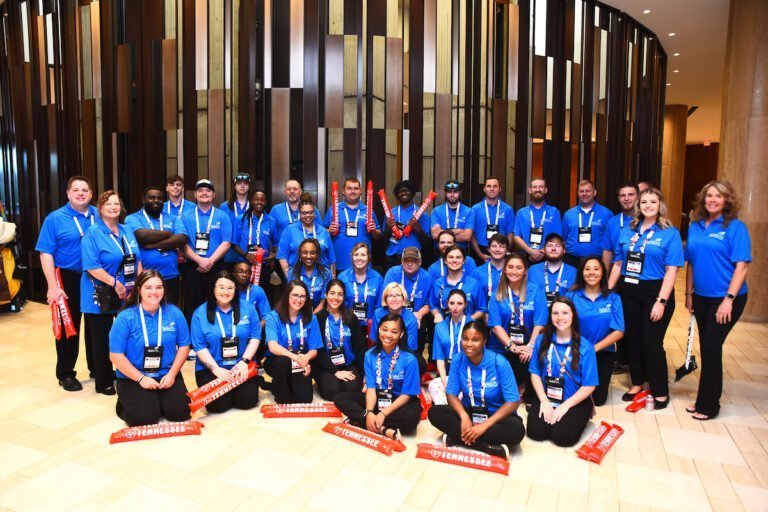
 July 8, 2022 (Chattanooga, TN) — Thirty statewide gold medal winners representing the Tennessee College of Applied Technology (TCAT) at Chattanooga State Community College recently returned with 18 medals from the 2022 National SkillsUSA competition in Atlanta. Chattanooga TCAT students were among the 6,600 competitors representing the best of 330,000 student members. 

EMPLOYMENT APPLICATION PROCESS: Katelyn Cooke of Hixson, Gold 

Tests the contestant’s readiness in applying for employment and their understanding of the process, that includes completing an application and interviewing with the judges. Their résumé and portfolio are used during their interviews. 

MEDICAL ASSISTING: Tara Grimes of Tracy City, Gold 

Tested on their skills in the clinical and administrative setting and judged on speed, use of correct safety measures and ability to interact personally with the patient(s). The contestants are judged on general office skills, communication skills, patient education, knowledge of anatomy and physiology, knowledge of medical terminology, instruments, medical equipment, as well as on procedures and techniques found in an ambulatory medical office or clinic. Contestants are given a scenario which requires action; they should be able to read the scenario, assess the supplies/equipment and/or situation in a short period of time and perform a skill required for that situation within the given time limit. Documentation, grammar, correct pronunciation and spelling count in all stations. 

INTERNET OF THINGS – SMART HOME: Matthew Deckman of Ooltewah, Silver 

Test each contestant’s preparation for employment and to recognize outstanding students for excellence and professionalism in the field of home technology integration. The contest is made up of multiple stations where the contestants will be judged and scored on the following skills and knowledge: Installation of “smart home” residential products including items such as bulbs, thermostats, locks, alarms, sensors, cameras, speakers, a home theater system; computer networking; video security equipment and construction of the various cables used at each of the stations. A written test includes Computer Networking Fundamentals, Audio and Video Fundamentals, Home Security and Surveillance Systems, Telecommunications Standards, Structured Wiring (Low Voltage & High voltage, and Systems Integration) and IoT products. 

JOB SKILL DEMO – OPEN: Liz Zapata Obregon of Wildwood, GA, Silver 

Contestants demonstrate and explain an entry-level skill used in an occupational area outside of their training program. Any technical skill may be demonstrated, from outside the training program of the participant. 

QUIZ BOWL: Alisha Holland-Frazier, Ashlyn West, Denzel Monfort, and Nathan Whitten of Chattanooga; Andrew Orr of Harrison; Erik Van Daley and Timothy Kerley of Dayton, Silver 

A team of five competitors are tested on their ability to quickly respond to questions covering the areas of academic knowledge, SkillsUSA Career Essentials knowledge and current events. The competitors also demonstrate communications, time management, teamworking and problem-solving skills. The teams receive one point for a correct answer and lose a point for each incorrect answer. The preliminary and final rounds are 100 questions each. 

OPENING AND CLOSING CEREMONIES: Amy Salazar of Hixson; DiMarco Haire, Jacob King, Jerry Fuget, and Shyanne Geathers of Chattanooga; Jacob Gross and Josh Osterhaus of Soddy-Daisy, Bronze 

A teamwork and oral presentation contest that evaluates teams’ understanding of the symbolic representation of the colors and assembled parts of the SkillsUSA emblem. Each team includes seven registered members in the roles of president, vice president, parliamentarian, reporter, treasurer, secretary and historian. 

Chattanooga TCAT Dean Jessica Green says that the students who enroll in the TCAT division of Chattanooga State are a special group of students. “They have chosen to enroll in a full-time program to pursue an education with a particular job in mind, and most do this while caring for their families and working full-time,” noted Ms. Green. “What they accomplish is impressive and to take on the additional work required for SkillsUSA is even more impressive. We are proud of each and every one of the students that participated in SkillsUSA and feel that the national recognition of some of them is a reflection of the great education and training our students are getting at Chattanooga State.” 

Advisors to these winning students included Diane Jackson, LeShundria Nelson, Nancy Draper, Mike Mercer, Rex Weeks, Tiffany Hammond, and Cynthia Rutledge. 

For more information on SkillsUSA and Chattanooga TCAT programs available, please plan to attend the TCAT Open House on Wednesday, July 20 from 10 a.m. to 6 p.m., visit chattanoogastate.edu/tcat or call (423) 697-4433. 

Laws Banning Employers From Discriminating Against Natural Hair, Dozens of Others, Take Effect July 1

0

By Camm Ashford 

Dozens of new laws passed in the last session of the Tennessee General Assembly took effect on July 1.

One such law, the “CROWN” Act, or HB 204, bans employers from discriminating against natural hair or protective hairstyles like braids, locs, twist or bantu knots–especially those which express “characteristics associated with a certain race.” State Rep. Karen Camper and state Sen. Raumesh Akbari, both Democrats from Memphis, sponsored the bill.

CROWN is an acronym for Creating a Respectful and Open World for Natural Hair. The CROWN Act is now law in 17 states. California was the first state to pass legislation outlawing racial discrimination against people based on their natural hairstyles. As of July 1, Tennessee is the first state in the Mid-South to make the CROWN Act law. 

“I think people have a right to be proud of their hair and who they are, and now this bill is going to protect them so that they can’t be fired because of it,” Sen. Akbari said.

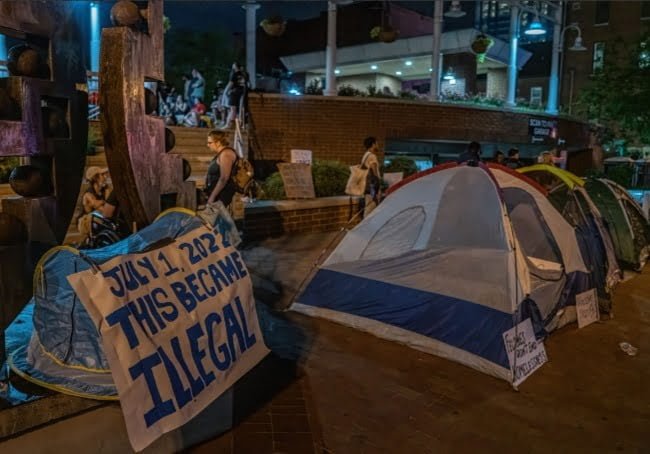
Homeless rights activists camped on downtown Nashville streets to protest a new law that criminalizes camping on public property. (Photo: John Partipilo)

The CROWN Act does not apply to public safety employees if a protective style would prevent them from performing essential parts of their job.

The act will allow employees who face discrimination to file a complaint to the federal government.

Under HB 1459, those arrested on accusations of domestic abuse must stay away from the victim’s residence for at least 24 hours. State Rep. Yusuf Hakeem, D-Chattanooga, and state Sen. Jeff Yarbro, D-Nashville, sponsored this law.

To impose stricter penalties on criminals who engage in drive-by shootings, another law requires that a person convicted of aggravated assault that involved the use or display of a deadly weapon be punished one classification higher than otherwise provided by law if the violation was committed by discharging a firearm from within a motor vehicle. Rep. John Gillespie, R-Memphis, and Sen. Paul Rose, R-Tipton, sponsored HB 2009 to “crack down on drive-by shootings.” 

Truth in Sentencing, or HB 2656, will require those convicted of violent crimes, including aggravated assault, murder, carjacking, aggravated burglary and kidnapping, to serve their entire sentence without a chance of reduced time. State House Speaker Cameron Sexton, R-Crossville, and Lt. Gov. Randy McNally, R-Oak Ridge, sponsored the bill.

“Joker’s Law,” or HB 1646, will impose felony punishment for killing or harming a service animal without the owner’s consent. The bill’s namesake is K-9 Joker, who was shot in 2021 while pursuing burglary suspects in Cleveland.  Rep. Mark Hall, R-Cleveland, and Sen. Mike Bell, R-Riceville, sponsored the law.

Homemade food will be exempt from regulation under the “Tennessee Food Freedom Act,” or HB 813. Producing or selling homemade food will be free of state regulations, unless officials are investigating food-borne sickness. State Rep. Justin Lafferty, R-Knoxville, and state Sen. Frank Niceley, R-Strawberry Plains, sponsored the measure.

Overall, there’s little controversy about the CROWN Act, or lesser known new laws such as the one that requires utility companies to provide the estimates of connection fees to potential customers, or one that allows defendants for whom bail has been set to pay with a debit card instead of cash.

Other laws–like the one that requires school librarians to classify material as obscene even if it has educational value; the one banning  transgender athletes from competing in women’s sports at public colleges and universities, as well as private institutions that compete against them; and the law that criminalizes camping on public property–have made headlines and stirred outcry as they progressed through legislatures this year.

Officials will consider camping on public property a felony, and camping along a highway, on-ramp or off-ramp a misdemeanor under HB 0978. Sponsors Sen. Paul Bailey, R-Sparta, and Rep. Ryan Williams, R-Cookeville, defended the bill as a tool local law enforcement could use to address homelessness.

Advocates for Tennessee’s homeless population contend the law which defines camping as erecting tents or tarps under bridges or overpasses and alongside state highways, as targeting houseless Tennesseans.

“Tennessee is poised to double down on using the criminal legal system to punish the poor,” the Vera Institute of Justice said in a statement. “The additional threat of a felony charge for public camping is likely to push unhoused Tennesseans into deeper desperation.”

Gov. Bill Lee said he didn’t approve of the new law and didn’t sign it, saying he wants to look for alternatives to it, but let it become law without his signature.

To protest the new law, last week several hundred people in Nashville marched through the streets of downtown before setting up tents and sleeping on benches overnight to test it.

Metro Nashville Police declined to make arrests.

Chattanooga Moc Gwain Durden Passes

0

CHATTANOOGA—Gwain Durden, the Chattanooga Mocs second-leading rusher all-time, passed away last week at the age of 62. Durden (1959-2022) most recently resided in Vidalia, Ga.

He burst onto the scene in 1977 with a 1,000-yard freshman campaign. Durden and fellow freshman Mike Smith Combined for 2,112 yards that initial tour of the Southern Conference with 1,045 coming from the native of Lyons, Ga., starring at Reidsville High School. They still rank as the only freshman pair in DI history to both run for 1,000 yards in the same season. It has not been done in either FBS or FCS since Division I split in 1978 into those common monikers of today.

The duo amassed 7,026 yards over their four years together leading the Mocs to a 33-9-2 mark and three straight SoCon titles in 1977, 1978 and 1979. Durden finished his career as the school’s all-time leading rusher with 3,686 yards. It was later eclipsed by current tight ends coach and former quarterback Jacob Huesman in 2015 finishing with 4,051 rushing yards. Durden ranks 31st all-time in NCAA Division I history with 6.8 career yards per carry. That’s among impressive company finishing three spots ahead of Barry Sanders (Oklahoma State).

Durden was named to the Mocs’ All-Century team in 2003. He was inducted into the UTC Athletics Hall of Fame in 1988. A story on his life can be found here. His family is hosting a visitation Friday, July 15, from 5-7 p.m., at Vidalia Funeral Home. The funeral service is Saturday at 2 p.m., at the First African Baptist Church, also in Vidalia.

The Los Angeles Lakers Have Signed Scotty Pippen Jr. and Shaq’s Son, Shareef O’Neal

Nationwide — Shareef O’Neal and Scotty Pippen Jr., the sons of former NBA legends, have recently signed two-way contracts with the Los Angeles Lakers.

Shareef, who is 22-years old, is the son of Lakers icon Shaquille O’Neal who played in the NBA from 1992 to 2010. Scotty, Jr., who is 21-years-old, is the son of six-time NBA champion Scottie Pippen who played in the NBA from 1987 to 1999.

Shareef is a 6-foot-10 power forward who previously played at LSU. He struggled during his last season due to his health and some injuries. Shareef even revealed his father wanted him to just stay in school because of his condition. Still, he pushed through and will start playing for the Lakers in next month’s Summer League.

Meanwhile, Scotty had played for Vanderbilt’s Commodores for the past 3 years. He was initially undrafted in both rounds of the NBA Draft but eventually received a call from the Lakers.

The two players expressed their excitement on Twitter after signing the deal.

“Thank you for this opportunity,” Shareef said, along with a throwback video of his young self wearing a Lakers jersey.

“Dream come true. Let’s get to work #lakeshow,” Scotty wrote.

4 Things Black People Must Do to Prepare for the Coming Recession

0

Nationwide — Jayson Thornton, CFP is an African American Certified Financial Planner and Advisor who also hosts a call-in financial talk show. Below he reveals four things that people should be doing to prepare themselves for a recession:

1. Build up your savings

An emergency savings fund is a foundational building block for any good personal financial plan. A sufficient emergency savings fund is three to six months of your household expenses. Remember: These are your needs and not your wants. Saving cash is not a sexy move to make with your money, but it is the first thing you must do.

Liquidating retirement accounts and paying for personal expenses on credit cards can set back your financial goals for years. I advise my clients to prioritize building up their savings. The emergency savings fund can protect their retirement plans during a recession.

2. Pay down debt

Surviving a recession requires disciplined budgeting. Now is the best time to pay down or pay off debt. This will give your budget the room and flexibility needed to meet the new demand caused by rising prices and decreasing wages.

Paying down debt now will help keep you from destroying your credit score and going even deeper into debt when debt payments are missed in order to keep current with monthly essential payments.

3. Don’t exit the market

Our economy goes through seasons; we have cycles of ups and downs. During a recession, far too many people get spooked and sell off their investments too early. Investing comes with inherent risk, but needlessly liquidating your retirement or other investment accounts can damage your financial plan for years.

If you are not nearing retirement, a down market is not a setback. You can take advantage of lower market prices if you are dollar-cost averaging. If you are near retirement, you should be contacting a financial planner to help you rebalance your portfolio to minimize your exposure to the coming recession.

4. Get or update advanced job training

Getting advanced job training before a recession is like putting on armor before a battle. As the economy slows down, the job market gets more competitive. Workers with a higher skill set have better odds of not being laid off and they are more likely to find new employment.

Advanced training opportunities do not have to be expensive, they can be found at junior colleges, trade schools, and through low-cost certifications

The key to a recession-proof financial plan is avoiding hype. Contact a Certified Financial Planner and follow the recommendations no matter how boring they may seem.

Over Half of U.S. Workers Continue to Feel Mentally Unwell and Require Time Away From Work

0

New research from employee benefits provider Unum shows over half (56%) of U.S. workers, primarily Millennials and Gen Z, felt mentally unwell in the previous year.

Additionally, 42% of employees said they needed to take time off from work to deal with their mental health.

Experts say the combination of health concerns and work pressures during the pandemic caused widespread mental health problems that will reverberate far into the future.

Among U.S. workers, Unum research found: 70% of employees suggest there’s room for improvement for their employers to reduce the stigma around mental health all year-round.

Nearly one third (30%) say their employer does not do a good job of promoting mental health resources or offerings. Forty-two percent are more likely to seek mental wellbeing support only in a crisis, rather than seeking help proactively. One in three (35%) identify cost of services as the biggest deterrent when seeking mental health resources. And one third (33%) are a part of the “Sandwich Generation,” meaning they currently care for parents/elders and children/younger dependents, which often comes with more responsibility, greater financial burden, and, at times, devastating stress.

Swapnil Prabha, vice president of Workforce Wellness Solutions for Unum Group, said this type of data continues to drive investments in mental health care by employers for their employees.

“The ongoing pandemic has further exacerbated the mental health crisis we were already in, but it also helped normalize the need for mental health support,” Prabha shared. “Despite the longstanding stigma and other challenges in mental health, the power of technology can make it possible for more people to get access to the right help when they need it.”

Chattanoogans Benefit From Medical-Debt Credit Report Changes

By Camm Ashford 

Healthcare costs continue to rise, even for people who have medical insurance. In total, Americans currently owe at least $195 billion in medical debt. 

Medical debt can become even more burdensome when a person defaults on it, as this information is reported to the credit bureaus and hurts the debtor’s credit score.

The good news is that the three major credit bureaus–Equifax, Experian and TransUnion– recently announced major changes to how medical debt is reported. With these changes expected to remove nearly 70% of medical collections debt tradelines from consumer credit reports, the personal-finance website WalletHub last week released the “Debt Credit Report: Cities Benefiting Most & Least From Medical-Debt.”

The report compares 182 U.S. cities across four key metrics based on TransUnion data in order to determine where people will receive the most and least credit-report relief. Cities where many people have small, new or recently-paid-off medical debts stand to gain the most from the changes. 

The study listed Chattanooga as number 18 out of the 182 cities benefiting most from medical-debt credit report changes. Norfolk, Va. was identified as number 1 on the list; New York, N.Y. was at the bottom at number 182.

The changes to how medical debt is reported by the three major credit bureaus are: from July 1 onward, all medical debt in collections that was eventually paid off will be removed from people’s credit report history; from July 1 onward, new unpaid medical debts will not appear on credit reports for a full year to give people time to pay them off without hurting their score; and starting in the first half of 2023, medical debts of $500 or less will no longer appear on credit reports. (Source: Chattanooga Is the City with the 18th Greatest Benefit from Medical-Debt Credit Report Changes – WalletHub Study July 2022)

African American History

By Robin Smith 

Americans celebrate Independence Day with little appreciation that–while a resolution was adopted to declare that independence by the Second Continental Congress was declared on July 4, 1776–the domination and violence of the British had commenced years earlier, and the Revolutionary War continued through 1783. 

Let’s take a moment to learn about a few overlooked people who did extraordinary things.

Economic oppression overwhelmed the colonists. England’s new territories brought rich resources and new reasons to collect taxes for the Crown to help England pay its debt, beginning in 1763, and continuing for over a decade with no colonial representation or voice within the British government. 

In 1770, citizens of Boston (population of 16,000 at the time) grew angry with 2,000 British troops roaming their streets enforcing the tax laws. A brawl escalated to a riot, called the Boston Massacre. These economic oppressions, met with growing resentment, moved the British government to disarm the colonists who grew more vocal in their protests.

Sybil Ludington is remembered for her valiant defense against British attack during the Revolutionary War.

Messengers, or 18th Century Freedom Riders on horseback, were critical to track British troop movements in the colonies when only word of mouth, letter writing, newspapers and pamphleteering were the means of communication to the public. The famed midnight ride of Paul Revere made for historic prose, as enjoyed by Henry Wadsworth Longfellow’s poem, Paul Revere’s Ride. But two riders, infrequently mentioned and overlooked in history, deserve attention!

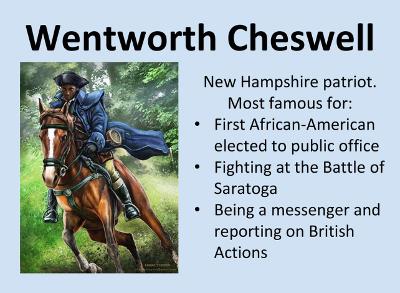
Before the more famous ride in April 1775 from Boston to Concord and Lexington and the “shot heard around the world,” came the 66-mile wintry ride to New Hampshire in December 1774. Paul Revere carried information to neighbors in Portsmouth, New Hampshire where the grandson of a slave and son of a free black man, Wentworth Cheswell, rode as a member of the secret network of patriot riders mobilizing militia members to secure munitions and weapons before British troops arrived to seize them.

A few months later, in April 1775, despite years of colonial pleadings for representation amidst greater public protests, British troops marched from Boston to Concord, Massachusetts to seize a cache of weapons. Paul Revere was joined by William Dawes, Samuel Prescott and Israel Bissell sounding the alarm of the British government’s actions. 

When Wentworth Cheswell was elected town Constable of Newmarket, New Hampshire in 1768, he became the second person of African ancestry to be elected to public office in what would become the United States.

Following in the same role as these dispatched riders, Sybil Ludington–yes, a young woman–at the age of 16 years young, rode 40 miles throughout the night from her family’s farm in Kent, New York to Danbury, Connecticut almost two years later to the date of Revere’s ride to alert of British plans to destroy a military supply depot used by the Continental Army in the fight for independence. 

In efforts to survive and obtain independence from the economic oppression by the British government under King George III, colonists demonstrated courage and determination. Many were overlooked, but historians are finally recognizing that Wentworth Cheswell and Sybil Ludington assisted the fearless citizenry who created America. 

Is America perfect? No. Just a land where the brave lived and left their trace. May we follow their selfless example.

“Don’t Go for the Okey-doke… (or the Single Story)!”

0

There’s not a day that goes by when I don’t get several annoying messages from scammers promising me millions of bucks once I pay their required “delivery fee.” Am I alone in this experience? Anyway, here’s an abbreviated version of one of the latest:

“Hello dear. I’m Elizabeth from the federal government of Nigeria and contacting you regarding your consignment box worth of $12.5 million. You only need to pay the $50 delivery fee to receive your funds. So, get back to me with your bank account and routing numbers and a copy of your ID card so that we can deliver your funds. God Bless you dear.”

First this advice: When it comes to scams like this, “don’t go for the okey-doke.” Now in case the term “okey-doke” is unfamiliar, it means a trick or scam. So delete those messages immediately.

Back to the above request from “Elizabeth Dear” from Nigeria.

“Drop dead you typical scamming, (cuss word) Nigerian,” is the thought that ran through my head as I broad brushed all Nigerians as scammers. But suddenly I thought about a brilliant Nigerian – repeat, NIGERIAN – novelist and her message about how we all sometimes fall into the trap of “a single story” as I just did with my hair-trigger mental reaction to “Elizabeth dear” purportedly from Nigeria. 

 “The Danger of a Single Story” is speech by Nigerian novelist Chimamanda Ngozi Adichie. In it she talks about the danger of believing one story instead of acknowledging the complexity of many stories. 

 As a child, Adichie wrote stories exclusively about white people in Western countries, having only encountered Western literature not realizing that books could depict anything else. It was only when she discovered other writers when she realized how limiting her “single story” had been. At the same time she  admitted to herself that she was not immune to stereotyping. 

 When Adichie went to college in America, she grappled with her classmates and instructors’ stereotyped ideas about her. She can’t truly blame Westerners, she says, for absorbing the single stories they encounter and offered a personal story as proof. While living in America, Adichie encountered so much anti-immigration rhetoric that the experience of traveling to Mexico and witnessing its diversity surprised her and broadened her perspective. 

So, what are the origins of single stories? Although the answer to that question is a complex one, part of the answer is misunderstandings, media portrayals and a basic lack of knowledge. Another part of the answer is “cultural laziness,” an unwillingness to set aside the convenience of stereotypes to individualize others. Instead, we often subconsciously engage in “confirmation bias,” the tendency to look for evidence that confirms the stereotype we hold.

Now it is no stretch in imagination to conjure up single stories about Jews, Christians, Muslims, Asians, gay people, poor people, northerners, southerners, obese people, or even Republicans and Democrats. For example, regarding political parties, I had a single story about Republican Liz Chaney, daughter of former VP Dick Chaney. Until I watched her impressive performance as a member of the congressional committee investigating the January 6, 2021, insurrection, my perspective about her was narrow. Politics aside, I’m now a fan of Liz Chaney although I may disagree with her in some areas. 

Let’s dig deeper.

Single stories also exist in perceptions about businesses and in the field of education. For example, my friend “Terri” who chairs a network that supports minority-owned businesses shared her frustration with the “single stories” she hears about the quality and efficiency of those businesses. Sadly, she says, some customers – yes, some dirty laundry airing here, minority ones too – walk into those establishments looking for evidence to support their “single stories.”  

In higher education, the New York Times recently did a series on the explosion of interest by talented Black students in enrolling in HBCU (Historically Black Colleges and Universities) schools, driven in part by wanting to avoid feelings of isolation – and overt acts of racism – on other campuses. Increasingly for those reasons, many turn down acceptance into Ivy League and other elite colleges. 

That New York Times and similar articles tend to cite Morehouse and Spellman as the “best” HBCUs. For the record, two of my nephews are Morehouse graduates, and two of my nieces are currently students at Spellman, so I have no bone to pick with those two fine schools.

But rarely in those articles is there a mention of other 100+ HBCU schools that produce Black talent, among them schools and alumni from North Carolina A&T (astronaut Dr. Ron McNair); Florida A&M (former Atlanta Mayor Keisha Lance Bottoms); Tennessee State (Cellular Base Station inventor Jesse Russell); sometimes Howard, sometimes Fisk, sometimes Hampton and sometimes other great institutions. 

Does this tendency to highlight certain schools put those not mentioned at a competitive disadvantage in attracting Black students? Humm, something to think about, huh? 

Hey, like yours truly, once we’re startled on realizing that we’ve been had by a single story, we’re embarrassed, look for the nearest rock to crawl underneath, and may even reevaluate other single stories we hold from past experiences. And that’s not such a bad thing, is it? 

Again folks, now slowly repeat after me; don’t go for the okey-doke from 

“Elizabeth dear”… or the single story!

© Terry Howard is an award-winning writer and storyteller. He is also a contributing writer with the Chattanooga News Chronicle, The American Diversity Report, The Douglas County Sentinel, Blackmarket.com, Hometown Advantage, co-founder of the “26 Tiny Paint Brushes” writers’ guild, recipient of the 2019 Dr. Martin Luther King, Jr. Leadership Award and 3rd place winner of the 2022 Georgia Press Award.