Saturday, October 17, 2026
Advertisement
Home Blog Page 134

“The Battle Turns” – In the Huddle

TODAY’S SCRIPTURE:

(Psalm 56:9, TLB)

The very day I call for help, the tide of battle turns. My enemies flee! This one thing I know: GOD is for me!

TODAY’S WORD:

We all go through times when we don’t think we’ll win our battles, seasons of darkness when nothing is changing. You may have been believing for a long time for things to change in your marriage, your finances, or with an addiction, but the obstacle seems permanent. You have to walk by faith and not by sight when there’s no evidence that it’s a new day and the battle has turned. Today’s SCRIPTURE says that the moment you prayed in the dark, the battle turned. Now instead of complaining about the dark, have a new perspective. Who can stop the sun from rising each morning? All the forces of darkness cannot stop what GOD has promised you from coming to pass. You may not see anything improving, but my challenge is to trust HIM in the dark. The sun is going to come up sooner than you think. The battle has already turned. Daybreak is about to happen. Get ready for favor, get ready for breakthroughs, get ready for freedom, get ready for promotion.

PRAYER FOR TODAY:

FATHER, thank YOU that YOU hear every prayer that I whisper in the dark, and YOU see me standing in faith. Thank YOU that in the unseen realm YOU turn the tide of the battle because YOU are for me. I believe and declare that nothing can stop what YOU have promised me from coming to pass. In JESUS’ Name, Amen.

Senate Passes Blackburn, Peters, Scott Bipartisan Bill To Strengthen Domestic Semiconductor Manufacturing

NASHVILLE, TENN. – The Senate has passed bipartisan legislation led by U.S. Senators Marsha Blackburn (R-Tenn.), Gary Peters (D-Mich.), and Rick Scott (R-Fla.) which would strengthen federal efforts to expand domestic manufacturing of semiconductor chips. The Securing Semiconductor Supply Chains Act would direct the U.S. Department of Commerce’s SelectUSA program – in collaboration with federal agencies and state economic development organizations – to develop strategies to attract investment in U.S. semiconductor manufacturers and supply chains. The legislation now heads to the House of Representatives.

“The recent global chip shortage put American medical equipment, computer, and car supply chains on hold,” said Senator Blackburn. “The passage of the Securing Semiconductor Supply Chain Act in the Senate gets us one step closer to making existing resources available to producers of semiconductor equipment. This work is essential to decreasing our reliance on companies controlled by the Chinese Communist Party, restoring global supply chains, and boosting manufacturers in Oak Ridge and Nashville, Tennessee.” 

“The ongoing semiconductor chip shortage has caused major disruptions for Michigan’s manufacturers and automakers and further exposed an overreliance on foreign producers that threatens our economic and national security,” said Senator Peters. “By boosting our semiconductor manufacturing capabilities and driving investments in American manufacturing, this legislation will bolster our domestic supply chains and strengthen our global economic competitiveness. I was proud to author this bipartisan bill and see it passed in the Senate – and I urge my colleagues in the House to take swift action to get it signed into law as soon as possible.”

“It’s more important than ever that we bolster the United States’ ability to be self-sufficient in our domestic semiconductor supply chain,” said Senator Scott. “Our good bill will address the crippling shortage facing our businesses and help our nation’s economy remain competitive on a global scale to fight against Communist China’s growing influence. I’m proud to see this critical legislation pass the Senate and urge its quick passage in the House.” 

The SelectUSA program was established in 2011 to improve federal efforts that attract job-creating business investments in the United States and support U.S. firms. The Senators’ bill comes amid a report issued last year by the Biden Administration, which emphasized that the SelectUSA program could be leveraged to strengthen private sector investments across the semiconductor manufacturing supply chain.

The Securing Semiconductor Supply Chains Act would direct the SelectUSA program to engage with state-level economic development organizations about how they are attracting foreign direct investment to onshore activities related to semiconductor manufacturing, and identify what resource gaps or other challenges they face in achieving that goal. SelectUSA would then be required to develop strategies to increase investments in semiconductor manufacturing.

Volunteer Tennessee Commission Announces $7.4 Million in AmeriCorps Grants to 18 Tennessee Organizations

Nearly 900 Tennessee AmeriCorps members will be empowered to meet local needs  

NASHVILLE, TN – Volunteer Tennessee, the state’s governor-appointed commission on volunteerism and service, today announced that Tennessee received nearly $7.4 million in AmeriCorps grant funding from AmeriCorps, the federal agency responsible for national service and volunteer programs.

These grants will support nearly 900 AmeriCorps members across the state as they serve with 18 organizations. The AmeriCorps members will tackle critical challenges in Tennessee, including supporting students with tutoring and mentoring, providing health services, restoring the environment, increasing economic opportunities, and recruiting and managing volunteers.

“National service is an essential part of the solution to many of the toughest problems facing our state,” said Donovan Robertson, Chair of the Volunteer Tennessee commission. “These AmeriCorps members will meet pressing local needs and strengthen communities as they develop civic and leadership skills to last a lifetime. I congratulate these outstanding organizations and thank all those who serve their communities through AmeriCorps.”

Of the $800 million awarded nationally, $7.4 million will be granted to Volunteer Tennessee, which in turn will award grants to nonprofit organizations and public agencies across the state.  The law creating AmeriCorps gave a key role to states in determining how national service resources are used and in promoting service and volunteering to meet community needs.

Every year, 250,000 AmeriCorps members serve through over 2,000 schools, nonprofits, and community and faith-based organizations across the country. These citizens have played a critical role in the recovery of communities affected by COVID and natural disasters and helped thousands of first-generation college students access higher education.

AmeriCorps’ unique model means that the grants announced today will leverage an additional $15 million from the private sector, foundations, and other sources – further increasing the return on the federal investment.

AmeriCorps will also provide nearly $6 million in Segal AmeriCorps Education Awards for the AmeriCorps members funded by these grants in Tennessee. After completing a full term of service, AmeriCorps members receive an award of approximately $6,500 that they can use to pay for college or to pay off student loans. The grants awarded will support AmeriCorps members in all three regions of Tennessee, including Teach for America, Hands On Nashville, Emerald Youth Foundation, and Bridges USA. A complete list of awards, including organizations and funding totals can be found here

Chattanooga Native Darrell S. Freeman Sr., Renown Business Leader and Philanthropist.

By Camm Ashford 

Chattanooga native Darrell S. Freeman Sr., a self-made millionaire, renown business leader, mentor, and philanthropist, died Tuesday at his home in Brentwood, Tenn. He was 57.

“Our beloved father and husband suffered from a serious illness that he succumbed to on the evening of June 28, 2022, the family said.  As we navigate this unknown territory and difficult time, we ask for your prayers and privacy.”

Freeman is survived by his wife, Gloria, and their four children

Nashville business leader and philanthropist Darrell Freeman

Freeman’s dad was a foundry worker who poured iron for 38 years, and his mom worked as a maid. They rented half a duplex in Orchard Knob, one of Chattanooga’s historically Black working-class neighborhoods. His grandmother lived in the duplex behind him. At 15, he studied electronics and learned to fix TVs and radios at Kirkman Technical High School, where thousands of teens from Chattanooga’s urban neighborhoods went to learn trades leading to living-wage jobs.

The first in his family to go to college, Freeman built tech company Zycron Inc. into a successful enterprise with 300-plus employees that generated $40 million a year or more in receipts. Zycron provided employees who help large corporate and government clients — such as hospital chain HCA, the Tennessee Valley Authority and Nashville Electric Service — with implementing their information technology plans.

He sold Zycron in 2017 for more than $20 million.

Freeman used money from the sale of Zycron to help others start their businesses, including the three Tennessee State University roommates who launched Slim & Husky’s Pizza Beeria which started on Nashville’s Buchanan Street and now has 10 locations in four states.

“The wisdom, exposure, knowledge and resources that Darrell shared with us are immeasurable and have made an incredible impact on our personal and professional growth. We love you, OG! You were a fierce leader and more than a partner to us. You were our friend, and you will be missed,” Slim & Husky’s owners said in a statement.

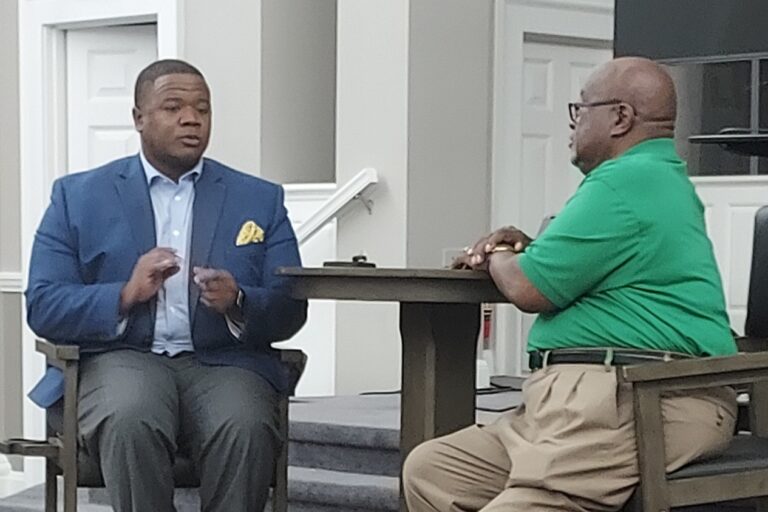
(Cockpit photo where Freeman conducts interview)

In 2018, Freeman founded Cockpit Conversations, a series of interviews hosted by Freeman, at an altitude of 25,000+ feet where he believes the sky is not the limit! During the interviews, Freeman and his guests discuss topics such as leadership, entrepreneurship, business principles, community service, goal setting and philanthropy. His goal was to motivate viewers to aim high and inspire them to pursue their dreams with passion and confidence. He wanted viewers to hear messages of hope, inspiration, and wisdom from a diverse collection of individuals.

The videos can be viewed on Freeman’s YouTube channel

Freeman often came back to Chattanooga to create opportunity for others and tell them his story. In 2020, he presented the Bessie Smith Cultural Center with a check for $25,000. The donation went toward digital upgrades at the Center.

Freeman began serving on the BlueCross Board of Directors in 2020, and he brought his unique perspective and passion to the role.

“Darrell left an indelible mark on Tennessee through his innovative and entrepreneurial spirit, along with his dedication to service,” said JD Hickey, M.D., president and CEO of BlueCross. “All of us at BlueCross are heartbroken by this loss, and our thoughts are with his loved ones.”

A graduate and board member of Middle Tennessee State University, Freeman was known for his commitment to education. He donated more than $100,000 to MTSU for programs to help first-generation college students and hosted free ladies’ lunches to advise and guide women entrepreneurs from around the country.

Freeman was a past chairman of the Nashville Area Chamber of Commerce board and a member of the board of Middle Tennessee State University. Freeman was selected by the Tennessee Tribune as our Man of the Year for 2021.

Freeman also served as chairman of the civic group 100 Black Men, and was a member of the Nashville Chapter Chamber of Commerce, Omega Psi Phi Fraternity Inc. and the Nashville Downtown Rotary. He was an avid golfer and was a member of the Governors Club of Tennessee. He enjoyed flying and received his Private Pilot Certificate in 2000.

In recent published remarks, Freeman said, “I spent the majority of my life getting money. I want to spend the majority of the rest of my life giving. I want to use my voice, my reputation, my resources to find people and help them become better.” 

Remembering My Friend:  “Darrell Freeman was a dear friend and business associate, more like my third son.  He had a brilliant business mind and the unique ability to know when he didn’t know or understand a subject.  He continuously surrounded himself with mentors and absorbed every ounce of knowledge that he could which contributed to his success in life. Darrell clearly made a difference with his life by giving back and paying it forward.  A life well lived and gone too soon; he went where there was no path and left a trail for others to follow.  I am going to miss him dearly”, wrote Frank Alford, TVA Retired.

Freeman’s funeral is set for 1 p.m. on July 7 at Olive Branch Church, 938 Havenhill Dr. in Nashville, with a viewing at noon. His Omega Psi Phi Memorial and Boule’ Service begins at 12:30 p.m., on the same day, and at the same location. 

In lieu of flowers, the family requests for donations to be made to: Chi Boule Foundation: www.chiboulefoundation.org/DarrellFreeman.(Tennessee Tribune & Main Street Nashville contributed to this story.)

Finance Company Owner Tells Black Youth How to Obtain Wealth

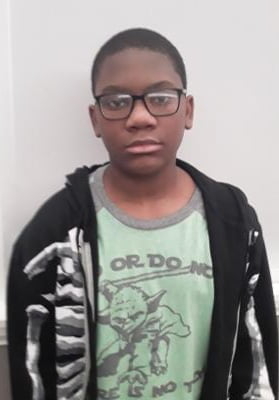
By Pierre Kelly, age 14, STEM School Chattanooga

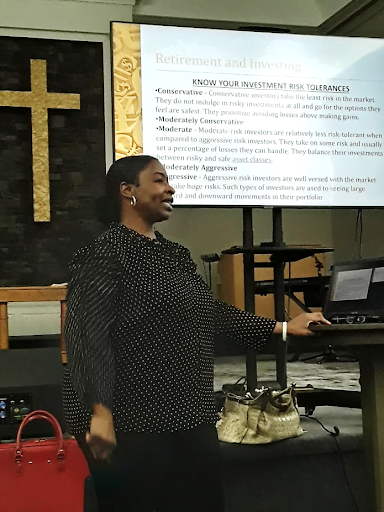
Determine a goal for investing money. Then begin investing, said Frenise Mann, owner of Mann Financial Consulting. No starting amount is too small.

“Don’t think you have to have $1000s to start a type of an account.You can start with $10,” she said. “The more that you put in every month, the more you’re building wealth.”

She spoke this week to more than 40 teens in camp REACH at Hope City Church. The camp promotes literacy using the Lexia reading program and pays students a stipend of up to $150 a week while exposing them to careers in journalism, painting and logistics. 

Lurone “Coach” Jennings, executive director of the Mary Walker Foundation which sponsors the camp, said he wants students to learn how to build generational wealth.

Mann has first-hand knowledge of wealth building skills and seeks to share her knowledge with others.

She and her husband, Carlos, were swamped with debt when they married more than 20 years ago. But by following the advice of author and financial guru Dave Ramsey, the two were debt free in six years.

“I know what it means to be without and what it means to have,” said Mann. “I want to teach others, especially in our culture that we can build wealth.”

Pierre Kelly, student at STEM School Chattanooga.

African Americans come from a slavery background that puts them 200 years behind in the generational gap between blacks and whites. But now blacks have the opportunity to obtain knowledge and wealth like anybody else, she said.

Her latest lesson at Camp REACH showed students how to invest in the stock market.

She awarded candy to teens who correctly answered questions, brightening the mood and  making students want to engage more. She taught by asking questions. She first asked about interest rates. Then she explained how interest rates can be used against a student when he owes money, but how compound interest can work for him when he invests.

One teen at the REACH camp after the lecture said, “The finance stuff was very informative  and it’s helpful but I feel like at our age we are not going to remember it unless we ask our parents or experience it later in life.”

Mann explained that real estate and investing is a passive means of earning money which means that students can earn money without working eight hours like a  job. Students who consistently invest money every month can gain wealth through the effects of compound interest by the time they retire.

Then she listed the steps to open a broker’s account, a custodial account or college fund.

She suggested students go with a custodial company. Mann’s company uses the financial services company, Charles Schwab. She said Fidelity and Vanguard are also good.

Next, determine a goal for investing. The goal may be long-term like saving for college or short-term like purchasing a car when you turn 16, she said.

Then decide how much to invest. 

“You can start with $50 or you can start with $25 or you can start with $10, but start,” she said.

Automatically set your brokerage account to take money out of your savings on a monthly basis. Then select a mutual fund or an index fund.

A mutual fund is investing in several stocks. That’s why it’s called mutual, she said.

So a mutual fund means it can have companies like Amazon, Apple and Tesla in one group and buying a share of it means buying a little piece of each company versus buying into just one. 

When buying stock in only one company, if that company fails, then all money is lost. But if an investor takes that same money and invests in 20 companies, even if one fails, all the money isn’t lost because the investor still has 19 other companies.

But if a student wants to invest in one single stock, he or she can do that, said Mann.

Her final advice was to set it and forget it. She told students to set up an automatic withdrawal from their income to invest and allow their wealth to accumulate. 

“Once you set it up,” she said, “don’t spend it until your goal is met.”

To contact Frenise Mann for financial consulting, call 423-504-5530 or email mannfinancialconsulting@gmail.com

Award-winning TV Personality Greg Funderburg Offers Camp Reach Teens a Message of Hope

By Camm Ashford 

Award-winning WTVC NewsChannel 9 personality Greg Funderburg last Wednesday met with Camp REACH teens to share the importance of getting an education, setting goals and remaining optimistic.

Funderburg told around 40 students how he was bullied in school for “talking like a white person” and how one of his high school teachers “told me that journalism wasn’t for me.”

“I was a shy kid and I remember at times getting really depressed when I was in high school,” he said. “But at the end of the day, when I think about the moments when those kids were picking on me, if I would have listened to a lot of those things, I would not have been prepared for so many opportunities I’ve had in my career. My teacher told me that TV news may not be the career for me and I should change my path, but I used her negative comments as ammunition to succeed. So I want to encourage you guys, don’t worry about what other people got to say.”

Based at Hope City Church, the Mary Walker Historical and Educational Foundation Camp REACH began June 6 and ends July 14. The camp promotes literacy using the Lexia reading program and pays students a stipend of up to $150 a week while exposing them to careers in journalism, painting and logistics. REACH is an acronym for Respect, Earn, Achieve, Citizenship and Hard Work. 

Funderburg, also an author and motivational speaker, said he strives to be a role model to show others if a little boy from the small town of Sylacauga, Ala. could grow up and follow his wildest dreams they could too.

“Chattanooga is such a wonderful place,” he said. “And Chattanooga is a great place to live in, but I want you guys to think longer and bigger. Think outside of Chattanooga.Think about going to college, and being able to come back into the city to do things. Because God can dream a bigger dream than what you could ever dream yourself.”

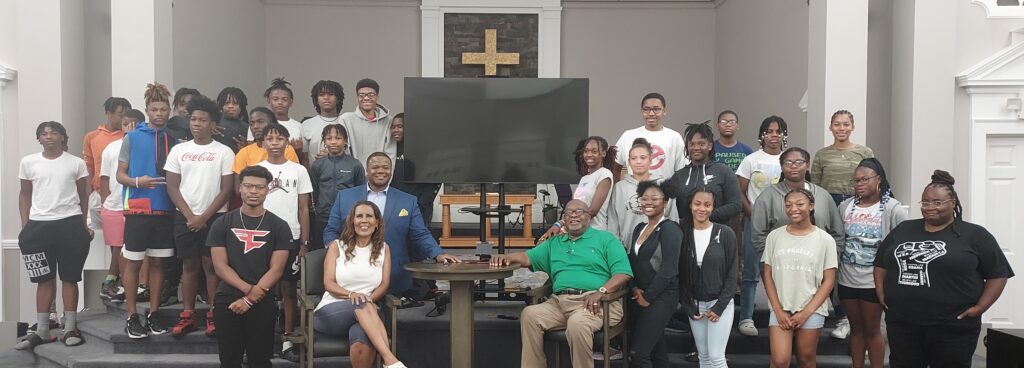
Camp REACH staff and students pose with award-winning WTVC NewsChannel 9 personality Greg Funderburg (second row standing with blue jacket).

Funderburg also warned the students, “When you’re in school or summer camp, one bad decision can really change the outlook of how people may portray you and how they view you. So I encourage students your age to really think about what you’re going to do, and how you’re going to respond to certain situations. Because a lot of times, the thing is just not worth it.”

Funderburg introduced the students to his current intern, Zapouria Wadley, a former student at Chattanooga Girls Leadership Academy who now attends Mississippi Valley State University. Wadley majors in mass communications, with a concentration in both broadcasting and print journalism. 

Wadley talked with and took pictures with some of the students.

At 17, Funderburg started his television career as a morning host with The Abrams Broadcasting Company in Sylacauga, Ala.

Prior to joining the WTVC news team in July 2013, he was a reporter and fill-in anchor with the FOX affiliate in Greenville, S.C. The veteran broadcaster has also made stops at other stations throughout the southern region including Columbus, Ga. and Birmingham, Ala. 

“I am so blessed to have amazing parents, family and friends who have pushed me to reach my goals,” he said.

In his free time, Funderburg loves watching scary movies, likes to travel, enjoys working out at the gym and appreciates spending quality time with family and friends. Holding memberships with Kappa Alpha Psi Fraternity, Inc. and the National Association of Black Journalists, he has a mass communications degree from the University of Montevallo.

HCS Conducts Latest Round of School Water Testing

0

Hamilton County Schools (HCS) places the highest priority on the safety of our students and staff. This  includes environmental factors, like water quality. 

Under Tennessee Code Annotated 49-2-133, local boards of education are required to periodically test  for lead in drinking water sources. To safeguard the health of our students and staff, HCS has conducted  ongoing sampling, testing, and reporting for lead in drinking water across all its schools for the past two  years. In terms of allowable lead limits and schools being tested, HCS has adopted guidelines that go  beyond the law’s requirements. 

According to state law, if a water sample tests at or above 20 parts per billion (ppb), the school shall  immediately remove the drinking water source from service. Hamilton County Schools (HCS) has adopted a stricter standard of 15 ppb to immediately remove the drinking water source from service until corrective  action can be taken. Additionally, HCS has sampled all schools, even though only buildings built prior to  1998 are required by state law. 

In 2020, we began testing water outlets at our schools for lead as part of a new regulation in Tennessee  for schools built prior to 1998. During Summer 2020, samples were collected from over 2,000 different  water outlets at 53 schools. During Summer 2021, over 1,000 additional samples were collected as part  of a voluntary effort at schools built in 1998 or later.  

In 2022, we have retested all schools built prior to 1998 that were originally tested in 2020. Samples from  24 schools were collected over spring break and reported in May, and the remaining 27 pre-1998 schools  were tested this summer to complete this round of testing. 

Out of 806 samples recently collected at the 27 schools, 12 (1.4%) samples included lead at a  concentration at or greater than the state’s limit of 20 ppb. Each of these 12 water outlets were  immediately removed from use, and remediation work and retesting will be performed as soon as  possible. The 12 outlets are located at 11 facilities. There are no concerns with the overall quality or  safety of drinking water at any of the tested facilities. (The list of 27 tested schools, noting those with  anomalies, is included at the end of this release.) 

“Hamilton County Schools is committed to providing a safe and healthy environment for our students and  staff,” said HCS Chief Operations Officer Dr. Robert Sharpe. “As a part of that commitment, we have held  ourselves to stricter water testing standards than those required by the state, and we have worked to be  transparent about our test results to school families and our community. Today’s release of our most  recent test results is the latest step in that process.”

 3074 Hickory Valley Road • Chattanooga, TN 37421  Tel: 423-498-6762 • www.hcde.org 

Families of students at the 27 tested schools will receive an email notification detailing the results at their  schools. Copies of those letters, as well as complete testing results, can be found on the District Water  Testing website. 

Why Test? 

Lead typically enters drinking water due to the wearing away of piping, faucets, fixtures, and other  plumbing materials. Because lead is tasteless, odorless, and colorless in drinking water, testing is a way  to learn if lead is present. It is important to sample each faucet or water fountain that is used for drinking  or food prep because test results can vary between outlets and various water chemistry changes can  change levels over time. HCS has been working with a contractor to utilize results to identify and  remediate sources of lead. When a test result indicates elevated lead content, additional testing is  conducted to determine the source of the lead. Once that investigation, corrective action, and retesting  are complete, the water sources may be reopened. HCS will continue to provide updates and share all  testing data along the way. 

Results 

Understanding Results 

We are committed to keeping you informed every step of the way as we test and improve the water  quality in our schools. Lead test results from the past three years can be viewed in a table on the District  Water Testing website. The EPA action level is 15 ppb. State of TN school lead testing requires sources  over 20 ppb to be removed from service until corrective action can be taken. HCS is remediating any  source over 15 ppb. All sources over 15 ppb have been immediately removed from service. The  corrective action columns show a brief description of actions taken, as needed. Results that are below the  laboratory detection limit, indicated with a less than sign, mean that the laboratory was not able to detect  lead in the sample. The source ID is a unique identifier for the drinking water outlet, associated with  information collected about location and outlet type. 

How are Samples Collected? 

Samples are collected following a standard operating procedure incorporating the United States  Environmental Protection Agency (EPA)’s Training, Testing, and Taking Action (3Ts) program and the  requirements of the state legislation. Water must be standing in plumbing overnight before samples are  collected. A “first draw” sample of water that has been standing in plumbing overnight will be collected in  laboratory supplied sample bottles. Each sample is assigned a unique number and each source will be  tagged with a sticker displaying the unique number. The sample is then supplied to a separate qualified  laboratory for conducting chemical analyses.

Summer 2022 Water Testing Summary 

School – Variances 

Alpine Crest Elementary – None 

Barger Elementary  – 1 

Brainerd High – 1 

Central High l – None 

CSAS – 1 

CSLA – None 

Daisy Elementary – None 

Dalewood Middle – 1 

Dupont Elementary – 2 

Hamilton County High – 1 

(Harrison Bay Future Ready Center)  

Hillcrest Elementary – None 

Hunter Middle – None 

Normal Park Lower – 1 

Normal Park Upper – 1 

North Hamilton County – 1 

Orchard Knob Middle – None 

Red Bank High School – 1 

Rivermont Elementary – None 

Sale Creek Middle/High – None 

Sequoyah High – 1 

Soddy Daisy Middle – None 

Soddy Daisy High – None 

Snow Hill Elementary – None 

Thrasher Elementary – None 

Wallace Smith Elementary – None 

Woodmore Elementary – None 

Washington Alternative – None

For additional Information, Contact: 

Steve Doremus, Hamilton County Schools Communications Officer Email: doremus_s@hcde.org 

23 Children Accepted Into the 2022 Relaunch of the Prestigious Dance Alive Program

0

Children at South Chattanooga and Shepherd Center auditioned for Dance Alive, a free two-week introductory dance program. The 22-year partnership between Ballet Tennessee and the City of Chattanooga served thousands of children before its pause in 2020 due to COVID restrictions. The program will relaunch  this July through The Pop-up Project, in collaboration with The City of Chattanooga and the Bessie Smith Cultural Center.

CHATTANOOGA, TN; July 1, 2022

23 children from South Chattanooga and Shepherd Community Centers have been selected for Dance Alive by an audition process. Dancers will participate in 3 hours of dance instruction and choreography in 3 genres of dance, as they prepare for a culminating performance. In addition to dance technique, the children will explore the historical and cultural themes of The Sit-in Protests, The Big Nine, and Juneteenth, with the guidance and expertise of Eli Cameron from the Bessie Smith Cultural Center.

Dance Alive will be held on-site at South Chattanooga and Shepherd Centers with the following dancers participating: South Chattanooga: Milaya Harmon, Kalani Hill, Unique Hubbard, Andrew Robinson, Javeon Smith, and Nyan Wera. Shepherd: Arzari Allen, Demour Allen, Ne’veah Bryant, Markia Davis, Layden Forte, Rheagan Johnson, Rhyley Johnson, McKenzie Smith, Parker Taylor, Nilah Thompson, London Thornton, and Tiara Thornton. Community Dancers: Ahliya Craig, Skyla Craig, Ja’Rya Davis, Olivia Tankersley, and Chase Zulueta.

The free performance will be on Friday, July 22 at the Bessie Smith Cultural Center at 6:00 pm, with performances by Dance Alive, Pop-up Project, and Dance Alive Alumni.

Dance Alive was founded by Barry and Anna VanCura in 1997. The relaunch is under the new direction of Jenison Eduave, Dance Alive alumni. Anna VanCura serves as artistic consultant and mentor for the program.

CONTACT:

Jules Downum, Co-founder and Director

Jenison Eduave, Outreach/Education Director

The Pop-up Project

info@thepopupproject.org 

Violence Is as American as Apple Pie

0

By Gordon Myers, Tennessee Lookout

In the wake of the May 24 mass shooting at Robb Elementary School in Texas, someone desperately asked: “Why is this happening?”

I was shocked by the question because to me, as a theologian, the answer is painfully obvious.

American history, culture and social norms are built upon the foundational equation: Violence equals power. Although we often claim the adjective “Christian” as part of our identity and heritage, the love, forgiveness, mercy, peace, and and prioritizing the needs of the “least of those among us” declared by Jesus as signs of God’s Kingdom, are seldom given more than lip service in our actual public life and systems. 

Instead, violence is as American as apple pie and certainly more popular. 

Historically, our nation was birthed in the violent conquest of territory from the indigenous peoples native to this land. “How the West Was Won” was at the barrel of a gun as the original inhabitants were exterminated as “heathens” and displaced to reservations, and in turn, marginalized out of the benefits of “life, liberty and the pursuit of happiness” reserved for the descendants of the largely northern European intruders. 

Economically, our nation prospered and bloomed as a result of abundant and cheap slave labor imported from Africa. Slavery, as practiced within our shores, was not a simple working off a debt or imposing of labor upon another people or group. The practice of slavery in the U.S. evolved into a much crueler and evil model that added torture, murder, rape and other violence into the mix, including denying basic human identity to the enslaved.   

The violent enforcement of slavery led to the origin of many of the systems of law enforcement which survive to this day. Their original function was the systematic capture, return and punishment of slaves who had escaped from their “masters” and thus were aimed at providing object lessons to discourage others from pursing their own liberty. This is quite a dramatic contrast to the way we prefer to think of ourselves as “the land of the free and home of the brave.”

When economic profit becomes a higher value than human life, the results are always violent for those without access to wealth. Our worship of the “almighty dollar” has become an art form as well as a religion, and is practiced with much more diligence than any of the words of Jesus. 

Jesus’ command to “Love one another” is replaced by a hyper sense of competition, and the goal of life in America is not for all to live well, but for each individual to “win” at all costs.

In our culture, even the theological concepts of redemption and salvation have come to be interpreted in highly individualistic and competitive ways: If you don’t believe the way I do, you obviously are not “saved.”

Within our culture, violence and guns have long been associated with masculinity, manhood and power.  They are marketed in such a way to encourage male egos to imagine themselves to be powerful, and envision guns as tools enhancing their ability to assert themselves over others.  

The gun lobby has also accomplished for its business sector what none other has been able to secure: Immunity from liability for the use, effect, or consequence of their products.

If you don’t know why people are fascinated with weapons of power and death, or feel compelled to assert themselves in violent ways, you simply have not been paying attention.

This is who we are. This is the path we have been on and will continue to follow, unless we decide to change. 

The Rev. Gordon Myers is a retired pastor in the Evangelical Lutheran Church in America, living in Arlington, Tenn. Throughout his life and ministry he has been active in social service and justice efforts. He currently serves the Poor People’s Campaign A National Call for Moral Revival as Co-Lead for Mobilizing the Mid-South.

Like A Candy Bar on A Shelf!

“Poetry is ordinary language raised to the Nth power. Poetry is boned with ideas, nerved and blooded with emotions, all held together by the delicate, tough skin of words.” — Paul Engle 

With that quote in mind, there’s no better embodiment of those lyrics than Sheila Ahmadi. Read on please.

Outside the city of Staunton’s art center, a block from the Shakespeare Theater, cars and SUVs slowly drove by. Judging from license plates – among them those bearing the names of New York, Illinois, Pennsylvania, North Carolina Maryland, and Delaware – I assumed that they were tourists attracted to this bucolic little town just off Interstate 81 in the middle of Virginia’s Shenandoah Valley. 

Those passing by on foot with cameras around their necks peered inquisitively through the window curious about the goings on inside and perhaps about the speaker who mesmerized a standing room only crowd. 

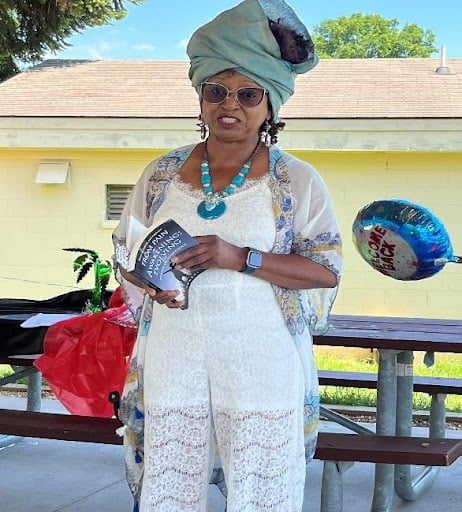
Behind the wooden podium stood Sheila Ahmadi reading several poems from her book, “From Pain to Awakening: Evolving into Women of Substance.” Her unadorned vocabulary and soft delivery style spawned nods of agreement from women in the room as she read her poems, each one followed by an ovation. Some of the relatively few men present sat stoically next to their female partners, arms folded across their chests, an obligatory nod here and there. 

Following is one poem that I really liked; one Sheila wrote for vulnerable young girls and older women; “Like A Candy Bar on a Shelf.” Take a deep breath and read it carefully with images of people in your life, girls and women in particular. 

“Why sit like a candy bar on a shelf

waiting for him to select you for himself

when he comes with his swag?

Be aware of some of the unpredictability in his bag.

He may say you’re most appealing and three months 

later say— “Oh—by the way—I’ve got someone else with whom I’m chilling.”

“Why sit like a candy bar on a shelf thinking no one will select you for yourself

feeling blue and wondering— “How did it come to this?”

Sit with yourself and reflect—“What did I miss?”

“Why did I sit like a candy bar on a shelf waiting to be chosen with little understanding of myself?

“Why did I trust that the relationship would last forever and be unaware that relationships can crumble like dry leaves in fall weather?

“Why didn’t I know the type of qualities I wanted in a man?”

“Or did I think that was passe and I didn’t need any rules to play.”

Time, reflection, and standards I set for myself

will keep me from sitting like a candy bar on a shelf!”

So for me, the images of the young girls I thought about in those lyrics were, to say the least, unnerving; those of my precious granddaughters I was with at an IHOP the day before, namely Nadia (age 12), Noelle (4) and Naomi (2). Added to those were images of my niece coincidentally named “Candi.” Let that sink in.

But let’s move on.

Now there’s no leap in the imagination to link the treatment of “Candies” to the treatment of women globally. For starters, the media has long been saturated with sexism and other evidence of the degradation of women. At the abuses absolute worse, think about Jeffery Epstein, Harvey Weinstein, Bill Cosby and more recently R. Kelly, and their sordid histories of using their wealth and celebrity to lure women (“Candies”) into their webs of sexual abuse and depravity. And the scary reality is that those are just the ones we know about.

Globally, the United Nations rated Mexico as one of the most violent countries for women in the world. According to the National Institute of Statistics and Geography in Mexico, 66.1 percent of all women age 15 and older have experienced some kind of violence in their lives, the worst of which is femicide, the gruesome killing of women. Of course, the treatment of women in European, Asian, and African nations is nothing to brag about either.

So, excuses aside, too many men are messed up and have done and continue to do some messed up stuff to women. Prove me otherwise. Go ahead, I’ll wait.

But back to Sheila Ahmadi.

When she stepped down from the podium and was quickly surrounded by folks from the audience, I waited my turn before corralling her off to the side to pose some questions about her poems, “Like A Candy Bar on A Shelf” in particular. 

She explained why she wrote her book. 

“For years, I’ve counselled women from teens on up not to wait for others to empower them,” explained Sheila. “I tell them that they are beautiful, don’t need to be validated by others and not allow others to dictate their thoughts. That’s why I wrote the book.” She then turned and greeted the next person waiting in line to chat with her and autograph her book.

When it was over and lights dimmed in the center, folks slowly poured out of the center and merged with others walking along and snapping selfies and of other colorful sights along Market Street. 

As for yours truly, the next day I hopped on a plane and headed back to Georgia with the lyrics from “Like A Candy Bar on A Shelf” and images of my granddaughters top of mind and, yes, forgive me, with fear and anger deeply lodged in my bones.
TerryHoward is an award-winning writer and storyteller. He is a contributing writer with the Chattanooga News Chronicle, The American Diversity Report, The Douglas County Sentinel, Blackmarket.com, Hometown Advantage, co-founder of the “26 Tiny Paint Brushes” writers’ guild, recipient of the 2019 Dr. Martin Luther King, Jr. Leadership Award, and 3rd place winner of the 2022 Georgia Press Award.