Several weeks ago, I relocated from Northern Virginia to Phoenix with my two kids in tow. While I had previously lived on the West Coast (including PHX) one thing I forgot – it’s xxxx hot! We’re not talking that great for your curls humid heat, but that forever feeling of dry mouth heat.
Naturally, the daily average temp of 110+ degrees put a damper on all the outdoor activities I had planned for my little ones including: hiking, biking, lounging by the pool, etc. So, in an effort to better protect my children (as they are far more susceptible to heat exhaustion than adults), I visited a local public health center to get a better grasp on the warning signs, symptoms and treatment for heat exhaustion and stroke.
Normal reactions to hot weather may include:
Heavy sweating
Redness of the face
Heavy breathing
Thirst
Muscle cramps
Signs of overexertion and possibly heat exhaustion may look a little something like this:
Dizziness, weakness
Beet-red skin and looking miserable
Clamminess
Fatigue
Fainting
Nausea or vomiting
Headache
Lack of sweat
While even the hottest day may feel comfortable enough for play, according to Weather Guidelines for Children:
80° or below is considered comfortable
90° beginning to feel uncomfortable
100° uncomfortable and may be hazardous
110° considered dangerous
With that said, pay attention to the signs. In the event any of the above symptoms occur, quickly find some shade or GO INSIDE.
Next, loosen his/her clothing and have them drink plenty of water — infants and toddlers may be given an over-the-counter rehydrating solution, like Pedialyte.
If symptoms don’t improve within the hour, or your child begins to exhibit signs they’re confused, has trouble breathing or develops a rapid pulse, seek medical help immediately.
In the future, encourage water and shade breaks every 15 minutes or so to prevent further episodes. Heat exhaustion and stroke are very serious conditions and should not be taken lightly. (Source: Blackdoctor.org)
Vice President Kamala Harris, Ghana’s President, and Others Receive Awards
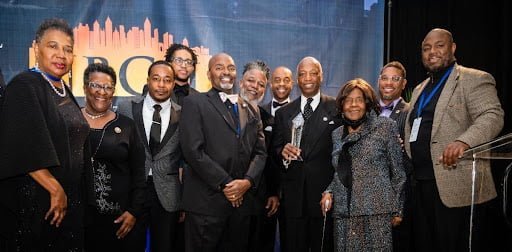
Tennessee State Representative Barbara Ward Cooper, who is 92 years old, stands next to NBCSL President Billy Mitchell after she received NBCSL’s Living Legend Award. Also pictured are members of the Tennessee Black Caucus of State Legislators.
Washington, D.C. — Over 500 Black State Legislators from across the United States left the National Black Caucus of State Legislators (NBCSL) Annual Legislative Conference last weekend recommitted to addressing voting rights, health care, education, and other important issues that are impacting African American communities.
Presently, more than 20 states have passed laws that will make it harder for millions of Americans to vote. President Joe Biden and Vice President Kamala Harris prepared recorded remarks that were shown during the Annual Awards Ceremony for the conference attendees.
“We have a White House that looks like America,’ said President Biden. In her remarks, Vice President Harris said, “We must have a national baseline for voting rights.” “Georgia is ground zero for voter suppression,” said NBCSL President Billy Mitchell (GA). “One of NBCSL’s goals is to ensure that we support and provide the framework needed for Black Legislators to better represent their communities, which is a major reason why we’re creating a Public Policy Research Institute (PPRI),” he said.
The Institute will represent the nation’s only nonpartisan think tank dedicated to providing evidenced-based public policy research to state legislators with a focus on issues concerning the Black community.
“In addition, PPRI will provide leadership development and training for legislators to assist them in constructing and analyzing new public policy,” said President Mitchell. Vice President Harris was presented with the David P. Richardson Jr. National Nation Builder Award for her significant contributions and for laying the foundation for political progress of African Americans.
The inaugural 2021 International Nation Builder Award was presented to Nana Akufo-Addo, President of the Republic of Ghana.
“President Akufo-Addo’s leadership demonstrates his commitment to public service, the Republic of Ghana, and the global African community,” said Mitchell. “He advocates guaranteeing the rights of Ghanian citizens and is a champion for justice, freedom, and democracy.” Darnella Frazier, the Minneapolis, Minnesota teenager who recorded the video of George Floyd’s arrest and death in 2020, received the Senator Regis F. Groff Youth Award for her courage and being the catalyst for demonstrations and a worldwide movement to admonish racial and social injustice.
The late Congressman John Lewis was posthumously honored with NBCSL’s Nation Award for his years of service as a civil rights leader and politician, while 92 year-old recently elected Tennessee State Representative Barbara Ward Cooperreceived the Living Legend Award for her decades – long dedication to youth and the Black community in Memphis. Visitnbcsl.orgto learn more.
Live Performance to Benefit the Mary Walker Foundation
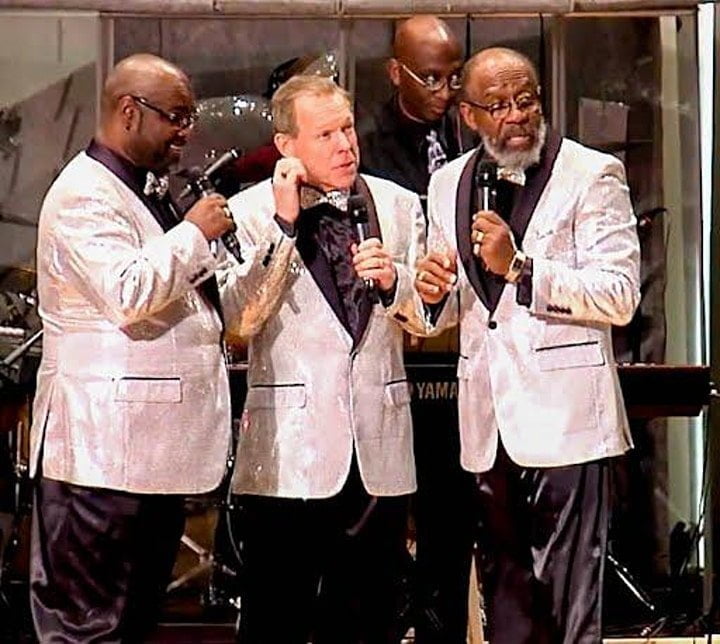
CHATTANOOGA, Tenn. — The 19th annual Tri-Octaves Christmas Concert, featuring former Impressions member Willie Kitchens Jr., will be held on December 17 at 7 p.m. and December 18 at 7 p.m., at Hope City Church, located at 7 N. Tuxedo Avenue in Chattanooga. This event is sponsored by the Chattanooga News Chronicle.
The Tri-Octaves, a group formed of Tennessee natives and lifelong musicians Willie Kitchens, Jr., Doug Richesin, and Michael Rodgers, each mastering a different genre of music. Their voices combined create a unique harmony celebrated by audiences across all musical tastes.
Concert admission is a $25 donation benefitting The Mary Walker Foundation, a 501(c)3 with a mission to help bring social and economic justice for all Chattanooga citizens through literacy.
Space is limited. Attendees may RSVP on the Chattanooga News Chronicle and Mary Walker Foundation Facebook Pages and on Eventbrite.com. The event will be simulcast via Facebook Live on the Chattanooga News Chronicle and Mary Walker Facebook Pages with donations kindly requested.
Event sponsors are welcomed, and interested organizations may contact john@chattnewschronicle.com or call (423) 267-2313 to learn more about sponsorship opportunities.
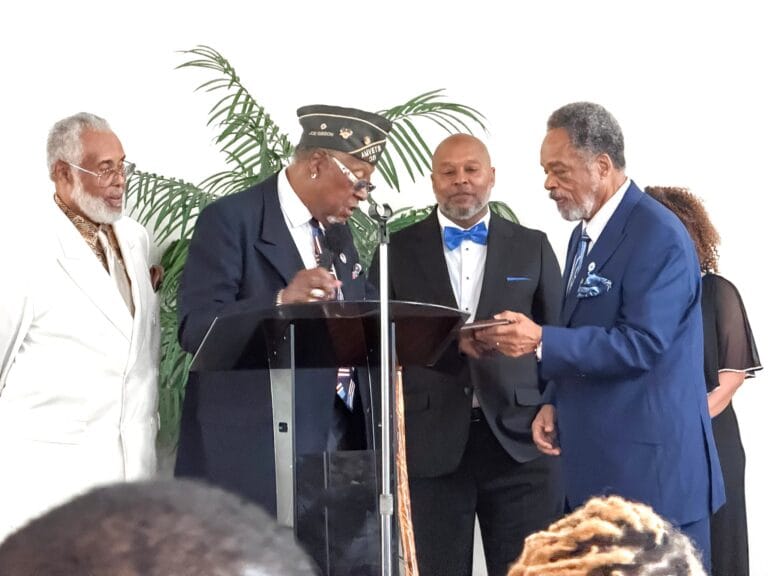
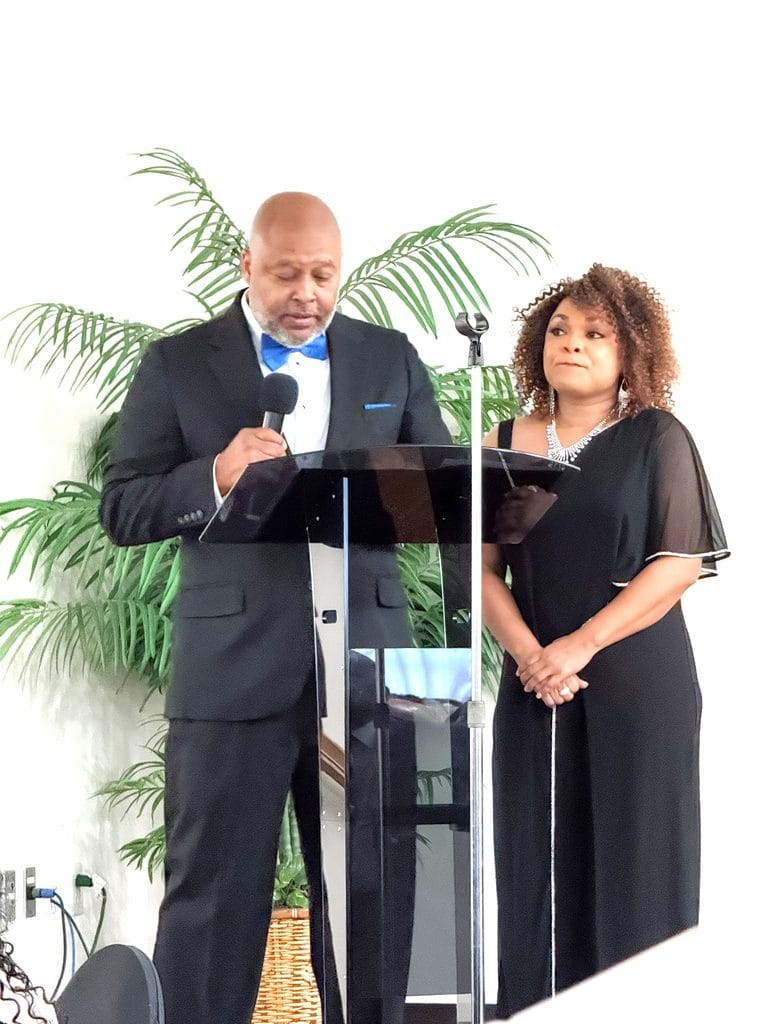
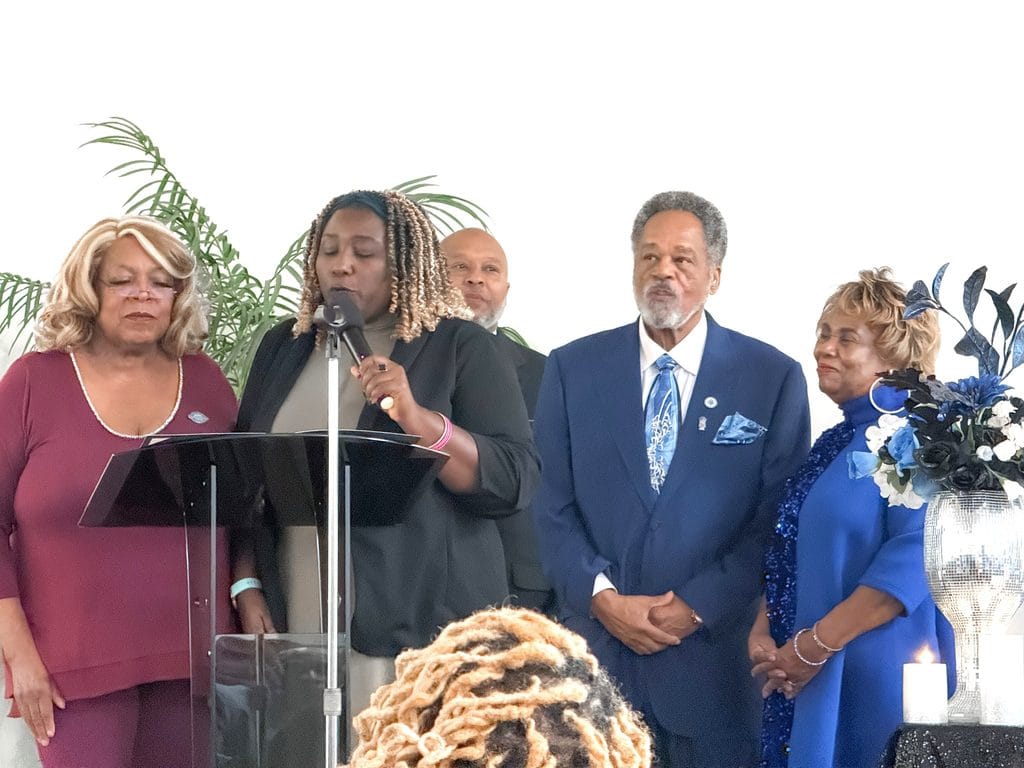
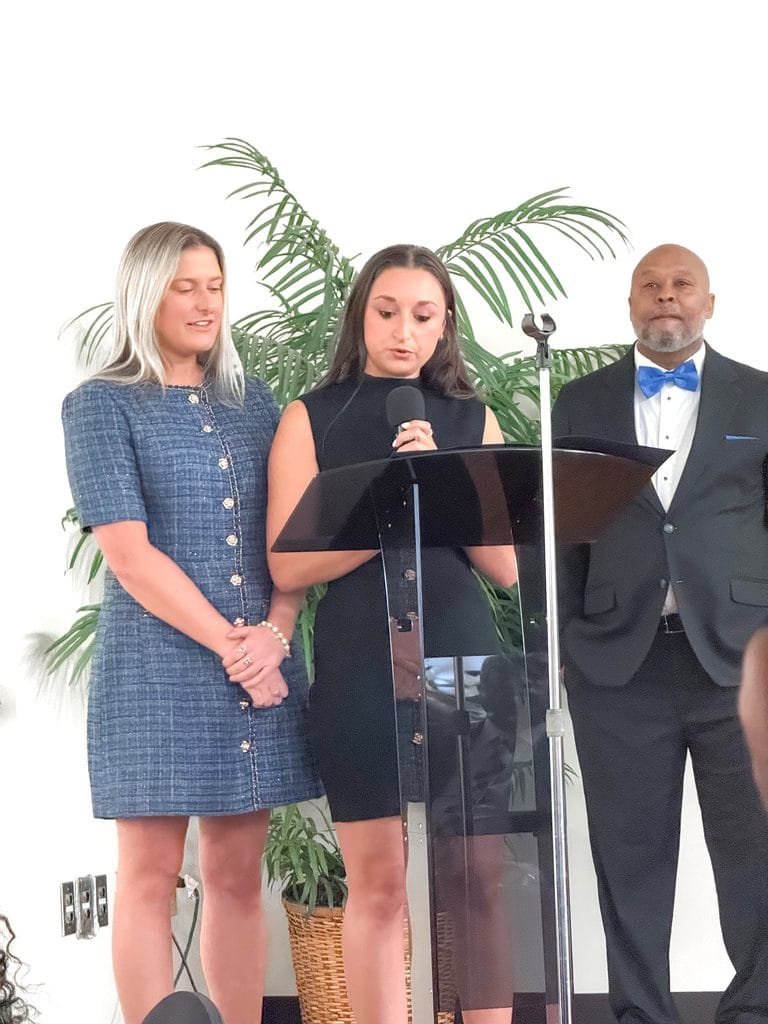
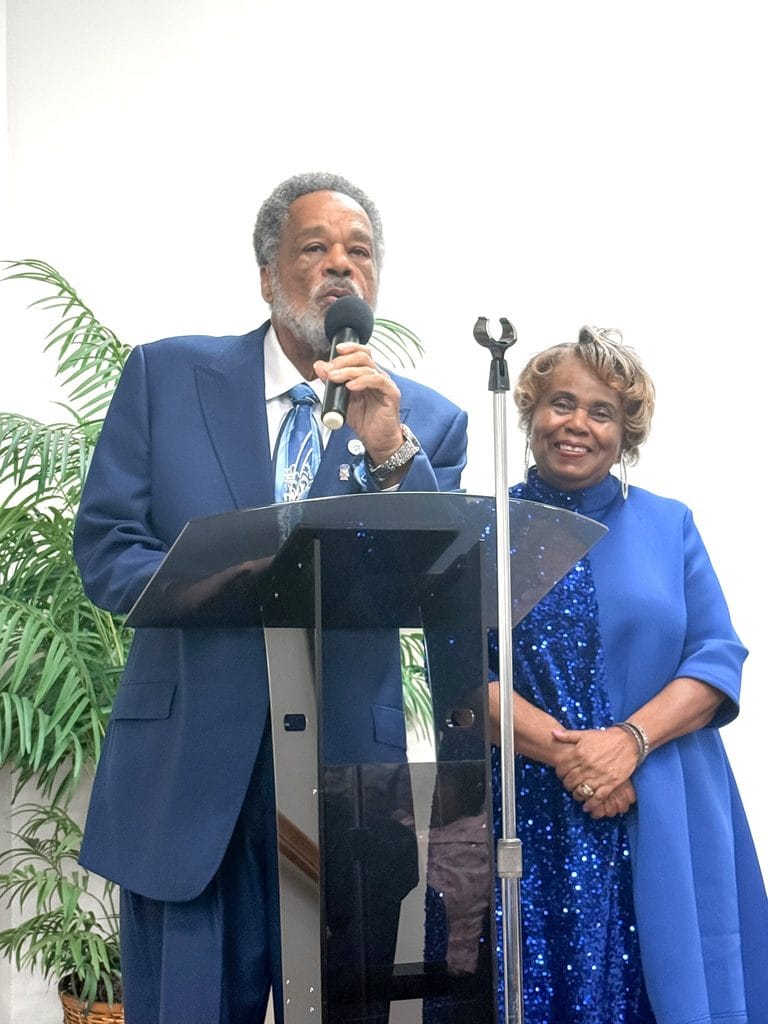
Adrian Edwards, CNC Co-Publisher and Nikita Edwards-Brown served as Hosts for the Chattanooga News Chronicle 37th Milestone Celebration on September 18, 2026.Proclamations presented by City of Chattanooga.Proclamations presented by Hamilton County.CNC founder and Co-Publisher John Edwards, III addresses the 200 + guests with gratitude as Executive Editor Faith Edwards nods with approval.37th Milestone Celebration Program Participants.Ruth Williams-Brinkley was guest speaker.
Nearly four decades of publication doesn’t come by chance.
For the Chattanooga News Chronicle, 37 years of documenting Chattanooga’s Black community has required intention, resilience and hard work — and speakers at the newspaper’s milestone celebration Friday night said its future will require continued support from advertisers and readers.
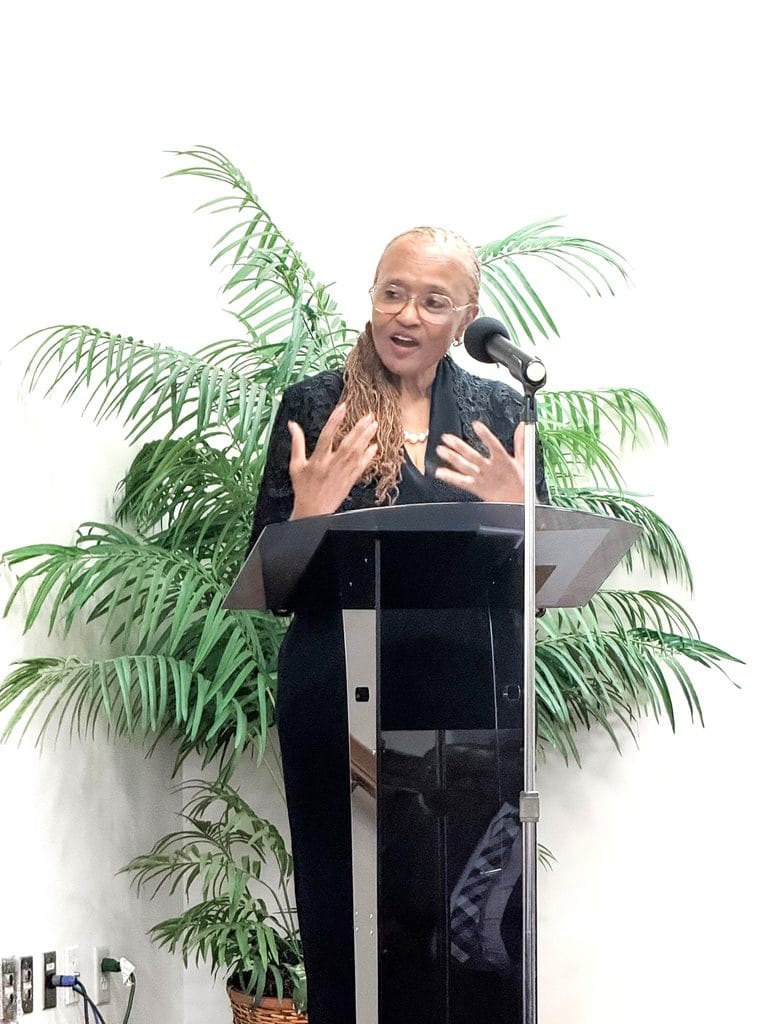
“Thirty-seven years doesn’t come about by accident,” said Ruth Williams-Brinkley, keynote speaker for the celebration. “Thirty-seven years comes by intention. It comes by resilience. It comes by hard work.”
Brinkley, a former president and CEO of Memorial Health Care System in Chattanooga, challenged the more than 200 people gathered at Greater Tucker Baptist Church Fellowship Annex to consider what the community would lose if the newspaper were no longer there.
“What would Chattanooga lose if this newspaper wasn’t here? And what responsibility do we share for making sure that doesn’t happen?” she asked.
The milestone celebration, held Sept. 18, recognized the Chattanooga News Chronicle as the longest-operating African American-owned newspaper in Chattanooga history. Founded in 1989 by John Edwards III, the newspaper surpassed the Chattanooga Observer in March 2026.
The evening’s theme, “Honoring Our Legacy, Inspiring Our Future,” reflected both the newspaper’s history and the challenge of sustaining it.
Soulful jazz filled the church fellowship hall as Karen Collins and Friends provided music for an evening of celebration, reflection and fellowship. Community leaders, supporters and long-time friends gathered to recognize the newspaper’s 37 years of service.
Brinkley said the News Chronicle has done more than publish news. For nearly four decades, it has recorded community accomplishments and struggles, recognized leaders, promoted Black-owned businesses, highlighted Black community activities, and preserved the stories of people who might otherwise have been overlooked.
“That is historic and it’s a historic role of the Black press,” Brinkley said.
She said Black newspapers developed in response to mainstream publications that often ignored or misrepresented Black communities, creating a place for Black people to tell their own stories, report injustice and encourage civic participation.
“The Black press did not simply report history, the Black press helped to make history,” she said.
But Brinkley also acknowledged the challenges facing newspapers in an era of social media, websites, podcasts and other rapidly changing forms of communication.
“A social media post may travel quickly, but speed is not the same as accuracy,” she said. “Popularity is not the same as credibility.”
Terry Howard, award-winning writer and contributor to the Chattanooga News Chronicle, made a direct appeal for community support. He encouraged business owners and residents to advertise in the newspaper and to make sure the newspaper remains visible in a variety of businesses and community spaces.
“We can buy ads. We can also ask majority businesses and utilities to advertise. The power of the Black consumer is enormous,” Howard said. “We can also pay attention to when the paper is not in businesses and locations that we patronize.”
Howard pointed to Chattanooga’s Black-owned businesses and Black community as an important potential support base.
“If you drill down even further, there is one Black-owned newspaper. Think about that, folks,” he said.
He recalled the story of Daisy Bates and the Arkansas State Press, a Black newspaper that survived after white advertisers withdrew their support, as an example of the challenges Black newspapers have faced and the importance of community support.
The celebration also connected the News Chronicle’s history to Chattanooga’s broader Black newspaper tradition.
Dr. Sandra Clark, granddaughter of Walter Robinson, publisher and editor of the Chattanooga Observer, reflected on the importance of maintaining an independent Black voice. The Chattanooga Observer operated for 33 years.
“Our voice is unique and it continues to need to be expressed and heard and celebrated,” Dr. Clark said, “Because our needs are unique and we need the newspaper.”
Adrian Edwards, co-publisher, and Nikita Edwards-Brown, Chief Financial Officer, John’s son and daughter, represented the next generation of the newspaper’s leadership.
“We also stand on the shoulders of community leaders, advertisers and supporters who understand the importance of the Black press,” Adrian Edwards said. “Their courage and commitment help create the legacy we honor tonight.”
For John Edwards, the anniversary was personal.
“I am so humbled,” the senior Edwards told the audience. “All the people coming out today, all of the comments, all of the encouragement that has been spoken has really moved me.”
Edwards credited his wife, Faith, Executive Editor, children, and staff for helping to sustain the newspaper. He recalled one of his father’s saying……… “that if someone sees a turtle sitting on top of a fence post, the turtle surely didn’t get there by itself.”
Edwards said he hopes to eventually transition the newspaper to his children, continuing a legacy that began in 1989.
After 37 years, the message from the milestone celebration was clear: The Chattanooga News Chronicle has spent nearly four decades telling Chattanooga’s story. Its next chapter will depend on whether the community continues to help support that voice. (By Brittaney Hale student writer from The Howard School/Yolanda Putnam, Instructor; with edits/CNC Editor)
Philip Emeagwali, nicknamed “Calculus” by his schoolmates, won the Gordon Bell Prize in 1989 for developing high-performance computing applications that used computational fluid dynamics for oil-reservoir modeling. Born in 1954 in Nigeria, by the age of 14, he had already become a master of calculus and could even out-calculate his teachers. Unfortunately, he was forced to drop out of school due to financial problems, but it did not prevent him from continuing to study. As a result, he managed to obtain a general certificate of education from the University of London.
At the age of 17, Philip was awarded a full scholarship to Oregon State University where he majored in mathematics. Upon graduation, he obtained several graduate degrees: a Master’s degree in Civil Engineering and another in Marine Engineering from George Washington University. He also obtained a Master’s in Mathematics from the University of Maryland and later earned his Ph.D. from the University of Michigan in Civil Engineering.
In 1989, Philip’s greatest achievement was The Connection Machine for which he had developed a program that solved a 350-year-old packing problem that was considered to be one of the greatest unsolved mathematics problems. The Connection Machine was the world’s very first supercomputer that utilized 65,000 computers linked in parallel to form the fastest computer on Earth. It could perform 3.1 billion calculations per second, which was faster than the theoretical top speed of the Cray Supercomputer. Later, Philip designed the Hyperball computer which was able to forecast long-term global warming patterns. The technology he built has been credited for being the foundation of today’s capabilities of the internet.
Drive through our city and the evidence is everywhere. New apartments are rising. Restaurants are opening. Downtown continues to develop. Neighborhoods once overlooked are attracting investment. People from across the country are discovering what those of us who have lived here for generations already knew: Chattanooga is a beautiful place with enormous potential.
But there is another question we must be willing to ask:
As Chattanooga grows, are Black Chattanoogans growing with it?
Growth and progress are not necessarily the same thing. A city can grow economically while some of its longtime residents lose ground. Property values can increase while families can no longer afford the neighborhoods they helped build. New businesses can open while household wealth remains stagnant. Development can come to a community without the people who have lived there sharing meaningfully in that development.
Housing provides one of the clearest examples.
According to the City of Chattanooga’s Housing for One Chattanooga: Housing Action Plan, prepared by HR&A Advisors, Black homeownership in Chattanooga declined from 42 percent in 2011 to 37 percent in 2021. During that same period, white homeownership declined from 64 percent to 61 percent, leaving a 24-percentage-point gap between Black and white homeownership rates.
The same City report found another troubling disparity: 52 percent of Black renters were housing-cost burdened in 2021, meaning they were spending more than 30 percent of their income on housing. Among white renters, the comparable figure was 39 percent.
The disparities do not end there.
Using Home Mortgage Disclosure Act data from 2018 through 2021, Chattanooga’s Housing Action Plan found that Black mortgage applicants earning between $100,000 and $150,000 experienced a 12 percent mortgage-denial rate, compared with just 4 percent for white applicants in that same income range.
Even more striking, the report found that the 12 percent denial rate for Black applicants earning $100,000–$150,000 was higher than the 9 percent denial rate for white applicants earning just $35,000–$50,000.
Those numbers should concern all of Chattanooga.
Homeownership is about more than having somewhere to live. For generations, owning a home has been one of America’s primary mechanisms for building wealth. A house becomes equity. Equity can help finance a child’s education, provide security during retirement, fund a business and eventually become an inheritance.
When Black homeownership declines, therefore, we are not simply losing houses. We are losing opportunities to transfer wealth from one generation to another.
There is also a historical dimension to this conversation. Chattanooga’s Housing Action Plan explicitly connects lower Black homeownership and the racial wealth gap to decades of systemic discrimination and redlining that limited Black families’ access to homeownership and wealth-building opportunities.
That history cannot be changed. But Chattanooga can decide what happens next.
In April 2026, the City of Chattanooga announced a new Down Payment Assistance Program providing eligible first-time homebuyers with up to $15,000 in City assistance. Through a partnership with the Tennessee Housing Development Agency, eligible buyers may receive up to $21,000 in combined assistance. That is an important step toward helping working families overcome the upfront costs of homeownership.
But government programs alone will not solve the problem.
This conversation must also take place around our kitchen tables, inside our churches, within our businesses and among our young adults.
We must teach financial literacy before adulthood. We must talk seriously about credit, saving, investing and homeownership. We must encourage Black entrepreneurship and intentionally support Black-owned businesses. Families that own property need wills and estate plans so that property accumulated by one generation is not unnecessarily lost by the next.
Our churches also have a role beyond Sunday morning. Historically, the Black church was not simply a place of worship. It was an institution around which Black communities organized, educated, saved, advocated and built. There is room again for churches to host homebuyer workshops, financial-literacy classes, entrepreneurship programs and estate-planning seminars.
I welcome Chattanooga’s growth. I want cranes in the sky, businesses opening, neighborhoods improving and new families choosing our city.
But twenty years from now, I also want to see Black families who can say, “We didn’t just watch Chattanooga prosper. We participated in its prosperity.”
Because the measure of a great city cannot simply be how much it grows.
The deeper measure is who gets to grow with it.
Sources: City of Chattanooga, Housing for One Chattanooga: Housing Action Plan, HR&A Advisors, 2023, particularly pp. 14 and 94; Home Mortgage Disclosure Act (HMDA) data, 2018–2021, as analyzed in the Housing Action Plan; City of Chattanooga Down Payment Assistance Program, 2026.
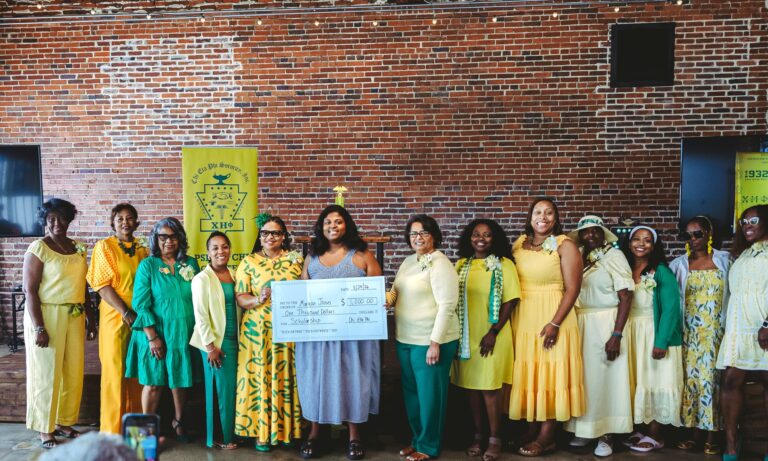
On August 29, 2026, Psi Chi Chi Chapter of Chi Eta Phi Sorority, Inc. celebrated its 10th anniversary and awarded a local nursing student a scholarship. Morgan Jones, the scholarship recipient, is a junior in the Bachelor of Science Nursing program at the University of Tennessee at Chattanooga.
It was the vision of Dr. Tamara Grayson-Eubanks to organize the chapter. On August 6, 2016, Psi Chi Chi chapter was chartered by 14 registered nurses. Since chartering, the chapter’s members began providing community health related services in the greater Chattanooga area.
Chi Eta Phi Sorority, Inc. is a professional organization for professional registered nurses and nursing students. Today, there are 101 graduate chapters and over 9,000 members throughout the United States, Washington D.C. and the U.S. Virgin Islands. The sorority motto is “ Service for Humanity”
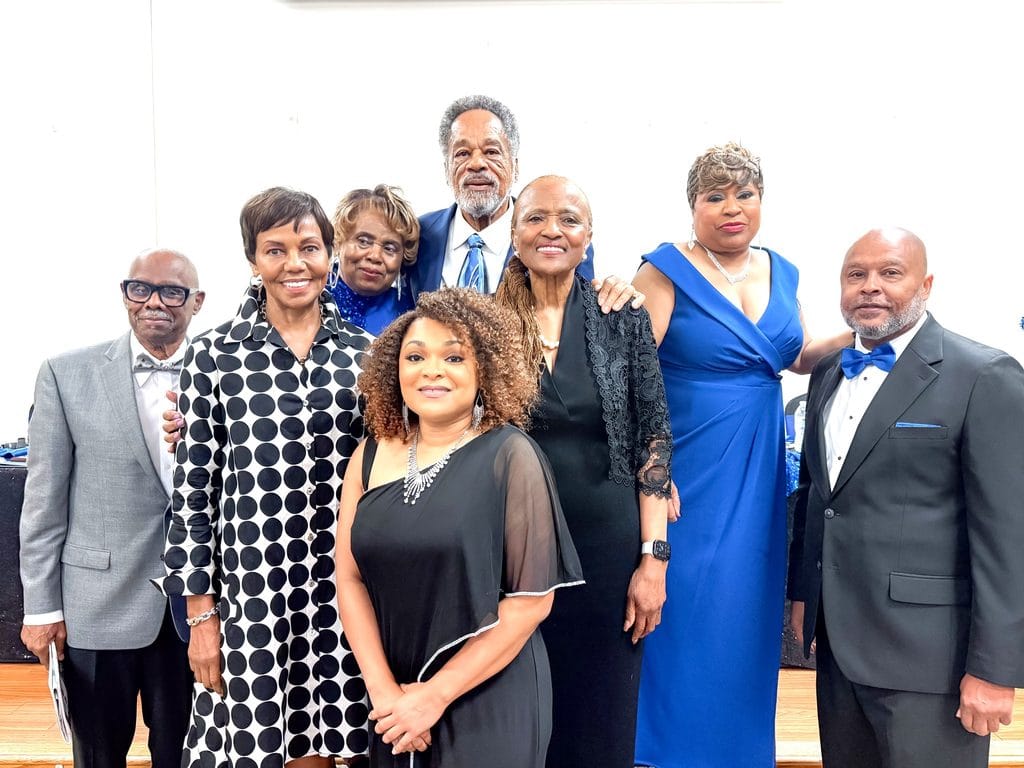
Pictured are: Dora Coker, Mildred Geeter, Deborah Johnson, Dr. J. Nicole Montgomery, President
Vonnie Stone, scholarship recipient Morgan Jones, Dr. Tamara Grayson- Eubanks, Dr. Grace Adeniji-Ilesanmi, Karmesha Colbert, Carolyn Lawhorn, Vice President Leslye Williams-Smith, Tameeka Millener and Mauriska Cash- Munroe. Photograph by: Charles J. Smith
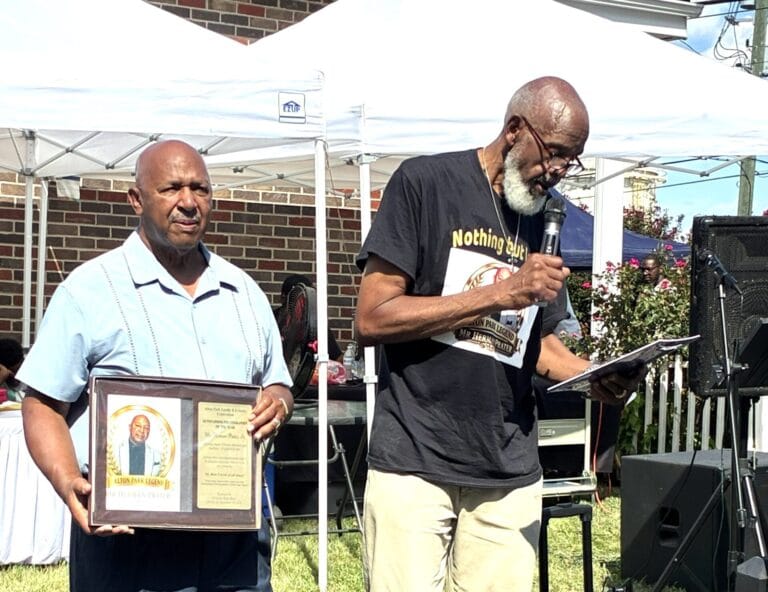
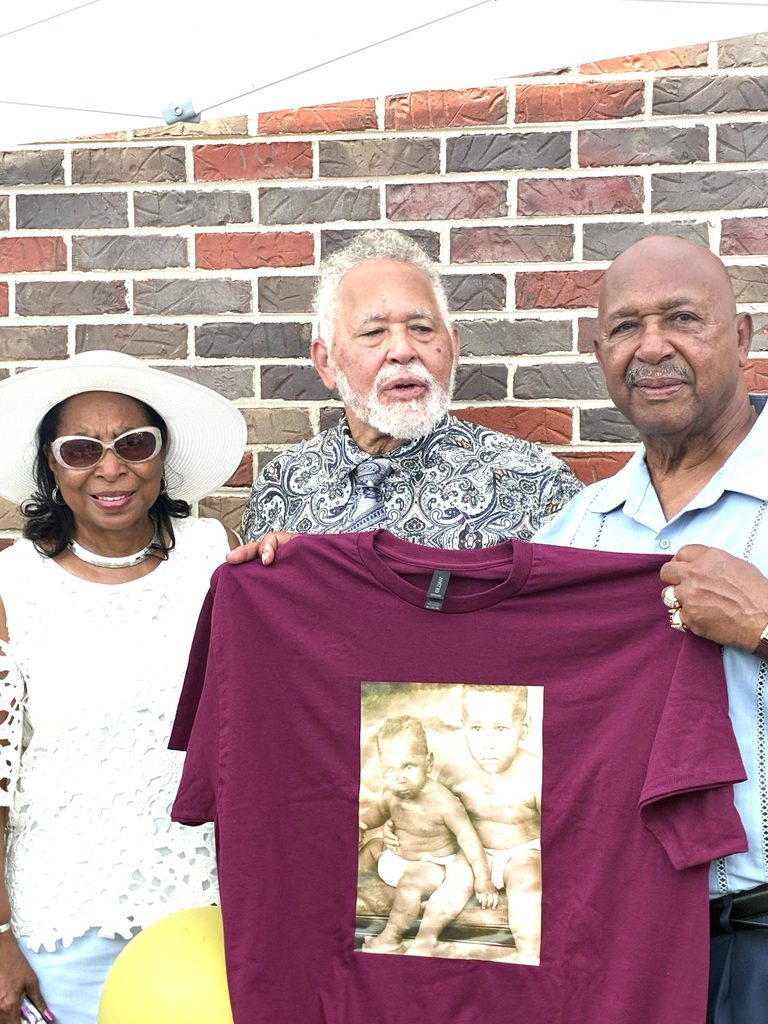
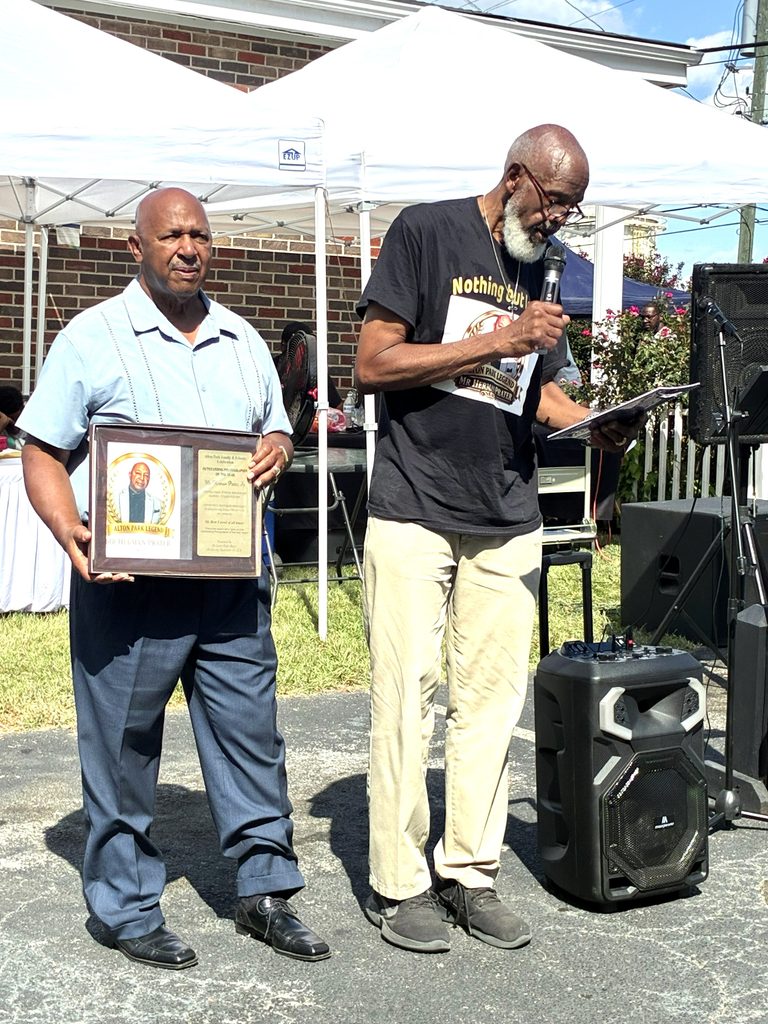
Guests of honor LaWanda Prater and Herman Prater, Sr. enjoy the festivities during the Alton Park Friends & Family Celebration.Herman Prater,Sr., standing with, sister-in-law, Dr. Loretta Prater, and his brother, Dwight Prater, holds t-shirt with photo of he and Dwight as children. (Photos: By Herman Prater, Jr.)At left, Larry High, owner of Bear’s Barber Shop in South Chattanooga, presents longtime Chattanooga photographer Herman Prater, Sr., with the Photographer of the Year Award in recognition of his years of service and dedication to the Alton Park community.
CHATTANOOGA, Tenn. — The Alton Park community came together in record numbers on Sunday, September 13, 2026, for the Alton Park Friends & Family Celebration, a special gathering celebrating fellowship, neighborhood pride and the contributions of longtime community member Herman Prater.
A highlight of the celebration was the recognition of Prater with a Photographer of the Year Award, honoring his years of service and dedication to the Alton Park community.
The recognition was led by Larry High of Bear’s Barber Shop and Terry McCullough of the Oak Hills Neighborhood Association, along with community supporters and sponsors.
High said Prater had not received the community recognition he deserved over the years and felt the time had come to give his longtime friend his flowers and honor his contributions. He described the occasion simply as “Nothing But Love.”
The president of the Oak Hills Neighborhood Association also praised Prater’s commitment, noting that he has been involved in this work since he was 10 years old and deserved recognition for his dedication to the Alton Park community.
The celebration included performances by Yolanda Dave and Denise Dave, with music provided by DJ Lebron. Food was prepared by Miss Faye, while Michelle and Mildred of the Dream Team provided decorations for the event.
Special thanks were extended to the event’s sponsors and supporters, including Chattanooga Old School Cruisers, Mountain View Detail Shop, Super T, and the Alton Park Dream Team.
City and county officials were also recognized during the celebration.
Organizers said Prater’s willingness to serve without seeking financial reward was another reason the recognition was so meaningful. His years of giving back represent the spirit of service, friendship and community pride that the Alton Park Friends & Family Celebration was created to honor.
About the Alton Park Friends & Family Celebration
The Alton Park Friends & Family Celebration brings residents, families, friends and community supporters together to recognize individuals who have contributed to the neighborhood while celebrating the history, fellowship and community spirit of Alton Park.
Welcome to Hispanic Heritage Month, a time to celebrate the history, diversity, achievements and contributions of Latinos whose ancestors came from Spain, Mexico, the Caribbean and Central and South America. This year’s recognition theme, Together, We Are More, pays tribute to community strength, shared values and the collective impact of Hispanic and Latino Americans.
September 15 marks Independence Day for five Latin American countries: Costa Rica, El Salvador, Guatemala, Honduras and Nicaragua. Mexico celebrates its independence on September 16 and Chile on September 18.
To be clear, the word Hispanic is generally a linguistic category, referring to people from the 21 Spanish-speaking countries and territories, including Spain. Latino is more of an ethnic and cultural category, describing people descended from Latin America, including Mexico, the Dominican Republic, Haiti, Cuba and Central and South America. Which term people use to describe themselves is a personal choice.
Although traditional celebrations span a rich mix of cultural activities, I’ve decided to personalize the celebration with snapshots of some Latinos who have directly or indirectly in some way enriched my life – and the lives of others – in immeasurable ways.
Let’s meet them now.
My friend Melody Brown is the best Human Resources professional on the planet. She possesses a God-given compassion for others and unique ability to work with all levels of management and across all cultures. Her talents were on full display during the past few years as she managed the human side of her organization as it migrated through turbulent times of change and uncertainty.
Edwin Martinez. and I shared the backcourt on basketball teams when we both worked at Bell Labs. As a bongo drummer and dancer and always the party animal, he was courageous enough to drive us through the rural countryside during our trip to the Caribbean Islands of Trinidad and Tobago several decades ago. Over the years, he has exuded a love for his native Puerto Rico.
While on a business trip to Germany years ago, Brazilian-born engineer Analise Sacks. invited me to have spaghetti dinner with her husband and baby boy. A year later after she moved to Texas to manage a large group of engineers she invited me to her office to explain how she’s been able to balance work and family – with priority on her family – through the demands of her job responsibilities. My respect for her increased ten-fold when I learned that she rejected a job opportunity for a promotion to a high-level position in China when, after a family visit, she was unwilling to expose her family to the pollution and poor air quality in that city in China.
Alex Casimiro grew up and cut his teeth on the basketball courts in Jersey City, New Jersey. After completing degrees at the University of Miami, he launched a successful career at a Fortune 500 company in Texas before a car accident took his life leaving his lovely wife Carmen and son Alex, Jr. without a father and wife. Arguably one of the most popular leaders in the company, Alex served as a role model and mentor to scores of employees. Despite a busy work schedule, he carved out time to volunteer in his community and coached a local soccer team. He and I spent lots of time sipping beer and talking about his love for his beloved Miami Hurricanes.
A highly regarded design engineer and leader in the Hispanic affinity group, Maria Rosario. found time to teach me on the nuances of Latina culture and connected me with influential leaders in the company and local community. Like others here, she was also very active in the local community and spent weekends teaching math and science to children in her neighborhood.
With Eddie Aguirre an IT specialist, and long-distance truck driver Isreal Rodriquez and their families, we travelled to watch our sons and grandsons play in soccer tournament Dallas, San Antonio, Austin and Memphis. What I learned from these “brothers from different mothers” are lessons you don’t learn in textbook, family unity, mutual respect and a love of friends.
During our trip last year to Argentina, I learned about how the late Eva Perón used her position as the first lady of Argentina to fight for women’s suffrage and improving the lives of the poor. Reading local material about her life and visiting her final resting place are experiences I’ll never forget.
As an admirer, I choose to celebrate Dr. Carlos E. Cortés, a retired history professor who has been a speaker, educator, trainer, and consultant for 45 years. His books include: The Children Are Watching: How the Media Teach about Diversity; his memoir, Rose Hill: An Intermarriage before Its Time; and a book of poetry, Fourth Quarter: Reflections of a Cranky Old Man, received honorable mention for the best book of poetry in the 2017 International Latino Book Awards.
I celebrate the lives of immigrants from south of the southern border who live their daily lives in fear of being unceremoniously snatched from the sanctity and safety of their homes, schools, jobs and deported by Immigration Control and Enforcement agents; the ones whose brown hands – and not those of a sitting president – that were the ones who worked with steel, brick and mortar to build high rises and a soon to be the “big beautiful” ballroom or all ballrooms.
In the end, what, how and who we celebrate is a choice we all must make. As it should be. But for yours truly, this year I choose to depart from tradition and celebrate Melody, Edwin, Analese, Alex, Maria, Eddie, Isreal, Carlos and the common bond of caring for others that connects them. And I also choose to recognize and celebrate the scores of largely unknown immigrants, inarguably the ones who are the sustainers of our economy, our unearned privilege and our way of life.
So please join me in recognizing and celebrating National Hispanic Heritage Month!
Terry Howard is an award-winning writer, a contributing writer with the Chattanooga News Chronicle, The American Diversity Report, The Douglas County Sentinel, Blackmarket.com, recipient of the Dr. Martin Luther King, Jr. Leadership Award, and third place winner of the Georgia Press Award.
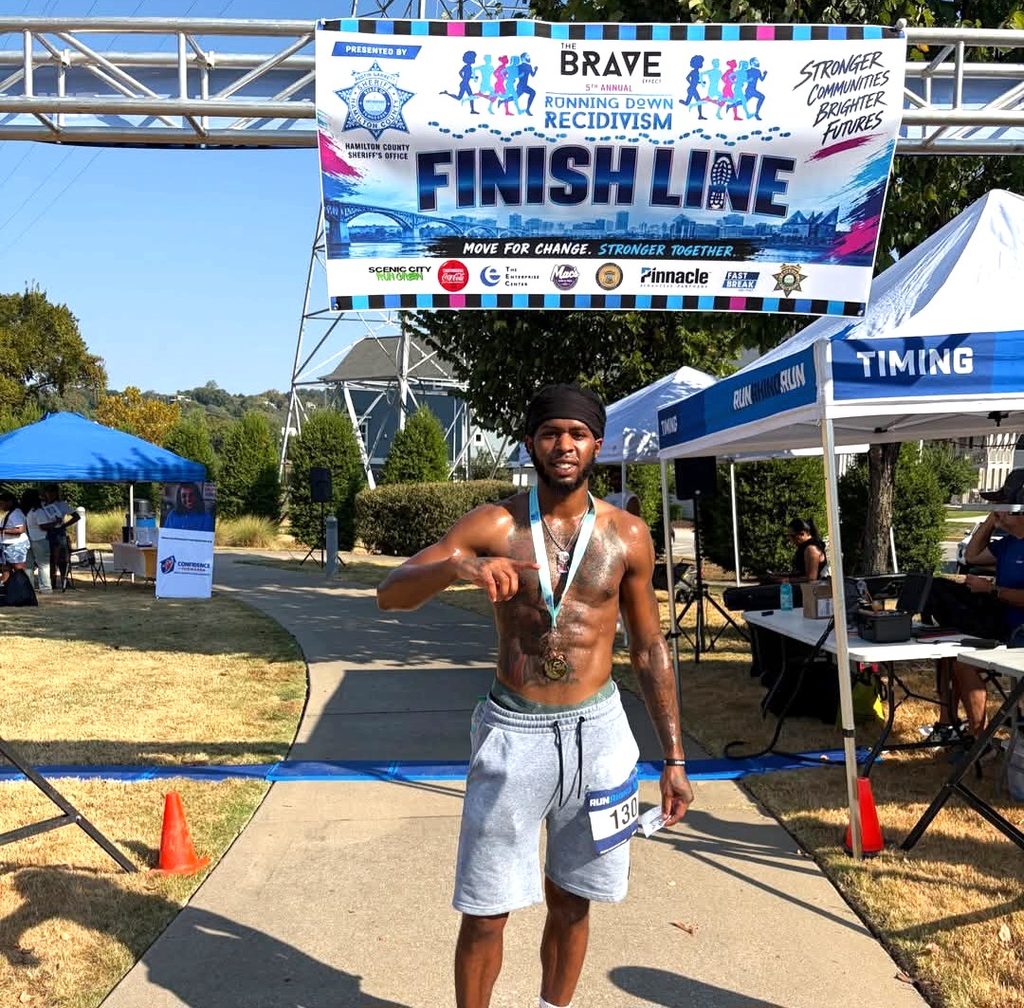
Antonio Hamilton, 27, of Chattanooga crosses the finish line during the fifth annual Running Down Recidivism 5K on Sept. 19 at the Blue Goose Hollow Trail. Hamilton completed the 5K in 25 minutes, 5.33 seconds, with an 8:06 pace. The annual event, organized by The BRAVE Effect, raises awareness and support for successful reentry and efforts to reduce recidivism.
The Chattanooga Police Department joined community members, advocates and local leaders Sept. 19 in support of the fifth annual Running Down Recidivism 5K, an event focused on raising awareness of reentry initiatives and efforts to help returning citizens successfully transition back into their communities.
The 5K began at 9:30 a.m. at the Blue Goose Hollow Trail near 935 Riverfront Parkway. Proceeds and community support from the event benefit The BRAVE Effect, a Chattanooga-based nonprofit that works with individuals returning to the community after involvement with the justice system.
The event also marked the establishment of BRAVE Day through a joint proclamation from Chattanooga Mayor Tim Kelly and Hamilton County Mayor Weston Wamp.
According to the proclamation, the designation reflects a shared city and county commitment to addressing barriers faced by returning citizens, reducing recidivism and promoting public safety through community support, workforce opportunities and pathways to successful reentry.
The Chattanooga Police Department’s participation highlighted the role of law enforcement and community organizations in addressing the factors that can contribute to repeated involvement with the justice system.
“Running Down Recidivism is more than just a race–it is a physical demonstration of our community’s collective stride toward restoration and resilience,” said Joe Jenkins, founder and CEO of The BRAVE Effect and Unshackled Mindset.
Jenkins said the joint proclamation demonstrates the community’s recognition of the work being done to support people returning home from the justice system.
“We are running to ensure that every individual leaving the justice system has the backing to stay out for good,” Jenkins said.
The BRAVE Effect–an acronym for Building Relationships And Valuable Encounters–was founded by Jenkins, whose own experience with incarceration shaped the organization’s mission.
Jenkins spent more than 13 years in the federal prison system after an earlier incarceration in Hamilton County. After his release, he returned to the Chattanooga neighborhoods where he had previously lived and recognized the challenges confronting formerly incarcerated individuals, including family estrangement, employment barriers and unresolved trauma.
Those experiences led Jenkins to develop a reentry program designed to help individuals prepare for life after incarceration.
The BRAVE Effect provides personalized coaching, employment assistance and guidance intended to help participants establish healthy boundaries, relationships and principles for their lives after release. Its programming can begin before an individual’s release from jail.
The organization also has partnered with the Hamilton County Sheriff’s Office, which became the first local jail to host The BRAVE Effect inside its facility. Through the partnership, Jenkins and his staff can work with individuals before their release and help them prepare for the transition back into the community.
Over the years, the organization has expanded its community presence through recreational and community facilities that provide participants with access to support, resources and employment opportunities.
The annual Running Down Recidivism 5K has become one of the organization’s signature community events, bringing together runners, families, advocates, business leaders and supporters around the goal of successful reentry.
Now in its fifth year, the event is held annually on the third Saturday in September.
For The BRAVE Effect, the event represents more than an athletic competition. It serves as an opportunity to bring attention to the challenges facing returning citizens and the community resources available to help them build productive lives.
The Sept. 19 event’s designation as BRAVE Day added a civic dimension to that message, bringing Chattanooga and Hamilton County together in recognition of reentry, community support and efforts to break the cycle of recidivism.
Chattanooga, TN — The Chattanooga Scenic City Chapter of the National Action Network (NAN), the Alton Park Development Corporation, and a coalition of community leaders today issued a State of Emergency for Voter Registration in Hamilton County and surrounding municipalities. With the voter registration deadline of October 5, 2026 rapidly approaching, leaders are calling for urgent action to ensure every eligible citizen is registered to vote in the November 3, 2026 General Election.
This joint declaration is led by Dr. Elenora Woods, a successful dentist and the President of both the Chattanooga Scenic City NAN and the Alton Park Development Corporation, alongside Pastor Kenneth Simpson, Vice President of the Chattanooga Scenic City NAN, and Bishop William Simpson III, also Vice President of the Chattanooga Scenic City NAN.
Organizers warn that thousands of eligible residents remain unregistered or unaware of the approaching deadline, creating a crisis that threatens fair representation and civic participation across the region.
“This is not just a moment — it is a movement,” said Dr. Woods. “Our communities cannot afford to sit out an election that will shape our future at every level of government.”
“We are sounding the alarm,” added Pastor Kenneth Simpson. “Voter registration is a fundamental right, and we are mobilizing every resource to ensure our citizens are empowered and prepared.”
“Every voice matters, and every vote matters,” said Bishop William Simpson III. “We are calling on the entire region to rise to this moment with urgency and unity.”
Elections on the Ballot — November 3, 2026
Citizens will be voting in State, Federal, and Municipal General Elections, including the following seats:
Federal Offices
U.S. Senate
U.S. House of Representatives
State Offices
Governor of Tennessee
State House
Districts 26, 27, 28, 29, and 30
Municipal Offices
Collegedale Commission (2 seats)
East Ridge Mayor
East Ridge City Council
East Ridge Court Clerk
Lake Site Commission
Red Bank Commission (3 seats)
Ridgeside Commission (3 seats)
Signal Mountain Town Council
(4 seats)
Soddy Daisy Commission (2 seats)
Walden Alderman (1 seat)
Community leaders emphasize that these elections will directly impact local development, public safety, education, infrastructure, and economic opportunity.
Emergency Mobilization Efforts In response to the registration crisis, the coalition is launching:
Citywide voter registration drives
Door-to-door canvassing in
underserved neighborhoods
Mobile registration units in
Alton Park, East Lake,
Brainerd, Red Bank,
and Soddy Daisy
Extended evening and
weekend registration events
Youth engagement initiatives at
high schools, colleges, and
community centers
Transportation assistance
for citizens needing help
reaching registration sites
Local organizations, churches,
neighborhood associations, and
civic groups are being asked to join
the mobilization immediately.
Call to Action
All eligible citizens are urged to:
Register to vote before
October 5, 2026
Verify their registration status
Encourage family, friends, and
neighbors to register
Participate in early voting and
Election Day turnout efforts
“Democracy only works when we show up,” said Dr. Woods. “This State of Emergency is a call for unity, urgency, and action.”