Saturday, October 17, 2026
Advertisement
Home Blog Page 132

Blackburn Blasts NEA For Creating “Enemies List” That May Target Concerned Parents

0

WASHINGTON, D.C. – U.S. Senator Marsha Blackburn (R-Tenn.), along with Senators Cynthia Lummis (R-Wyo.), Steve Daines (R-Mont.), and James Lankford (R-Okla.), sent a letter to National Education Association (NEA) President Rebecca Pringle demanding answers on the NEA’s plan to spend $140,000 creating an “enemies list.” The NEA is known to undermine parents, push CRT, and encourage revisionist biology in schools, so this list raises serious concerns about who they plan to target. 

The NEA Is Creating An Enemies List To Target Dissenters 

“We write regarding New Business Item 15 which was considered and adopted during the National Education Association’s (NEA) 2022 Representative Assembly. We are concerned that the NEA reportedly plans to spend $140,000 to create an ‘enemies list’ of groups that have been identified as ‘actively working to diminish a students’ right to honesty in education, freedom of sexual and gender identity, and teacher autonomy,’” the Senators wrote. 

The NEA Is Trying To Keep This Information Hidden From The Public

“Despite each year’s New Business Items being previously published on the NEA’s website for public access, New Business Item 15 is not currently reviewable by the public. An effort that seems designed to protect the NEA from scrutiny,” the Senators wrote. 

View full letter here or below. 

We write regarding New Business Item 15 which was considered and adopted during the National Education Association’s (NEA) 2022 Representative Assembly. We are concerned that the NEA reportedly plans to spend $140,000 to create an ‘enemies list’ of groups that have been identified as “actively working to diminish a students’ right to honesty in education, freedom of sexual and gender identity, and teacher autonomy”.

As you know, the COVID-19 pandemic disrupted the education of millions of children who were forced to learn remotely. We are only beginning to realize the grievous implications of the public health emergency in terms of student learning loss, and the diminished social skills of children. The need to focus on our children, and the work involved with meeting their individual learning needs, has never been more critical.

We are disturbed to know that the nation’s largest labor union, with over 3 million members working in public education, seems more concerned with advancing a ‘social justice’ agenda instead of meeting the needs of children and students who are experiencing catastrophic learning challenges. 

Despite each year’s New Business Items being previously published on the NEA’s website for public access, New Business Item 15 is not currently reviewable by the public. An effort that seems designed to protect the NEA from scrutiny. Accordingly, we are requesting a copy of the contents of New Business Item 15. Moreover, please identify what purposes the ‘enemies list’ will serve, and describe how it will be used. 

Nearly 80% of Tennessee Voters Back Civics Education, While Voters Are Split on National Service Requirement

CHATTANOOGA, TN – According to a poll conducted by Embold Research for the Tennessee Democracy Forum, Tennessee voters strongly supported additional investments in civics education. At the same time, a small plurality of Tennessee voters backed a requirement that young men and women devote a year to national service.

Among all Tennessee voters, 78% supported new federal funding for civics education (46% strongly supported and 32% somewhat supported) and 14% opposed civics education funding.

Voters were asked: “Under a bill currently before Congress, the federal government would provide new funding to state governments and school districts to support quality history and civics education that informs and empowers students to participate in our constitutional democracy. The bill has support from both Democrats and Republicans. Do you support increasing federal funding for civics education in public schools?”

–       95% of Biden 2020 voters (73% strongly support) and 67% of Trump 2020 voters (27% strongly support) backed funding for civics education.

–       New funding for civics education won majority support among rural (75%), suburban (80%) and urban (79%) – with strong support ranging from 39% among rural voters to 58% among urban voters.

–       81% of women and 74% of men backed new federal funding for civics education.

–       Funding for civics education won strong majority support for voters in every age group – 79% among 18- to 34-year-olds; 77% among 35- to 49-year-olds; 79% among 50- to 64- year-olds and 77% among voters 65 years of age or older.

In June, Senators Chris Coons (D-Delaware) and John Cornyn (R-Texas) introduced the Civics Secures Democracy Act which would add $1 billion in annual funding for civics education in K-12 schools and higher education.

A plurality of Tennessee voters, by a margin of 49% to 43%, backed a requirement that all young men and women devote a year to national service.

Voters were asked: “Would you support or oppose requiring all young men and young women in the U.S. to give one year of service to the nation, either in the military forces or in nonmilitary work, here or abroad?”

–       Trump 2020 voters backed a national service requirement by a margin of 57% to 35% (with 31% strongly supporting), while Biden 2020 voters opposed a national service requirement by a margin of 51% to 39% (with 37% strongly opposed).

–       Rural (53% to 39%) and urban (47% to 41%) voters backed a national service requirement, while suburban (45% to 46%) voters were nearly evenly split.

–       Younger voters (18- to 34-year-olds) overwhelmingly opposed a national service requirement (26% to 65%, with 52% strongly opposed), while older voters in every other age group were split or backed national service – 35- to 49-year-olds (46% to 46%), 50- to 64- year-olds (56% to 34%) and 65 years of age or older (65% to 27%)

–       A majority of men (60% to 34%) back a national service requirement, while a majority of women are opposed (39% to 50%).

–       A plurality of white voters (49% to 42%) back a national service requirement, while a majority of black voters are opposed (37% to 53%).

For a discussion of the case for national service, see the Brookings Institution’s “Will America Embrace National Service?” report.

“As Congress continues its investigation of the January 6th investigation, it is important to turn attention to how to rebuild support for democracy in Tennessee and in the nation,” said Emily Eichenthal, Coordinator for the Tennessee Democracy Forum. Leaders on both the left and the right have looked at both civics education and the idea of making national service a norm as means to that end. That’s why we wanted to look at where Tennesseans stood on these ideas.”

Religious Liberty Has a Long and Messy History – and There is a Reason Americans Feel Strongly About It

James Hudnut-Beumler

Professor of American Religious History, Vanderbilt Divinity School

James P. Byrd

Professor of American Religious History, Vanderbilt Divinity School

At the close of its recent term the Supreme Court ruled on the cases of Carson v. Makin and Kennedy v. Bremerton School District, rekindling controversy over one of the most enduring issues in American history: religious liberty. Another of this term’s blockbuster decisions, Dobbs v. Jackson Women’s Health Organization, underlines the fact that religious beliefs and actions in the public realm matter. Whether the issue concerns religion and education, prayer or reproduction, Americans feel strongly about their religious liberties.

The Carson case came from Maine, where areas with too few students to justify a public high school used public money to pay private schools to educate their students. Under its policy, Maine only allowed nonsectarian private schools or nearby public school districts to receive the funds. Parents who wished to send their students to religious schools argued that the policy discriminated based on religion. The court’s majority agreed, ruling that denying state support to students attending religious schools because their schools were religious violated the First Amendment’s protections on religious freedom.

In the Kennedy case, the court chipped away at decades of rulings that deemed school employees leading prayer an unlawful establishment of religion because it entangled church and state in the act. In the court’s revised view, coach Joseph Kennedy possessed a First Amendment right to privately pray after football games on the 50-yard line, permissible even if students joined him in praying.

Religious liberty is one of the earliest civic values associated with the United States, yet defining and defending it has proved a centurieslong process. Both sides of the courts’ divided opinions claimed to be speaking for religious liberty. This is possible because religious liberty under the Constitution contains both a right to freely exercise religion and a right not to be coerced via the state into accepting someone else’s religious practices.

Roger Williams founded Providence, R.I., as a refuge for people wanting religious liberty. AP Photo/Steven Senne

The founders on religious freedom

The Constitution’s First Amendment, adopted in 1791, defended the free exercise of religion and prohibited the founding of a national church. The leading founders on religious liberty and church-state issues were two Virginians, Thomas Jefferson and James Madison.

The problem with religious beliefs, Madison believed, was that most often people could not agree on them. Governments, he argued, therefore had no business supporting religion.

Religion could unite people, but most often it did the opposite, dividing people into opposing sides, each believing their side was sacred. In Madison’s view, therefore, religious differences made it harder to run a government for the common good.

Early American religious liberty

Over 150 years before religious liberty entered the Constitution, however, it lived in the mind and conduct of Roger Williams, a Puritan educated at the University of Cambridge, who challenged Puritan views on religious liberty and the relationship between church and state.

No sooner had Williams landed in New England than he began challenging Puritan authorities, saying that civil courts should not enforce religious belief and that the right to worship (or not) according to one’s own conscience was fundamental. He noted that the American Indians, to whom his fellow Christians considered themselves superior, were often better people than the English.

These beliefs terrified and infuriated Puritan leaders, who promptly banished radical Roger from the Massachusetts Bay Colony. He later resurfaced in what became the colony of Rhode Island, where he helped to start a new settlement called Providence, which, unlike Puritan-controlled Massachusetts Bay, would allow religious liberty for all who lived there.

Although the Puritans thought Williams’ ideas were dangerous, Williams believed the greatest danger was in government trying to legislate religion. He only had to point to the fact that more blood had been shed over religion than just about any issue, with Protestants fighting Catholics, Christians fighting Muslims, and European empires trying to forcibly convert Indigenous Americans in so-called “missions.”

The slow path to religious liberty for all

Yet state-sponsored religion died hard. Massachusetts was the last state to abandon the establishment of a church, in 1833. Even after all the states had abandoned their tax-supported “official” denominations, states continued to police religious and moral conduct.

Moreover, the states themselves often forced Christianity, and particularly Protestantism, onto the public in school and public policy. This continued until the First Amendment’s prohibitions on government religion was extended to the states via the 14th Amendment. Two Supreme Court cases involving Jehovah’s Witnesses’ refusing to salute the flag – Minersville School District v. Gobitis (1940) and West Virginia v. Barnette (1943) – were important in this. In other words, the right to religious liberty, in the sense of being allowed to refrain from an activity due to one’s religious convictions, is less than a long lifetime old.

Up through the Vietnam War, if a man applied to be a conscientious objector, draft boards examined whether he came from a denomination that objected to all participation in war – Mennonites or Quakers, for example. Objection to a particular war, or assertion of one’s own sincerely held beliefs, did not get one off the hook for draft induction.

This orientation changed beginning with the Supreme Court’s recognition of individual conscience in two cases: Welsh v. United States (1970) and Gillette v. United States (1971). The rulings came too late to keep Muhammad Ali from going to jail when he resisted the draft in 1967. But they relocated the locus of conscience to individuals, provided their objections were sincerely held.

Individual consciences in collective conflict

In subsequent decades American religious life has itself become more centered on individuals and less on the teachings of religious traditions. Courts have likewise focused more on particular people’s definitions of their own sincerely held beliefs. These shifts are both very American – as illustrated in the example of Roger Williams – and susceptible to greater social division because citizens’ and groups’ beliefs may take them in opposite directions.

Religious liberty in America is perpetually a work in progress. The free exercise and establishment clauses of the First Amendment live in perpetual tension – two goods that must be balanced. The Supreme Court’s recent religious liberty rulings are fully a part of America’s long struggle to define religious freedom and only the most recent attempt to achieve a balance between goods. (The CONVERSATION)

Vanderbilt Divinity School is a member of the Association of Theological Schools.

The ATS is a funding partner of The Conversation U.S.

What Really Drives Anti-abortion Beliefs? Research Suggests It’s a Matter of Sexual Strategies

Jaimie Arona Krems

Assistant Professor of Psychology, Oklahoma State University

Martie Haselton

Professor of Psychology, University of California, Los Angeles

Many people have strong opinions about abortion – especially in the wake of the U.S. Supreme Court decision that overturned Roe v. Wade, revoking a constitutional right previously held by more than 165 million Americans.

But what really drives people’s abortion attitudes?

It’s common to hear religious, political and other ideologically driven explanations – for example, about the sanctity of life. If such beliefs were really driving anti-abortion attitudes, though, then people who oppose abortion might not support the death penalty (many do), and they would support social safety net measures that could save newborns’ lives (many don’t).

Here, we suggest a different explanation for anti-abortion attitudes – one you probably haven’t considered before – from our field of evolutionary social science.

Why do people care what strangers do?

The evolutionary coin of the realm is fitness – getting more copies of your genes into the next generation. What faraway strangers do presumably has limited impact on your own fitness. So from this perspective, it is a mystery why people in Pensacola care so strongly about what goes on in the bedrooms of Philadelphia or the Planned Parenthoods of Los Angeles.

The solution to this puzzle – and one answer to what is driving anti-abortion attitudes – lies in a conflict of sexual strategies: People vary in how opposed they are to casual sex. More “sexually restricted” people tend to shun casual sex and instead invest heavily in long-term relationships and parenting children. In contrast, more “sexually unrestricted” people tend to pursue a series of different sexual partners and are often slower to settle down.

These sexual strategies conflict in ways that affect evolutionary fitness.

The crux of this argument is that, for sexually restricted people, other people’s sexual freedoms represent threats. Consider that sexually restricted women often get married young and have children early in life. These choices are just as valid as a decision to wait, but they can also be detrimental to women’s occupational attainment and tend to leave women more economically dependent on husbands.

Other women’s sexual openness can destroy these women’s lives and livelihoods by breaking up the relationships they depend on. So sexually restricted women benefit from impeding other people’s sexual freedoms. Likewise, sexually restricted men tend to invest a lot in their children, so they benefit from prohibiting people’s sexual freedoms to preclude the high fitness costs of being cuckolded.

Benefiting from making sex more costly

According to evolutionary social science, restricted sexual strategists benefit by imposing their strategic preferences on society – by curtailing other people’s sexual freedoms.

How can restricted sexual strategists achieve this? By making casual sex more costly.

For example, banning women’s access to safe and legal abortion essentially forces them to endure the costs of bearing a child. Such hikes in the price of casual sex can deter people from having it.

This attitude is perhaps best illustrated by a statement from Mariano Azuela, a justice who opposed abortion when it came before Mexico’s Supreme Court in 2008: “I feel that a woman in some way has to live with the phenomenon of becoming pregnant. When she does not want to keep the product of the pregnancy, she still has to suffer the effects during the whole period.”

Force people to “suffer the effects” of casual sex, and fewer people will pursue it.

Also note that abortion restrictions do not increase the costs of sex equally. Women bear the costs of gestation, face the life-threatening dangers of childbirth and disproportionately bear responsibility for child care. When women are denied abortions, they are also more likely to end up in poverty and experience intimate partner violence.

No one would argue this is a conscious phenomenon. Rather, people’s strategic interests shape their attitudes in nonconscious but self-benefiting ways – a common finding in political science and evolutionary social science alike.

Resolving awkward contradictions in attitudes

An evolutionary perspective suggests that common explanations are not the genuine drivers of people’s attitudes – on either side of the abortion debate.

In fact, people’s stated religious, political and ideological explanations are often rife with awkward contradictions. For example, many who oppose abortion also oppose preventing unwanted pregnancy through access to contraception.

From an evolutionary perspective, such contradictions are easily resolved. Sexually restricted people benefit from increasing the costs of sex. That cost increases when people cannot access legal abortions or prevent unwanted pregnancy.

An evolutionary perspective also makes unique – often counterintuitive – predictions about which attitudes travel together. This view predicts that if sexually restricted people associate something with sexual freedoms, they should oppose it.

Indeed, researchers have found that sexually restricted people oppose not only abortion and birth control, but also marriage equality, because they perceive homosexuality as associated with sexual promiscuity, and recreational drugs, presumably because they associate drugs like marijuana and MDMA with casual sex. We suspect this list likely also includes transgender rights, public breastfeeding, premarital sex, what books children read (and if drag queens can read to them), equal pay for women, and many other concerns that have yet to be tested.

No other theories we are aware of predict these strange attitudinal bedfellows.

Behind the link to religion and conservatism

This evolutionary perspective can also explain why anti-abortion attitudes are so often associated with religion and social conservatism.

Rather than thinking that religiosity causes people to be sexually restricted, this perspective suggests that a restricted sexual strategy can motivate people to become religious. Why? Several scholars have suggested that people adhere to religion in part because its teachings promote sexually restricted norms. Supporting this idea, participants in one study reported being more religious after researchers showed them photos of attractive people of their own sex – that is, potential mating rivals.

Sexually restricted people also tend to invest highly in parenting, so they stand to benefit when other people adhere to norms that benefit parents. Like religion, social conservatism prescribes parent-benefiting norms like constricting sexual freedoms and ostensibly promoting family stability. In line with this, some research suggests that people don’t simply become more conservative with age. Rather, people become more socially conservative during parenthood.

Restricting everyone to benefit yourself

There are multiple answers to any “why” question in scientific research. Ideological beliefs, personal histories and other factors certainly play a role in people’s abortion attitudes.

But so, too, do people’s sexual strategies.

This evolutionary social science research suggests that restricted sexual strategists benefit by making everyone else play by their rules. And just as Justice Thomas suggested when overturning Roe v. Wade, this group may be taking aim at birth control and marriage equality next. (The CONVERSATION)

Smooth Transition: New Program Prepares Men of Color for Life at UTC

0

By Shawn Ryan 

Alvin Bolden was born 21 minutes before his twin Albert. It might not seem like much, but Alvin insists it is.

“Twenty-one minutes. Makes a difference,” he said while Albert sat next to him with an expression of “Yeah, right. Heard this before.”

The fraternal twins are connected by more than just birthdays and DNA. This fall, they’ll leave their home in Dyersburg, Tennessee, to be freshmen at the University of Tennessee at Chattanooga. Alvin will major in electrical engineering while Albert will pursue a degree in graphic design.

Any nerves?

“A tiny bit,” Alvin said, holding his index finger and thumb a tiny bit apart. “If I’m not confident about it, I know I’ll be extremely scared. So I’ve just got to be confident.”

To build confidence for their new adventure, the twins enrolled in MOC Academy, a newly created, year-long program for male students of color at UTC. National numbers show men of color don’t do as well enrolling and staying in college, said Jason Harville, assistant director of Student Success Programs.

“It’s the trend nationwide, so it’s not unique to us,” he said. “Looking at those numbers and knowing that a diverse campus is important, increasing those numbers is important.”

MOC Academy was developed to address the issue, he explained.

“When these males see this program and hear about this program, it shows that the University is placing importance on them being here,” Harville said.

When they heard about MOC Academy, the Bolden twins had the same first impression.

“Honestly, it just seemed like a good idea. A really good idea. I had a good vibe from it,” Alvin said.

“It’s the same thing that you said,” Albert added, pointing at his brother. “Just having a good vibe about it. Also, one thing you didn’t mention is that there was a little bit of pestering from our parents.”

With 13 students, the program started in a virtual format in late June before moving to the UTC campus on July 9. The on-campus experience includes a daily course that helps the students “transition into UTC and focuses on many topics, including time management, academic success and diversity,” Harville said.

Incoming first-year University of Tennessee at Chattanooga students Albert and Alvin Bolden, part of the inaugural MOC Academy, stand outside Patten House.

“This version of the course covers all these topics but is taught keeping in mind the lens through which the MOC Academy scholars will see the campus as males of color.”

Rooming together in Stagmaier Hall housing, the students also have time to hang out, a key part of the program.

A group of current UTC male students of color are helping MOC Academy members with advice, mentorship and simple friendship. Their main goal, mentors say, is to show the new students that they’re not alone.

Getting involved in campus organizations and activities, not being afraid to meet new people and knowing about support services are some of the major lessons that MOC Academy students need to know.

“I want to make them feel welcome, make them feel like they have community here,” said mentor Juan Aponte, a senior in political science.

Coming to UTC from his home in Puerto Rico was Aponte’s first time away from home, and he needed help to adjust.

“I didn’t have any family, didn’t know anybody here, and that community building made me feel like I had a place to go,” he said. “Just talk to someone; that really impacted me as a freshman. And it made me seek these opportunities out.”

Donald Webb, a sophomore in education and a MOC Academy mentor, said getting involved in campus organizations such as the Black Student Alliance during his freshman year made him more comfortable.

“I’m very introverted, so I made myself a promise to get out there,” he said.

Mentor Ayub Farah, a junior in exercise science, said he hopes to help those in MOC Academy “find a safe space” and avoid some of the issues he faced after moving from Memphis to attend UTC.

“Being able to navigate scholarships, academia, especially in a predominantly white society, you’re not that comfortable sometimes. So having a safe space is really important,” he said.

Through MOC Academy, Alvin (the “oldest” Bolden twin) said he has enjoyed “meeting new people and getting away from home a little bit, but also I want to grow as a person.”

“I want to get more experience. I want to learn more. I want to be able to apply the skills that I have or that I will learn in order to help others,” he said.

“Picked the words right out of my mouth,” Albert added.

“It’s Changing You” – In the Huddle

TODAY’S SCRIPTURE:

(2 Corinthians 12:9, NIV)

But HE said to me, “My grace is sufficient for you, for MY power is made perfect in weakness.”

TODAY’S WORD:

The apostle Paul asked three times for GOD to remove something that was deeply troubling to him. But GOD’s response to Paul was, “My grace is sufficient for you.” GOD’s grace doesn’t mean HE’s going to remove the challenge or that the opposition will let up. It means HE’s going to increase your strength, so that what you’re up against becomes easier. Now you can handle what you couldn’t handle before. That coworker who used to get on your nerves hasn’t changed, but you’ve changed. You don’t let him steal your joy. The obstacle isn’t changing, but it’s changing you. That’s GOD’s plan working. You may have situations you’ve been dealing with for a long time, and you’re tired and discouraged. Right now, grace is coming on you in a new way. GOD is breathing strength into you, fresh vision, fresh passion, and a second wind, so you can stand strong and outlast what’s trying to stop you. Receive HIS grace. It’s sufficient for all you need.

PRAYER FOR TODAY:

FATHER, thank YOU that YOU know what is best for me, and YOUR grace is sufficient for everything I’m facing. Thank YOU that it is serving YOUR plan for my life. Whether it ever changes or not, I declare that I’m not just going to go through it, but I’m going to grow through it. In JESUS’ Name, Amen.

The Power of Your Paycheck is Shrinking too

By Robin Smith

No, it’s not your imagination. Your paycheck’s buying power is shrinking just like package sizes of cereal, toothpaste and most other retail items that cost the same for less volume in the phenomena, “Shrinkflation.”

Data released by the US Bureau of Labor and Statistics document that inflation in June reached 9.1%, another historical high breaking the record set over forty years ago. To the average person, a 3.6% decline in wages has been compounded by skyrocketing prices over the last 18 months. That translates into an estimated $3,400 loss per worker and a $6,800 loss in two-worker homes.

Plainly stated, the average worker is being taxed twice with lost wages and lost buying power with individuals sustained by government welfare or support are seeing their supplemental assistance having less of an impact due to the rising costs of goods for less volume of the same.

Since this time in 2021, the prices of critical staples to live and work are up. Fuel oil is up over 98%; gasoline has more than doubled in price per gallon; natural gas utilities are up almost 39% and electricity is up just under 14%; food to cook at home is up over 12%; transportation costs has climbed almost 9% and the cost of rent has risen just under 6%, just to name a few essentials in the basket of good and services measured to gage inflation.

If you’re a worker, no one has received wage increases to offset these massive cost increases. If you have relied on the federal stimulus checks during the pandemic over the last two years to give your budget some cushion, the $1,200, $600 and $1,400 checks totaling $3,200 still doesn’t cover your losses.

And, sadly, things appear to be headed from inflation to recession, according to Dr. Tyler Goodspeed, a Kleinheinz Fellow at the Hoover Institution at Stanford University specializing in economics. Goodspeed declared, “I think we’re in serious trouble,” when appearing on the business show last week, “Mornings with Maria,” to address the runaway inflation that has now become “a growth problem” as the American economy is shrinking.

What would a recession mean to the average American?

A recession is loosely defined as two consecutive quarters with a significant decline in the overall economic activity and production. Symptoms and signs of this malady are an increase in consumer debt, as in the use of credit card debt, interest rates (or the cost of borrowing others’ money) increase, manufacturing slows, typically because consumer spending has slowed due to increased prices and fear of the economic downturn and unemployment increases because jobs are cut due to the factors just mentioned. The two most obvious that harm average workers will be jobs cut and increases in prices.

So, how do you deal with recession? Get out of debt as quickly as possible, create an emergency fund for expenses, be thrifty on your purchases, prioritizing needs and avoiding impulse buys and, finally, be a reliable employee. 

Bad policies hit our paychecks! 

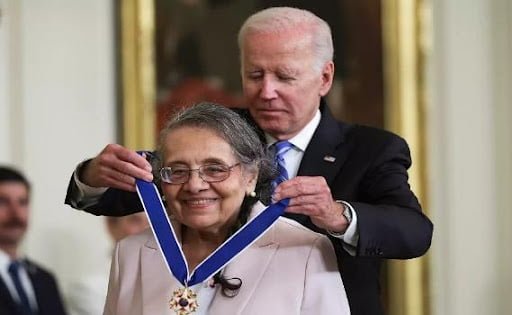
Civil Rights Icon Diane Nash Awarded Presidential Medal of Freedom

By Terry Howard

Diane Nash….what else don’t we know?

When I got the news last week that President Biden recently awarded the Presidential Medal of Freedom to civil rights icon Diane Nash, I called an equally elated John Edwards, III, publisher of the Chattanooga News Chronicle having recalled a conversation I had with him a while ago about his experiences with Diane Nash who, along with the late John Lewis, led the 1960 Nashville sit-ins, among the most successful student led sit-ins in history. 

Said John, whose dad was an influential pastor and civil rights leader in Tennessee whose own church was bombed by racists, “I was only 12 years old when I got the approval from my father to take part in the sit-ins. Dad dropped me off at the church early each morning where I sat on the front row and took my marching orders from Lewis and Nash. I was so enamored with these two Fisk University students and the courage they imbodied.”  

Diane Judith Nash, what else don’t we know?

Although not as prominent as other leaders in the American movement for civil rights, Nash’s role as a leader has few parallels. Her campaigns were among the most successful of the era and includes organizing the first successful civil rights campaign to integrate lunch counters in Nashville and the Freedom Riders to desegregated interstate travel.

“It was clear to me that if we allowed the Freedom Rides to stop at that point, just after so much violence had been inflicted, the message would have been that all you have to do to stop a nonviolent campaign is inflict massive violence,” said Nash in the 2010 documentary Freedom Riders.

Originally fearful of jail, Nash was arrested dozens of times for her activities and spent 30 days in a South Carolina jail after protesting segregation in Rock Hill in 1961. In February that year, Nash served jail time in solidarity confinement with the “Rock Hill Nine,” nine students imprisoned after a lunch counter sit-in. They were sentenced to pay a $50 fine for sitting at a whites-only lunch counter. Nash said to the judge, “We feel that if we pay these fines we would be contributing to and supporting the injustice and immoral practices that have been performed in the arrest and conviction of the defendants.” 

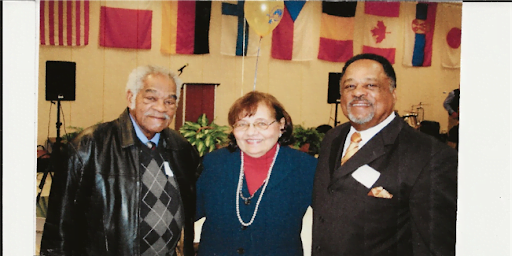
Photo: From left, Reverend John L. Edwards, Jr., Diane Nash, and John L. Edwards, III

In 1962, although four months pregnant with her daughter Sherri, Nash faced a two-year prison sentence in Mississippi for “contributing to the delinquency of minors” whom she had encouraged to become Freedom Riders. Despite her pregnancy, she was ready to serve her time with the possibility of her daughter’s being born in jail. 

“I believe that if I go to jail now, it may help hasten that day when my child and all children will be free, not only on the day of their birth but for all their lives.” She was sentenced to 10 days in jail in Jackson, Mississippi, where she spent her time there washing her only set of clothing in the sink during the day and, she recalls,  “listening to “cockroaches skitter overhead at night”.

Shocked by the 1963 church bombing in Birmingham that killed four young girls, Nash and activist James Bevel committed to raising a nonviolent army in Alabama. Their goal was the vote for every Black adult in Alabama, among other southern states that had effectively excluded Blacks from the political system since disenfranchising them at the turn of the century. 

Diane Nash is featured in the documentary film series Eyes on the Prize (1987) and the 2000 series A Force More Powerful about the history of nonviolent conflict and featured in the PBS American Experience documentary on the Freedom Riders. Nash is credited for her work in David Halberstam’s book about the Nashville Student Movement, The Children, as well as Lisa Mullins’ Diane Nash: The Fire of the Civil Rights Movement.

In addition, she has received the Distinguished American Award from the John F. Kennedy Library and Foundation (2003),https://en.wikipedia.org/wiki/Diane_Nash – cite_note-JFK_Award-29 and the LBJ Award for Leadership in Civil Rights from the Lyndon Baines Johnson Library and Museum (2004). 

In 2013, Nash expressed her support for Barack Obama, while also sharing her misgivings about his continuing involvement in the wars in Iraq and Afghanistan. While encouraged by the positive implications associated with electing the first Black president of the United States, Nash still believes that the true changes in American society will come from its citizens, not government officials. 

Although she attended the Selma 50th anniversary celebrations in March 2015, Nash was noticeably absent from the restaging of the 1965 Selma march. When asked about her refusal to participate in the historic event, Nash cited the attendance of former president George W. Bush. Nash, who has dedicated her life to pursuits of peace and nonviolence, declared that Bush “stands for just the opposite. For violence and war and stolen elections, and his administration had people tortured.” 

Today Diane Nash remains humble and reflective. 

“It took many thousands of people to make the changes that we made, people whose names we’ll never know. They’ll never get credit for the sacrifices they’ve made but I remember them.” 

But your name, Diane Nash, is one we’ll never forget. 

 © Terry Howard is an award-winning writer and storyteller. He is also a contributing writer with the Chattanooga News Chronicle, The American Diversity Report, The Douglas County Sentinel, Blackmarket.com, Hometown Advantage, co-founder of the “26 Tiny Paint Brushes” writers’ guild, recipient of the 2019 Dr. Martin Luther King, Jr. Leadership Award and 3rd place winner of the 2022 Georgia Press Award.

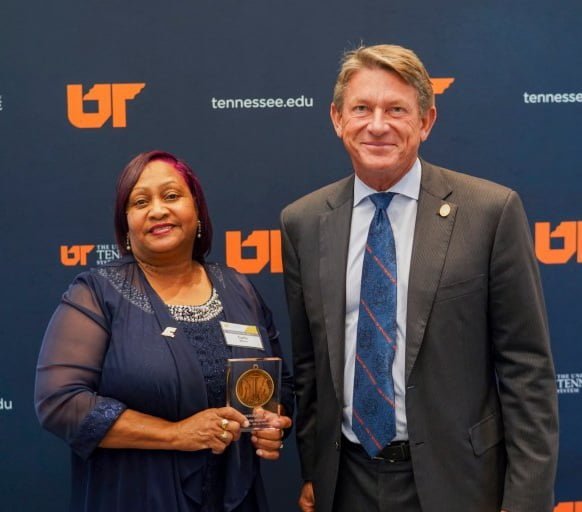
Carla Mason Honored with UT President’s Award

0

By Charlie Reed 

When Carla Mason asks how you’re doing, she really wants to know.

She waves and smiles at everyone she encounters working on the campus of the University of Tennessee at Chattanooga.

But she can also sense when someone is down and could do with some cheer.

“When I see people hurting, I want to go up to them and talk to them and you know, just say a nice thing. A nice word goes far; a nice word goes very far. And people need that. They really do,” said Mason.

Her warmth is palpable. Her hugs are therapeutic. And her work as a senior custodian in Race and Hooper halls is outstanding.

So outstanding that she won this year’s UT President’s Award in the “Excel in All We Do” category. Mason was nominated by UTC Vice Chancellor for Finance and Administration Tyler Forrest and was selected for the prestigious award by a state committee, standing out among a pool of candidates from across the UT system.

“Carla is an outstanding team member,” Forrest said. “Her contributions to the University go far beyond the exceptional job she does as a senior custodian. She brings a positive attitude and great outlook to work every day. She is always ready for a good laugh, serious conversation, or anything someone wants to discuss. It is truly a pleasure knowing Carla.”

Mason said the feeling is mutual.

“We just bonded,” said Mason, who started at UTC in 2015. “He’s always talked about how good I kept up everything. But I had no idea he was thinking that I was above and beyond.”

Mason didn’t know she had been nominated, so when Forrest delivered the good news, she felt like “a kid on Christmas morning.”

“I was in awe. I could not believe that I even qualified for such a thing. It was humbling, and I really am grateful,” said the 60-year-old Chattanooga native.

Mason won’t take credit for her work ethic or sweet nature.

“It’s not me at all. It’s the Christ within me that shows up and shows out evidently, because I just do my little job, mind my own little business,” said Mason, who sometimes takes her break in Danforth Chapel.

Sometimes her grandson, Ledarrius Mason, a UTC business major, comes to visit her after or before classes.

But her positive impact on UTC goes far beyond her assigned duties, according to UTC Chancellor Steven R. Angle. During the onset of the COVID-19 pandemic, Mason was “one of our frontline heroes for her commitment to protecting others and providing leadership during uncharted waters,” he wrote in her nomination for the President’s Award. “Anyone who interacts with Carla is left feeling valued and important.”

Mason was previously honored with the Chancellor’s Blue Ribbon Award in 2018, given to those who go above and beyond the call of duty at UTC.

Whether she prays or reads passages from the Bible during her short respites throughout her workday at UTC–which starts at 6 a.m.–Mason said she stays positive and stays driven by her faith.

“I ask the Lord every day to let His light shine in me,” she said, “and you know what? Some people say to me, ‘There’s something different about you.’ And I’m like, ‘Yeah, the holy spirit.’”

Mason, the youngest of 11 children, grew up not far from the UTC campus in Alton Park. Her grandfather was a preacher and she was raised in the church. She now attends Greater Community Church of Chattanooga Church of God In Christ.

She and her husband, Leroy Mason, who she calls her best friend, met in elementary school and started dating by high school.

“I thought he looked like Michael Jackson,” said Mason, a former majorette at Howard High School.

They’ve been together ever since and have four children, 12 grandchildren and three great-grandchildren.

“Family is everything to me. We’re so close,” said Mason, whose house serves as a daily gathering spot.

Her only daughter and “other best friend,” Calebra Mason, was her date for the award ceremony in Knoxville.

“I’m so proud of her. She really is the best,” Calebra said of her mom.

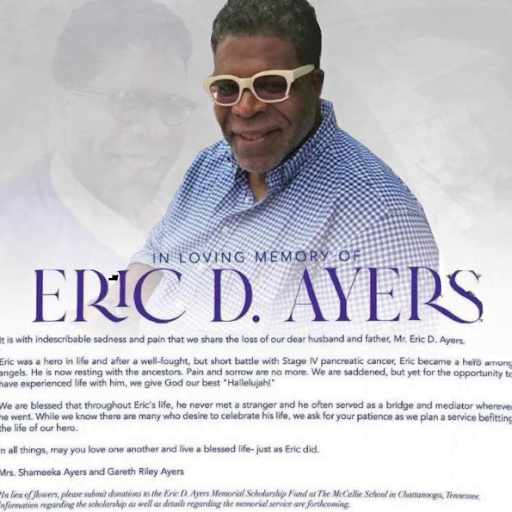
Ayers Loses Battle to Cancer

0

Eric Dwyane Ayers, 58, passed away at his home Friday, June 24th in Atlanta, GA after a short, courageous battle with cancer.  Wife, Shameeka and son, Gareth were by his side. 

Eric was a 1981 graduate of McCallie School in Chattanooga, Tennessee and  attended Morehouse College, Atlanta, GA.

He was preceded in death by his father, Berry Lee Ayers, Chattanooga; and grandparents Richard Lee and Sarah Ayers of Triana, AL.

Continuing his legacy and holding cherished memories are survivors:  wife, Shameeka (Shy) Ayers; son Gareth Riley Ayers of Washington D.C.; mother, Mary F. Ayers, Chattanooga, TN; brother, Danny Lee Shaver Ayers and wife, Crystol, Mullica Hill, New Jersey.

Final services were held in Atlanta, Georgia.