Saturday, October 17, 2026
Advertisement
Home Blog Page 125

Black Farmers Feel Left Out of Medical Marijuana System 

By Paul Nutcher, The Ledger 

LAKELAND, Fla. (AP) _ Nearly six years ago, the Florida Legislature set aside a medical marijuana license for a Black farmer like John Allen to join the burgeoning industry. 

But the license still has not been issued by the Florida Department of Health, which regulates the industry. 

Twenty-two licenses have been issued but none so far to a Black farmer, despite the aim of the Legislature in 2016. In the intervening years, the licenses have generated enormous revenues from some of the license holders _ frustrating the Black farmers who wonder how they can catch up. 

“The license should have been released going on five, now six years ago, where a lot of the white farmers are now $150 million to $175 million ahead of the game versus the Black farmers that have to start over at zero and are behind the ball again and the medical marijuana industry,” said Raymond Warthen, co-founder and president of Orlando-based Zion Infinite Farms, which has applied for a license. “It’s unfortunate.” 

Meanwhile, several top marijuana cultivators have gained sizable market share within Florida’s $1.2 billion medical marijuana treatment center (MMTC) industry, which is poised to reach $2 billion in annual sales by 2025. 

A report in MJBiz Daily in June 2021 said, “The 14 active MMTC license holders operate 347 dispensaries with three _ Trulieve, Surterra, Curaleaf _ controlling more than two-thirds of the market.” 

The top six medical marijuana treatment centers account for nearly 90% of all sales. The health department’s Office of Medical Marijuana Use lists 22 licensed treatment centers. 

Florida Black farmers like Allen have struggled to participate in the medical marijuana industry because of laws they say are too narrowly focused for them to get into the business, with the seed-to-sale vertically integrated business requirement as one of the big ones. 

Cited by TheCounter.org, a nonprofit independent news organization covering issues from farming to food, Roz McCarthy, director of Minorities for Medical Marijuana in Orlando, said the full-service requirement can be a financial hurdle. 

“That $146,000 tag (application fee) is also just a fraction of the total costs,” she said. “Attorney fees, hiring technical writers and consultants, along with sourcing real estate for cultivation, processing, and dispensing locations, could run applicants at least half a million dollars.” 

And while many have pointed to the current process to obtain a treatment center license as unfair and discriminatory, the health department has since opened up another window for applications. The application window in March was only open to Pigford-Black farmer litigants. 

But Black farmers in Florida who were part of the Pigford vs. Glickford (USDA) class action lawsuit are either too old and frail to farm, lack financial resources despite the lawsuit settlement or have died before the license could be issued. 

Once awarded, the licensee would have to compete against multi-state giants such as Trulieve Cannabis Corp., which operates in 11 U.S. states and has a market capitalization of $2.31 billion, a Yahoo Finance report said. 

Allen, president of FTG Development Inc. in Cape Coral, is now one of 12 applicants for the Black farmer license who hope to hear from the state agency in the coming weeks. 

The Pigford vs. Glickman/USDA case 

Discrimination against Black farmers in America is not new. 

“Forty acres and a mule. As the Civil War drew to a close, the United States government created the Freedmen’s Bureau to provide assistance to former slaves,” wrote U.S. District Judge Paul L. Friedman in his 1999 opinion for the landmark Pigford vs. Glickman/USDA case. 

“The government promised to sell or lease to farmers parcels of unoccupied land and land that had been confiscated by the Union during the war, and it promised the loan of a federal government mule to plow that land,” Friedman said. 

Some Blacks took advantage of these programs and bought or leased farmland. During Reconstruction, however, President Andrew Johnson vetoed a bill to enlarge the powers and activities of the Freedmen’s Bureau, and he reversed many of its policies. 

Much of the promised land that had been leased to Black farmers was taken away and returned to Confederate loyalists, Friedman said. “For most African-Americans, the promise of 40 acres and a mule was never kept.” 

Despite the government’s failure to live up to its promise, African-American farmers persevered. By 1910, they had acquired approximately 16 million acres of farmland. By 1920, there were 925,000 Black-operated farms in the United States. 

Today, fewer than 50,000 Black farmers are left nationwide. The Federation of Southern Cooperatives puts the figures much lower, but for the same time period, Black-owned farms disappeared at three times faster than white-owned farms. 

When the Pigford case was settled and a consent decree issued in 1999, the case would become the largest settlement in U.S. history with $2.3 billion to be paid to Black farmers “who claimed that they were discriminated against by USDA officials as they `farmed or attempted to farm’ and applied for farm loans or other USDA benefits.” 

The suit claimed that the USDA had discriminated against Black farmers and failed to investigate or respond to complaints from 1983 to 1997. Among the complaints were lost farm loan applications to buy seeds or prohibiting Blacks access to loans at all. 

Allen is a Black farmer litigant through an inheritance after his family’s farm in Alabama was part of the class-action settlements under the Pigford lawsuit. 

According to the health department website on June 9, “Applications for the Pigford/Black Famers Litigation MMTC license are currently under review.” 

Allen is a 51% owner of the FTG farm, which was a requirement in the original law restricting the applications for the Black farmer medical marijuana license. FTG has been registered with the state of Florida for more than 38 years, which also met the initial 30-years-in-business requirement defined by the Department of Health in the original legislation setting aside a license for a Black farmer. 

Legal Maneuvers 

Disappointed with Florida’s process, Allen filed two lawsuits against the Department of Health in 2019 in hopes that his organization, FTG Development Inc., would be considered for a license and there still had not been a Black farmer license issued. 

In the first case, the judge ruled in favor of the Department of Health, stating there was not an “open” application window in October 2018 so the “Deemer provision,” which requires state agencies to respond within 90 days or issue the license, did not apply for FTG. 

FTG would have preferred to file an application and not gain the license through a lawsuit, but the state was issuing licenses through lawsuit settlements. Most of the lawsuits were filed by applicants who were not awarded a license in 2015. 

“I said to my guys, hey we’re standing in the wrong line,” Allen said after seeing nine licenses issued following settlements with 2015 applicants. 

In the second lawsuit, FTG sought to force the state agency to make a license available to the company if they were successful in their initial lawsuit but they lost the case. 

Other requirements 

Potential marijuana treatment centers also must pay a $146,000 application fee. That fee started at $60,000 initially and was recently raised. 

The jump in price was criticized as the money was non-refundable. As of July 1, applicants will no longer lose their fee and can roll over their application fees to enter the application pool at a later date. 

Medical marijuana license applicants originally had to have these and several other requirements including a $5 million performance bond, which Allen already met. 

And while the full-service requirement has remained the law in Florida, it has not been without critics. 

Due to restrictions in the laws, only seven organizations that had spent $667,000 on campaign contributions and nearly $1.5 million on lobbyists had licenses by 2017, according to a report by the Government Accountability Institute, a Tallahassee-based conservative think tank. 

“Critics of the system labeled them cartels,” said the institute in the February 2021 report entitled “Cannabis Cronyism.” 

In that report, Florida Republican Sen. Jeff Brandes of St. Petersburg is quoted saying, “The laws on the books today promote a state-sanctioned cartel system that limits competition, inhibits access, and results in higher prices for patients.” 

The report produced by Jedd McFatter, research director for GAI, continued in a similar vein: “However, more restrictions meant less competition and more opportunities for investment and millions in profits for the lucky few.” 

Politics of pot 

According to Nikki Fried, who was a medical marijuana lobbyist prior to taking office as Florida’s agriculture secretary and is a candidate in the Democratic gubernatorial primary, said the process to award a Black farmer license has taken too long. 

“The way that the state of Florida has handled the medical marijuana licensure process for Black farmers is completely unacceptable and discriminatory on its face,” she said in October. “We should be leveling the playing field for Black farmers who have faced discrimination and other structural obstacles in the farming industry, not doubling their fees and creating additional regulatory burdens for them.” 

Fried said in a recent press release the state needs to investigate “this blatantly discriminatory rule _ but in the meantime, they should waive the application fees and accelerate the process immediately.” 

She also called for a state investigation into the rule announced by the Florida Department of Health that increased financial and regulatory hurdles for Black farmers saying they were “potentially discriminatory” by design. 

Florida Democratic Sen. Darryl Rouson of St. Petersburg, who voted in favor of the legislation providing a medical marijuana license for a Black farmer, said he wants answers for the delays and a firm date for the announcement of the Pigford license. Specifically, he said, answers from the state agency on the issuance date for one of those applications. He said he plans to reach out to Cassandra Pasley, chief of staff at the Florida Department of Health, for those answers. 

“I am expecting to get the final analysis on where they are, what they are doing in addition to talking about speeding this process up,” Rouson said. “I was getting a little frustrated with the lack of announcements and what appeared to be inaction.”  The Department of Health says the licensing timeline is in phase two of a three-phase process. 

Rouson, meanwhile, is not satisfied with the process.  “Much of this delay has been because of litigation,” said Rouson, who is also vice-chair of the Florida Legislative Black Caucus. 

Rouson also said application fees have nearly tripled since the law took effect and he requested the fees be rolled over into a future application, a measure approved and signed by Gov. Ron DeSantis. “There really should be more licenses for Black farmers,” Rouson said.  Black farmers await announcement. 

Warthen, of Zion Infinite Farms, bought land near Groveland hoping to qualify for a treatment center license, but so far hasn’t. 

Warthen blamed the legislation for being too narrowly focused by limiting licenses to Pigford case farmers, who now range in age from 80 to 90 years old. He wants the Black farmer license for both _ for those who are a part of the Pigford case and those who are not. 

“It’s unfortunate and discriminatory _ that those families that can apply and potentially get it have to be a part of a case dating back to the 1980s,” Warthen said. “Most of those people won’t be growing medical marijuana themselves so there should be an exception made for current Black farmers who are not a part of the Pigford case and have the same opportunity all the other white farmers have had.” 

“I know applying as a Black farmer myself, we should have the same opportunity as the previous organizations have had,” Warthen added.  Until the Black farmer license for medical marijuana is issued, Allen remains positive about his chances of landing one. 

“I feel pretty good about our chances,” he said comparing his enterprise to others applicants. “We have more qualifications that they don’t have.” 
BlueCross Appoints Johnny Moore to Board of Directors

0

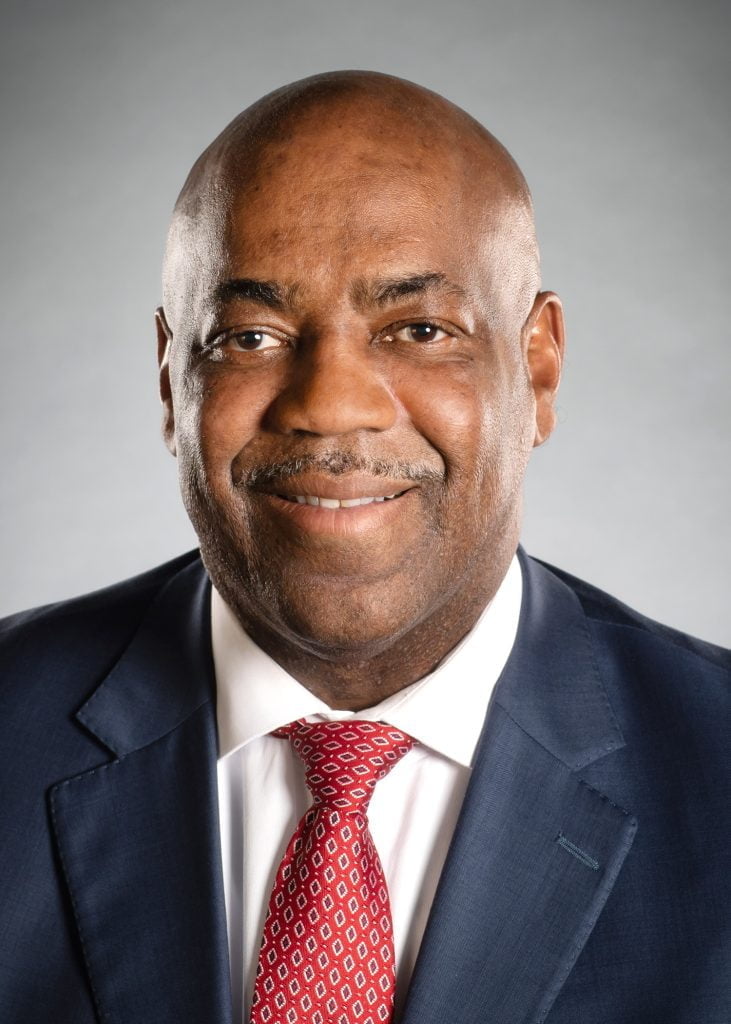
Johnny B. Moore, regional president for the Tennessee Region at Truist Financial Corporation, has been named to the BlueCross BlueShield of Tennessee (BCBST) board of directors.


“Johnny is an experienced business leader, public servant and committed philanthropist who supports a variety of causes and organizations,” said Emily Reynolds, chairperson of the BCBST Board of Directors. “He has unique insights into Tennessee communities that will help us meet the needs of BlueCross members across the state.”


An active community member, Moore currently serves on the boards of directors for Memphis Tomorrow, National Civil Rights Museum, Tennessee Business Leadership Council and Rhodes College.


Moore earned a bachelor’s degree in Business Administration with an emphasis in accounting from Rhodes College. He also successfully completed the SunTrust Advanced Leadership Program and the Graduate Leadership Program at Emory University.


BlueCross BlueShield of Tennessee is a taxpaying, not-for-profit health plan serving more than 3.3 million members in Tennessee and around the country. The Chattanooga-based company was founded in 1945.

Voting Timeline – Women Given Voting Rights After All Men

By Robin Smith 

Did you know all men could vote before any women?

Following the Emancipation Proclamation– which was signed by President Abraham Lincoln in September 1862, and was issued as an Executive Order on January 1, 1863– the fight to recognize all men as created equal, as the founding documents had declared, began.

The Reconstruction Amendments to the US Constitution, the 13th, 14th and 15th, ended slavery, defined citizenship and equal protection under the law to those born in the United States of America and the universal suffrage for all men, regardless of race, color or “previous condition of servitude.” The US Constitution was ratified in 1870 to reflect passage of these critically important amendments that honored the founding documents and the Creator’s handiwork of equality.

Wrongly, according the US National Archives, “the white supremacist wing of the Democratic Party dominated the South,” delayed black men from voting as poll taxes, literacy test and intimidation prevailed as the Union presence ebbed in the region after the Civil War. Yet, legally, men in the US had the legal right to vote, while the effort to include women had failed after many attempts. 

It wasn’t until 1920, over 50 years later, that the Woman’s Suffrage Movement was successful after decades of effort. Tennessee women of all races and stations of life were the driving force to the made-for-TV finish in giving women the right to vote.

Thirty-six states needed to pass legislation to ratify the US Constitution with the 19th Amendment, giving women the right to vote. Tennessee was one of the last hopes, despite other southern states having voted in opposition to awarding women voting rights.

Tennessee was the national epicenter of attention during the hot summer of 1920. A special session was called by Governor A.H. Roberts, who had initially opposed women’s suffrage. While the drama on the Tennessee House floor featured tied votes, scuffles and a gasp-producing final vote, opponents wore red roses and supporters, yellow roses, making vote-counting easier in Tennessee’s War of the Roses.

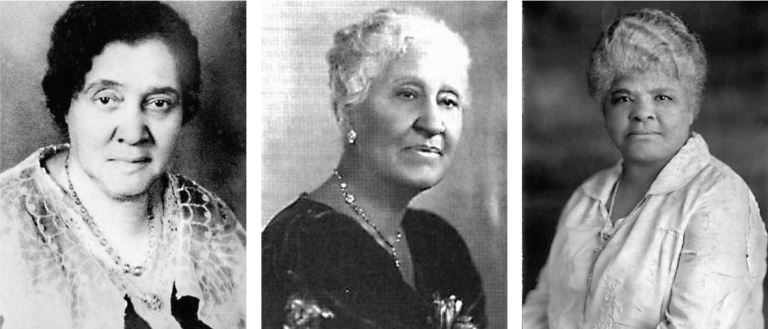
Among the tireless women fighting for the right to vote in Tennessee were Chattanoogan Abby Crawford Milton and prominent black women, J. Frankie Pierce, Ida B. Wells and Mary Church Terrell. Their speeches, letter-writing and travel across the state were carried out in a day when communications were almost exclusively via the written word and when transportation was limited and grueling. 

Yet, these pillars of strength and determination worked doggedly to ratify the US Constitution through their work to make Tennessee the 36th state to pass the required legislation. 

Remember August 18 as the date that Tennessee women spoke with one voice, transcending race or socio-economic standing, for women’s right to vote that ultimately gave millions of American women that right in 1920.

What’s Causing Generational Destruction & Death

0

By Robin Smith 

Are you aware that the lifespan of American adults is significantly impacted by something which has fallen out of our discussions, yet has grown more potent in recent months?

No. It’s not currently COVID, despite rising case counts as our social patterns of activity have increased over the summer. No. It’s not monekypox, the latest declared emergency that, interestingly, the World Health Organization has issued direct warnings to those living the homosexual lifestyle. 

CNBC published remarks by WHO’s monkeypox expert and WHO Smallpox Secretariat, Dr. Rosamund Lewis, noted that “men who have sex with men are the group for the highest risk of infection right now. About 99% of cases are among men, and at least 95% of those patients are men who have had sex with men.”

It’s increasing overdose deaths from fentanyl and a new class of synthetic opioids that are literally wiping out generations of Americans. This is due to addictions and ease of access obtaining illegal drugs flowing over open borders, as reported by CNN in February 2022. To fund international drug cartels that are lavishly wealthy from preying on Americans, the Centers for Disease Control and Prevention reports that from February 2021 to February 2022, more than 108,000 Americans died of drug overdoses.

Almost three-fourths, or more than 70 for every 100 overdose deaths, were opioid-related.

What is fentanyl? It’s a powerful medication used appropriately for severely injured patients, or those dealing with terminal diseases, or who are under strict supervision of physicians. Why is it so deadly? Its potency is underestimated, but its impact on the respiratory system is greater than morphine and heroin.  

Stated plainly, fentanyl reduces both your rate of breathing and the volume of air moved. Its victims usually die. Fentanyl also lowers the heart rate and blood pressure. Obviously, if one’s heart is not beating sufficiently to move blood through your body and not giving breath, the outcome is clear – death.

Even in states where other drugs are legal, like Colorado, where marijuana was legalized back in 2012, an analysis of 2021 deaths in the “Rocky Mountain High” state revealed 48,284 deaths, 10,363 more than the pre-pandemic average.  Only 5,298 of those were caused by the COVID virus.  Coloradans are seeing a massive increase in overdose deaths in ages 25-44 years young. 

As International Overdose Day, August 31, approaches, talk to your family members and friends. Addictions are deadly and must be addressed through medical and behavioral interventions. Resources are available with professionals ready to assist when accessed. 

Be aware. Fentanyl is 50 times more potent than heroine, and 100 times more potent that morphine. A new synthetic class being smuggled into our streets is the nitazenes. These illicit drugs are 20 times more powerful than fentanyl. 

A Stanford-Lancet study this year predicts 1.2 million US deaths, with the greatest impact to the Black community, over the next decade due to opioids.

If you get medicine from your physicians, take it as prescribed and in consultation with your health team. Otherwise, beware of dangers. 

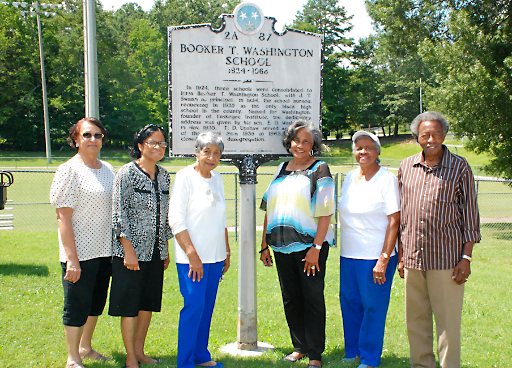
Booker T. Washington High School Reunion, Planned for September 2nd Through the 3rd, 2022

The Booker T. Washington High School (BTW) steering committee and alumni are looking forward to coming together again!   It has been fifty~four years since the closing of our school.  The last graduating class of BTW was in 1968.   We had planned to come together in 2020; but our plans were not HIS plans.  Due to the 2020 COVID pandemic, we had to postpone.

We are excited about plans for September 2-3, 2022!  

If you want more information, please contact us by calling (423) 315~7493.   

BTW has so much rich history!

ALL BLACK TOWNS: A UNIQUE HISTORY IN OKLAHOMA  

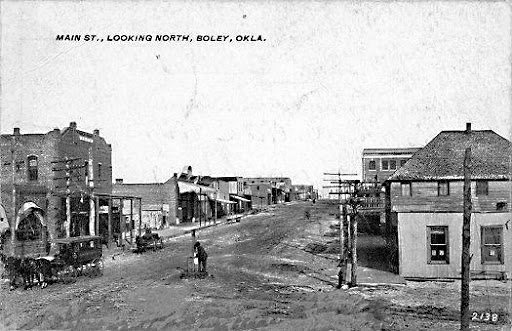
The All-Black towns of Oklahoma represent a unique chapter in American history. Nowhere else, neither in the Deep South nor in the Far West, did so many African American men and women come together to create, occupy, and govern their own communities. From 1865 to 1920 African Americans created more than fifty identifiable towns and settlements, some of short duration and some still existing at the beginning of the twenty-first century. 

All-Black towns grew in Indian Territory after the Civil War when the former slaves of the Five Tribes settled together for mutual protection and economic security. When the United States government forced American Indians to accept individual land allotments, most Indian “freedmen” chose land next to other African Americans. They created cohesive, prosperous farming communities that could support businesses, schools, and churches, eventually forming towns. Entrepreneurs in these communities started every imaginable kind of business, including newspapers, and advertised throughout the South for settlers. Many African Americans migrated to Oklahoma, considering it a kind of “promised land.” 

When the Land Run of 1889 opened yet more “free” land to non-Indian settlement, African Americans from the Old South rushed to newly created Oklahoma. E. P. McCabe, a former state auditor of Kansas, helped found Langston and encouraged African Americans to settle in that All-Black town. To further his cause, McCabe established the Langston City Herald and circulated it, often by means of traveling agents, throughout the South. McCabe hoped that his tactics would create an African American political power block in Oklahoma Territory. Other African American leaders had a vision of an All-Black state. Although this dream was never realized, many All-Black communities sprouted and flourished in the rich topsoil of the new territory and, after 1907, the new state. 

In those towns African Americans lived free from the prejudices and brutality found in other racially mixed communities of the Midwest and the South. African Americans in Oklahoma and Indian Territories would create their own communities for many reasons. Escape from discrimination and abuse would be a driving factor. All-Black settlements offered the advantage of being able to depend on neighbors for financial assistance and of having open markets for crops. Arthur Tolson, a pioneering historian of blacks in Oklahoma, asserts that many African Americans turned to “ideologies of economic advancement, self-help, and racial solidarity.” 

Marshalltown, North Fork Colored, Canadian Colored, and Arkansas Colored existed as early as the 1860s in Indian Territory. Other Indian Territory towns that no longer exist include Sanders, Mabelle, Wiley, Homer, Huttonville, Lee, and Rentie. Among the Oklahoma Territory towns no longer in existence are Lincoln, Cimarron City, Bailey, Zion, Emanuel, Udora, and Douglas. Towns that still survive are Boley, Brooksville, Clearview, Grayson, Langston, Lima, Red Bird, Rentiesville, Summit, Taft, Tatums, Tullahassee, and Vernon. The largest and most renowned of these was Boley. Booker T. Washington, nationally prominent African American educator, visited Boley twice and even submitted a positive article on the town to Outlook Magazine in 1908. 

The passage of many Jim Crow laws by the Oklahoma Legislature immediately after statehood caused some African Americans to become disillusioned with the infant state. During this time Canada promoted settlement and, although the campaign focused on whites, a large contingent of African Americans relocated to that nation’s western plains, forming colonies at Amber Valley, Alberta, and Maidstone, Saskatchewan. Another exodus from Oklahoma occurred with the “Back to Africa” movements of the early twentieth century. A large group of Oklahomans joined the ill-fated Chief Sam expedition to Africa. A number of other African Americans migrated to colonies in Mexico. 

White distrust also limited the growth of these All-Black towns. As early as 1911 whites in Okfuskee County attempted to block further immigration and to force African Americans into mixed but racially segregated community’s incapable of self-support. Several of these white farmers signed oaths pledging to “never rent, lease, or sell land in Okfuskee County to any person of Negro blood, or agent of theirs; unless the land be located more than one mile from a white or Indian resident.” To further stem the black migration to eastern Oklahoma a similar oath was developed to prevent the hiring of “Negro labor.” 

Events of the 1920s and 1930s spelled the end for most black communities. The All-Black towns in Oklahoma were, for the most part, small agricultural centers that gave nearby African American farmers a market. Prosperity generally depended on cotton and other crops. The Great Depression devastated these towns, forcing residents to go west and north in search of jobs. These flights from Oklahoma caused a huge population decrease in black towns. 

As people left, the tax base withered, putting the towns in financial jeopardy. In the 1930s many railroads failed, isolating small towns in Oklahoma from regional and national markets. As a result, many of the black towns could not survive. During lean years whites would not extend credit to African Americans, creating an almost impossible situation for black farmers and businessmen to overcome. Even one of the most successful towns, Boley, declared bankruptcy in 1939. Today, only thirteen historical All-Black towns still survive, but their legacy of economic and political freedom is well remembered. A fourteenth town, IXL, is new, incorporated in 2001 

Birthday “Confession” of an Imperfect Man!

0

Ever have one of those moments when something comes to you leaving you grappling with, “what do I do with this?” When that happens you’re often left with a gut feeling that there’s something here that may benefit someone if you pass it along. Well, here’s one I got from “Troy” who just celebrated his birthday:

“I’ve officially been walking on this rock for 55 years, met my weight loss goal and developed arthritis in my neck and lower back.

I’ve broken hearts more than I’ve had my heart broken. I’ve had great friends who turned out to be enemies, and enemies who are now great friends. I may have lied a little, drank a bit too much, smoked, dabbled in a little “chemistry,” been in fights, been arrested, shot at, gone to jail, wrecked a few cars, been kicked out of some bad places and welcomed into a few good ones (but I had a praying mother who I owe more than I could ever pay back). 

I’ve been betrayed, lied to, reported, fired, disappointed, angered and saddened by family and so-called friends. I have stolen and had things stolen from me. I’ve been beaten over the head with religion, saved too many times to count by His grace, sinned more than I could ever admit here, repented, backslid, shook my fist in anger at God, been on my knees begging for forgiveness and His help, disillusioned by religion (the actions of man) but have remained steadfast in the belief of a designed plan (my spirituality is yet undefined).

I find comfort in darkness but continue to seek light. I do grown man stuff, but deep inside I’m still the comic book nerd with a whimsical imagination. I’ve lusted and been lusted after, been famous and infamous. I’ve hated and been hated, and never truly understood love until a woman stayed by my side as I faced Stage 4 cancer and staring death in the eye, even after I’d pissed her off for the umpteenth time.

I’m the biological father of three amazing, very distinctly different kids, the father-figure to a countless number of kids I’ve coached or mentored over the years. I’ve also been the reason a few (maybe more) young women had to make a difficult life or death decision (for that, I am truly sorry), but also a dad to someone I believed was my biological child, only to find out that he wasn’t.

I’m the guy who stayed on the phone with a suicidal person for seven hours convincing them that they had a reason to live. I’ve had some who have wanted to take my life (including me) that tried and failed (yeah, me and death have gone a few rounds, but I’m still here).

I have a heaping pile of “survivor’s guilt” that occasionally weighs heavy on my heart. So much so that when I hear of someone’s passing, especially from cancer, I sometimes look to the heavens and ask, “Why me? Why did I get saved?”

I’m an introvert hiding in an extrovert’s psyche. There are only two people that truly know and have known me the most. I trust them enough to allow them to figure me out, even though there may not be enough lifetime to actually do it. I’m married to one, and unfortunately, COVID took the other. But I know his spirit visits me, challenges me to listen to my better angels and ignore my worst demons. God help him if he’s actually been assigned as my guardian angel. 

I’m a loner but belong to several affiliations. I may seem to conform, but in my own way I’m a maverick, work best when I’m flying by the seat of my pants or find myself in chaos. Yet I tend to like things uncluttered and am a perfectionist about particular things but not all things. My desk is organized chaos. 

I love all kinds of music. Even some country. Now that I’m older, bluegrass makes me feel nostalgic (I am a Kentucky-Tennessee hybrid after all). You may just as soon hear me bumping Public Enemy, Prince, AC/DC, or Charlie Daniels. 

I have “mommy issues” and “daddy issues,” but I love both my parents, just not the same. I care about my family who I would be there for in a heartbeat if they needed me. Same for my close friends (some of whom don’t know I consider them that). I will become evil incarnate to anyone who hurts my wife or kids. Yet, I’m a harmless little fuzz ball if I and mine are treated well.

If you have managed to get to this point in my birthday flow of consciousness, you have been rewarded with the peeling of a few layers of the onion that is me. Why did I choose to do this? It’s high time for me to stop being so walled in. I need to live and speak my truth more, whatever the consequences. My bride has worked hard for 24 years to make me more comfortable walking in the light, leaving darkness and my old friend, well, in the dark. Thank you for the well wishes already received, and thanks in advance for those yet to come.”

Okay readers, what aspects of “Troy’s” story resonated with you, or someone you know, at some level? Now if you could somehow “rewind your (or their) clock” back, say 20 years, what would you do differently based on what you know now to shape a better result? 

Just asking!

© Terry Howard is an award-winning writer and storyteller. He is a contributing writer with the Chattanooga News Chronicle, The American Diversity Report, The Douglas County Sentinel, Blackmarket.com, co-founder of the “26 Tiny Paint Brushes” writers’ guild, recipient of the 2019 Dr. Martin Luther King, Jr. Leadership Award, and third place winner of the 2022 Georgia Press Award.

Chattanooga State’s Zennia Nesmith Honored by House Joint Resolution

0

By Betty A. Proctor 

Zennia Nesmith, a 2022 Chattanooga State Community College graduate, was recently honored with House Joint Resolution 1128 commending her unflagging commitment to academic excellence, exceptional resilience, and immeasurable contributions both as a student leader and within the community, and as someone who actively demonstrates her passion for advocacy, service and justice.

 Presented to Nesmith on July 20 by state Rep. Greg Vital, the resolution he crafted was inspired by the selection of Zennia as the 2022 Tennessee Community College Student of the Year during the Statewide Outstanding Achievement Awards (SOAR) earlier this year.

 “It is an honor to recognize an individual like Zennia who has overcome challenges in life with determination and personal desire to improve life for herself and others,” said Rep. Vital.

 Nesmith’s journey to this point was long and arduous, “full of twists, turns, and bumps along the way,” as stated in the resolution. She survived early family trauma triggering psychiatric hospitalization, became a mother, and earned her GED. 

 Several years later, a car accident that resulted in the traumatic brain injury of her daughter and the loss of her grandmother, led Nesmith to discover her life’s purpose by founding a nonprofit organization called Empowered Connections with Siskin Hospital to support other families who have children with physical and intellectual disabilities.

Empowered Connections made Nesmith realize that she needed a college degree to expand the work of her nonprofit, but finances were a definite roadblock until she discovered the Tennessee Reconnect Grant. 

Nesmith began classes in the spring of 2020 at no cost. “When I said yes to education everything just fell into place,” she recalled.

“Zennia’s story is one of transformation,” stated Dr. Rebecca Ashford, Chattanooga State president. “She overcame a challenging beginning and redefined her life through hard work and education. She is an inspiration to all of us at Chattanooga State, and she embodies the calling that we have to work in community college education.”

Nesmith said her educational experience at Chattanooga State “was more than good grades… it was an awakening.” Availing herself of every opportunity, she joined Global Scholars, served as Student Government Association president, made the Dean’s List, received the 2022 President’s Award, and was named one of eight national Dream Scholars by the Achieving the Dream (ATD) network, all while maintaining a perfect 4.0 GPA.

The House of Representatives resolution notes that Nesmith’s dedication to excellence is clearly deserving of the respect, admiration and commendation of the members of the 112th General Assembly, concurred by the Senate. 

“She represents Chattanooga State and the College System of Tennessee in such an admirable way,” stated Rep. Vital.

September 15th is RUNOFF ELECTION for VOTERS of District 8 – Early Voting to start August 26.


LETTERS to the EDITOR:

August, 5, 2022

Cc: Election Steps for District 8 Run-Off

One staunch aspect of American democracy is  deeply rooted in the principle “one person-one vote.” 

It is to our dismay that as of this time, for the citizens and voters of District 8,  that standard has been compromised, endangered and undermined.

We previously expressed our concern that a significant number of the voters were not informed that due to the 50 percent plus 1 standard found within the City Charter, in the absence of a candidate surpassing the 50 percent threshold in a multi-tiered race; a special election would be constituted where the two highest vote getters would be placed in a run-off. 

That election will be held on September 15, 2022.

It was already extremely problematic that the language outlined in the City Charter is confounding and ambiguous, but  what is even more egregious is that the processes and procedures that will conduct the special election have not been adequately conveyed to the residents of District 8. 

For most elections, there is a registration deadline of 30 days preceding the election. Similarly, if an eligible voter desires to request absentee or vote by mail, that time frame in most instances is no later than 7 days before the election.

The failure of the Charter to clearly spell out the procedures of the special election, the absence of an official resolution that corresponds to those rules, and failure of government and election officials to provide pertinent information and guidance, is just the latest form of electoral injustice that has befallen the voters of this District. It has created a Zone of Twilight where questions are aplenty and answers are less than few.

In addition the disingenuous adaption of the special election, the residents of this district have had to endure a rash wave of polling place closures, district lines that have been nefariously altered, names that have been purged from the rolls, and in some instances voters have reported irregularities such as being given the wrong ballots.

 These adverse effects are nothing less than outright voter suppression that has created barriers and obstructions which have hampered, and greatly diminished, active civic engagement and voter participation. 

A City Charter and ordinance that is imprecise; ambivalent electoral processes and procedures; barriers and obstructions that directly impacts the will of the voters; this election is now much more than selecting a new member of the Council, this election is also about eradicating voter suppression in all its forms.

We urge all civic groups, organizations and voting rights advocates to continue voter registration efforts in District 8 for the next several weeks.  

We humbly beseech each eligible voter of the District to confirm your polling place because in this election you must go to the polling site listed on your voter registration card and have a photo ID when you reach the polls. 

 If you desire to vote absentee or by mail, promptly request to do so at your earliest convenience.

 If you get to the polls and encounter an unexpected circumstance, request a provisional ballot and follow the guidance given. 

Voting is one way we lift up our voices. We hope that eligible voters will dually exercise this sacred right. 

Yours in Abundance,

Unity Group of Chattanooga,

Eric Atkins Co-Chair; and Pastor Charlotte S.N.N Williams Co-Chair


LETTERS to the EDITOR:

DISTRICT 8 RUNOFF

August 5, 2022

Thanks to Eric and the Unity Group for pointing out that the template City of Chattanooga ordinances and resolutions needs to be revamped. 

There is a commonly accepted format used by cities and counties throughout the country.

The title, called the caption, should be short. Ours are way too long. See Eric’s attachment. This caption could have read “A Resolution to Describe the Process for Filling the Council Seat vacated by Councilman Anthony Bird.”

Then there would be a series of recitals (“whereases”) explaining the need for the resolution. This provides a legislative history of why Council is taking this action. Things like

Whereas Anthony resigned on (date); and 

Whereas the next scheduled election is on August 4th. and

Whereas, Council will choose a representative for District 8 during this interim period,

Finally, there would be several “Be it Resolved” statements addressing–

  • dates for Council to pick an interim…;
  • notification to the Election Commission about placing qualified applicants on the August 4th ballot;
  • notification to the Election Commission about setting the date of a special run-off election on September 15th, which would be needed per City Code (Sec. 5.10) if no candidate on August 4th receives a majority of votes cast.

Making changes such as these would increase transparency and public trust. Currently, in addition to the awkward wording, there is very little language in a city ordinance or resolution explaining why the city is doing what is called for in the ordinance or resolution. 

~Helen Burns Sharp