Saturday, October 17, 2026
Advertisement
Home Blog Page 126

“Greater Is Coming” – In the Huddle

TODAY’S SCRIPTURE:

(Psalm 71:20–21, NLT)

YOU have allowed me to suffer much hardship, but…YOU will restore me to even greater honor and comfort me once again.

TODAY’S WORD:

We all face setbacks in life that we don’t understand. When we go through loss and disappointment, it’s easy to get discouraged and think that’s the way it’s always going to be. But our GOD is a GOD of restoration. HE doesn’t keep us from every challenge. But in today’s SCRIPTURE, HE promises that although HE allows us to go through hardships, HE will pay us back for the wrongs and restore what was taken away. The suffering is a setup, not to make you miserable but to restore you to greater honor. GOD never brings you out the same. HE makes the enemy pay for bringing the trouble. When you’re in tough times, remind yourself that the loneliness, the bad break, or the anxiety is not how your story ends. Greater is coming–greater joy, greater strength, greater relationships. The setback in your finances didn’t stop your purpose. Greater opportunities are coming. Greater favor. Greater influence. The enemy meant it for your harm; GOD is turning it to your advantage.

PRAYER FOR TODAY:

FATHER, thank YOU that there is a purpose for whatever hardship comes my way, and YOU only allow what YOU know will work for my good. Thank YOU that YOU are a GOD of restoration and that greater is coming–greater honor, joy, and opportunities. I believe that YOU will turn it to my advantage. In JESUS’ Name, Amen.

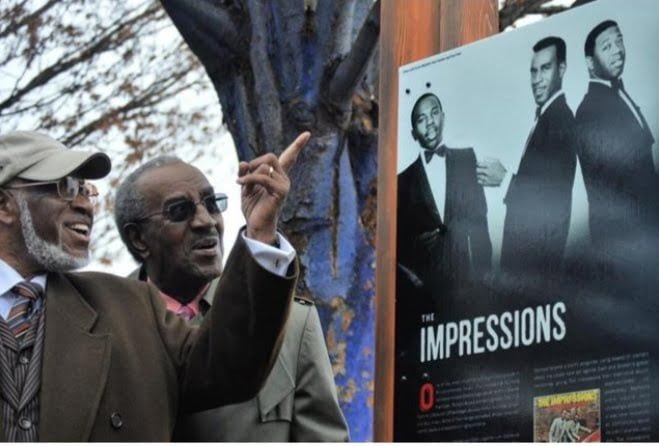
Chattanooga Remembers Mr. Sam Gooden, Rock and Roll Hall of Famer and Original Member of the Impressions

By Camm Ashford 

Mr. Sam Gooden, an original member of the Impressions and a 1991 inductee into the Rock and Roll Hall of Fame, passed away Thursday in Chattanooga, surrounded by family. He was just a month shy of his 88th birthday.

Known for their gospel-styled harmonies and socially conscious songs, the Impressions remained one of the top R&B and soul groups for more than five decades, with million sellers like “Gypsy Woman,” “It’s Alright,” “People Get Ready” and “Choice of Colors.”

Lead singer Curtis Mayfield left the group in 1970 for a solo career, although he continued to write and help produce for The Impressions. Mr. Gooden and fellow Chattanoogan Fred Cash continued to sing as The Impressions along with other lead singers over the years, including Willie Kitchens. Mr. Gooden retired in 2017, with a final concert at the Chattanooga Convention Center.  

The state of Tennessee honored the Impressions with a Tennessee Pathways sign at the Bessie Smith Cultural Center on M.L. King Boulevard in downtown Chattanooga on Dec. 3, 2019.

Mr. Gooden was the eighth child born to the late Reverend George and Ruby Gooden on Sept. 2, 1934. He began his formal education in Rossville, Ga. and later graduated from Howard High School in Chattanooga. After graduation, he joined the United States Army where he was a truck driver.

In 1957, after serving his country, Mr. Gooden began his singing career and took his vision to Chicago, where he met Jerry Butler and Curtis Mayfield. Realizing they needed someone to take them further in their career, they allowed a gentleman by the name of Eddie Thomas to take them under his wings as their manager. Mr. Thomas persuaded the rising stars to change the name of their group from “The Roosters” to “The Impressions.” 

The group released the song “For Your Precious Love,” and life for the young singers was never the same.

In 1963, Gloria Driver, a young lady he met in Chicago four years earlier, became Mr. Gooden’s wife. They later relocated to Chattanooga. 

In addition to his singing career, Mr. Gooden served as an auxiliary police officer for the city of Chattanooga. He was also a member of River of Life Church in Rossville, Ga.

Mr. Gooden often stated that the 64 years of his career blessed his life with joyful memories, and his faith brought him through many challenges that presented opportunities for personal and spiritual growth. 

“I am motivated to ‘Keep On Pushing’ until my heart tells me it is time to sit and rest,” Mr. Gooden said during a recent interview. “I love entertaining. Seeing the happy faces of those we sing to is a bonus. Singing is my way of spreading love, peace and hope to a newer generation, and telling our faithful followers thank you.”

Mr. Gooden is preceded by his parents the Rev. George and Ruby Satterwhite Gooden; brothers, Doc Gooden, George Gooden, LaVelle Gooden and Varnell Gooden; sisters, Mae Ruby Blake, Annie Ruth Ross and Mary M. Scott; and son-in-law, John Wade.

Mr. Gooden is survived by his loving wife, Gloria Driver Gooden; children, Samuel J. Gooden, Sandra D. (Marvin, Sr.) Hudgins, Gina (Darryl, Sr.) Griffin, and Gloria J. “Spanky” Gooden, all of Chattanooga; 11 grandchildren; 12 great-grandchildren; and a host of nieces, nephews, cousins, other relatives, in-laws and friends.

A private Memorial Service will take place at a later date. Military Honors and Rites will follow at a later date at the Chattanooga National Cemetery, as well. 

Arrangements are being handled by Willis Funeral Home, 2011 Martin Luther King Jr. Blvd., Dalton, Ga.

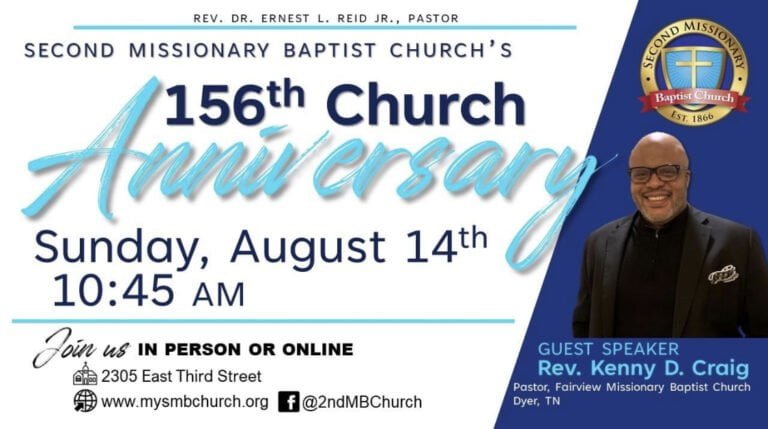
Second Missionary Baptist Church’s 156th Church Anniversary

Rev. Dr. Ernest L. Reid Jr., Pastor

Second Missionary Baptist Church 156th Church Anniversary

Sunday August 14th, 10:45 AM

Join In Person or Online

2305 East Third Street

www.mysmbchurch.org

Facebook: @2ndMBChurch

Guest Speaker Rev. Kenny D. Craig | Pastor, Fairview Missionary Baptist Church Dyer, TN

What a Formula Change May Mean for Black Patients in Need of a Kidney Transplant

0

ROCHESTER, MN (August 2022)  — Experts are hoping a new requirement that all U.S. transplant centers use a race-neutral formula to determine eligibility for a kidney transplant will improve African American access to lifesaving transplants.

“This is an essential step toward reducing racial inequity in access to kidney transplantation,” says Naim Issa, M.D., a Mayo Clinic nephrologist. “The inclusion of race in the calculation of kidney function has been linked to disparities in care for African Americans, including delays in diagnosis of kidney disease and eligibility to be put on the waiting list for a kidney transplant.”

Role of race in estimating kidney function

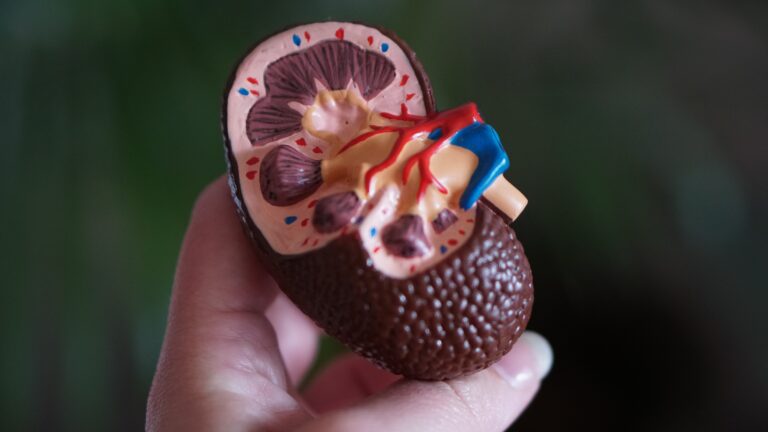
The new requirement, which was recently approved by the Organ Procurement & Transplantation Network’s board, centers on how a patient’s glomerular filtration rate, or GFR, is calculated. This rate estimates how much blood the kidneys’ filtering units clean every minute based on a person’s body size.

Some transplant centers, including Mayo Clinic, directly measure the glomerular filtration rate to determine a patient’s kidney function. But direct measurement of kidney function is not widely available across laboratories and is cost-prohibitive for routine clinic use. Therefore, many health care professionals rely on calculated estimates of the glomerular filtration rate known as eGFR. This estimate is important because it determines whether a patient qualifies to be put on the transplant waiting list.

Some formulas commonly used to estimate kidney functions include a Black race variable. Those formulas report higher eGFRs for Black people, compared to non-Black people with similar characteristics. Recent research has found that these race-based calculations can end up overestimating a Black patient’s kidney function by as much as 16%.

What change means for health equity

Racial disparities surrounding access to kidney transplants remain an issue. African Americans are more than three times as likely to have kidney failure than white people and less likely to be put on a waiting list for a kidney transplant.

Once on a waiting list, Black patients often end up waiting longer than white patients for a kidney transplant. The reason behind these disparities is complex.

African Americans are at high risk for kidney failure due in part to high rates of diabetes and high blood pressure. Recent research also has discovered a genetic predisposition to kidney disease for some people with Western African ancestry. Economic and social conditions also play a role, as does a lack of access to health care and structural racism.

“African Americans are markedly overrepresented among patients on dialysis and are less likely to be referred for or receive a kidney transplant,” Dr. Issa says.

Encouraging more diverse donors

Experts are optimistic this transplant policy change will encourage more people, especially people of color, to consider becoming organ donors.

August is National Minority Donor Awareness Month. Of the nearly 90,000 people in the U.S. on the waiting list for a kidney transplant, more than one-third are Black.

While organs are not matched based on race and ethnicity, people will generally have a better chance of matching with someone from a similar racial or ethnic background. While most people in need of a transplant in the U.S. are people of color, 30% of donors come from communities of color.

Mayo Clinic has one of the largest living-donor programs in the country. People can register to become organ donors on the Donate Life America website.

Experts available:  These Mayo Clinic experts can discuss the race-neutral requirement, its role in addressing racial inequities in transplants and the need for more diverse organ donors:

More Americans Not Getting Boosted

By Peter White 

NASHVILLE, TN – Fewer Americans are getting a second booster shot and only 2.8% of young children under five years old have been vaccinated. According to a Kaiser Family Foundation poll last week the number of young children getting vaccinated is declining and 4 in 10 parents say they are not going to vaccinate their child. 

Children 5 to 11 were first eligible for a vaccine in November 2021, and according to the CDC, 30% of older kids are now fully vaccinated. But adults aren’t rushing to get boosted. As of July 28, only 51.5% of U.S. residents 18 and older had gotten a booster while 90% had gotten a first shot. 

In Tennessee, 60% of those 18 to 64 got one jab but only 24% are boosted. Cases and deaths are increasing in the U.S. Last week there were averages of 124,090 cases/dy and 437deaths/dy. 

In Tennessee last week, CDC figures indicate there were 2,668 new daily cases, 942 hospitalizations, and 10 deaths. The average of ICU occupancy in Tennessee hospitals was 88% last week; the U.S. average ICU occupancy was 73%. Number of cases in Tennessee has increased each month since April 2022. 

The BA5 Omicron subvariant is causing 78% of infections in the U.S. BA5 is good at evading immune protection from a vaccine or a prior COVID infection. 

“They’re the Houdini of Covid,” said Dr. Peter Chin-Hong, an infectious disease expert at the University of California, San Francisco. “They’re the escape artists.” 

BA5 infects the upper respiratory tract, and while very infectious, it generally has milder symptoms than earlier variants like Delta. Chin-Hong said wastewater studies in CA. indicate there could be 3-8 times more infections than the official counts. 

Everything You Need to Know About Paxlovid. Should You Take It?

0

When President Joe Biden tested positive for COVID-19 on July 21, his physician recommended he take the antiviral drug Paxlovid. The drug significantly reduces the likelihood of hospitalization or death for someone at high risk of developing severe COVID. Biden started the five-day course that day, according to the White House, and within six days he tested negative for the virus and was cleared to leave isolation. However, days later he tested positive once again.

Biden’s chief medical adviser, Dr. Anthony Fauci, also took Paxlovid when he contracted COVID in June yet soon tested positive for the disease again. So he took a second round of the drug even though it isn’t approved for that.

Since Paxlovid became available seven months ago, it has eclipsed other available therapies created to forestall life-threatening COVID symptoms in high-risk patients. Some doctors are quick to prescribe it, but as with so much about the COVID pandemic, there is controversy. Some patients are concerned about a possible rebound of the disease, while others have difficulty convincing their doctors they are good candidates for the drug.

“Paxlovid is still the go-to drug” even though it may not be appropriate for everyone, says Dr. Priya Nori, an infectious disease physician who directs the COVID outpatient treatment program for the Montefiore Health System.

In a clinical trial, people who had mild-to-moderate COVID and were at high risk for becoming seriously ill lowered their risk of being hospitalized with or dying of the disease by 88% if they took Paxlovid within five days of developing symptoms.

But even as specialists in infectious diseases praise the treatment’s effectiveness, many doctors say they have questions about prescribing the drug and want better data.

Here are answers to some common questions about Paxlovid.

Q: What is Paxlovid, and how does it work?

Paxlovid is an antiviral medication that is made of two drugs: One blocks a key enzyme that the COVID virus needs to replicate, and the second blocks the first drug’s metabolism in the liver so it doesn’t leave the body as quickly. Patients take three pills twice a day for five days.

Q: Who should take Paxlovid?

When the FDA authorized the emergency use of Paxlovid, it specified that the drug was to be prescribed to people at high risk of getting severely ill from COVID. The high-risk list is long, including people older than 65 and those who have chronic or serious health conditions such as cancer, obesity, diabetes, asthma, and heart disease.

Yet seven months after Paxlovid was authorized, some patients have the protection of two booster shots of a COVID vaccine, and many were previously infected by the Omicron variant of the virus. So doctors are left to assess how much a patient’s history elevates or lowers their risk of severe infection, balancing that against the utility of prescribing a drug that has downsides as well.

If you fall into a high-risk category many, you may not be able to take Paxlovid if you take any drugs that could interact with the antiviral. Temporarily pausing some drugs on the list — like those that treat high cholesterol or high blood pressure — until a course of Paxlovid is finished may not cause you any serious health problems, but should be taken up with your doctor. However, if you are taking drugs such as transplant rejection drugs or antiarrhythmic drugs that regulate your heartbeat, “these could cause catastrophic complications” if taken with Paxlovid, says Dr. Scott Roberts, assistant professor of infectious diseases at Yale School of Medicine.

Paxlovid is not recommended for people who are unlikely to get seriously ill from COVID. In June, the drug’s manufacturer, Pfizer, announced it was discontinuing a clinical trial for standard-risk people because Paxlovid didn’t significantly reduce hospitalization and death in that group. The trial included both vaccinated and unvaccinated people.

Perhaps those results aren’t surprising, since “for people who are low-risk, their risk of getting hospitalized is so low that taking Paxlovid isn’t adding any advantage,” says Dr. Daniel Kuritzkes, chief of the division of infectious diseases at Brigham and Women’s Hospital in Boston.

Also in June, Pfizer announced it had applied to the FDA for full approval for Paxlovid.

Q: What are the options for someone who can’t take Paxlovid?

A couple of other antiviral medications (Veklury and Lagevrio) and a monoclonal antibody drug (Bebtelovimab) also reduce people’s risk of hospitalization and death from COVID. But they are less convenient than Paxlovid, requiring injections or infusions, or not as effective. Still, they are possibilities if you are unable to take Paxlovid.

Q: How often do people experience rebound infections after taking Paxlovid?

A small percentage of people get COVID symptoms and test positive for the coronavirus again after completing a five-day course of Paxlovid. But how many patients are affected and why rebounds occur are much debated.

In the Pfizer clinical trial, 1% to 2% of participants tested positive for COVID again after completing a course of Paxlovid. Because the rebound occurred in people who got the drug and those who got a placebo, the FDA concluded that “it is unclear at this point that this is related to drug treatment.”

A study published in June by researchers at the Mayo Clinic found that fewer than 1% of 483 high-risk patients who had received Paxlovid experienced rebound symptoms.

Anecdotal reports suggest that the rebound figure is higher, though. Several prominent people in the medical community have reported experiencing rebound infections and symptoms, though they are typically mild. In addition to Biden and Fauci, director of the National Institute of Allergy and Infectious Diseases, the group includes Dr. David Ho, director of the Aaron Diamond AIDS Research Center at Columbia University, and Dr. Peter Hotez, dean of the National School of Tropical Medicine at Baylor College of Medicine.

“I’m still confused about it, and most of the people I speak to about it are still confused because we don’t know why exactly it’s happening,” says Dr. Robert Wachter, a professor and the chair of the Department of Medicine at the University of California-San Francisco. In May, Wachter tweeted about the rebound experience of his wife, writer Katie Hafner. “The public data on frequency doesn’t sync up with everybody’s experience.”

There are several theories for why rebounds occur. Some experts suspect the drug doesn’t totally eliminate the virus in some people who have a high viral burden, leading to a resurgence after the five-day course. Others suggest that because the treatment is started immediately after COVID symptoms emerge, the body’s immune system doesn’t get a chance to get a good look at the virus and ramp up to fight it once the treatment ends. Or it could be that some people clear the antiviral drug from their bodies faster than others.

“If you have faster clearance, you may not have the exposure necessary to clear the virus,” says Ashley Brown, a virologist at the University of Florida in Orlando.

“We are continuing to monitor the data, but we have not seen any resistance emerge to date in patients treated with Paxlovid and believe the return of elevated detected nasal viral RNA is uncommon and not uniquely associated with treatment,” Pfizer spokesperson Kit Longley said in an email.

Q: Given the rebound effect, do current prescription guidelines need to be revisited?

Some medical experts wonder if tweaking the timing or duration of a course of Paxlovid might eliminate the rebound effect some patients experience. If people started taking Paxlovid on day 3 of symptoms, instead of right away, for example, their bodies’ defenses could kick in, bolstered by vaccines or previous infections, Nori shares.

“Then we augment with the antiviral, and this rebound might be mitigated,” she adds.

Many experts believe a five-day course is just too short, says Wachter, who wants more data. “You would think it wouldn’t be that hard to do a study on five days versus seven days versus 10 days,” he notes.

According to Pfizer’s Longley: “There may be some patient populations who may benefit from longer durations of treatment or recurrent treatment, and we are considering additional studies to evaluate this in some populations.”

Q: Fauci took a second course of Paxlovid after experiencing a rebound effect. Is that something other patients can do too?

Generally, no.

Fauci says he took a second course of Paxlovid after testing positive for COVID and feeling even sicker on the second go-around with the virus.

Prescription guidelines state clearly that “Paxlovid is not authorized for use longer than five consecutive days.”

Not all clinicians agree with the guidelines. “For people who are really high-risk, it’s hard to say, ‘Just take Tylenol,’” says Dr. David Wohl, a professor of medicine in the division of infectious diseases at the University of North Carolina-Chapel Hill.

At Brigham and Women’s Hospital, clinicians don’t generally recommend a second course of Paxlovid for patients who experience a rebound, says Kuritzkes, “though there is some diversity of opinion.”

In the FDA’s guidance to providers in May, Dr. John Farley, director of the Office of Infectious Diseases, says, “There is no evidence of benefit at this time for a longer course of treatment (e.g., 10 days rather than the 5 days recommended in the Provider Fact Sheet for Paxlovid) or repeating a treatment course of Paxlovid in patients with recurrent COVID-19 symptoms following completion of a treatment course.”

Fauci’s move was disconcerting to some clinicians.

“I was a little surprised and taken aback that the country’s top doctor went against guidance,” say Roberts, of Yale. “That sends a mixed message to me. I imagine I’ll get patients who say, ‘Dr. Fauci got two courses. Why not me?’”

Q: Are people contagious if they have a rebound? Should they isolate?

If people test positive again after a course of Paxlovid, Kuritzkes says, it’s assumed they are contagious, and they should isolate from others.

Q: Will the coronavirus become resistant to Paxlovid?

It’s a concern, experts say, but there’s no evidence it’s happened yet.

“The virus is mutating at all regions of its genome at all times, so at some point, Paxlovid will probably become less effective than when the study was done a year ago,” Roberts adds.Paxlovid is safe and highly effective at preventing hospitalization and severe disease from COVID, however, you should consult with your doctor before taking it, especially if you are taking other medications to ensure it is safe. (Source:  BlackDoctor.org/August 3, 2022 by Jessica Daniels)

‘Revitalize Eastdale’ Community Meeting Set for Aug. 8

0

By Camm Ashford 

A community meeting, “Revitalize Eastdale,” will be held at the Eastdale Recreation Center, 1312 Moss Dr.,

 on Mon., Aug. 8 at 6 p.m.
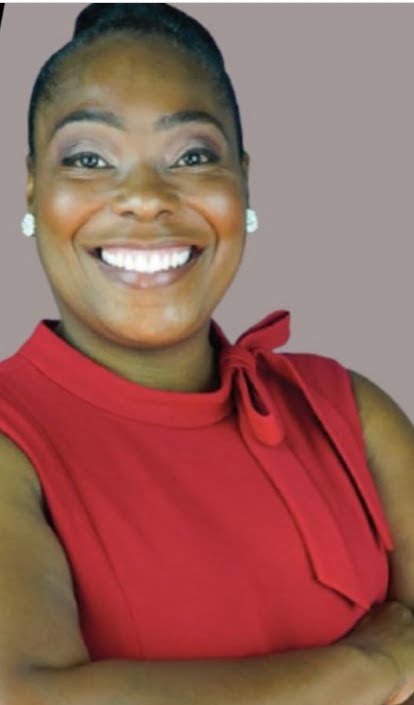
The event is being hosted by Demetrus Coonrod, the council representative for District 9–which includes Eastdale, East Chattanooga, Glenwood, Missionary Ridge and Ridgedale.
Councilwoman Coonrod previously served as the president of the Eastdale Neighborhood Association and pushed for numerous projects, including long-awaited infrastructure improvements to the Wilcox Tunnel. 

She also advocates so that convicted felons can have their voting rights restored as part of the Ban the Box movement. Councilwoman Coonrod is one of 11 people to have had their voting rights restored between 2014-2017 after being convicted of a felony.

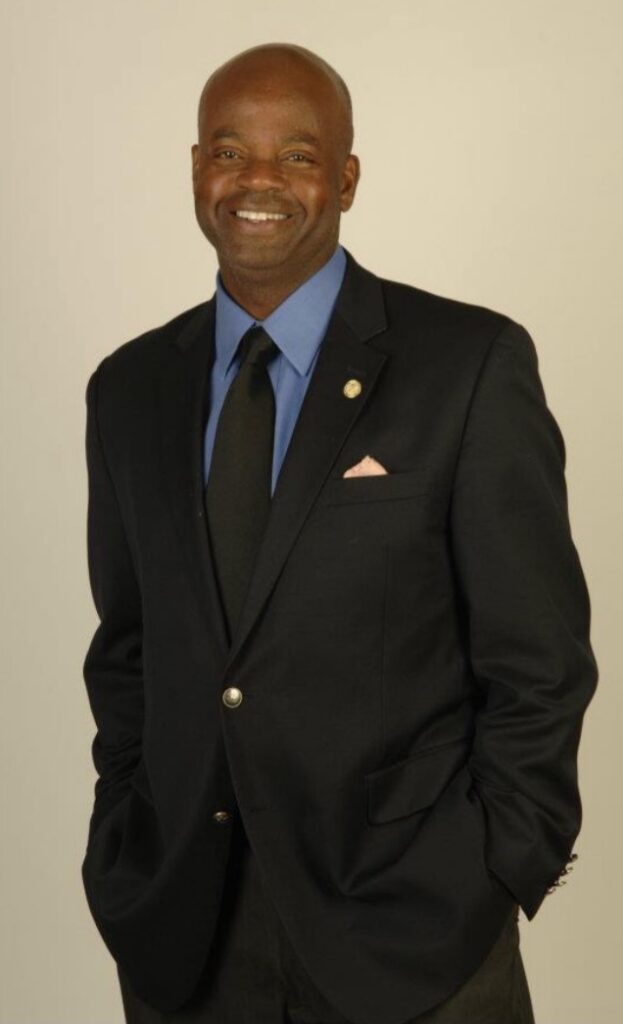
Also speaking at the event is Hamilton County District 4 Commissioner Warren Mackey.


“I’m very enthusiastic about getting to know the people of Eastdale, and listening to them,” Commissioner Mackey said in a phone interview. “And, very definitely, I’m looking forward to fighting for them.”

Hamilton County District 4 Commissioner Warren Mackey.

Ben Taylor, director of Transportation Operations with the city of Chattanooga, is also on the program. 

The Eastdale neighborhood, bounded by main thoroughfares such as Greenwood Road, Tunnel Boulevard, Wilcox Boulevard and Shallowford Road stretches across three zip codes including 37404, 37406 and 37411.

$125K in Scholarships Awarded to Black Male Students in Chicago Affected by Gun Violence 

0

Nationwide— Dozens of African-American males received college scholarships from the Ezekiel Taylor Scholarship Foundation (ETSF) this year during its 6th annual scholarship fundraiser, gala, and silent auction. To date, the program has awarded more than $125,000 in college scholarships from a grassroots level and has highlighted the academic achievements and success of young black males in the Chicago area who have been impacted by gun violence. 

The event honors the legacy of Ezekiel Taylor who was robbed and killed on Chicago’s Southside in the early 80s by teenagers. The gala, usually held in person, is virtual again due to the Covid-19 pandemic. 

“The pandemic, social injustices, and inequities in our communities have forced our students to survive, thrive, and think outside of the box, and it has also caused our foundation to become more innovative and creative,” says Tenisha Taylor, daughter of Ezekiel Taylor and ETSF CEO. “These young men are defying the odds, despite what the media says… there is good news about our young Black men and we are celebrating their success,” adds the former CNN Executive Producer. 

The virtual gala, Onward & Upward, is a one-hour production that celebrates each of the 2022 scholarship winners and highlights their achievements.  Special guests this year include Good Morning America news anchor T.J. Holmes, Oscar-Nominated Actress Aunjanue Ellis, and The Honorable Dr. Rev Raphael G. Warnock (D-GA). 

“You have chosen the high and noble road,” Senator Rev. Warnock said to scholarship awardees. “You’re congratulated, we celebrate you and we stand on tip-toe anticipation to see all what you shall become to the glory of God.” 

Besides financial support, the foundation conducts quarterly life skill programs for high school and college students. It also boasts a one-on-one mentoring program. 

“I’ve gained internships and so many opportunities through this foundation,” says Jordan Alfred, Illinois Institute of Technology rising senior. “My mentor, Cedric Malone, and the men I’ve been able to connect with truly care about my future.” 

Entire Police Department in North Carolina Resigns After First Black Woman Town Manager Hired 

0

Nationwide — The entire police department of a small town in Kenly, North Carolina has reportedly resigned in an apparent protest against Justine Jones, a Black woman who was hired as the town manager two months ago. 

They claim that she is creating “hostile work environment.” 

Kenly Police Chief Josh Gibson took to his Facebook about his resignation, saying that the assistant town manager, a key clerk, and his 5 police officers are all quitting. 

“The new manager has created an environment I do not feel we can perform our duties and services to the community,” Gibson wrote in his post.

Gibson, who has served for 21 years in the police department, said he submitted his 2-week notice to Jones herself. The other officers submitted theirs to Gibson. 

“In my 21 years at the Kenly Police Department, we have seen ups and downs. But, especially in the last 3 years, we have made substantial progress that we had hoped to continue. However, due to the hostile work environment now present in the Town of Kenly, I do not believe progress is possible,” Gibson wrote in his letter of resignation, according to a copy obtained by Fox News. 

Meanwhile, Kenly residents are conflicted whether or not it is a race issue as Jones is Black while the entire Kenly Police Department is White. 

“I feel like they don’t want a Black woman over top of them, basically managing them or telling them what to do,” Brittney Hinnant, a Kenly resident, told CNN. 

“I think there are too many jumping to conclusions, we really don’t know what is going on,” Joy Wright, another Kenly resident, said. 

After a private emergency meeting, the Kenly town council released a statement saying, “The prudent course of action is to find out what happened and not make any rash decisions.” 

Moreover, Jones declined to give a comment about the police resignations since this is a personnel matter. 

Republicans Help Honor Dr. Mary Mcleod Bethune with Historic Statue Unveiling in U.S. Capitol

0

On July 13th, 2022, in the United States Capitol’s Statuary Hall, Republicans honored the legacy of Dr. Mary McLeod Bethune with her marble statue unveiling.  “Dr. Mary McLeod Bethune was a trailblazing educator and leader, worthy of the high honor of being the first Black American to have a state-commissioned statue in the National Statuary Hall of the United States Capitol.  Thanks to the 2018 bill passed by the Republican-controlled Florida state legislature to commission the statue, which was signed by former Republican Governor Rick Scott, and the 2019 official request to Congress by Republican Governor Ron DeSantis, Republicans worked to make this historic day happen.” -Paris Dennard, Republican National Committee National Spokesperson and Director of Black Media Affairs.