Friday, October 16, 2026
Advertisement
Home Blog Page 106

Georgia’s GOP overhauled the state’s election laws in 2021 – and critics argue the target was Black voter turnout, not election fraud

0

Richard F. Doner

Goodrich C. White Professor (Emeritus) of Political Science, Emory University

In the rash of election reform laws enacted after former President Donald Trump’s false claims of fraud during the 2020 presidential election, few were tougher than SB 202 – the Election Integrity Act – passed in 2021 in Georgia, a state long known for its history of suppressing  the Black vote, especially in response to growth in Black political influence.

Media attention focused on SB 202’s shortened runoff periods from nine to four weeks, limits on who can turn in absentee ballots and a partial ban on offering food or water while waiting in line to vote.

But other parts of SB 202 have drawn especially strong charges of racism from Black voters, Democrats and voting rights activists.

Details of the new Georgia law

One part of the law restricts the use of drop boxes, used most extensively by voters of color.

A second involves the State Elections Board, the state agency charged with administering elections in a nonpartisan way. The Board, now composed of four Republicans and one Democrat, is subject to review by the GOP-controlled state legislature and has the authority to take over election boards, including in counties with Democratic majorities and large populations of Black and other voters of color.

Finally, the new law allows any Georgia voter to challenge an unlimited number of other voters in their county. That provision already led to consequences after the state’s May 24, 2022, primary and foreshadows potential problems after the upcoming midterm elections.

According to the New Georgia Project, a voting rights group that is tracking the impact of the new law, about 64,000 challenges were filed statewide – with about 37,000 of them in the Atlanta area alone – and at least 1,800 mostly Black or Democratic voters’ names already have been removed from the voter rolls.

While the state Board of Registrars upheld the voting rights of the vast majority of challenged voters, voting experts disagree on how voting rules impact voter turnout or erode public trust, especially in a state with a history of discriminatory voting laws that affect people of color.

SB 202’s supporters argue that the overhaul expands voting hours and does not suppress Black voting.

Critics counter that the 98-page bill, similar to others across the country, was a thinly disguised effort to target voters of color because it restricts voting mechanisms used most extensively by Black voters, especially in reaction to the recent growth in political power by Black Georgians.

Georgia’s growing Black political power

For the last 20 years, Georgia has seen a shift in its state politics, largely the result of an influx of Black Americans who have moved back to the South since 2000 and tend to vote Democratic.

Black voters accounted for half of the state’s 1.9 million increase in eligible voters between 2000 and 2019.

With close to 700,000 more voting-age Black Americans moving to the Atlanta area of Fulton County since 2000 – and another 200,000 to nearby Cobb and Gwinnett counties – Black voters in 2018 helped Democrat Stacey Abrams come within about 55,000 votes – 50.2% to 48.8% – of becoming the first Black person and first woman of any race to become Georgia governor.

She lost the race to GOP incumbent Brian Kemp, whose victory withstood several legal challenges filed by Abrams alleging election irregularities.

Georgia Democrats had much more success in 2020. Black turnout helped Joe Biden win the state in the presidential election and saw two Democrats – Raphael Warnock, a Black man, and John Ossoff, a Jewish man – win the state’s two U.S. Senate seats.

Critics suggest that SB 202’s passage following this rise in 2020 Black turnout mirrors a historical pattern of voter disenfranchisement after a rise of Black voter strength. This pattern, which began right after the Civil War, contributed to historian Laughlin McDonald’s conclusion in his “A Voting Rights Odyssey: Black Enfranchisement in Georgia” that “no state was more systematic and thorough in its efforts to deny or limit voting and officeholdings by African-Americans after the Civil War.”

Backlash after the Civil War

In 1868, Black citizens were 44% of the state’s population, and voting-age Black men outnumbered white men in 65 of Georgia’s 137 counties.

Along with the power of growing Black political organizations such as the Loyal Leagues, Reconstruction led to an influx of Black Georgians to elected office in the late 1860s and early 1870s, including the “original 33” Black members of the Georgia General Assembly and members of elected boards of education.

The white-dominated Democratic party responded to these seismic shifts in political power by not only forcibly replacing Black elected school board members with white Georgians selected by all-white grand juries, but also imposing strict vagrancy laws.

These not only restricted the mobility of Black men – and thus their ability to organize – but they also led to convictions of Black men on charges of vagrancy, thus depriving them of the right to vote.

In his book, McDonald describes the reality for Black Georgians trying to vote. At the polls, McDonald writes, Black voters were required to prove that they had paid poll taxes at a time when political violence by white supremacists was a constant.

From 1867 to 1872, McDonald reveals, “at least a quarter of the state’s Black legislators were jailed, threatened, bribed, beaten, or killed.”

The pattern of violence against Black elected officials continued throughout the early 20th century. From 1908 to 1962, no Black Georgian held a seat in the state legislature.

Voting under Jim Crow

Despite those obstacles, Black political power continued to grow.

The movement of Black people to jobs in Georgia’s industrializing cities resulted in the growth of strikes and boycotts. In some cases, as in the Georgia Railroad strike of 1909, white union members resented the employment of Black, nonunion firefighters and staged numerous strikes that ultimately led to federal mediation.

But urban-based industrialization also led to the multiracial, class-based Populist Party in the early 1890s that appealed to Black voters who made up almost half of the state’s population.

The response was Jim Crow, a systematic set of restrictions that historians Suzanne Mettler and Robert Lieberman described as “changing the rules for how elections were run, in ways that would cripple the political opposition once and for all.”

Jim Crow laws included a strengthened poll tax and literacy tests, both of which aimed to block voting by Black voters,, reestablishment of the “white primary” where only whites could vote in the key Democratic Party races, and stricter residency requirements that limited Black people’s ability to organize.

The impact was significant: According to Richard M. Vallely, a political science professor at Swarthmore College, Black voter turnout in Georgia for presidential elections fell from 42% in 1880 to 33% in 1892, 7% in 1900 and 2% in 1912.

White supremacy in the 1940s

A further example of white conservative reaction to expanded Black political activity took place right after World War II. In Georgia’s 1946 gubernatorial election, the candidacy of Democratic incumbent Eugene Talmadge was threatened by a significant rise in Black registrations, from about 20,000 in 1940 to more than 125,000 in 1946.

In addition, the U.S. Supreme Court had outlawed the white primary and the poll tax. More importantly, Black-led organizations, often involving Black veterans, such as the All-Citizen Registration Committee and the Atlanta Negro Voters League, continued to expand throughout the state.

In response to the increase in Black voter registrations, Talmadge-led white supremacy forces mailed thousands of mimeographed forms to challenge and disqualify Black voters across the state.

Whereas few if any white registrants were challenged in any county, historian Joseph l. Bernd found that Blacks voters were challenged in more than 30 counties, and an estimated 15,000 to 25,000 were purged.

The result was a Talmadge victory despite the fact that his opponent – James Carmichael – won 16,000 more popular votes.

National stakes

Of course, much has changed in Georgia since the days of Talmadge.

But the almost immediate passage of new election laws at a time of growing Black political strength suggests the persistence of a white backlash in Georgia.

In a politically divided state such as Georgia, voter turnout is crucial.

Out of nearly 5 million ballots cast in the 2020 presidential campaign, for instance, Joe Biden beat Donald Trump by only 11,779 votes.

The balance of power in the U.S. Senate may rest on the outcome of the race between Warnock and GOP candidate Herschel Walker.

Though the race is still too close to call, one thing is clear: If the record turnout at May’s primaries was any indication, Georgia election officials will be swamped sorting out challenges in a replay of the state’s 1946 governor’s race. (The CONVERSATION)


“A Dull Life of Routine” – Life During the Siege of Chattanooga

0

Fort Oglethorpe, GA:  On Saturday, November 5, at 10 am, 1 pm, and 3 pm, and on Sunday, November 6, at 10 am, Chickamauga and Chattanooga National Military Park will present a special ranger-led hike/living history program at the Cravens House, on Lookout Mountain (1060 Cravens Terrace).  This program will involve a short 45-minute walk of approximately 1 mile and will explore some of the daily routines conducted by Confederate soldiers stationed around Lookout Mountain during the Siege of Chattanooga.  There will be ongoing camp life programs between the tours, where you can witness many of the army’s activities.  Please wear comfortable shoes, and dress for the weather.

Between the Battles of Chickamauga and Chattanooga, the US Army of the Cumberland, whose soldiers manned the fortifications of Chattanooga, found itself besieged by Confederate General Braxton Bragg’s forces from atop the surrounding heights. Hunkered down on the heights, like Lookout Mountain, were men of General Longstreet’s Corps from the Army of Northern Virginia, sent to reinforce Bragg in early September 1863. Longstreet’s men, particularly those in Hood’s Texas Brigade, played a prominent role at Chickamauga, yet now found themselves bogged down in in what one soldier called, “A dull life of routine duty.”  Life was monotonous and miserable as the weather turned cold and damp. The men yearned to be home with their loved ones or, at the very least, to return to Virginia. 

For more information about programs at Chickamauga and Chattanooga National Military Park, contact the Chickamauga Battlefield Visitor Center at 706-866-9241, the Lookout Mountain Battlefield Visitor Center at 423-821-7786, or visit the park website at www.nps.gov/chch.   

Start of 2022 Loose Leaf Collection

0

CHATTANOOGA, Tenn. – The Department of Public Works will begin collecting on-demand loose leaves from residents beginning Tuesday, November 1, 2022. 


Loose leaf collection may be requested by city residents through the following actions; 

  1. Call 311 at 423-643-6311, 
  2. Request loose leaf collection online, 
  3. CHATT311 App on your Apple or Android device,  
  4. Email 311 at 311@chattanooga.gov.


Loose leaves should be separated from bagged yard waste, brush, and bulky items. Loose leaves should be placed on the curb. Residents should not rake leaves over storm drains, catch basins or curb inlets to prevent flooding.


Residents may contact CHATT311 with any additional questions.

BlueCross Medicare Advantage Earns Sole 5-Star PPO Plan Rating in Tennessee

0

Annual review for 2023 highlights insurer’s dedication to optimizing member experiences and health outcomes

 CHATTANOOGA, Tenn. — Each year, Medicare plans are evaluated based on a 5-star rating system, and BlueCross BlueShield of Tennessee (BlueCross)’s BlueAdvantage PPO plan has earned the highest possible rating from the Centers for Medicare & Medicaid Services (CMS) for 2023. The 5-Star quality rating reflects a commitment to superior member service.

This year’s achievement represents the second score increase in two years and makes BlueCross the only 5-star PPO plan headquartered in Tennessee. The company’s leaders credit this to employees’ unwavering commitment to provide excellent support for members in every interaction.

“Our teams are dedicated to collaborating with providers to ensure communication and outreach is as clear and supportive as possible, and to provide members with individualized options to achieve and maintain their health goals in a way that works best for them,” said Dr. Angeline Brunetto, vice president and chief medical officer for senior products. “Our people continually take responsibility to put our members first, and it shows.”

CMS determines ratings after a review of plan operations and member satisfaction, including analysis of:

• How members rate their health plan’s customer service and support in getting care overall;
• How the plan supports members in safely and appropriately using prescriptions, and
• How well the plan’s in-network doctors and providers help prevent and manage members’ chronic illnesses.

Medicare Advantage plans with prescription drug coverage are evaluated against more than 40 different measures related to performance and quality. Members’ reported experiences with their health plan and rates of members getting recommended preventive care and screenings make the biggest impact.

With COVID-19 still a public health concern during the measurement period for the 2023 ratings, BlueCross BlueShield of Tennessee teams have continued to emphasize flexibility and creative solutions for addressing member concerns related to seeking screenings and care, according to Ann Rakes, director of quality improvement for senior products.

“We know the consumer health experience is more important than ever in terms of engaging members to take an active role in their own care,” she said. “Members who feel they are treated well and understand why they’re being asked to get screenings, establish certain habits or follow medication regimens are more likely to have positive health outcomes.”

Dolly Parton’s Investment Honoring Whitney Houston

Dolly Parton is known for her big hair, big voice, and…big heart.

A Tennessean renowned for her talent and her unashamed accentuation of her God-given gifts, we’ll say, shows us the good we can all be by sowing into others.

Many still don’t know of a strip mall in a Nashville neighborhood, located in a predominantly African American community Dolly purchased as an investment in the Black community. Sowing seeds into needs using the $10 million in profits from her song, “I Will Always Love You,” sang by the unmatched voice of Whitney Houston and the lead song of the movie, The Bodyguard, Tennessee’s treasure demonstrated, and still does, the Law of the Harvest.

The Sevier County native originally recorded her song on June 13, 1973, and included it on the album, Jolene, after a professional parting-of-the ways of the lyrical duo she had with the country music legend, Porter Waggoner. When released as a country single in 1974, the song was #1 for that genre with little thought of its massive appeal worldwide to come.

As filmmakers and producers of the award-winning movie starring Whitney Houston and Kevin Costner were assembling the movie’s music, the song originally selected for the finale, “What Becomes of the Brokenhearted,” was featured in the movie Fried Green Tomatoes, out at the same time.

It was actually Kevin Costner who suggested Dolly’s song as a replacement and reached out to the Queen of Country Music as one of the producers, actor, and friend. Dolly recalls the phone conversation conveying the “honor” she’d experience should that happen. 

And, indeed, it happened. In the 2020 interview with Oprah Winfrey for her Apple+ show, The Oprah Conversation, Dolly tells of her first hearing the lyrics she penned performed by Whitney Houston on the radio. “My heart just started to beat so fast and then when she got into ‘I Will Always Love You,’ when that opened up, and I realized that was my song, it was the most overwhelming thing.”

Parton reminisced of her driving from downtown Nashville to her home in Brentwood and having to pull off the road in her commute, hearing the power of Whitney Houston’s rendition of the ballad. “I was shot so full of adrenaline and energy, I had to pull off, because I was afraid that I would wreck, so I pulled over quick as I could to listen to that whole song. I could not believe how she did that. I mean, how beautiful it was that my little song had turned into that, so that was a major, major thing.”

The Voice, as Ms. Houston was rightfully nicknamed, had brought back to life lyrics of a rags-to-riches Tennessean. That new life brought profits, and characteristic of the petite powerhouse born in a one-room cabin on the banks of the Pigeon River to poor parents with 11 living siblings, those profits were invested in an area of Nashville needing economic life.

Planting seeds brings harvest. Be a sower, like Dolly.

Eastdale Community Festival set for Nov. 5

0
Shane Morrow

The Eastdale Neighborhood Association has partnered with RISE Chattanooga to host the first Eastdale Community Festival. The free event will take place Nov. 5, from 11a.m.-4 p.m., on the grounds of Eastdale Community Center, 1312 Moss St.

“This is a great opportunity to bring our community together through local performers, vendors, family and friends,” said Councilwoman Demetrus Coonrod, who represents District 9– which includes Eastdale. 

“Social cohesion is a basic requirement of healthy communities. So we welcome Chattanoogans and surrounding areas to come enjoy fun-filled family activities, good food, laughter–and to meet new friends.”

Jessi Igou, secretary of the Eastdale Neighborhood Association, agreed.

“It’s wonderful to see such vibrancy within our community and to bring everyone together to celebrate through music, food and the arts,” she said. “The Eastdale Neighborhood Association is a place with open doors to ensure the community has access to the services they need to enjoy what Chattanooga has to offer.” 

According to its website, RISE (Responsive Initiatives for Social Empowerment) Chattanooga–formerly known as Jazzanooga– “provides an array of cultural arts programming promoting community empowerment.”

“Having the opportunity to host an eclectic mix of arts within the community only strengthens our neighborhood,” said Shane Morrow, founder of RISE Chattanooga. For more information, to reserve as a vendor, or to make a donation to the success of this event, email angi.reed.thomas@gmail.com.

Prayer in Schools – Please Do This More

0

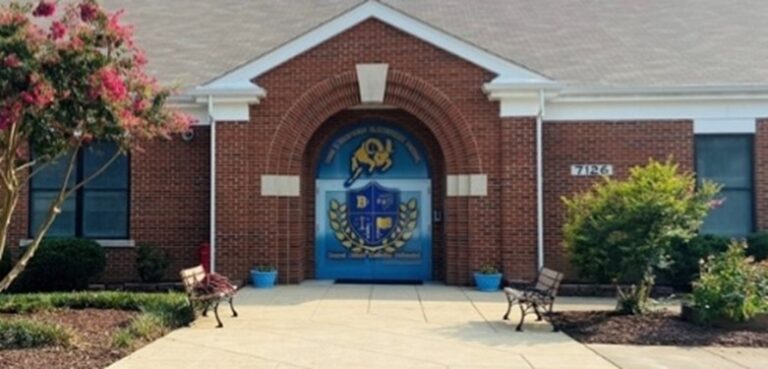
“Excorcism” was the term used by the person who posted the YouTube video capturing the prayer being broadcast from the public address system at the Bess T. Shepherd Elementary School, located off Tyner Road, according to Chattanooga’s Local3 News.


Take 120 seconds and watch this video of faculty fervently praying without awareness that the external speakers were broadcasting their before-school meeting. Every parent in every school should pray for teachers, principals, and school leadership who care enough to assemble daily before school and pray protection around their school, the children they’ll touch through their profession during the day, and for the guidance from God’s Hand as Creator and Provider.

But, as we know, it’s a free country to silence those whose voices offend. And, based on the original posting of this video, it was taken and posted for the purpose of exposing behavior that offended someone and was deemed inappropriate.

Let’s see. In schools, parents are witnessing the teaching from some that humans born with XX (males) or XY (females) chromosomes can imagine themselves to be of another gender, even to the point that we “affirm” their confusion by allowing surgeries to cut off the breasts of teen girls and penises of boys.

In schools, teachers and parents are fearful of violence, including weapons, used by angry and isolated kids who aren’t taught how to resolve conflict and don’t see that process modeled in their homes, churches, or communities–much less their schools. Instead, we’re taught to fight back and settle scores, even to the point of silencing our critics. 

So, the person capturing this video–who appears to be a Caucasian male–is hearing what he believes, and has been taught by some, is offensive behavior. 

On Sunday mornings, in quite a few Houses of Prayer, as God has said He wants His church to be, this same type of behavior, thankfully, is heard. In many homes, and hopefully more homes, this type of behavior is heard as petitions are lifted with emotion to God the Father earnestly seeking Divine protection, favor, and guidance.

Thank You, God, that this is heard from the Bess T. Shepherd Elementary School from the hearts of women and men acknowledging their need of wisdom, a Divine covering, and a hope for the best from the children and faculty in that school.

Moms, Dads, Grandparents, and citizens, we should all pray these same utterances over our children, over our teachers, over our schools, and all institutions of this community. We should also hope and pray that more schools are having these moments of meaningful fellowship, commitment, and devotion to their ministry and calling of the licensed profession of teaching. 

Dr. Luke, in The Gospel, penned and recorded the words of Jesus Christ, “And blessed is he who is not offended because of Me.” Blessed, indeed. Pray more!

Preview YouTube video Prayer broadcasted over intercom at a Chattanooga elementary school caught on video.

Chattanooga Mayor Tim Kelly Announces New Hires

0

Mayor Kelly brings on three new deputies to further drive One Chattanooga priorities

Chattanooga, Tenn.  — Last Friday Mayor Tim Kelly’s administration announced the appointment of three new deputies to help lead key city projects and priorities in the areas of community development, human resources, and public health. 

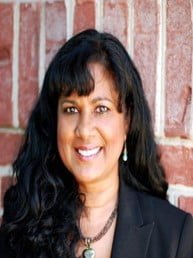
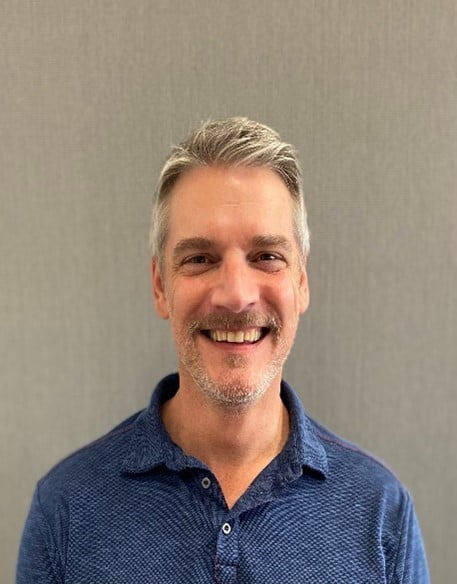
Don Walker is joining the City as Deputy Administrator for Community Development, Daniel Harrigan will serve as the new Deputy Chief Human Resources Officer, and Dr. Geeta Maharaj, DNP, RN, CPNP, will serve as the new Deputy Director of the Office of Community Health and Safety. 

“It takes a talented, diverse team working across departments to truly create lasting change, which is why I’m thrilled to have Don, Daniel, and Geeta on board,” said Chattanooga Mayor Tim Kelly. “From years of service in local government and community institutions, to on-the-ground work improving the health of some of our most vulnerable communities, this trio brings the breadth and depth of experience that will help ensure we get big things done for our residents.” 

Don Walker, serving as deputy under current Administrator for Community Development Anthony Sammons, will support the Mayor’s and the Administrator’s goals by directing, planning, and organizing the Department of Community Development’s programs and operations to help strengthen and empower communities throughout the city. The department oversees neighborhood services, community centers, community development and other assistance programs, and coordinates with workforce-development initiatives. 

Walker comes to the City with more than 30 years of experience in managing complex program operations and solving customer service challenges. He spent 25 years as the Director of Guest Services and Operations for the Tennessee Aquarium, where he implemented multiple company-wide programs and processes to improve operations and guest satisfaction, including the development of a company-wide customer service and training program that led to sustained increases in customer satisfaction ratings. 

“Don spent decades strengthening programs and policies at the Tennessee Aquarium to meet the needs of residents and visitors alike, and I couldn’t be more thrilled that he is bringing that unique expertise to the Department of Community Development,” said department administrator Anthony Sammons. “Our teams work every day to strengthen Chattanooga’s communities, and I look forward to opening up even more opportunities for our residents to engage and lead in their neighborhoods with Don’s added leadership.” 

Daniel Harrigan will serve as Deputy Chief Human Resources Officer directly under the Chief, Mande Lawrence, to help drive the City’s day-to-day operational goals. He is charged with implementing processes and policies to continuously improve the employee experience, while inspiring teams in their work to advance the One Chattanooga vision. 

Harrigan brings more than 13 years of experience in human resources to the City, twelve of which were spent working for Clark County in Washington State. Most recently, he served Clark County as a Senior Human Resources Representative, advising approximately 400 employees in eleven internal departments on policy and contract interpretation, labor relations, recruitment and compensation, and performance management. 

“Greatness starts from within, and that’s why I’m so excited to have Daniel on board to help advise and empower the nearly 3000 employees who serve our city every day,” said Lawrence. “Having worked for local government for over a decade, Daniel understands first-hand the unique types of challenges – and opportunities – that city staff face on a daily basis, and I’m confident his expertise will grow our capacity to support every employee as we work together to create a city where everyone has the opportunity to thrive.” 

Geeta Maharaj, DNP, RN, CPNP, serving as Deputy Director of the Office of Community Health and Safety, will work under director Dr. Mary Lambert to lead community health programs designed to address long standing health disparities in Chattanooga. Dr. Maharaj will also provide leadership support to the Family Justice Center and the City’s safety and gun violence prevention program, both of which also fall under the Office of Community Health and Safety. 

Dr. Maharaj has more than 30 years of experience in health care, including advanced nursing practice, public health, education, and research, with an emphasis on serving vulnerable populations. She received her Bachelor of Science in Nursing from the University of Tennessee Chattanooga, and holds a masters degree in advanced practice from the University of California, as well as a Doctorate in Nursing Practice from the University of Utah.  “I am thrilled to have Dr. Maharaj join my Office to move forward our continued efforts to close public health gaps and address disparities,” said Dr. Lambert. “Her extensive experience is a testament to her commitment to promoting health and serving communities in need, and I’m excited for her to bring that same passion and expertise in service to our city.”

GAME WEEK: Mocs Named FCS National Team of the Week

0

CHATTANOOGA—The 6th-ranked Chattanooga Mocs had week. They rolled to a 41-21 win over No. 11 Mercer Saturday night in Finley Stadium. It was a big game, big game atmosphere and the Mocs were up to the task led by junior defensive back Kameron Brown.

The defense turned the Bears over six times. The first was a fumble on the opening kickoff setting up a 3-0 lead. The next was Brown’s pick 6 on Mercer’s second offensive play put the wheels in motion to the runaway triumph.

The win earned FedEx Ground National Team of the Week per Stats Perform as well as Athlon’s National Team award. Brown earned SoCon Defensive Player of the Week honors collecting two of the Mocs four interceptions on the day. Mercer’s quarterback Fred Payton entered the game with just one interception thrown all season.

But that was then, and this is now. That’s been this team’s mentality throughout the campaign. It’s needed as No. 24 Furman looms with the road trip to Greenville, S.C.

“Last week is over,” Coach Rusty Wright began. “It was over at whatever time the final horn sounded, and we were done playing. You get until midnight to enjoy and then it’s on to the next one. It’s going to be a touch challenge this weekend.

“It’s their Homecoming. It’s a place we haven’t played particularly well at (over the years). We just have to figure it out with another good week of preparation.”

Coach Wright joins “Voice of the Mocs” Jim Reynolds on Chat with the Mocs tonight at Walk-On’s Sports Bistreaux on Broad Street in Chattanooga’s Aquarium District. The show airs from 7-8 p.m., on 96.1 FM/1070 AM in the Scenic City area or access it online here if you can’t make it.

Southern Conference Champion soccer coach Gavin McKinney is their special guest. He led the program to the first league title in program history.

TICKETS

Home tickets can be purchased at the link above or by calling (423) 266-MOCS (6627). Single-game sales start at $15. Away tickets are available on the football schedule page on GoMocs.com under that game week.

3 NOTES TO KNOW

  • Chattanooga is now No. 6 in AFCA Coaches Poll and 7th in the Stats Perform FCS Top 25.
  • 4-0 start for the Mocs for the first time since the same record in 2016. Last time 5-0? 2015. It’s happened twice before in the program’s 45 complete seasons in the SoCon: 2014 (7-0), 2015 (5-0).

Furman Week is off to a good start for the Mocs. The men’s golf team ran away with a 14-stroke victory Sunday in the Furman Intercollegiate, while the soccer team claimed a share of its first SoCon title with a 1-1 draw against the Paladins. There is a chance Furman is back on the soccer schedule on Friday in Chattanooga in the tournament quarterfinals depending on its result at Wofford Tuesday. The Mocs are the tournament’s top seed.

15-State Campaign Under Way to “Defend the Black Vote”

0

By Tennessee Tribune Staff

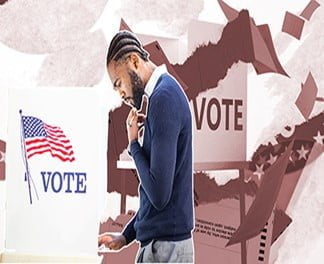
WASHINGTON, DC — People For the American Way announced its launch of the nonpartisan “Defend the Black Vote” campaign uniquely focused on mobilizing one million Black male voters between 18-60 against right-wing misinformation and attacks on voting rights before Election Day. Covering 15 states — Alabama, Arkansas, Florida, Illinois, Louisiana, Maryland, Michigan, Mississippi, North Carolina, Ohio, Pennsylvania, South Carolina, Texas, Virginia, and Wisconsin — “Defend the Black Vote” is one of the largest national direct texting campaigns exclusively focused on Black men who have voted in one of the last three elections. Messages will encourage them to vote and give them important information about voting laws and polling places.

The goal of the “Defend the Black Vote” campaign, is to improve democracy by bringing about more representative elections with greater participation of Black male voters so that elected officials and their policies truly reflect the will of their constituencies. Target states for the campaign include those where there has been a history of voter suppression and where Black voters have been persistently given misinformation about changes to voter ID laws, mail-in voting, early voting, and Election Day voting.

“The Far Right is waging a two-front war on Black voters and American democracy,” said President of People For the American Way Ben Jealous. “More and more of the Far Right’s agenda is being exposed every day and their policies have become the bedrock principles of MAGA extremist candidates that continue to marginalize and disenfranchise Black men. Far-right attacks on our children’s education, attacks on reproductive freedoms, attacks on our right to vote in free and fair elections are just the tip of the iceberg. Our ‘Defend the Black Vote’ campaign can help communities gain greater rights and protections.”

Main components of the “Defend the Black Vote” campaign include a video launch (It’s time to Defend the Black Vote – Are You Ready?”) and text messaging to potential voters about how to check their registration and where to cast their ballots. The campaign will also include story gathering of voters inspired to make their voices heard at the ballot box and digital advertising to sound the alarm about sustained right-wing attacks intended to misinform, intimidate, and suppress votes. Organizers plan for the social media portion of #DefendTheBlackVote to feature key influencers, faith leaders, and civil rights leaders.

“Black men have the potential to wield significant electoral power, but are often overlooked, so there’s a crucial nature to defending the Black vote,” said People For the American Way Executive Director Svante Myrick. “Defend the Black Vote” will reach Black men, regardless of political ideology, who deserve the truth about the far-right schemes to deny justice, equality, opportunity, and freedom.” Black eligible voters are projected to represent 13.6 percent of all eligible U.S. voters  (32.7 million) in November 2022, including 47 percent of Black men. Since 2020, legislatures in 49 states introduced more than 400 bills that would restrict access to the ballot and disproportionately affect voters of color (according to the non-partisan Brennan Center for Justice).