

Women of Distinction of Greater Chattanooga Luncheon
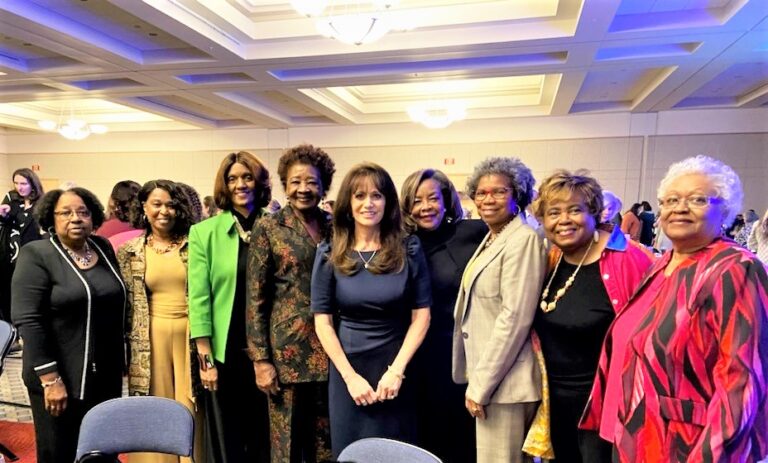
2022 Tennessee Woman of the Year, Louise Mandrell, attended and performed at the Women of Distinction of Greater Chattanooga Luncheon held today at the Chattanooga Convention where 10 local women were recognized and honored for their community/volunteer contributions. Joining Louise Mandrell following the event are attendees, from left, Bertha Alford; Jacqueline Lyons; Carolyn Dozier; Beverly A. Pasley Johnson (Table Host); 2022 Tennessee Woman of the Year, Louise Mandrell; Patricia McKoy; Daisy Madison; Faith R. Edwards; and Frances Rice.
Fall Break Legends of Chattanooga Camp
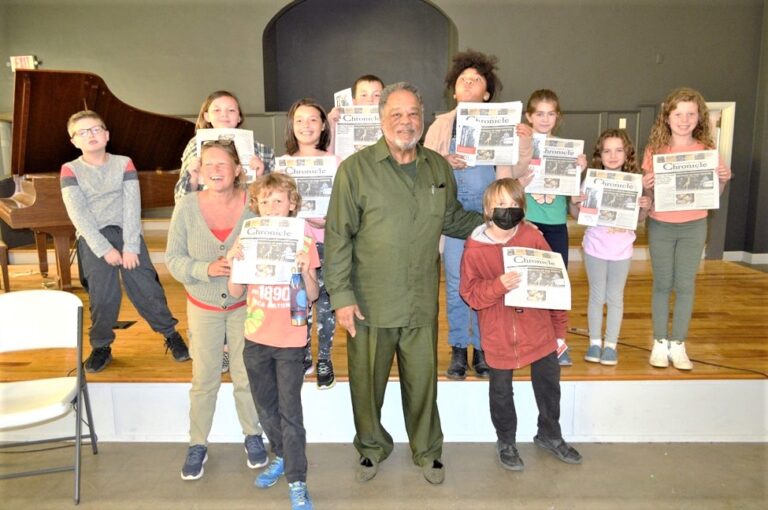
From Left, Jennifer Crutchfield, Camp Director for Fall Break Legends of Chattanooga Camp and John Edwards, III, Publisher, Chattanooga News Chronicle and local historian, are joined by 4th and 5th graders who attended the camp.
Edwards kicked off the start of the Fall Break Legends of Chattanooga Camp by sharing information on the importance of Moccasin Bend to the community; the life and legacy of former slave Mary Walker who learned to read and write at age 117; and service to the community as a newspaper publisher.
The Legends of Chattanooga Camp held during Fall Break was a joint effort of National Park Partners; Chattanooga Historical Society and Rise Chattanooga.
Guitar Protégé

Taking “The Road Not Taken” with Phyllis and Eugene

“Here we are, year 2022 and we’re still dealing with race in America. Where do we go from here and how do we get there?”
That’s the question I started with from a list of 15 I’d planned to get answers to from Phyllis and Eugene Unterschuetz, authors of “Longing Stories of Racial Healing” before another author, Mona Matthews, joined us for lunch.
But little did I know that 90 minutes would transpire, and we would never get back to my list that, had we, would have taken us way beyond the restaurant’s closing.
Now about their book.
Hey, talk about Robert Frost’s poem, “The Road Not Taken,” their book chronicles a white couple’s personal account of a ten-year journey across the country in their RV, one that forced them to reconsider their comfortable notions about race as they forged new relationships with people of African descent across the nation. Their stories describe a longing to heal by them – and I suspect others – from racial tensions that has so deeply wounded this country and continue to plague us.
With scintillating prose, the authors draw the reader into the moment, walking side by side with them, sharing the same observations, nuances and sounds of cross racial dynamics. Their stories are deliberate, sometimes stumbling, efforts to learn about the delicate nature of Black/white relations. It delves into the authors’ efforts to connect with the “racial other,” look squarely at the roots of their racial conditioning and allow their eyes to be opened to racial realities of others they’d been previously unaware of.
For yours truly, the book’s table of contents is a potpourri of eye-catching chapter titles, a “where do I start” challenge for a linear person like me who is conditioned to reading chapters in sequence, from beginning to end.
Case in point, I was lured to the “Confrontations” chapter in which Phyllis shares her mix of emotions when she encountered “Emilio,” the first Mexican she’d ever met and, later, when she happened upon a group of young Mexican boys on a corner and, in the moment, her conditioned inclination to avoid them, cross the street and averted her eyes away from them. What she learned about them and, more importantly, about herself is forever etched in her memory.
Next, in a striking comparison to race in America today, Gene’s chapter, “That’s a Lid,” describes what happened when two “strange” Black men walked into a restaurant, the diners all white, his innocent complimentary comment to one of them, and an eye-opening positive outcome that surprised him.
For the authors, their discovery of and use of the “Cycle of Racial Conditioning” was a game-changer. The model begins with misinformation resulting in fear, mistrust, and separation.
From childhood, we receive messages about who we are and who others are and the superiority of one group versus others. It comes from families, friends, institutions, and the media. It is the misinformation phase.
Fed by misinformation, separation (We don’t want to be around people “like that”) is the next phase in the cycle. It’s the breeding ground for stereotypes.
The final – and most disturbing say the authors – phase is “internalized oppression” when members of targeted groups accept the stereotypes about themselves and act on them which reinforces the stereotype. That furthers the separation, bringing the cycle full circle.
Which brings this to the question – how can we break the cycle?
The answer, say our authors, is at the separation stage. We must be willing and courageous enough to take baby steps in developing relationships with others who are different. “Relationships are the cure for separation; they are the simplest, most logical and most joyful ways to break the cycle.”
Okay, in case you’re wondering, here are some of the questions from my list that we did not get around to:
- “White?” “Anglo?” “European?” How do you prefer to be called?
- Why does race in a black/white context remain such a difficult subject to talk about cross racially?
- What are some of the most common “landmines” that sometimes torpedo genuine attempts at cross racial dialogues?
- If you could both roll the clock, back say 25 years, what do you think you could have done differently in the space of race relations based on what you know now?
- Describe a time when you kept your distance or mouth shut because you feared being misunderstood or rejected by someone different.
- Describe a situation when you actively sought assurance or approval from a person of color?
- What is one mistake you hope to never make around a person of color, or you hope a person of color never makes around you?
- What do you suspect persons of color would like you white people to stop doing, continue doing, or start doing, to break down barriers to trust and authentic relations with them?
- What does “patronizing” people of color and others look like and how can one interrupt it?
We will tackle these questions and many more in the days ahead. In the end, one cannot walk away from these and other questions and this book without self-discovery and reflection.
Here we’re talking about baby steps, and pretty good ones at that.
© Terry Howard is an award-winning writer and storyteller. He is also a contributing writer with the Chattanooga News Chronicle, The American Diversity Report, The Douglas County Sentinel, Hometown Advantage News, Blackmarket.com, co-founder of the “26 Tiny Paint Brushes” writers’ guild, recipient of the 2019 Dr. Martin Luther King, Jr. Leadership Award and 3rd place winner of the 2022 Georgia Press Award.
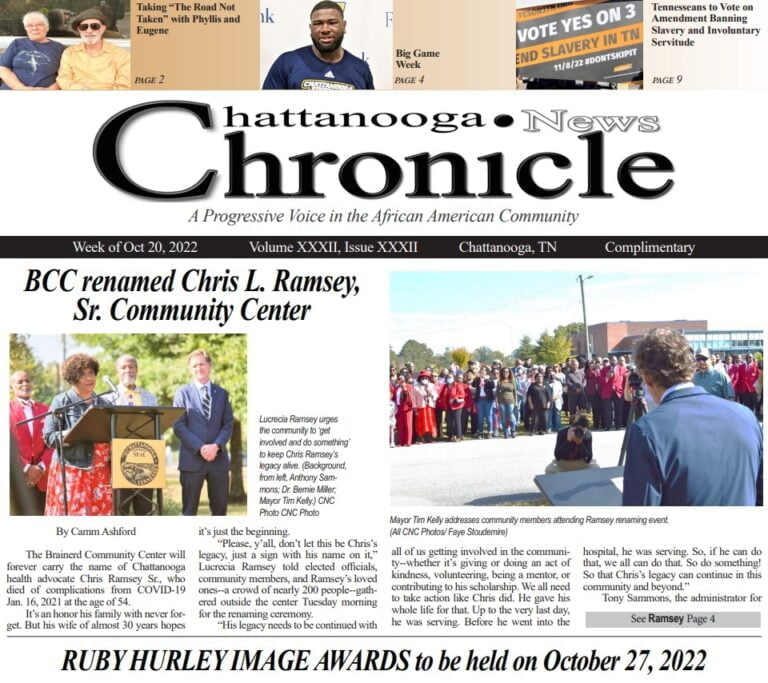
BCC renamed Chris L. Ramsey, Sr. Community Center
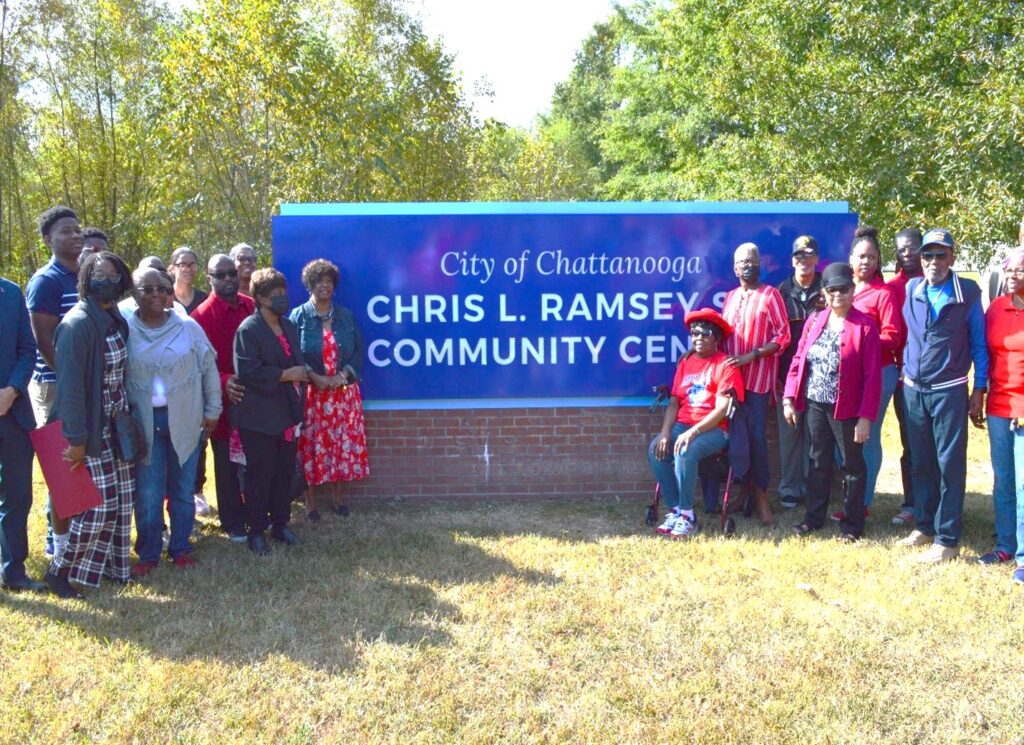
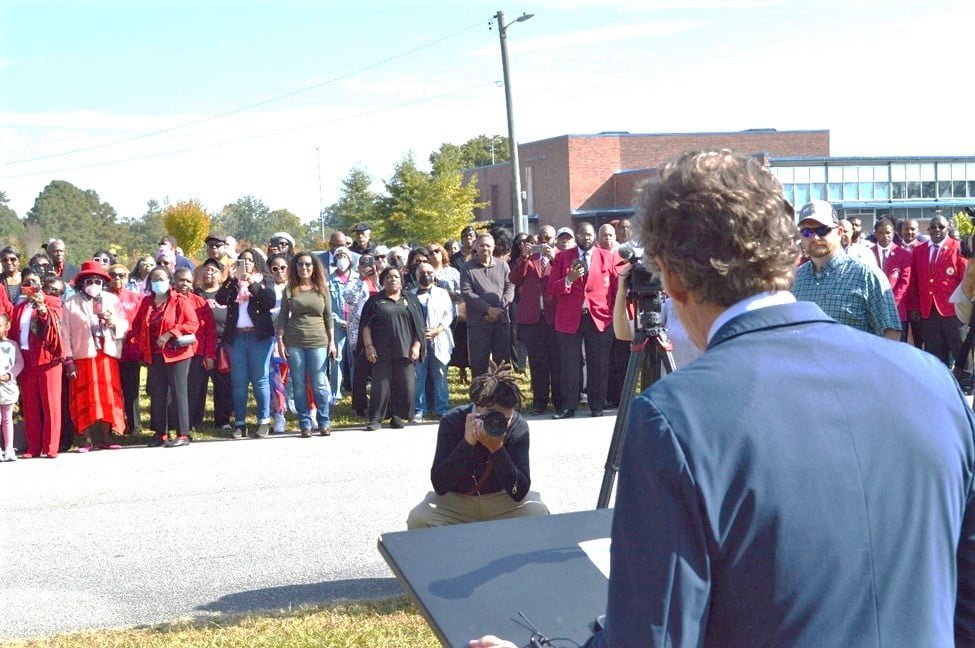
The Brainerd Community Center will forever carry the name of Chattanooga health advocate Chris Ramsey Sr., who died of complications from COVID-19 Jan. 16, 2021 at the age of 54.
It’s an honor his family with never forget. But his wife of almost 30 years hopes it’s just the beginning.
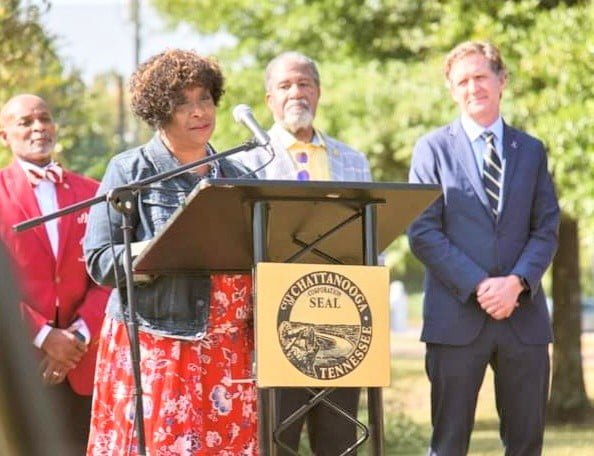
“Please, y’all, don’t let this be Chris’s legacy, just a sign with his name on it,” Lucrecia Ramsey told elected officials, community members, and Ramsey’s loved ones–a crowd of nearly 200 people–gathered outside the center Tuesday morning for the renaming ceremony.
“His legacy needs to be continued with all of us getting involved in the community–whether it’s giving or doing an act of kindness, volunteering, being a mentor, or contributing to his scholarship. We all need to take action like Chris did. He gave his whole life for that. Up to the very last day, he was serving. Before he went into the hospital, he was serving. So, if he can do that, we all can do that. So do something! So that Chris’s legacy can continue in this community and beyond.”
Tony Sammons, the administrator for the Department of Community Development for the city of Chattanooga, agreed with Mrs. Ramsey.
“Through his outreach, through his entire life, his goal was to give back to his community,” Sammons said. “This is only a symbol of what he represented. The lasting work that Chris gave us, is us returning and giving back to our community as well. So let’s do him that honor.”
Mayor Tim Kelly said the Brainerd center, a place that’s become synonymous with community in the area, is being honored in a way reminiscent of how Chris Ramsey lived.
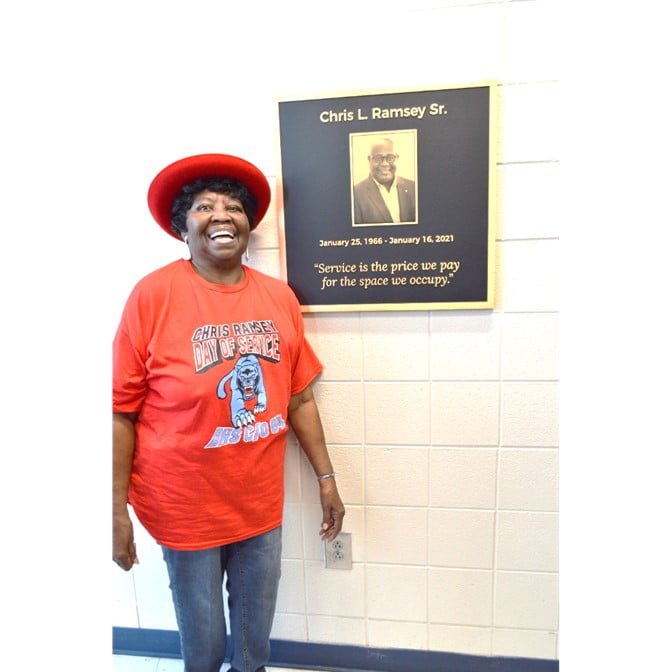
“I will forever be in his debt and grateful for everything he did during his lifetime to inspire all of us to make that vision a reality,” Mayor Kelly said. “Chris lived by the phrase ‘service is the price we pay for the space that we occupy.’”
Best known for his work promoting the Hamilton County Minority Health Fair, Mr. Ramsey was a dedicated public servant and an outspoken advocate for health equity and education for underserved communities in Chattanooga. He was also a leading voice at the height of the COVID-19 pandemic. Sadly, it was that very virus he was fighting so hard to keep others safe from that claimed his life.
“It was Chris who pointed out to me during my campaign that Chattanooga had one of the worst health disparities in the state of Tennessee,” Mayor Kelly said. “It was he who inspired me to really create the Office of Community Health to continue to try to close those health disparities that have haunted our area for so long.”
His widow noted that the Brainerd Community Center held a special significance to Mr. Ramsey, a 1984 graduate of Brainerd High School.
“It’s such an honor to have the center named after him,” she shared. “He always used to tell me that this center was where he used to go in the summertime, and he was a member of the Boys Club. So, this is the ideal place to continue his legacy.”
A plaque in Mr. Ramsey’s honor was hung in the entryway of the center now bearing his name, a reminder of his dedication to service and community. Dr. Bernie Miller, pastor of the New Covenant Fellowship Church in Chattanooga, also unveiled a proclamation in Mr. Ramsey’s honor that will hang in the center.
“Chris challenged us to find our passion and serve our community,” Mrs. Ramsey said. “He felt that we didn’t have to wait on the government, on people, to help us, that we can help ourselves. He didn’t just sit back and let others do. He wanted to do and share his part.”
Mr. Ramsey was a native of Chattanooga. He received his Bachelor of Business Administration from Austin Peay State University in 1988, and his Master of Business Administration from the University of Tennessee at Chattanooga in 1990.
While attending Austin Peay, Mr. Ramsey became a member of Kappa Alpha Psi Fraternity, Inc. After college, he continued to serve as an active member of the organization and held several leadership roles.
He was a 2011 NAACP Ruby Hurley Humanitarian Honoree.
Additionally, Mr. Ramsey was an active member at New Covenant Fellowship Church, where he joined in 2004. He served as a deacon and in 2014 was ordained as an elder.
Lucrecia Ramsey said that although it’s bittersweet her husband isn’t here to see the renaming, she is proud of him and glad he was recognized.
“My heart is just overfilled with happiness,” she said. “I know Chris is up in heaven, just smiling.”
Mrs. Ramsey said she is thinking about bringing some of her husband’s awards and other memorabilia to the center so those visiting can learn more about him. (Photo Gallery on pg 3)
UTC student digitally digs into huge African American collection at Bessie Smith Cultural Center
By Shawn Ryan
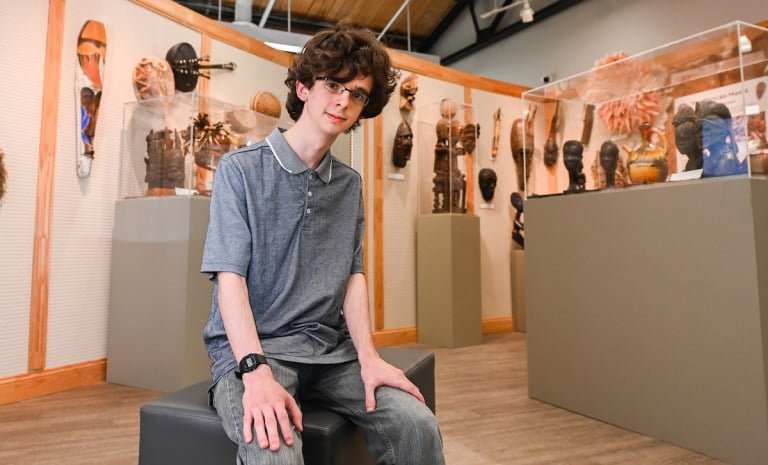
Over the summer, Maxwell King was immersed in the history of Chattanooga.
It may seem odd that a sophomore majoring in computer science at the University of Tennessee at Chattanooga would dive into the city’s past, but King was using his tech skills.
As an intern in the city’s Bessie Smith Cultural Center, which focuses on the history of blacks in Chattanooga, he helped digitize its massive collection of artifacts, photos and artwork, a task that hadn’t been done until now.
Some of the history was totally new to King.
“I was learning to effectively research topics I know nothing about–traditional African art, African American music history, African American local history,” he said. “The most surprising, memorable thing I cataloged was an original map of downtown Chattanooga from 1880.”
King was the first student in the College of Engineering and Computer Science selected for the Small-Business Intern Initiative Fund, established with a $25,000 donation from Atlanta-based KaZee, the largest minority-owned software development company in the country.
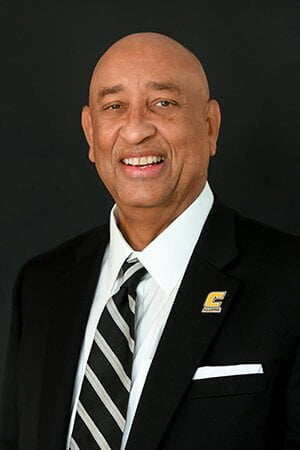
Albert Woodard, a 1974 graduate from UTC with a bachelor’s degree in industrial engineering, is founder and chief executive officer of Atlanta-based KaZee, which provides information technology products and services to the health-care industry.
“It is important to future generations that we record and display the contributions and history of Chattanooga’s black community,” Woodard said. “The Bessie Smith Cultural Center provides a balanced historical perspective as well as an educational venue for arts and the exchange of ideas.”
The KaZee fund will financially support paid internships with preference given to small, minority-, women- and disabled-owned businesses with less than 25 employees and $5 million in annual revenue.
Tyler Broome, digital media specialist at the Bessie Smith Cultural Center, said King was “a huge help to us with this project.”
“Maxwell’s drive, willingness to learn and genuine interest in history really shined through during his time here,” Broome said. “He did research on almost every item he touched. He learned what the artifact was, how it was used, and what significance it had for Chattanooga’s African American History.”
During his internship, King catalogued almost 1,000 pieces of history at the center, Broome said, “as well as assisted us with the finishing touches on our brand-new exhibit ‘Chattanooga’s Black Soundtrack,’” Broome said.
King said he archived photos of black Chattanoogan musicians such as Usher, singer and composer Roland Hayes–namesake of the concert hall in the UTC Fine Arts Center–and Russell Goode, a music teacher at Howard High School.
Photos also documented local history such as the Martin Hotel, once the largest African American hotel in the South and located on what is now M.L. King Boulevard in front of the Bessie Smith Cultural Center.
Others were taken outside of Chattanooga.
“One photo I remember well is one of two Congolese fishermen from the 1930s,” King said.
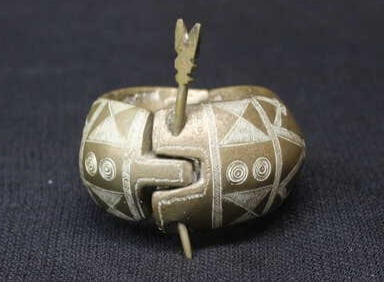
Along with photos, King also cataloged African instruments such as a masenqo, a single-stringed instrument with an animal-skin resonator and a harp with an animal-skin stand.
“The items I cataloged were all to remain in storage, with the idea being that, if they wanted to put something on exhibit, they would be easier to find.”
The Bessie Smith Cultural Center was created 39 years ago, Broome noted, and only a fraction of the details and history of its large collection has been saved in digital form. Most of it is on paper and “mostly handwritten,” he said.
“Archiving and digital preservation is a necessity. Over time, paper, wood and organic materials erode and disintegrate,” Broome said. “By digitizing photos and documents and photographing artifacts, it allows us to ensure that there will always be a copy of that piece of history in our archive digitally.”

Commissioners in standoff with Mayor on firing of longtime Hamilton County Attorney Rheubin Taylor
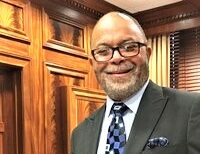
Rheubin Taylor remains the Hamilton County attorney as of this Wednesday, despite Hamilton County Mayor Weston Wamp announcing Oct. 14 that he was removing Taylor from that position effective immediately.
Mayor Wamp said last Friday that he would immediately begin a search to identify an appointment to bring before the County Commission to replace Taylor, who has served as county attorney for almost three decades.
But County Commission members on Wednesday said the county attorney works for both the county mayor and the commission and both should have been involved in any decision to terminate Taylor.
Commissioner Lee Helton, saying the county mayor acted unilaterally, said, “It just doesn’t leave a good taste in your mouth. It’s completely inappropriate for someone to come and fire our attorney.”
Other commissioners expressed frustrations at how Mayor Wamp’s announcement of Taylor’s firing was handled, with many saying they learned about it through news reports.
“The lack of transparency in taking this action is troubling,” said Hamilton County Commission Chairman Chip Baker.
At the suggestion of Baker, the commission agreed to hire outside counsel John Konvalinka to represent the panel for a $10,000 fee.
After meeting with Konvalinka, the commissioners on Wednesday afternoon passed a resolution setting up a civil service system for county employees. Another resolution blocks any firing of county employees (including attorney Taylor) until the new civil service program is set up.
In June 2021, commissioners and then-Mayor Jim Coppinger approved a four-year contract with Taylor lasting through June 30, 2025.
Termination, the contract states, requires a majority of the County Commission, with concurrence from the county mayor or a two-thirds majority without concurrence from the county mayor.
A resolution unanimously passed by commissioners on Wednesday also says attorney Taylor would continue as county attorney “with no lapse” under his 2021 contract.
Mayor Wamp told commissioners that it is not legal for such a contract to extend over to the next administration.
“I’m not gonna go down there and prevent him from walking in the county attorney’s office, I’ve got other things to do,” Mayor Wamp said during a news conference about Attorney Taylor held Wednesday before the commissioners met. “But he doesn’t have access to email. He doesn’t have a county phone, and he’s not on the payroll.”
According to a news release from his office last Friday, “Mayor Wamp came to this decision based on concerns about private legal work Mr. Taylor conducts during business hours, concerns about breach of attorney-client privilege with our office, and previous admissions from Mr. Taylor that his office had systematically destroyed thousands of documents related to open records requests.”
Attorney Taylor, 73, a native of Chattanooga, has a long record of service to the community. When he returned to Chattanooga in 1973, he was the first African American licensed attorney in the city. In 1978, he and the Rev. Paul McDaniel became the first Black Hamilton County Commissioners. Taylor also became the first Black Hamilton County attorney.
Attorney Taylor has continued to work at the courthouse and was present for Wednesday’s commission meeting.
Commissioner Greg Martin indicated the matter could go to court, but chairman Baker hopes that’s not the case.
“We did a number of things, to reinstate the fact that we control the buildings, that he’s our attorney, that we have a contract with him, and that all the contracts that we have, should remain in place,” he said.
Tennesseans Can Honor a Service Member with their Vote in the Nov. 8 Election
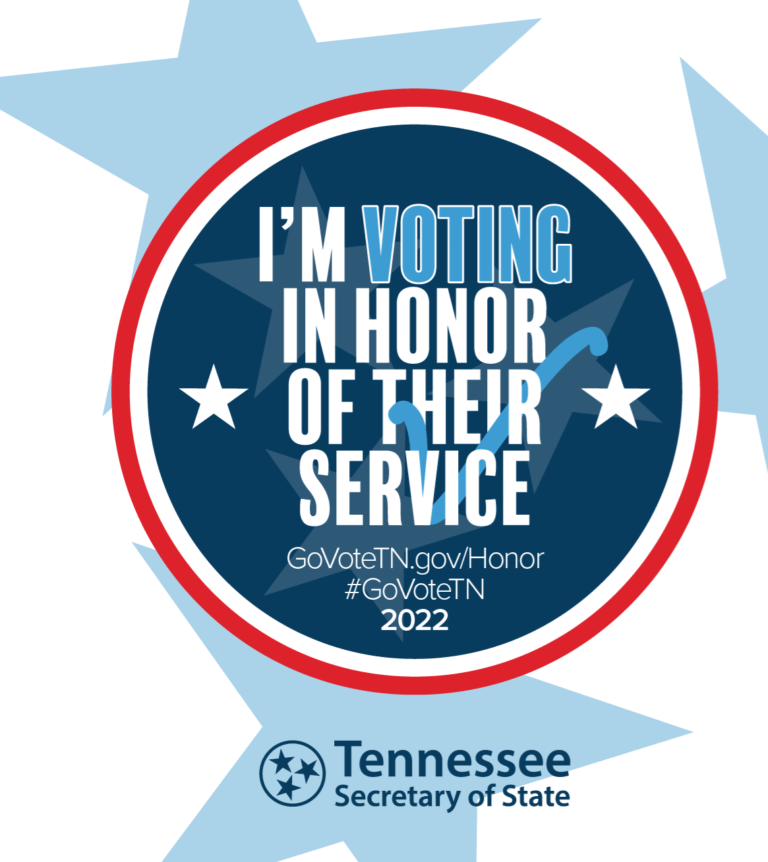
NASHVILLE, Tenn.–The Secretary of State’s Honor Vote Program allows Tennesseans to dedicate their vote Nov. 8 State and Federal General Election to a veteran or active-duty member of the U.S. military.
“We have the right to select our leaders through free elections thanks to the brave men and women who have served our country in the armed forces,” said Secretary of State Tre Hargett. “The Honor Vote program is a small way that we can show our appreciation for the soldiers who fought for our rights and serve our county to protect them.”
The Honor Vote program is free and open to any registered voter in Tennessee. Voters can choose to dedicate their vote to anyone currently serving in or a veteran of the U.S. Army, Navy, Air Force, Marines, Coast Guard or Tennessee National Guard.
Honor Vote participants will receive an information guide and an official 2022 Honor Vote button that they can wear while casting their ballot.
All Honor Vote dedications are posted on the official Tennessee Honor Vote List on GoVoteTN.gov and the Honor Vote Twitter account @tnhonorvote. Participants are encouraged to share their dedication on their social media accounts using the hashtags #TNHonorVote and #GoVoteTN. For more information or to register your vote dedication, visit GoVoteTN.gov/honor