Friday, October 16, 2026
Advertisement
Home Blog Page 105

Chattanooga City Council Adopts Westside Community Transformation Plan

0

The Chattanooga City Council on Tuesday night adopted the Westside Evolves Plan, which provides a 10-year strategy for change in the city’s oldest public housing community. The plan was developed over a two-year period with more than 82 percent of the area’s 4,500 residents participating in the process.

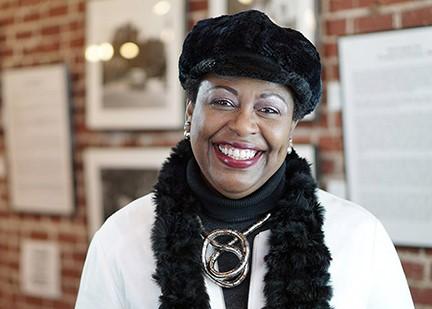
“Thanks to deep collaboration between the community, the Chattanooga Housing Authority, the City, and other stakeholders, we now have an accountable and transparent plan to revitalize our beloved Westside, opening up opportunity and quality affordable housing that will uplift the community for years to come,” said Councilwoman Raquetta Dotley, whose district includes the Westside neighborhood.

In further support of the plan, City Council also voted to approve an interlocal agreement that will allow the City to provide $1 million from its affordable housing fund to support the renovation of the historic James A. Henry school. The school will serve as the Westside’s new neighborhood hub, anchored by a 100-seat Head Start facility. The funding is in addition to the $2 million in federal American Rescue Plan funds the City already invested in the renovation, for a total commitment of $3 million.

“Chattanooga’s Westside is one of our most historic neighborhoods, home to over five generations of our residents,” said Chattanooga Mayor Tim Kelly. “The Westside Evolves plan will ensure this critical part of our city is revitalized in a way that will support the growth and prosperity of future generations, all without displacing the existing community. This is exactly the kind of thoughtful planning we need to further our vision for One Chattanooga, and I’m grateful to City Council for supporting this transformative initiative for our city.”

Westside Evolves is a collaborative neighborhood planning initiative among the Chattanooga Design Studio, the Chattanooga Housing Authority (CHA) and the City of Chattanooga. In addition to the funding provided by the City, U.S. Rep. Chuck Fleishmann secured a $3 million federal appropriation for the project, and Hamilton County invested an additional $2 million in American Rescue Plan funds. The money will be used to leverage additional dollars to fully fund the project, at an estimated total cost of $1 billion over the next 10 years.

Adoption of the plan launches an official partnership between the City and CHA, in which both will leverage the plan as the official strategy for revitalizing the historic neighborhood. With a one-for-one replacement of housing for the 629 families living in the Westside, the plan includes replacement, work force, and market rate housing during each phase of development.

The plan encompasses the area known as the Westside District, which is bordered by Martin Luther King Boulevard, Riverfront Parkway, Main Street and I-27. While residents of College Hill Courts may be relocated during future construction, all lease compliant residents will have the right to return to a new unit in the Westside neighborhood. CHA residents will continue to pay 30 percent of their adjusted income towards rent at any redeveloped property.

CHA executive director Betsy McCright said, “Few planning projects begin in the midst of a pandemic and even fewer are successful. Our residents wanted a voice in the future of their community and their diligence is coming to fruition with adoption of the plan by the City of Chattanooga.”

Chattanooga Design Center executive director Eric Meyers noted, “Chattanooga Design Studio is grateful for the City Council’s support of the efforts of the residents, artists, institutions and planning partners who all worked together to craft a shared vision for the future of the Westside.”

Each phase of the project will seek to employ local residents in construction jobs to support the development. Through an agreement with the AGC of East Tennessee, Westside students attending the Howard School have a unique opportunity to obtain professional training through the AGC’s Construction Career Academy. As they graduate, the students will be able to obtain jobs to work on the construction projects within the Westside, helping end generational poverty in the area.

The Chattanooga Design Studio, www.chattanoogastudio.com, is an independent, non-profit community resource that promotes excellence in urban design through education, facilitation and collaboration.

The Chattanooga Housing Authority, chartered in 1938, is a public body that offers affordable housing opportunities through its Low Income Public Housing Program in Chattanooga and the Housing Choice Voucher Program throughout Hamilton County. To learn more about the CHA, visit www.chahousing.org.

Cannabis holds promise for pain management, reducing the need for opioid painkillers – a neuropharmacology expert explains how

0

Benjamin Land – Research Associate Professor of Pharmacology, University of Washington

Drug overdose deaths from opioids continue to rise in the U.S. as a result of both the misuse of prescription opioids and the illicit drug market.

But an interesting trend has developed: Opioid emergency room visits drop by nearly 8% and opioid prescriptions are modestly lower in states where marijuana is legalized.

Marijuana is produced by the cannabis plant, which is native to Asia but is now grown throughout the world. Individuals use marijuana for both its psychoactive, euphoria-inducing properties and its ability to relieve pain.

Chemicals produced by the cannabis plant are commonly known as cannabinoids. The two primary cannabinoids that occur naturally in the cannabis plant are THC – the psychoactive compound in marijuana – and CBD, which does not cause the sensation of being high.

Many marijuana users say they take it to treat pain, suggesting that readily available cannabinoids could potentially be used to offset the use of opioids such as morphine and oxycodone that are commonly used in pain treatment. A safer, natural alternative to opioid painkillers would be an important step toward addressing the ongoing opioid epidemic.

Intriguingly however, research suggests that cannabis use could also lessen the need for opioids directly by interacting with the body’s own natural opioid system to produce similar pain-relief effects.

I am a neuropharmacology scientist who studies both opioids and cannabinoids as they relate to pain treatment and substance abuse. My research focuses on the development of drug compounds that can provide chronic pain relief without the potential for overuse and without the tapering off of effectiveness that often accompanies traditional pain medications.

How opioids work

Our bodies have their own built-in opioid system that can aid in managing pain. These opioids, such as endorphins, are chemicals that are released when the body experiences stress such as strenuous exercise, as well as in response to pleasurable activities like eating a good meal. But it turns out that humans are not the only organisms that can make opioids.

In the 1800s, scientists discovered that the opioid morphine – isolated from opium poppy – was highly effective at relieving pain. In the last 150 years, scientists have developed additional synthetic opioids like hydrocodone and dihydrocodeine that also provide pain relief.

Other opioids like heroin and oxycodone are very similar to morphine, but with small differences that influence how quickly they act on the brain. Fentanyl has an even more unique chemical makeup. It is the most powerful opioid and is the culprit behind the current surge in drug overdoses and deaths, including among young people.

Opioids, whether naturally produced or synthetic, produce pain relief by binding to specific receptors in the body, which are proteins that act like a lock that can only be opened by an opioid key.

One such receptor, known as the mu-opioid receptor, is found on pain-transmitting nerve cells along the spinal cord. When activated, mu-receptors tamp down the cell’s ability to relay pain information. Thus, when these opioids are circulating in the body and they reach their receptor, stimuli that would normally cause pain are not transmitted to the brain.

These same receptors are also found in the brain. When opioids find their receptor, the brain releases dopamine – the so-called “feel-good” chemical – which has its own receptors. This is in part why opioids can be highly addicting. Research suggests that these receptors drive the brain’s reward system and promote further drug-seeking. For people who are prescribed opiates, this creates the potential for abuse.

rx pharmacy prescription bottle of pills $100 usa v2 - opioid drugs stock pictures, royalty-free photos & images

Opioid drugs, which include heroin, oxycodone and fentanyl, are highly addictive.  The opioid crisis: Painkillers are killing us.

Opioid receptors are dynamically regulated, meaning that as they get exposed to more and more opioids, the body adapts quickly by deactivating the receptor. In other words, the body needs more and more of that opioid to get pain relief and to produce the feel-good response. This process is known as tolerance. The drive to seek more and more reward paired with an ever-increasing tolerance is what leads to the potential for overdose, which is why opioids are generally not long-term solutions for pain.

The potential of THC and CBD for pain treatment

Both THC and CBD have been shown in numerous studies to lessen pain, though – importantly – they differ in which receptors they bind to in order to produce these effects.

THC binds to cannabinoid receptors that are located throughout the central nervous system, producing a variety of responses. One of those responses is the high associated with cannabis use, and another is pain relief. Additionally, THC is believed to reduce inflammation in a manner similar to anti-inflammatory drugs like ibuprofen.

In contrast, CBD appears to bind to several distinct receptors, and many of these receptors can play a role in pain reduction. Importantly, this occurs without the high that occurs with THC.

Because they target different receptors, THC and CBD may be more effective working in concert rather than alone, but more studies in animal models and humans are needed.

Cannabinoids may also be helpful for other conditions as well. Many studies have demonstrated that cannabinoid drugs approved for medical use are effective for pain and other symptoms like spasticity, nausea and appetite loss.

Moving pain research forward

Along with the pairing of THC and CBD, researchers are beginning to explore the use of those two cannabinoids together with existing opioids for pain management. This research is being done in both animal models and humans.

These studies are designed to understand both the benefits – pain relief – and risks – primarily addiction potential – of co-treatment with cannabinoids and opioids. The hope would be that THC or CBD may lower the amount of opioid necessary for powerful pain relief without increasing addiction risk.

For example, one study tested the combination of smoked cannabis and oxycontin for pain relief and reward. It found that co-treatment enhanced pain relief but also increased the pleasure of the drugs. This, as well as a limited number of other studies, suggests there may not be a net benefit.

However, many more studies of this type will be necessary to understand if cannabinoids and opioids can be safely used together for pain. Still, using cannabinoids as a substitution for opioids remains a promising pain treatment strategy.

The next decade of research will likely bring important new insights to the therapeutic potential of cannabinoids for chronic pain management. And as marijuana legalization continues to spread across the U.S., its use in medicine will undoubtedly grow exponentially. (The CONVERSATION)

Property appraisers valued an interracial couple’s home at $310,000 when they met the Black homeowner — but gave their white partner a $350,000 valuation

0

By Emma Ockerman 

Property appraisers valued an interracial couple’s home at $310,000 when they met the Black homeowner — but gave their white partner a $350,000 valuation© Getty Images

Interracial couples were assigned different appraisal values for their homes in the Baltimore, Md., area depending on the skin color of the partner who greeted the appraiser and whether the house was “whitewashed,” a new study from the National Community Reinvestment Coalition shows.

In one case, a single row house was valued at $350,000 when the appraiser met only with their white homeowner in an interracial relationship. The person’s Black partner received a valuation of $310,000 — given by a separate appraiser who met only with them, according to the NCRC, which said it chose the appraisers randomly and scheduled their inspections on different days, but as close together as possible.

For each test, two full appraisals using two different appraisal companies were conducted, with the white partner presenting a “whitewashed” home where any evidence of their Black partner, including family photos and cultural items, had been removed. The Black partner, on the other hand, presented a “blackwashed” home, removing signs of the white partner.  

“The discrimination we found in the appraisals system undermines Black wealth-building and almost certainly violates the law,” Jesse Van Tol, president and CEO of the NCRC, a nonprofit based in Washington, D.C., said in a statement. “It is unacceptable for appraisers to undercut the value of homes and conduct themselves less professionally when dealing with Black homeowners.”

‘The discrimination we found in the appraisals system undermines Black wealth-building and almost certainly violates the law.’ — Jesse Van Tol, president and CEO of the NCRC

The NCRC’s study is hardly the only recent example of bias in the home appraisal industry, which is overwhelmingly white, according to government data. 

Earlier this year, the National Fair Housing Alliance issued an 84-page report noting how discriminatory associations between race and risk have historically undermined the value of Black neighborhoods, including through color-coded maps that “redlined” neighborhoods of color and deemed them hazardous, making it difficult to get mortgages in these areas.

“Because home value has been the cornerstone of intergenerational wealth in the United States, the historical appraisal practices have had long-term effects in creating some of the current wealth inequalities where white wealth has soared while Black wealth has remained stagnant,” the report said.

Last year, Freddie Mac  also said that, based on data from more than 12 million appraisals, it discovered that 12.5% of homes in Black Census tracts received an appraisal value lower than the contract price, compared to 7.4% of homes in white census tracts.

Furthermore, a 2018 Brookings Institution study found that homes in majority Black neighborhoods were undervalued by 23% less on average — amounting to $48,000 less per home — when compared to the value of homes of similar quality in neighborhoods with similar amenities, but few to no Black residents. 

These disparities have also been the subject of various lawsuits from Black homeowners alleging mistreatment. 

A Black couple in Marin City, California, for example, said that an appraiser assigned their home a value of $995,000 in 2020, which they felt was low because they’d made $400,000 in renovations. When the Black couple brought in a white friend to act as if the property belonged to her, though, a different appraiser valued the home at $1.48 million, according to KGO-TV in San Francisco and the Washington Post.

These disparities have also been the subject of various lawsuits from Black homeowners alleging mistreatment. 

The family later sued the first appraiser and her company, and a trial is set to take place next fall, according to the North Bay Business Journal.  (A settlement deal was reached with another party in the lawsuit — the firm that hired the appraisers, the North Bay Business Journal reported.)

And, in Baltimore, a Black history professor and his wife, a lecturer in literature and Africana studies, said that before they began to refinance their home last summer, a local appraisal company valued their home at $472,000, just $22,000 more than the amount they had paid in 2017 despite $35,000 in renovations and a new $5,000 tankless water heater, according to the New York Times. The family was then denied a refinance loan.

However, when they removed family photos and a white, male colleague stood in for a second appraisal, their home was deemed to be worth $750,000. They ultimately sued the mortgage lender who denied their loan, the appraisal company who gave their first appraisal, and the first appraiser, who they said improperly weighed the value of their home against the sale prices of “comparable” properties that allegedly included a fixer-upper and a property outside the boundaries of their neighborhood, according to the New York Times. 

Both cases were mentioned in the NCRC’s report. 

“The evidence of systemic bias in the appraisal business has been mounting for some time,” Van Tol said in his statement about the NCRC’s report, “but NCRC’s new testing showed that interracial couples in Baltimore get far better treatment and valuations if the appraiser believes the homeowner and their family are white.”

One Black partner was ghosted by the appraiser and never received a report; another was asked to pay upfront. 

The NCRC study examined appraisals across four interracial couples who own homes in the Baltimore area, with 14 appraisals conducted across seven “tests.”

On average, the white partners received valuations worth nearly $7,000 more than their Black partners, despite showing the same property, the report said. *

However, Black partners were given valuations higher than their white partners in three of the seven tests, with one Black homeowner receiving an appraisal of $500,000 while their partner had the home appraised at $460,000. The other gaps in valuation were more slight, with another Black partner receiving $10,000 more on a home than their white partner and a third receiving $5,000 more.

The Black partners also sometimes received dramatically worse customer service during the tests. While white partners universally reported having pleasant experiences and received their appraisal reports promptly across all seven tests, Black partners had negative experiences in two of the seven tests, the NCRC report said. One Black partner was ghosted by the appraiser and never received a report; another was asked to pay upfront, and then didn’t receive their test for nearly 11 weeks. 

Those kinds of delays can cost Black homeowners money in the home-selling or refinancing process, the NCRC noted, either by getting in the way of a sale or by subjecting the homeowner to increase borrowing costs as interest rates rise. 

To be sure, the Appraisal Institute, a professional association of appraisers, says it’s trying to improve diversity in the profession, and its president, Jody Bishop told the House Committee on Financial Services earlier this year that the organization was “deeply concerned” about allegations of bias. 

“When we see even one story of a consumer who feels they were treated differently because of their race, it’s gut-wrenching because that goes against everything appraisers stand for,” Bishop said in a statement to MarketWatch. “Appraisal is one piece of a larger ecosystem to look at when it comes to housing issues. Ensuring unconscious bias doesn’t play a role in appraisals and seeking broader solutions to diversity, equity and inclusion in housing is a priority for the Appraisal Institute.”

“Creating a more equitable housing environment in this country will take solutions advanced by real estate brokers/agents, banks, government agencies, appraisers and others,” Bishop added.

Ernest Withers’ Iconic Photographs on Exhibit with Till Film  

0

By Wiley Henry 

MEMPHIS, TN – One of this country’s preeminent civil rights photographers is receiving widespread attention from Hollywood notables 15 years after his death this month in 2007.  

Rosalind Withers, daughter of Ernest C. Withers Sr. and director and conservator of The Withers Collection Museum and Gallery in Memphis, said her father’s work is reaching a global audience. 

In partnership with Orion Pictures (an MGM company) and United Artists Releasing, some of Withers’ iconic photographs are being exhibited with others in tandem with the Till movie. 

“We (The Withers Collection) worked with the premiere release of the film,” said Rosalind Withers, who met the president of Orion Pictures, Alana Mayo, at a prior Withers exhibit.  

According to Rosalind Withers, Mayo said, “We need to do something together on this film (Till) … and somehow incorporate the Withers collection into this film.”  

The movie premiered at the Samuel Goldwyn Theater in Beverly Hills on Oct. 8 to much fanfare and debuted in New York and Chicago as well. Till also premiered in London on Oct. 15. 

Rosalind Withers attended the Beverly Hills screening of Till and the exhibit entitled “Till: Impact of Images,” featuring African American photographers and journalists from the Black press corps who captured that dark and turbulent era in American history.

    Ernest C. Withers, Sr.    

“It was amazing. It was probably one of the greatest functions I’ve attended in a long time,” Rosalind Withers said. “It was LA.’s first time seeing the film.” 

Withers, L. Alex Wilson, Clotye Murdock, Simeon Booker and others who risked their lives for the story were described on the website for “Till: Impact of Images” as “soldiers without swords.”  

Their stories and images, cobbled together at times under dire circumstances, exposed humanity at its worst when Black lives were imperiled and relegated to a harsh reality during the Jim Crow South.  

The “Till: Impact of Images” collection is organized by K Period Media Foundation and Lead With Love, with support from Orion Pictures, United Artists Releasing, and the Till movie.  

Personal photographs from the families of Emmett Louis Till and Mamie Till-Mobley and Medgar and Myrlie Evers are part of the “Till: Impact of Images” collection as well. 

The Emmett Till Legacy Foundation, The Medgar & Myrlie Evers Institute, and The Withers Collection are cited for their continued fight for equality and battle for civil rights. 

Ernest Withers’ “I Am a Man” photo of striking sanitation workers in Memphis, TN. Photos courtesy of the Withers Family Trust Credit 

The Withers Collection also collaborated on a commemorative art piece for attendees at the Till movie premiers in New York, Los Angeles, and Chicago, and provided them with a keepsake ticket stub honoring the aforementioned organizations. 

The movie is based on Till-Mobley’s courageous and relentless fight for justice after her 14-year-old son was brutally lynched in 1955. Till opened in select theatres on Oct. 14 and will open nationwide on Oct. 28.  

Rosalind Withers, Ernest C. Withers’ daughter. 

It was directed and co-written by Chinonye Chukwu and produced by Whoopi Goldberg, Frederick M. Zollo, Thomas Levine, Keith Beauchamp, Michael Reilly, and Barbara Broccoli.  

It has been 67 years since Emmett Till’s life was snuffed out by white men for whistling at a white woman in Money, Miss. His gruesome death is not the crux of this Till movie. 

After the lynching of Emmett Till and all the hullabaloo over his death, Withers went to Sumner, Miss., and risked his life to photograph the trial of Roy Bryant and J.W. Milam, who were acquitted of killing the Chicago lad. 

“One of the things that we showed in our exhibition was my father’s image of Mose Wright pointing (at Milam and Bryant when he testified at their trial),” Rosalind Withers said. “He was the only person who took that picture.” 

A group of people holding signsDescription automatically generated with medium confidence
Ernest Withers’ “I Am a Man” photo of striking sanitation workers in Memphis, TN. Photos courtesy of the Withers Family Trust Credit 

Withers published a pamphlet of photographs from the trial and marketed them as the “Complete Photo Story of Till Murder Case.” The cost: $1.00. The pamphlet is now part of the Smithsonian collection, Rosalind Withers said. 

She has one other copy in her possession and declared it to be “extremely valuable.” A descendant of President Thomas Jefferson gifted it to her, she said.  

“It shows you how far-reaching Dad’s work [has] impacted our history.”  

Man who attacked Speaker Pelosi’s husband wanted to break ‘her kneecaps,’ DOJ says

By Jennifer Shutt, Tennessee Lookout 

WASHINGTON — The U.S. Department of Justice on Monday announced federal charges against the man who allegedly broke into U.S. House Speaker Nancy Pelosi’s San Francisco home and attacked her 82-year-old husband with a hammer. 

If convicted, David DePape could receive up to 50 years in prison.

The Federal Bureau of Investigation’s complaint and affidavit into the alleged crime, also released Monday, revealed new insight into the attack that took place in the early morning hours Friday. It said that DePape told police officers during an interview that after he found Speaker Pelosi, if she told the “truth,” he planned to let her go, but that if she “lied,” he was planning to break “her kneecaps.”

David DePape allegedly told San Francisco police department officers that “by breaking Nancy’s kneecaps, she would then have to be wheeled into Congress, which would show other members of Congress there were consequences to actions.” 

DePape told San Francisco police department officers during that interview he “was certain that Nancy would not have told the ‘truth,’” according to the affidavit. 

DePape allegedly told SFPD that “by breaking Nancy’s kneecaps, she would then have to be wheeled into Congress, which would show other members of Congress there were consequences to actions.” 

He also “explained generally that he wanted to use Nancy to lure another individual to” him, according to the FBI affidavit. That individual was not identified.

DOJ is charging DePape with one count of assault of an immediate family member of a United States official with the intent to retaliate against the official on account of the performance of official duties, and one count of attempted kidnapping of a United States official on account of the performance of official duties. The first charge would come with a maximum sentence of 30 years in prison while the second would come with a maximum 20-year sentence, if he’s convicted. 

These charges are separate from the state criminal charges DePape faces in San Francisco, which include attempted homicide, assault with a deadly weapon and elder abuse.

The FBI affidavit released Monday reveals that during an interview with an SFPD officer inside an ambulance on the way to the hospital, Paul Pelosi said he was asleep when DePape came into his bedroom and said he wanted to talk to “Nancy.”

“When Pelosi told him that Nancy was not there, [DePape] stated that he would sit and wait. Pelosi stated that his wife would not be home for several days and then [DePape] reiterated that he would wait,” according to the affidavit’s summary of Paul Pelosi’s ambulance interview. “Pelosi was able to go into the bathroom, which is when he was able to call 9-1-1.”  

During DePape’s interview with SFPD on Friday, he allegedly told investigators that he “broke into the house through a glass door, which was a difficult task that required the use of a hammer.”

DePape allegedly told investigators that after he woke up Paul Pelosi and asked to see Speaker Pelosi, that Paul “Pelosi asked how they could resolve the situation, and what [DePape] wanted to do.”

“[DePape] stated he wanted to tie Pelosi up so that [DePape] could go to sleep as he was tired from having had to carry a backpack to the Pelosi residence,” according to the affidavit’s summary of DePape’s police interview.

After Paul Pelosi was able to get to a phone and call 911, DePape allegedly told police he decided not to leave the Pelosi house “because, much like the American founding fathers with the British, he was fighting against tyranny without the option of surrender.”

DePape told police during the interview that Paul Pelosi ran to open the front door after police arrived at the house. Paul Pelosi then grabbed onto the hammer DePape was holding, after which point DePape told police he “did not plan to surrender and that he would go ‘through’ Pelosi.”

Police officers responding to the 911 call arrived at 2:31 a.m. Friday morning. They then allegedly saw DePape pull the hammer away from Paul Pelosi and hit Paul Pelosi in the head, according to the affidavit. 

SFPD officers then immediately went inside the house to restrain DePape. 

The San Francisco Police Department officers allegedly “recovered zip ties in Pelosi’s bedroom and in the hallway near the front door of the Pelosi residence” as well as a roll of tape, white rope, one hammer, one pair of rubber and cloth gloves and a journal in DePape’s backpack, according to the affidavit. 

Speaker Pelosi said in a written statement released Saturday night that Paul Pelosi’s “condition continues to improve” during his hospitalization and treatment.

“​​Our children, our grandchildren and I are heartbroken and traumatized by the life-threatening attack on our Pop,” Speaker Pelosi wrote. “We are grateful for the quick response of law enforcement and emergency services, and for the life-saving medical care he is receiving.”

One day after the alleged break-in and assault, on Saturday, law enforcement officers spoke with the owner of a garage in Richmond, California where DePape has lived for the past two years, according to the affidavit. 

After getting a federal search warrant, law enforcement officers seized two hammers, a sword and a pair of rubber and cloth gloves from the garage. The agents also allegedly found Department of Motor Vehicles paperwork, Internal Revenue Service letters and Paypal credit cards that belonged to DePape in the garage, according to the affidavit. 

Richmond is about 19 miles away from San Francisco.  

Men Can Have Breast Cancer Too: 8 Risk Factors to Know

0

It’s October and calendars all over the world are packed with events that will be dressed in pink ribbons! The stories of courageous women who have been impacted by breast cancer will inspire and educate us. In the midst of our support and empowerment of women during Breast Cancer Awareness Month, we seemed to have forgotten about the men.

We do recognize how breast cancer affects their lives as a husband or a son, but not often do we recognize that men can also be the warriors fighting the disease.

When it comes to men and breast cancer, there is a lack of awareness and stigma that comes with the thought of a man having a “woman’s disease”. Knowing the risk factors can bring more awareness that can be preventative and life-saving, so here are 8 to look out for.

1. Excessive Drinking

If you’re a guy who drinks a half bottle of vodka every night of the week, your risk of breast cancer greatly increases.

Heavy drinking leads to liver damage, which can cause low production of male hormones. In turn, gynecomastia (overdevelopment of male breast tissue) increases your risk of breast cancer as well.

2. Obesity

Skipping out on the gym and unhealthy eating habits can lead you on a path to obesity.

Obesity is a risk factor for developing breast cancer because those extra fat cells will convert your male hormones into female hormones. An excess of female hormones increases your risk of breast cancer.

3. Family History

If anyone in your family, male or female, was diagnosed with breast cancer, you are at an increased risk for the disease.

Inheriting a gene mutation, such as the BRCA2 gene, greatly increases your risk for breast and prostate cancer. You may want to ask your doctor about genetic testing, which can reveal gene mutations if you have a strong family history of breast cancer.

4. Klinefelter Syndrome

There’s a chance that you’ve never heard of Klinefelter Syndrome, but it is a condition in which a male is born with an extra X chromosome.

Characteristics like low levels of male hormones, high estrogen levels, and gynecomastia place men born with Klinefelter Syndrome at an increased risk for breast cancer.

5. Estrogen Therapies

If you’ve received estrogen therapy to fight prostate cancer, you are at an increased risk for developing breast cancer.

Men that are undergoing sexual reassignments are thought to be at more risk for breast cancer due to the increase of estrogen utilized in the process.

6. Exposure To Radiation

If you had radiation to treat cancer or a condition that affected your chest area, your risk for breast cancer is increased.

7. Age

Breast cancer diagnoses most often occur in men who are 70 years old and older. However, that doesn’t mean that younger men are not affected so all men should know their risks.

8. Testicular Issues

If you’ve had inflammation of the testes (orchitis), an undescended testicle, or surgical removal of a testicle, your risk for breast cancer is increased due to the underproduction of male hormones.

This October, as we paint the town pink in honor of breast cancer awareness, let us not forget the men directly impacted by this disease. Let’s continue the fight by educating our sons, dads, granddads, brothers, and uncles on the risk factors for breast cancer. (Source:  BlackDoctor.org by Dr. Candace McMillon-Dantley is the health-empowering creator of The Doc Knows and she’s on a mission to motivate you to a life of health.)

5 Black Middle School Kids from Florida Make History, Complete Their First Year of College

0

Nationwide — Meet Miracle Butler, 14, Keniah Washington, 13, Keyanna Grant, 13, Tyreek Nash, 14, and Kaitlyn Archie-McDonald, 14 (absent from photo). This bright young cohort started as the 1st group of students taking college dual enrollment classes at Icon Preparatory School in Tampa and Jacksonville, Florida. They just finished their first year of college as well as three years of high school at the ages of 13 and 14. The youngest of the group Keniah and Keyanna began taking college courses at 12 years old.

Icon Preparatory School is a private school in the cities of Tampa and Jacksonville, FL that educates over 800 students. Icon Prep is open to any student in the state of Florida and committed to closing the achievement gap among its scholars and more affluent peers. With a belief that a student’s zip code does not determine their destination, Icon Preparatory School empowers its students to reach their maximum potential, preparing them for life in college and beyond.

Five of Icon Prep’s six founders are alumni of Florida A&M University, a historically black college that prides itself on excellence with caring among its students. The leaders of Icon Prep aim to use the knowledge obtained from their HBCU experience to significantly impact their student population that is 99% African American and Hispanic.

The dual enrollment scholars anticipate obtaining their Associate’s Degree within the next year from Saint Leo University. They will then transfer to another four-year university as juniors to complete their bachelor’s degree.

Homeless Black Teen From California Earns Spot on Fisk University Basketball Team

0

Nationwide — Jeremiah Armstead, a 19-year-old teen from Los Angeles who was homeless while in high school, has been accepted at Fisk University, an HBCU in Nashville, Tennessee, and will play basketball for its team.

“Any type of adversity that I went through, for the most part, it motivated me and pushed me,” Armstead said he felt after seeing his acceptance letter, according to ABC News.

In the past 3 years, Jeremiah has lived mostly in cars and domestic violence shelters with his mother and siblings.

“I’m not surprised Jeremiah is where he’s at today,” his mother Mindy Brooks said. “I’m not surprised because he’s always been a good person.”

Jeremiah says that getting into Fisk was not easy for him as he juggled his studies and the effects of homelessness. But he managed to push through as he received a lot of support from his family, coaches, and organizations like We Educate Brilliant Minds and Sisters of Wyatt.

“I was bringing smarts, of course, but it was hard to do that being homeless and juggling everything, like domestic violence situations, just stuff like that,” he said. “Living in a shelter, living in a car — it was hard to think, go to school, worry about my mom or my brother, my sister.”

A graduate from Long Beach Polytechnic High School in Long Beach, California, Jeremiah is now a college student studying kinesiology. He has joined Fisk University men’s basketball team under the guidance of team coach Kenneth Anderson, who was a formerly played for the NBA’s Los Angeles Clippers.

Jeremiah pursuing higher education has motivated his younger siblings to dream big and go to college as well. And he wants other people to see it, too. “That’s all I ever needed in life was a chance,” he said. “I just want to show people that’s in my circumstances like ‘don’t stop’. Don’t ever think of giving up because just like that, stuff could change.”

Howard University College of Medicine Appoints First Ever Black Woman Dean in 154 Years

0

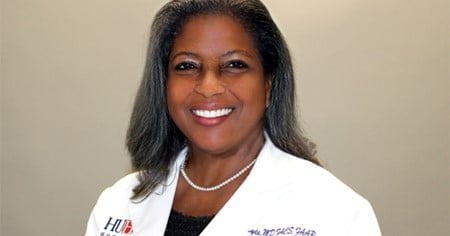
Nationwide — Andrea A. Hayes Dixon, M.D., FACS, FAAP has made history as the first Black woman dean of the Howard University College of Medicine in the institution’s 154-year history.

“I am truly honored and humbled to lead the outstanding Howard University College of Medicine,” said Dixon, according to The Dig. “The responsibility of educating the nation’s next generation of leaders in medicine is an enormous responsibility that I take very seriously. I am excited to engender allies and friends to join me in the journey of moving Howard forward.”

In 2021, Dixon became the first woman chair of the Department of Surgery at Howard University. Just a year later on October 3, Dixon was officially appointed dean of the university’s College of Medicine, succeeding Hugh Mighty, MD, MBA, FACOG, who previously held the position since 2015.

Now, Dixon is one of the 11 women serving as academic deans at Howard University.

Prior to joining Howard University, Dixon was a surgeon-in-chief and division chief of pediatric surgery, and professor of pediatric surgery and surgical oncology at the University of North Carolina (UNC) Children’s Hospital. Moreover, among Dixon’s historic achievements were being the first Black woman in the US to become a board-certified pediatric surgeon in 2004 and the first surgeon in the world to ever perform a high-risk surgery that saved the life of a teen with a rare form of abdominal cancer in 2006.