Friday, October 16, 2026
Advertisement
Home Blog Page 104

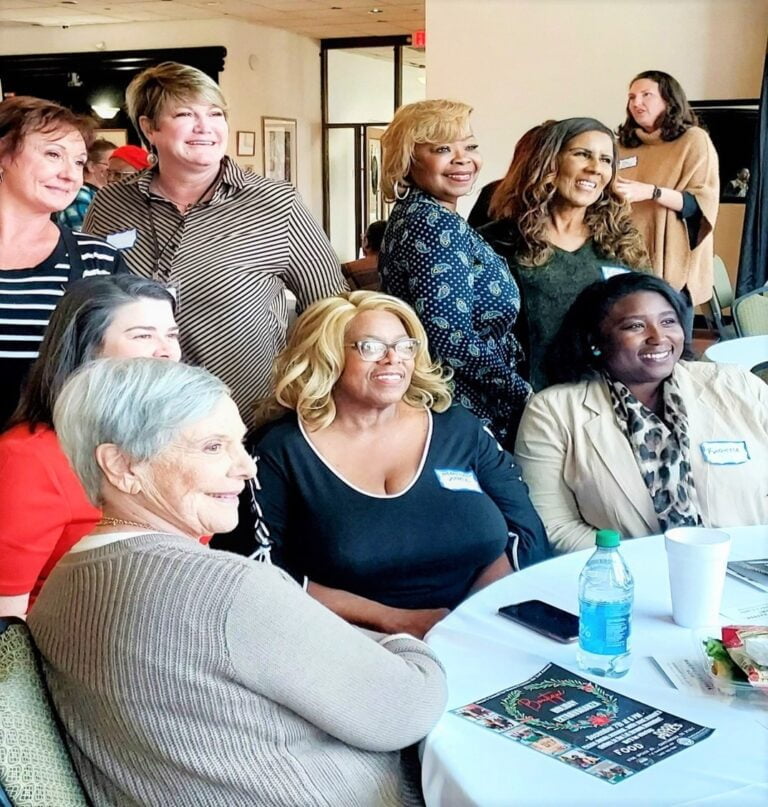
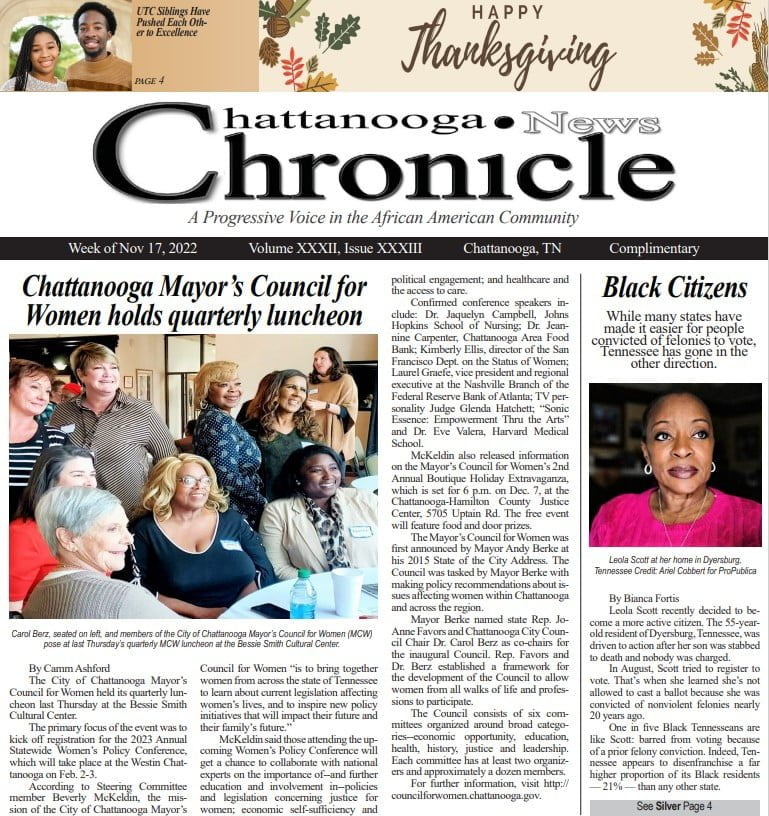
Chattanooga Mayor’s Council for Women holds quarterly luncheon 

0

Thursday at the Bessie Smith Cultural Center.

The primary focus of the event was to kick off registration for the 2023 Annual Statewide Women’s Policy Conference, which will take place at the Westin Chattanooga on Feb. 2-3.

According to Steering Committee member Beverly McKeldin, the mission of the City of Chattanooga Mayor’s Council for Women “is to bring together women from across the state of Tennessee to learn about current legislation affecting women’s lives, and to inspire new policy initiatives that will impact their future and their family’s future.”

McKeldin said those attending the upcoming Women’s Policy Conference will get a chance to collaborate with national experts on the importance of–and further education and involvement in–policies and legislation concerning justice for women; economic self-sufficiency and political engagement; and healthcare and the access to care.

Confirmed conference speakers include: Dr. Jaquelyn Campbell, Johns Hopkins School of Nursing; Dr. Jeannine Carpenter, Chattanooga Area Food Bank; Kimberly Ellis, director of the San Francisco Dept. on the Status of Women; Laurel Graefe, vice president and regional executive at the Nashville Branch of the Federal Reserve Bank of Atlanta; TV personality Judge Glenda Hatchett; “Sonic Essence: Empowerment Thru the Arts” and Dr. Eve Valera, Harvard Medical School. 

McKeldin also released information on the Mayor’s Council for Women’s 2nd Annual Boutique Holiday Extravaganza, which is set for 6 p.m. on Dec. 7, at the Chattanooga-Hamilton County Justice Center, 5705 Uptain Rd. The free event will feature food and door prizes. 

The Mayor’s Council for Women was first announced by Mayor Andy Berke at his 2015 State of the City Address. The Council was tasked by Mayor Berke with making policy recommendations about issues affecting women within Chattanooga and across the region.

Mayor Berke named state Rep. JoAnne Favors and Chattanooga City Council Chair Dr. Carol Berz as co-chairs for the inaugural Council. Rep. Favors and Dr. Berz established a framework for the development of the Council to allow women from all walks of life and professions to participate. 

The Council consists of six committees organized around broad categories–economic opportunity, education, health, history, justice and leadership. Each committee has at least two organizers and approximately a dozen members.

For further information, visithttp://councilforwomen.chattanooga.gov.

Black Citizens

0

While many states have made it easier for people convicted of felonies to vote, Tennessee has gone in the other direction. 

By Bianca Fortis

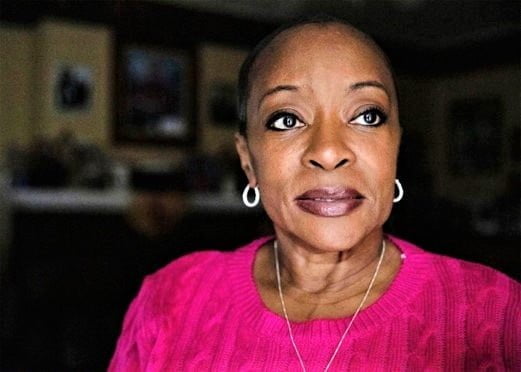
Leola Scott recently decided to become a more active citizen. The 55-year-old resident of Dyersburg, Tennessee, was driven to action after her son was stabbed to death and nobody was charged.

In August, Scott tried to register to vote. That’s when she learned she’s not allowed to cast a ballot because she was convicted of nonviolent felonies nearly 20 years ago.

One in five Black Tennesseans are like Scott: barred from voting because of a prior felony conviction. Indeed, Tennessee appears to disenfranchise a far higher proportion of its Black residents — 21% — than any other state.

The figure comes from a new analysis by the nonprofit advocacy group The Sentencing Project, which found that Mississippi ranks a distant second, just under 16% of its Black voting-eligible population. Tennessee also has the highest rate of disenfranchisement among its Latino community — just over 8%.

While states around the country have moved toward giving people convicted of felonies a chance to vote again, Tennessee has gone in the other direction. Over the past two decades, the state has made it more difficult for residents to get their right to vote back. In particular, lawmakers have added requirements that residents first pay any court costs and restitution and that they be current on child support.

Tennessee is now the only state in the country that requires those convicted of felonies be up to date on child support payments before they can vote again.

The state makes little data available about who has lost the right to vote and why. Residents who may qualify to vote again first have to navigate a confusing, opaque bureaucracy.

Scott says she paid off her court costs years ago. But when she brought a voting rights restoration form to the county clerk to affirm that she had paid, the clerk told her she still had an outstanding balance of $2,390.

“It was like the air was knocked out of me,” she said. “I did everything that I was supposed to do. When I got in trouble, I owned it. I paid my debt to society. I took pride in paying off all that.”

Scott does not have receipts to verify her payments because she made them so long ago, she said. And there is no pathway for her to fight what she believes is a clerical error.

She is now a plaintiff in a lawsuit filed by the Tennessee NAACP challenging the state’s voting rights restoration process. In court documents, the state denied allegations that the restoration process is inaccessible.

Overall, according to The Sentencing Project, about 470,000 residents of Tennessee are barred from voting. Roughly 80% have already completed their sentence but are disenfranchised because they have a permanently disqualifying conviction — such as murder or rape — or because they owe court costs or child support or have gotten lost in the system trying to get their vote back.

Over the past two years, about 2,000 Tennesseans have successfully appealed to have their voting rights restored.

Those convicted after 1981 must get a Certification of Restoration of Voting Rights form signed by a probation or parole officer or another incarcerating authority for each conviction. The form then goes to a court clerk, who certifies that the person owes no court costs. Then it is returned to the local election commission, which then sends it to the State Election Commission for final approval. (Rules on voting restoration were revised multiple times, so older convictions are subject to different rules.)

Republican Cameron Sexton, speaker of the Tennessee House of Representatives, said people convicted of felonies should have to pay court costs and child support before voting.

“If someone’s not paying or behind on their child support payment, that’s an issue,” he told ProPublica. “That’s an issue for that child, that’s an issue for that family, not having the things that they agreed to in court to help them for that child.”

When asked about Tennessee being the only state to require that child support payments be up to date before voting rights can be restored, Sexton said, “Maybe Tennessee is doing it correctly and the others are not.”

A 2019 report from the Tennessee Advisory Committee to the U.S. Commission on Civil Rights found that the requirements for repayment have been especially burdensome to women, the poor and communities of color. The report also noted that Tennessee has increasingly levied court charges “as a means for funding the State’s courts and criminal justice system.”

Georgia previously required payment of restitution and fines in order to restore voting rights. But in 2020, the office of Georgia’s secretary of state clarified that anyone who has completed their sentence may vote, even if they owe court costs or other debts that were not incurred as part of their sentence.

Disenfranchisement does not solely impact the lives of individual voters — it can have consequences for elections, too. This is particularly true for multiracial communities in Tennessee, according to Sekou Franklin, a political science professor at Middle Tennessee State University. He pointed to county-level races that have been decided by a few dozen votes.

“There are real votes that are lost that can shape elections,” Franklin said.

Black Tennesseans, even those who were not enslaved, have been disenfranchised for centuries. In 1835, the new state constitution took away the right to vote from free Black men, who had been able to vote under the previous constitution. It also stipulated that anyone convicted of an “infamous” crime — a list that included robbery, bigamy and horse stealing — would lose their voting rights, often permanently.

The civil rights laws of the 1960s opened up voting again for Tennesseans. But soon lawmakers began adding back in provisions that disenfranchised people convicted of felonies. Legislators updated the statute every few years, adding to the list of crimes that permanently disqualify someone from voting. The result is a convoluted list of eligibility criteria for voting rights restoration that depend on what a person was convicted of and when the conviction took place.

The reality of disenfranchisement in Tennessee received some national attention recently around the case of a Memphis woman, Pamela Moses. Three years ago, she got her probation officer’s signoff to vote again. The next day, the Tennessee Department of Correction asserted the officer had made an error. Prosecutors then charged Moses with lying on an election document. She was convicted and sentenced to six years in prison, but a judge later threw out the conviction.

Tennessee lawmakers from both parties have tried, unsuccessfully, to make it easier for residents to get their vote back.

In 2019, two Republican lawmakers sponsored a bill that would have automatically restored voting rights to people upon completion of their sentence. It was supported by a bipartisan coalition of civil rights advocates, including the libertarian group Americans for Prosperity and the Tennessee American Civil Liberties Union. But it never gained traction among legislators.

In 2021, two Democrats sponsored another bill that would have granted automatic vote restoration, but that bill also died. The sponsors said that the Republican supermajority in Tennessee’s legislature simply doesn’t have an appetite to take it on.

“We said we wanted to do criminal justice reform, but all we’ve done is really nibbled around the edges,” state Sen. Brenda Gilmore told ProPublica, referring to a bill she co-sponsored with a fellow Democrat.

Dawn Harrington, the founder of Free Hearts, an organization that supports formerly incarcerated women, also advocated for the 2021 bill. Reforms Falter in Police Department Under Scrutiny for Killings

On a trip to New York City in 2008, Harrington carried a gun that was licensed in Tennessee. Because New York does not recognize permits from other states, she was convicted of a gun possession charge.

After serving a yearlong sentence on Rikers Island, she returned to Tennessee and set out to have her rights restored. Tennessee requires the incarcerating agency to sign the rights restoration form, but Harrington struggled to find someone in New York willing to sign it. After nine years, her rights were finally restored in 2020.

“I don’t know if you know the show ‘The Wiz,’ but I literally eased on down the road,” Harrington said about having her voting rights restored. “I danced. I was so happy I cried. I was feeling all the emotions. You never know how much something means to you until it’s taken away.”

Do you have information about people with felony convictions who are not allowed to vote? Contact Bianca Fortis at bianca.fortis@propublica.org.

Bianca Fortis is an Abrams Reporting Fellow at ProPublica. This story was first published by ProPublica

New Scholarship to Honor Longtime UTC Executive Dr. Richard Brown

0

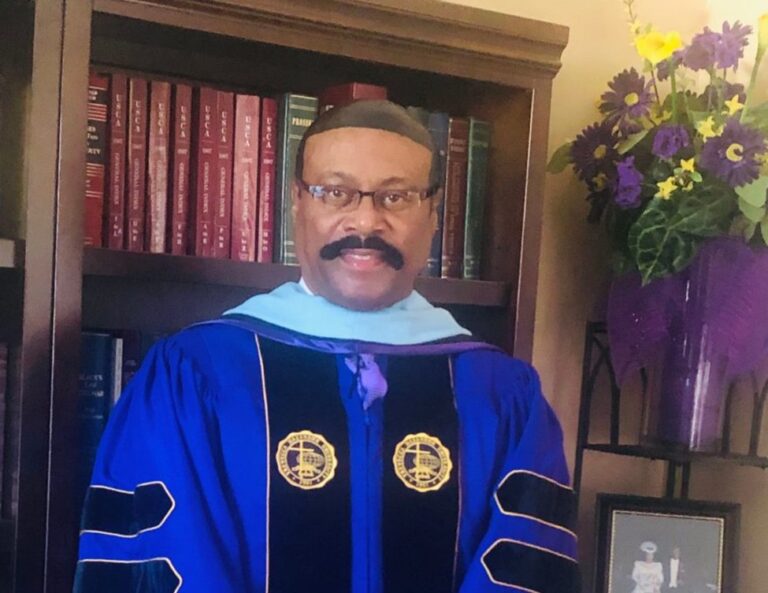
CHATTANOOGA—Dr. Richard Brown, who provided more than 38 years of service to the University of Tennessee at Chattanooga and the University of Tennessee System, is the namesake of the new Richard Brown Inclusive Access Scholarship at UTC.
 
The scholarship—a collaboration of the Division of Diversity and Engagement, the Division of Enrollment Management and Student Affairs in conjunction with the Office of Financial Aid and Scholarships—commemorates the contributions of Brown, who began working for the University in 1984 and rose to executive vice chancellor for administration and finance. He then took on a dual role in 2021 as a special advisor to UTC Chancellor Steven R. Angle and UT System President Randy Boyd before retiring at the end of the year.
 
“Richard Brown invested decades of his life helping to build UTC into the university we are all proud of. He worked his way up through the ranks to one of the top jobs on campus,” Angle said. “During those years, he was a tireless advocate for excellence and inclusion, and he has mentored countless students and employees and been a role model for many others. These scholarships are a fitting tribute for Richard’s impact here at UTC.”
 
During the 2022-2023 academic year, 30 UTC students from the Chattanooga region are benefiting from this new scholarship. The students come to UTC from the following Hamilton County high schools: Brainerd, East Ridge, Hixson, The Howard School, Red Bank and Tyner Academy.
 
Brown confessed to being flattered when he was told about a new scholarship program named after him.
 
“My first reaction to it was that I was humbled and honored to have such a prestigious honor and recognition by the University, but after that, I was really excited about it,” he said. “This will create an opportunity for access to some students who are underserved by access to higher education.
 
“Fundamentally, I believe that access to higher education transforms lives for many, many years and generations to come.”
 
Stacy Lightfoot, vice chancellor for the UTC Division of Diversity and Engagement, said Brown was involved in drafting some of the philosophies for the scholarship, suggesting ideas for who the award should be geared toward.
 
“He helped create some of the criteria,” Lightfoot said. “When I talked to him about this, he was touched and added to the criteria. He said, ‘Make sure you think about the adult learner. Make sure you think about the veteran student.’
 
“So he owns some of this process. This isn’t just an award in his honor; this is an award that he helped create. I think that’s what makes this special as well.”
 
During his time at UTC, Brown was a pillar of the campus community, serving as a member of the executive leadership team under five chancellors and playing a vital role in the expansion of the campus across McCallie Avenue.
 
As a result of crossing McCallie, UTC South Campus housing came into existence in the late 1990s, fostering the growth and upward trajectory of the University.

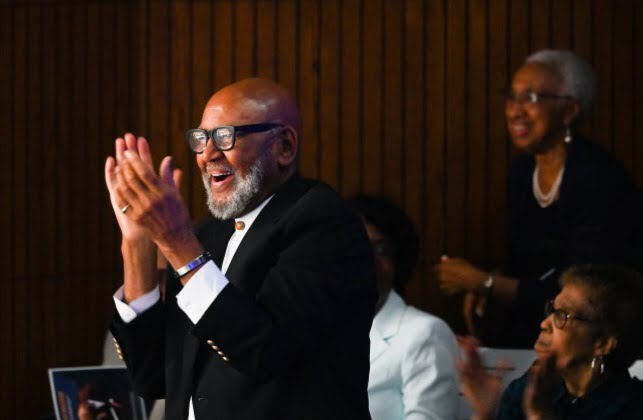
Dr. Roland Carter reveals cancer diagnosis during ceremony renaming Chattanooga street in his honor

0

By Shawn Ryan

A University of Tennessee at Chattanooga campus street now bears the name of an educator, music composer and conductor whose impact on UTC students reaches around the globe.

At a Friday, Nov. 4., ceremony on campus, the section of Vine Street from Lupton Hall to Palmetto Street was renamed in honor of Dr. Roland Carter.

During his remarks, the 80-year-old Carter revealed that he was diagnosed with cancer in November 2021 and had his final treatment in May 2022.

“I didn’t share it while I was going through it, but I have a testimony–to be here to witness this celebration. It’s not an ‘in memory of,’” he said. “I feel emotional at this point for this honor to happen and for me to be here to see it.”

Internationally known as a musician, composer and arranger, Dr. Carter spent 23 years at UTC as a teacher and administrator, retiring in 2013. Over his years at the University, Carter taught classes, conducted choirs, arranged music and mentored and recruited students.

“I want to say that it’s because of you who are here and these students that I am whatever or whoever I am,” Dr. Carter told the audience in the Roland Hayes Concert Hall in the UTC Fine Arts Center.

A native of Chattanooga, Dr. Carter has been an advocate for the musical traditions of African American heritage. He is celebrated internationally for his arrangements of “Lift Every Voice and Sing”–now described as the “Black national anthem.”

On last Friday, his arrangement of the song closed out the musical portion of the celebration. With gusto that belied his age, Dr. Carter conducted the performance by the Choral Society of Chattanooga and the UTC Chamber Singers.

UTC Chancellor Steven R. Angle praised Dr. Carter’s contributions both to Chattanooga and the world.

“I think all of us in this room are a testament to his impact in his field and on our community,” Angle said. “We’re proud to honor him with the naming of the street, but we honor him in an even greater way by sustaining his love and mastery of his art form.”

Angle said Carter’s impact comes from more than just his music. “When I think of Dr. Carter and the times I’ve talked with him, it’s this warm-spot smile and friendly handshake, and it comes across in everything he does, and you feel it in his music.”

Everything Voters Need to Know for the Nov. 8 Election

NASHVILLE, Tenn. — Secretary of State’s Tre Hargett wants Tennessee voters to have the information they need before heading to the polls for the Nov. 8 State and Federal General election.

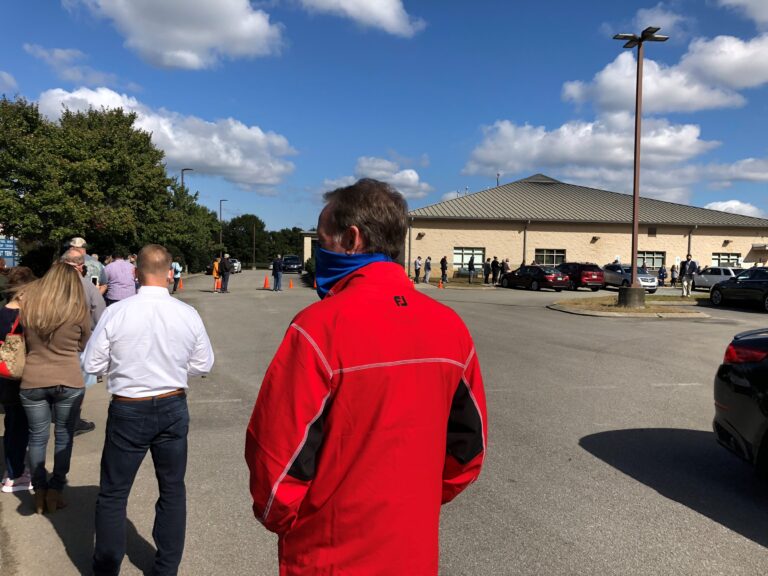
Tennesseans can access voter-specific Election Day information, including polling times, locations, sample ballots, election results and more, on GoVoteTN.gov or the Secretary of State’s free GoVoteTN app. The GoVoteTN app is free in the App Store or Google Play. On Election Day, polls in all 95 counties open at various times. A list of when polling locations open is available on GoVoteTN.gov. All polls close at 8 p.m. EST/7 p.m. CST.

Casting your ballot in the midmorning or midafternoon may shorten your time. Early morning, noon and after 5 p.m. are peak times as people typically vote before work, after work or on their lunch breaks. If there is a line to vote, frail, physically disabled or visibly pregnant voters can request to move through the process faster.

To cast a ballot, voters need to bring valid photo identification. A driver’s license or photo ID issued by the Tennessee Department of Safety and Homeland Security, Tennessee state government or the federal government is acceptable even if it’s expired. A student ID or out-of-state driver’s license is not acceptable. For more information about what types of IDs are permitted, visit GoVoteTN.gov or call 1-877-850-4959.

State law requires polling locations and areas within a 100-foot boundary of the entrance to remain campaign-free zones. The display or distribution of campaign materials and the solicitation of votes for or against any person, party or question on the ballot within this area are prohibited. Voters wearing campaign-related clothing or paraphernalia will not be allowed within the 100-foot boundary.

Tennessee voters are encouraged to report possible voter fraud or misinformation to the Secretary of State’s Division of Elections. Tennesseans can text ‘TN’ to 45995 to use the new Text to Report Voter Fraud system or call the Official Election Day Hotline toll-free at 1-877-850-4959.

The Secretary of State’s office will post minute-by-minute unofficial results on their Twitter accounts @tngovelection, @tnushouse, @tnsenategen, @tnhousegen and @tnconstamend. The Secretary of State’s office will also post unofficial election results on their website, elections.tn.gov.

A comprehensive report of early and absentee by-mail voter turnout by county with comparisons to 2018 and 2014 from the 14-day early voting period, which ran from Wednesday, Oct. 19, to Thursday, Nov. 3, is available on GoVoteTN.gov.

For the latest information about Tennessee elections, follow the Secretary of State’s social media Twitter: @SecTreHargett, Facebook: Tennessee Secretary of State and Instagram: @tnsecofstate.

For more information about the November 8 election, visit GoVoteTN.gov or call the Division of Elections toll-free at 1-877-850-4959.

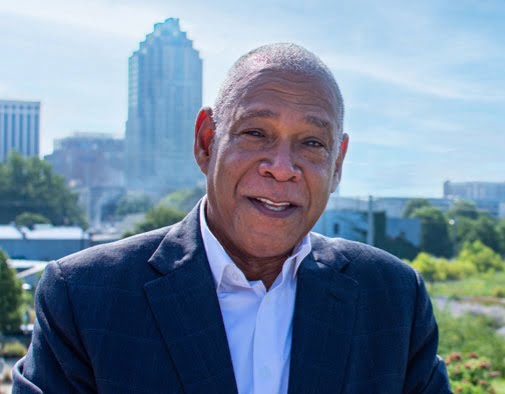
Renowned parks expert Mitchell Silver headlines CIVIQ speaker series

0

Renowned parks expert Mitchell Silver will headline CIVIQ, the speaker series from the Chattanooga Design Studio. The event will take place from 5:30-7 p.m. on Nov. 10, at the Camp House, 806 East 12th St.

Silver will discuss the evolution of parks from the mid-19th century through the 21st centuries, bringing the critical role of contemporary parks and public space planning into focus. 

“There’s no one better in the country to address how the confluence of public health, resilience and equity initiatives can result in a development of a successful modern-day public realm,” said Eric Myers, executive director of the Chattanooga Design Studio. 

Silver serves as vice president of Urban Planning at McAdams, a land planning and civil engineering design company in Raleigh-Durham, North Carolina, and is former commissioner for the New York City Parks Department. 

In his role at McAdams, Mitchell is responsible for providing advisory services in urban planning, land use, parks and public space planning with an emphasis on diversity, equity and inclusion. 

An award-winning planner with more than 35 years of experience, Mitchell is one of the nation’s most celebrated urban thinkers. He was selected to Planetizen’s list of the 100 Most Influential Urbanists in the world. In addition, he has been honored as one of the top 100 City Innovators in the world by UBM Future Cities, and the Urban Times named him one of the top international thought leaders of the built environment.

In addition to his CIVIQ lecture, Silver will also take part in a panel discussion with Chattanooga Mayor Tim Kelly and Scott Martin, administrator for the city of Chattanooga’s Department of Parks and Outdoors, on Nov. 9 from 5-7 p.m. at Common House, 1517 Mitchell Ave. 

CIVIQ was started in 2018 as “a quarterly event which introduces and humanizes national and international movements in urban design by showcasing visionary work being done by practitioners in other cities. More than a lecture, each event is intended to equip the city to think differently about challenges faced in our community.” All events are free and open to the public. More information may be found at https://www.eventbrite.com/e/civiq-with-mitch-silver-tickets-440562352857

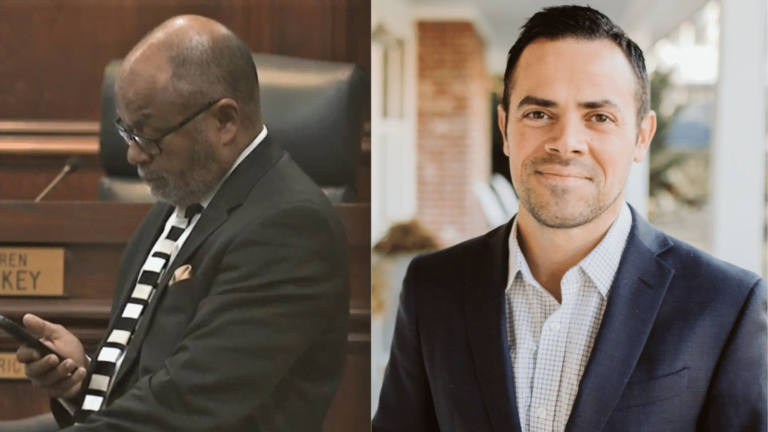
Tension between longtime County Attorney Rheubin Taylor and Mayor Weston Wamp escalate, lawsuit filed

0

Longtime County Attorney Rheubin Taylor has filed a lawsuit against County Mayor Weston Wamp. Taylor said the new county mayor is trying to fire him despite his having a four-year contract given by the prior County Commission in 2021.

“By letter, dated October 14, 2022, Weston Wamp, purported to terminate the contract referred to in paragraph 4, effective immediately. Weston Wamp did not have the unilateral authority to terminate the contract and/or Rheubin M. Taylor’s employment with Hamilton County and/or the Hamilton County Commission, nor did he provide notice or seek approval of the County Commission to do so,” the lawsuit reads.

In his lawsuit, Taylor said the contents of his computer were taken, including attorney-client documents.

“At some point on or after October 14, 2022, Weston Wamp caused the IT Department of Hamilton County to confiscate the computer of Rheubin Taylor, the contents of which contained information protected by the attorney-client privilege. In addition, with his computer disconnected from the Hamilton County server, Rheubin M. Taylor was inhibited in the services he was required to perform for the County under his contract. To date, the privileged material has not been returned, nor has the computer been reconnected.”

The lawsuit also said that attorney Taylor’s health insurance benefits were due to end on Oct. 31. The 73-year-old Taylor said the benefits are important because his wife has a heart condition.

“Employee benefits, including health benefits, have been provided to Rheubin M. Taylor and his family, which will cease on October 31, 2022, due to the instructions or directions of Weston Wamp. The benefits referred to in the previous paragraph are crucial to Rheubin Taylor and his family because his wife has a heart condition. Without the benefits, Rheubin M. Taylor will suffer immediate and irreparable harm in the form of a loss of health care for himself and his wife, in addition to the anxiety and insecurity associated with this loss.”

Attorney Taylor’s employment status and the ensuing fallout dominated Wednesday’s regular Hamilton County Commission meeting. During the meeting, commissioners unanimously overrode Wamp’s veto of the resolution which the panel approved two weeks ago in response to the mayor’s attempt to fire the longtime attorney.

“We’ve reached an impasse that we don’t like,” Commission Chairman Chip Baker, R-Signal Mountain, said.

As a result of Wednesday’s override, attorney Taylor’s contract remains in place.

District 4 County Commissioner Dr. Warren Mackey is worried that Mayor Wamp’s actions could end up in court and cost taxpayers.

“You say you don’t want to be litigious, but if we go to court how much money do you think this case will cost us,” Commissioner Mackey asked Wamp.

“Well, I have no idea; there’s no way of knowing,” Wamp answered. 

“Everyone here on this dais has said they are concerned about each and every tax dollar,” Commissioner Mackey told the mayor. “I am not willing to gamble by going to court when none of the lawyers you’ve mentioned will say categorically that contract is void. I don’t want to be personal, but on a certain level I want to ask people personally, would they risk tax money or taxpayers’ money on a gamble?” 

Mayor Wamp countered that under his leadership attorney Taylor has “wasted hundreds of thousands of dollars” for many years.

“So if we are really talking about taxpayer dollars, it is not the most efficiently run part of county government and it’s one of the reasons we pursued a change,”  Wamp said.

Attorney Taylor has a long record of service to the community. When he arrived in Chattanooga in 1973, he was the first African American licensed attorney in the city. In 1978, he and the Rev. Paul McDaniel became the first African-American County Commissioners. In 1993, Taylor became the first African American Hamilton County attorney.

At press time, Chancellor Jeff Atherton has filed a temporary restraining order, keeping Mr. Taylor as the county attorney.

Museum Exhibit Reveals True Story of Emmett Till and Mamie Till-Mobley and How It Influenced the Civil Rights Movement 

0

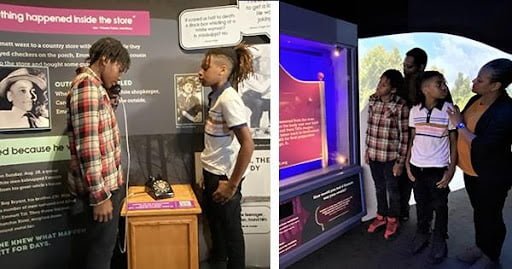
Nationwide — Three years in the making, the Emmett Till & Mamie Till-Mobley: Let the World See exhibit has made its national debut at The Children’s Museum of Indianapolis and runs through October 30, 2022. It will then make a historic tour across the United States traveling to the Birmingham Civil Rights Institute in Alabama, Martin Luther King, Jr. Memorial Library in Washington, DC, Two Mississippi Museums in Mississippi, DuSable Museum of African American History in Illinois, Atlanta History Center in Georgia and National Civil Rights Museum in Tennessee before reaching its permanent destination at the Emmett Till Interpretive Center in Sumner, Mississippi. This historic exhibit is recommended for ages 10 years old and older.

“Learning more about Emmett Till’s story is difficult, but I believe it’s crucial for families to understand what happened during the cruel and senseless tragedy to help people heal from prejudice and discrimination and to prevent senseless acts of violence today,” said Jennifer Pace Robinson, President and CEO, The Children’s Museum of Indianapolis. 

Families will also learn how two of Emmett Till’s murderers were tried & found not guilty in just 67 minutes by an all-White, all-male jury—despite eye-witness testimony from Emmett’s great uncle, Moses Wright. His murderers later confessed and were paid $4,000.00 for their story by Look magazine. 

Facilitators within the exhibit will share conversation starters to help families understand what happened during the Jim Crow era and reflect. There is also a Building Bridges workshop that will guide visitors to turn a fence into a bridge—symbolizing ways to break down racial barriers. An actor lead performance will feature a social justice educator and their reflection on the negative response they received after sharing Emmett Till’s story with students. 

“Let the world see what they did to my boy,” are the heart-wrenching words spoken by Mamie Till-Mobley who insisted upon an open casket for her 14-year-old son who was brutally tortured and murdered for whistling at a White woman in Money, Mississippi in 1955. 

It all started in August of 1955. Fun-loving, Emmett Till could hardly wait to visit family in Mississippi. The 14-year-old grew up near Chicago and had never ventured far from home. After stern warnings from his mother about racism and social etiquette in the South, he took a summer trip to visit relatives in Mississippi with his great uncle and cousin, Wheeler Parker. That trip and a visit to the local store changed their lives forever. “They came out of the store and Emmett loved 

to make people laugh – telling people jokes. He wolf-whistled right there in front of the store and we could have just died,” said Rev. Wheeler Parker Jr., Emmett’s cousin. Later, the husband and brother-in-law of the woman who Emmett whistled at, abducted 14-year-old Emmett from his Great Uncle Moses’s home in the middle of the night. “I heard them coming. In walked this guy- his name was Milam,” said Parker. “He had a pistol in one hand and a flashlight in the other. I was shaking, literally shaking like a leaf on a tree.” 

This is just one of the memories you’ll hear from the last surviving eyewitness to the kidnapping and the subsequent brutal murder of Emmett Till. The Emmett Till & Mamie Till-Mobley: Let the World See (EmmettTillExhibit.org) exhibit created by the Till family, Emmett Till & Mamie Till-Mobley Institute, Emmett Till Interpretive Center, and The Children’s Museum of Indianapolis will travel to seven cities before being permanently displayed steps away from where the trial for his murder took place in the Second District Tallahatchie County Courthouse in Sumner, MS. The exhibit shares how a mother’s bravery and fight for justice more than six decades ago fueled the Civil Rights Movement in America. When Emmett’s body arrived in Chicago, his mother insisted on an open casket so the world could see the ugly face of hatred and racism. 

Historic markers installed near the Tallahatchie River (acknowledging where Emmett Till’s lifeless body was recovered) have been continually stolen, shot at, and vandalized. One sign made headlines after a group of students from the University of Mississippi posed in front of it with rifles and then posted their photo on Instagram in March of 2019. That shot-riddled sign will be on display to show that racism continues today as people try to destroy the memory of what happened to 14-year-old Emmett Till. 

Rev. Wheeler Parker wants people to know, “History is history. It’s not who we are today. What matters is what we choose to do about it today. So what are you going to do?” 

Executive Director of the Emmett Till Interpretive Center, Patrick Weems, hopes it means people will take positive action, “Despite the repeated vandalism of these signs, our community has united again and again to replace them to tell the truth about what happened to Emmett Till. We believe that telling the truth about these acts of violence and injustice is the first step toward racial healing. These vandalized signs show just how much further we have to go to combat racism in our country.” 

RECENT CHANGE 
Learn more about Emmett Till Historic Landmarks as part of the Civil Rights Trail and historic sites. 

After 100 years and 200 failed attempts, a bill named the Emmett Till Antilynching Act was finally passed in March 2022. It criminalizes lynching and makes it punishable by up to 30 years in prison. Exhibit developers hope visitors will feel empowered to stand up against racial violence and to make a difference in their own communities. 

Rev. Wheeler Parker’s memoir: “A Few Days Full of Trouble” published by Random House, to be released January 10, 2023, tells the story of his friendship and his search for justice for his cousin and best friend, Emmett Till. 

To learn more about the Emmett Till story, watch the ABC mini-documentary series called, “Let the World See”. 

This project was made possible in part by The National Endowment for the Humanities: Democracy demands wisdom, the Maddox Foundation in Hernando, MS, The Institute for Museum and Library Services [MH-249226-OMS-21], and The Historic Preservation Fund administered by the National Park Service, Department of the Interior [15.904]. The Children’s Museum of Indianapolis is proud to partner with Riley Children’s Health, Old National Bank, Ice Miller LLP and the Heritage Group. 

Guns at voting sites have long sparked fears of intimidation and violence – yet few states ban their presence

0

Robert Spitzer

Distinguished Service Professor Emeritus of the Political Science Department, State University of New York College at Cortland

A couple in Mesa, Arizona, was dropping off their ballots on Oct. 21, 2022, for the forthcoming midterm election when they saw two people carrying guns and dressed in tactical gear hanging around the Maricopa County drop box. The armed pair left when officers later arrived.

Multiple allegations of voter intimidation have come out of Maricopa County, Arizona. People have been filming, photographing, approaching, and harassing early voters at two outdoor drop-boxes in the county.

It wasn’t an isolated incident. A lawsuit filed Oct. 24 by Arizona Alliance for Retired Americans and Voto Latino noted that on several occasions “armed and masked individuals” associated with the group Clean Elections USA had gathered at drop boxes in the county “with the express purpose of deterring voters.”

Voter intimidation is a crime in Arizona – as it is throughout the country. In the case of Maricopa County, a judge ruled on Nov. 1 that the actions of the individuals – who present themselves as anti-voter fraud activists – crossed the line and issued a restraining order. Under the order, people associated with Clean Elections USA are now barred from openly carrying firearms within 250 feet of a ballot box. Concealed firearms will be permitted, though, and the restriction only affects individuals connected to Clean Elections USA.

The presence of armed individuals at voting sites adds to concerns over the prospects of election-related intimidation and violence, which have deepened in recent years.

 As Rachel Kleinfeld, senior fellow in the Democracy, Conflict, and Governance Program at the nonpartisan Carnegie Endowment, recently reported to the congressional committee looking into the Jan 6. attack on the Capitol, political violence “is considered more acceptable” by the public than it was five years ago.

False charges of stolen elections – such as those repeatedly made by former President Donald Trump – are “a major instigator of political unrest,” Kleinfeld noted, although she added that extremists in both political parties have reported a greater willingness to resort to political violence.

These concerns are far from hypothetical: As of this fall, more than 1,000 threats to election officials – some explicitly mentioning gun violence – were under review by federal law enforcement agencies. Responding to the situation in Arizona, the Department of Justice on Oct. 31 noted that the presence of armed individuals raises “serious concerns” of voter intimidation.

Such concerns are fanned by the fact that only seven states ban all gun-carrying at polling places. Five more states bar the carrying of concealed guns at polling places. But in swing states like Florida, Nevada, North Carolina, Ohio, Pennsylvania and Wisconsin, people are allowed to carry guns even while they are voting.

The lack of a federal ban on firearms at voting sites has prompted Senator Chris Murphy, D-Conn., to introduce in Congress the Vote Without Fear Act, proposed legislation that would “prohibit the possession of a firearm within 100 yards of any federal election site.” 

Pitched battles, and voter intimidation

To be sure, election-related violence is a part of America’s past. For example, the anti-immigrant Know-Nothing party of the 1850s often employed armed violence using an array of weapons, and Democrat-Whig party battles erupted in the 1830s. Throughout the middle of the 19th century, such cities as Philadelphia, Baltimore and New Orleans at times witnessed pitched battles between warring political factions at election time. And lethal violence was used extensively after the Civil War to systematically terrorize and disenfranchise Black voters in the South.

Yet many people in the United States also believed from the start that guns and violence were contrary to the values of a democratic nation, especially, though not limited to, during times of elections. As early as 1776, Delaware’s state Constitution stated: “To prevent any violence or force being used at the said elections, no person shall come armed to any of them.” It further stipulated that, to protect voters, a gun-free zone would be put in place within a mile of polling places for 24 hours before and after election day.

In its state Bill of Rights of 1787, New York decreed that “all elections shall be free and that no person by force of arms nor by malice or menacing or otherwise presume to disturb or hinder any citizen of this State to make free election.”

In my own research on historical gun laws, I found roughly a dozen states that specifically barred guns during elections or at polling places in laws enacted between the 1770s and the start of the 20th century. But even more importantly, from the 1600s through the 1800s, I found that at least three-quarters of all Colonies and later states enacted laws criminalizing gun-brandishing and display in any public setting – and that would certainly include voting stations at election time.

As I discuss in my new book, “The Gun Dilemma,” early American lawmakers well understood that public gun-carrying, by its very nature, was intimidating. And that extended not only to brandishing a gun, meaning displaying one in a threatening manner, but also to mere gun display – simply showing a gun in a public setting.

Modern studies confirm this understanding. Analysts in fields including psychology and criminology have concluded that the mere presence of guns increases aggression and violence. To cite a different analysis, a study of over 30,000 demonstrations in the U.S. from 2020 to 2021 found that when guns were present, protests were over six times more likely to turn violent or destructive.

Creating an ‘island of calm’

According to polls, wide majorities of Americans oppose public gun-carrying. A 2017 study reported that from two-thirds to over four-fifths of respondents opposed public gun-carrying in various settings, including at the polls. And as recently as 2018, the Supreme Court affirmed that Election Day polling places should be “an island of calm in which voters can peacefully contemplate their choices.”

Both history and modern research support the conclusion that the presence of guns in public defeats this goal. Indeed, they can induce “great fear and quarrels,” or so said New Jersey in a law passed in 1686. (The CONVERSATION)