Thursday, October 15, 2026
Advertisement
Home Blog Page 94

Michelle Obama

née Michelle LaVaughn Robinson, (born January 17, 1964, Chicago, Illinois, U.S.), American first lady (2009–17), the wife of Barack Obama, 44th president of the United States. She was the first African American first lady.

Michelle Robinson, who grew up on Chicago’s South Side, was the daughter of Marian, a homemaker, and Frasier Robinson, a worker in the city’s water-purification plant. She studied sociology and African American studies at Princeton University (B.A., 1985) in New Jersey before attending Harvard Law School (J.D., 1988). Returning to Chicago, she took a job as a junior associate at Sidley & Austin (now Sidley Austin LLP), where she specialized in intellectual property law.

In 1989, while at the firm, she met Barack Obama, who had been hired as a summer associate. Seeking a more public-service-oriented career path, in 1991 she became an assistant to Chicago Mayor Richard M. Daley. The following year she and Barack, then a community organizer, were married. From 1992 to 1993 Michelle was the assistant commissioner for the Chicago Department of Planning and Development, and in 1993 she founded the Chicago branch of Public Allies, a leadership-training program for young adults; she served as the branch’s executive director until 1996.

Barack was elected to the Illinois Senate in 1996, and that year Michelle became the associate dean of student services at the University of Chicago, where she helped organize the school’s community outreach programs. In 2002 she became the executive director of community and external affairs for the University of Chicago. Two years later Barack was elected to the U.S. Senate and came to national prominence with a speech he gave on the final night of the 2004 Democratic National Convention. In 2005 she became vice president of community and external affairs for the University of Chicago Medical Center.

When her husband announced his candidacy for the 2008 Democratic presidential nomination, Michelle took a prominent role in his campaign. She took leave from her position at the University of Chicago to devote herself more fully to campaigning while still maintaining time to care for her and Barack’s two young daughters. An adept speaker, she stumped extensively for her husband during the long Democratic primary race, and in June 2008 Barack became the party’s presumptive nominee. Michelle’s openness on the campaign trail and in interviews—she often humanized her husband by discussing his faults and implored observers not to “deify him”—endeared her to many.

However, critics of her husband’s campaign took issue with some of her comments—such as when she remarked, while campaigning in Wisconsin in February 2008, that “for the first time in my adult lifetime, I am really proud of my country.” Michelle later clarified her statement—saying that she meant to say that she was proud that Americans were eagerly engaging in the political process during the 2008 election—and she continued to have an active role in her husband’s campaign.

Indeed, campaign aides referred to her as “the closer,” for her persuasiveness on the stump among uncommitted voters who attended rallies. On November 4, 2008, Barack was elected 44th president of the United States, defeating Arizona Sen. John McCain; he took office on January 20, 2009, and was reelected in 2012.

As first lady, Michelle was involved in various causes, notably supporting military families and ending childhood obesity. In an effort to promote healthy eating, she planted a vegetable garden on the South Lawn of the White House in 2009. She related her experiences with the project in the book American Grown: The Story of the White House Kitchen Garden and Gardens Across America (2012). In addition to her work on such issues, Michelle also garnered attention for her fashion sense.

During the 2016 presidential race, Michelle supported the Democratic candidate, Hillary Clinton, and her speech during the party’s national convention drew widespread praise; noting the coarse tenor of the race, Michelle stated that “when they go low, we go high.” Clinton ultimately lost to Republican Donald Trump, who had repeatedly and falsely suggested that Barack was not a U.S.-born citizen.

After her husband’s term ended in 2017, Michelle kept a relatively low public profile. However, in 2018 she released the autobiography Becoming, which garnered much attention and became one of the top-selling memoirs in the history of publishing. Although the book largely avoided politics, her criticism of Trump, whom she claimed endangered her family with his role in the “birther” conspiracy, drew particular interest.

A Gamified App Teaching Credit Education Nabs First Place in the Inaugural #IYKYK Hackathon

0

Experian & HomeFree-USA award $40,000 scholarship to winning team from Alabama State University for designing the next best credit education program for their peers (Black PR Wire)

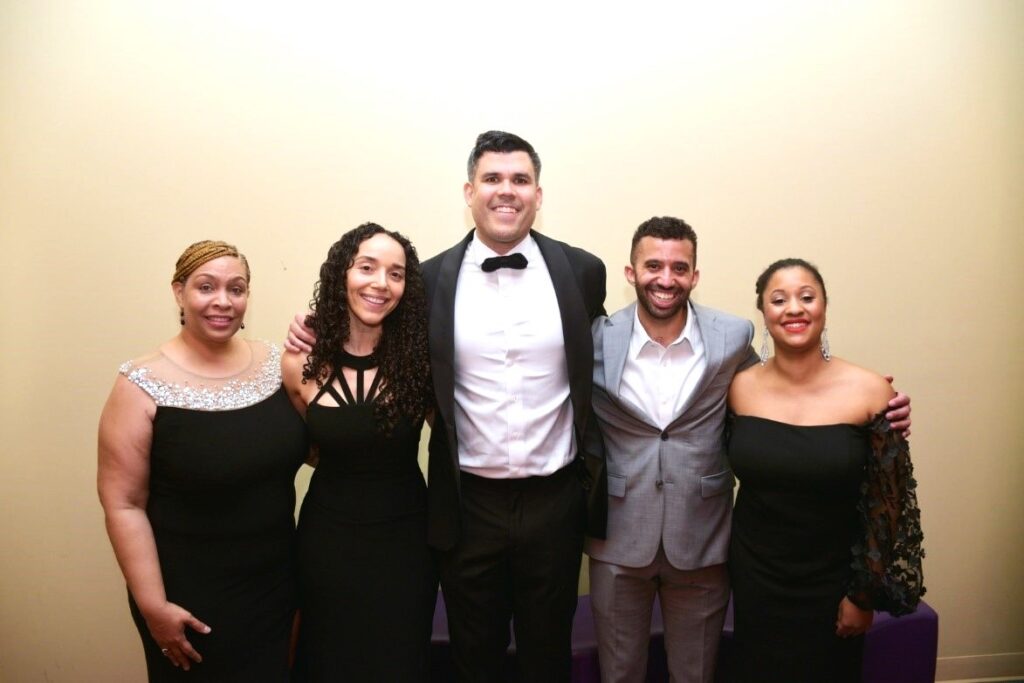
 COSTA MESA, Calif.–(BUSINESS WIRE)– A team of students from Alabama State University (ASU) took the top prize for their innovative credit education program to reach their peers in the first-ever #IYKYK Hackathon (If You Know, You Know), sponsored by Experian and HomeFree-USA. Their winning concept was a gamified app that teaches credit education and fiscal responsibility. “We talked about teaching people from ages 10 to 99. That’s how much of an impact credit has. Through our app, we hope to tell more people about credit,” said Mandelkosi Sibanda of Alabama State University.

Nicknamed the “ASU Credit Stingers,” Sibanda and his teammates Thomas Mulaisho, Takudzwa Modza and Janai Thompson earned a $40,000 scholarship for their concept, “Credit Rush.” The award-winning idea is a game where, in order to overcome obstacles, students watch a video or take a quiz about credit in order to advance to higher levels. Other features include the “Hive,” a library of credit education materials, chat, daily calendar functions and more.

The #IYKYK Hackathon challenged students to create a credit education program for their peers, including those who are not part of the credit ecosystem. The competition was the culmination of a six month program as part of the Center for Financial Advancement® (CFA) Credit Academy sponsored by Experian and HomeFree-USA that brought together more than 250 students from 14 Historically Black Colleges and Universities (HBCUs) in live sessions with Experian credit education experts and self-paced content. Finalists from ASU, Fisk University, Morgan State University and Shaw University represented six countries and eight different languages. The teams presented their ideas live at Experian’s North America headquarters.

“Every team exceeded our expectations. We’re inspired by these student leaders and their commitment to driving positive change in their communities. In sharing their personal stories and experiences, they’re helping us create solutions that are culturally and generationally relevant so we can meet them where they are in their financial and credit journeys,” said Raudy Perez, Experian North America’s senior director for diversity, equity and inclusion partnerships. “This is the most transformative experience that many of these students will have in their lives,” said Gwen Garnett, HomeFree-USA Center for Financial Advancement® Executive Director. “We thank Experian for its commitment to the CFA and its scholars by helping us provide the training and tools to allow young adults and credit invisibles to understand and successfully navigate the credit ecosystem.” As part of its mission of financial inclusion and empowerment for all, Experian partners with HomeFreeUSA to provide continuing education for its housing counselors and resources for their clients. The company created the Home Preservation Grant, which supported homeowners at risk of losing their homes due to COVID-related hardships with credit education and mortgage relief. Inclusion Forward – Experian Empowering Opportunities™ harnesses Experian’s data, analytics and technology to help clients provide more affordable credit access to diverse communities. The Mortgage Bankers Association recently honored Experian with its 2022 DEI Leadership Award. To learn more about Experian’s work in diverse communities: visit www.experian.com/diversity. (BPRW)

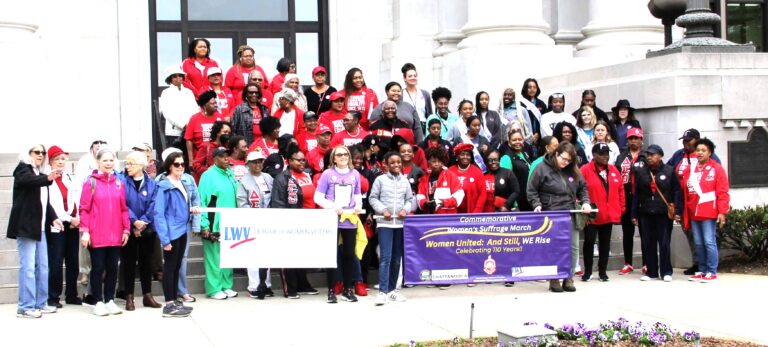
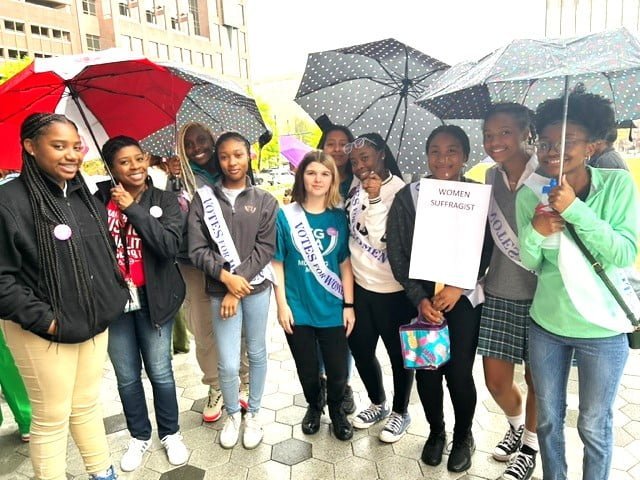
110th Anniversary of the historic Women’s Suffrage March celebrated in Chattanooga

Organizers of the 110th Anniversary of the Women’s Suffrage March decided the best alternate day to celebrate this historic event should be on the last day of Women’s History Month.

Last Friday’s reenactment in Chattanooga was previously scheduled for March 3, to coincide with the date of the original event in 1913, but was rescheduled to March 31 due to inclement weather.

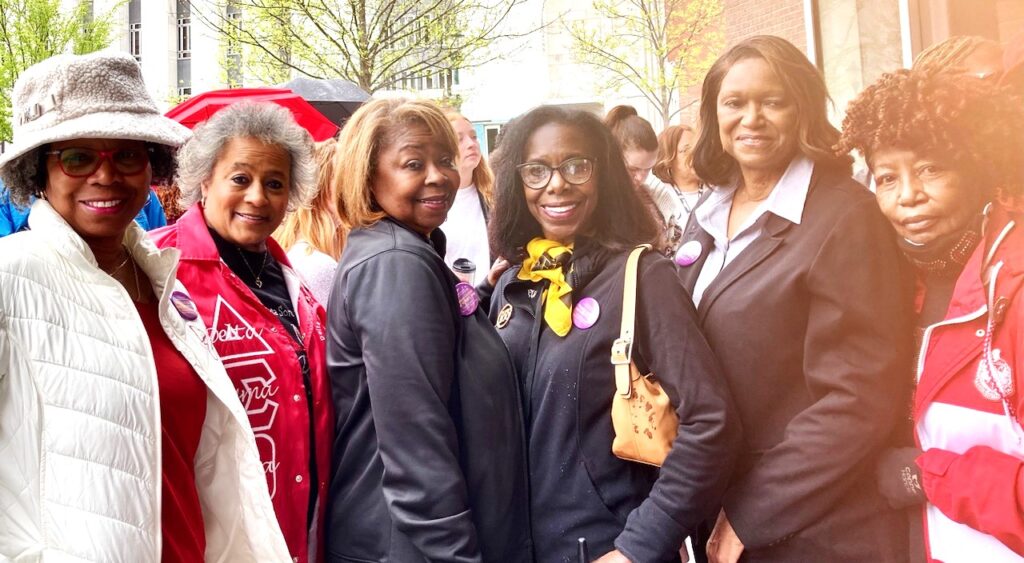
“We are hosting the Women’s Suffrage Reenactment March to celebrate the hard won achievements of the courageous leaders who played a vital role in ensuring that all women earned the right to vote–because of them, we can,” said Amy R. Davis, president of the Chattanooga Alumnae Chapter of Delta Sigma Theta Sorority, Inc.

Last Friday at noon, dozens of participants carrying umbrellas met on the lawn of the Hamilton County Court House, 625 E. Georgia Ave. in downtown Chattanooga, to begin the ¼ mile reenactment of the Women’s Suffrage March. The procession walked from the courthouse down Georgia Avenue towards Miller Park in a light rain. 

A short program at Miller Park followed.

Delta Sigma Theta Sorority, Inc. was founded on Jan. 13, 1913, by 22 women at Howard University in Washington, D.C. The sorority’s first public act of service was its participation in the Women’s Suffrage March in Washington, D.C., on March 3, 1913.

This march was held the day before Woodrow Wilson’s inauguration and faced strong opposition from anti-suffragist crowds. Insults and lit cigarette butts were thrown and marchers were tripped, groped and beaten. Army troops were called in and 100 women were hospitalized.

Although women were granted the right to vote in 1920, it would be many more decades until all women had the opportunity to fully participate in our democracy. 

The local 110th Anniversary Women’s Suffrage Reenactment March was organized by the Chattanooga Alumnae Chapter of Delta Sigma Theta Sorority, Inc., in partnership with the League of Women Voters of Chattanooga and the city of Chattanooga.

From “Spook Who Sat by The Door”…. to trailblazer!

0

Wow, March, Women’s History Month slipped up on me before I had any idea of what history-making woman I’d want to write about. But NPR (my favorite radio station) answered my question when they reported about the recently deceased Zandra Flemister, an individual I’d never heard of. I suspect that I’m not the only one.

Now once I dug into it, her story provided me with an opportunity to staddle two identities – race and gender – as well as two history month celebrations – African American (February) and National Women’s (March).

As I pored through Flemister’s history, I was struck by several parallels between her professional experiences – blatant acts of racism, discrimination and tokenism among them – and those experienced by scores of other pioneering African Americans who were hired in the 60s and 70s, some as window- dressing tokens. (Google “The Spook Who Sat by The Door” to get my drift).

Flemister was born in Frankfurt, Germany to a U.S. Army sergeant and government microfilm technician, and spent the first four or five years of her life in Germany and France before her parents separated and she moved with her mom to Connecticut. She went to Northeastern University on a work-study program, graduating with a degree in political science.

She was the first Black woman to serve as a special agent in the U.S. Secret Service, then spent over three decades as a foreign service officer, rising to the upper ranks of senior foreign service. She did so while juggling family responsibilities, including raising her son who was diagnosed with autism as a child.

Flemister met a Secret Service recruiter at a job fair who told her she was overqualified for the uniformed service but encouraged her to apply to be a special agent instead. She got the job in 1974. She was mostly assigned to undercover, counterfeit and treasury fraud work, though did work some notable protective details — including for Bob Dole’s wife Elizabeth while he was running for vice president and first daughters Susan Ford and Amy Carter. But she struggled to be taken seriously by her colleagues and supervisors and felt she would not be able to advance at the agency in the long term.

Unfortunately, Flemister experienced discrimination throughout her time at the agency, including, she reported, being relegated to mostly undercover and lower-paying duties, getting propositioned by male colleagues on overnight assignments, being denied recognition for exemplary work and facing a constant barrage of racist comments and slurs. However, she stayed with the agency “because she wanted to be a “trailblazer for other African-American women,” she wrote in an affidavit filed in support of a 2000 class-action lawsuit alleging racial discrimination within the Secret Service (settled for $24 million).

Later she left Secret Service, ultimately taking a new job — and a pay cut — at the State Department in 1978, launching a career in the foreign service. Her three decades there included running interagency visa screening programs in Pakistan and South Korea and establishing a multinational anti-visa fraud working group in London.

At one point, she reported, a superior told her that she would have to get rid of her Afro-style hairdo in order to get assigned to more prestigious and lucrative security details. Flemister did, but later wrote that she felt like “the show African American female agent that the Secret Service rotated around to different details to make it appear racially diverse.”

Further, a colleague taped an image of a gorilla over her photo on her ID card, while another gestured to her in the office and asked “Whose prisoner is she?” She added that on presidential visits to Senegal and Grenada, she heard white agents refer to the leaders of those countries using the n-word, and wasn’t aware of any action being taken after she reported it.

“With my requests for transfers to career-enhancing squads consistently denied, my credibility and competency constantly questioned, and the common use of racial epithets in my presence, I saw the handwriting on the wall,” Flemister wrote, according to a copy of the affidavit shared with NPR. “Because of my race I would never be allowed to have a successful career in the Secret Service.”

According to NPR, one of the agents who followed — albeit unknowingly — in Flemister’s footsteps was former Secret Service Assistant Director Renee Triplett who arrived at the Washington Field Office in 1989 and retired in 2016 as the first Black woman to serve in that executive-level position.

“To me, this was the first recognition of who the first Black female [special agent] was,” Triplett says. “I thought, ‘Wow,’ because it was in the 1970s, I knew the history of when, generally, the first women were hired within the agency, but I never had an understanding of when the first Black female had ever been hired.” It was only after Flemister’s death that Triplett learned how difficult her time at the agency had been, a story that she called “heartbreaking” to read.

In the end, I salute and celebrate Zandra Flemister and other trailblazers like her who paved the way for scores of others like them.

© Terry Howard is an award-winning speaker, writer and storyteller. He is also a contributing writer with the Chattanooga News Chronicle, The American Diversity Report, The Douglas County Sentinel, The Waynesboro News Virginian, Blackmarket.com, co-founder of the “26 Tiny Paint Brushes” writers’ guild, recipient of the 2019 Dr. Martin Luther King, Jr. Leadership Award, and third place winner of the 2022 Georgia Press Award.

Chattanooga City Councilman Isiah Hester presents proclamation honoring John R. Taylor Sr. 

0

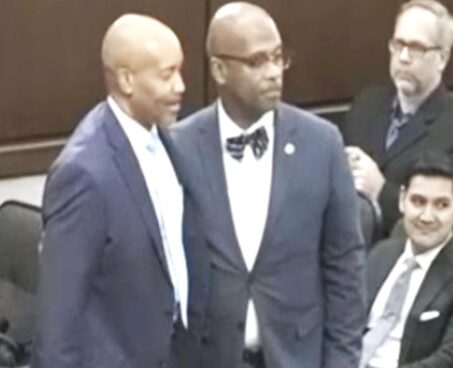
At last Tuesday’s (March 7) meeting of the Chattanooga City Council, District 5 Councilman Isiah Hester presented a proclamation to John R. Taylor Sr. He cited Mr. Taylor’s many years of meritorious service as a community leader, business entrepreneur and former councilperson.

“For some men are born to change the course of history,” Councilman Hester said. “These men of indomitable fortitude and unparalleled tenacity, they have all the ingredients of heroes. Such a man today is John R. Taylor–a husband, businessman, father, and my mentor and spiritual leader.”

Mr. Taylor accepted the proclamation with words of thanks and encouragement for the City Council members. 

“I just want to say thank you so very much for this recognition,” he said. “I understand what you’re going through, and the great service that you are rendering to our city. And I want to just encourage you to continue to do what you’re doing, working together in order to make our great city even greater. And I want to say to Isiah, thank you so very much for even considering me for this service and this award.”

Mr. Taylor ended the acceptance with one of his favorite mottos: “Working together works.” 

Mr. Taylor’s proclamation reads:

“WHEREAS, John R. Taylor, Sr. is a native of Chattanooga, Tennessee, and a graduate of the Brainerd High School class of 1980. Mr. Taylor holds a bachelor’s degree from Southwestern Christian College and a degree in mortuary science from John A Gupton College.

WHEREAS, in 1997, John first entered local politics as the City Council District representative, making history as the first District 7 councilperson to be elected to two consecutive terms since the origination of the City Council.

WHEREAS, while serving as District 7 representative, John addressed resident needs with physical and management improvements, community services, and social services being a vital force behind the 2007 HOPE VI project, a series of government grants designed to reshape and revitalize neighborhoods. He was an Executive Team member for the Chattanooga African American Summit and founding member of the City of Chattanooga’s Office of Multicultural Affairs Board.

WHEREAS, through the years, he has held a multitude of titles including the President of Taylor Funeral Home of Chattanooga, Inc., Chairperson for the International Committee, President of Scales Funeral Home in Nashville, President of the East Tennessee Funeral Directors & Morticians Association and many more.

WHEREAS, for years, John served faithfully as the Avondale Church of Christ Education Director under the ministry of his father, Carl, Sr. Taylor, and is currently following the call as minister of the East Third Street Church of Christ. Now Therefore, I, Isiah Hester, Councilman of the Chattanooga City Council, do hereby honor and recognize, John R. Taylor, Sr. as a public servant in the highest sense for his lifetime commitment to the community.

Hamilton County Health and Safety Board Changes Likely to Increase Visibility

0

Property owners in the unincorporated area of Hamilton County may see an increased presence of the Hamilton County Health & Safety Board (HCHPSB).

In the March 8 agenda session, Andy Mullins, serving as the Chairman of the HCHPSB, made a presentation which included a resolution to amend the current governing rules and regulations of this group.

The HCHPSB was established in 1999, in part, to address the condition of private properties that fall within the jurisdiction of Hamilton County Government, to ensure they do not “endanger the health, safety, or welfare of anyone” or violate the terms of the various codes and regulations that would do the same.

A property owner may have contact with the Hamilton County Health Department’s Enforcement Officer who has either taken a complaint regarding that property or an adjacent or nearby property that is of concern and impacting the health and public safety of others. Complaints may relate to unsanitary conditions, hazards such as fire, accidents, or other “calamities” which would jeopardize the public, or dilapidated structures on a private property, which includes items such as swimming pools.

HCHPSB Chairman Mullins presented amending language that makes current the board’s composition to match the 11 members of the Hamilton County Commission, boosting the current membership from 10 to 12, with one Board member appointed from each Commission District and one appointee serving at large as a representative of the Hamilton County Mayor in a four-year term.

This resolution also included language, as Mr. Mullins noted, that benchmarks with more than 12 other states and municipalities of similar size. Amended language adds that the HCHPSB Enforcement Officer, “charged with the responsibility of following up with a property inspection following a complaint or has witnessed unlawful conditions from a public road, an adjacent property, or has been granted access to the property under review, shall wear a uniform, drive a clearly marked County-owned vehicle, be equipped with communication tools to access law enforcement, and be authorized to carry a County-issued firearm.”

The amended resolution includes the approval to issue devices for the Enforcement Officer “to insure his/her safety by use of a body camera, two-way radio, and GPS tracker.”

The expanded document includes the process by which a private property located outside the jurisdiction of one of Hamilton County’s 11 municipalities would be handled should a violation be assessed. These include notification of the property owner with an opportunity to provide remedy or to request a hearing before the HCHPSB. Should the need to escalate the matter beyond the Board and its finding, the Hamilton County Attorney may be the final step with a lien affixed to the property with remediation costs assessed after the work is done by the County.

Chairman Mullins, in his presentation at the agenda session, also put forward a request to be included in the 2024 County budget to cover costs of the properties under liens or those abandoned. This amended language was set for discussion on the March 15 County Commission meeting.

Dr. Lucille O’Neal shares her life story at CGLA’s 14th Annual Odyssey Awards Luncheon

0

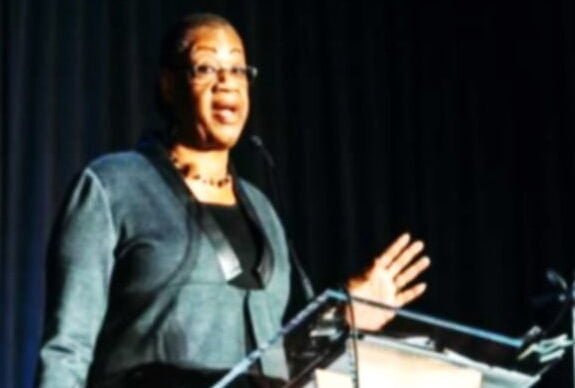
Dr. Lucille O’Neal–educator, author and mother of retired NBA legend Shaquille O’Neal–was the featured speaker last Wednesday at Chattanooga Girls Leadership Academy’s (CGLA) 14th Annual Odyssey Awards Luncheon. 

Each year, CGLA presents the Odyssey Awards Luncheon to recognize exemplary CGLA students and celebrate CGLA’s distinctive accomplishments. 

Dr. O’Neal–candidly, and often humorously–shared her life story, and discussed overcoming hardships and pursuing dreams with the audience at the Chattanooga Convention Center ballroom.

Dr. O’Neal said that at the age of 12, she told God that she wanted to be a motivational speaker. A tall, skinny child, she said she always felt different–a feeling that caused her to have low self-esteem throughout her youth. She shared that she eventually learned to drown those feelings with alcohol. 

After becoming a mother at the age of 17, as soon as she finished high school in 1972–and eventually a wife and mother of three more children–Dr. O’Neal was married for 28 years, never letting go of her dream.

“I was fresh out of high school,” she recalled of her teen pregnancy. “I didn’t know what my future held. Even after learning what my mother taught me–keep dreaming, keep striving, keep going forward–I got caught up looking for love in all the wrong places.”

Dr. O’Neal said that when her son Shaquille was first drafted into the NBA by the Orlando Magic in 1992, she was struggling with alcoholism.

“I was not in a good place,” she said. “And I used his money to buy the best liquor that we could buy. I was drinking liquor that I couldn’t even pronounce. But eventually, I learned how to pronounce ‘Courvoisier.'”

It was her faith that pulled her out of her dark place, Dr. O’Neal said.

“It came to me that I needed to be doing something else,” she said. “In my mind, I could hear, ‘Walk like you have somewhere to go.’ I heard it clearly.”

Dr. O’Neal enrolled in an adult education program at Bethune-Cookman University in Daytona Beach, Florida, and graduated in 2003 with a degree in business administration.

“My son said, ‘If you go to college and you keep your grades up, I promise I’ll pay your tuition’,” she joked.

Following graduation at Bethune-Cookman, she, her son and daughter attended the University of Phoenix. Dr. O’Neal received her Master of Arts in organizational management in 2005.

“When you come together as a family and work together, the dreams that you have, even if they die, they can be resurrected,” Dr. O’Neal said.

Stacy Lightfoot, vice chancellor of diversity and engagement at the University of Tennessee at Chattanooga, announced CGLA’s Rising Star and Shining Star awards. 

Four students received awards for displaying exceptional leadership and academics: First place, Rising Star Award: Devine Tate, seventh grade; Second place, Rising Star Award: Amy Morales Morales, seventh grade; First place, Shining Star Award: Amaya Dieng, 10th grade and Second place, Shining Star Award: Shaire Mendoza Izara, 11th grade.

“Odyssey is a time when we spotlight outstanding students–young women who are conscientious and disciplined, creative and insightful, eager and curious,” said Dr. Elaine Swafford, chief executive officer at CGLA.

The event featured a performance of “This Little Light of Mine” by Trinidadian-American singer Wintley Phipps and the academy choir. Phipps is a world-renowned vocal artist, pastor, motivational speaker and education activist. 

Nicole Brown served as master of ceremonies for the awards luncheon. The Rev. Ann Weeks delivered the invocation. Hilda Murray and Jay Bock served as co-chairwomen. 

Money raised from Odyssey supports CGLA’s mission “to provide girls and young women with a rigorous college preparatory education focused on science, technology, engineering, the arts and math (STEAM) in a supportive environment that nurtures self-confidence, inspires leadership, encourages critical thinking, and promotes academic excellence.”

The Chattanooga News Chronicle was the 2023 featured media sponsor for the 14th Annual Odyssey Awards Luncheon. CGLA, 1802 Bailey Ave., is a public charter school for girls in grades 6-12.

Hinton receives Inaugural Walter F. Williams Achievement Award

First Barristers’ Ball by S. L. Hutchins Bar Association

Officers of S.L. Hutchins Bar Association, from left, Kisha Cheeks, Esq.– reasurer; Crystle Carrion, Esq.–Recording Secretary; Martin Trimiew, Esq.– President; Michael Jones, Esq.– Vice President; Harolda Bryant, Esq.–Corresponding Secretary; Ariel Anthony, Esq.– Past President (not pictured).

Chattanooga, TN – The S. L. Hutchins Bar Association held its First Barristers’ Ball on Saturday, February 25, 2023 at the WTCI-TV studio. It was an elegant affair consisting of entertainment and fellowship and attended by over 100 local attorneys and professionals and concluded following an evening of dancing and music provided by Herculean Entertainment.  The sold-out event was sponsored by local law firms, with Chambliss and Luther Anderson as premier sponsors, and table sponsorship by The Ware Law Firm; Husch Blackwell; Miller Martin; and the Tennessee Alliance for Black Lawyers; and the Napier-Looby Bar Association.

The highlight of the evening was the presentation of the inaugural Walter F. Williams Achievement Award recognizing an individual that has been significantly involved in the Chattanooga area community and has excelled in their role as an attorney. Demonstrating the same  principles of activism and community service embodied in the legacy of the award’s namesake, Judge Walter F. Williams, the ideal award recipient has impacted the legal profession by exemplifying high ethical standards, excelled in the application of the law and demonstrates a true understanding of advocacy and representation of clients. The 2023 Walter F. Williams Achievement Award was presented to former City Attorney and founder of Hinton & Company, Wade A. Hinton, Esq.

At left, S.L. Hutchins Bar Association Past President Ariel Anthony, Esq. and Yasmin Stiggons, Esq.

The S.L. Hutchins Bar Association was founded to honor and preserve the legacy of Chattanooga’s first African-American attorney, Styles L. Hutchins. As the only active minority bar association in Hamilton County, Tennessee, the association is dedicated to growing and maintaining a diverse voice in the legal profession and community. The S.L. Hutchins Bar Association is an affiliate chapter of the National Bar Association, the oldest and largest association of attorneys of color in the world. For more information on the S. L. Hutchins Bar Association, please contact the organization at slhutchinsbar@gmail.com or visit our website www.slhutchinsbar.com – Submiited by Attorney Kisha L. Cheeks

TN Black Caucus of State Legislators STAND in Support of TSU

Compiled – According to State Representative Yusuf Hakeem the Tennessee Black Caucus of State Legislators is standing with Tennessee State University and supporting the decision to let its Board of Trustees remain intact for another year.  

This comes after the State Comptroller’s office released an audit that was severely critical of TSU and made several suggestions for improvement, including possibly removing the President and the Board of Trustees.

The audit focuses on last Fall when TSU leadership undertook an extensive recruiting and scholarship drive.  The University ballooned the scholarship budget from $6 million dollars to $28 million dollars—without taking into full consideration that the school didn’t have enough on-campus housing to accommodate all of those students.  As a result, the school had to scramble to provide housing at several hotels. Exacerbating the situation was admittedly poor communication between the school and the incoming freshman class that frustrated many of the students and their families. 

TSU President Glenda Glover has pointed out that the University readily admits that the mistakes that were made and that the administration has taken steps to alleviate the situation in the future.  However, the report goes on to list several potential recommendations for TSU, including possibly changing management at the University, vacating, and replacing the TSU board, and placing TSU back under Board of Regents oversight, (where it would be the only 4-year institution in the state under such guidance). 

Keep in mind that these recommendations are based on having insufficient housing for the record number of scholarships that they awarded last year in an effort to educate more students.  There was no financial malfeasance or mismanagement.  The suggestions of these major changes are based solely on the housing issues.  

Following the presentation of the audit, Representative Sam McKenzie, Chairman of the Tennessee Black Caucus of State Legislators, held a press conference where he said that the potential penalties far outweigh the infractions. 

Rep. McKenzie, who represents the Knoxville district where the University of Tennessee is located, said U-T is also currently using hotels to house overflow students. And that in Knoxville, the increased enrollment numbers are good news and a cause for celebration. He talked about how his alma mater, Fisk University, is using converted land-sea shipping containers for overflow housing and they are being applauded for their ingenuity.  He said that while increased enrollment is being celebrated at other schools, it’s suggested that drastic action be taken at TSU. He also noted that at other schools, junior and senior years are a time that students leave dorm rooms and move off-campus, that option is cost prohibitive in Nashville and off the table. 

Finally, McKenzie made the point that TSU has a plan to fix the problems cited, but we won’t even have a chance to see if remedies are successful until next Fall.  

The audit was presented again on Monday to a Government Operations Subcommittee.  The Committee room was filled with TSU supporters wearing blue and overflow supporters had to watch monitors in the hallway.  After hearing from President Glover and several TSU supporters, the Committee decided to recommend that the current board remain in place for another year.  That recommendation will now go on through the committee process in House and the Senate en route to an eventual full vote in both chambers.    


The full audit is here: TSUFullReport.pdf (tn.gov)

The link to the first hearing is here: Senate Ad Hoc Committee to Review the Management and Operations of Facilities and Dormitories at TN State University (granicus.com)

The second hearing can be viewed here: Ed., Health & GW Joint Sub of Gov Op (granicus.com)