

Democratic State Representative Yusuf Hakeem of Chattanooga passed a bill Monday night to make youth sports safer for public schools, charter schools, private schools and community organized leagues. The bill will encourage all youth coaches to complete training in physical conditioning and training equipment use to the extent that the training is available. It also requires that an emergency action plan is created and rehearsed. The legislation applies when the activity is conducted on property that is owned, leased, managed, or maintained by the state or a political subdivision of the state. The measure passed the House unanimously. Representative Hakeem said, “I’m very pleased that we could come together in a bipartisan way with the entire body voting together to help make youth athletics safer.” The bill will now be heard in the Senate on Thursday, where it is expected to pass.
City Council Member Introduces Reparations Request

As the April 11 Chattanooga City Council Agenda Session was nearing its conclusion, City Council Member Demetrus Coonrod asked Chairman Darrin Ledford to be recognized. The District 9 representative serving in her second term for the areas of Glenwood, Missionary Ridge, Ridgedale, Eastdale, and East Chattanooga brought attention to the attention of Council Members a document that had been distributed requesting a reparations study be established.
In her brief remarks, Council Member Coonrod recalled a resolution previously discussed and passed by the Chattanooga City Council, “when the civil unrest had happened,” in the summer of 2020. Stating that her proposal “is just adding on to that,” the request introduced would result in actions to establish a feasibility study for reparations and specifically, “the authorization of expenditures to develop, establish, and implement reparations.”
In a presentation lasting under 90 seconds, Council Member Coonrod introduced a proposal that would be an annual budgeted line item for Chattanooga’s budget, housed under the Equity Department, apparently the Equity & Community Engagement Department of Chattanooga, which would involve a selected panel which would make up a reparations committee.
Continuing in her remarks, the Council Member, who also chairs the City Council Economic Development Committee, informed her colleagues that she awaits some possible costs of a feasibility study from Marcus Mauldin, PhD, an associate professor within the Department of Political Science and Public Service.
City Council Chairman Darrin Ledford, presiding over his final agenda session as the body’s leader, asked if the proposing Member would like to have the request presented further and discussed in the Strategic Planning Committee, to which Council Member Coonrod agreed.
Federal legislation in Washington, DC has passed neither the US House nor US Senate. In 2007, a Congressional discussion failed to produce actionable legislation followed in 2019 by the US House Judiciary Subcommittee on the Constitution, Civil Rights, and Civil Liberties. In 2020, reparation payments per descendent were projected over $151 million ,and proposed legislation in 2021 to establish a Congressional Commission to study the issue saw consideration and markup at the Judiciary Committee level with no further action.
However, states’ and local governments have discussed, debated, and brought forward actions on the issue of reparations, which include cash payments and resources to narrow the “Africans in America during centuries of oppression and exploitation” due to enslavement and subjugation, as described by the National African American Reparations Commission.
The first program considered America’s original reparations effort was passed and launched in 2019 in Evanston, Illinois, as a housing initiative named the Restorative Housing Reparations Program. The program addressed discriminatory housing policies. Contrast this with the statewide program in California which began as a study with a released 2022 interim report, and moving to the final report due in summer of 2023 that is expected to establish a mechanism for implementation. Any Chattanoogans interested in this issue may attend the open Strategic Planning Committee meeting that is next set to meet on Thursday, April 20th and contact their Council Member.
Justin J. Pearson reinstated, in unanimous vote, to the Tennessee legislature

Compiled CNC Staff – On Wednesday, April 12, the Shelby County Board of Commissioners voted 7-0 Wednesdayto reinstate state Rep. Justin Pearson.
Pearson, the second Tennessee House Democrat reinstated, was expelled by Republicans for “disorderly behavior” that “brought dishonor to the House of Representatives.”
The so-called “disorderly behavior” occurred when Rep. Justin Jones, Rep. Gloria Johnson, and Pearson joined protestors/gun control advocates as they peacefully marched in the House of Representatives.
On Tuesday, Pearson had been reported to say, “I’m hopeful that I’ll be reinstated tomorrow. The truth is, state legislators and people at the Governor’s office, I’ve been told, are threatening to withhold over $300 million of funding to Shelby County in Memphis if I am reinstated.”
In Memphis, the packed crowd inside the County Administration Building erupted in cheers and applause following the vote for Pearson’s reinstatement.
Hundreds marched in celebration to the Memphis Civil Rights Museum. During an impassioned speech, Pearson said it was time to get back to work.
“You can’t expel our voice, and you sure can’t expel our fight,” he told the crowd.
“Let’s get back to work!”
Nationally recognized as the ‘Tennessee 3’, Rep. Justin Jones, Rep. Gloria Johnson, and Rep. Pearson joined in the protest for gun control on March 30th. Only the two black legislators, Jones and Pearson were expelled and Rep Gloria Johnson, who is white, was spared expulsion by a single vote. Pearson will return to Nashville on Thursday to be sworn in.
Brainerd High School senior Maurquez Thompson offered over $1 million in scholarships

After being offered over $1 million in assorted scholarships, and receiving acceptance notifications from more than 35 different educational institutions, Brainerd High School senior Maurquez Thompson has made a decision.
He has chosen the prestigious Jack Kent Cooke Scholarship and a full ride to Stanford University, one of the most esteemed institutions of higher learning in the United States. The California school is extremely selective, with an acceptance rate of only 4%.
“As a first-generation and low-income student, receiving $1.1 million in scholarships is unbelievable,” Thompson said. “Being able to afford college has been one of my biggest concerns; however, the Jack Kent Cooke scholarship will help cover the remaining costs of my post-secondary education. I only had to think about deciding on a best-fit college rather than picking the most affordable one. I am grateful to have been accepted into Stanford University on a full-ride scholarship. These acceptances are surreal as a young black male from an underserved community and Title 1 school.”
Thompson is an exceptional student who has set his sights on becoming an attorney and a future federal judge. He has been recognized for his dedication to his studies and passion for social justice. His selection as a recipient of the Jack Kent Cooke Scholarship is a testament to his hard work and commitment to excellence.
Thompson, who said he plans to use his education to create positive change in his community, was accepted into UCLA, Morehouse College, Swarthmore College, Tuskegee University, Fisk University, Emory University, Colgate University, University of Southern California and Sewanee: University of the South–among others. The total value of all the scholarships and grants he was offered amounted to an impressive $1,083,648.
Since 2000, the Jack Kent Cooke Foundation has awarded almost $250 million in scholarships to nearly 3,200 students from 8th grade through graduate school, along with comprehensive academic advising, career pathway counseling and other support services. The Foundation has also provided $125 million in grants to organizations that serve such students. Thompson will receive up to $55,000 annually from the Jack Kent Cooke Foundation to cover costs associated with his undergraduate education at Stanford University.
VETERANS AND FAMILIES PURCHASE “BRICKSOF HONOR” TO SUPPORT THE MOHHC


They say that in order to create lasting memories, you must first pave the way. You can help pave the way by supporting the new Charles H. Coolidge National Medal of Honor Heritage Center by purchasing a Brick of Honor to honor a fellow veteran, friend, loved one, or member of your family, or your business for the world to see. The bricks are presently being laid at the entrance of the Medal of Honor Heritage Center.
Opened on Feb. 22, 2020, the National Medal of Honor Heritage Center is located in the heart of where its heritage started back in 1862-1863 – Chattanooga, Tenn. The Heritage Center’s mission focuses on protecting and preserving the important heritage of our country’s highest military award for valor – the Medal of Honor – and serves as a lasting tribute to all Medal of Honor recipients – from the first recipients of the Medal in and around Chattanooga during 1862-1863 to those who have received this honor since – including the 32 recipients accredited to the state of Tennessee.
More importantly, the Heritage Center’s mission centers around our collaboration with the Congressional Medal of Honor Society and its Character Development Program. Through this program, we are working to educate the next generation of Americans about the six-character traits that embody the Medal of Honor – Patriotism, Citizenship, Courage, Integrity, Sacrifice, and Commitment – and inspiring them to emulate these six values to make an impact in their community. With each passing day, I believe this mission is becoming more and more relevant as we, and our children, look for inspiration on how to face and overcome the challenges we are facing today.
With your Brick of Valor, you can help support and sustain this lasting tribute to these genuine American heroes who represent the best and bravest values of all who have served and sacrificed in defense of our nation. If you have questions or need information, please send an email to info@mohhc.org or call (423) 877-2525.

Former Rep. JoAnne Favors recognizes The Howard School for its historical impact on the Black community
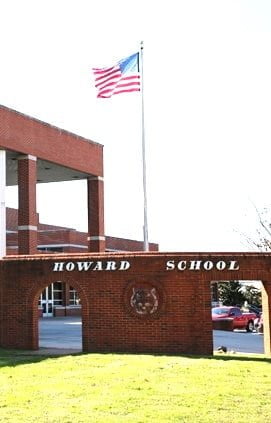
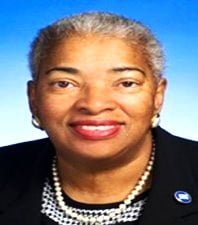
The Howard School will always hold a special place in the heart of JoAnne Favors, former member of the Tennessee House of Representatives for the 28th District in Hamilton County. She was a graduate of The Howard High School Class of 1960.
“The Howard School Class of 1960 is a very special and historic one indeed, for we started the Civil Rights Movement in Chattanooga, Tennessee,” Favors said.
Today, inside The Howard School hallways at 2500 Market St., class photos can be seen hanging that date back to 1927 through the 1980s, which show black students–even after segregation ended.
Favors talked about the struggle black students went through just to be educated. Even though almost 100 years had passed since the end of the divisive Civil War, black people had to deal with Jim Crow Laws, which they detested.
During this time, there was not a single black university in Chattanooga, and many students found that disheartening, she said.
“We were constantly discouraged by the lack of job opportunities for people who looked like us,” Favors noted.
In 1960, students decided it was time to take action. On Feb. 19, three students–Robert Taylor, Robert Winston, and Andrew Smith–led a sit-in at McClellan’s segregated lunch counter at 713 North Market St. in Chattanooga. Thirty local black high school students eventually came to protest and express their dissatisfaction for how they were treated.
The walls of segregation slowly started to crumble away from those students wanting to make a change. To honor this day, Favors said there is a mural in the front lobby of The Howard School that depicts Howard students sitting in the segregated lunch counters at the sit-in.
The importance of the piece can make it quite emotional for viewers who know its history, she said.
The Howard School was the first free public school established in Hamilton County, making it a main source of pride in Chattanooga’s black community.
It was founded in 1865 by the Rev. E. O. Tade, a black Congregational minister who served as Hamilton County’s first Superintendent of Education. Later, the school was named after Gen. O. O. Howard, the commissioner of the Freedmen’s Bureau, an act established to help freed African Americans and refugees.
The school was first incorporated into Chattanooga Public Schools in 1873, and was moved to its current location on South Market Street. The school later became a part of the Hamilton County School system in 1997.
Today, The Howard School is known as a culturally inclusive community, with a growing Hispanic population attending the school. However, for years Howard was the only school black students were allowed to attend. Favors is a motivational speaker and member of Gamma Theta Sigma Chapter of Sigma Gamma Rho Sorority, Inc.
Want the Benefits of Ozempic Without Taking a Shot?

Most people have heard of or know someone who’s using the medication Ozempic to address their blood sugar issue, but also losing a great deal of weight.
The prescription medication being used to treat patients with Type 2 Diabetes, or a state of insulin-resistance that’s often reversable–with behavior modifications, such as diet and exercise–has gained popularity because of the weight loss that accompanies its use.
Taken by subcutaneous injection only, Ozempic, is in a class of drugs called glucagon-like peptide 1 (GLP-1) agonists. This class of medications, available only through a healthcare provider’s prescription, mimic a hormone which stimulates the production of your body’s insulin during and after a meal. This extra insulin produced lowers the blood sugar levels that are characteristic of Type 2 Diabetes.
The weight loss is likely attributed to the slowing of food emptying out of the stomach into the small intestine which produces a full feeling quicker and longer than without the medication.
Individuals under their doctor’s care receiving Ozempic or others from this class of drug lose, according to the prescribing information, 10.5-15.8 pounds. Those patients who incorporate lifestyle changes, such as changes in one’s daily food intake and activity levels, lost 33.7 pounds.
According to information from the Mayo Clinic, patients taking medications from the GLP-1 class of drugs have also benefitted from improvements in their blood pressure and cholesterol levels.
In science, and in this case, causation and correlation must be distinguished. Does the medication alone reduce the blood pressure and improve cholesterol or does the weight loss correlated with the use of the medication cause the improved numbers?
And that seems to be a valid point. If patients taking the medication alone lose almost 16 pounds, but shed about 18 pounds more with changes in how these patients ate daily and enhanced their activity, shouldn’t one assume those behavioral changes alone, without taking an injection, are achievable?
The answer is “Yes!”
Obviously, if you walk more, move around more, and burn more calories, you lose weight. You also increase your metabolism as you build your muscle mass, even slightly, and increase activity.
Further, there are foods that produce the same outcomes as Ozempic. Meals and snacks that feature good fats–like avocado or nuts–and revolve around high protein sources like eggs and fish, trigger GLP-1. Food choices that are high in fiber, such as whole grains, and especially fermentable fiber, like beans and legumes, which feed the good bacteria in your intestines, stimulate GLP-1 as well as digest more slowly than simple sugars and carbohydrates found in prepared foods, fast foods, and many snacks.
If you’re looking for a guide for this type of food selections, check out the terrific article at Health.com, which speaks beyond the Ozempic effect with improved cognitive performance and slowing the risk of chronic disease. For those whose doctors have prescribed Ozempic or any other medication, make a few changes and gain an even greater health benefit.
‘Woke’- Good grief, an American threat?

Okay readers, ready yourselves for another entry into the You Can’t Make This Stuff Up Chronicles of the Asinine. Have an extra strength Excedrin or shot of Bourbon within easy reach. You may need it.
Now before the ink was dry on recent news about the Silicon Valley Bank collapse, voices from the peanut gallery began pointing silly blame on the latest convenient boogey man…. “Woke.”
Hey, this from the co-founder of Home Depot, “These banks are badly run because everyone is focused on diversity and woke issues.” (Excedrin please!).
This from the governor of Florida, the wannabe next president of the United States, “Woke will die if it finds its way to Florida.” (Double Bourbon please!).
“All this led me to think: Good grief, fellas, why don’t you just come out and suggest the bank would’ve been ok if it were run by a bunch of white guys?” wrote Rex Huppke of USA Today.
As another example of hilarity gone haywire, recently a conservative author was asked by an interviewer to define the term “woke” but was left dumb founded since she didn’t have an answer. “So, I mean, woke is, uh, sort of, the idea, that’s hard to define…”
Red-faced, she gave it another try and dug herself deeper into the delusion with some gobbledygook that made her look “foolish 2.0.”
“If You Hate “Woke” But Can’t Define It, Maybe What You Hate Is Something Else,” penned writer William Spivey.
So let me get this straight. The bank would not have gotten into all this mess had it not been distracted by diversity and wokeness? I mean, maybe I missed the memo, but since when did the aims of diversity and inclusion become a fatal disease? Can someone escort me to a graveyard and show me the words “Poor George died from an overdose of wokeness” etched into his tombstone?
Okay, c’mon, seriously now, let’s step back from this insanity and ask ourselves what’s really going on here?
To me “wokeness” is number three on a three headed monster, “The great replacement theory” and “diversity” being the other two. Since the definition of diversity is fairly understood, or should be, let’s unpack the other two.
The “great replacement theory” hinges on stoking fears that a non-white population will displace a white majority. Dramatic shifts in demographics, growths in immigration, patterns in birth rates and increasing numbers of people of color in positions of power foster the fear of being replaced. Slick politicians and ratings hungry media willingly exploit these insecurities.
Turning now to “woke,” a four letter word that’s dominated the headlines recently, let alone provided fodder and talking points for ambitious politicians who keep tripping over themselves trying to define it.
The term “woke” was created by Black people referring to being alert to systemic racial injustices. The first documented use of the phrase “stay woke” happened in the 1930s when musician Lead Belly ended his song by advising Blacks traveling through Alabama to “stay woke.”
Now before the concept of “wokeness” was hijacked, its original definition accurately defined it as a state of being aware, especially of social problems such as racism and inequality. “Woke” was thrust back into the headlines with the police killing of George Floyd and other cases. Even before, parents of Black kids warned them of the dangers of “Driving While Black,” another way of saying “staying woke.” If you are Black “staying woke” may be a life saver.
So here’s how “woke” these days is used as a devious strategy to exploit. First, those who suggest that “woke” is behind bank failures, for example, know darn well that that’s untrue. Second, they understand that if they repeat that lie often enough, their base will accept it as true. In the end, ambitious politicians and ratings-hungry media will attempt to “outwoke” each other.
In a recent USA Today poll that offered two different definitions of “woke,” 56% of respondents chose the positive definition – “to be informed and educated on social injustices.” Only 39% chose the other – “to be overly politically correct and police the words of others.”
Now like woke’s bedfellow in asininity, PC (Political Correctness) spawned years ago in response to assertions by people of color and other marginalized people, “anti -wokeness” has emerged as a pernicious attempt to ridicule, deride and sanitize embarrassing histories to shield young readers from hurt feelings and guilt. Look no further than the recent movement in Florida to remove all references to “slavery” from Rosa Park’s story and banning late baseball’s Roberto Clemente’s biography altogether.
Since the late 1980s, the term PC has been used to deride preferences for avoiding language that can be seen as marginalizing or insulting to groups of people, particularly groups defined by ethnicity, sex, gender, or sexual orientation. In public discourse, PC was employed pejoratively to shut down genuine discussions about how people wanted to be called and treated.
Like PC, woke backlash typically happens during social movements when some, driven by fear of change and perceived loss of privileges, respond by trivializing, belittling, mocking, and sometimes in violence.
Wrote Rex Huppke, “I fully expect one of them (Home Depot co-founder and Florida governor) any day now to say that I put on a couple of pounds because of the woke ice cream companies and their preoccupation with diversity.”
Let’s end by going back to the mess created by the bank in question and the real reasons behind the collapse; that some banks, because of deregulation, rising interest rates, etc., took on undue risks and were strapped with poor management. Woke had absolutely nothing to do with what happened, period!
So, if you believe that wokeness led to the Russian invasion, climate change, bad breath, or little Jennie’s snotty nose, then I’ve got a bridge in Brooklyn I can sell you…for real cheap!© Terry Howard is an award-winning trainer, writer and storyteller. He is also a contributing writer with the Chattanooga News Chronicle, The American Diversity Report, The Douglas County Sentinel, Blackmarket.com, co-founder of the “26 Tiny Paint Brushes” writers’ guild, recipient of the 2019 Dr. Martin Luther King, Jr. Leadership Award and 3rd place winner of the 2022 Georgia Press Award.
Former TV anchor among Urban League’s three new hires

CHATTANOOGA, Tenn. (March 30, 2023) – Urban League of Greater Chattanooga (ULGC) has expanded its team with three promotions and three new staff including Greg Funderburg, a well-known community advocate and local journalist.
Since taking the helm of ULGC in 2021, president and CEO Candy Johnson prioritized reframing the organization. Her vision is to distinguish ULGC as a minority-serving landmark institution in the heart of downtown along the M.L. King corridor and ultimately as a driver of equitable and inclusive community-based economic growth.
Johnson established ULGC’s first physical headquarters last year and restructured services and programs under three empowerment centers:
- Center for Economic and Black Business Success
- Center for Education and Family Empowerment
- Center for Equity and Inclusive Leadership
Next, Johnson focused on sourcing the best and brightest talent to move the mission forward.
“After my first two years of working with the board and team to reframe our next five years, I knew finding the right talent and helping them become better leaders for the future of our community would be a heavy lift in light of talent shortages and being a nonprofit,” said Johnson. “Now, with the support of more investors over the past two years who believe in what we are trying to accomplish, we have been able to set a new culture of excellence, source new talent, make promotions and work toward stabilizing operations.”
Funderburg will serve as director of marketing and stakeholder relations, a role ULGC has not had in more than 10 years. He’s a committed ULGC volunteer and a recipient of the Whitney M. Young, Jr. Award. During his almost decade long tenure as a morning and noon anchor for WTVC NewsChannel 9, Funderburg was named Best of the Best TV Personality by readers of the Chattanooga Times Free Press and Best TV Personality in Chattanooga Business Elite’s Black Excellence Awards. He holds a bachelor’s degree in mass communications from the University of Montevallo.
During the past two months, two other team members joined ULGC, and three moved into new roles:
Lya Kimbrough, a Chattanooga native, is the new senior director of operations and client engagement for the Center for Economic and Black Business Success, which supports minority-owned businesses by accelerating growth and expanding access to networks and knowledge. Kimbrough’s wealth of experience in small businesses has prepared her to lead several ULGC entrepreneurship programs, including the Next Level Business Accelerator and BIPOC Restaurant Accelerator. She will also implement several new initiatives. Previously, Kimbrough worked for The Company Lab (CO.LAB) and The Enterprise Center, where she assisted local small businesses. She holds a Bachelor of Business Administration with a concentration in marketing from MTSU and is completing an MBA.
Anthony M. Wiley, Jr. is the new senior manager of workforce and family empowerment for the Center for Education and Family Empowerment, which provides integrated services to address family prosperity and to foster educational attainment, personal well-being and increased economic power. Previously, he worked for Dynamo Studios, mentoring young men and women to discover their strengths, to learn how to be emotionally and physically whole and to begin the process of self-actualization. A U.S. Navy veteran, Wiley participated in two deployments overseas, receiving two Navy and Marine Corps Achievement Medals and a Global War on Terrorism Expeditionary Medal.
Sarah Concepcion, who has served ULGC for nearly two years, has been promoted to senior director of policy and administration. She holds a bachelor’s degree in cognitive and behavioral science from Washington and Lee University and has been instrumental in the acceleration of ULGC’s program and policy work in the Center for Equity and Inclusive Leadership. The center aims to engage and empower diverse community members to promote a shared understanding of racial, social and economic equity and foster inclusive leadership opportunities.
Terisha Grant, a former part-time ULGC LEAP after-school teacher and 2022 graduate of the University of Tennessee at Chattanooga, will now serve in a full-time role as youth and education program coordinator. She holds a bachelor’s degree in psychology with a concentration in child and youth development. Grant has been instrumental in implementing the new social and emotional learning program throughout ULGC after school sites and will lead the Project Ready/National Achievers Society high school program.
Estephanie Acheson, former executive assistant to Johnson, is the interim regional VITA coordinator and has been with the organization for nearly three years. She holds a bachelors’ degree in English from the University of Tennessee Knoxville.
About Urban League of Greater Chattanooga The Urban League of Greater Chattanooga is an affiliate of the National Urban League, the nation’s oldest and largest community-based movement devoted to empowering African Americans and other underserved individuals to enter the economic and social mainstream. Since 1982, the Chattanooga affiliate has served many thousands of economically disadvantaged persons, individuals representing communities of color, and minority-owned businesses through programs and initiatives that promote educational attainment, economic development, self-sufficiency, and inclusive leadership opportunities.