Monday, October 12, 2026
Advertisement
Home Blog Page 9

John A. Merritt Classic Moves to Vanderbilt as TSU Hosts Jackson State

NASHVILLE, Tenn. (TSU News Service) — Tennessee State and Jackson State will renew one of HBCU football’s most storied rivalries at Vanderbilt University’s FirstBank Stadium when the teams meet in the 2026 John A. Merritt Classic, presented by the Tennessee Titans and ONE Community, on Saturday, Aug. 29, at 7:30 p.m.

Tennessee State 2026 single-game tickets, including the John A. Merritt Classic, will go on sale Monday, June 15, at 9 a.m. CT.

The game will be played at FirstBank Stadium due to NFL scheduling, which has the Tennessee Titans hosting the Chicago Bears in their preseason finale at Nissan Stadium that weekend. Vanderbilt University stepped forward to host the event, ensuring the Classic could remain in Nashville. The Titans will continue their longstanding support of the game as presenting sponsor alongside ONE Community.

“We are excited to bring the John A. Merritt Classic to FirstBank Stadium and honor Coach John Merritt’s legacy at a venue where he enjoyed tremendous success,” said Director of Athletics Dr. Mikki Allen. “We appreciate the partnership of Vanderbilt University and the Tennessee Titans in helping make this special event possible for our student-athletes, alumni and fans.”

“We are excited to bring the John A. Merritt Classic to FirstBank Stadium and honor Coach John Merritt’s legacy at a venue where he enjoyed tremendous success,” said Director of Athletics Dr. Mikki Allen. “We appreciate the partnership of Vanderbilt University and the Tennessee Titans in helping make this special event possible for our student-athletes, alumni and fans.”

The move returns TSU to the venue where legendary coach John Merritt enjoyed tremendous success during one of the most dominant eras in program history.

“We are honored to partner with Tennessee State University to host the 2026 John A. Merritt Classic at FirstBank Stadium,” Vanderbilt Vice Chancellor for University Affairs and Athletic Director Candice Lee said. “Coach Merritt led many memorable victories at Dudley Field, making it especially meaningful to welcome this game and TSU back to campus. We are proud to support an event that celebrates Coach Merritt’s legacy and the rich tradition of HBCU football, and we look forward to welcoming Tennessee State and Jackson State fans for what promises to be a special evening.”

Merritt posted a 14-4-1 record at Vanderbilt’s Dudley Field, including a 2-1 mark against Jackson State. His first game at the facility came on Oct. 23, 1965, when Tennessee State defeated Florida A&M, 50-8. Among the most memorable victories was a 20-3 triumph over top-ranked Florida A&M on Oct. 20, 1979.

Tennessee State has compiled a 23-15-1 record at Vanderbilt when playing opponents other than the Commodores. Under Merritt, the Tigers earned victories against Florida A&M (3-2), Middle Tennessee State (5-1), Grambling State (1-0-1), Southern (2-0) and Nicholls State (1-0) at the historic venue.

Tennessee State and Jackson State met three times at Dudley Field during Merritt’s tenure, with the Tigers posting a 2-1 record. Following a 35-24 setback in 1978, Tennessee State responded with consecutive shutout victories, defeating Jackson State 20-0 in 1980 and 21-0 in 1982.

The game also carries added significance given Merritt’s ties to both institutions. Before becoming the winningest coach in TSU history, Merritt spent 11 seasons as head coach at Jackson State, where he posted a 63-37-5 record and led the Tigers to an Orange Blossom Classic victory during his final season in 1962.

The matchup renews a rivalry that has largely been played in Memphis, Tennessee in recent years. Each of the last 19 meetings between TSU and JSU has been contested as part of the Southern Heritage Classic.

The Tigers hold a 30-23-2 advantage in the all-time series. The most recent meeting came in 2022, when Jackson State earned a 16-3 victory. The last matchup played in Nashville was Nov. 17, 2001, when Tennessee State defeated Jackson State, 64-33.

The 2026 contest will mark TUS’s first game at Vanderbilt as the designated home team since Sept. 21, 1996, when the Tigers hosted Florida A&M.

Single-game parking will be available in Vanderbilt University’s 25th Avenue Garage through advance purchase and the West Garage on game day. Tailgating will not be permitted inside parking garages.

Additional details regarding tailgating, premium hospitality experiences and game-week festivities will be announced later.


Tennessee Department of Human Services opens grant applications for non-profits

NASHVILLE, TN– The Tennessee Department of Human Services (TDHS) has opened applications for the 2026-27 Families First Community Grant Program, an initiative that will make available approximately $4 million in funding to non-profit organizations providing direct services to strengthen Tennessee families in need and promote self-sufficiency. Qualifying non-profit organizations are invited to apply here through 5PM Central Time Monday, July 13, 2026.

“At TDHS, we understand that Tennessee’s strength comes from its people, and our work is centered on ensuring every Tennessean has the opportunity to achieve economic and social well-being,” said TDHS Commissioner, Clarence H. Carter. “Through the Families First Community Grant Program, we are creating pathways that help reduce poverty by focusing on upward mobility, economic opportunity, and increasing access to education, workforce training, and individualized support services for Tennesseans facing barriers to employment. Our goal is to partner with organizations that are deeply rooted in their communities and committed to helping families build stability, independence, and long-term prosperity.”

The Families First Community Grant program was created as an additional method to invest TANF funds in ways to help low-income families overcome barriers and help them move towards sustainable economic stability. The grants will support a wide range of services in the areas of education, health and well-being, economic stability and fostering safe, stable, and nurturing relationships. Grant recipients will be selected through a competitive application process and evaluated based upon their ability to provide effective services and programs that address the specific needs of the community.

TDHS encourages all community-based, non-profit organizations ready to play a central role in the design and implementation of programs that address the unique problems of low-income families in their communities and fosters at least one of the federal TANF goals to submit an application for a Families First Community Grant. The department is focused on partnering with organizations that can provide family-focused solutions that demonstrate measurable impacts designed with the goal of transforming Tennessee’s safety net by growing the capacity of vulnerable families to self-sufficiency and economic prosperity.

“The Shepherd’s Voice”

By Dr. Ernest L. Reid, Jr

Stay in the Fight: Vote

In March 1965, brave men and women crossed the Edmund Pettus Bridge in Selma, Alabama, facing clubs, tear gas, and violence in their demand for voting rights. Five months later, on August 6, 1965, their sacrifice helped lead to the passage of the Voting Rights Act, one of the most significant pieces of civil rights legislation in American history. Decades later, Black voter turnout continues to demonstrate its power to shape elections and influence public policy. That history makes a troubling reality impossible to ignore: when eligible Black voters stay home, communities lose influence over decisions that affect their schools, neighborhoods, economic opportunities, and future.

I understand the disappointment many African Americans feel toward the political process. We have watched candidates’ campaign vigorously in Black neighborhoods only to disappear after Election Day. We have seen schools struggle, neighborhoods remain neglected, and economic disparities persist regardless of who occupies public office. For many, politics can feel like a hustle; a cycle of promises followed by neglect. That frustration is real.

However, disappointment and disengagement are not the same thing. One of the greatest challenges facing the Black community today is voter apathy—the belief that participation no longer matters.

Our history tells a different story. For generations, Black Americans fought, marched, suffered, and in some cases died for the right to vote. The ballot was not freely given; it was won through sacrifice. During the Jim Crow era, literacy tests and other barriers were used to prevent African Americans from voting. These tests were often administered unfairly, ensuring that many qualified Black citizens were denied access to the ballot. Black applicants could be asked absurd questions while white applicants received favorable treatment. Yet our ancestors persisted because they understood a fundamental truth: political power rarely listens to those who do not participate. The vote was never viewed as a cure-all. It was viewed as a tool.

Today, many younger voters inherit this right without fully appreciating the struggle behind it. Because they did not witness poll taxes, literacy tests, segregated voting booths, or the violence of the Civil Rights Movement, voting can seem routine or insignificant. Yet local elections often affect daily life more directly than presidential elections. School boards, city councils, judges, and state legislators make decisions that influence education, housing, public safety, healthcare, and voting access itself.

When people choose not to vote, they do not remove themselves from the process. They simply surrender their voice to someone else. Communities with low voter participation often receive less resources and care because elected officials naturally focus on groups that consistently show up. If a community is perceived as unlikely to vote, its concerns become easier to overlook.

The Black church historically understood this connection. During the Civil Rights Movement, churches served as centers of worship, voter registration, civic education, and community organization. Faith and public responsibility were viewed as inseparable.

Scripture teaches that stewardship matters. Jesus said, “For unto whomsoever much is given, of him shall be much required” (Luke 12:48). The freedoms secured by previous generations carry responsibility. Just as we steward our finances, talents, and influence, we must also steward our citizenship and seek the welfare of our communities.

Voting alone will not solve every problem facing Black America. It will not eliminate poverty, eradicate racism, or heal every social wound. But refusing to participate guarantees that others will make decisions on our behalf. In many respects, choosing not to vote is still a choice that shapes outcomes. Silence at the ballot box allows others to determine priorities for our communities.

Our ancestors understood this truth. They believed the vote was valuable enough to fight for. The question before us is whether we value it enough to use it.

Dr. Martin Luther King Jr. often spoke of “the fierce urgency of now.” Those words remain relevant today. Register to vote. Confirm your voter status. Learn about upcoming elections. Encourage others to do the same. Every vote is an opportunity to influence decisions that affect our schools, neighborhoods, families, and future.

The fight for voting rights did not end in Selma. It continues every Election Day. The sacrifices made on the Edmund Pettus Bridge remind us that voting is more than a political act—it is an act of stewardship, responsibility, and respect for those who paid a price so that our voices could be heard. Stay in the fight. Vote!

Appreciate Chattanooga’s Juneteenth History

0
A Juneteenth history marker highlights Chattanooga Civil War sites where Black troops helped fight for freedom. Union control of Chattanooga in 1863 meant many Blacks in Southeast Tennessee gained freedom sooner than those in Texas, where emancipation was enforced on June 19, 1865.

How was life different for Blacks in Chattanooga, Tennessee compared to Galveston, Texas during the Civil War? One might answer, nothing, since Blacks were treated as property with no human rights due to cultural acceptance at the time.

Books could be written on the definitions of culture versus what God says. Let’s stick to the historical facts.

Chattanooga was the southernmost point of the anti-slavery movement with the population divided. The state of Tennessee was the last to separate from the Union to fight with the Confederacy, or pro-slavery states. According to the 1860 census, the entire state of Tennessee had 275,719 enslaved persons, about 25% of the 1.1 million citizens. Hamilton County recorded fewer than 4,000 slaves. East Tennessee reported fewer than 45,000; Middle Tennessee had about 110,000; West Tennessee had approximately 135,000 slaves.

Chattanooga was not a stronghold of the Confederacy–the pro-slave movement. President Abraham Lincoln’s Emancipation Proclamation was announced on January 1, 1863, two years before the Civil War ended in May 1865. By September 1863, Union forces controlled Chattanooga. This meant Blacks in Southeast Tennessee were freed sooner than most southern states, especially Texas.

The anti-slavery forces, the railroad, and the comparatively small number of landowners who owned slaves provided fertile ground for freedom for Blacks in Chattanooga and Hamilton County. Blacks had opportunities for education, leadership in houses of faith, employment, and early observance of the Constitutional rights provided through the 13th, 14th, and 15th Amendments.

Slavery was abolished. Citizenship and equal protection under the law was codified. The right to vote for men regardless of status of free or previous enslavement was established in federal law. Unfortunately, cultural norms in the South continued to push against these rights and human decency, requiring Union forces during the era of Reconstruction from late 1864 through 1877.

During this window of time, history records that Union forces finally reached Texas on June 19, 1865. Union Major General Gordon Granger delivered General Order No. 3 declaring the immediate freedom of all slaves.

The order declared under law and military enforcement the “absolute equality of personal rights and rights of property between former masters and slaves, and the connection heretofore existing between them becomes that between employer and hired labor.”

After more than two years since Blacks in Tennessee experienced freedom, those in Texas went from property to having property rights; they went from forced laborers to workers for wages.

While commemorating Juneteenth this year and every year, consider the Union soldiers fighting the Battle of Chattanooga, a critical engagement between the Union and Confederacy that many cite as one of the turning points of history, where Black troops fought for freedom.

Look at Orchard Knob, Lookout Mountain, Missionary Ridge, the banks of the Tennessee River, and the railroads. Think of the role that Blacks in Chattanooga, and anti-slavery soldiers, played to free all Blacks from a culturally approved sin –slavery.

Let’s forever pray our area stands above cultural approval to keep the Chattanooga Way.

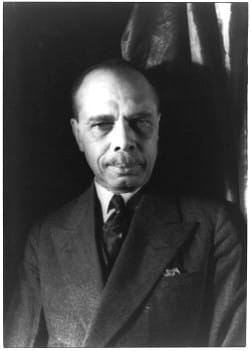
JAMES WELDON JOHNSON

James Weldon Johnson’s NAACP Achievements

James Weldon Johnson was a pivotal figure in the NAACP, where his leadership and advocacy had a lasting impact on the civil rights movement.

Early Involvement and Leadership

Johnson joined the NAACP in 1916 as a field secretary, helping to open new branches and expand membership across the country.  His work focused on combating segregation, voter disenfranchisement, and the scourge of lynching. He campaigned for a federal anti-lynching bill and spoke at the 1919 National Conference on Lynching, drawing national attention to the issue. 

In 1920, Johnson was appointed NAACP executive secretary — the organization’s top operational role — a position he held until 1930. In this capacity, he:

Organized the Silent March of 1917 in Manhattan to protest lynching, a landmark protest that brought national visibility to the NAACP’s anti-lynching campaign 

Advocated for federal anti-lynching legislation, working to influence lawmakers and public opinion.

Promoted African American cultural and intellectual achievements as a counter-narrative to racial stereotypes, believing that literature, art, and music could demonstrate Black Americans’ equality in intellect and creativity.

Cultural and Educational Contributions

While serving as executive secretary, Johnson also continued his work as a writer and educator. He edited The Book of American Negro Poetry (1922) and The Book of Negro Spirituals (1925), foundational texts in African American literature and music. His novel The Autobiography of an Ex-Colored Man (1912) was reissued under his name in 1927, further cementing his literary influence.

Johnson’s NAACP tenure was marked by strategic organizing, cultural advocacy, and a commitment to both legal and moral action against racial injustice. His leadership helped shape the NAACP’s national profile and laid groundwork for future civil rights campaigns. His work in the NAACP, combined with his broader contributions as a writer, diplomat, and educator, made him one of the most influential African American leaders of the early 20th century.

Why this Black guy sat behind the table?

0

So here we are, the beginning of June, Gay Pride Month. It’s hard to believe that 15 years ago I made a conscious decision to become an ally to a historically marginalize group of Americans during a cultural diversity event. That group? Members of the LGBTQ (Lesbian, Gay, Bisexual, Transgender, Queer) community.

LGBTQ Pride Month is a month-long observance dedicated to the celebration of LGBTQ pride, commemorating the contributions of LGBTQ) culture and community. Pride Month is observed in June, coinciding with the anniversary of the 1969 Stonewall riots, a series of gay liberation protests.

Back to the cultural diversity event I referenced at the outset.

You see, the organization, as it had done for years, planned to offer its diverse employees cultural diversity fair with music, food and booths housed by African American, Hispanic, disabled, Asian, Christian, Jewish, Muslim and women’s affinity groups. Until then there was never a booth for the LGBTQ employee group. But after months of lobbying by the LGBTQ group the event planners finally agreed. I was invited to provide consultation for the planning team.

Now when I sat down with the event’s planners I noticed that the booth for the LGBTQ group had been assigned to the far end of the event room next to the exit. After some initial resistance they finally agreed to mainstream the position of the LGBTQ table to the center of the room with the group’s signature rainbow color flag on full display.

On the day of the event, hundreds of employees poured into the event sampling ethnic foods, gathering booth literature and enjoying the music. Well, that’s when things got interesting.

For the first thirty minutes or so, once they figured what it was, many employees went out of the way to avoid the LGBTQ booth.  That’s when I sprang into action.

I quietly made my way to the back of the booth and spoke to “Andy” a member of the group and suggested that they remove their flag. I then slipped on one of their “gay pride” tee shirts and took a seat at the front of the booth.

Curiosity, shock, disbelief, whatever the reason, traffic to the booth picked up. I returned handshakes, stares -and, yes, a few glares – that came at me by handing out booth literature and light chatter.

Now here’s the point I’m getting to. The fact is that I sat down inside that gay booth as a heterosexual male and, two hours later, left that booth as a heterosexual male. Other than mixed reactions on the part of passersby, nothing else changed. That is except that I seemed to have won some friends and lost some because I chose to sit behind the table in the gay booth.

Enter my – I hate to say – “former” friend “Shannon.”

You see, “Shannon,” a Black lady I’d known for a while, seemed to be the most vocal and offended about my decision. A few days later she cornered me in a hallway, harangued me mercifully and quoted me that part in Leviticus where homosexuality is condemned and accused me of co-opting the African American struggle, therefore paralleling the African American struggle with that of gays. It was clear that any attempt to convince her to see otherwise would have been an exercise in futility. She never spoke to me again. That was years ago.

Look, I understand completely that at that time and even now the issue of homosexuality remains one of those emotional sticking points for many heterosexual types. Here’s what Pulitzer Prize laureate writer Leonard Pitts once wrote about African Americans who bristle at the comparison between the civil rights movement and the gay community’s struggle for equality:

 “Granted, the comparison between the Black struggle and the gay one is inexact. But here’s the thing; every freedom movement from Poland’s labor uprising to America’s feminism to China’s Tiananmen Square protests have been compared to the civil rights movement. When Czechoslovakians threw off communist rule in 1989, they sang “We Shall Overcome. It tells me this stinginess about the movement arises only when gays seek to embrace it. And that Black people – some of us, at least – ought to be ashamed.”

Yeah, a lot to unpack here, huh?.

Well not to diminish those sincerely held opinions by folks like “Shannon,” ones that warrant a fair and deeper analysis, the immediate need in my humble opinion are strategies for bridging the gap between diverse communities. Becoming allies to diverse communities seems to be as good as any place to start.

First, given our turbulent national landscape these days where, among other things, transgender Americans are being caricatured and scapegoated by ambitious politicians to appeal to their bases, and the word “diversity” has been hijacked and turned into a wedge issue for division, the need for allies and allyship with the LGBTQ – and other communities – is more important than ever.

In his typical hard-hitting commentary, John Pavlovitz in his “The Beautiful Mess” newsletter kicked off Pride Month with a piece on allyship, “A Pride Month Challenge to Would-Be Allies (And A Warning to the Bigots).”

“Yes, allyship is about rainbow flags, social media posts, and parade events, but it’s about a hell of a lot more than that. To be a true LGBTQ ally right now means visibly and forcefully pushing back against the quickly metastasizing hatred throughout this country; the toxic flood of intellectual ignorance, archaic dogma, phobic fear, and inherited stupidity ….

As with other historically marginalized and oppressed populations in this country (people of color, immigrants, women, Muslims), LGBTQ human beings are seeing their hard-fought legal protections vanishing in recent months. Long-decided laws protecting them are being furiously challenged. They are being painted as immoral existential threats and bathroom-lurking monsters for gullible, easily manipulated, hate-addled Americans who have abandoned the Golden Rule, discarded the Constitution, and rejected the call to love their neighbors.

So, we’ll end with a two-part question: First, what do you do when someone’s looking at you behind a table comprised of folks who differ from you?  And second, what do you do as an ally when nobody’s looking at you once you leave that table?

I’ll now leave you with this list of six questions for a thoughtful analysis:

–     As a white person, if you take a seat at an African American table, will you emerge from that table still as a white person, perhaps as an ally.?

–             As a Christian person, if you take a seat at a Jewish American table, will you emerge from that table still a Christian, perhaps as an ally?

–             As a citizen of the United States, if you take a seat at an undocumented immigrant table, will you emerge from that table still a citizen, perhaps as an ally?

–             As a physically abled person, if you take a seat at a physically challenged person’s table, will you emerge from that table still a physically abled person, perhaps as an ally?

–             As a housed person, if you take a seat at an unhoused (aka homeless) person’s table, will you emerge from that table still a housed person, perhaps as an ally?

–             As an English language proficient person, if you take a seat at the table of someone who struggles because English is their second language, will you emerge from that table still an English language proficient person, perhaps as an ally?

–             As a Baby Boomer, if you take a seat at the table of Gen Zers, will you emerge from that table still a senior citizen, perhaps as an ally?

Now if there’s a word I want to leave you with as you reflect on those questions, that word is …”temporary”….the adjective that describes the amount of time you’ll likely spend behind the table with some who differ from you.

But here’s the kicker. Afterwards, you have the freedom to go back to who you are once you exit the table. However, for many of those you leave behind, temporary is not a luxury, nor always an option.

Terry Howard is an award-winning writer, a contributing writer with the Chattanooga News Chronicle, The American Diversity Report, The Douglas County Sentinel, Blackmarket.com, recipient of the Dr. Martin Luther King, Jr. Leadership Award, and third place winner of the Georgia Press Award.

Juneteenth at the Tennessee State Museum

VISITORS are invited to celebrate VISITORS are invited to celebrate Juneteenth at the Tennessee State Museum. Sankofa African Drum and Dance Company will be performing at noon. Throughout the day, hands-on history stations will be in the galleries. Families can also enjoy Storytime and craft activities at the Museum during the celebration.
The Museum is conveniently located at the corner of Rosa L. Parks Blvd. and Jefferson Street, adjacent to the Nashville Farmers’ Market at the Bicentennial Capitol Mall State Park. Free parking is available in lot shared by the Museum and the Farmers’ Market.
REGULAR OPERATING HOURS: The Museum is open:
Tuesday-Saturday: 10 a.m. – 5 p.m. and Sunday: 1 p.m. – 5 p.m.
ADMISSION: Admission to the Tennessee State Museum is FREE.
Visit the website for additional information.

. Sankofa African Drum and Dance Company will be performing at noon. Throughout the day, hands-on history stations will be in the galleries. Families can also enjoy Storytime and craft activities at the Museum during the celebration.

The Museum is conveniently located at the corner of Rosa L. Parks Blvd. and Jefferson Street, adjacent to the Nashville Farmers’ Market at the Bicentennial Capitol Mall State Park. Free parking is available in lot shared by the Museum and the Farmers’ Market.
REGULAR OPERATING HOURS: The Museum is open:

Tuesday-Saturday: 10 a.m. – 5 p.m. and Sunday: 1 p.m. – 5 p.m.
ADMISSION: Admission to the Tennessee State Museum is FREE.
Visit the website for additional information.

Nashville Street Renamed for Thelma Harper

The first Black woman elected to the Tennessee Senate

The late Tennessee State Senator. Thelma Harper

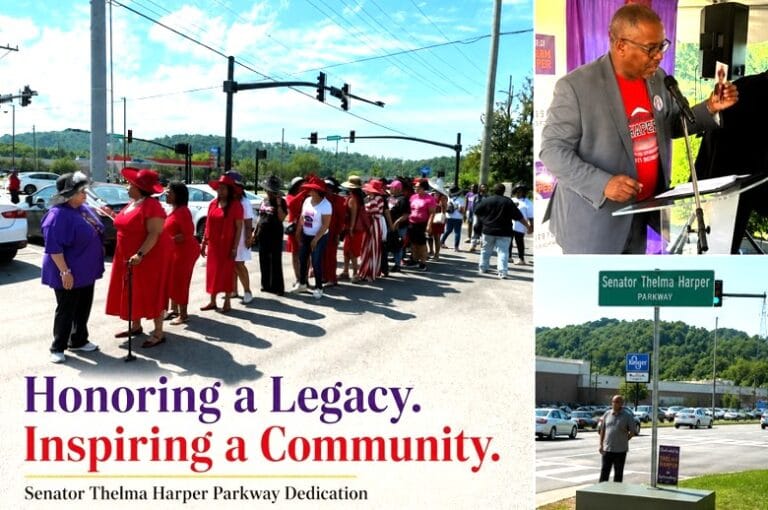
NASHVILLE — A stretch of Clarksville Pike in North Nashville was renamed in honor of the late Sen. Thelma Harper, recognizing the impact of the longtime lawmaker who broke barriers as the first Black woman elected to the Tennessee Senate.

The street dedication ceremony was held Saturday at the Bordeaux Library and featured music, speakers and refreshments. Attendees were encouraged to wear red in recognition of Harper’s legacy.

Harper represented North Nashville in the Tennessee General Assembly for nearly 30 years and became a respected advocate for her community. Her daughter, Linda Harper, said the street designation reflected her mother’s deep connection to Bordeaux and the people she served.

Linda Harper said her mother never forgot her roots as the daughter of a sharecropper and one of 11 children, and that those experiences helped shape her determination to create opportunities for others.

She said her mother often emphasized the importance of economic development, community development and people development, believing all three were necessary for a neighborhood to prosper.

State Sen. Charlane Oliver, who now represents the district once served by Harper, said the late senator’s example inspired her own path into public service. Oliver recalled sharing a photograph of Harper standing in front of a dump truck to protest a proposed landfill in North Nashville, using it to illustrate Harper’s willingness to put herself on the line for the community.

Oliver said Harper’s legacy continues to inspire young Black women to pursue leadership roles and public office, demonstrating what is possible through determination, service and courage.

Linda Harper said her mother would have been deeply appreciative of the recognition and the opportunity to be remembered by the community she loved.

Lost History of Chattanooga: The Gilbert Family Advocates for Preservation of Turkey Foot Hollow (Shot Hollow) and Johnson Cemetery

By The Gilbert Family

Chattanooga State Community College faculty and staff are earning recognition across Tennessee’s higher education system, highlighted by the appointment of Clomeisha Tumlin as Faculty Regent for the Tennessee Board of Regents (TBR).

Tumlin, department head and associate professor in Chattanooga State Community College’s Business and Industry Division, has been appointed by Governor Bill Lee to serve a two-year term through June 30, 2027.

In the role, she will represent faculty perspectives from community colleges across the state and contribute to system-wide decision-making affecting higher education institutions in Tennessee.

A Faculty Regent serves as a formal member of the Tennessee Board of Regents and helps shape policies governing the state’s community colleges and Colleges of Applied Technology. Responsibilities include participating in board meetings, reviewing and approving budgets, advocating for faculty concerns, helping guide institutional leadership decisions, and contributing to academic policy discussions.

Tumlin, who has served at Chattanooga State since 2015, said her work has focused on advancing student success, career readiness, and high-impact educational practices designed to prepare students for employment and long-term professional growth.

Prior to entering higher education, she spent more than a decade in human resources within the healthcare industry, gaining experience in workforce development, employee relations, and organizational leadership.

Currently serving as department head and associate professor in Chattanooga State’s Business and Industry Division, Tumlin previously served as president of the Faculty Senate during the 2024–2025 academic year and held the position of president-elect from 2022 to 2024.

Her professional leadership extends beyond campus. Tumlin serves as treasurer for the Chattanooga Chamber of Commerce East Brainerd Council and Community Haven boards and participates on the Community Foundation of Greater Chattanooga’s Together We Can Scholarship Board and Chattanooga State Community College’s Business Advisory Board.

Tumlin earned bachelor’s degrees in human resources and general management, along with a master’s degree in business, from the University of Tennessee at Chattanooga.

According to Tennessee law, the Tennessee Board of Regents oversees the governance and management of the state’s community college and technical college system. When legislation approved by the Tennessee General Assembly in 2025 is fully implemented, the board will consist of 21 members, including public representatives, faculty, students, and ex-officio state officials.

The board’s mission includes governing Tennessee’s community colleges and Colleges of Applied Technology, coordinating educational systems while preserving institutional independence, improving operational effectiveness through centralized services, strengthening accountability for state funding, and ensuring public oversight of postsecondary education.

“These recognitions reflect the skills and leadership we see every day at Chattanooga State,” said Dr. Rebecca Ashford, president of Chattanooga State. “Our faculty and staff are making meaningful contributions not only on our campus, but to the future of higher education across Tennessee.”

CHATTANOOGA, Tenn. (June  2026) — A forgotten chapter of Chattanooga’s history was brought into focus during the Historic Preservation Town Hall held on June 3 at Chattanooga City Hall, where descendants and preservation advocates called for greater recognition and protection of Turkey Foot Hollow also know as Shot Hollow and Johnson Cemetery, one of the region’s most historically significant burial grounds.

Hosted by Chattanooga City Council Members Dennis Clark, Ron Elliott, and Cody Harvey, the town hall introduced the historic preservation planning process for Chattanooga and Hamilton County. The initiative is being led by Walker Collaborative in partnership with Preserve Chattanooga and funded by the Lyndhurst Foundation and the Tennessee Historical Commission. The discussion was moderated by WUTC’s Ray Bassett.

Among those addressing attendees were former Chattanooga City Councilman Russell J. Gilbert Sr. and his daughter, Skieree A. Gilbert, who presented a historical overview of Turkey Foot Hollow (Shot Hollow) and Johnson Cemetery. The presentation was based on years of family research and historical documentation compiled by Terri, Russell, and Skieree Gilbert.

For decades, Russell and Terri Gilbert have been dedicated advocates for preserving Johnson Cemetery and the history of Turkey Foot Hollow (Shot Hollow). Through historical research, family records, oral histories, and community engagement, they have worked to protect the burial grounds of their ancestors and preserve the legacy of the families who helped shape the community.

Their preservation efforts have become a multi-generational family initiative. Alongside Russell and Terri, their daughter, Skieree Gilbert, has played an active role in researching the history of Turkey Foot Hollow (Shot Hollow) and bringing awareness to its significance. Their son, Terran “T-RAN” Gilbert, has used his platform to raise awareness about the importance of preserving the cemetery and the history of their family legacy, while his wife, Alexis Gilbert, has assisted with research organization and correspondence with local and state officials.

Together, the Gilbert family remains committed to ensuring that the history, culture, and contributions of Turkey Foot Hollow (Shot Hollow) are recognized, documented, and preserved for future generations.

“To understand why Johnson Cemetery matters, we must first understand the history of Turkey Foot Hollow (Shot Hollow),” Skieree Gilbert told attendees during the presentation.

According to family records, historical accounts, and documented burials, Turkey Foot Hollow (Shot Hollow) existed long before the Civil War and was home to Indigenous Cherokee, Black, and Brown families living along what is now Chattanooga’s Highway 58 corridor. The community developed schools, churches, businesses, and civic institutions that served generations of residents.

Before Tennessee became a state and before the displacement caused by the Tennessee Valley Authority (TVA) and the construction of the TNT plant, Turkey Foot Hollow (Shot Hollow) was a thriving community where families established homes, maintained burial traditions, built institutions, and sustained deep connections to the land.

One of the most significant surviving landmarks from that history is Johnson Cemetery, located near present-day Booker T. Washington State Park.

Historical records indicate that the cemetery contains some of the earliest documented burials associated with the community, including Sarah Batcher, whose burial is recorded in 1816. Many additional graves remain unmarked or undocumented, suggesting that much of the area’s Indigenous Cherokee, Black, and Brown history has yet to be fully uncovered and preserved.