Monday, October 12, 2026
Advertisement
Home Blog Page 8

On Her Front Porch: How Mary Walker Inspired a Nation

Camp REACH student reporters, Ester Tallman and Ja’Rya Zulueta assisted in reporting this story.

Mary Hardway Walker
1848 — 1969

Long before she became nationally known as the nation’s oldest student, Mary Hardway Walker spent her days sitting on the front porch of her small brick home on what is now Martin Luther King Boulevard.

From that porch, Walker greeted neighborhood children, including Tyrone Gamble, who knew her as a young boy in the early 1960s.

“I always helped her get out on the porch,” said Gamble, now 71 and a resident of Mary Walker Towers. “She would say hi and bye and tell me I was going to have a good day.”

Walker used a wheelchair and sometimes struggled to get through her screen door. On his way to the YMCA, Gamble would stop to help her outside. He visited her many days each week.

At the time, neither Gamble nor the other children knew they were helping a woman who would become a national symbol of lifelong learning.

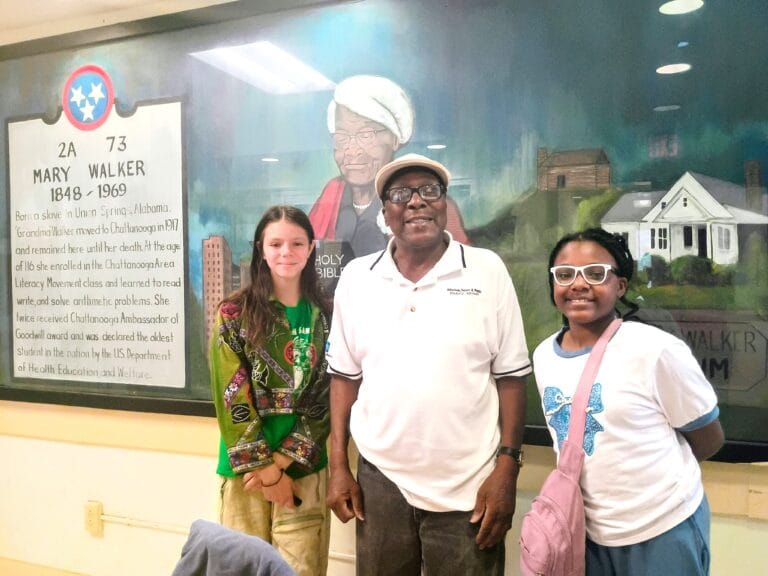
Born into slavery in 1848, Walker spent most of her life unable to read or write. Yet she never gave up on her dream of learning. In 1963, at age 116, she joined the residents’ literary society at the Chattanooga retirement community that would later bear her name and began attending night classes twice a week.

Walker was especially motivated by a desire to read the Bible for herself. Her progress quickly gained national attention. The U.S. Department of Health, Education and Welfare recognized her as the nation’s oldest student, Chattanooga named her an Ambassador of Goodwill, and she received recognition from Presidents Lyndon B. Johnson and Richard Nixon.

Today, her story continues to inspire new generations. During the first week of Camp REACH, students researched Walker’s life and reflected on her determination.

“One thing that surprised me was that she learned to read at 116 and lived to be 121,” wrote 12-year-old Akeem Thompson.

Gamble believes Walker’s story also teaches respect for elders.

“When I was growing up, I was told to look up to your elders,” Gamble said. “That’s how I ended up knowing who she was.”

Walker died in 1969 at the reported age of 121. The retirement home where she learned to read was later renamed Mary Walker Towers in her honor. The woman who once sat quietly on her front porch encouraging neighborhood children continues to inspire others to dream and learn..

Chattanooga Police Department Bids Farewell to Recruiting Veteran Sgt. Mike Smith After 30 Years of Service

The Chattanooga Police Department (CPD) marked the end of an era as Sergeant Mike Smith officially signed off the radio for the last time, concluding a distinguished 30-year career dedicated to serving and protecting the local community.

Sgt. Smith, who first joined the force in March 1996, spent the final chapter of his three-decade tenure anchoring the department’s Recruiting Unit. In this critical leadership role, Smith was responsible for shaping the future of the CPD by overseeing the complex process of attracting, vetting, and hiring the next generation of law enforcement officers.

Under his leadership, the Recruiting Unit managed comprehensive outreach campaigns across regional universities, job fairs, and community events to build a diverse pool of applicants.

Sgt. Smith’s daily responsibilities spanned the entirety of the hiring pipeline, from administering entry-level written exams and supervising physical agility tests to coordinating rigorous background checks and polygraph examinations.

“It was a bittersweet moment as Sgt. Mike Smith signed off for the last time,” the Chattanooga Police Department said in an official statement. “Sgt. Smith served this community for 30 years, most recently in the Recruiting Unit. We’re grateful for his work to bring new officers into Chattanooga Police Department, and wish him the best in retirement. Congratulations Sgt. Smith.”

Beyond community outreach, colleagues noted that Smith served as a vital bridge to the CPD Training Academy, directly ensuring that successful candidates smoothly transitioned into the department’s Early Hire program and subsequent academy classes.

Black Elected Officials Discuss Regional Collaboration, Equity, and Community Growth at Chattanooga Roundtable

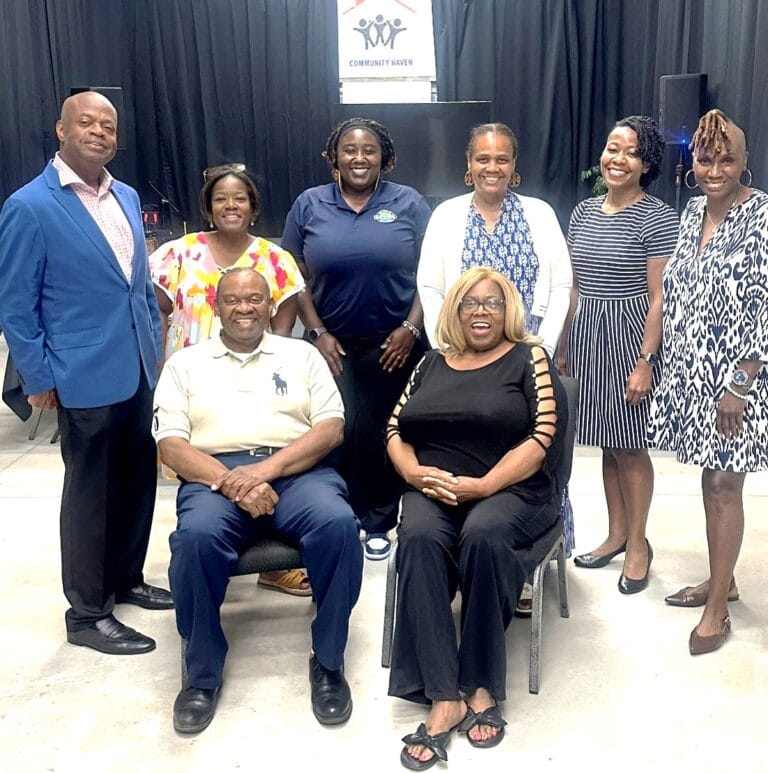
Black elected officials from Chattanooga and Hamilton County convened June 11 for an invitation-only discussion focused on economic development, education, public safety, and civic engagement–with an eye toward building coalitions that outlast any single election cycle.

The Local Black Elected Officials Roundtable, held over dinner at Community Haven, brought together leaders committed to strengthening collaboration and advancing long-term strategies for equity and opportunity across the region.

The roundtable was moderated by Pastor Terry Ladd of First Baptist Church East 8th Street and facilitated by District 7 Chattanooga City Councilwoman Raquetta Dotley.

The roster of regional leadership present at the event included State Representative Yusuf Hakeem, Hamilton County Commissioner Warren Mackey, Hamilton County Commissioner-elect Katherlyn Geter, East Ridge Commissioner Terri Holmes, Hamilton County School Board member Jackie Anderson-Thomas, Hamilton County School Board member-elect Thessela White, and District 8 Chattanooga City Councilwoman Marvene Noel.

“As a reminder, this is part of a larger effort to reestablish coordinated Black leadership in Chattanooga,” Dotley said during the gathering. “Following this event, our next step is to host some type of public forum focused on a ‘Meet your local elected officials’ type event. We may even want to explore partnerships with other minority organizations as part of that effort.”

Discussion topics focused heavily on how Black communities can become direct beneficiaries of economic growth and investment occurring throughout the region.

Leaders also explored strategies for increasing Black business development, reducing wealth gaps, and creating stronger pipelines connecting education, careers, entrepreneurship, and civic leadership for young people.

Public safety and community trust were also central themes, with conversations examining what community-centered policing and neighborhood investment should look like in historically underserved communities. Participants discussed ways local governments can strengthen trust between institutions and residents while addressing violence and quality-of-life concerns.

Additional discussions centered on regional political collaboration and leadership development. Officials examined how Black elected leaders across city, county, and state government can work together more effectively while also mentoring and preparing future generations of leadership.

The group also addressed accountability and civic engagement, including how to measure the effectiveness of equity initiatives and how elected officials can maintain authentic community engagement beyond election cycles and moments of crisis.

Another portion of the discussion focused on democracy and voting rights, specifically the impact that changes to portions of the 1965 Voting Rights Act have had on Black political representation, voter participation, and public trust in democratic institutions.

“I saw the meeting as a new opportunity for Black elected officials to be a catalyst for positive change during this chaotic time in Tennessee,” said Rep. Hakeem.

“Working with other citizens and groups, we want to push back and dismantle Jim Crow 2.0. We must work with those willing to work with us–there is enough work to spread around to those willing to put the community above individual gain.”

Following the roundtable, Councilwoman Dotley said one of the most important outcomes was the recognition that the discussions extended beyond issues affecting only Black residents.

“The most important accomplishment from the Local Black Elected Officials Roundtable was the recognition that our vision extends beyond Black Chattanooga–it is about building a stronger Chattanooga for everyone,” Dotley said.

“We had meaningful conversations around economic opportunity, community health, public safety, youth development, civic engagement, and wealth creation, all centered on ensuring that growth and prosperity are shared.”

Dotley said participants agreed that expanding access to opportunity and ownership strengthens the city as a whole.

“There was a clear understanding that when communities that have historically been excluded gain greater access to opportunity, ownership, and resources, the entire city benefits,” she said. “That shared vision naturally led to discussions about developing a common agenda and identifying ways Black elected leaders can work together across city, county, and state levels to create lasting impact.”

Looking ahead, Dotley said the focus will be on transforming dialogue into sustained action and long-term community impact.

“Moving forward, our focus is on turning those conversations into action,” she said. “We are committed to building relationships, aligning priorities, and creating systems that outlast any one elected official or administration. This work is not about individual accomplishments or operating in silos–it is about serving as a collective voice for progress and laying the foundation for generational change that will help build stronger communities and a brighter future for Chattanooga.” To maintain this momentum, a follow-up meeting has been scheduled for June 29.

Chattanooga Celebrates Juneteenth 2026 with Weeklong ‘United We Stand’ Festival

Chattanooga residents came together throughout the city during Juneteenth 2026 for a weeklong celebration of freedom, culture, history, and community under the theme “United We Stand.” The citywide observance, which spanned June 13 through June 21, featured parades, festivals, educational programs, live entertainment, and artistic performances honoring the legacy of African Americans and the significance of Juneteenth.

Although Juneteenth National Independence Day was officially observed on Friday, June 19, festivities began nearly a week earlier and drew residents from across the region to commemorate one of the most important dates in American history.

Juneteenth marks June 19, 1865, the day Union troops arrived in Galveston, Texas, and informed enslaved African Americans that the Civil War had ended and they were free. The announcement came more than two years after President Abraham Lincoln signed the Emancipation Proclamation.

The following year, formerly enslaved Texans organized the first Juneteenth celebrations, often referred to as “Emancipation Day” or “Jubilee Day,” featuring prayer services, spirituals, family gatherings, and community meals.

As Black Texans migrated to other parts of the country during the early and mid-20th century, they carried Juneteenth traditions with them, helping spread the observance nationwide.

The holiday experienced renewed prominence during the Civil Rights Movement and became a powerful symbol of freedom and equality.

Texas became the first state to recognize Juneteenth as an official state holiday in 1980. More than four decades later, following years of advocacy by activists including Opal Lee and Congresswoman Sheila Jackson Lee, Juneteenth was designated a federal holiday when President Joe Biden signed legislation establishing Juneteenth National Independence Day on June 17, 2021.

In Chattanooga, this year’s celebration began on June 13, with the Southside Juneteenth Jubilee at The Bethlehem Center and Art CHATT: Black Joy, a visual arts and dance showcase held at Stove Works. The events set the stage for a week of reflection, education, and celebration.

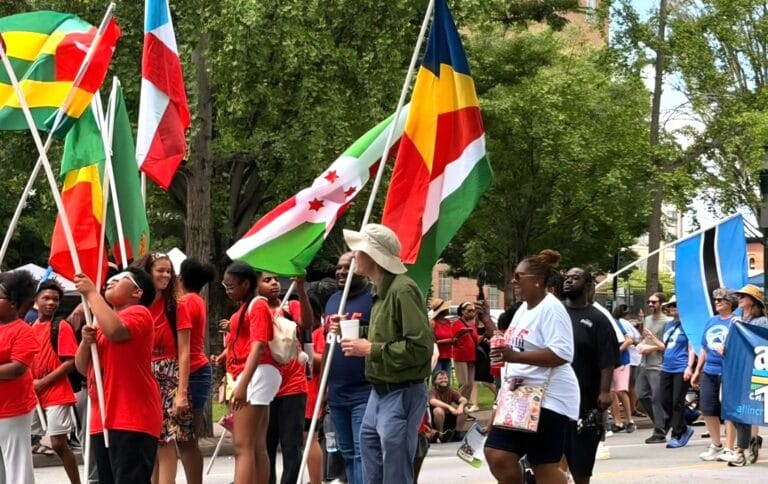
The centerpiece of Chattanooga’s observance was the Juneteenth National Freedom Day Parade on June 19. The parade marched along East Martin Luther King Boulevard through downtown Chattanooga, featuring local organizations, city departments, community groups, and residents carrying the Juneteenth banner and flag. Spectators lined the streets to cheer participants and celebrate the spirit of freedom and unity.

Following the parade, hundreds gathered at the Bessie Smith Cultural Center for the “Juneteenth: Celebration of Freedom” festival. The free public event featured music from DJ Ant, African drumming performances by Kofi Mawuko, children’s activities, local vendors, food trucks, and complimentary admission to the museum.

Visitors also attended screenings of the documentary Juneteenth: Faith & Freedom, which explored the historical and cultural significance of the holiday.

The Chattanooga Festival of Black Arts & Ideas also hosted a Juneteenth Commemoration Ceremony at the Walker Theatre on June 19. The artistic presentation combined culture, education, and reflection while honoring the struggles and achievements of generations of African Americans.

The celebration continued throughout the weekend with the South Chattanooga Juneteenth Celebration on June 20. Held around the Cocoa Café on West 38th Street, the neighborhood gathering featured live entertainment, food, vendors, and family-friendly activities that brought residents together in a festive atmosphere.

That same day, the Bessie Smith Cultural Center hosted its annual Big 9 Music Fest, a musical tribute to Chattanooga’s historic Black business and entertainment district. The festival highlighted the city’s rich musical heritage through performances and cultural programming that celebrated the legacy of the famed Ninth Street corridor.

Mayor Tim Kelly joined residents in recognizing the significance of the holiday and praised the community’s participation in the annual observance.

“Chattanooga celebrates Juneteenth for the very same reason it’s celebrated on a national level, because it is essentially Black Independence Day,” Mayor Kelly said. “The enslaved Americans of our past deserve a rightful celebration, and it was so great to see you all come out today and walk with us during the annual parade in honor of them. Together, we are One Chattanooga.”

Not Just a Zoo: Chattanooga Helps Protect Animals on the Brink of Extinction

Camp REACH students contributed to the reporting of this article.

“Hakuna Matata!” a group of Camp REACH girls sang as they bounced past the warthog exhibit at the Chattanooga Zoo.

The group laughed, waved at animals and raced from one exhibit to the next, expecting a day filled with fun. But along the way, they discovered another side of the zoo—a place working to help save some of the world’s rarest animals.

“People think of zoos as entertainment venues, and they are fun,” said Jake Cash, the zoo’s director of marketing. “But we’re also a conservation organization. We have unique, rare species here, and we do real hands-on conservation work.”

As Cash led the group through the zoo, he stopped at exhibits housing animals listed as critically endangered by the International Union for Conservation of Nature (IUCN), the global organization that tracks extinction risk through its Red List of Threatened Species.

“Critically endangered means near extinction,” said 12-year-old camper Ester Tallman when Cash asked if anyone could define the term.

The Chattanooga Zoo is home to several critically endangered species, including the African pancake tortoise, Bali myna, Chinese alligator, Santa Catalina Island rattlesnake, spider tortoise and pied tamarin. It also houses species believed to be extinct in the wild, including the Panamanian golden frog and the Roti Island snake-neck turtle.

Among the animals drawing the most attention were the pied tamarins, squirrel-sized monkeys native to an area around the Brazilian city of Manaus.

“There are fewer than 1,000 individuals left in the wild,” Cash told the students. “Because of deforestation and expanding cities, it’s very likely they could disappear from the wild during our lifetime.”

The Chattanooga Zoo is helping prevent that from happening.

“We’ve been unusually successful at breeding pied tamarins,” Cash said. “We’ve had lots of babies over the last few years and have been able to help expand the population by sending them to other zoos.”

The zoo currently houses 11 pied tamarins, the second-largest zoo population of the species in the United States and one of only six zoos in the country to care for them.

A few steps away, another exhibit told an even more sobering story.

Inside a habitat decorated with rocks and plants lived two bright yellow Panamanian golden frogs, a species believed to be extinct in the wild.

According to Cash, a deadly fungus swept through Panama and wiped out wild populations before scientists could stop it. The surviving frogs were rescued and placed in breeding programs at zoos and conservation centers.

“If we didn’t have these populations in human care, they would be gone forever,” he said.

The frogs have another unusual trait. Instead of relying mainly on croaks, they communicate by waving their front feet.

“They’re doing sign language,” Camp Executive Administrator Elizabeth Tallman exclaimed..

Cash laughed.

“They actually live near loud rushing water, so their calls can’t always be heard,” he explained. “They wave to communicate with each other.”

For the campers, the day was filled with singing, dancing and seeing animals they had never encountered before. But it also offered a lesson in responsibility.

The Chattanooga Zoo is a place for fun and adventure, but behind many of its exhibits is a serious mission: protecting species whose future depends on conservation efforts today.

“We’re going to see lots of cool animals,” Cash told the group at the beginning of the tour. “But I also want people to know what we’re doing to protect these species here and in the wild.”

LL Cool J Joins Ben Crump’s DreamFi to Build Financial Literacy in Underserved Communities

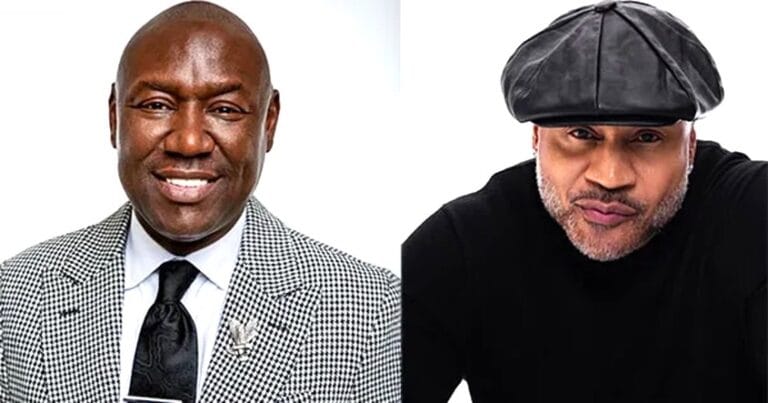
Nationwide — DreamFi, the financial empowerment platform co-founded by renowned civil rights attorney Ben Crump, today announced that LL Cool J has partnered with the DreamFi family. The partnership brings together two figures whose careers have centered on expanding opportunity – from the courtroom to the stage and TV screen – with a shared focus on increasing access to financial knowledge and tools.

“For decades, I’ve fought for justice in the courtroom, but justice also means access to opportunity, to information, and to financial stability,” said Ben Crump, co-founder of DreamFi. “Too many families have been left out of systems that help build security and generational wealth. DreamFi is about helping close that gap in a real, tangible way. We’re thrilled to welcome LL COOL J to help lead that charge.”

LL Cool J will work with DreamFi to promote financial literacy, particularly in communities that have historically lacked access to traditional financial systems.

While I was growing up, I watched my grandfather move from shining shoes to baggage handling and eventually going back to school for an engineering degree to better himself. To me, his shoeshine box was the foundation. It represented the discipline and vision required to build a better life,” said LL Cool J. “Most of us aren’t taught how to manage money early on. We learn through the struggle — and sometimes through avoidable mistakes. DreamFi offers tools, and they provide opportunities, access, and the options people need to succeed.”

The announcement comes as gaps in financial literacy persist across the United States. According to DreamFi’s Access and Equity Study, 13% of Americans say they regularly learned basic financial concepts like budgeting in school, and 28% feel confident teaching those concepts to a child. At the same time, demand for financial education continues to grow, particularly among younger and more diverse audiences. Of Black respondents, an overwhelming 79% said they actively sought out financial education in the past six months “LL Cool J has spent his career showing what’s possible when talent is paired with discipline and vision,” said Don Ross, CEO of DreamFi. “He’s uniquely positioned to encourage people to move from just getting by to getting ahead. By bringing his experience and voice to DreamFi, we can make financial education more interesting and accessible — through conversations that meet people where they are.”

Through this partnership, LL COOL J will participate in digital content, community engagement efforts, and educational initiatives aimed at increasing financial awareness and confidence.

DreamFi provides members with access to financial tools and services, including:

• Checking accounts¹ with a DreamFi Visa® Debit Card² and no minimum balance requirements

• Access to a nationwide network of 50,000+ surcharge-free ATMs³

• Telehealth access with no copay4 and 24/7 roadside assistance5

• Financial education grounded in real life

At a time when families face rising costs, widening wealth gaps, and too few trusted voices in the financial space, DreamFi, Crump, and LL COOL J aim to put real resources in real people’s hands. Visit DreamFi.com to learn more and join the movement.

7-Year-Old Black Girl Recognized for High IQ After Scoring Above 99.9%

0

Nationwide — Anaya Browne, a 7-year-old African American girl from Seminole County, Florida, has joined Mensa after scoring in the top 0.1% on an intelligence test. Her result placed her above 99.9% of children her age nationwide and secured her spot in the high IQ society.

Anaya, a student at Wilson Elementary School in Sanford, took a standardized intelligence test that led to her acceptance into Mensa. Her performance stood out nationally and confirmed Her parents told WESH the result came as a surprise when they first reviewed it.

Her father, Kevis Browne, said, “We got the results, and at first we were like, is this a good thing? Or like, what’s going on? And then come to find out, she had scored very highly on the test, testing higher than 99.9% of students in the country at her age group.”

Her mother, Tiffany Browne, described her feelings about watching her child grow and achieve milestones. “This little person you have like dreams and thoughts for who they’re gonna be and like to see them turn out so good is really just this huge blessing, right,” she said.

Anaya also described the testing experience in her own words. She said she felt nervous before taking it and worried about her performance. “Yeah, I was kind of scared. Or like, what if we don’t do good? And then I ended up doing amazing,” she said.

Mensa accepts members who score in the top 2% on approved intelligence tests. It offers educational resources and a community for gifted individuals. Anaya’s score placed her well above the requirement, securing her membership.

Her first-grade teacher, Patria Slaughter, praised her progress and the support she receives at home. She said Anaya has strong guidance from her parents and a loving environment. “I’m so grateful that I got to be a part of her life, and I wish her the best,” Slaughter added.

Anaya also left a short message for other students. “You got this, you can do this!” she said.

Ten Tuskegee University Class of 2026 Graduates Maintained a 4.0 GPA All Four Years

In a remarkable demonstration of sustained academic excellence, 10 members of Tuskegee University’s Class of 2026 achieved a perfect 4.0 grade point average across all four years—a rare feat that underscores how Tuskegee’s Renaissance Era is demanding unflinching academic rigor while wrapping students in a deeply supportive network of faculty and staff determined to help them succeed. 

“Each of these students is a shining example of what the Tuskegee University experience can be,” said Dr. Mark A. Brown, president and CEO. “Tuskegee is for all—but, as W.E.B. Du Bois affirmed, we must cultivate the ‘Talented Tenth,’ for in their excellence lies leadership and service to the nation. I’m proud of all of our graduates and these exceptionally talented 10 lift even higher the promise, opportunity, and expectations of Mother Tuskegee.”

Most Americans broadly support public education for undocumented students – regardless of their political affiliation or religion

BY William McCorkle, Associate Professor of Social Studies Education, College of Charleston;

E. Kyle Romero, Assistant Professor of History,  University of North Florida;

Lina-Maria Murillo, Associate Professor of History, The University of Texas at Austin

All public schools in the U.S. must provide an education to all students, regardless of their immigration status.

In 1982, the U.S. Supreme Court affirmed the right of immigrant students in Texas to attend school free of charge, regardless of their citizenship, in Plyler v. Doe. Texas had passed a law in 1975 that allowed public school districts to charge these students tuition, or not let them attend altogether. This law was repealed following the Supreme Court decision.

As scholars of history and education, we are particularly interested in understanding how Americans feel about this policy, which has been in place for four decades.

Some legislators in states like Ohio, Idaho and Oklahoma have unsuccessfully tried to make it harder for immigrant students to attend public school, by proposing that all public school students must share their immigration status prior to enrolling in school.

Tennessee considered a bill in 2025 and 2026 that would allow public school districts to not admit undocumented students. Though the bill passed the state Senate, it did not ultimately pass the House.

In March 2026, Republican representatives led a Congressional hearing focused on Plyer’s negative effects on U.S. schools and students, such as straining schools’ funding and available resources. The conservative think tank Heritage Foundation has called on all state legislators to propose laws that would challenge undocumented students’ right to attend public schools free of charge.

But what do most Americans actually think about undocumented students attending public schools? According to our recent survey, which is in the process of publication, most Americans broadly support public education for undocumented children.

Who supports public school for all? – In mid-April 2026, with support from the Public Religion Research Institute – an organization that supports public scholarship on the beliefs of the American public – two colleagues and I worked with Ipsos to survey a nationally representative random sample of more than 1,500 Americans about their views on public education and immigration. It was a diverse cross section of people who held a range of political beliefs and affiliations.

We asked respondents whether they agreed with the statement: “I believe all children, regardless of immigration status, should have the right to public education.”

We found that there were obvious differences between survey respondents’ views, depending on their political affiliation. For instance, of the survey respondents who voted for former Vice President Kamala Harris in 2024, 95.7% of people agreed with the statement. Only 48.8% of survey respondents who voted for President Donald Trump agreed with the statement.

Similarly, 57.5% of Republicans overall agreed with the statement, while 93.9% of Democrats did.

But other than this political divide, we found strong support for universal education across all ages, ethnicity and faiths, with 75.5% of all Americans agreeing with the statement.

The survey revealed strong support for universal education, with 75.5% of all Americans agreeing with the statement. Among Hispanics and Latinos, nearly 86.9% supported the policy, along with 86.7% of African Americans, 77.7% of Asians Asian Americans and 69.9% of non-Hispanic white people.

In each income bracket, there was over 70% of support for free public education for all. Wealthier Americans – those making more than US$150,000 a year – supported this policy least, at 70.4%. More than 77% of those making under $150,000 supported it. Those making under $25,000 a year supported it by 82%.

Among age groups, American adults between 18-29 had the highest support for undocumented immigrant children attending public school, at 81.4%. Americans we surveyed over the age of 60, meanwhile, had the least support for the policy, at 71.5%.

Our survey showed that even looking at educational levels, there was little difference, with every group supporting public education for all students at 73% or more.

Across a range of faiths, people tended to support public education for all students, including undocumented immigrants. We found that 92.9% of Muslims, 82.2% of unaffiliated respondents, 81.1% of Jewish respondents, 79.5% of Catholics and 72.6% of mainline Protestants supported the idea of undocumented students attending school for free.

Evangelical Protestants were the outliers, with only 59.9% agreeing with this policy.

A shift in public opinion – While our data shows that today there’s widespread support for immigrant kids attending public school, these attitudes have shifted over time.

We can compare these numbers with polling about past state legislation, such as California’s Proposition 187, which passed in 1994.

Almost 60% of the state voted that year to bar undocumented students from public education. A federal court struck down the law in 1998 as unconstitutional.

While little other public polling exists showing how people feel about the Supreme Court’s Plyler ruling, there is data on a related question about undocumented immigrants who came to the country as children, often known as Dreamers. There seems to have been a shift since the ‘90s in public opinion toward supporting undocumented students. Much of this may have been due to the strong advocacy of Dreamers themselves.

In 2020, Pew Research found 74% of Americans think that people who were brought to the U.S. as young children without legal authorization should be allowed to legally stay in the country. Approximately 91% of Democrats said they thought Dreamers should be able to remain in the U.S., while 54% of Republicans said the same.

At 57.5%, Republicans’ support for public education for undocumented children might seem low. However, it does correlate with other recent polling from the University of Massachusetts-Amherst that shows 91% of Republicans support Trump’s overall immigration policies.

Even as political parties may play a role influencing views toward immigration, as a whole, Americans overwhelmingly support public education for all children. (The CONVERSATION)

Democracy Speaks Civic Poetry Pathway Launch Set for June 28at Renaissance Park

0

Renaissance Park will host the official launch of the Democracy Speaks Civic Poetry Pathway on Sunday, June 28, from 5:30 to 8 p.m. The event marks a new addition to Chattanooga’s public arts landscape and serves as a local observance of America 250.

The event will showcase the work of 16 local poets whose original writings explore themes of history, democracy, civic engagement, and community. Organizers describe the installation as a one-of-a-kind public literary experience designed to encourage reflection, dialogue, and appreciation for the power of the written word.

The Democracy Speaks Civic Poetry Pathway was made possible through a partnership between Rhyme N Chatt Interactive Poetry and the City of Chattanooga’s Department of Arts, Culture and Creative Economy.

The launch event is free and open to the public, and residents are encouraged to bring family members, friends, and community groups to support local literary artists and experience Chattanooga’s first interactive public poetry exhibit.

The Poetry Pathway is located within Renaissance Park, a 23-acre urban wetlands park situated along the North Shore and Tennessee River waterfront at 100 Battery Place. 

The outdoor installation features QR-coded signs placed along the park’s walking trails, allowing visitors to access audio recordings of original poems read by the authors themselves.

As visitors stroll through the park, they can stop at designated locations, scan the QR codes with a smartphone, and listen to poetry inspired by Chattanooga’s culture, community, natural environment, and local ecosystem. 

The installation highlights the voices of local writers, including Kelly “Stormy Poet” Williams, Drexel White, Laura Brown, Mama T, and other Chattanooga-area poets.

Organizers say the project is intended to create meaningful connections between art, nature, and community while making poetry accessible to residents and visitors alike.

Rhyme N Chatt Interactive Poetry, a nonprofit dedicated to cultivating a vibrant community through the art of poetry, sponsors the initiative. The organization provides interactive platforms that empower individuals to express themselves, connect with others, and inspire change. Its mission centers on becoming, building, and bridging through creative expression.

The Poetry Pathway is available to the public daily at no cost. Visitors are encouraged to bring a fully charged smartphone with data access, along with headphones or earbuds, to fully enjoy the audio experience.

Community members can also preview the stops, read artist biographies, and listen to the poems online at poetrypathwaycha.com.