
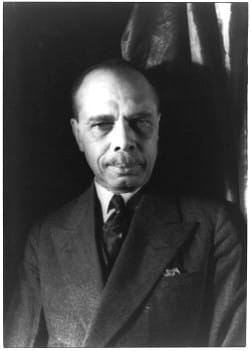
James Weldon Johnson’s NAACP Achievements
James Weldon Johnson was a pivotal figure in the NAACP, where his leadership and advocacy had a lasting impact on the civil rights movement.
Early Involvement and Leadership
Johnson joined the NAACP in 1916 as a field secretary, helping to open new branches and expand membership across the country. His work focused on combating segregation, voter disenfranchisement, and the scourge of lynching. He campaigned for a federal anti-lynching bill and spoke at the 1919 National Conference on Lynching, drawing national attention to the issue.
In 1920, Johnson was appointed NAACP executive secretary — the organization’s top operational role — a position he held until 1930. In this capacity, he:
Organized the Silent March of 1917 in Manhattan to protest lynching, a landmark protest that brought national visibility to the NAACP’s anti-lynching campaign
Advocated for federal anti-lynching legislation, working to influence lawmakers and public opinion.
Promoted African American cultural and intellectual achievements as a counter-narrative to racial stereotypes, believing that literature, art, and music could demonstrate Black Americans’ equality in intellect and creativity.
Cultural and Educational Contributions
While serving as executive secretary, Johnson also continued his work as a writer and educator. He edited The Book of American Negro Poetry (1922) and The Book of Negro Spirituals (1925), foundational texts in African American literature and music. His novel The Autobiography of an Ex-Colored Man (1912) was reissued under his name in 1927, further cementing his literary influence.
Johnson’s NAACP tenure was marked by strategic organizing, cultural advocacy, and a commitment to both legal and moral action against racial injustice. His leadership helped shape the NAACP’s national profile and laid groundwork for future civil rights campaigns. His work in the NAACP, combined with his broader contributions as a writer, diplomat, and educator, made him one of the most influential African American leaders of the early 20th century.