Monday, October 12, 2026
Advertisement
Home Blog Page 10

Clomeisha Tumlin Appointed Faculty Regent for Tennessee Board of Regents

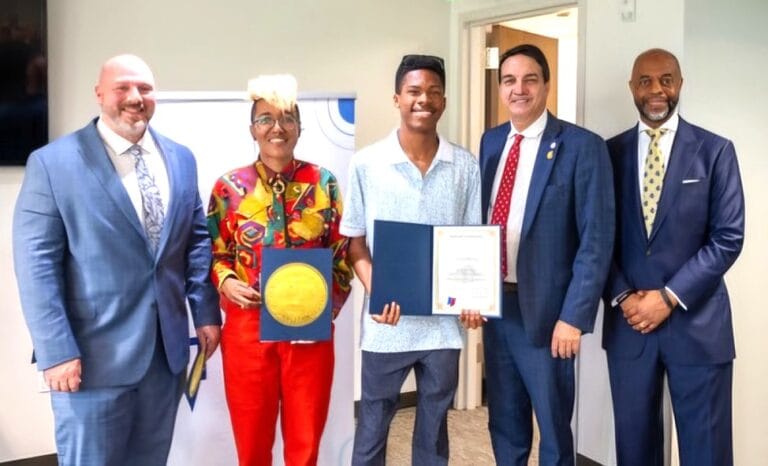
Chattanooga State Community College faculty and staff are earning recognition across Tennessee’s higher education system, highlighted by the appointment of Clomeisha Tumlin as Faculty Regent for the Tennessee Board of Regents (TBR).

Tumlin, department head and associate professor in Chattanooga State Community College’s Business and Industry Division, has been appointed by Governor Bill Lee to serve a two-year term through June 30, 2027.

In the role, she will represent faculty perspectives from community colleges across the state and contribute to system-wide decision-making affecting higher education institutions in Tennessee.

A Faculty Regent serves as a formal member of the Tennessee Board of Regents and helps shape policies governing the state’s community colleges and Colleges of Applied Technology. Responsibilities include participating in board meetings, reviewing and approving budgets, advocating for faculty concerns, helping guide institutional leadership decisions, and contributing to academic policy discussions.

Tumlin, who has served at Chattanooga State since 2015, said her work has focused on advancing student success, career readiness, and high-impact educational practices designed to prepare students for employment and long-term professional growth.

Prior to entering higher education, she spent more than a decade in human resources within the healthcare industry, gaining experience in workforce development, employee relations, and organizational leadership.

Currently serving as department head and associate professor in Chattanooga State’s Business and Industry Division, Tumlin previously served as president of the Faculty Senate during the 2024–2025 academic year and held the position of president-elect from 2022 to 2024.

Her professional leadership extends beyond campus. Tumlin serves as treasurer for the Chattanooga Chamber of Commerce East Brainerd Council and Community Haven boards and participates on the Community Foundation of Greater Chattanooga’s Together We Can Scholarship Board and Chattanooga State Community College’s Business Advisory Board.

Tumlin earned bachelor’s degrees in human resources and general management, along with a master’s degree in business, from the University of Tennessee at Chattanooga.

According to Tennessee law, the Tennessee Board of Regents oversees the governance and management of the state’s community college and technical college system. When legislation approved by the Tennessee General Assembly in 2025 is fully implemented, the board will consist of 21 members, including public representatives, faculty, students, and ex-officio state officials.

The board’s mission includes governing Tennessee’s community colleges and Colleges of Applied Technology, coordinating educational systems while preserving institutional independence, improving operational effectiveness through centralized services, strengthening accountability for state funding, and ensuring public oversight of postsecondary education.

“These recognitions reflect the skills and leadership we see every day at Chattanooga State,” said Dr. Rebecca Ashford, president of Chattanooga State. “Our faculty and staff are making meaningful contributions not only on our campus, but to the future of higher education across Tennessee.”

Kaylea Moore–Finding Her Way as She Inspires

0

What happens when a determined, inspired, and gifted young woman decides to do more? Well, meet Kaylea Moore. Her life story inspires as she focuses on making a difference, not just making a point.

CNC: Tell us a little about yourself and your Chattanooga roots.

Kaylea: I was born in Chattanooga on January 7, 2004, and attended Harrison Elementary, Big Ridge Elementary, Bess T. Shepherd, Tyner Middle School, and eventually Tyner Academy, where I graduated as valedictorian in 2022. Chattanooga has always been home, and it shaped who I am. Even though I have traveled and lived elsewhere, I still carry Chattanooga with me everywhere I go.

CNC: What inspired your love for education?

Kaylea: Honestly, it started when I was young. I was the kid who chose the library over recess. I loved reading, learning, and helping others learn. At age 15, I became a teaching assistant for Bess T. Shepherd’s Read to be Ready Summer Program, and later I participated in Tyner Academy’s Teaching and Learning Program. Those experiences confirmed that education was where my heart was.

CNC: You recently graduated from Howard University. Why Howard?

Kaylea: Howard represented opportunity, excellence, and a pathway into educational policy. I knew I wanted to make an impact beyond the classroom. Being in Washington, D.C., surrounded by leaders, policymakers, and students from around the world, gave me access to experiences that aligned with my goals. I was also the first student from Tyner Academy to attend Howard University, which made the journey even more meaningful.

CNC: Your journey has not been easy. What challenges have you overcome?

Kaylea: When I was 12, doctors discovered severe scoliosis while I was getting a physical for cheerleading. I underwent major spinal fusion surgery at age 13 and had to relearn how to walk. Activities I loved, including gymnastics and competitive sports, suddenly became impossible. Then, just three months after surgery, my mother passed away from lupus. That period changed everything. I struggled with grief, uncertainty, and questions about why those things had happened, but I chose to keep moving forward. School became an outlet for me, and I poured myself into learning and leadership.

CNC: What kept you going during those difficult years?

Kaylea: My faith, my family, and my belief that difficult circumstances do not define a person’s future. I trusted God and trusted that there was purpose in what I was experiencing, even when I couldn’t understand it. I also wanted to honor my mother, who loved education and encouraged reading and learning in our home. She remains my greatest motivation.

CNC: What advice would you give young people facing obstacles?

Kaylea: Don’t be afraid to be uncomfortable. Growth happens when you step beyond what feels safe. Many of the best opportunities in my life began with uncertainty. If I had stayed comfortable, I never would have gone eight hours away to Howard University, started new organizations, or discovered what I was capable of achieving.

CNC: What’s next for Kaylea Moore? Kaylea: I’ll begin teaching sixth-grade English in Washington, D.C., while pursuing a master’s degree in public administration. Long term, I hope to work in educational policy and eventually serve in a position where I can help shape educational opportunities for future generations. My goal is simple: despite everything I’ve endured, I want to continue making a difference and remain proud to be Kaylea Moore.

Net Resource Foundation Launches Community Choice Pantry in South Chattanooga

The Net Resource Foundation is set to launch its new Community Choice Pantry in South Chattanooga, offering residents a more personalized and dignified approach to food assistance. The pantry will officially begin Wednesday, June 10, and will operate from 1 to 2 p.m. every Wednesday at Westside Church, located at 4001 Hughes Avenue.

Unlike traditional food distribution programs, a Community Choice Pantry allows individuals and families to select food items based on their specific household needs and preferences. Organizers say the approach helps reduce food waste while giving participants greater flexibility in choosing foods that best fit their circumstances.

Foundation leaders say they are eager to bring the resource to South Chattanooga and hope to create a welcoming and meaningful experience for community members throughout the season.

In addition to providing food assistance, The Net Resource Foundation is inviting local organizations, businesses, and community groups to partner in expanding available resources for attendees. Agencies interested in connecting with residents are encouraged to participate through tabling opportunities offered during pantry hours from 1 p.m. to 2 p.m. each Wednesday.

Participating groups will have the opportunity to share services, educational materials, and community information with families and individuals attending the pantry.

The organization is also seeking support for its ElderCare Program, which serves senior citizens ages 60 and older. Through the program, care bags are distributed monthly to seniors, providing supplemental items intended to meet practical needs and offer encouragement.

Donations of supplies are currently being accepted, and organizers say both individuals and groups are encouraged to participate through donations or workplace and community supply drives.

High-priority items needed include toilet paper, paper towels, trash bags, bar soap, dish and laundry detergent (pods preferred), and household cleaners.

Volunteer opportunities are also available for those looking to make a difference in the community. Volunteers ages 16 and older are needed every Wednesday from 1 p.m. to 3 p.m. to assist with stocking shelves, packing bags, greeting guests, and helping with setup and cleanup efforts.

Founded in 2015, The Net Resource Foundation is a South Chattanooga-based 501c(3) dedicated to challenging “systemic issues through active community building and mentorship.”

Born out of a desire to serve the Alton Park and South Chattanooga neighborhoods from within, the foundation addresses the needs of the “whole person” by offering impactful, community-driven programs. From food security initiatives and youth leadership academies to senior outreach and neighborhood revitalization projects, the foundation works hand-in-hand with residents and local leaders to foster equity, connection, and long-term opportunity. 

Ready to make a difference? Whether you want to volunteer, host a supply drive, donate, or secure a tabling spot, reach out to The Net Resource Foundation at (423) 401-0503 or thenetresourcefoundation@gmail.com.

Chattanooga Fire Department Establishes Dedicated Community Risk Reduction Division

0

The Chattanooga Fire Department is reinforcing its long-standing commitment to proactive public safety with the formal establishment of its new Community Risk Reduction (CRR) Division.

While the department has provided fire prevention education, outreach initiatives, and safety programs for many years, the creation of this dedicated division marks a pivotal step in coordinating and expanding these vital services under a unified, data-driven strategy.

The CRR Division aims to identify community-specific risks and implement programs designed to prevent emergencies before they ever happen. By examining local data and trends, the team will address unique community needs through public education, smoke alarm initiatives, fall prevention for older adults, youth outreach, disaster preparedness, and targeted safety campaigns.

The division’s launch reflects a growing nationwide emphasis within the fire service on prevention-focused strategies that improve overall quality of life, reduce injuries, and enhance neighborhood resilience.

Fire department leadership emphasizes that the team will work hand-in-hand with schools, neighborhood associations, healthcare providers, local businesses, and public safety agencies to build a stronger safety net across Chattanooga.

“Community risk reduction is about meeting people where they are and helping prevent emergencies before they occur,” said Lt. Jumaane Lanier, CFD’s Fire and Life Safety Educator. “This work has always been part of our mission, but formalizing this team allows us to be even more intentional, collaborative, and effective in serving our community.”

As part of its official launch, the CRR Division is immediately putting its mission into action. The division’s first official community project is an Elder Care Drive focused on collecting essential household items for older adults and vulnerable residents.

All 20 Chattanooga fire stations served as neighborhood drop-off points for items like toilet paper, trash bags, bar soap, paper towels, and laundry detergent pods, with the donation drive running through June 8.

The shift toward structured risk reduction represents an evolving philosophy on the modern role of first responders, focusing just as heavily on proactive mitigation as emergency response.

“Fire departments today do far more than respond to emergencies,” said Captain Damien Vinson, Community Outreach and Recruitment Coordinator. “By investing in prevention and community partnerships, we can help create a safer community for everyone.”

To follow the division’s ongoing work and stay updated on upcoming safety programs, connect with them on social media at @ChattFireCRR.

Residents can request smoke alarms by calling the Chattanooga Fire Department directly at (423) 643-5600 during regular business hours, or by visiting the Fire Administration building at 910 Wisdom Street.

Chantelle Morrison- Kourouma (on a holistic approach to healthcare)!

Here’s another addition to the montage of fascinating people I’ve encountered when coffee house and café hopping around town. This time it’s mother first and healthcare professional second, Chantelle Morrison- Kourouma.

What immediately strikes one about Chantelle is her broad smile and “come sit down and let’s talk” demeanor, a quality you’d want in a healthcare practitioner. I was lucky to snare some time with her recently during which reality sank in that 30 minutes were not nearly enough. Not by a long shot.

Although it took some prodding to get her to grant me the privilege of writing her story, it was pointing out its value to a broader community that got her to yes. Later she sent me her curriculum vitae.  

Well, like a kid in a candy store, reading Chantelle’s 3000+ word vitae left me drooling over the goodies, fretting over where to start, and let alone the challenge of how to distill it into the space limitations of a single column without doing her whole story a disservice. But here’s my best shot.

Chantelle Morrison- Kourouma holds bachelor’s and master’s degrees in education and nursing from Wayne State and Albany State Universities. Altogether, her work history, accomplishments and awards would take this and several follow-up columns to list. Although she’ll disagree, I’ll add that she’s a ChatGPT expert who I’ve encouraged to publish “ChatGPT for dummies” (eh, like me).

Here’s a deep dive into Chantelle’s story:

What motivated you to pursue a nursing career?

Before becoming a nurse, I was a teacher in Michigan and working on my master’s degree. At the time the state had a policy requiring students with significant absences to attend summer school. That sparked my research question: Is summer school effective?  

But as I began looking closer at my own classroom, I realized that I needed to ask a more important question: Why were so many students missing school in the first place? What I discovered changed the direction of my career. Many of my students were not absent because they lacked motivation, they were dealing with health and other challenges. I had children with uncontrolled asthma, experiencing housing instability and who were exposed to conditions like scabies. At that point it became clear to me that summer school alone could not address those deeper systemic issues. So, I made the decision to go to nursing school, not to leave education, but to become a better educator and advocate for children and families.

Describe a typical day in the life of Chantelle Morrison-Kourouma.

Yeah, I wish. But the truth is that there really is no such thing as a typical day for me because my life exists at the intersection of caregiving, healthcare, education and advocacy. My days begin with my most important role: being a mother to my son who is on the autism spectrum. That means balancing school schedules, appointments, therapies, advocacy, and creating stability and support for him while also managing my professional responsibilities. 

I read in your vitae that you’re also a footcare specialist. Say more about that.

 First, it’s important to understand that symptoms of foot diseases include pain, discoloration, fungus, numbness, visible lesions, blisters and scaly patches. So as a foot care specialist, I provide mobile foot care services to seniors, individuals with diabetes and clients with mobility or health-related challenges through my business, Atlanta Foot Fairy, work that often takes me into homes and communities. I hope to eventually disseminate footcare information at barber shops, beauty shops and other places.

If you could roll back the clock to the beginning of your career as a health care practitioner, what would you do differently based on what you know now?

Great question. I would want to build a stronger personal foundation in the historical and structural realities that shape how communities experience healthcare, particularly within Black communities. One of the most impactful books I read was Medical Apartheid, which examines the long history of medical exploitation of African Americans in the United States. I was familiar with the Tuskegee Syphilis Study and the story of Henrietta Lacks whose cells were used in research, but this book further opened my eyes.

Your son, who’s a student in the County system, is on the autism spectrum. Based on your experience, what advice would you offer to similarly situated parents and families?

The first thing I would tell families—especially parents of newly diagnosed children—is not to become emotionally trapped by the diagnosis itself. Autism is not a dead end. What it means is that your child and family now have an additional layer of responsibility, advocacy and support needs that must be navigated over time. For me, once I understood the diagnosis, I threw myself into research and learning. Now recognize that many parents reached the diagnosis stage already exhausted. In many cases they’ve dealt with behaviors, developmental concerns, sleep issues, feeding struggles, school challenges, or emotional stress long before they ever received a formal diagnosis. By the time they finally get answers they’re overwhelmed. That’s why support matters so much.

One of the biggest mistakes I see, particularly in underserved communities, is that families often try to navigate autism alone. I strongly encourage parents to connect with a parent support organization early and to remember that you are the expert on your child. That means documenting behaviors, triggers, progress, developmental concerns and patterns. I kept journals about behaviors, potty training challenges, feeding concerns, sensory triggers, and developmental changes because that information became important for medical appointments, therapy planning, and educational meetings. I also made a very intentional decision to raise my son as a child first—a child who happens to be on the autism spectrum. I wanted him exposed to experiences that encouraged growth, confidence, recreation and social connection.

Tell us something about Chantelle that folks may be surprised to know about.

I think what may surprise people is my life beyond my professional work that centers around healthcare. But those quieter hobbies—fishing, gardening, quilting, art, nature, and creative living—are also part of what keeps me balanced and connected. Fishing in particular is a peaceful time for me. It slows my mind down and gives me space to think, reflect and decompress from the emotional weight that can come with healthcare, caregiving, advocacy, and just everyday life.

 Is there a question you hoped I’d ask but didn’t?

One question I would’ve welcomed is: “What larger community issues concern you the most right now as a nurse, caregiver, and clinical social worker?” For me, one of the biggest concerns is housing instability and the growing lack of affordable, accessible housing for families, seniors, veterans, individuals with disabilities, and medically vulnerable populations. I see how closely housing is connected to physical health, mental health, disability support, educational outcomes, and overall quality of life. These are some issues that keep me awake at night.

 What’s your departing message to readers?

We’re wired to be with others and do not heal in isolation. We heal through connection. There’s evidence based on research that loneliness and lack of connection with others have adverse health implications. If there’s one thing I hope people take away from my story, it is that many individuals and families exist in bubbles of loneliness while dealing challenges that are not always visible and lack the opportunity to heal. They may be navigating health struggles, caregiving responsibilities, disability, grief, financial stress, burnout, housing instability and emotional exhaustion while still trying to show up every day for themselves and for the people they love.

I’ve learned that healing is not always immediate. Sometimes it looks like consistency. Sometimes it looks like asking for help. Sometimes it looks like a support group, a safe home, a caring teacher, a nurse who listens, a therapist, a mentor, a parent advocating for their child, or simply someone willing to sit down with you over a cup of coffee at Starbucks like you and I often do and have a real conversation.

I also hope people begin to see healthcare more holistically. It is also about its connection with dignity, housing, food access, transportation, mental health, disability support, relationships, safety, and whether people feel seen, respected and supported within their communities.

Now despite all the challenges I’ve cited here, I still believe deeply in community, that people can heal, grow, adapt and thrive when given support, opportunity, compassion and access to the resources they need. Sometimes the smallest acts of kindness and understanding can completely change the direction of someone’s life. In the end Terry, that’s the bottom line of my story.

This concludes our story of Chantelle Morrison-Kourouma, another addition to our mighty mosaic of fascinating people.

Terry Howard is an award-winning writer, a contributing writer with the Chattanooga News Chronicle, The American Diversity Report, The Douglas County Sentinel, Blackmarket.com, recipient of the Dr. Martin Luther King, Jr. Leadership Award, and third place winner of the Georgia Press Award.

‘It’s Flat-Out Un-American’: Rep. Hakeem Condemns Tennessee’s Congressional Gerrymander

Rep. Yusuf Hakeem (left in gold tie) joins protesters gathered on the steps of the Tennessee State Capitol on May 7, as lawmakers convened a special session to redraw the state’s congressional districts and dismantle Tennessee’s lone majority-Black congressional seat.

When Tennessee state Rep. Yusuf Hakeem stood before his colleagues last week, he invoked the people who came before him–those who marched, bled, and died so that every Tennessean might have an equal voice in government.

What he saw happening around him, he said, dishonored every one of them.

“It’s desperate. It’s dangerous. It’s flat-out un-American,” the Chattanooga Democrat said as lawmakers reconvened in a special session to redraw the state’s congressional districts mid-decade.

His words came as Gov. Bill Lee signed a sweeping new congressional map into law May 7–and the NAACP filed an emergency lawsuit within hours to block it.

The lawsuit argues Tennessee Republicans not only drew a racially discriminatory map but violated their own state laws in doing so, setting the stage for a legal battle voting rights advocates say strikes at the heart of American democracy.

Rep. Hakeem, whose district sits in the heart of Chattanooga, was unsparing in his assessment of the Republican majority’s motivations. Tennesseans deserve leadership focused on lowering costs, strengthening schools, and improving life for working families, he said–and Republicans know their record on those issues is weak.

“Gas prices aren’t lower. Groceries aren’t cheaper. Our schools are still underperforming,” Rep. Hakeem said. “They know they don’t have to face accountability on their record–instead, they can just change the rules in the middle of the game.”

While Chattanooga’s congressional representation is not dramatically altered under the new map–Hamilton County remains whole within the district currently held by U.S. Rep. Chuck Fleischmann of Ooltewah–Rep. Hakeem warned his constituents not to mistake local stability for safety. The real story, he said, is what is happening to Memphis.

“Chattanooga may not see a dramatic change in its congressional representation under this proposal, but what is happening to Memphis today should concern communities across this state,” he said. “We have seen these kinds of efforts before, and we know what is at stake when communities lose their ability to fully make their voices heard.”

The map’s most consequential provision splits Memphis–one of the nation’s largest predominantly Black cities–into three separate congressional districts, scattering Black voters across swaths of rural white constituencies.

The redraw is expected to eliminate the lone Democratic, majority-Black congressional seat currently held by Rep. Steve Cohen. Rep. Hakeem pledged to use every available tool in Nashville to fight the maps.

“We’ve come too far in this fight to turn back now,” he said.

The NAACP’s emergency lawsuit, filed just after Gov. Lee signed the bill, takes an approach that sidesteps the weakened federal Voting Rights Act and targets Tennessee Republicans on their own legal turf.

At the heart of the complaint is a procedural argument: that Gov. Lee’s proclamation calling lawmakers into special session never specifically authorized the repeal of a five-decade-old statute prohibiting mid-decade congressional redistricting.

Under the Tennessee Constitution, legislators in a special session may only act on matters the governor explicitly identifies.

NAACP General Counsel Kristen Clarke did not mince words. “It is a direct attack on our democracy and our Constitution to dismantle majority-Black districts,” she said. “We will fight this map, tooth and nail.”

Gloria Sweet-Love, president of the Tennessee State Conference of the NAACP, called the redraw part of a long, painful pattern.

“There is a long history and contemporary pattern of unfair redistricting practices in rural West Tennessee that have harmed Black political representation,” she said.

The day before Gov. Lee signed the bill, the Hamilton County branch of the NAACP hosted a press conference at which community leaders drew direct lines between last week’s events and the long arc of Black Americans’ struggle for political participation.

The Rev. Ernest Reid offered a sobering reminder.

“Our ancestors bled for this right. They marched for this right. They were jailed, beaten, humiliated, and in some cases killed for this right,” Reid told those gathered. “For Black communities, this conversation is deeply personal because the right to vote has always come at a cost.”

Eric Atkins, co-chair of the Unity Group of Chattanooga–founded in 1969 to support Black candidates for public office–called the moment a direct action phase and urged those present to respond accordingly.

“If we let this country revert back to Jim Crow,” he said, “this country will cease to exist as we know it. It will be the death of democracy.”

Under the proposed map, Meigs and Rhea counties would join Hamilton County in Fleischmann’s district. Morgan County would shift to the Middle Tennessee district represented by Rep. Scott DeJarlais. Portions of Campbell and Scott counties would move to Rep. John Rose’s district.

House Speaker Cameron Sexton stated during a Congressional Redistricting Committee meeting that race data was not factored into the proposed map–that only population and politics guided the redraw.

Critics, however, argue the distinction is hollow given that Black voters have historically supported Democrats in overwhelming numbers, making the racial and partisan impacts of the map functionally inseparable.

Lt. Gov. Randy McNally framed the effort in purely political terms.

“Tennessee now has the opportunity to send another Republican voice to Washington,” he said. “We intend to seize it.”

Tennessee joins Florida, Louisiana, Mississippi, Alabama, and Illinois among states already moving to redraw congressional maps following the Supreme Court’s gutting of Section 2 of the Voting Rights Act.

Primary elections are scheduled for Aug. 6, and candidate qualifying deadlines have already passed–leaving campaigns scrambling in districts that no longer exist. The compressed timeline, voting rights advocates warn, threatens confusion for voters and candidates alike with the 2026 midterms just months away.

For Rep. Hakeem, the moment is not abstract–it is personal, historical, and urgent.

“My whole life, I have stood on the shoulders of those who came before me,” he said. “People who fought to ensure every Tennessean, especially our Black neighbors, had an equal voice in our government and in our elections.”

That fight, he made clear, is not over.

Trio of UTC Leaders Sweep Prestigious Statewide Service Awards

The University of Tennessee at Chattanooga is celebrating a major statewide achievement, as three members of the UTC community have been named recipients of the prestigious 2026 Harold Love Outstanding Community Service Award.

The Tennessee Higher Education Commission (THEC) recently announced this year’s honorees, celebrating the exceptional dedication of students, faculty, and staff across the state who go above and beyond in their commitment to public service.

Among this year’s distinguished awardees are UTC student Joshua Clay, alongside esteemed faculty members Dr. Rick Dierenfeldt and Dr. Chandra Ward.

The Harold Love Outstanding Community Service Award stands as one of the highest recognitions for public service in Tennessee higher education. Established by the General Assembly in 1991, the award was created to honor the enduring legacy of the late Representative Harold Love Sr.

Elected to the General Assembly in 1968, Representative Love was a Tennessee State University alumnus and a successful Nashville insurance salesman renowned for his profound compassion and good humor.

From serving on community center boards to using his own resources to aid constituents, Love was an emblem of true public service. His presence in the House of Representatives famously inspired the phrase, “Love is in the House.”

Today, the awards serve to recognize individuals who carry forward that exact spirit of compassion, leadership, and volunteerism.

This year’s UTC recipients represent a diverse cross-section of academic and community leadership, demonstrating how higher education can directly uplift regional communities.

Representing the next generation of leadership is Joshua Clay, a standout student pursuing integrated studies in accounting administration and enterprise rhetoric.

Clay has consistently leveraged his interdisciplinary coursework to drive impactful change across the region. By combining sound business acumen with a deep dedication to civic advocacy, he exemplifies the power of student-led community engagement.

In the realm of faculty leadership, Dr. Rick Dierenfeldt has been recognized for his tireless work as a UC Foundation Professor and Head of the Department of Criminal Justice.

Dr. Dierenfeldt bridges the gap between academic research and real-world public safety solutions. His hands-on community outreach has been vital in addressing critical criminal justice issues and creating actionable pathways for local reform.

Joining them in this prestigious honor is Dr. Chandra Ward, a UC Foundation Professor and Associate Professor of Sociology. Known as a passionate advocate for civic engagement, Dr. Ward centers her academic and community efforts on elevating marginalized voices.

Through her sociological research and direct local initiatives, she works to build sustainable support systems and lasting partnerships throughout the Chattanooga area.

As the state’s higher education coordinating body, THEC aims to build a strong educational landscape across Tennessee. By highlighting these three individuals, the Commission underscores the vital role higher education institutions play in the welfare of their local communities. In its official announcement, THEC commended the UTC recipients and their fellow honorees for serving as statewide ambassadors, congratulating them for their outstanding contributions and lasting impact on their communities.

Unchecked Development is Exposed by Problems that Harm Citizens Not Developers

Recently, Hamilton County Mayor Weston Wamp and the County Commission have agreed to create a separate group that oversees and determines development within Hamilton County’s unincorporated areas versus that of the City of Chattanooga that has previously been a shared task in the Chattanooga-Hamilton County Regional Planning Agency (CHRPA).

One example of the concerns that have been brewing within the CHRPA for the last year or more has been the heavy representation of developers on this appointed board that approves growth through zoning changes and development approvals, some of which they profit and gain from personally.

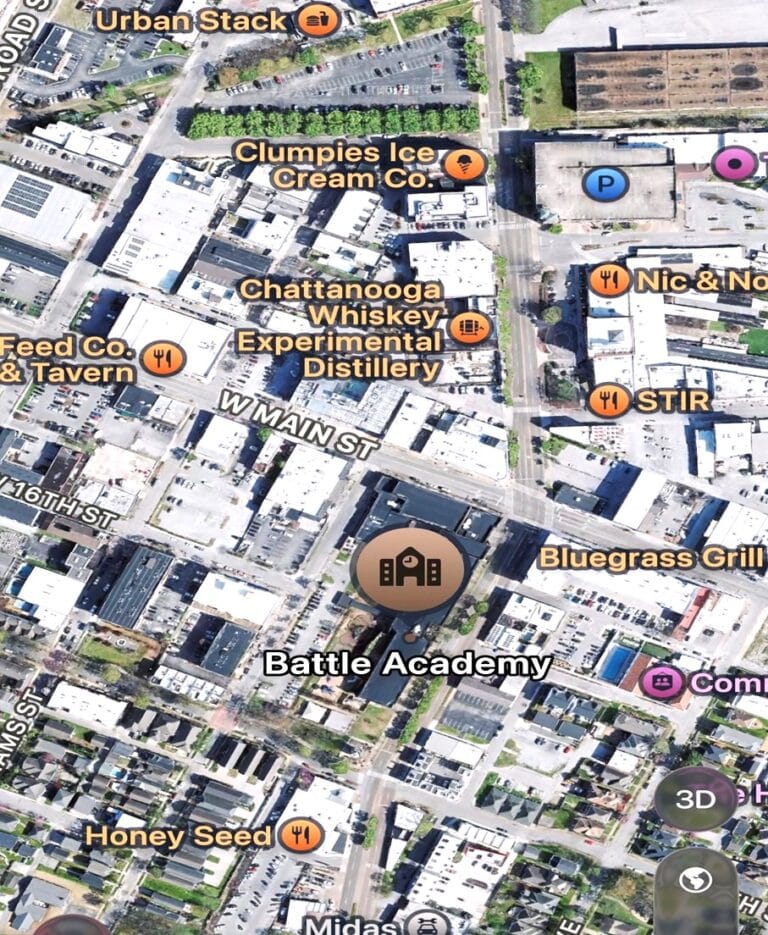
Look no further than the parking issue pitting Battle Academy School and the Southside Cowart Place neighborhoods and retail store fronts for parking spaces.

Who approved the school, opened in August 2002, to be built in a major downtown sector of retail along with a large number of housing units that do not have adequate parking on top of store fronts and restaurants that have little to no parking for customers?

Who? The Chattanooga-Hamilton County Regional Planning Agency.

Who is responsible for addressing the issue of ingress, egress, parking, and accommodation of patronage for the school, the retail businesses, and homeowners who were either made promises that never materialized or they didn’t think about the need for parking?

Growth doesn’t have to be painful. But it is when less than thoughtful approvals are sure to wrongly pit a public facility paid for by taxpayers–Battle Academy–against residential and retail needs.

What’s the answer? It’s not an easy one or one that will happen quickly.  A start would include good communication, strategic planning, and critical thinking beyond the real time building approvals that seem to never come with parking as a consideration. The fact that governments budget and pay for streets, sidewalks, and infrastructure seem to be an incidental expectation of developers who are getting approvals despite the lack of infrastructure to support the sudden bolus of growth.

Are there conflicts of interest among those on the Chattanooga-Hamilton County Regional Planning Agency, as its former executive director has alleged? Are developers quick to approve projects that essentially rely upon public funding–that means you pay for it with your tax dollars–versus little to any development costs or allowances for infrastructure such as parking and the strain on facilities such as schools?

Tennessee’s State law does permit a form of taxation that only developers would pay as part of each new development if permissive legislation and voters made that decision.

Unfortunately, the status quo is embraced to expand the property tax base while good stewardship of our community has suffered.

There used to be “The Chattanooga Way” that described the amazing collaboration to see growth, expansion, and community good. The Chattanooga Way has not been redefined; it’s been replaced by those who forget how special our community is from her people who foot the bill.

There’s no need to go back to any days of yesteryear. Instead, Chattanoogans must demand leaders who are good stewards.

Surveillance Pricing is Legal in TN–Consumers Beware

Did you know in Tennessee it is legal for one person to be charged a different amount for the same, exact product, as a person who could literally be standing right beside them?

Surveillance pricing is as creepy as it sounds. It also is predatory at best and government protected price gouging at worst.

Few will argue that all that we do is now monitored through digital technology. This data collected now assists a practice employed by businesses to surveil your location, browsing history, purchase behavior, device type, demographic data, and other online activity to determine the price for each shopper. 

Privacy advocates warn that surveillance pricing likely harms vulnerable populations, including low-income families, the elderly, or consumers facing urgent needs. Researchers fear algorithms could permit “digital redlining,” where certain neighborhoods or demographic groups consistently receive higher prices.

“Algorithmic collusion” is another real concern where multiple companies using similar software systems gradually raise prices in tandem without direct human coordination.

Modern algorithms analyze your online behavior, hence the more palatable name, “personalized algorithmic pricing.” This pricing is legal in Tennessee and most states.

Maryland is the first state in America to ban certain forms of surveillance pricing in grocery stores. The “Protection From Predatory Pricing Act” in April 2026 prohibits grocery stores and third-party delivery services from using personal consumer data to alter prices for individual shoppers.

The Maryland law resulted from growing public concern that two consumers standing side-by-side could unknowingly pay different prices for the same groceries based solely on data collected about them. The practice has been referenced as a form of economic surveillance and digital discrimination.

In Tennessee, surveillance pricing currently exists in a legal but shaded area. As of 2026, no comprehensive statewide ban similar to Maryland’s has taken effect.

Be attentive. Let’s hope our legislative leaders remain focused on the critical issues that make an enormous difference to families.

Former Slave Turned Inventor Patented Technology Still Being Used in Lawn Mowers Today

In May 1899, John Albert Burr, an African American inventor from Maryland, patented very innovative technology that is still being used today in modern-day lawn mowers. He did not invent the first lawn mower, but he did design a lawn mower with traction wheels and rotary blades that would not get easily clogged up from grass and weeds. He also drastically improved the lawn mower’s design making it possible to mow closer to buildings and wall edges.

All in all, Burr held over 30 U.S. patents for lawn care and agricultural inventions. In fact, even today’s mulching power lawn mowers are part of his legacy.

John Albert Burr spent his early teenage years working as a field hand in Maryland amid the turmoil of the American Civil War (1861–1865), a period when he was between the ages of 13 and 17. His family’s status provided limited opportunities for advancement, yet allowed engagement in manual labor on farms. Burr demonstrated an early aptitude for mechanics. This inventive talent caught the attention of wealthy Black supporters, who recognized his potential and funded his further development by ensuring he could attend engineering classes at a private university  Through this education, repairing supported by community benefactors, Burr transitioned from field labor to more skilled work, and s

During his studies, Burr began to see the opportunity to put his mechanical skills to work and started to make a living, repairing and servicing farm equipment and other machines.

He later moved to Chicago and also worked as a steelworker and filed his first patent for the rotary mower in 1898. Just one year later in 1899, his patent was approved by the US Patent and Trademark Office.

During the early 1920s, he was able to see the commercial success of his inventions and also received several royalties for his creations. He enjoyed traveling and lecturing and later died of the flu in 1926 at the age of 78.

Rotary Blade Lawn Mower:  Burr filed for a patent on his improved rotary blade lawn mower on September 8, 1898, which was granted on May 9, 1899, as U.S. Patent No. 624,749.  This invention built upon the common type of lawn mower featuring traction wheels and a rotary cutter that shears against a fixed bar, but introduced significant enhancements to address limitations in existing designs.  Burr assigned three-fourths interest in the patent to Oscar L. King of Agawam, Massachusetts.  The core design incorporated traction wheels fixed to a central shaft, providing enhanced mobility for the user, and a rotary blade system with long shearing edges that extended beyond the outer faces of the wheels.  To prevent clogging from grass clippings and debris, Burr enclosed the operating gearing within a chambered casing formed by cheek-plate extensions and a cap plate, ensuring the mechanism remained protected during use.  Additionally, the cheek plates were offset outwardly beyond the wheels, supporting a counter-shaft and fixed bar that allowed for a longer rotary cutter without compromising stability. These modifications represented key improvements over prior mowers, where exposed gearing often choked on obstructions and wheel placement limited the cutting width to the span between the wheels. By altering the wheel and cheek-plate configuration, Burr’s design enabled wider cutting paths and closer proximity to obstacles like buildings or fences, while the enclosed system reduced maintenance interruptions.  Overall, the mower aimed to deliver smoother, cleaner cuts with less physical labor, making lawn maintenance more efficient for homeowners and groundskeepers.