Sunday, October 18, 2026
Advertisement
Home Blog Page 151

Zennia Nesmith Wins Tennessee Community College Student of The Year

0

Chattanooga State Community College student Zennia Nesmith was named the Tennessee Community College Student of the Year during the College System of Tennessee’s 4th annual Statewide Outstanding Achievement Awards (SOAR) ceremony held March 30 in Nashville. 

Zennia’s personal story is one of resilience and hard work. Although Zennia did not graduate from high school, a year after her daughter was born, Zennia completed her GED and made a decent living working. 

Twenty years later, she enrolled at ChattState at no cost thanks to the Tennessee Reconnect scholarship, a program her husband had recently completed.

Zennia has maintained a 4.0 GPA, joined the Global Scholars Honors program, was awarded the Chattanooga State Foundation Beacon Scholarship, and earned the highly competitive Dream Scholar program where she was one of eight community college students chosen nationwide.

“Zennia is an inspiration to the faculty, staff and students at Chattanooga State,” said Chattanooga State President Rebecca Ashford. “She overcame many obstacles to enroll in college, and she is determined to succeed. She is incredibly deserving of this recognition as the TBR Community College Student of the Year. We at the College are so very proud of her.”

Board of Regents Vice Chair Emily J. Reynolds, who presented the Student of the Year Awards, said students “come to our colleges with a thirst for knowledge and leave prepared to enter the workforce in a job vital to our state or to continue your education. Whatever path you choose, we love the fact that you often come back to your communities as future leaders.”

The College System, governed by the Tennessee Board of Regents, is composed of the state’s 13 public community and 26 technical colleges. Launched in 2019, SOAR celebrates the colleges’ outstanding students, employees, colleges, benefactors, volunteers and partnerships.

Zennia is the third Chattanooga State student in the past four years to earn the statewide Student of the Year distinction. Chattanooga State alum Jim Fry won in the inaugural year, and alum Deborah Hale won last year. 

The SOAR Student of the Year award also includes a $5,000 scholarship.

Equitable Recovery Commission Issues Recommended Framework for Chattanooga’s American Rescue Plan Investments

0

Mayor Tim Kelly to consider commission’s recommendations and begin taking next steps on Friday

Chattanooga, Tenn. (Tuesday, April 26) — The Chattanooga Equitable Recovery Commission on Monday presented its recommended framework to Chattanooga Mayor Tim Kelly for the investment of $30 million from the American Rescue Plan.

The commission developed the framework by using strategic priority areas and incorporating examples of the investment types that members believe can help stimulate long-term prosperity in the city, filling gaps that are remnants of an imperfect legacy. In its work, the commission acknowledged that some of the city’s communities have been historically neglected and require intentional focus and investments — investments that can lead to a more just and prosperous Chattanooga.While $30 million is not enough to bridge all gaps that exist in Chattanooga, it still represents a significant opportunity to fund transformative projects, the commission said. And over the past four months, members of the commission have engaged in many hours of robust discussions on how to best invest in an equitable, robust recovery.

In its framework, the Equitable Recovery Commission first analyzed Mayor Tim Kelly’s One Chattanooga strategy, and from there recommended a single goal — catalyzing the economic growth of the Black community — serve as its primary objective.

“Our research showed that the Black community in Chattanooga was disproportionately impacted by the negative effects of COVID-19,” said Commissioner Lakweshia Ewing. “We appreciate Mayor Kelly’s continued commitment to honoring his campaign promises by investing $30 million of ARPA funding into community-based initiatives that address the inequities that have existed for generations.” 

As the main objective, or “hub” of this investment framework, the commission recommended that every application for funding should incorporate this goal within both its scope of work, as well as in its impact.

To help spur economic growth in Chattanooga’s neighborhoods, the commission recommended funding projects which fall into the following four priority areas:

Ensure accessible housing for all Chattanoogans

Build a universal path to early learning and provide high-quality childcare

Close the gaps in public health

Build a competitive regional economy

“I want to first acknowledge the hard work by the members of the Equitable Recovery Commission, who took on the tough discussions, put in the long hours and performed the diligent research required to produce a framework of this magnitude,” said Chattanooga Mayor Tim Kelly. “My team and I look forward to reviewing it and leveraging it to inform our notice of funding opportunity later this week.”

Next steps include a formal notice of funding opportunity, technical assistance for applicants, and final application deadlines.

The formal notice of funding opportunity will be made available at Recovery.Chattanooga.gov on Friday, April 29. 

The city will host a virtual applicant information session on May 3 at 1 p.m. to provide technical assistance for applicants. 

Register at https://tinyurl.com/ARPATA

The session will be recorded and posted online to Recovery.Chattanooga.gov

An additional in-person applicant information session for technical assistance is scheduled for May 9 at 5 p.m. at a location that will be announced on Recovery.Chattanooga.gov. 

The final date to submit applications is currently set for June 3 at 5 p.m. 

Notices of intent to award to be released in early July.

The ARP spending plan is contingent on City Council approval.

The Equitable Recovery Commission was established to ensure Chattanooga’s fund allocation process is administered with integrity and accountability, through an equity lens. The Commission was composed of six members selected by the Mayor’s Office, three members nominated by the Urban League of Greater Chattanooga, and three members nominated by the Chattanooga Area Chamber of Commerce.

Federal Mask Rule Dropped for Travel on U.S. Planes, Buses & Trains

0

By Christina Ianzito

AARP, Updated April 21, 2022

The Department of Justice (DOJ) said on Wednesday that it will appeal the ruling that overturned the longtime COVID-19 mandate that face masks be worn on public forms of transportation and in transportation hubs.

Federal Judge Kathryn Kimball Mizelle in Florida had ruled on Monday that the Centers for Disease Control and Prevention (CDC) mask-wearing mandate was an overreach of the agency’s authority and dismissed the mandate as “unlawful.”

The DOJ’s move came at the request of the CDC, which said in a statement: “It is CDC’s continuing assessment that at this time an order requiring masking in the indoor transportation corridor remains necessary for the public health.” It added, “CDC will continue to monitor public health conditions to determine whether such an order remains necessary. CDC believes this is a lawful order, well within CDC’s legal authority to protect public health.”

In response to Monday’s decision, the Transportation Security Administration (TSA) is no longer enforcing the longtime mask rule, which applied to passengers and workers on planes, trains and buses, as well as in U.S. airports. It may do so again, however, if the DOJ moves to block the judge’s order.

Last month the CDC announced that most people were safe to go maskless in many other indoor settings, but recommended that “everyone ages 2 years and older should properly wear a well-fitting mask indoors in public in areas where the COVID-19 Community Level is high, regardless of vaccination status.” The agency maintains a color-coded, county-by-county map to track COVID-19 data, including hospital capacity and the number of new COVID-19 cases in an area. (Most of the country is now at a green, or low, level, despite a slight uptick in new infections.)

What this means for travelers

Though some travelers cheered when the mask news was announced by some pilots mid-flight on Monday, travelers are likely to face a patchwork of requirements, depending on where and how they are traveling.

It’s still up to individual airlines, bus lines, transit agencies and other transportation entities to decide whether to keep their mask mandates in place — but many, including Amtrak, Lyft and Uber, dropped them soon after the ruling. Both Uber and Lyft also announced that passengers can again ride in the front seat, which was banned during the pandemic.

The Washington, D.C., Metro system has dropped its mask requirement, but New York City is still mandating face coverings on its subways, buses and trains. Philadelphia International Airport is also requiring masks inside its terminals.

All major airlines announced within hours that passengers and employees no longer need to wear face masks. Delta added that they “may continue wearing masks if they so choose.” The airline’s chief health officer, Henry Ting, M.D., said, “Wearing a well-fitting mask — such as a KN95 — protects the wearer, even if others around them are not wearing masks.” Other medical experts have agreed.

Delta also acknowledges the confusion this new ruling may cause, as people “may be receiving this information at different times.” The company therefore asks passengers to “remember to show understanding and patience with others who may not be aware enforcement is no longer required.”

Disputes over mask wearing have been one reason for passengers’ unruly and sometimes violent behavior going through security and in the air. From the middle of January 2021 through Dec. 21, 2021, there were 5,779 reports of unruly passenger behavior, at times involving physical assault, according to the Federal Aviation Administration. Many airlines stopped serving alcohol on board for many months during the pandemic, concerned that inebriation was fueling bad behavior.

How to protect yourself

If you are at higher risk for complications from COVID-19, the best way to protect yourself from infection when others are unmasked is to wear a well-fitted respirator mask like an N95 or KN95.

As the name suggests, these masks are at least 95 percent effective at filtering out virus-sized particles, including the virus that causes COVID-19, when worn correctly. A study published by the CDC in February found that people who wore an N95 or KN95 mask in indoor public settings were 83 percent less likely to test positive for COVID-19 than those who wore no mask.

“If you’re in a crowded place where there are people who maybe have COVID, wearing an N95 mask means you’re cleaning the air much better right before you breathe it in,” M. Patricia Fabian, an associate professor in the Department of Environmental Health at the Boston University School of Public Health, told AARP in a previous interview.

A surgical mask is another option that provides more protection than a cloth mask, although it’s considered less effective than respirators. 

Just make sure your mask fits well: It should be snug over your nose and mouth and should form a tight seal, without any gaps along the edges or around the nose. Don’t have an N95? Your local pharmacy or health clinic may offer them for free — you can check the CDC’s website to find a list of participating pharmacies near you.

Traveling by air? Airlines have touted the safety of flying, equipping their planes with high-efficiency particulate air (HEPA) filters, which remove at least 99.97 percent of dust, pollen, mold, bacteria and airborne particles as small as 0.3 microns, according to the Environmental Protection Agency.

Editor’s note: This story has been updated with new developments.

Black Music Industry Icon Reveals How He Helped the Careers of Prince, Quincy Jones & Many Others

Nationwide — In his new memoir entitled A Golden Past -And- A Platinum Future, author Teddy Astin reveals his monumental journey from being a 6-year-old paperboy to the warehouse of Warner Brothers Records. Eventually, he became a supervisor of the mailroom in Atlanta and then later was hired in the company’s boardroom in Burbank, California as an award-winning record promotion executive.

With an impressive work ethic and a creative approach to the music industry, he enhanced the record sales of some of the world’s most popular artists across multiple genres. In fact, he has worked with the likes of Prince, Morris Day & The Time, Vanity 6, Sheila E, Zapp featuring Roger to Madonna, Quincy Jones, Miles Davis, Tevin Campbell, James Ingram, Patti Austin, Bob Marley, Sly Stone, Larry Graham, Donna Summer, Sylvester, Chaka Khan, Ashford & Simpson, George Clinton, The Funkadelics, Bootsy’s Rubber Band, Rod Stewart, Ice-T, Biz Markie, Big Daddy Kane, Michael McDonald, Al B. Sure!, Karyn White, George Benson, Earl Klugh, Bob James, Foreplay (featuring Bob James, Lee Ritenour, Nathan East & Harvey Mason), Al Jarreau, David Sanborn, The Isley Brothers, Joe Sample, Rose Royce, Frankie Beverly, Jennifer Holiday, Keith Washington, Atlantic Starr, Jasmine Guy, The Force M. D. S, Club Nouveau, Tom Tom Club, and many others.

Teddy has received over 50 Gold & Platinum albums in recognition of his contributions to their career success. (Gold [sales over 500,000], Platinum [sales over 1,000,000], Multi-Platinum [1,000,000+] Records & Dimond Sales 10,000,000+). Additionally, each artist has received nominations and awards from the NAACP Image Awards, BET, MTV, Soul Train Awards, American Music Awards, Tony Awards, Billboard Music Awards, and Grammys Awards. Some have even been inducted into the esteemed Rhythm and Blues and Rock & Roll Hall of Fame.

His book, A Golden Past -And- A Platinum Future, symbolically describes the journey from his milestone music industry achievements including WBR’s Promotion Person of the Year, 5-Times & MVP. Recently, Teddy was inducted into The National Black Radio Hall of Fame (NBRHOF) for the incredible promotions he’s done with radio stations all over the USA, along with countless other awards and accolades to mention here. However, they are all listed in the book.

Teddy shares the stardust of his exciting two-decade music industry ride with readers and includes an impressive collection of archival photos with artists with whom he created close bonds and special relationships. A highlight is his account of taking a young, unknown artist known as Prince on his first promotional tour, and the rest is history.

Teddy also documents his subsequent entertainment ventures over the years, including operating one of Atlanta’s top live music clubs in Underground Atlanta, “Teddy’s Live”. Pioneering new

revenue sources for urban radio through Non-Traditional Revenue (N.T.R.) and his current work as at TLA Real Estate Consulting, focusing on preserving homeownership and generational wealth in communities.

Teddy recently received The Presidential Volunteer Service Award, From President Joe Biden. Teddy has long been a champion of his Atlanta hometown and worked consistently to create a mutually productive bridge between the city and the music industry. He was also commissioned by Mayor Maynard Jackson to play a key role in creating initiatives resulting in Atlanta becoming the Entertainment Mecca for Film & Music industry as it is today, particularly as a precursor for Tyler Perry’s studios and a prime location for other prominent filmmakers, Record Companies, Producers & Recording Artist.

Teddy also includes his encounters with or personal takes on other key figures from the city’s past, present, and future, including former President Jimmy Carter, who officially designated June as Black Music Month at a White House event Teddy attended; media mogul Ted Turner; baseball icon Hank Aaron; and voting rights activist Stacey Abrams. He also cites Clifford (T.I.) Harris), Mike (Killer Mike) Render, and Rick Ross, who are among the new breed of hip-hop artists who are making a difference as leaders and entrepreneurs in the Atlanta community.

Whether you want to know how records become hits or get behind-the-scenes stories about your favorite hitmakers or learn about the little-known industry and Atlanta’s Music & Film history, Teddy Astin’s book is an entertaining, informative, and inspiring read.

Teddy says that his book is the beginning of something really big. He comments, “It’s the kind of book that documentaries and movies are made of.”

4 Scientifically Proven Ways To Protect Your Memory With Age

0

If you seem to be getting more forgetful lately, don’t worry — there’s hope to restore and stop the memory loss you may be experiencing as you age. Based on studies, here are four ways to maintain your memory:

1. Slow down on the champagne.

Recently, a 2013 U.K. study resurfaced, leading many to believe that all the celebratory champagne they indulged in during the holidays may have helped their memory.

Unfortunately, that study, which claimed that drinking three glasses of champagne every week could prevent dementia was actually misleading.

In fact, consuming too much liquor does the opposite and speeds up memory loss.

That’s backed up by many more research studies like Neurology’s January 2014 study that found men who drank more than 2.5 drinks per day may experience memory loss six years earlier.

2. Watch what you eat.

Other risks aside, you now have another reason to adopt healthy eating habits.

A June 2015 study by Neurology said that the better your diet, the less likely you are to experience “cognitive decline” or memory loss.

The study included almost 28,000 participants in 40 different countries.

3. Put down the marijuana.

Contrary to the thought that marijuana use doesn’t hurt, marijuana use now can hurt your memory later.

A March 2015 study in Hippocampus suggests that heavy cannabis users are more inclined to memory loss as they get older.

Years after they stopped using cannabis, adults in their twenties showed brain abnormalities attributed to previous use.

4. Get some sleep.

Your brain needs to rest up, too. Scientists at the University of California, Berkeley have said that not getting enough restorative sleep can result in the buildup of beta-amyloid — a protein that attacks the brain’s long-term memory and is believed to trigger Alzheimer’s disease.

There’s good news, though.

Matthew Walker, neuroscience professor and senior author of the study, said that sleep can be a beneficial therapy to reverse these effects and can be reinforced with exercise, behavioral therapy, and electrical simulation — a treatment that uses electrical currents to improve brain wave production.  (BlackDoctor.org Arionne Nettles)

EPB Promotes Ken Jones To Lead Combined Purchasing, Materials Management & MWOB Efforts

0

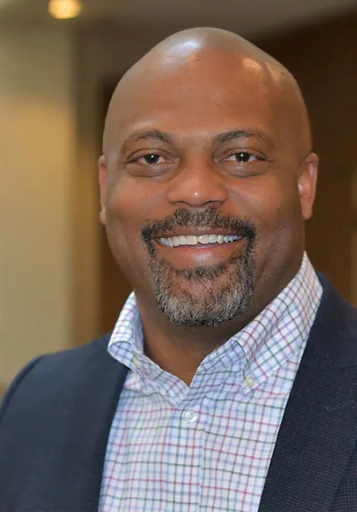
In the new position, Jones will be responsible for leading the company’s overall Purchasing and Materials Management as well as the MWOB Program, which began in 2002.

“At EPB, the Purchasing team and the Minority and Women-Owned Business Program have worked closely over the years on efforts that total more than $90 million in contracts with business owners since the program began,” Joned noted. “Our goal is to further increase our ability to form successful contracts with diverse companies that help us provide outstanding services for our customers while helping more local companies grow and create jobs.” 

David Wade, president and CEO of EPB, said Jones’ promotion is part of EPB’s mission of enhancing quality of life for the community by supporting job creation and broader prosperity.  

“Our goal in promoting Ken Jones is to maximize our local economic impact by further integrating our purchasing efforts with our focus on contracting with diverse Chattanooga area businesses whenever possible,”  Wade explained.

“Ken was already doing an outstanding job leading EPB’s Purchasing team and has built a strong network of community connections over the years. Adding our Minority and Women-Owned Business Program to his responsibilities is a great fit.” 

Jones attended Chattanooga State Technical Community College, where he earned an associate’s degree in Electrical Electronics Engineering Technology, and the University of Tennessee at Chattanooga (UTC) where he graduated with a B.S. in Business Entrepreneurship and an MBA in Business Analytics. 

Jones started at EPB in 2000 as a Network Technician and has worked for EPB in a range of roles and leadership positions including fiber optics, project management, engineering, strategic planning and, most recently, procurement.    

In addition to being the board chair for Erlanger Community Health Centers, Jones currently serves on the board of directors for green|spaces, United Way of Greater Chattanooga, UTC Alumni Association and the Chattanooga Library. 

Jones also mentors middle school, high school, college students and adult professionals. Additionally, he works as a volunteer for The Hunter Museum of American Art, American Association of Blacks in Energy (AABE), UTC Gary Rollins College of Business and Chattanooga Preparatory School.  

“Having the opportunity to make a difference for our neighbors across the Chattanooga area is what makes working for EPB so meaningful to me,” Jones said. “I carry that same commitment into my volunteer work.” 

Jones is the proud of father of two adult children and credits his mother as his biggest supporter and role model in success. 

Local businesses of all kinds with an interest in EPB’s contracting opportunities are encouraged to contact Jones at joneske@epb.net.

“When It Stinks” – In the Huddle

TODAY’S SCRIPTURE

(John 11:39, NLT)

“Roll the stone aside,” JESUS told them. But Martha, the dead man’s sister, protested, “LORD, he has been dead for four days. The smell will be terrible.” 

TODAY’S WORD

In John 11, when JESUS showed up at Lazarus’ house four days after he had died, Lazarus had been in the tomb so long that his body stunk. At times, we all have things in life that stink. Maybe a relationship feels so dead that it stinks. Your finances stink. The layoff stinks. That mistake you made that set you back stinks. JESUS went to the tomb, where the stink was, and told them to roll away the stone. Sometimes we think that GOD will help us only if we’re good enough, but GOD goes to the stinky places in our lives. That person who hurt you—it stinks. GOD is saying, “Let Me in. I’m going to wake up the healing, wake up the restoration, wake up the new beginning.” That past mistake you made and feel condemned about—it stinks. GOD is saying, “Roll that stone away. I’m waking up forgiveness, cleansing, and redemption.” It’s not too late for whatever stinks in your life. GOD is saying, “Let ME in.”

PRAYER FOR TODAY

FATHER, thank YOU that YOU are the GOD who is willing to go to the stinky places in my life and bring redemption and resurrection. Thank YOU that YOU don’t require that I be good enough to qualify for YOUR goodness. I am inviting YOU in to touch and wake up what seems dead. In JESUS’ Name, Amen.

Chattanooga Area Historical Association (CAHA) Annual Luncheon

0

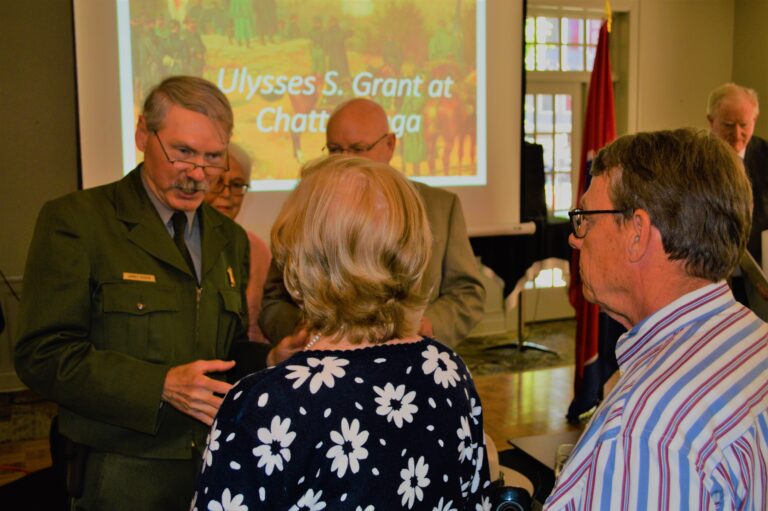
The Chattanooga Area Historical Association hosted its Annual Luncheon meeting April 23, 2022, at the Mountain City Club, located on Chestnut Street in downtown Chattanooga. The luncheon featured Chickamauga National Military Park historian Jim Ogden, who spoke on General Ulysses S. Grant’s 60-day stay in Chattanooga during the Civil War.  Ogden, a long-time fixture at the National Park, is well known for his knowledge of the Civil War, which played a central role in the history of Chattanooga and the surrounding area.  

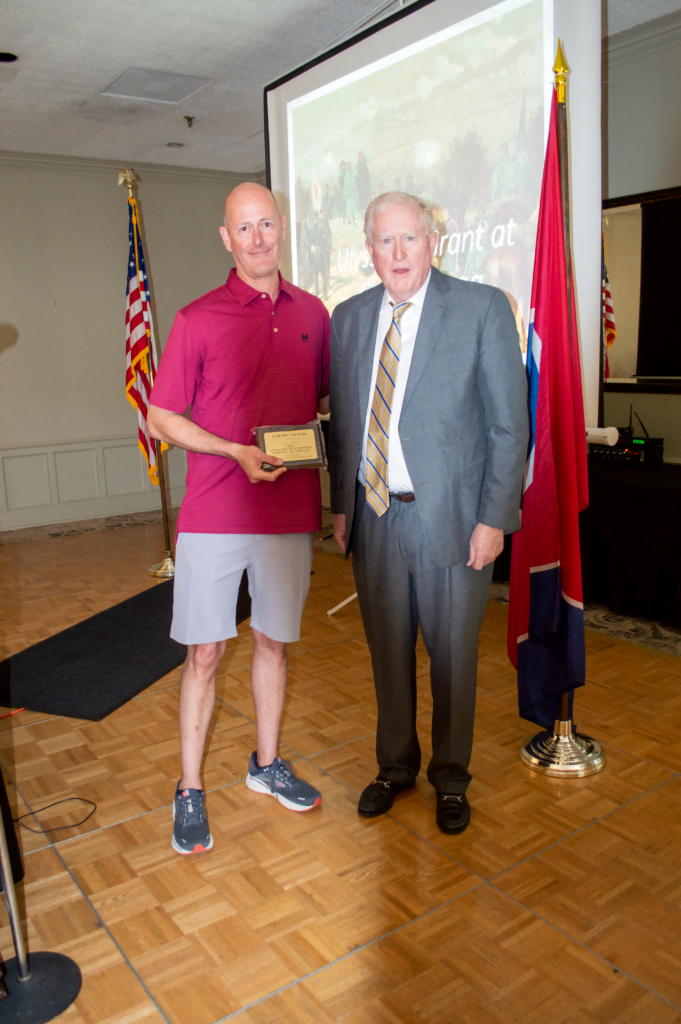
Fresh off one of his popular Chattanooga Historical Walking Tours, Attorney and historian Maury Nicely accepts ‘Historian of The Year Award from CAHA president, Joe V. Williams. 

Attorney and historian Maury Nicely received the ‘Historian of The Year’ Award which is presented annually by the organization. John Shaerer and Carrington Montague placed second and third in a close final round of voting.  

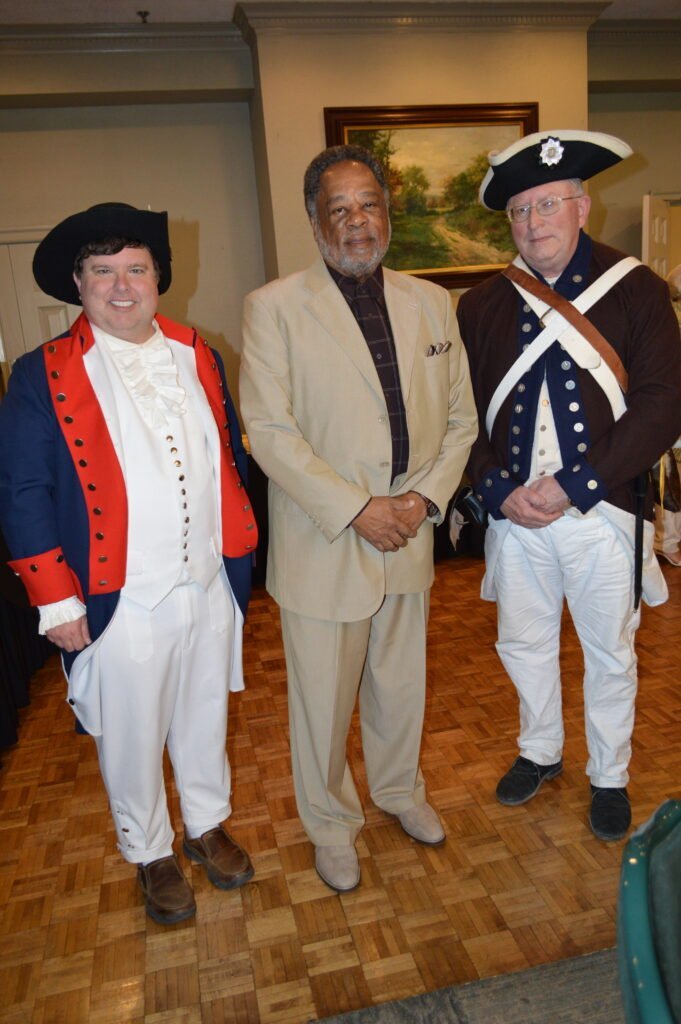
CAHA board member John L. Edwards, III, (center) is flanked by board members and Revolutionary War Reenactors Brian Frye (red/blue uniform) and Cliff Kent (brown uniform).

Joe V. Williams, President of CAHA said, “this was one of the largest crowds in attendance in the luncheon’s history”.

Are Men Necessary?

0

On my way out of a local fitness center, I happened across a used book dispenser and, like I always do, peered inside. The cover of one of those books, “Are Men Necessary?” by Maureen Dowd was indeed an attention getter if ever there was one. Although I was amused by it, some may find the book’s title off putting. Yes, I get that. 

Which brings us to the issue of men these days – more to the point, arguments for and against the “necessity” of men as Dowd put it. 

Let’s start by applying the (non-procreation) “necessity” test to a partial list of “men” as we think about the behaviors of some (note that I didn’t say “all”) men these days.

How about the “necessity” of that terrible Vladmir Putin? I think not!

How about the “necessity” of that miscreant who opened fire recently in that New York City subway? Absolutely not! 

How about the “necessity” of, as Maureen wrote, “The snarling pack of male Republicans ripping apart a poised, brainy Black woman at a U.S. Judiciary committee hearing.” Nope!

How about the men who stormed the nation’s Capital last year? Forget it.

Or the “man” who slapped the joke out of the mouth and smile off the face of another man during the recent Oscars? Yeah, right!

C’mon, you know my answer to these rhetorical questions, don’t you?

Now back to Maureen Dowd, call me nutty or eccentric, but the truth is that I have an affinity for Pulitzer Prize winners, especially writers. And, like bees to honey, I’m drawn to those who not only are brilliant writers, but also who publish to provoke, who call out hypocrisy. For me Dowd checks the box on those qualities and is at the top of my list of favorite Pulitzer Prize winners.

As a longtime Dowd follower, I always keep within reach a dictionary, a volume of English literature and yellow highlighter when reading her column. She’s a vocabulary builder extraordinaire, and with pinpoint accuracy can draw striking comparisons between seriously flawed contemporary public figures and out of the page characters in, for example, Shakespeare’s tragedy, King Lear.

A columnist at The New York Times, Dowd was named a Woman of the Year by Glamour magazine in 1996 and won the 1999 Pulitzer Prize for distinguished commentary. Her columns are distinguished by an acerbic writing style, displaying criticism of powerful figures. 

She tends to refer to her subjects by nicknames, for example, former President George W. Bush as “W,” former Vice President Dick Cheney as “Vice” and former President Obama as “Spock” or “Barry.” 

Not one to mince words, Dowd slices deftly through an individual’s hypocrisy as skillfully as she carves up a steak with that same person the evening before at a high-end Washington DC restaurant. 

Which takes us to more evidence of men behaving badly.

In, “Why Are 90% of All Murderers Men?” Daylin Brown, professor and writer with the Good Men Project, shared some eye-opening statistics. 

Data shows that 90% of all murderers in the United States are men, and almost 99% of all rapists are men. 

In the U.S., men account for almost 82% of all vandalism, 83% of all arson, and 80% of all general violent crime.

“In our society, we have established the idea that violence is the domain of men,” wrote Brown. “We absorb this through cultural messaging from conversations, entertainment, advertising and from our friends and families.”

Brown admits that violence is a complex problem, and the relationship between masculinity and violence is complex with many inextricably linked factors. Those factors? He shared some from research by the American Psychological Association and a report from the World Health Organization.

Expression of anger. Experts believe that the most prominent factor in male violence has to do with many men not really knowing what to do when they feel anger or frustration. 

Gender identity pressure. Our world is ale dominated. For this reason, many men feel pressure to acquire power and status in this male-dominated hierarchy. 

Encouragement of the emotionless man. We encourage a superficial type of stoicism in men, but a sense of empathy in women. We’re taught that “real men” don’t express emotions. Most men are not violent, but those who are usually lack strategies for dealing with their emotions.

Overexposure to violence. Men are exposed to violence in film, violent language in music and in peer groups. This means that men learn from other men that violence is a viable solution to their problems.

Solutions? The first thing we can do is to be more effective bystanders suggests Brown. “One of the things I tell my men friends is that there is no “bro code” to sexual assault, and I will drive them to the police station myself. We need to be more vigilant when we see our friends talking or acting in troublesome ways BEFORE situations become violent.” 

On a systematic level, Brown suggests that we need more programs that teach boys and young men exactly what healthy masculinity should look like. 

Seconding the need for a more systemic approach, author Elwood Watson urges society to place a greater focus on the innate characteristics of men, such as intelligence, sensitivity, curiosity, flexibility, strength and resilience. Humm, those sound to me a lot like innate female characteristics, yes?  

 Just asking.