Friday, October 16, 2026
Advertisement
Home Blog Page 99

AARP Tennessee Welcomes 1st African American State President 

Memphis native is first African American woman to hold AARP TN’s top volunteer role 

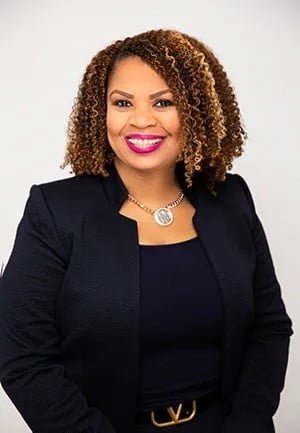
NASHVILLE, TENN. — AARP Tennessee is pleased to announce that Gerre Currie of Memphis has been selected to serve as State President, the organization’s highest volunteer position in the state. Currie becomes the first African American woman to serve in this role in Tennessee. 

“I am so pleased that Gerre has agreed to take on this critically important position with our AARP Tennessee team,” said AARP Tennessee State Director Mia McNeil. “Her experience as a business executive, city official and community leader will help guide AARP’s work across Tennessee to support and advocate for people 50-plus and their families.” 

Currie is no stranger to AARP, having served on the AARP Tennessee Executive Council since February 2021 and several months recently as its interim state president. Professionally, she is currently the Vice President and Community Development Officer at Financial Federal Bank. Currie also served on the Memphis City Council as an appointee in 2019, leveraging her banking experience to address issues in the community that impact growth.    

“I believe that success is measured in relationships and service to others,” Currie said. “I am passionate about AARP’s priorities, including fraud prevention, supporting family caregivers and helping Tennesseans to age in their own homes.”  Currie attended Southwest Community College and is a graduate of the Barrett School of Banking.  She is married to retired City of Memphis firefighter, Larry L. Currie, and they are the parents of two sons, eight granddaughters, one grandson and two great grandchildren.

ARE YOU PREPARED to SAVE A LIFE?

0

If someone’s life depended on you to begin cardio-pulmonary resuscitation (CPR), would you be prepared to save a life?

Absolutely, the first response is to dial 911 to mobilize an emergency response. Once the 911 operator answers, the information you give the dispatcher must include the nature of the emergency. If someone appears to be unresponsive, relay that information. If there’s been a trauma, provide a description. Next, give your physical location and what you see. If you don’t know a street number, look for obvious landmarks. If inside a structure, give details – what floor you’re located, identifying items for an apartment door or room. The more details you provide, the better.

Finally, if possible, keep the line with the dispatcher open. Even if you’re involved in giving aid, put your phone on speaker.  The dispatcher may provide assistance and guidance.

Understand how critical time is in an emergency when someone is unresponsive. You need a clear airway to breathe, and your heart must pump to push oxygenated blood to tissues throughout your body, especially your brain.

It only takes 30-180 seconds to be without adequate oxygen to lose consciousness. That’s only after about 20 seconds of a heart no longer pumping.

A person may be able to avoid brain damage if they’ve been deprived of oxygen is no more than 4-6 minutes…or 240 to 360 seconds. Serious brain damage occurs beyond 10 minutes.

Once you’ve made the 911 call, look at the person in need. Talk to them, attempt to stir them to respond. If there’s no response, listen for a breath or any air movement from their mouths. If you’re comfortable taking someone’s pulse, you can place your index and middle fingers along the side of their neck or at their wrist. Practice by finding your own with gentle palpation, not pressing.

If you hear no breathing, feel no pulse, and have elicited no response, make sure the person in need is on a flat, preferably firm surface, not a bed or couch. You may need to reposition them to the ground on their back.

Effective chest compressions are your goal to cause external pressure on the heart, essentially doing its job until emergency support arrives.

Effective compressions are achieved by placing your two hands, one on top of the other, heel of the hand touching the unresponsive person, placed between their breasts and on the bone that centers one’s chest. Press down about two inches. Do this at a pace of 100-120 per minute.

It’s good to count a cadence out loud, “One-and-two-and-three-and-four-and…” with the number on the down compression and the “and” on the release.

If you are comfortable, then give two breaths to the person in need that are at least one second in length, allowing their chest to rise. Resume compressions, which are critical, and continue with 30 compressions followed by two breaths in a repeated cycle until Emergency Medical Services professionals arrive. You can do it. Someone’s life will depend on it.

Single Black Mom Recovers After Her Autistic Son Accidentally Wiped Out Her Bank Account 

0

Nationwide — When Kayla Howard, a single mom of four sons from Phoenix, Arizona, found her bank account emptied after her 7-year-old son mistakenly made purchases on Roblox, people from across the nation began making online donations to help them. 

Kayla’s son, who has autism, was playing the popular game Roblox when he accidentally made multiple purchases amounting to $897. It exceeded the balance in her bank account which resulted in overdraft fees and a more than $1,000 negative balance in her account. 

Kayla, who is a single mom, works two jobs to support her 4 children, of which 3 have autism. She started a GoFundMe page to help cover her expenses. She set the goal to $1,244, the exact amount her account was negative. 

Howard was surprised when she saw that they raised ten times the goal. She found support from complete strangers who are also single moms and parents of children with autism and some who could relate to the Roblox spending mistake. She ultimately received a total of $10,979. 

“Thank you to everyone who supported myself and my children during this time. Thank you for reminding me that there are good people in this world,” Howard told Good Morning America. 

Howard said she used some of the money to buy a Christmas tree to decorate with her kids. She also bought gifts for them. She now plans to use the extra donations to give back to the community. 

“What I’m most excited about doing is actually starting a non-profit named after my daughter specifically to help families of children with autism,” she said.  Moreover, Howard said Roblox, which initially only agreed to a $10.80 refund, have since refunded her money after her story gained attention. She also said that she has since made necessary changes to the Roblox apps on her children’s devices to prevent the mistake from happening again.

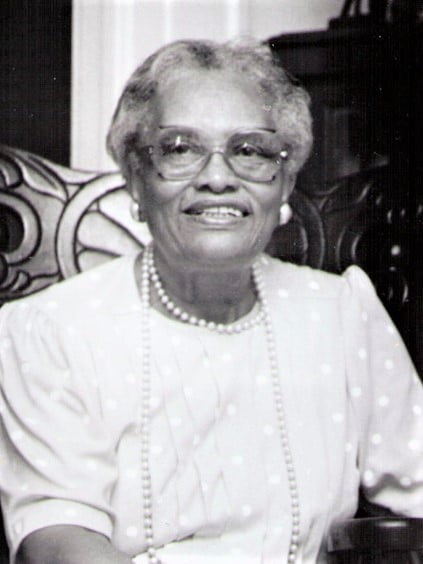
DOVEY JOHNSON ROUNDTREE (1914–2018)

Born Dovey Mae Johnson on April 17, 1914, in Charlotte, North Carolina, Dovey Johnson Roundtree was an African American civil rights activist, attorney, and ordained minister who won the 1955 Interstate Commerce Commission case on segregated bus terminals. She was the second oldest of four children born to James Elliot Johnson, a printer who worked in the local offices of the African Methodist Episcopal Zion Church, and Lela Bryant Johnson, a domestic and seamstress.

Johnson attended Spelman College from 1934 to 1938 and then briefly taught school in South Carolina before moving to Washington, D.C., to seek employment in the burgeoning World War II defense industry. Because of her college education, however, Mary McLeod Bethune selected her to be among the forty African American women who became the first to train as officers in the newly formed Women’s Army Auxiliary Corps.

Following World War II and a nine-month assignment with the Fair Employment Practices Committee (FEPC), Johnson rekindled a romance with William Roundtree that had started at Spelman College. They married on Christmas Eve 1946, but the marriage lasted less than a year.

In 1947, Dovey May Johnson Roundtree entered Howard Law School, where Thurgood Marshall was one of her instructors, and graduated in 1950. As an attorney, her most prominent case came in 1955. Sarah Keys v. The Carolina Coach Company involved Sarah Louise Keys, an African American WAC private who had been forced by a North Carolina bus driver to relinquish her seat to a white Marine. The case was personal to Roundtree because she had a similar experience in 1943.

Roundtree and her law partner Julius Winfield Robertson took the complaint to the Interstate Commerce Commission (ICC) which on November 7, 1955, ruled that segregated interstate bus travel was banned, an explicit repudiation of the “separate but equal” doctrine in transportation that evolved from the 1896 Plessy v. Ferguson Supreme Court decision.

The ICC decision was hailed as a major breakthrough for the civil rights movement. Nonetheless, the ruling remained unenforced from 1955 to 1961, when U.S. Attorney General Robert F. Kennedy used it to support the Freedom Riders’ campaign that had prompted federal intervention. On May 29, 1961, the Justice Department requested the enforcement of the ruling in the states where the Freedom Riders traveled and essentially put a permanent end to segregation in travel across state lines.

Roundtree was also involved in a major—but less publicized—criminal case in which she successfully defended a black laborer, Ray Crump, Jr., who was accused of the 1964 murder of Mary Pinchot Meyer, the wife of a Central Intelligence Agency (CIA) operative and alleged mistress of the late President John Kennedy. In July 1965, Roundtree took the case and argued that Crump, given his limited mental capacity and small size, was incapable of carrying out the murder of Meyer. The not guilty verdict for Crump ironically opened speculation of CIA involvement in Meyer’s murder.

Roundtree, who in 1961 became one of the first women to be ordained as a minister in the African Methodist Episcopal Church, also integrated the previously all-white Women’s Bar Association of the District of Columbia Women the following year. She was a well-known public figure for youth advocacy in the District of Columbia and continued in this role after she retired from active legal practice in 1996.

Dovey Johnson Roundtree passed away on Monday, May 21, 2018, in her hometown of Charlotte, North Carolina. She was 104 years old.

Dr. Dre Slams Use of His Song by ‘Divisive and Hateful’ Rep. Marjorie Taylor Greene  

By Judy Kurtz 

Dr. Dre is slamming Rep. Marjorie Taylor Greene for using one of his songs in a video, blasting the Georgia Republican as “divisive and hateful.” 

Greene shared an offbeat, stylized video with her nearly 2 million Twitter followers on Monday, showing her walking through the halls of the Capitol in slow motion while the 1999 Snoop Dogg-featuring hit “Still D.R.E.” plays in the background. 

“I don’t license my music to politicians,” rapper and mega-producer Dre, who was born Andre Young, said a Monday statement, “especially someone as divisive and hateful as this one.” 

In a scathing cease-and-desist letter obtained by ITK, the performer’s attorneys wrote to Greene that their client “has not, and will never, grant you permission to broadcast or disseminate any of his music.” 

“One might expect that, as a member of Congress, you would have a passing familiarity with the laws of our country,” the letter said. “It’s possible, though, that laws governing intellectual property are a little too arcane and insufficiently populist for you to really have spent much time on. We’re writing because we think an actual lawmaker should be making laws not breaking laws, especially those embodied in the constitution by the founding fathers.” 

The video was not visible on Twitter by Monday afternoon, with a message saying it wasn’t being displayed due to a “report from the copyright holder.” 

A Twitter representative did not respond to a request from ITK for comment. 

In a follow-up tweet, Greene shared a comment she gave to TMZ ripping Dr. Dre.  

“While I appreciate the creative chord progression,” Greene said, “I would never play your words of violence against women and police officers, and your glorification of the thug life and drugs.” 

At one point in the nearly-two minute clip, Greene highlighted news coverage of a phone call she said she had with former President Trump on Friday during the contentious election for Speaker of the House. In a photo, Greene — who supported Rep. Kevin McCarthy’s (R-Calif.) bid for the Speakership — was seen holding up her cell phone to Rep. Matt Rosendale (R-Mont.) with the caller identification reading “DT.”  

Prince Harry says he believed for years that Diana faked deathFive things to know from Prince Harry’s new book 

A news report featured in Greene’s video also showed her snapping a selfie with McCarthy on Friday night after he won the Speaker’s gavel.  Dre isn’t the first musical artist to express opposition to their songs being utilized by a politician. Several musicians, including Neil Young, Bruce Springsteen and R.E.M., among others, criticized Trump’s presidential campaigns for playing their songs at political rallies.

Dr. Martin Luther King, Jr. – Speaking Truth to 2023

0

Born on January 15, 1929, Michael King, Jr carried the name of his father, a strong Baptist minister and was lovingly called, “Little Mike” for his young years. Rev. Michael King, Sr. joined a group of ministers on a 1934 trip to Germany as the pastor of Ebenezer Baptist Church of Atlanta, GA visiting life-changing sites and learning of the Great Reformer, Martin Luther.

The famed 16th Century Protestant Reform leader’s 95 Theses and recognition that the powerful Catholic denomination excluded average men and women, forever changed the Protestant faith. You see, Martin Luther believed and taught that salvation from God was a gift of grace through the love of His Son Jesus Christ, not works. Luther further proclaimed that man’s access to God was direct and for all, not just those with means, money or a merit awarded by an institution.

Returning to the US, Reverend King was so inspired by the life, devotion and change which resulted from one man’s acknowledgement of the truth and willingness to stand in the face of great hostilities that he had his and his son’s name changed. 

Who could’ve known, other than God Himself, the significance of that name change.

Like the 16th Century Martin Luther, the 20th Century pastor and civic leader had a simple yet profound message: men and women, regardless of color, ethnicity and heritage possess God-given rights which transcend the enumeration of any manmade organization or establishment. Made plain, all men and women have rights as those made in God’s Image that no man, government, act of hate, stereotype, or culture may take away or award.

Believers in God find these truths in the same place Rev. Martin Luther King, Sr. and Dr. Martin Luther King, Jr found them–in God’s Word. From Genesis, the Bible says our identify and image is from God Himself. In Galatians, the Bible says, “There is neither Jew nor Greek, there is neither slave nor free, there is no male and female, for you are all one in Christ Jesus,” describing a united humanity as it exists in faith in Christ, not divided by culture.

If you’ve never heard the teachings of Pastor King, honor his memory by making the time to listen to his renowned “Drum Major Instinct” sermon delivered on February 4, 1968, just 60 days prior to his assassination. Dr. King imagined his own funeral, hoping, “I’d like for somebody to say that day that Martin Luther King, Jr., tried to love somebody.”

It’s also from this sermon, Dr. King’s observation is made that, “Everybody can be great, because everybody can serve.”

As the third Monday of January comes and goes, observe the life of the iconic leader, not through a lens looking for perfection as a person or a powerful political partisan. Instead, hear his courageous voice speaking of equality in the humanity as created by God and our duty to serve.

Dr. King still speaks in 2023.

Why America has a debt ceiling: 5 questions answered

0

Part-Time Professor of Economics, The New School

Republicans and Democrats are again preparing to play a game of chicken over the U.S. debt ceiling – with the nation’s financial stability at stake.

The Treasury Department on Jan. 13, 2023, said it expects the U.S. to hit the current debt limit of US$31.38 trillion on Jan. 19. After that, the government will take “extraordinary measures” – which could extend the deadline until May or June – to avoid default.

But it’s not clear whether Republicans in the House will agree to lifting the debt ceiling without strings attached – strings that President Joe Biden and Senate Democrats have vowed to reject. Right-wing Republicans demanded that, in exchange for voting for Kevin McCarthy as speaker of the House, he would seek steep government spending cuts as a condition of raising the borrowing limit.

Economist Steve Pressman explains what the debt ceiling is and why we have it – and why it’s time to abolish it.

1. What is the debt ceiling?

Like the rest of us, governments must borrow when they spend more money than they receive. They do so by issuing bonds, which are IOUs that promise to repay the money in the future and make regular interest payments. Government debt is the total sum of all this borrowed money.

The debt ceiling, which Congress established a century ago, is the maximum amount the government can borrow. It’s a limit on the national debt.

2. What’s the national debt?

On Jan. 10, 2023, U.S. government debt was $30.92 trillion, about 22% more than the value of all goods and services that will be produced in the U.S. economy this year.

Around one-quarter of this money the government actually owes itself. The Social Security Administration has accumulated a surplus and invests the extra money, currently $2.8 trillion, in government bonds. And the Federal Reserve holds $5.5 trillion in U.S. Treasurys.

The rest is public debt. As of October 2022, foreign countries, companies and individuals owned $7.2 trillion of U.S. government debt. Japan and China are the largest holders, with around $1 trillion each. The rest is owed to U.S. citizens and businesses, as well as state and local governments.

3. Why is there a borrowing limit?

Before 1917, Congress would authorize the government to borrow a fixed sum of money for a specified term. When loans were repaid, the government could not borrow again without asking Congress for approval.

The Second Liberty Bond Act of 1917, which created the debt ceiling, changed this. It allowed a continual rollover of debt without congressional approval.

Congress enacted this measure to let then-President Woodrow Wilson spend the money he deemed necessary to fight World War I without waiting for often-absent lawmakers to act. Congress, however, did not want to write the president a blank check, so it limited borrowing to $11.5 billion and required legislation for any increase.

The debt ceiling has been increased dozens of times since then and suspended on several occasions. The last change occurred in December 2021, when it was raised to $31.38 trillion.

4. What happens when the US hits the ceiling?

Currently, the U.S. Treasury has under $400 billion cash on hand, and the U.S. government expects to borrow around $100 billion each month this year.

When the U.S. nears its debt limit, the Treasury secretary – currently Janet Yellen – can use “extraordinary measures” to conserve cash, which she indicated would begin on Jan. 19. One such measure is temporarily not funding retirement programs for government employees. The expectation will be that once the ceiling is raised, the government would make up the difference. But this will buy only a small amount of time.

If the debt ceiling isn’t raised before the Treasury Department exhausts its options, decisions will have to be made about who gets paid with daily tax revenues. Further borrowing will not be possible. Government employees or contractors may not be paid in full. Loans to small businesses or college students may stop.

When the government can’t pay all its bills, it is technically in default. Policymakers, economists and Wall Street are concerned about a calamitous financial and economic crisis. Many fear that a government default would have dire economic consequences – soaring interest rates, financial markets in panic and maybe an economic depression.

Under normal circumstances, once markets start panicking, Congress and the president usually act. This is what happened in 2013 when Republicans sought to use the debt ceiling to defund the Affordable Care Act.

But we no longer live in normal political times. The major political parties are more polarized than ever, and the concessions McCarthy gave right-wing Republicans may make it impossible to get a deal on the debt ceiling.

5. Is there a better way?

One possible solution is a legal loophole allowing the U.S. Treasury to mint platinum coins of any denomination. If the U.S. Treasury were to mint a $1 trillion coin and deposit it into its bank account at the Federal Reserve, the money could be used to pay for government programs or repay government bondholders. This could even be justified by appealing to Section 4 of the 14th Amendment to the U.S. Constitution: “The validity of the public debt of the United States … shall not be questioned.”

Few countries even have a debt ceiling. Other governments operate effectively without it. America could too. A debt ceiling is dysfunctional and periodically puts the U.S. economy in jeopardy because of political grandstanding.

The best solution would be to scrap the debt ceiling altogether. Congress already approved the spending and the tax laws that require more debt. Why should it also have to approve the additional borrowing?

It should be remembered that the original debt ceiling was put in place because Congress couldn’t meet quickly and approve needed spending to fight a war. In 1917 cross-country travel was by rail, requiring days to get to Washington. This made some sense then. Today, when Congress can vote online from home, this is no longer the case. (The CONVERSATION- Article updated Jan. 14, 2023)


Unum Appoints Valoria V. Armstrong Chief Global Inclusion and Diversity Officer, Kimberly Bowen promoted to senior VP

Valoria V. Armstrong

Unum Group has named Valoria V. Armstrong to lead the company’s office of inclusion and diversity. Armstrong will continue to develop the company’s I&D strategy to further foster a culture of belonging. 

“We’re proud of our representative workforce as well as the communities where we live and work. Valoria has strong operational and functional expertise to build on our data informed I&D strategy. She will also help us ensure customers benefit from the diverse talents and thoughts of our employees,” said Liz Ahmed, executive vice president of People & Communications at Unum Group. 

Prior to joining Unum, Armstrong served as chief inclusion officer and vice president, External Affairs, for American Water. While in the role, she strengthened the company’s inclusion, diversity, and equity strategy by creating a comprehensive and integrated focus on driving dignity, respect and inclusiveness for the largest U.S. publicly traded water and wastewater utility company.

She was president of Tennessee American Water and held various roles in human resources with Food Lion over her 15-year career with the company.

Armstrong earned her bachelor’s degree in business administration from Georgia Southern University and her master’s degree in human resource development from Villanova University.

Kimberly Bowen

She is the current chair of the Hamilton County Partnership Advisory Board and a board trustee at the Tennessee Aquarium and Benwood Foundation. 

In related news, Kimberly Bowen was recently promoted to senior vice president in an expanded role leading Unum’s global talent and inclusion efforts. 

Bowen joined Unum in 2019 as head of talent management. Prior to that, for two decades she served in roles focused on all facets of human resources, including talent acquisition and management, employee relations, inclusion and diversity, compensation, mergers and acquisitions, and employee learning and development. 

Her career has spanned multiple industries, including retail, healthcare, third party staffing, outsourcing and financial services.

 “I’m incredibly excited to have Valoria and Kimberly Bowen, who leads Talent and Inclusion, driving Unum’s ongoing commitment to inclusion and diversity,” Ahmed said. “We are so fortunate to have these dynamic leaders on our team.”  Unum (NYSE: UNM), an international provider of workplace benefits and services, has been helping workers and their families for more than 170 years.

Rep. Yusuf Hakeem introduces bill that could provide exceptions to Tennessee’s current abortion law

0
Rep. Yusuf Hakeem is proposing a new bill that he says would protect the health and safety of women in Tennessee
Sen. Rusty Crowe, a Bristol Republican, is looking at legislation that could provide exceptions to Tennessee’s current abortion law.

Rep. Yusuf Hakeem is sponsoring a bill that could provide exceptions to Tennessee’s abortion law when lawmakers return to the State Capitol Jan. 10 to begin the 2023 legislative session. 

HB10 proposes exceptions regarding issues of rape and incest, as well as the health and potential death of the mother. It calls for additional exceptions for the pregnant woman’s mental health.

The bill also requires the doctor who performs the abortion to verify the patient reported the offense to law enforcement before the procedure.

“This bill specifies that the offense of criminal abortion does not include an abortion that was necessary due to a medical emergency affecting the physical or mental health of the pregnant person or performed on a patient whose pregnancy was the result of rape or incest when the physician performing the abortion has verified the patient reported the offense to the appropriate law enforcement agency prior to the procedure,” the text of Rep. Hakeem’s bill, filed Dec. 8 of last year, said.

Tennessee’s “trigger” law went into effect in August 2022, making abortions illegal in Tennessee, with little to no exceptions. In anticipation of the U.S. Supreme Court overturning its landmark 1973 decision in Roe v. Wade, Tennessee’s Republican dominated legislature passed the Human Life Protection Act in 2019.

The law excludes mental health as a medical risk that can be taken into account. And any Tennessee doctor who performs an abortion would need to prove in criminal court that the procedure was necessary, or face felony charges, prison time and stiff fines.

Citing a local resident whom he said had experienced a near-death situation since the “trigger” law took effect in August, District 28 Democrat Hakeem noted that sometimes after a law is implemented, consequences follow that were not considered.

“We’ve had an example of that here in the city of Chattanooga, where we’ve had a citizen who had to be driven by ambulance for six hours to North Carolina so that she could have a necessary abortion to save her life,” Rep. Hakeem said.

Last summer, Democrats said they would be proposing a litany of bills designed to turn back the state’s abortion ban, which is among the most stringent in the nation. On the other hand, GOP lawmakers voted overwhelmingly for the “trigger ban” in 2019. And Republican Gov. Bill Lee said he is “satisfied” with the law as written and doesn’t think it needs to be changed. 

Now, six months after one of the nation’s most restrictive abortion laws took effect in Tennessee, some GOP state lawmakers appear ready to loosen it. 

Sen. Rusty Crowe, a Bristol Republican, is looking at legislation which would make saving the life of the mother an exception rather than require an “affirmative defense” in which the physician would have to introduce evidence in court to negate criminal or civil liability, proving an abortion was necessary to stop the mother from dying or suffering a life-altering illness.

“In the upcoming legislative session, Sen. Crowe wants to ensure the law protects physicians who perform life-saving abortions when the life of the mother is in jeopardy. At this point, Sen. Crowe has not met with stakeholders to discuss specific legislation but he looks forward to doing so in the coming weeks and months,” said Senate Republican Caucus spokeswoman Molly Gormley.

And House Speaker Cameron Sexton is saying he would back exceptions to the abortion restrictions.

“Speaker Sexton believes clarification is needed in the current law, as well as a change to affirmative defense–meaning someone has to prove their innocence which runs contrary to our judicial system. A doctor should not be singled out under affirmative defense instead of the usual standard of being innocent until proven guilty,” spokesman Doug Kufner said last week. “As with any legislation, should a proposal with agreeable language make it through the committee system to the House floor–including exceptions for rape, incest and life of the mother–the speaker would be supportive.” Sexton is expected to appoint a committee when the General Assembly convenes, along with standing committees, that would shepherd such legislation through the House.

Chattanooga Soldier Gets Hero’s Welcome in Paris in 1963, Returns Home to Face Widespread Segregation and Racial Upheaval. 

Eddie Lee King

“As soon as I arrived at the Gare du Nord train station in Paris, France, everybody was hollering, yelling and screaming,” recalled King. “So I said, ‘Was there some kind of dignitary over here when I’m arriving here.’ A lady touched me on the shoulder and she said, ‘No, soldier, all these ladies and men and people they’re hollering at you. All these people are hollering at you.’ And I said, ‘Well that’s a surprise. That’s different from the United States.’ It was a heck of a difference to be welcomed in Paris as soon as I got off the train by white ladies, women, boys, girls, men–everyone.”

And the hero’s welcome continued throughout King’s stay in Paris. He said he “hung out with white guys,” frequently went to integrated clubs and dances and walked the streets of downtown Paris and surrounding areas without his race ever being an issue. 

“They looked up to soldiers, especially the Black soldiers, to be honest,” King explained. “And, no, I never heard a negative comment about race the whole time I was in Paris. Never. We use to dance with the French ladies, and I never heard a negative comment about race in my 25 months in Paris. Several of us were even invited to the University of Paris to mingle and compare cultures.” (Editor’s Note:  Read King’s full story in the December 29, 2022 issue of the Chattanooga News Chronicle)

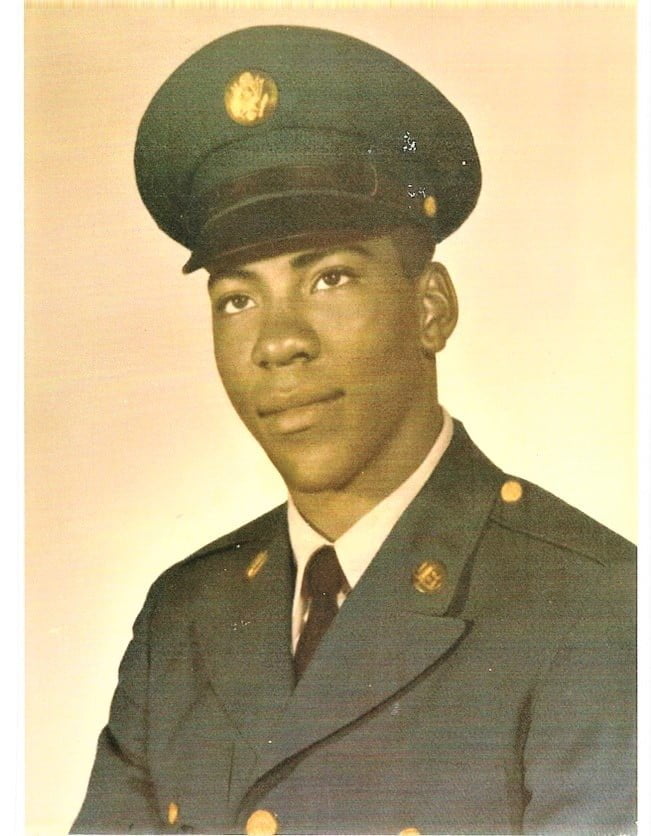
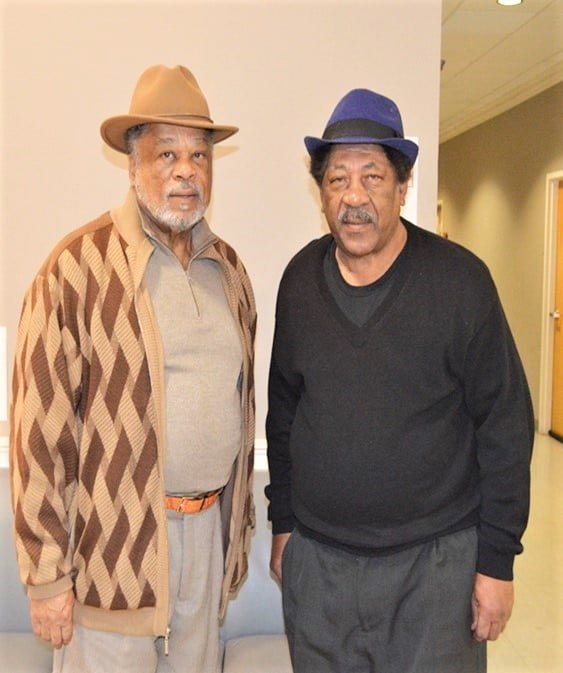
Army Veterans: left, Vietnam Combat Vet, John L. Edwards, III, publisher, CNC, and, right, Eddie L. King who served in Paris, France, discuss major differences upon their return home from same war.

By John L. Edwards, III 

Statistics say that only two percent of Americans experience military combat.  A former Army Sergeant and combat squad leader, I was drafted when I dropped out of college to take a job so I could earn money and get back to school.  Having been involved in the Nashville “Sit-ins” and the Black Power Movement on the campus of Tennessee State University in Nashville, Tennessee, I had no desire to put my life on the line for a country who denied me first class citizenship.  My late father who was a minister and World War II Navy Veteran was heavily involved in the Civil Rights Movement suggested I consider going into the ministry.  I might fool my country, but I couldn’t fool God.  I wanted no part of that, but I did talk to God about it.  

In the story recounted in Matthew 22:15–22, Jesus speaks the well-known phrase, “Give to Caesar what belongs to Caesar, and give to God what belongs to God”. Most Christians take Jesus’s words here straightforwardly to suggest that we have dual allegiances, one to The United States and one to God.