Friday, October 16, 2026
Advertisement
Home Blog Page 97

Your employer may have good news from Tennessee Treasury’s Unclaimed Property Program

Nashville, TN — The Tennessee Department of Treasury is sending letters you will be happy to get from your boss. Employers across Tennessee are receiving letters addressed to many employees who have unclaimed property available to claim.

The Unclaimed Property program is a consumer protection service of the Tennessee Department of Treasury that works to return missing money to the rightful owner. The program works to proactively locate owners through various means, including working with the Tennessee Department of Labor & Workforce Development to match information with employment records to help locate people with unclaimed property. Each year, thousands of letters are mailed in large batches to those owners via their current employers, who are asked to deliver the letters to those with missing money.

Unclaimed property is money that has been turned over to the State by businesses and organizations unable to locate the rightful owners, such as utility refunds, uncashed paychecks, credit balances for overpayments, rental deposit refunds, gift certificates, securities, and abandoned bank accounts. 

The letter sent via employers directs the recipients to submit a claim through ClaimItTN.gov. A significant portion of claims each year are returned through the assistance of employers. About 70% of claims are paid in as little as two weeks, on average.

“For most of us, it’s probably hard to believe that we might have money missing, but the 7 million names in our database show it happens to many of us,” said State Treasurer David H. Lillard, Jr. “We hope you’ll find this letter a welcome one, as we’re contacting you to let you know you have money that belongs in your bank account.”

Letters are also mailed by the division to the address provided when the property was turned over from the business (holder). If you have received a letter, you can verify the information by visiting ClaimItTN.gov.

The quickest way to find out if you have missing money is to visit, ClaimItTN.gov, where you can search your name in a secure online database, locate missing money, and submit a claim in a matter of minutes. Treasury recommends searching for common misspellings of your name and addresses as well, as that may be why the business was unable to return the money to you initially.

There was over $1.2 billion waiting to be claimed, as of June 30, 2022, and more missing money has been turned over by businesses throughout the past fiscal year. Last year, the Division returned 50,337 claims totaling $57.6 million in cash property to the owners or their heirs, businesses, and local governments.

There is no time limit on claiming the property, and there is never a fee to claim it in Tennessee. Beware of any service asking you to pay them to help you get your money back. If you are ever contacted about unclaimed property in Tennessee and would like to check the validity, go to ClaimItTN.gov.

Ultra-processed foods – like cookies, chips, frozen meals and fast food – may contribute to cognitive decline

0

Sara N. Burke, Associate Professor of Neurobiology and Cognitive Aging, University of Florida

Scientists have known for years that unhealthy diets – particularly those that are high in fat and sugar – may cause detrimental changes to the brain and lead to cognitive impairment.

Many factors that contribute to cognitive decline are out of a person’s control, such as genetics and socioeconomic factors. But ongoing research increasingly indicates that a poor diet is a risk factor for memory impairments during normal aging and increases the risk of developing Alzheimer’s disease.

But when evaluating how some diets may erode brain health as we age, research on the effects of consuming minimally processed versus ultra-processed foods has been scant – that is, until now.

Two recent large-scale studies suggest that eating ultra-processed foods may exacerbate age-related cognitive decline and increase the risk of developing dementia. In contrast, another recent study reported that ultra-processed food consumption was not associated with worse cognition in people over 60.

Although more research is needed, as a neuroscientist who researches how diet can influence cognition later in life, I find that these early studies add a new layer for considering how fundamental nutrition is to brain health.

Lots of ingredients, minimal nutrition

Ultra-processed foods tend to be lower in nutrients and fiber and higher in sugar, fat and salt compared to unprocessed or minimally processed foods. Some examples of ultra-processed foods include soda, packaged cookies, chips, frozen meals, flavored nuts, flavored yogurt, distilled alcoholic beverages and fast foods. Even packaged breads, including those high in nutritious whole grains, qualify as ultra-processed in many cases because of the additives and preservatives they contain.

Another way to look at it: You are not likely to find the ingredients that make up most of these foods in your home kitchen.

But don’t confuse ultra-processed with processed foods, which still retain most of their natural characteristics, although they’ve undergone some form of processing – like canned vegetables, dried pasta or frozen fruit.

Parsing the research

In a December 2022 study, researchers compared the rate of cognitive decline over approximately eight years between groups of people that consumed different amounts of ultra-processed foods.

At the beginning of the study, over 10,000 participants living in Brazil reported their dietary habits from the previous 12 months. Then, for the ensuing years, the researchers evaluated the cognitive performance of the participants with standard tests of memory and executive function.

Those who ate a diet containing more ultra-processed foods at the start of the study showed slightly more cognitive decline compared with those that ate little to no ultra-processed foods. This was a relatively modest difference in the rate of cognitive decline between experimental groups. It is not yet clear if the small difference in cognitive decline associated with higher consumption of ultra-processed foods will have a meaningful effect at the level of an individual person.

The second study, with about 72,000 participants in the U.K., measured the association between eating ultra-processed foods and dementia. For the group eating the highest amounts of ultra-processed foods, approximately 1 out of 120 people were diagnosed with dementia over a 10-year period. For the group that consumed little to no ultra-processed foods, this number was 1 out of 170.

Research examining the relationship between health and ultra-processed foods uses the NOVA classification, which is a categorization system based on the type and extent of industrial food processing. Some nutritionists have criticized the NOVA classification for not having clear definitions of food processing, which could lead to misclassification. They also argue that the potential health risks from consuming ultra-processed foods could be explained by low levels of fiber and nutrients and high levels of fat, sugar and salt in the diet rather than the amount of processing.

Many ultra-processed foods are high in additives, preservatives or coloring agents, while also having other features of an unhealthy diet, such as being low in fiber and nutrients. Thus, it is unclear if eating food that has undergone more processing has an additional negative impact on health beyond low diet quality.

For example, you could eat a burger and fries from a fast food chain, which would be high in fat, sugar and salt as well as being ultra-processed. You could make that same meal at home, which could also be high in fat, sugar and salt but would not be ultra-processed. More research is needed to determine whether one is worse than the other.

Brain-healthy diets

Even when the processes that lead to dementia are not occurring, the aging brain undergoes biochemical and structural changes that are associated with worsening cognition.

But for adults over the age of 55, a healthier diet could increase the likelihood of maintaining better brain function. In particular, the Mediterranean diet and ketogenic diet are associated with better cognition in advanced age.

The Mediterranean diet emphasizes the consumption of plant-based foods and healthy fats, like olive oil, seeds and nuts. The ketogenic diet is high in fat and low in carbohydrates, with the primary fiber source being from vegetables. Both diets minimize or eliminate the consumption of sugar.

Our research and the work of others show that both diets can reverse some of these changes and improve cognitive function – possibly by reducing harmful inflammation.

Although inflammation is a normal immune response to injury or infection, chronic inflammation can be detrimental to the brain. Studies have shown that excess sugar and fat can contribute to chronic inflammation, and ultra-processed foods might also exacerbate harmful inflammation.

Another way that diet and ultra-processed foods may influence brain health is through the gut-brain axis, which is the communication that occurs between the brain and the gut microbiome, or the community of microorganisms that live in the digestive tract.

Not only does the gut microbiome help with digestion, but it also influences the immune system, while producing hormones and neurotransmitters that are critical for brain function.

Studies have shown that the ketogenic and Mediterranean diets change the composition of microorganisms in the gut in ways that benefit the person. Ultra-processed food consumption is also associated with alterations in the type and abundance of gut microorganisms that have more harmful effects.

The uncertainties

Disentangling the specific effects of individual foods on the human body is difficult, in part because maintaining strict control over people’s diets to study them over long periods of time is problematic. Moreover, randomized controlled trials, the most reliable type of study for establishing causality, are expensive to carry out.

So far, most nutritional studies, including these two, have only shown correlations between ultra-processed food consumption and health. But they cannot rule out other lifestyle factors such as exercise, education, socioeconomic status, social connections, stress and many more variables that may influence cognitive function.

This is where lab-based studies using animals are incredibly useful. Rats show cognitive decline in old age that parallels humans. It’s easy to control rodent diets and activity levels in a laboratory. And rats go from middle to old age within months, which shortens study times. Lab-based studies in animals will make it possible to determine if ultra-processed foods are playing a key role in the development of cognitive impairments and dementia in people. As the world’s population ages and the number of older adults with dementia increases, this knowledge cannot come soon enough.


Tyre Nichols Death Should Have Never Happened

0

Atlanta, GA, January 28, 2023 – What happened to 29-year-old Tyre Nichols should not have happened. This senseless loss of life is being felt across the country. The National Coalition of 100 Black Women, Inc. (NCBW) finds the brutal beating of Tyre by Memphis police officers to be very disturbing and heartbreaking.

After all the supposed reforms police departments made following the high-profile police killings of George Floyd and Breonna Taylor, and other Black victims, how could something like this happen? As a country, we continue to struggle to prevent these horrific incidents from occurring and hold the powerful accountable.

NCBW believes policing in this country is at a crossroad. What is becoming more and more apparent is that law enforcement is frequently falling short of its fundamental task of protecting and serving all communities fairly and effectively. We support all efforts that will make law enforcement more accountable to communities. We believe there needs to be a greater focus on rethinking the role of police and consider new ways to tackle some of the most pressing problems in police departments. “We must also inspire action through education and advocacy. It’s imperative that lawmakers on Capitol Hill revive the George Floyd Justice in Policing Act, to hold police accountable for their unlawful actions. Lawmakers must take action to prevent senseless tragedies like Tyre Nichols,” said NCBW National President Elizabeth A. Jones.

Bessie Smith Cultural Center Celebrates Black History Month

CHATTANOOGA, TN – The Bessie Smith Cultural Center will commemorate Black History Month in February 2023 with a full calendar of events, featuring educational programs, tours, and in-person and virtual public programs.

Chattanoogan Willie Ricks aka Mukasa Dada The free event will take place in the Bessie Smith Performance Hall on February 2 at 6:00 pm and will be live-streamed at www.bessiesmithcc.org/bhm.

The month kicks off with a “Fireside Chat: The Power of Activism” with Willie “Mukasa Dada” Ricks and John Edwards. Willie Ricks, also known as “Mukasa Dada” or “Papa Ricks,” was a prominent Civil Rights activist, community organizer, and leader in the struggle for equal rights in the United States. John Edwards is the owner/publisher of the Chattanooga News Chronicle and a local historian.

On February 9th in partnership with the Jewish Federation of Greater Chattanooga, a documentary film “Shared Legacies: The African American-Jewish Civil Rights Alliance,” will be shown at 6:00 pm in the Bessie Smith Performance Hall. “Shared Legacies,” tells the often-forgotten story of the coalition and friendship between the Jewish and African American communities during the Civil Rights Movement. On February 16th a panel discussion with African American physicians from the Mountain City Medical Society will be held at 6:00 pm in the Bessie Smith Performance Hall. The physicians will discuss the disparities in health and healthcare among African Americans. The event will be live-streamed at www.bessiesmithcc.org/bhm. On February 23rd at 6:00 pm, in the Bessie Smith Performance Hall, Dr. Clark White “Deacon Bluz” and a guest will discuss Chattanooga African American history from the early years to today. This will be an interactive discussion with attendees and will be live-streamed at www.bessiesmithcc.org/bhm.

The Bessie Smith Art Contest Exhibit Opening will be held Saturday, February 25 from 10:00 am – 3:00 pm with free admission to the museum on this day.

The Chattanooga African American Museum will be open for tours Tuesday through Friday from 10:00 am – 5:00 pm and Saturdays from 10:00 am – 3:00 pm during February.

The Bessie Smith Cultural Center and Chattanooga African American Museum celebrates Black History 365 days a year. We believe that the African American culture and history of Chattanooga should be available to all community members and visitors. Arts, culture, and history are essential for building community, supporting development, nurturing health, and wellbeing, and contributing to economic opportunity. Collectively, arts and culture enable understanding of the past and envision a shared, more equitable future.

The Black History Month programs are being sponsored by the City of Chattanooga, Tennessee Arts Commission, and Erlanger Health System. For more information, visit www.bessiesmithcc.org

Tennessee Democratic Party Unanimously Re-elects Hendrell Remus Chair

The Tennessee Democratic Party (TNDP) held its biennial officer elections on Jan. 21, and chair Hendrell Remus was unanimously re-elected.

“It’s an honor, and today I am elated at the opportunity to continue building our party anew; to continue doing the crucial work of empowering and motivating Democrats to win again in Tennessee,” said Remus. “We have made significant gains in building the type of party infrastructure that can deliver victory. Now it is time for that victory.” 

Prior to becoming TNDP chair, Remus worked as the assistant director of Emergency Management at Tennessee State University, a role that followed his tenure as the Middle Tennessee operations manager for Allied Universal. 

On Jan. 16, 2021, Remus became the first Black man or woman to be elected party chair in Tennessee history. Remus previously served as an Ex-officio member of the Tennessee Democratic Party Executive Committee and as the National Committeeman for the Tennessee Young Democrats.

The 36-year-old said his background in business management and operations, coupled with a passion for progressive politics, sets the tone for his leadership at the helm of TNDP. 

Additionally, Remus said he is focused on building a stronger Tennessee Democratic party infrastructure and beginning the hard work to register more voters and elect more Democrats.

“Building back Democratic infrastructure takes time, which is why we are in this for the long haul,” he said. “Each and every one of you has played a crucial role in our success so far, and we’re not stopping now.”

The Memphis native is a graduate of Excelsior College and currently resides in Nashville, with his wife Marlene and their two children. 

Also re-elected was Secretary Pam Weston and Treasurer Carol Abney.

The Executive Committee elected a new vice chair, Rachel Campbell of Hamilton County. Regional vice chairs of the TNDP were elected resulting in West Tennessee Vice Chairs Jasmine Boyd and David Cambron; Middle Tennessee Vice Chairs Charles Uffelman and Dr. Michelle Brown and East Tennessee Vice Chairs Deborah Harley-McClaskey and Ryan Scofield.

Dr. Angela Davis speaks to full house during MLK Day event

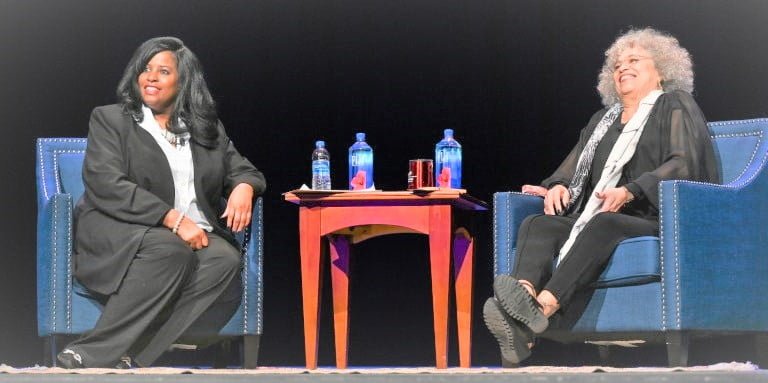
Dr. Felicia McGhee, left, and Dr. Angela Davis at the University of Tennessee at Chattanooga MLK Day 2023 event on Tuesday, Jan. 24, at the Roland Hayes Concert Hall. (UTC Photo)

Prominent educator, author and lecturer Dr. Angela Davis highlighted the University of Tennessee at Chattanooga MLK Day 2023 festivities on Tuesday, Jan. 24, speaking to a standing-room only crowd.

The discussion, titled “A Call for Civility,” took place at 12:30 p.m. in the UTC Fine Arts Center’s Roland Hayes Concert Hall. It was moderated by Dr. Felicia McGhee, associate professor and head of the UTC Department of Communication.

This was the 10th year for UTC’s MLK Day keynote speaker series and the first held in person since 2020 due to COVID-19 concerns.
Dr. Davis shared with the standing-room only crowd her experiences as a Black woman growing up in some of the hardest times for our country. The renown political rights activist emphasized the importance of questioning everything and imagining new ways of being as a society.

“It’s not about the destination; it’s about the journey,” she said, “and the journey is infinite.”

When asked by Dr. McGhee how she feels when she hears the word “woke,” Dr. Davis said, “It’s great to wake up, isn’t it? But we should always be aware that no change that really makes a difference is going to be without its detractors, is going to be without those who want to conserve the old way of doing things.”

Dr. Davis was born Jan. 26, 1944. Influenced by her segregated upbringing in Birmingham, Ala., she joined the Black Panthers and an all-Black branch of the Communist Party as a young woman.

The 25-year-old Davis, then acting assistant professor of philosophy, taught her first class at the University of California, Los Angeles (UCLA) on Oct. 6, 1969. Because she was a member of the Communist Party, the University of California Board of Regents, at the urging of then-Gov. Ronald Reagan, fired her in 1970 for her radical politics.

Shortly after being dismissed from UCLA, Dr. Davis was charged with aiding the botched escape attempt of imprisoned Black radical George Jackson, and served roughly 18 months in jail before her acquittal in 1972. After spending time traveling and lecturing, she returned to the classroom as a professor.

Her teaching career has included stints at San Francisco State University; Mills College in California; University of California, Berkeley; UCLA; Vassar College and Syracuse University, both in New York; the Claremont Colleges in California; and Stanford University.

Dr. Davis, who has authored 10 books and numerous articles and essays, is the Distinguished Professor Emerita of History of Consciousness–an interdisciplinary doctoral program–and of Feminist Studies at the University of California, Santa Cruz. During the last 25 years, she has lectured in all 50 states in the U.S., Africa, Europe, the Caribbean and the former Soviet Union.

In recent years, a theme of Dr. Davis’ work has been the range of social problems associated with incarceration and the generalized criminalization of communities most affected by poverty and racial discrimination. She is a founding member of Critical Resistance, a national organization dedicated to dismantling the prison industrial complex.

Since 2013, UTC has held a special MLK event on a day separate from the federal holiday, which is marked every year on the third Monday in January.

Dr. Davis said she and other activists have never given up on the fight for Black liberation.

“We never gave up,” she said. “Hundreds of years and Black people still never gave up, then managed to pass down that impulse to fight for freedom from one generation to the next.”

Mary Walker Foundation delivers lunch to residents of Chattanooga’s Mary Walker Towers

0

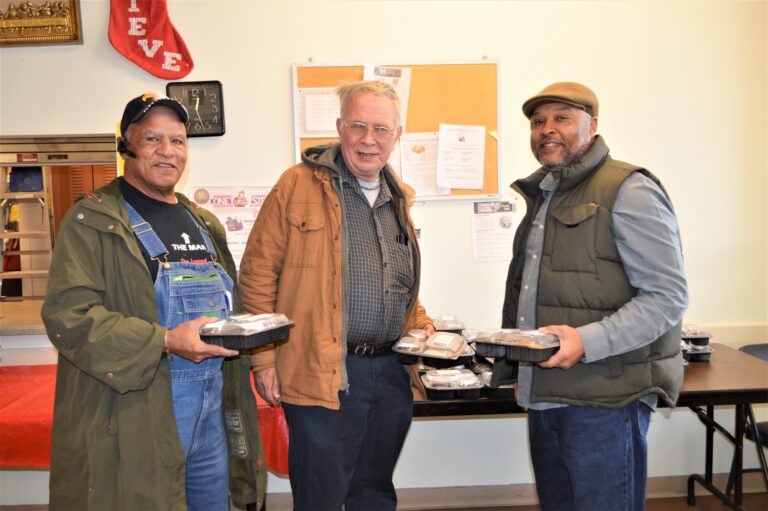
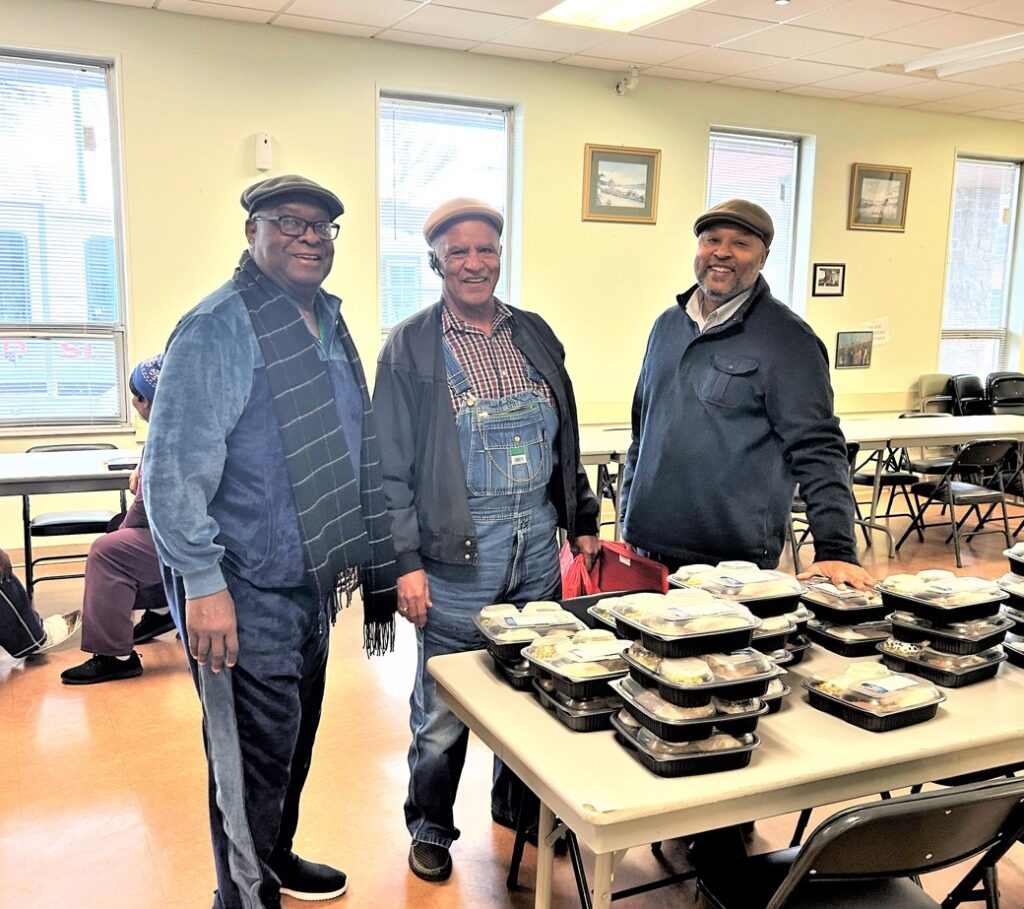
Mary Walker Historical and Educational Foundation officials on last Wednesday delivered lunch to residents of Mary Walker Towers, 2501 Market St. The public housing community is home to more than 150 residents aged 50 and older.

On Wednesday January 18, 2023, left, Lurone “Coach” Jennings, far right, Adrian Edwards, fellowship with Jeff McClendon, President of Mary Walker Towers, and residents after delivering lunches to the facility courtesy of the Mary Walker Foundation.
Special thanks to Gordon Food Service and Store (1817 S. Broad St, suite 117) for providing the delicious and nutritious lunches (above) on Wednesdays.

“In honor of Mary Walker, we will be delivering lunches to the Mary Walker Towers for several Wednesdays–in hope that we may discover the next remarkable person living in the shadows of illiteracy,” said Adrian Edwards, Mary Walker Historical and Educational Foundation President and Chattanooga News Chronicle President. “Our mission is to help people learn to read and have them enjoy the rewards that go along with that.”

The Mary Walker Foundation was established in 1970 in honor of its namesake, Mary Walker, by the Rev. John Loyd Edwards Jr., father of Chattanooga News Chronicle founder and publisher John L. Edwards III. Its mission is to help alleviate poverty for all Chattanooga citizens and help create economic stability through literacy training and educational activities.

Born in 1848 In Union Springs, Ala., and enslaved until she was 15 years old when President Abraham Lincoln signed the Emancipation Proclamation, Mary Walker worked in a variety of service jobs and raised her family of three children.

Her husband and family moved to Chattanooga in 1917, when Walker was 69. For many years, she lived in a run down and dilapidated brick apartment at 1812 Baldwin St. It was said that Walker would sell sandwiches in the neighborhood to earn funds for her church, New Hope Baptist on Kerr Street.

Staying busy with work and church service, Walker had lost her children and husband to death by the time she was 114 years old. She eventually moved to the Poss Homes High Rise Apartments on Market Street. It was there she met a woman named Helen Kelly, a volunteer teacher for the Chattanooga Area Literacy Movement (CALM).

Walker enrolled in the CALM program at the tender age of 115, learning to read and write and mastering addition and subtraction after attending a one-hour class, two nights a week for more than a year. She twice received Chattanooga’s Ambassador of Goodwill award and following her death in 1969 at the age of 121, the city of Chattanooga renamed the Poss Homes high rise–in which she lived–the Mary Walker Towers.

Recognized and honored locally, regionally, and nationally, Walker inspired a commitment through determination and grit to grow and be better, regardless of her years and station in life.

Board Chairman Lurone “Coach” Jennings said the Mary Walker Foundation exists to carry that mindset into the Chattanooga community, specifically through literacy and hard work.

“Mary Walker was recognized as ‘the Nation’s Oldest Student’ after living through 26 presidents spanning two centuries,” he noted. “Today, the Mary Walker Foundation exists to cultivate a commitment to lifetime learning that opens doors of opportunity for all.”

For further information, or to donate to the Mary Walker Historical and Educational Foundation, call (423) 267-2313 or access marywalkerfoundation.org.

TSU Announces Plans for Historic $250 Million Funding Package from the State of TN 

By Kelli Sharpe, Alexis Clark

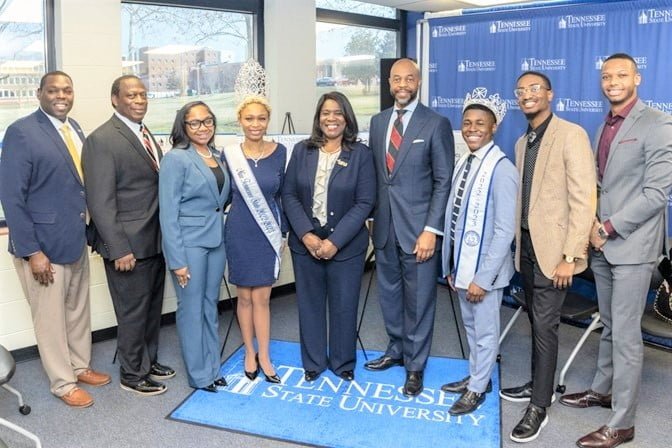
NASHVILLE, Tenn. (TSU News Service) – On the day the nation celebrated the life and legacy of Dr. Martin Luther King, Jr., MLK Day, Tennessee State University shared its plans for the historic $250 million from the State of Tennessee. It is the largest one-time investment to a historically black university by a state. 

The funds come at a critical time as states across the nation are being held accountable even more for underfunding HBCUs. The funds are for capital improvement projects only as outlined by the State. University officials say long overdue repairs and upgrades are now on the way, citing many of the campus structures have gone without improvements for decades.

TSU President Glenda Glover says the much-needed funding will cover expenses for upgrades to several academic and student services buildings, in addition to the electrical and HVAC systems.

“We are excited to share with you our plans for using this historic funding that will assist with TSU’s continued growth and campus development as we provide students with the best academic environment possible.” Glover adds. “This will allow us to enhance our campus for further sustainability as we continue our service to our students.”

A total of six structures will see improvements. Some of these renovations began in Fall 2022, but students should expect continuous upgrades to the following buildings: Boswell Science Complex, Davis Humanities, Elliott Hall, Jackson, Harold Love, Sr. (LRC), and McCord first as university officials say it is best to begin with buildings that have reached or are near their life expectancy.

Boswell Science Complex is one of six buildings that will be a part of structures that will see improvements at the university.

TSU student leaders spoke about the excitement of announcing the improvements to their campus as they reflected on the day honoring civil rights icon, Dr. King.

“Today we are seeing that dream come into fruition as we are seeing six buildings being renovated to uplift TSU,” says Student Government Association President Kenneth Rolle, II. “I am glad to be on this side of history to say I was here when we started this project.”

SGA Vice President Aliyah Holmes shared the same sentiments and noted that one of the buildings slated for improvements is a major part of student life.

Gov. Bill Lee and lawmakers allocated the historic funding package in April 2022 for infrastructure developments and major improvements that also include outdoor lighting, HVAC system upgrades, and interior décor. President Glover thanked Gov. Lee and lawmakers and applauded State Rep. Harold Love, Jr. for his work to ensure TSU gets funds that had been withheld for decades. Love, who is also a TSU alumnus, believes the enhancements will play a greater role in attracting world-class students and faculty.

“This is a start of a multi-year project to make sure we invest in facilities at Tennessee State University. If we are providing a high-quality education, we must provide the facilities that are state of the art,” says Rep. Love. “These upgrades and improvements will help to sure that all of our students are equipped with all they need to be able to be great scholars and our faculty to be able to be great instructors.”

Rep. Love was joined by fellow Davidson County lawmaker Sen. Heidi Campbell and State Architect Ann McGauran.   

TSU officials say the goal of the campus improvements is to eliminate life-safety issues, address deferred maintenance, and invest in academic buildings.

“TSU is working to extend the life expectancy of our facilities to better accommodate our students and to enhance their college experience while here,” says Dr. Curtis Johnson, associate vice president and chief of staff.

 Dr. Learotha Williams, noted historian and TSU history professor, says President Glenda Glover and State lawmakers are to be commended for working together to right a wrong. He contends, most importantly, the funds are available now instead of being embroiled in a lengthy legal battle like in Mississippi and Maryland with its HBCUs.

“While I believe there are several factors that led to the State reaching an understanding and common ground with TSU, the efforts of President Glover and Rep. Love as the drum majors of justice to make this happen, can’t be underscored, says Dr. Williams.

He noted programs hosted by TSU colleagues to bring further awareness to the disparity in funding between 1890 institutions (HBCUs) and majority land-grant universities. 

Shaun Wimberly, who serves as the student trustee for the university, summed it up best when he proclaimed he’s already thinking about his future that will include TSU.

“I’m excited for TSU’s future and what this funding and these upgrades will do for my school. I will be a proud legacy as my children will come here to get a quality education.”

Raising Young Adults – Common Practices of Successful Parenting

0

The ultimate goal of parenting is to raise a young man or woman who is loved, secure in their identity and purpose, and equipped to be self-reliant.

Yep, that’s all.

If it were only as easy as reading the words and agreeing with that statement, right?

But are there secrets to raising these self-assured and self-reliant adults? Are there any proven practices found that work in parenting?

Acknowledging that each child is a unique personality with their own preferences, gifts and talents, and tendencies that all come together to form their own individuality, parenting must take into account these differences among kids. But, yes, there are a few common practices that are shown to work and foster more productive young adults.

First, appreciate that our current social construct of children moving to the phase of adolescence, typically recognized as 11-17 years of age, then to adulthood at age 18 years is a relatively recent development, when viewed on the timeline of humanity.

The formal study of adolescence began in the 1940s, but this phase recognized today was invented and introduced in 1904 by G. Stanley Hall, the first president of the American Psychological Association. The social scientist focused on the maturation and behavioral differences of various ages as part of human development and also realized that Child Labor Laws and the growing availability of public education redefined roles of older children and young adults.

Yet, the origin of adolescence is actually a verb. The Latin word, “adolescere” means to grow up, mature. It’s important for parents to expect their children to mature, to grow, while committing to fostering an environment with behaviors, expectations, and experiences that will shape a young adult positively. It’s an active process, not an automatic event.

Adults modeling good and valuable behaviors through parenting, mentorships and coaching are commonly present in the lives of successful young adults. Their parents have been their first teachers, giving time and trust in activities that include education, sports and chores, as examples. Children become what they see in their own homes. Likewise, adolescents will become the young adults they see in their own parents and the adults in their lives.

Researchers at Stanford University have also found that parents of thriving young adults have high expectations that are clearly communicated to their children and adolescents coupled with experiences where the young adult in progress takes the lead in easy to moderately difficult tasks. Put simply, parents first model, provide instruction, then step back and allow their child to engage, and even make errors from which to learn, in a task or activity.

Dealing with conflict constructively is another common practice found in raising successful young adults. Clear communication, compromise and a commitment to mutual respect and resolution has to be modeled rather than negative behaviors such as name-calling, profanity, hostilities, and revenge, framed by a lack of respect. Parents and families who spend time together, talking, engaged in social activities and work yield self-reliant young adults. The process is proven.

Pastor Marcellus Barnes & Sounds of Unity Present… “Chattanooga Gospel Music Awards” 2023

Friday, Feb 10, 2023, 7:00 PM EST

(Doors open at 6:00 PM)  

Location: Abbas House,

5208 Hixson Pike Hixson, TN 37343

Let’s celebrate the History and Heritage of Gospel Music in observance of Black History Month! Sounds of Unity, established in 2006 under founder Marcellus Barnes Sr., has had 16yrs worth of electrifying gospel music concerts featuring the over 100 voice choir! This year, 2023, not only will they be performing but our host will be the legend illustrious Dr. Bobby Jones. Also, Gospel Stellar Award Winner John Lakin and his Band of Worshippers (B.O.W.) from Columbia, SC! Come with your Sunday Best as we render Awards to Chattanooga’s Amazing Gospel Music Artists and Musicians!

A portion of the proceeds will sponsor current students enrolled under the Unity Performing Arts Foundation of Chattanooga (UPAFC) arts and youth development program of Chattanooga. For ticket information and cost, contact Pat Shackleford-Gray at (423) 227-4883 and Enoushall Kilgore at (423) 320-1611.