Wednesday, October 14, 2026
Advertisement
Home Blog Page 78

Evann Freeman Promoted to EPB Vice President, Government and Community Relations

0

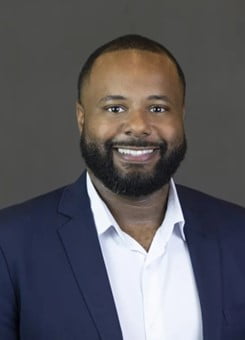
The EPB Board has approved Evann Freeman’s promotion to vice president, Government and Community Relations. In his new position, Freeman will continue to lead EPB’s government relations and economic development efforts by building on work he first undertook when he joined EPB in December 2019 as director of Government Relations.

According to David Wade, EPB president and CEO, Freeman plays a critical role in working with elected officials and community leaders.

“Our mission to enhance quality of life for the people we serve gives us the opportunity to work closely with elected officials at the local, state, and federal level as well as many organizations engaged in related work,” Wade said. “Evann does a wonderful job of working with leadership from all of our stakeholders to keep our work coordinated and aligned with our partners, so we can work together on efforts that benefit our customers.”

Freeman points to HCS EdConnect powered by EPB as an example of a project that benefited from collaboration both within the municipal utility and across the community.

“I felt honored to play a role in working with our partners including Hamilton County Schools along with city, county, state and private sector leaders as the EPB team pulled together to launch this nationally recognized program in a few short weeks,” Freeman said. “Knowing that HCS EdConnect now provides internet to more than 28,000 people in need is a great example of why working for EPB is so meaningful to me.”

With more than a decade of experience as a government relations professional, Freeman has focused his public policy efforts on community benefit and coalition building. Since 2009, he has worked for U.S. Senator Lamar Alexander across Tennessee, most recently serving as the senior liaison in Middle Tennessee working closely with local, state and federal stakeholders.

A proud Chattanooga-native, Freeman serves on many non-profit boards including the Urban League, Chattanooga Area Chamber of Commerce, Boys and Girls Club, Tennessee Chamber of Commerce and Industry, Georgia Chamber of Commerce and Chattanooga Tourism Company, among others. With the mission of “enhancing quality of life in our community,” EPB is a municipal utility that delivers world-class energy and connectivity services to Chattanooga, Tennessee, and the surrounding area.

Riverside 75th Birthday Gala! – Remembering educator Annie Cannon Davis

0
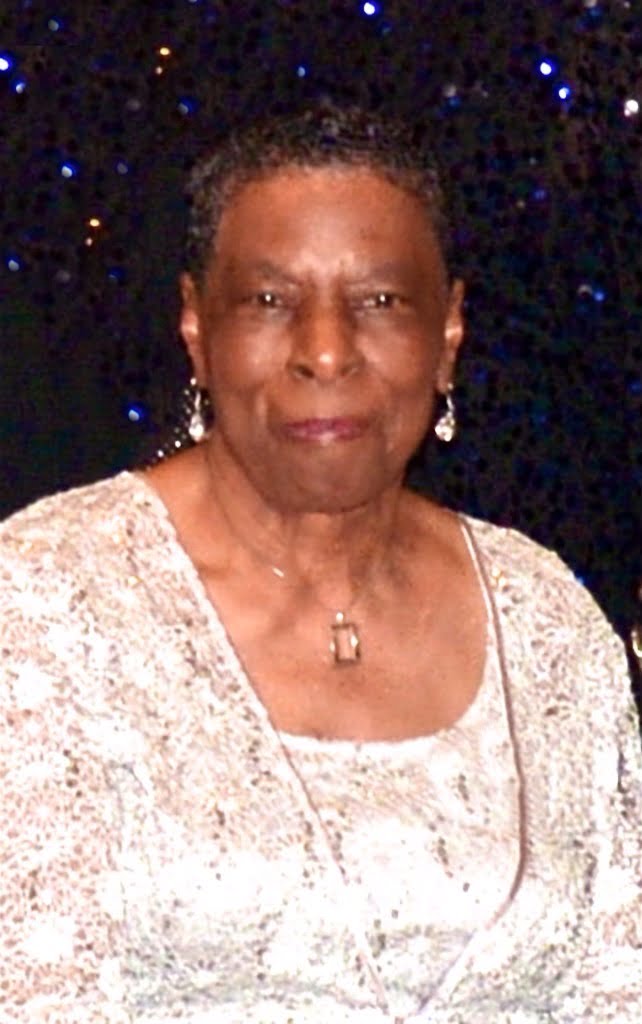
Annie Cannon Davis Nov. 10, 1940 – Oct. 02, 2023 Riverside High School Educator Photo credit: Unlimited Photography/ Wallace Jenkins

The Riverside High School Class of 1966 is greatly saddened to learn of the passing of Mrs. Annie Cannon Davis. 

We were greatly honored and happy to have her in our presence one last time on September 16, 2023, as the class celebrated 57 years since our graduation from Riverside.  She looked so beautiful, vibrant, and younger than most of us! 

Mrs. Annie Cannon Davis represented a group of dedicated educators and teachers who not only taught us lessons in the classroom but also ‘lessons in life’.  We are extremely thankful God blessed us by allowing our class to give her flowers while she lived and could enjoy them. It is with sincere sympathy that we mourn her transition.  

The Riverside Class of 1966 will be forever grateful for what she instilled in our minds and lives: value of education, honor, self-worth, integrity, perseverance and love for ourselves and our race.  Her legacy will continue to shine in and through those she taught and loved! 

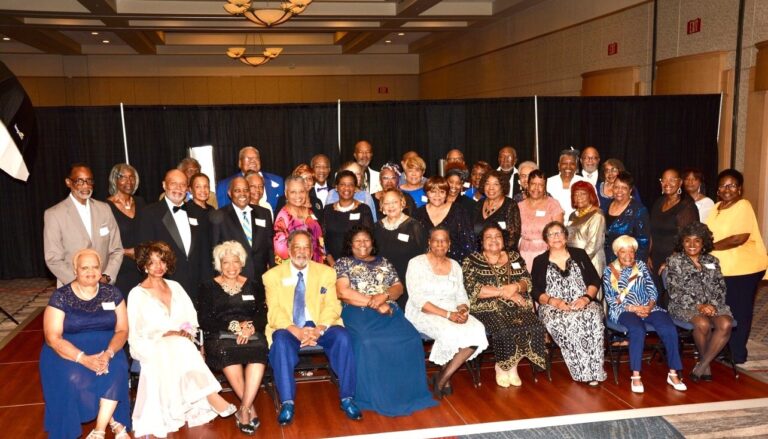
The phenomenal Riverside High School Class of 1966 celebrated their 75th BIRTHDAYS last Saturday Night at the Chattanooga Convention Center. The grand occasion was highlight with thankfulness for the Class to be joined by one of their former dedicated teachers, Ms. Anne Cannon Davis, (seated 5th from right)…… and she was looking Grreat! Class President Wilma McClure Brown is seated far left. (Photo credit: Unlimited Photography/ Wallace Jenkins)

Westside Residents to be Relocated – But to Where?

The Bend-Westside Evolves proposals are getting news headlines because of the responses of decision-makers that reflect frustration, a bit of anger, and opposition to this historic project that involves the long-overdue upgrades to the subsidized housing paired with the development of the former Alstom property along the Tennessee River.

Both promise a great deal of public and community good.

But the big news seems to be the unanswered questions around the relocation of current residents and the lack of understanding of that process. These facts were manifested by the palpable stress, that if measured like tremors by a Richter Scale, the numbers would have been pretty high at the September 26 agenda session.

It’s understandable, and relatively clear, that the large number of moving parts with such a large scale of financing that’s tied together the dynamics of these two worthy endeavors are stress-inducing.

It’s not so understandable that simple answers have not been provided in advance of such a presentation through one-on-one meetings with critical stakeholders. Most have heard of the idiom, “An ounce of prevention is better than a pound of cure.”

It was stated, but also vividly clear that private meetings, a flow of information, and any give-and-take had not occurred prior to the agenda session/committee meeting in efforts to prevent confusion. The nine people elected to represent the best interests of all Chattanoogans–the Chattanooga City Council members–had not received adequate information. The voice of Councilwoman and Chairwoman Raquetta Dotley, the very elected leader representing the area containing both projects, framed the entire meeting with her open disgust.

Back to the critical question: What are the options given to residents of the Westside regarding their relocation?

A new Chattanooga Housing Authority (CHA)  survey to determine which residents want to relocate or stay within the downtown area should be in the field within days, according to the pledge of Director Elizabeth McCright.

Residents have three choices regarding their move. First, those indicating their wishes to remain downtown will be housed in the initial replacement units built on the former Youth and Family Development site. Two other choices may be made between a mobile voucher good for relocation to any place in the US or relocation to properties within the CHA portfolio.

Another new bit of information elicited by the hope expressed by Councilwoman Coonrod that some residents would be in a position to own a home came as McCright informed the Council of the availability of an “active upward mobility program.” Counselors are available to assist residents who aspire for homeownership. Further, the relocation voucher could be used as a “soft second on a home mortgage for home ownership.”

Despite the contention that has been the “news,” clear communication and data may aid in restoring trust to address concerns. The Chattanooga City Council Economic Development Committee did its job for all Chattanoogans with a public hearing of sorts. Stay tuned as this project moves forward to create wonderful assets for the Westside residents and all Chattanoogans.

UTC Nursing Program Lands Federal Grant to Increase Training Opportunities in Rural and Medically Underserved Populations

CHATTANOOGA—A $1.4-million grant from the federal Health Resources and Services Administration (HRSA) has been awarded to the University of Tennessee at Chattanooga School of Nursing to prepare undergraduate students to meet the needs of rural and medically underserved populations.

 Dr. Brooke Epperson, assistant professor and undergraduate coordinator in the School of Nursing, is the principal investigator—landing a three-year grant through the HRSA Nursing Education, Practice, Quality and Retention (NEPQR) Simulation Education Training (SET) program for the project titled “AHEAD-RN,” an acronym for Addressing Health Equity, Access and Diversity through Nursing simulation experiences and partnerships.

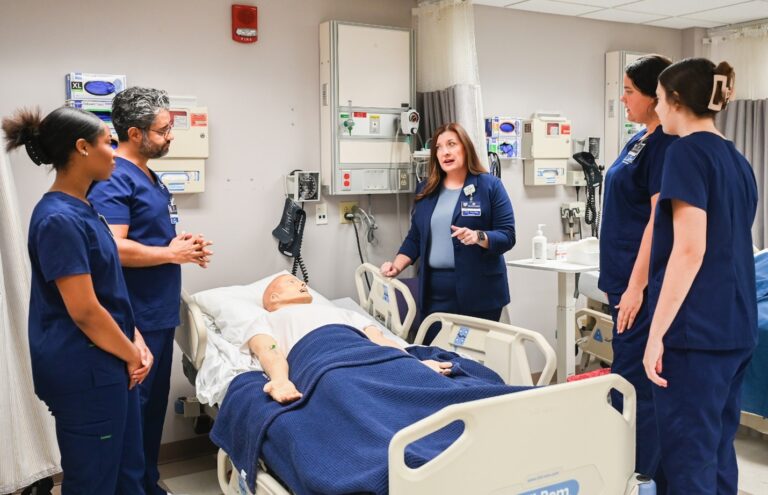
 Through AHEAD-RN, UTC and clinical partners will increase the availability and capacity of nurses by concentrating on the health care needs and improving patient outcomes of rural and/or medically underserved populations. They will use innovative academic-practice partnerships to prepare undergraduate nursing students for the workforce through clinical and simulation experiences that combine academic and clinical learning.

 Overseen by the U.S. Department of Health and Human Services, HRSA is the primary federal agency for improving access to health care services for people who are uninsured, geographically isolated and economically or medically vulnerable.

 Landing the award is especially noteworthy because it is the first grant funding received for the UTC undergraduate BSN program in many years.

 “The premise of this grant is to have practice-ready graduates,” said Epperson, a member of the UTC faculty since 2016 and a nurse at Tennova Healthcare Cleveland in Bradley County. “We have new BSN essentials that came out from the (American Association of Colleges of Nursing)—a part of our accrediting body—with a really big focus on end-of-life and palliative care.”

 Palliative care is specialized medical care for people with serious illnesses like cancer or heart failure.

 “So we were thinking of how can we step up our game from a simulation perspective to be able to meet the needs of our students and to be able to care for individuals with certain behavioral health issues, end of life, palliative, the aging population and homelessness,” she continued.

 Epperson, a first-time project director, was applying for her first federal grant. A registered nurse since 2006, she has three degrees from UTC—a BSN in 2010, a Doctor of Nursing Practice in 2020 and a Master of Business Administration in 2021.

 The grant will increase training opportunities for BSN students through the use of simulation-based technology, including equipment, to increase their readiness to practice upon graduation.

 “I always feel like we graduate practice-ready students, but there are some situations they’re not going to see as often or be a part of in the clinical setting as often,” Epperson said. “Not every student is going to get that experience of being able to see someone transition at the end of life or be in palliative care. What does that mean? Difficult conversations.

 “Every student will be exposed to it, and we’re also looking at creating a homeless sim(ulation). So again, providing care in different areas the students aren’t necessarily in regularly and ensuring that everybody has that experience and feels confident in the material.”  Epperson said the BSN program typically has around 200 students at any given time, estimating that 350 to 400 students will be impacted during the grant period.

TSU’s President Wants State to Pay $2.1 Billion Owed to University 

By Kelli Sharpe 

NASHVILLE, TN (TSU News Service) — The HBCU community is still reacting to the letters the U.S. Department of Agriculture and the Department Education sent to 16 of the nation’s governors, stating that they collectively owed their respective land-grant HBCUs $13 billion. U.S. Secretary of Education Miguel Cardona and U.S. Secretary of Agriculture Thomas J. Vilsack cited research conducted by the National Center for Education Statistics (NCES) Integrated Postsecondary Education Survey (IPEDS). Tennessee State University was listed as having the largest underfunding amount owed by a state at $2,147,784,704.

“This enormous figure of over $2.1 billion can’t be overlooked,” said TSU President Glenda Glover.

“We have been on our own journey to recoup $544 million from the State that TSU should have received, as required by law, and were not aware of an additional underfunding review by the U.S. Departments of Education and Agriculture prior to the release of those letters.”

In 2022, Governor Bill Lee allocated $250 million to TSU which was approved by the legislature, making it the largest one-time State investment to any HBCU. President Glover added this was the result of working closely with TN lawmakers, who conducted their own research and calculations to pay TSU nearly half of the underfunded amount.

“TSU has a track record of working with the State, and we look forward to a similar relationship to get the $2.1 billion in funding USDA and the Dept. of ED have also researched. TSU deserves it, our students deserve it.” 

The USDA and Dept. of ED review covered a period of 33 years, from 1987 to 2020. The letter to Governor Lee acknowledges that Tennessee has made strides in providing more equitable funding for TSU but reiterates more is still needed to overcome the historic underfunding of the university. TSU alumni and students say this latest $2.1 billion speaks to the long-standing underfunding of the University but also to TSU’s resilience in being successful despite having been slighted for so long.

“I am impressed by the global impact Tennessee State University alumni have made considering how significantly and historically underfunded the University has been,” said Charles Galbreath, president of the Tennessee State University National Alumni Association.  

“I often ponder how much greater the impact might have been with greater resources. Equitable funding can only attempt to reconcile a blemished past. However, equitable funding can absolutely enhance the global contributions of future Tennessee State University students and alumni.”

President Glover was highly scrutinized by Tennessee lawmakers last year for not having enough housing for a historic freshman class of over 3,300 students. TSU housed over 4,900 students, with the use of off-campus housing that included hotels. The University of Tennessee at Knoxville, the State’s other land-grant institution, used hotels for its housing overflow as well but did not face the same backlash of improper planning and inadequate leadership.

“The State of Tennessee has two land-grant institutions. One has been allocated a tremendous amount of funding for decades, while another has had to operate with minimal apportions. However, this is not the time to issue blame or fault. It is time to come to the table with a strategic plan of action that specifically involves payment. The 33-years cited predates almost everyone at the capitol, but it’s never too late to do what’s right. Imagine how much greater TSU could be with equitable funding. The greater TSU becomes so will the State of Tennessee.”

SGA President Derrell Taylor, a business major from Memphis, believes the housing challenge and so many more infrastructure issues could have been avoided if TSU had received its fair share of funding all those years.

“I’ve been here four years and can only imagine what our campus would look like and how different the college experience would have been for me, and all the students before me,” said Taylor.

“I would select TSU all over again without hesitation because it has been an amazing experience. The University has done so much with so little, but TSU should have never been put in this position in the first place. I should have the same advantages to be successful as my counterparts at the State’s other public institutions.”

Taylor said this includes more residence halls without community bathrooms, a new football stadium on campus, a true student center, an upgraded heating and cooling system, more computer labs throughout the campus, better technology, most importantly scholarships. So many students had to borrow money to attend TSU as the school of their choice when they could have had scholarships.

“TSU students should have what everyone else has, and we can with our right share of State funding.”

In the letter, both USDA and the Dept. ED offered to hold a workshop for the State’s Budget Office to review their calculations in detail. President Glover says she is hopeful that the State will schedule this workshop soon and invite TSU to participate.

Simone Biles wins historic 8th all-around title at U.S. championships

“I’m at eight. I’ve been doing it for so long. I feel like I don’t think about numbers, I think about my performance,” Biles said. “And I think overall, I hit eight for eight. It’s eight, I guess it’s a lucky number this year.”

The gymnastics star won her record eighth U.S. Championship on Sunday night during the competition at the SAP Center in San Jose, California, 10 years after she first ascended to the top of her sport as a teenage prodigy.

Biles, now a 26-year-old wife and mother, is considered perhaps the greatest of all time! And at age 26, she’s also the oldest woman to win the title. She posted an all-around two-day total of 118.40, four points clear of runner-up Shilese Jones. Florida junior Leanne Wong finished third. (Compiled)

Myles Rowe Becomes First lack Driver to Win an Indycar Championship

Nationwide — On Saturday, September 2, 2023, Myles Rowe, #99 Pabst Racing with Force Indy, became the first Black driver to win an INDYCAR-sanctioned championship. After starting the final race with a 64-point series lead, 23-year-old Rowe clinched the 2023 Cooper Tires USF PRO 2000 title at the Portland International Raceway, in Portland, Oregon. With this USF Pro 2000 championship, Rowe will advance to the INDY NXT by Firestone series in 2024.

In the 2023 USF Pro 2000 series, Rowe accumulated more wins, (five), pole positions (four), fastest laps, (three), and podium finishes (seven) than any of his rivals. During last year’s USF 2000 Series Championship, Rowe placed runner-up, finishing within six points of the winner. Since the age of four, Atlanta native Myles Rowe has been fascinated with all things racing. He’s a past winner of the 2018 Lucas Oil Formula Car Race Series.

“This year was a test to see what I’ve got,” said Myles Rowe. “And luckily, I was able to pull it off.”

On December 3rd, 2020, Black Indianapolis business leader and team co-owner, Rod Reid, and Roger Penske, the owner of the most successful racing organization in history, announced the formation of the USF2000 race team at the Indianapolis Motor Speedway, as part of the Race for Equality & Change diversity initiative. On August 29, 2021, Rowe became the Black driver to win an INDYCAR-sanctioned race at New Jersey Motorsports Park in the Cooper Tires USF2000 Championship.

“When I first envisioned the Force Indy team, I saw it as a pipeline to create opportunities for black and brown talent. An opportunity to change the face of motorsports,” said Force Indy Team Principal and Co-owner Rod Reid. “I never imagined winning a championship nearly two years to the day we won our first race.”

Force Indy celebrates this historic moment as it has focused on establishing a program that fuels opportunities for people of color – including drivers, crew members and more – across the INDYCAR paddock. The goal for Force Indy is to open as many doors as possible for diverse representation and leadership in the motorsports world. Force Indy was founded as part of Penske Entertainment’s Race for Equality & Change initiative, launched in July 2020 to create fundamental change in the motorsports industry.

This championship win in the #99 continues Force Indy’s tribute to Dewey “Rajo Jack” Gatson, the Black racer denied entry in the Indy 500 in the 1930s and 40s. Rowe drove the red rear-winged USFPro2000 car to victory in honor of the Red-Tailed 99th Squadron of the Tuskegee Airman. Force Indy is a race team created specifically to develop talent with a diverse group of individuals, outside as well as inside the cockpit. The foundation of Force Indy is the racing background of Team Principal Rod Reid and a mentorship alliance with Team Penske—the most successful team in motorsports history. The team leadership brings years of experience from grassroots racing to the Road to Indy ladder system. The organization concentrates on developing skills that promote success at the highest level. Force Indy’s vision is to see motorsports grow ethnically, educationally, and across gender.

Black Woman Makes History With Lead Role in Upcoming Broadway Premiere of Betty Boop Musical

Nationwide — Jasmine Amy Rogers, a 23-year-old African American actress, is set to take on the lead in “BOOP! The Betty Boop Musical” that will debut on Broadway. The musical, which promises to bring Betty’s charm to life on stage, is making its premiere in Chicago this November before hitting Broadway.

This musical, directed and choreographed by Tony winner Jerry Mitchell, is bringing Betty Boop to life. Mitchell is all praises for Rogers, lauding her versatile talents in acting, singing, and dancing that perfectly fit the character of Betty Boop.

“From the moment Jasmine walks into a room and shares that magnificent smile and her contagious laugh, you know you are in the presence of Betty Boop. And, like the cartoon Betty, Jasmine can do everything brilliantly — acting, singing, dancing — I know her performance will capture the hearts of audiences of all ages,” he told Blex Media.

Behind the scenes, a talented team including David Rockwell, Gregg Barnes, Philip S. Rosenberg, Gareth Owen, Finn Ross, and Daryl Waters are working hard on set design, costume design, lighting, sound, projection design, and musical supervision.

The musical is inspired by Max Fleischer’s iconic characters, with music by Grammy winner David Foster, lyrics by Tony nominee Susan Birkenhead, and a book by Tony winner Bob Martin.

The story follows Betty’s quest for an ordinary day away from her celebrity status. Her adventure takes her to colorful, musical New York City, delivering a message of empowerment: “You are capable of amazing things.”

Betty Boop debuted in 1930, initially as a dog-like stage performer. She evolved into a human character, becoming the world’s only female animated screen star in 1932, voiced by Mae Questel.

Moreover, it’s important to acknowledge the Black historical connection to Betty Boop’s creation. Esther Jones, known as “Baby Esther,” is credited with inspiring the character. Born in 1918 in Chicago, she was a talented child performer known for her unique singing style and black-bottom dancing. A lawsuit in 1930 revealed the true origins of Betty Boop. Helen Kane, a white performer, sued Fleisher Studios for appropriating her “Betty Boop” character. During the trial, it was revealed that Kane had imitated Jones’ scat act, leading to the recognition of neither Kane nor Jones as the source.

GEORGE METCALFE (1911-1989)

George Metcalfe was a civil rights leader in Natchez, Mississippi who led one of the most successful yet little-known movements in the Deep South.

Metcalfe was born on September 20, 1911, in Franklin, Louisiana to parents Ernest Metcalfe and Alberta Simon Metcalfe.

He was a World War II veteran who held numerous jobs leading up to his work with the NAACP. He and his wife, Adell, moved to Natchez around 1940, where he worked as a truck driver for a sawmill. Metcalfe also sold burial insurance and made additional income from his rental property. In 1954, he met Wharlest Jackson Sr. and both began working that year at Armstrong Tire Company. Metcalfe was a forklift driver and shipping clerk for the company.

Natchez was a hotbed of Ku Klux Klan activities in the early 1960s. Although many Klansmen worked at Armstrong, their presence did not deter Metcalfe from his determination to help the Black community.

Metcalfe lived in a house at 9 St. Catherine St., which was originally built and owned by Dr. John Bowman Banks, Natchez’s first Black physician. During the Freedom Summer of 1964, Metcalfe housed civil rights activists and the home became known as “Metcalfe’s Boarding House.”

Metcalfe’s work made him a target of the Klan. In late January 1965, night riders fired shots into his home. In March 1965, Metcalfe relaunched the Natchez branch of the NAACP with help from Charles Evers, the brother of slain Mississippi NAACP field secretary Medgar Evers. Metcalfe was elected president, and Jackson, secretary.

Metcalfe successfully led a voter drive that resulted in over 8,000 African Americans registering to vote. He and the NAACP called on the Natchez city administration to denounce white supremacist groups like the Klan and to end police brutality. They also urged the city to hire Black employees and to desegregate swimming pools, parks, and other public facilities.

At Armstrong Tire Co., Metcalfe and Jackson succeeded in having employee promotions based on seniority and qualifications instead of race. Metcalfe also led a delegation which confronted the school board with a signed petition calling for the desegregation of the public school system.

On Friday, August 27, 1965, George Metcalfe completed his shift around noon at Armstrong and walked outside the plant to his 1955 Chevrolet sedan. When he placed his key in the ignition and turned the switch, the car exploded. Metcalfe suffered burns and a broken arm from the explosion. His right leg was shattered in three places and his right eye was permanently damaged. Many, including investigators, believe the bomb was planted by the KKK. However, no one was ever charged for the crime.

In December 1965, the city of Natchez conceded to the demands of the NAACP. Metcalfe, however, spent a year recovering from his injuries and eventually returned to work at Armstrong, alongside the Klansmen, including the leader who ordered the bomb attack.

After he recovered from his injuries George Metcalfe moved back to Monroe, Louisiana and died unexpectedly on April 21, 1989, in his home. He was 77. (CONTRIBUTED BY: ROSCOE BARNES III)

Is Your Cell Phone to Blame for these 5 Skin Problems?

0

Did you know that every time you’re on your phone you put your skin at risk? Interaction with mobile devices can be harmful to your skin causing acne, wrinkles and dark spots, just to name a few.

Try these five tips to save your skin:

1. Wrinkles

Did you know there is something referred to as “tech neck”?

Well apparently there is, and it’s the position you hold your head and neck when you are staring down at a computer or a phone.

Consistently doing this can cause wrinkles to form underneath your chin and around your neck. Squinting to see the text on the screen can also cause crow’s feet in the eye area.

If you aren’t interested in completely putting the phone down, try using anti-aging creams and focusing them around the eyes and neck. Algenist Firming and Lifting Neck Cream is a great option.

2. Allergies

Ever noticed a rash forming on your face after a long conversation with your bestie?

Recent studies suggest that the nickel and chromium on the casings of a lot of cellular devices can cause skin allergies called contact dermatitis. As a solution, try a screen protector and a case, and if that just isn’t cutting it, use a hands-free headset.

3. Acne

Did you know that most cell phones have more germs and bacteria than a toilet seat handle? Sounds disgusting right?

All of the sweat, makeup and oils that stay on the surface of your phone eventually just accumulate, and may be the culprit/reason for those pimples right along your cheekbone.

Try cleaning off your phone daily. Use a cotton swab and some rubbing alcohol. That should do the trick!

4. Under-eye circles

Electronic devices like phones and computers are proven to throw off your internal sleep rhythms. They keep your brain up and therefore shorten your REM sleep session. Less sleep = eye bags.

Try to pry your hands off your phone at an earlier hour so that your brain can begin to rest as you prepare to go to bed. Also, put your phone on silent. The chimes and notifications are bound to ruin your good night’s sleep.

5. Dark spots

Ever been up talking to your boo for so long that the screen actually began to feel hot on your face? The overheating of the device can actually cause skin damage. The melanin production can be thrown off by the added heat from your phone. To combat this, try to limit your time on the phone to something more reasonable. If this isn’t possible, try using a hands-free headset or speakerphone. (Source:  BlackDocor.org by Naomi MacKenzie)