Wednesday, October 14, 2026
Advertisement
Home Blog Page 69

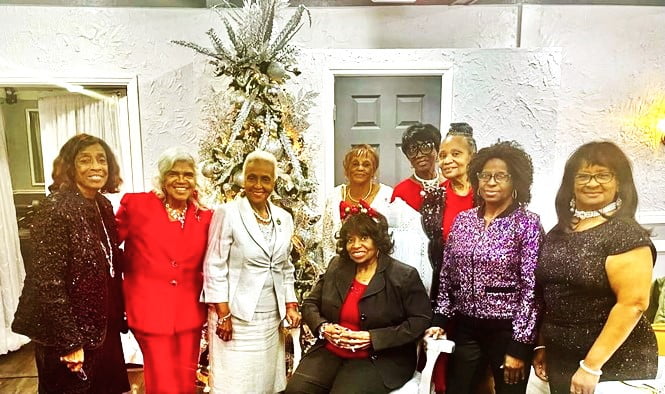
PHILOS CELEBRATE & COMMEMORATE 43rd Anniversary

0

On December 18, 2023 the Gamma Theta Sigma Chapter of Philos Affiliate of Sigma Gamma Rho Sorority, Inc., had their Christmas Gala at “Cilla’s” of Herman’s Restaurant.

This was a special double occasion as their Christmas Celebration and the Celebration of their Anniversary of being in existence for 43 years, as a local affiliate. The organization is a non-profit volunteer affiliate group that renders service to the community.

When Martin Luther King Jr. Considered a Presidential Run

In 1967, several prominent antiwar activists urged MLK to run for president with Dr. Spock as his VP.

Dr. Martin Luther King Jr. never sought public office or held an allegiance to any of the major political parties. “I don’t think the Republican Party is a party full of the almighty God nor is the Democratic Party,” he said in a 1958 interview. “They both have their weaknesses. I’m not concerned about telling you what party to vote for. But what I’m saying is this, that we must gain the ballot and use it wisely.”

Yet in 1967 with both the Vietnam War and the civil rights movement in full swing, King briefly considered launching a presidential campaign on a third-party ticket with Dr. Benjamin Spock, the noted pediatrician and the author of the bestseller Dr. Spock’s Baby and Childcare. Spock had risen to fame in the 1940s with his guidance on raising children, but by the 1960s, he was one of the leading antiwar demonstrators in the country.  After seeing Ramparts magazine photos of Vietnam children sprayed with napalm by U.S. military forces, King came to a reckoning about the war. “Never again will I be silent on an issue that is destroying the soul of our nation and destroying thousands of little children in Vietnam,” he said. This new awareness brought King closer to Spock and the antiwar movement and on the precipice of electoral politics.

K On April 4, 1967 before 3,000 people at New York’s Riverside Church, King gave his famous “Beyond Vietnam: A Time to Break Silence” speech, where he called for the U.S. government to take immediate steps to end the Vietnam War. “If we continue, there will be no doubt in my mind and in the mind of the world that we have no honorable intentions in Vietnam,” he said. I

King would later say that he had “no other ambitions in life but to achieve excellence in the Christian ministry” and that he “didn’t plan to do anything but remain a preacher.” It was this Baptist preacher who yielded a measure of political and moral authority that made his role outside of partisan politics a key element of his gift as a leader. One year to the date of his Riverside speech, Dr. King was killed outside of the Lorraine Motel in Memphis by a white supremacist named James Earl Ray.

Racist? We’re not really sure, are we?

0

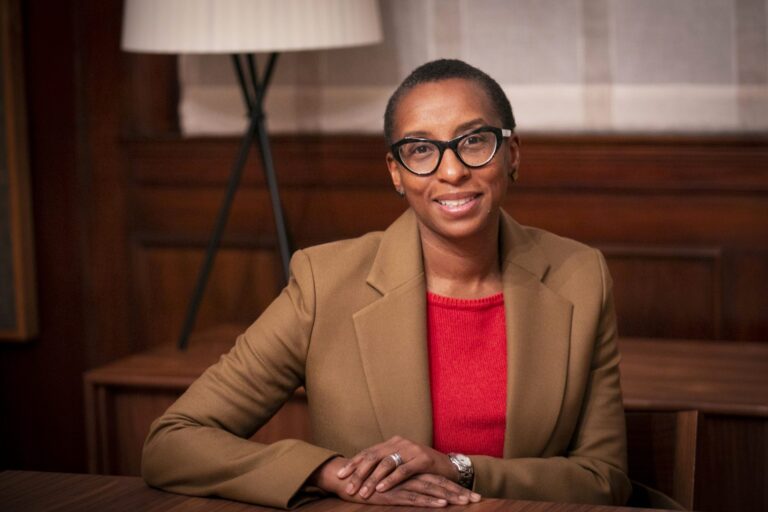
It came as no surprise that before the ink was dry on my recent piece, “Race Obsession vs Race Consciousness,” that the issue of race would find itself back in the news with this headline in The Washington Post: “In push against Harvard leader, some see racism.”  This time the alleged “victim” of racism is Dr. Claudette Gay, African American president of Harvard University. (Although it may not be relevant here, I’ll point out anyway that Dr. Gay is the daughter of immigrants from Haiti, a nation once called a “shithole country” by an ex-president).

You see, unlike the presidents of MIT and the University of Pennsylvania, both white women, suddenly Gay’s qualifications – including her PhD from Harvard – mean nothing since she obtained the Harvard position, okay here we go again, because of the university’s emphasis on diversity. In other words, she likely would not have obtained the position were it not “for a fat finger on the diversity scale,” whined one of her harshest critics, himself a Harvard graduate and today a billionaire hedge fund manager.

Now what started out as a public hearing on what these institutions were doing to combat growing antisemitism on their campuses, in a matter of days morphed into a partisan critique of Gay’s race and qualifications, criticism faced by neither of the presidents of MIT, Sally Kornbluth, nor the University of Pennsylvania, Liz Magill. While the names of Magill and Kornbluth disappeared from the news, Gay’s fiercest critics smelled “blood in the water” with her alleged plagilarized academic papers. And the feeding frenzy continues to this day.

This takes us to a deeper dive into the lingering emotional effects of race in America, this time to the debilitating power of words, code words and idioms.

In “Race Obsession vs Race Consciousness,” you’ll recall that “Karen” played the proverbial “race card” by unfairly calling me a racist, then slammed the door on further dialogue. Now although I’ve been called the “N-Word” a few times in my life, I don’t recall ever having been called  a “racist.”

Said my friend “Andy,” a white guy, “Terry, realize that like being called the “N-Word,” being called a racist is just as paralyzing and hurtful. I was unfairly called a racist many years ago and have not been able to put that behind me even although the person who did that to me later apologized.”

“Playing the race card”? What are we talking about here folks?

Well, “playing the race card” is an idiomatic phrase that refers to the exploitation by someone to gain an advantage to dodge personal accountability or shut down a conversation. It attempts to belittle the person or persons raising concerns regarding attitudes and/or behaviors. Like accusations of “political correctness” or “wokeness,” playing the race card is an attempt to delegitimize a person or an issue he/she raises.

In his book, Playing the Race Card, George Dei argues that the term itself is a rhetorical device used in an effort to devalue and minimize claims of racism. It is important to point out that employing dog whistles and code words – i.e., “those people,” “inner city,” “illegals,” etc. – are contemporary examples of playing race cards to stoke fears and resentment.

Now the truth is that playing the race card can swing both ways racially. For example, some ultraconservative African Americans played the race card in response to those who referred to them as “sellouts” to their communities. Examples include “high tech lynching” (Supreme Court Justice Clarence Thomas) and “I don’t fit the traditional narrative” (Senator Tim Scott). The point is that no one holds exclusive rights to the use of the idiom and won’t hesitate to use it for self protection or to silence others.

Unfortunately, success at even the most prestigious institutions does not immune deserving individuals from questions about their achievements. For example, not long after he became the second African American to be selected by NASA, the late Challenger astronaut, Dr. Ronald E. McNair was amused when sharing that some sniped that he got into the shuttle program to fill a racial quota. Mind you that Dr. McNair earned a PhD in Laser Physics from MIT. Yep, you read that right readers.

In the end, as much as the “N-Word” yelled at Black people stings and can pain them for years, even decades, getting called racist too can have a long lasting effect.

“As much as I write about race and racism, I’m generally very slow to accuse someone of being racist,” wrote William Spivey. “If I’ve said it, you can be certain I can document my reasons for believing it. I’m equally hesitant to say something isn’t racist because I may not know that either. Much, if not most of the time, I’m just not sure.”

We’re just not sure, are we?

© Terry Howard is an award-winning trainer, writer, and storyteller. He is a contributing writer with the Chattanooga News Chronicle, The American Diversity Report, The Douglas County Sentinel, Blackmarket.com, co-founder of the “26 Tiny Paint Brushes” writers’ guild, recipient of the 2019 Dr. Martin Luther King, Jr. Leadership Award, and third place winner of the 2022 Georgia Press Award.

Musicians, speakers to come together for ‘O King’

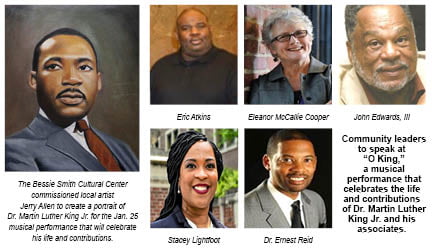
Community leaders to speak at “O King,” a musical performance that celebrates the life and contributions of Dr. Martin Luther King Jr. and his associates.

Chattanooga, TN – People from different cultures, ages and educations unite through music. Even differing points of view can share a common experience through music.

One way people in Chattanooga can get together and enjoy a variety of musical performances is by celebrating the life and contributions of Dr. Martin Luther King Jr. and his associates.

On Thursday, Jan. 25, the University of Tennessee at Chattanooga Department of Music, the Ruth Holmberg Professor of American Music, the Vice Chancellor for Access and Engagement and the Office of Multicultural Affairs will partner with the Bessie Smith Cultural Center to present “O King.”

The free concert, open to the public, will begin at 7 p.m. in the Bessie Smith Cultural Center performance hall (200 E. M.L. King Blvd.). The venue is accessible.

“O King,” a concept initiated by Dr. Jonathan McNair, the Ruth S. Holmberg Professor of Music at UTC, was first presented in March 2017.

“‘O King’ promises to be an engaging, enlightening and uplifting program that touches many bases in hopes of reaching many hearts and minds,” said McNair, who has been working with local literacy groups SoLit (previously known as Southern Lit Alliance) and Rhyme N Chatt on the event.

“Short reflections on the impact of Dr. King’s work on current community and campus leaders will be interspersed between musical selections, while a slideshow will provide visual images linked to the program. SoLit and Rhyme N Chatt will offer a list of appropriate readings for those wanting to know more about the vital movement Dr. King and his associates brought to national attention.”

Musical performances will include the UTC Singing Mocs, a Pentatonix-style a cappella vocal group; a UTC Music faculty trio; the Littleton H. Mason Gospel Choir from UTC; vocalists from Chattanooga High School Center for Creative Arts, including Ella Hill and JerRod Taylor; and local professional musicians. Additionally, spoken word artist Erika Roberts will perform a newly created work.

Speakers include John Edwards, publisher of the Chattanooga News Chronicle; Dr. Ernest Reid, pastor of Second Missionary Baptist Church; Eric Atkins, president of the Unity Group; Dr. Eleanor McCallie Cooper; and Stacy Lightfoot, Vice Chancellor for Access and Engagement at UTC.

McNair said a different program involving speakers and musicians from the community and campus was offered in 2018 with Dr. Moises Baptiste as co-director. The new January 2024 presentation was planned with input from McNair, Lightfoot, Bessie Smith Cultural Center President Paula Wilkes, Bessie Smith Cultural Center Director of Community Relations Elijah Cameron, and SoLit Executive Director Chelsea Risley. For more information, contact the Bessie Smith Cultural Center at 423-266-8658 or the UTC Department of Music at 423-425-4601.

The curious joy of being wrong – intellectual humility means being open to new information and willing to change your mind

0

By Daryl Van Tongeren, Associate Professor of Psychology, Hope College

Mark Twain apocryphally said, “I’m in favor of progress; it’s change I don’t like.” This quote pithily underscores the human tendency to desire growth while also harboring strong resistance to the hard work that comes with it. I can certainly resonate with this sentiment.

I was raised in a conservative evangelical home. Like many who grew up in a similar environment, I learned a set of religious beliefs that framed how I understood myself and the world around me. I was taught that God is loving and powerful, and God’s faithful followers are protected. I was taught that the world is fair and that God is good. The world seemed simple and predictable – and most of all, safe.

These beliefs were shattered when my brother unexpectedly passed away when I was 27 years old. His death at 34 with three young children shocked our family and community. In addition to reeling with grief, some of my deepest assumptions were challenged. Was God not good or not powerful? Why didn’t God save my brother, who was a kind and loving father and husband? And how unfair, uncaring and random is the universe?

This deep loss started a period where I questioned all of my beliefs in light of the evidence of my own experiences. Over a considerable amount of time, and thanks to an exemplary therapist, I was able to revise my worldview in a way that felt authentic. I changed my mind, about a lot things. The process sure wasn’t pleasant. It took more sleepless nights than I care to recall, but I was able to revise some of my core beliefs.

I didn’t realize it then, but this experience falls under what social science researchers call intellectual humility. And honestly, it is probably a large part of why, as a psychology professor, I am so interested in studying it. Intellectual humility has been gaining more attention, and it seems critically important for our cultural moment, when it’s more common to defend your position than change your mind.

What it means to be intellectually humble

Intellectual humility is a particular kind of humility that has to do with beliefs, ideas, or worldviews. This is not only about religious beliefs; it can show up in political views, various social attitudes, areas of knowledge or expertise or any other strong convictions. It has both internal- and external-facing dimensions.

Within yourself, intellectual humility involves awareness and ownership of the limitations and biases in what you know and how you know it. It requires a willingness to revise your views in light of strong evidence.

Interpersonally, it means keeping your ego in check so you can present your ideas in a modest and respectful manner. It calls for presenting your beliefs in ways that are not defensive and admitting when you’re wrong. It involves showing that you care more about learning and preserving relationships than about being “right” or demonstrating intellectual superiority.

Another way of thinking about humility, intellectual or otherwise, is being the right size in any given situation: not too big (which is arrogance), but also not too small (which is self-deprecation).

I know a fair amount about psychology, but not much about opera. When I’m in professional settings, I can embrace the expertise that I’ve earned over the years. But when visiting the opera house with more cultured friends, I should listen and ask more questions, rather than confidently assert my highly uninformed opinion.

Four main aspects of intellectual humility include being:

•             Open-minded, avoiding dogmatism and being willing to revise your beliefs.

•             Curious, seeking new ideas, ways to expand and grow, and changing your mind to align with strong evidence.

•             Realistic, owning and admitting your flaws and limitations, seeing the world as it is rather than as you wish it to be.

•             Teachable, responding nondefensively and changing your behavior to align with new knowledge.

Intellectual humility is often hard work, especially when the stakes are high.

Starting with the admission that you, like everyone else, have cognitive biases and flaws that limit how much you know, intellectual humility might look like taking genuine interest in learning about your relative’s beliefs during a conversation at a family get-together, rather than waiting for them to finish so you can prove them wrong by sharing your – superior – opinion.

It could look like considering the merits of an alternative viewpoint on a hot-button political issue and why respectable, intelligent people might disagree with you. When you approach these challenging discussions with curiosity and humility, they become opportunities to learn and grow.

Why intellectual humility is an asset

Though I’ve been studying humility for years, I’ve not yet mastered it personally. It’s hard to swim against cultural norms that reward being right and punish mistakes. It takes constant work to develop, but psychological science has documented numerous benefits.

First, there are social, cultural, and technological advances to consider. Any significant breakthrough in medicine, technology or culture has come from someone admitting they didn’t know something – and then passionately pursuing knowledge with curiosity and humility. Progress requires admitting what you don’t know and seeking to learn something new.

Relationships improve when people are intellectually humble. Research has found that intellectual humility is associated with greater tolerance toward people with whom you disagree.

For example, intellectually humble people are more accepting of people who hold differing religious and political views. A central part of it is an openness to new ideas, so folks are less defensive to potentially challenging perspectives. They’re more likely to forgive, which can help repair and maintain relationships.

Finally, humility helps facilitate personal growth. Being intellectually humble allows you to have a more accurate view of yourself.

When you can admit and take ownership of your limitations, you can seek help in areas where you have room to grow, and you’re more responsive to information. When you limit yourself to only doing things the way you’ve always done them, you miss out on countless opportunities for growth, expansion, and novelty – things that strike you with awe, fill you with wonder and make life worth living.

Humility can unlock authenticity and personal development.

Humility doesn’t mean being a pushover

Despite these benefits, sometimes humility gets a bad rap. People can have misconceptions about intellectual humility, so it’s important to dispel some myths.

Intellectual humility isn’t lacking conviction; you can believe something strongly until your mind is changed and you believe something else. It also isn’t being wishy-washy. You should have a high bar for what evidence you require to change your mind. It also doesn’t mean being self-deprecating or always agreeing with others. Remember, it’s being the right size, not too small.

Researchers are working hard to validate reliable ways to cultivate intellectual humility. I’m part of a team that is overseeing a set of projects designed to test different interventions to develop intellectual humility.

Some scholars are examining different ways to engage in discussions, and some are exploring the role of enhancing listening. Others are testing educational programs, and still others are looking at whether different kinds of feedback and exposure to diverse social networks might boost intellectual humility.

Prior work in this area suggests that humility can be cultivated, so we’re excited to see what emerges as the most promising avenues from this new endeavor.

There was one other thing that religion taught me that was slightly askew. I was told that too much learning could be ruinous; after all, you wouldn’t want to learn so much that you might lose your faith.

But in my experience, what I learned through loss may have salvaged a version of my faith that I can genuinely endorse and feels authentic to my experiences. The sooner we can open our minds and stop resisting change, the sooner we’ll find the freedom offered by humility.

(The CONVERSATION)

Missy Crutchfield Announces Run for Hamilton County School Board District 4, Remembers Key Literacy Partnerships with the Mary Walker Foundation Over the Years

Earlier this week, Missy Crutchfield announced in a Facebook live video she is running for Hamilton County School Board District 4 in the March 5, 2024 Hamilton County Primary Election. Crutchfield’s campaign is focusing on safe school facilities, attracting and retaining teaching talent, offering students better access to public libraries, outdoor education, healthy school food options, and mental health resources, among other initiatives in the works.

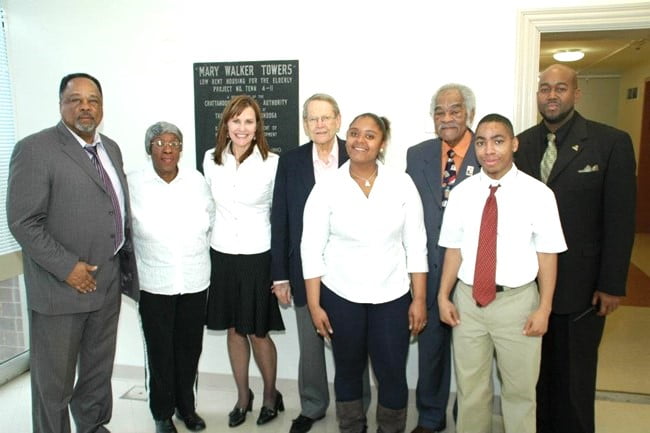
Archived photo of Missy with Mary Walker Tower resident, students from Howard School, along with her father, the late Ward Crutchfield, the late Rev. J. Loyd Edwards, Jr.; John Edwards, III; and Howard School former principal, Dr. Paul Smith.

Crutchfield remembers key educational partnerships she enjoyed working with the Chattanooga News Chronicle during her time serving as Administrator of the City of Chattanooga Department of Education, Arts & Culture (EAC), under Mayor Ron Littlefield.

“We had the opportunity to develop a student-led publication called ‘Chattanooga Teen Scene’ with the help of a student advisory board representing public and private high schools across Hamilton County,” she shares. “It made for some interesting and informative discussions of issues important to teens as well as showcasing their journalism, creative writing, art, and photography. It was very empowering for the students, and they often shared how much it meant for them to have a publication of their own as well as the opportunity to include their published work in their college resumes as they planned for their futures.”

A few years later another unique partnership with the Mary Walker Foundation and the Chattanooga News Chronicle brought together students from Howard School’s “Talented Tenth” leadership program with senior citizen residents at Mary Walker Towers for Black History Month event called “Celebrating Freedom” and a Literacy Month event called “Celebrating Literacy” with Publisher John Edward’s late father Rev. John Loyd Edwards, Jr. who marched with Dr. Martin Luther King, Jr. during the Civil Rights Movement and who founded the Mary Walker Foundation, working for literacy and honoring the legacy of the Chattanooga resident who learned to read at the age of 115 and who came to be known as the “Nation’s Oldest Student” after living through 26 presidents and two centuries.  Adrian Edwards, the son of John and the grandson of the late Rev. Edwards, continues their legacy as director of the Mary Walker Foundation.

“It was an honor to work with John Edwards and his father Rev. Edwards both on these important literacy partnerships for students across Hamilton County,” Crutchfield shares.  “We know that literacy is a key to student success here in Tennessee and Hamilton County, and we desperately need a renewed focus on helping students build literacy skills. We can do this by incorporating creative learning opportunities like we did with Chattanooga Teen Scene and the Celebrating Freedom and Celebrating Literacy events that encourage students to enjoy reading, writing, and learning more about their history while they prepare for their futures.”

Learn more at: www.electmissycrutchfield.com. (PAID by FRIENDS TO ELECT MISSY CRUTCHFIELD)

Tyner Unites to Give Back to Community

0

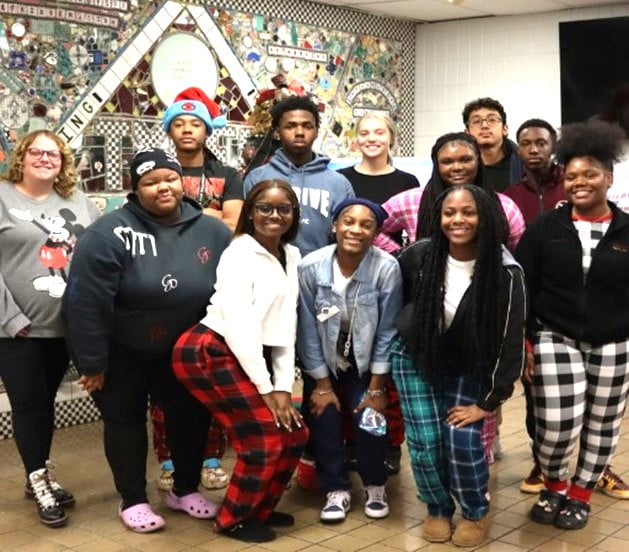
Tyner Academy and Tyner Middle Academy, in collaboration with their student councils, came together to create a community service project in the spirit of the holiday season. The project aimed at providing Christmas meal bags to community members in need, an effort that exemplifies the schools’ commitment to service and giving back.

“This project was handled by our students,” said Dr. Tiffany Earvin, Tyner Academy principal. “I tasked them to come up with a service project and this is what they chose. I want them to appreciate all our community does for us and recognize that it is important for them to give back to those who give us so much. I am extremely proud of the work they’ve done and those we have helped this holiday season.”

Over 250 bags were assembled by the students and distributed to families in need at various locations around the community, including the students’ selected elementary school, the Salvation Army, Partnership for Families, Children and Adults, and a women’s shelter. The students’ initiative was met with enthusiasm from their peers and community members, who were grateful for the generous contributions.

“It was exciting to be surprised every day by what people were bringing in support of this project, but also to see the faces of those receiving the bags,” said Chari Ryan, Tyner Academy Student Council president.

Students were responsible for the work of advertising the project through flyers and phone calls, garnering student body support, calling community partners, packing the bags, and finding families in need and distributing the meals.

“I appreciate our students and our community for stepping up and helping us accomplish our goals,” said Mariah Caldwell, member of the Tyner Academy Student Council. “I loved seeing our students and community work together for a common goal and good of others.”

The project also served as an opportunity for students to come together and to begin building their culture of One Tyner, as the schools prepare to merge upon the completion of the new Tyner Middle High Academy.

The students were excited to see their peers and community come together for the good of others, and they hope to continue this tradition of service in the future.

“I think this project opened our eyes to what we can do when we work together. This is just the start to what we can do for our community in coming together as One Tyner,” said Jamaree Jenkins, member of the Tyner Academy Student Council.

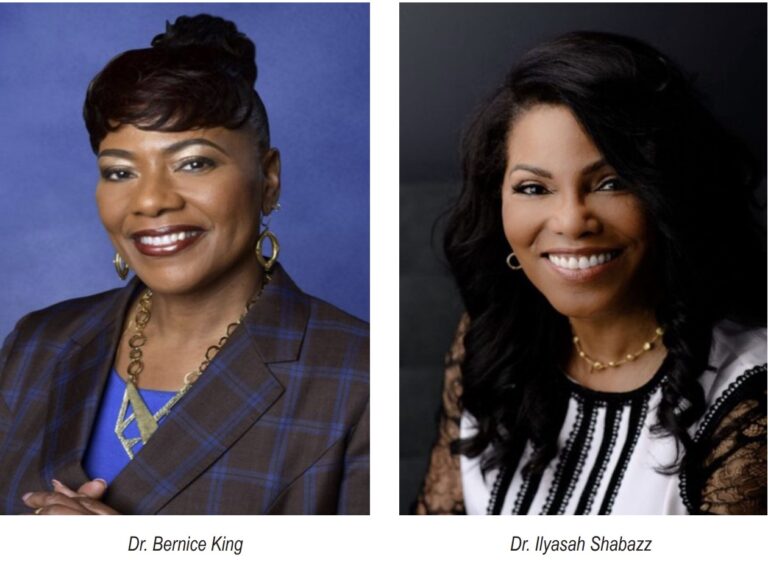
Dr. Bernice King and Dr. Ilyasah Shabazz to headline UTC MLK Day 2024

The University of Tennessee at Chattanooga will celebrate its 11th UTC MLK Day by bringing a pair of co-headliners to Chattanooga.

Dr. Bernice A. King and Dr. Ilyasah Shabazz will be the keynote speakers for the UTC MLK Day 2024 celebration taking place at 12:15 p.m. on Friday, Jan. 19, at Soldiers and Sailors Memorial Auditorium Walker Theatre–located at 399 McCallie Ave.

Open to the general public, this will be the first UTC MLK Day event held in an off-campus venue.

“A Conversation with Bernice King and Ilyasah Shabazz–A Legacy of Leadership and Service” will be moderated by UTC Vice Chancellor for Engagement Stacy Lightfoot and Student Government Association President Chamyra Teasley. The program will include a discussion and Q&A.

All guests are required to RSVP. For information, call 423-425-5683 or contact mcc@utc.edu.

King, a minister, attorney, and daughter of Dr. Martin Luther King Jr., is the chief executive officer of the Martin Luther King Jr. Center for Nonviolent Social Change. Commonly known as The King Center, the not-for-profit organization was founded by her mother, Coretta Scott King, as the official living memorial to her father’s life, work, and legacy.

Shabazz, an award-winning author, educator, producer and daughter of Malcolm X, is chairperson of the Malcolm X and Dr. Betty Shabazz Memorial and Educational Center. She has authored five historical novels, has served as project advisor for the PBS award-winning film, “Prince Among Slaves,” and is currently producing a television series based on her latest two publications–“X” and “The Awakening of Malcolm X”–with Sony Pictures Entertainment’s TriStar Pictures.

According to Christopher Stokes, assistant director of the UTC Office of Multicultural Affairs, bringing together the daughters of Dr. King and Malcolm X came out of a conversation between Dr. Tara Mathis, the associate dean of students and director of the Multicultural Center, and Sherese Williams, director of operations and admissions for the Honors College and president of the UTC Black Faculty and Staff Association.

“Sherese presented the idea to us and asked, ‘What if we could make this happen?’ and we were like, ‘That’s a little bit bigger than we’ve gone before, so let’s see what we can do,”’ Stokes recalled. “What would that look like if we moved this to an off-campus venue? How would we bring them together? What would the conversation look like? How would our community embrace it?

“After a few conversations, Dr. Mathis pulled our sponsors together from last year and pitched the idea to them. They were all on board and brought a new level of excitement to this event. With these two names, the work they do and the legacy that both of their fathers left, we thought it would be an incredible opportunity to bring them together at UTC.”

Said Mathis, “Even when I reached out to the speaker’s bureau and our rep, he didn’t know if we could pull this off. He was like, ‘Oh, that’s interesting. I don’t know if we can do that, but we’ll contact them.’ He reached out to them individually to see if they were interested in coming–and they were–and it went from an initial conversation to that’s a pretty good idea to making it happen.”

King continues to advance her parents’ legacy of nonviolent social change through policy, advocacy, research, education and training based on nonviolent principles and strategies modeled by her parents. She received a Doctorate of Law from Emory University in Atlanta, a Master of Divinity from Emory’s Candler School of Theology and a bachelor’s degree in psychology from Spelman College in Atlanta.

Shabazz has dedicated herself to institution-building and intergenerational leadership development with the tenants of diversity, equity and inclusion in her work to preserve her parents’ legacy. She received a Doctor of Humane Letters from Worcester (Massachusetts) State University, a master’s degree in human resource development from Fordham University in New York and a bachelor’s degree in biology from SUNY New Paltz in New York.

UTC began hosting a special MLK event on a day separate from the federal holiday in 2013. Previous UTC MLK Day keynote speakers have included prominent educators Angela Davis and Cornell West, New York Times bestselling author Meena Harris, political strategist Symone Sanders and journalist Roland Martin.

“When you’ve brought Cornell West and Angela Davis to campus, you’ve kind of set a standard, and we wanted to continue to move forward and challenge ourselves and our community to bring someone different to campus,” Stokes said. “In honor of Dr. King, we had talked about bringing his daughter before, but we also wanted to find a way to create a larger impact and a larger conversation.

“We really have something that our campus and community want, and they want to see more events like this. It shows our growing position as Chattanooga’s university, our role in connecting with the community and providing opportunities, resources and a space where we can educate our community as well.”

Curtis (CJ) Drake Named 2023Mr. Beautillion XIII at The Links, Incorporated Biennial Gala

0

Chattanooga, Tenn.  — More than 300 guests filled a Chattanooga Convention Center ballroom to witness Curtis Jackson Drake named as Mr. Beautillion 2023. (Beau) Drake, the son of Mr. Curtis and Dr. Marsha Drake, earned the distinguished title at “Beautillion XIII: The Making of a Gentleman” presented by the Chattanooga Chapter of The Links, Incorporated on Saturday November 11, 2023. The East Hamilton High School junior was escorted by (Belle) JaMya Talis Rogan, daughter of Dr. Jerome and Mrs. LaTasha Rogan.

The first runner-up was Mr. Benjamin Sledge, a senior at Central High School. Benjamin is the son of Mr. and Mrs. Brian Sledge.  He was escorted by (Belle) Dana Hardaway.

The second runner-up was Kobe Smith, a senior at Red Bank High School. Kobe is the son of Mr. Clarence and Mrs. Hailee Young.  He was escorted by (Belle) Je’Annyia Phillips.

Since its inception, the Beautillion has been considered a rite of passage event that formally presents young black men to society. Its participants include 9th through 12th grade young men – referred to as Beaux – and their escorts known as Belles. For the first time in local Beautillion history, the Chattanooga Links also presented Junior Beaux (with Belles) ranging from 3rd to 7th grades.

The winner of Mr. Junior Beautillion 2023 was Cheikh (CJ) Diakhate Jr., son of Mr. Cheikh Diakhate Sr. and Ms. Felicion McMillon. “CJ”, a 7th grader at Chattanooga Preparatory School was escorted by (Junior Belle) Zyhonna Ca’Mya Jackson, daughter of Mr. Anthony Jackson and Ms. Jerrian Hicks.

This year, eleven senior Beaux and seven junior Beaux completed a wide range of activities during which they participated in community service, cultural engagement events, self-enhancement seminars, social etiquette skills, and other fun outings along the way.

“Beautillion XIII was a stellar event that showcased an exceptional group of young men,” said Dr. Angelnetta McGee Ulmer, Chattanooga Links President. “We are confident that each of the Beaux have benefitted greatly from this experience and will continue to apply these skills in their young adult lives.”

After practicing for several months for the occasion, the Beaux and the Belles looked stunning in their tuxedoes and ball gowns and showed members of the Chattanooga community and surrounding areas all the work they put in for the formal presentation. Proceeds from the biennial fundraiser go back into the community through scholarships for students heading to college. The Chattanooga Chapter of The Links, Incorporated is grateful to the like-minded families of the participants, corporate sponsors, and a supportive community for pouring into our youth in a way that builds confidence, self-esteem, and encourages their dreams. Because of everyone’s support, Beautillion XIII: The Making of a Gentleman was a grand success.

Mayor Tim Kelly releases year-end highlights, looks ahead to ‘24

In 2023, the Kelly Administration earned accolades in financial strength, made significant progress toward One Chattanooga goals, and continued its commitment to responsive and effective governing. 

Chattanooga, Tenn. (December  2023) – Last week at year’s end, Chattanooga Mayor Tim Kelly and his administration released a snapshot of the team’s achievements in 2023. From the City’s AAA bond rating and accolades in financial reporting to the largest grant for urban forestry in our history, the Kelly Administration remains committed to a responsive and effective approach to governing and to improving the quality of life for every Chattanoogan in every corner of the city.

“I’m excited about the momentum we are carrying into the new year, and I’m proud to know that we are making our city an even better place for everyone who chooses to call Chattanooga home,” said Mayor Kelly. “While we haven’t yet arrived, the progress we’ve made in 2023 is substantial – and we’re going to continue to execute on the priorities and issues that matter most to Chattanooga’s residents in 2024.”

Building a Universal Path to Early Learning:

Catalyzing Economic Vitality in the Black Community:

Ensuring Affordable Housing Choices for All Chattanoogans:

Improving Local Infrastructure & Public Transit:

Building a Competitive Regional Economy:

Closing the Gaps in Public Health:

Providing Responsive and Effective Government:

  • Awarded AAA bond rating by S&P and Fitch for the third consecutive year.
  • Recognized by the Government Finance Officers Association (GFOA) for excellence in financial reporting.
  • Announced waste-to-energy system to convert city’s wastewater into renewable energy.
  • Property crime rates down by double digits and an 80% clearance rate, roughly 30% higher than the national average. 
  • Improved 311 request completion times and reduced 311 wait times.
  • Secured more than $61 million in direct and pass-thru federal funding to supplement City operations and initiatives. 

Doubled the number of neighborhood associations compared to 2022. These organizations are a critical component of healthy neighborhoods, and we’ve been working hard to return to pre-Covid participation.