Wednesday, October 14, 2026
Advertisement
Home Blog Page 68

‘A Legacy of Leadership and Service’ brings Bernice King and Ilyasah Shabazz to UTC MLK Day celebration

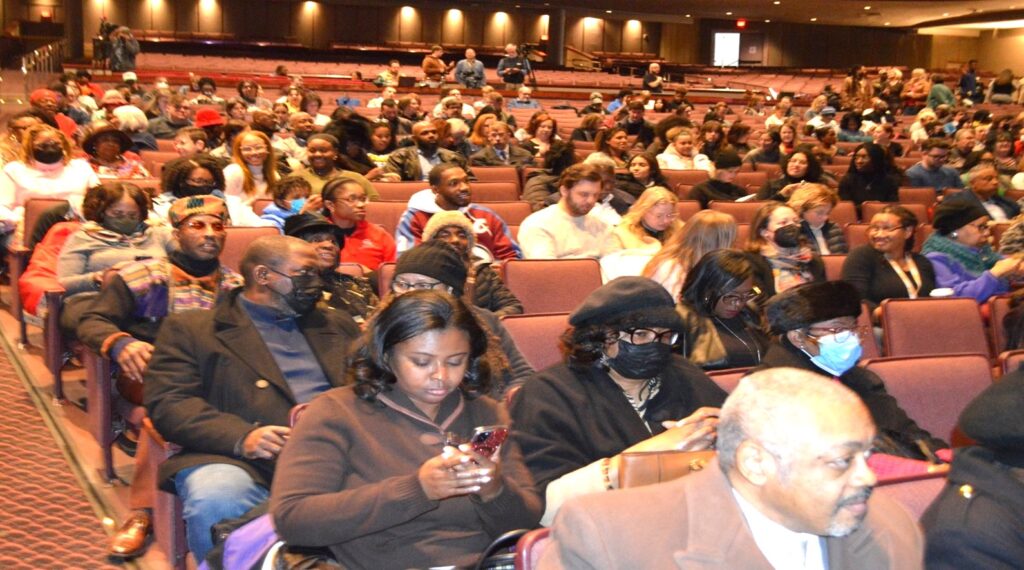
Community and crowd view of the diverse group who came out to hear Dr. Bernice King and Dr. Ilyasah Shabazz during the UTC M. L. King Day celebration on Friday, Jan. 19, 2024 at Soldiers and Sailors Memorial Auditorium. (CNC Photo: G. Faye Stoudemire)

By Peyton Schultz

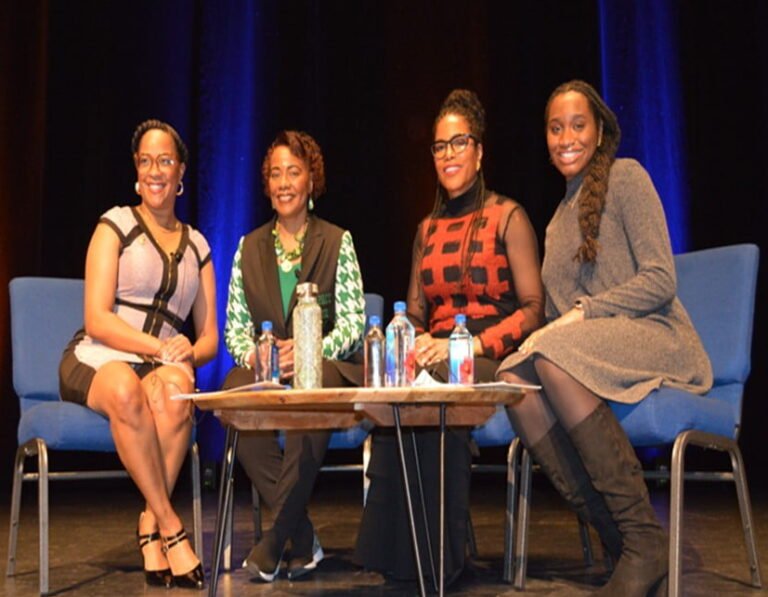
Dr. Bernice King and Dr. Ilyasah Shabazz, a pair of celebrated social justice activists, motivational speakers and daughters of two of the most influential civil rights leaders, were the keynote speakers at the University of Tennessee at Chattanooga MLK Day 2024 on Friday, Jan. 19, at Soldiers and Sailors Memorial Auditorium.

Held in an off-campus venue for the first time due to high demand, the event brought together community members and UTC students, faculty and staff.

The event theme, “A Legacy of Leadership and Service,” was moderated by UTC Vice Chancellor for Access and Engagement Stacy Lightfoot and UTC Student Government Association President Chamyra Teasley.

King, a prominent minister, attorney and the daughter of Martin Luther King Jr., is the CEO of the Martin Luther King Jr. Center for Nonviolent Social Change–also known as the King Center. Shabazz, the author of five historical novels and the daughter of Malcolm X, is the chairperson of the Malcolm X and Dr. Betty Shabazz Memorial and Educational Center.

Together, they sat on the Memorial Auditorium stage and discussed the legacy of their fathers, their journeys to activism and carrying on their fathers’ missions for racial equality.

King and Shabazz both stressed that studying their fathers’ names equally is important to comprehending the civil rights movement.

“Malcolm and Martin don’t have to be presented as a conflict,” King said. “A lot of times we put people in a position of ‘I’m a Malcolm. I’m a Martin.’ You can be both.”

Shabazz said that one person cannot make change, but a “village” of people can.

“There’s always some kind of divisive tactic to keep us separated because we know that there are more good people in the world than there are bad. But we want to focus on Black; we want to focus on white,” Shabazz said.

“It’s your generation that gets it, and they understand that the only way we are going to accomplish these goals is by getting this boot off of all of our necks. It’s by coming together.”

When asked what motivated her to convey her message to the masses, King said it was the anger she felt after her father’s assassination and the oppression in the Black community.

“It wasn’t until I became CEO of the King Center that what my father left for us became real–his philosophy and methodology of non-violence,” she said. “It began to really help me to find the way to channel that anger into something more positive so that I can also be a vessel for change and transformation.”

The two shared their fathers’ core values, some of which they believe have become misrepresented over time.

“My mother, as a grown woman, had to safeguard her husband’s legacy because of all these negative and horrible things that they said about him,” Shabazz said.

“He believed in our humanity and he believed that America should live up to her promise of liberty and justice for all of its citizens.”

For King, it’s the misuse of one of her father’s most famous quotes: “I have a dream that my four little children will one day live in a nation where they will not be judged by the color of their skin, but by the content of their character.”

“My father did not want us not to recognize color or culture or respect that and understand that, recognize that and embrace that,” she explained. “He was talking about a world after we addressed and eradicated racism.”

While there has been significant change since the days of their fathers’ assassinations, King and Shabazz both said there is more to be done, citing unequal voting rights, poverty and the racial disparities that exist in systems and institutions.

“There are things happening right now that could very much restore the essence of what was happening in the ’50s and ’60s,” King said.

“Please, let’s not mistake where we are today,” she added. “We are not where we used to be, but we could be.”

Shabazz stressed the importance of properly educating youth on Black history and the civil rights movement.

“We’re approaching Black History Month,” she said, “and now we are understanding that Black history is not just for February, but that Black history in America is American history.

“As an educator, I feel it is important to make sure that you are receiving accurate information. Educators have a responsibility and an opportunity to ensure that our young people are receiving the values of honesty, compassion and forgiveness, recognizing the truth that happened in this contemporary country.”

King said the way to change is to demonstrate that people don’t fall for divisive tactics while coming together strategically to address challenges and accomplish goals.

“As daddy said, ‘Hate cannot drive out hate. Only love can do that,’” she said. Other speakers included UTC Chancellor Steven R. Angle; Dr. Tara Mathis, associate dean of students and director of the Multicultural Center; Christopher Stokes, assistant director of the Office of Multicultural Affairs; and Sherese Williams, director of Operations and Admissions for the UTC Honors College and president of the University’s Black Faculty and Staff Association.
Scratching Your Roots Black Genealogy Society Meets

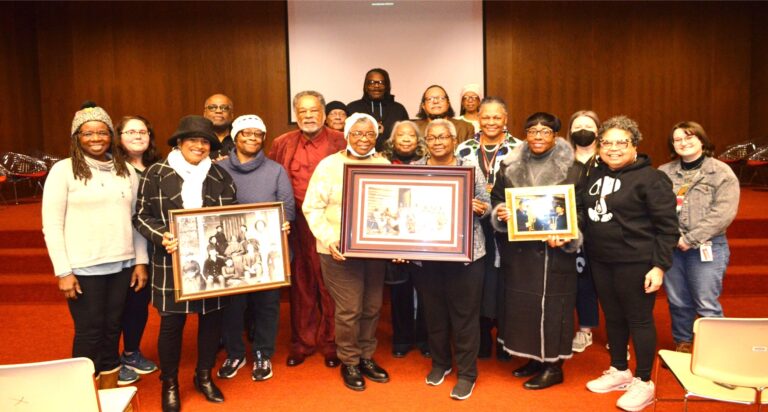
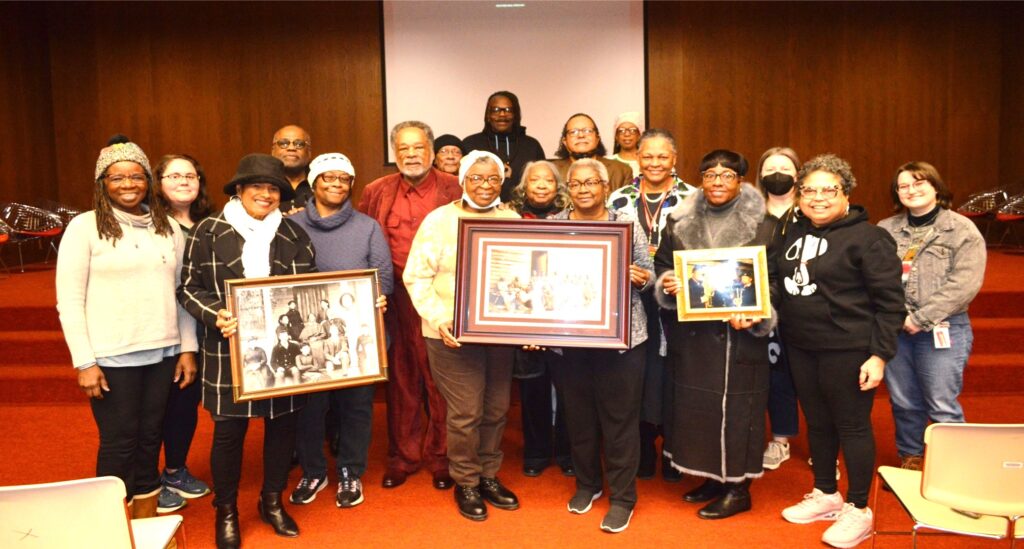
The Scratching Your Roots Black Genealogy Society (SYRBGS) welcomed local historian and publisher John L. Edwards, III this past Saturday, January 20th at the Downtown Library. Mr. Edwards discussed the origin of Chattanooga’s Black Community. Edwards is also the founder and publisher of the Chattanooga News Chronicle Newspaper and one of the architects of the Mary Walker Historical and Educational Foundation.
The (SYRBGS) in partnership with the Chattanooga Festival of Black Arts and Ideas, meets every other month to discuss and explore family history research with support and resources from the Library’s Local History and Genealogy Department. Meetings are open to the public and welcome anyone interested in learning more about African genealogy and discovering ancestors of African descent. (CNC Photo: G. Faye Stoudemire)

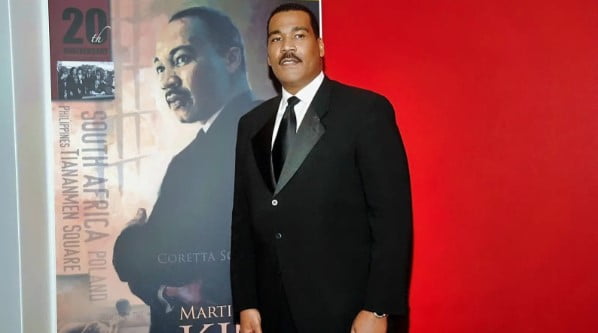
Martin Luther King Jr.’s Youngest Son Dexter has Died at Age 62

National —Dexter King, the youngest son of Rev. Martin Luther King Jr., and Coretta Scott King, has died after a battle with prostate cancer, The King Center announced on Monday (Jan. 22). King, 62, passed away at his home in California, according to reports.

The King Center confirmed in a statement the 62-year-old civil rights activist died Monday after a battle with prostate cancer.

The third child of Dr. and Mrs. Coretta Scott King was married to Leah Weber King since 2013.

Weber King said in a statement from the King Center, “He transitioned peacefully in his sleep at home with me in Malibu.” She added, “He gave it everything and battled this terrible disease until the end. As with all the challenges in his life, he faced this hurdle with bravery and might.”

Dexter’s older brother Martin Luther King III said in a statement, “I am deeply saddened to share that my brother, Dexter Scott King, has passed away. The sudden shock is devastating. It is hard to have the right words at a moment like this. Please keep the entire King family in your prayers, and in particular Dexter’s wife, Leah Weber.”

The Rev. Al Sharpton said he was “heartbroken to hear that Dexter King left us this morning, but I was comforted by the knowledge he is reunited with his parents and sister.”

Dexter’s mother, Coretta Scott King, died in 2006. His sister Yolanda Denise King died in 2007.

Atlanta Mayor Andre Dickens also expressed his condolences to Dexter’s family. “His profound and unwavering love for his family positioned him as a guardian of his father and mother’s legacies,” the mayor said of Dexter in a news release.

“Dexter held various titles—Morehouse Man, humanitarian, Civil Rights activist, and even actor. However, above all, he was a devoted family man,” he said.

A graduate of Morehouse College, Dexter worked as chairman of The King Center for Nonviolent Social Change, a nonprofit started by Coretta Scott King in the wake of her husband’s assassination, and president of the King Estate, according to King Center representatives.

Dexter was just seven years old when his father was assassinated. He told CNN he had been watching TV with his older brother when a news flash interrupted, announcing his father had been shot in Memphis.

“It was a very chaotic and traumatic period,” he said.

Dexter previously told CNN bearing his revolutionary father’s name could be both a blessing and a curse.

After his father’s killing, some people would tell young Dexter they expected him to follow his father’s path, he said in 2003.

“People would say, ‘I want you to be just like your father,’ or ‘You should be a minister,’” he said.

Dexter’s career has intertwined with his father’s legacy, cowriting a book, “Growing Up King: An Intimate Memoir,” and even acting as his father in a 2002 film, “The Rosa Parks Story.”

In addition to continuing his father’s civil rights work, Dexter was a vocal vegan and advocate for animal rights throughout his life. In a 1995 interview with The Vegetarian Times, he said his diet was an extension of his nonviolent beliefs. “There is a connection between how you live life and how you treat others,” he told the magazine. “It starts with the individual.” Dexter had no children. (This article was first published by CNN & by Tn Tribune January 22, 2024)

The Unity Group, Hutchins Academy Partner to Host Successful Book Drive for Youth Literacy

0

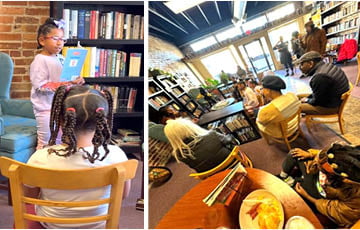
On Jan. 13, Hutchins Academy LLC and the Unity Group of Chattanooga hosted their second annual book drive to celebrate Dr. Martin Luther King Jr. and promote youth literacy. This year’s event was held at Allgoods Used Books and Coffee Shop and featured several engaging activities for families. 

Youth collaborator, Girl Scout Violet Lee, played a central role in the book drive, which collected books to be donated to local Little Libraries. Lee, along with author Tia Hunt and community leader Marie Mott, read to children at the event. The Music, Fashion, Arts Foundation added to the festive atmosphere by sponsoring a variety of children’s activities.

“We are so grateful to the community for coming out to support this important cause,” said Mott, founder of Hutchins Academy LLC. “Literacy is essential to a child’s success, and we want to ensure that every young person in our city has access to books.”

Last year’s inaugural book drive brought in 50 books during Juneteenth celebrations. Those books were donated to Violet Lee’s Little Library project. This year, the organizations are aiming higher and are confident they will surpass last year’s numbers.

Requested Titles include: I Have a Dream by Dr. Martin Luther King, Jr.; illustrated by Kadir Nelson; Let the Children March by Monica Clark-Robinson; Be a King: Dr. Martin Luther King Jr.’s Dream and You by Carole Boston Weatherford; Memphis, Martin, and the Mountaintop: The Sanitation Strike of 1968 by Alice Faye Duncan; We March by Shane W. Evans; and My Daddy, Dr. Martin Luther King, Jr. by Martin Luther King III.

The Book and Cover, 1310 Hanover St. and Allgoods Used Books and Coffee, 2420 Glass St., have partnered with the organizations as book drop-off sites.

Unity Group of Chattanooga was organized in 1969 to elect Black candidates to positions in local government. In 1970, the Unity Group initiated the march in Chattanooga, to make Dr. Martin Luther King Jr.’s birthday a national holiday. The organization is also responsible for renaming 9th Street to M.L. King Boulevard.

The book drive is a part of the Unity Group’s larger celebration of the annual Martin Luther King Jr. holiday. 

Founded by Harvard Emerging Leader Marie Mott and named after the revered Styles Hutchins, Hutchins Academy LLC is a mentorship program for high school students focused on leadership, academic excellence, literacy and parental support.

Little Free Library is a nonprofit dedicated to increasing book access for all through a network of volunteer-led micro-libraries, usually in the form of a public weatherproof bookshelf built by an individual or group. People can come and get a book for free, so long as they leave a book in return. According to the Little Free Library World Map (https://app.littlefreelibrary.org/ourmap), there are approximately 50-60 registered Little Free Libraries within the Chattanooga area–but probably many more since not all of them are registered.

The power of the “said” and the “unsaid”!

0

I came across the following quote in the Writers & Poets magazine recently:                 

“Where words prevail not, violence prevails.”

Please pause and sit on that one momentarily. In case you’re wondering, it’s a phrase from Thomas Kyd, a playwright and contemporary of William Shakespeare.

I then squared that quote against another familiar one, “words have power,” meaning that words have energy and power with the ability to help, motivate, demotivate, heal, harm, humiliate and devastate.

With all that said, I also thought about the title of this narrative and its message about the undeniable power of words within the context of the dangers of silence and how silence is sometimes complicit in the spread of hate and violence.

Now as a person who writes stuff, edgy stuff sometimes, I’ll admit that taken together, those quotes caused a bit of soul searching on my part. And rightfully so. 

I thought about divisive words out of the mouths of public figures (no need to name them here) that lead to the waves of violence that’s sweeping our nation today, namely domestic shootings, bombing places of worship, homophobic and race-based physical attacks, let alone hate that frequently pervades social media. I thought about the disturbing patterns of silence in response to those acts of violence.

So readers, allow me to have a “word” with you about “words,” and the damaging effects of silence in response to divisive words. First, “words.”

As a snotty nose kid growing up in a small town in Virginia, in addition to sports, strawberry ice cream and an interest in the opposite sex, I had a fascination with the English language, particularly how on Earth one could piece together 25 letters from the alphabet into a word, paragraph, chapter and eventually into a book. 

And here it is decades later, I remember the wise words from my father, “the two most powerful words in the English language are if and but. Remember that.” And I have.

Now there’s tons of research that confirms how the power of words can influence behaviors, build or destroy one’s confidence and alter the choices made in one’s life.

 Proof positive is yours truly, a fifth grader at the time who thought he could sing, a notion that was quickly dashed when my music teacher humiliated me in front of the class with words to the effect that I couldn’t sing and pointed me back to my desk. 

That humiliating experience ended my interest in ever singing again (even, eh, while driving alone in my car).

Turning now to the undeniable power of silence, the “unsaid,” and its potential harmful implications.

Now c’mon readers, chances are that there were times in your life when you wanted to say something you felt strongly about but wisely chose not to. Was it to a family member, boss, teacher, coworker, bully or some jerk in public? Although what you really wanted to say was warranted and would have been cathartic had you said it, it could have had negative consequences.

 “In the end, we will not remember the words of our enemies, but the silence of our friends.” – Dr. Martin Luther King, Jr.

Turning now to the proverbial “silent majority,” an unspecified large group of people or groups who do not express their opinions publicly. Given the pervasiveness of yelling, screaming, name-calling, finger-pointing and vitriol that’s replaced respectful dialogue nowadays, one could conclude that the ranks of the “silent majority” continues to swell.

According to research, the term “silent majority” was popularized by President Richard Nixon in a televised address in 1969, in which he said, “And so tonight—to you, the great silent majority of my fellow Americans—I ask for your support.” He was referring to those Americans who did not join in the large demonstrations against the Vietnam War at the time. 

Similar to “silent majorities” these days, Nixon saw this group of Middle Americans as being overshadowed in the media by the more vocal minority. Before that, the phrase was used in the 19th century as a euphemism referring to all the people who have died, and others have used it before and after Nixon to refer to groups of voters in various nations of the world.

Of course, there’s the familiar very relevant quote, “your silence speaks volumes.” So as much as others can hear your words, similarly they can “hear” your silence in the face of evil acts done or said, be they acts of racism, sexism, antisemitism, Islamophobia and bullying. This means that by not speaking out against injustice, you may be perceived of as actually condoning it. Know that by not talking (or writing) about evil can make it easier for it to occur and recur.

So as we bring this narrative to a close, ponder each of the quotes you’ve read – and maybe highlighted – thus far and leave by reflecting on the following one:

“First they came for the Socialists, and I did not speak out because I was not a Socialist. Then they came for the Trade Unionists, and I did not speak out because I was not a Trade Unionist.Then they came for the Jews, and I did not speak out because I was not a Jew.Then they came for me and there was no one left to speak for me.” — Martin Niemöller

© Terry Howard is an award-winning trainer, writer, and storyteller. He is a contributing writer with the Chattanooga News Chronicle, The American Diversity Report, The Douglas County Sentinel, Blackmarket.com, co-founder of the “26 Tiny Paint Brushes” writers’ guild, recipient of the 2019 Dr. Martin Luther King, Jr. Leadership Award, and third place winner of the 2022 Georgia Press Award.

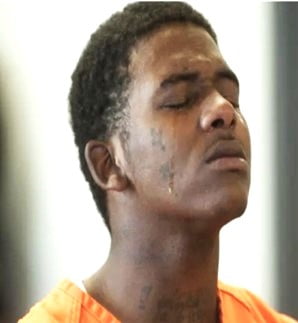
Chattanooga Mourns the Passing of Local Rapper James McReynolds, a.k.a. ‘Biggie Moe’

By Camm Ashford 

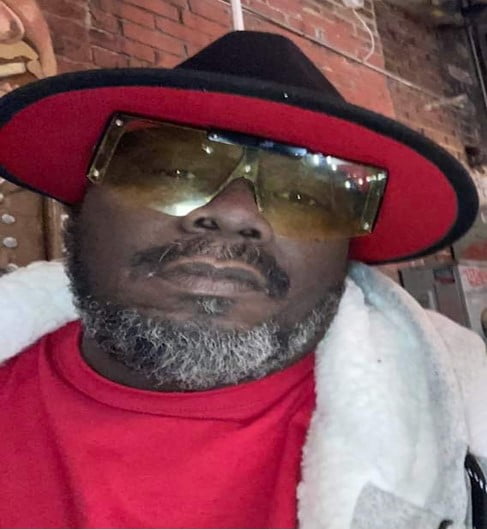
The community is reeling in shock and grief as news of the tragic death of James L. McReynolds, known to many as “Biggie Moe,” continues to spread through the city. The 57-year-old Chattanooga native and renowned rapper passed away on Jan. 10.

According to the Chattanooga Police Department (CPD), Mr. McReynolds was shot in his car on the 7600 block of North Bishop Drive on the night of Jan. 9. Responding officers found him with life-threatening injuries, and he was rushed to the hospital, where he later succumbed to his wounds.

CPD is actively investigating the homicide. 

Fondly known as “Biggie Moe” or “Moe Chatty,” Mr. McReynolds was not only a prominent figure in Chattanooga’s music scene but also a beloved member of the community. His creativity and unique approach to rap made him a standout artist.

Power 94, a local radio station, is committed to preserving Mr. McReynolds’ legacy through his music. Big Tula, Digital Media manager and on-air personality at Power 94, described him as someone who could turn a simple conversation into a source of inspiration for his music.

“He was a creative, in every sense of the word,” Big Tula said. “We could have a conversation right now, he might hear a word or a phrase in the conversation, then he’d immediately start to create something based on what we just talked about.”

Chattanooga Mayor Tim Kelly expressed his sorrow over the tragic incident, condemning the circumstances that claimed Mr. McReynolds’ life.

“Once again, our community has to grapple with senseless violence taking the life of another Chattanoogan loved by many,” he said. “I’m saddened by the violent disregard for human dignity that underpins the commonplace use of guns to resolve disputes–it has to stop. My heart goes out to the community and to the many people I know who have reached out to me to share their heartbreak.”

Local rapper C-Grimey, a close friend and mentee of Mr. McReynolds, shared his grief on social media, paying tribute to Mr. McReynolds as a positive influence, innovator, and legend. 

“It’s a real sad day,” he said. “A true friend and mentor of mine has been viciously taken from us. Moe Chatty aka Biggie Moe was killed last night. It hurts to lose such a positive person, an innovative, a friend, a legend. I been rock wit u this long bro. Until we meet again.”

Arrangements for Mr. McReynolds are being handled by Taylor Funeral Home of Chattanooga, Inc.

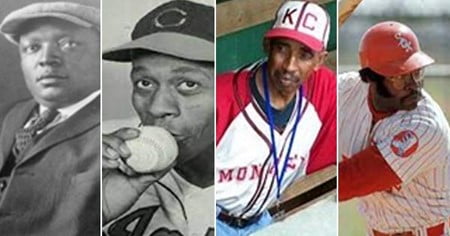
Black-Owned Independent Baseball League To Honor Negro League Legends

0

Nationwide — A League of Our Own (ALOOO), a self-funded baseball league that is the only African American owned Independent Baseball League in the United States, is honoring the legacy, history and accomplishments of four very distinguished African American Baseball players – Rube Foster, the father of Negro League Baseball; Stachel Paige, one of the greatest pitchers of all time; Sam Allen, a Negro League great; and Dick Allen, one of the Chicago White Sox’s most fierce hitters in his day.

ALOOO will honor these distinguished baseball icons by naming teams in their league after them in an effort to forever invoke their memories in the hearts and minds of past, present, and future baseball generations. The teams will bear the name Rube Foster Chicago Giants, Stachel Paige All-Stars, Sam Allen Monarchs, and Dick Allen Hittman, and the league will host an official dedication prior to the start of the 2024 season.

A few years ago, a little league baseball team from the Southside of Chicago by the name of Jackie Robinson West captured the heart and soul of the nation. Most importantly they captured the heart and soul of the African American community around the world. Baseball in inner cities is dying and we have an avenue to give baseball players something to look forward to. This league would afford baseball players the opportunity to play baseball to further advance and develop their baseball skills. We want this league to capture the heart and soul of the nation as we serve as a lifeline to pump life back into the game by providing an outlet for baseball players to continue playing past the high school and college levels.

This league is open to all baseball players from the East, West, North, and South regardless of their ethnic background, and is currently in the midst of holding open tryouts. Tryouts will remain open until all the spots are filled. Players interested in being a part of this program should visit the website and register online today for the tryouts. As a 501(c)3 not-for-profit, ALOOO is looking to develop a network of supporters to help us sustain and cultivate the future growth of this league by becoming financial donors or sponsors. All players who are interested in being a part of this league and/or those interested in becoming a financial supporter feel free to contact us at (205) 264-1468 or visit the official website at ALeagueofOurOwn247.com

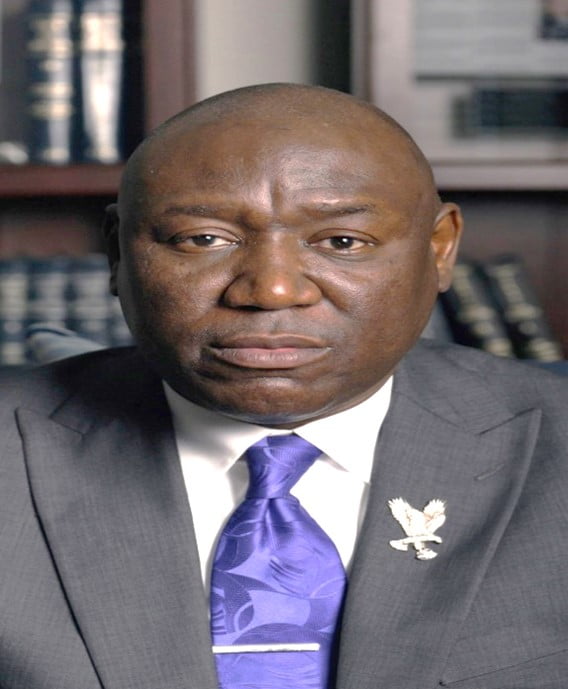
Riveting Film, How to Sue the Klan, Features Story about Five Chattanooga Women Attacked by the KKK in 1980

0

Chattanooga, TN. – Attorney Ben Crump, founder of Ben Crump Law, is known for his work on high profile civil rights cases, including the Trayvon Martin, Breonna Taylor, and George Floyd cases, now has a connection to Chattanooga though a documentary he produced entitled, “How to Sue the Klan”.

The film features the heroic efforts of five African American women who were brutally attacked by the Ku Klux Klan members while waiting on a cab in downtown Chattanooga in 1980. Despite two Klans men being acquitted by an all-white jury in criminal court and the third only serving 6 months, the women were determined to get justice. Led by Randolph McLaughlin, Attorney at New York’s Center for Constitutional Rights, the women took the case to federal civil court utilizing the 1871 Ku Klux Klan Enforcement Act, a Reconstruction era law designed to curb racial violence. This case set a nationwide legal precedent, allowing more cases to be tried in civil courts seeking damages, weakening the Klan’s power and influence over time.

Attorneys Ben Crump and Randolph McLaughlin along with the one remaining survivor of The Chattanooga Five are planning to attend the premiere screening of “How to Sue the Klan” on Friday, February 9. The event will begin at 6 pm and it will be held at The Walker Theatre located at 339 McCallie Avenue. Following the screening, a panel discussion will be hosted. While the program is free and open to the public, tickets are required. For more information about “How to Sue the Klan and to access complimentary tickets, visit www.thecivilcase.com

New Tennessee Law Helps Ex-Offenders Secure Employment Upon Release

By Camm Ashford

A new law that took effect in Tennessee on Jan. 1 aims to provide soon-to-be-released prison inmates with the documents they need to secure employment upon their release.

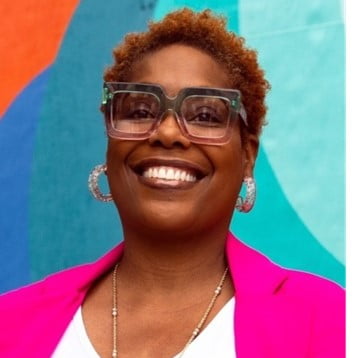
“It is time we foster a criminal justice system that is equitable, just, and focused on rehabilitation,” said District 9 City Councilwoman Demetrus Coonrod.

The Assisting Inmates in Post-Release Employment (SB0814) law mandates that the Tennessee Department of Correction provide any inmate who is released after serving time for a felony offense with the relevant documentation to assist them in obtaining employment.

This includes copies of their vocational training record, work record, birth certificate, and social security card, as well as notification of their eligibility to apply for occupational licenses or certifications.

The bill requires the process of gathering required documentation to begin nine months before an inmate’s release. It also authorizes the department to use any available funds, including inmate trust funds, existing funds, or donations, to cover the costs associated with the purchase of photo identification licenses.

The law is a significant step forward in helping ex-offenders successfully reintegrate into society. Nearly 15,000 people are released from Tennessee penitentiaries each year, and many struggle to find work and readjust to life outside of prison.

A recent study estimated that nearly one out of six Black men are currently in prison, on parole, or formerly incarcerated. A new law that took effect in Tennessee on Jan. 1 will help break down barriers former inmates face when they get out of prison.

The transition from prison back to the community is fraught with challenges, and the search for employment is one of many tasks that can derail successful reentry. The intersection of race and criminal history can be doubly disadvantageous, as formerly incarcerated people of color often face additional barriers to employment.

“Providing photo identification to newly released inmates is a practical step that can significantly contribute to successful reintegration, reduce strain on social services, and promote safer and more inclusive communities,” said District 9 City Councilwoman Demetrus Coonrod.

Councilwoman Coonrod, who is open about her past as a convicted felon, has become an advocate for police reform and crime victims’ rights. She recently published a book about her incarceration called Prison to Purpose: A Past That Shaped My Future. “By facilitating employment for newly released individuals, there’s a positive impact on the economy,” Councilwoman Coonrod noted. “Employed individuals contribute to the economy and are less likely to require assistance from social services.”