
David Jean-Baptiste Hits Buzzer Beater to Lift Men’s Basketball to 2022 Southern Conference Title
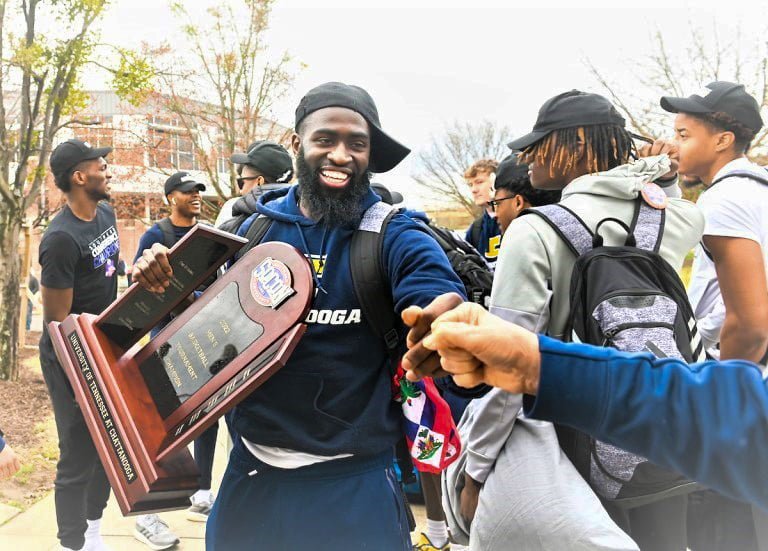
ASHEVILLE, N.C. — A shot that will live forever. Graduate guard David Jean-Baptiste buried a highly-contested 30-foot jump shot to lift the Chattanooga Mocs men’s basketball team to the 2022 Southern Conference title and a spot in the NCAA Tournament, downing No. 2 Furman 64-63 in overtime on Monday evening inside Harrah’s Cherokee Center.
Chattanooga improves to 27-7 overall this season and earns a spot in the NCAA Tournament for the first time since 2016. The Mocs have won their 12th SoCon Tournament title in school history. Furman fell to 22-12 and will await a spot in postseason play.
A game that started slow, finished in a fashion that will be remembered forever in school history. After Furman grabbed a 68-66 lead with just 4.0 seconds left in overtime, Jean-Baptiste took the inbound, dribbled left, and fired a contested three from the sponsor logo.
That shot found nothing but the bottom of the net and sent the Harrah’s Cherokee Center, the Scenic City and college basketball watchers across the country into a frenzy. The highlight and moment peaked as the No. 1 trending topic on social media waves in the United States.
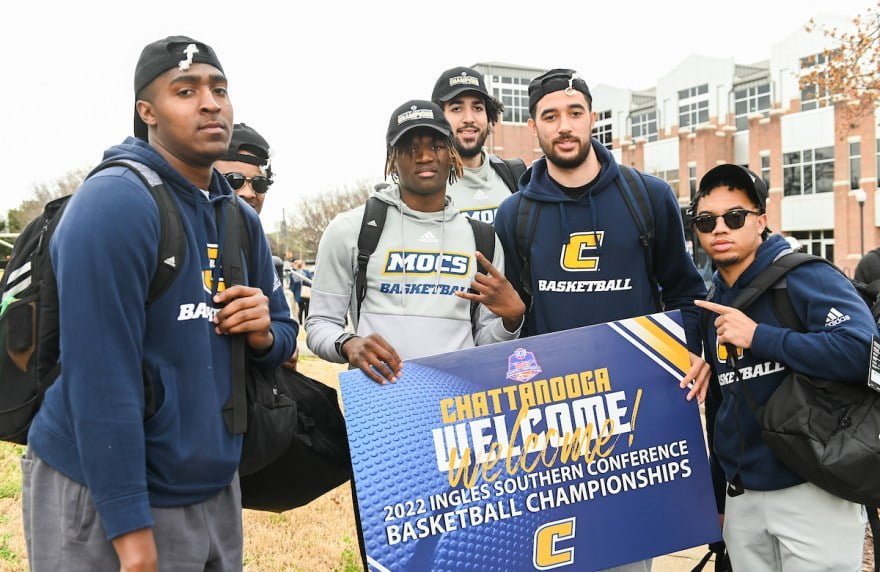
“Just unbelievable. I always talk about this book that I’m going to write when this is all said and done, and the longest chapter will be titled, ‘DJB III,’” said head coach Lamont Paris.
“It’s surreal what has transpired, the good, the bad, the ugly, we’ve been all over the place as a team, and for it to come down to that, I literally am now committed to writing that book and telling that story.”
Malachi Smith was named the Most Outstanding Player for the tournament while Jean-Baptiste (All-Tournament), Silvio De Sousa (All-Tournament) and Grant Ledford (Pinnacle – Academic) all cleaned up postseason tournament awards.
Jean-Baptiste, when asked to chime in on the life-changing moment, “It was surreal. I knew I had four seconds left, tried to put myself in the best position possible just to get the shot up, and it felt like it took forever for the ball to reach the basket, but once I saw it hit the net, I couldn’t feel no more after that. It was unbelievable.”
McDonald’s To Temporarily Close Restaurants & Pause Operations in Russia

This article was originally sent via email from CEO Chris Kempczinski to McDonald’s employees and franchisees.
March 8, 2022 – The conflict in Ukraine and the humanitarian crisis in Europe has caused unspeakable suffering to innocent people. As a System, we join the world in condemning aggression and violence and praying for peace.
Our number one priority from the start of this crisis has been – and will remain – our people.
As Ian Borden shared last week, the Company has provided immediate financial support to our team in Ukraine. We are continuing to pay full salaries for our Ukrainian employees and have donated $5 million to our Employee Assistance Fund, and continue to support relief efforts led by the International Red Cross in the region. We have been overwhelmed by the offers of support across the System and thank you for your generous contributions to date.
As many of our colleagues in Ukraine have sought refuge, they have found the familiar support of the McDonald’s System in new and unfamiliar places. In Poland and many other markets across Europe, our System has literally opened their homes, their hearts, and their restaurants. The Ronald McDonald House Charities (RMHC) Poland Care Mobile is at the Polish-Ukrainian border to provide medical care and humanitarian aid for families and children, and another Care Mobile is on the way from RMHC Latvia. Additionally, RMHC Ukraine is deploying medical supplies and providing humanitarian aid throughout the country, and its programs are being repurposed for use by hospital personnel.
This support, enabled by our global System, is happening across Europe, and will continue to grow.
In recent days, I have spoken with and heard from many in our System about our operations in Russia. The situation is extraordinarily challenging for a global brand like ours, and there are many considerations. For 66 years, we have operated with the belief that communities are made better when there’s a McDonald’s nearby.
In Russia, we employ 62,000 people who have poured their heart and soul into our McDonald’s brand to serve their communities. We work with hundreds of local, Russian suppliers and partners who produce the food for our menu and support our brand. And we serve millions of Russian customers each day who count on McDonald’s. In the thirty-plus years that McDonald’s has operated in Russia, we’ve become an essential part of the 850 communities in which we operate.
At the same time, our values mean we cannot ignore the needless human suffering unfolding in Ukraine. Years ago, when confronted with his own difficult decision, Fred Turner explained his approach quite simply: “Do the right thing.” That philosophy is enshrined as one of our five guiding values, and there are countless examples over the years of McDonald’s Corporation living up to Fred’s simple ideal. Today, is also one of those days.
Working closely in consultation with our Chairman, Rick Hernandez, and the rest of McDonald’s Board of Directors over the last week, McDonald’s has decided to temporarily close all our restaurants in Russia and pause all operations in the market. We understand the impact this will have on our Russian colleagues and partners, which is why we are prepared to support all three legs of the stool in Ukraine and Russia. This includes salary continuation for all McDonald’s employees in Russia.
Importantly, RMHC Russia will continue its full operations, just as RMHC Ukraine is partnering with local hospitals and providing humanitarian aid throughout the country.
Across the rest of Europe, we will stay focused on how McDonald’s can best help those in need, both now and in the future. We have already seen extraordinary leadership by our Ukrainian and Russian teams, and I know the rest of the McDonald’s System stands ready to support the large number of refugees who have been displaced by this conflict.
As we move forward, McDonald’s will continue to assess the situation and determine if any additional measures are required. At this juncture, it’s impossible to predict when we might be able to reopen our restaurants in Russia. We are experiencing disruptions to our supply chain along with other operational impacts. We will also closely monitor the humanitarian situation.
As always, McDonald’s will be guided by our values and our purpose to feed and foster communities across the globe.
Fisk Installs New Fellowship Program in Honor of Alum John Lewis

By Ashley Benkarski
NASHVILLE, TN—Fisk University’s John Lewis Center for Social Justice announced a new fellowship program in honor of its late alumni’s lifelong fight for justice last Wednesday. The three Fellowships are focused on policy, arts, and S.T.E.M. and were made possible with the support of the Charles and Lynn Schusterman Family Philanthropies.
Founded in 2019, the Center’s mission is “to foster and advance social justice across every sphere of contemporary society by engendering rigorous research, applying scholarship, artistic production, and community engagement locally as well as globally,” the institution’s press release explained.
“Fisk University has always been synonymous with a global concern for equality, inclusion, and prosperity. From W.E.B DuBois to Ida B. Wells, John R. Lewis and Diane Nash, Fisk has helped shape a better world for more than one hundred and fifty years,” said Fisk University President Vann Newkirk.
According to Fisk:
- The Policy/Activism Fellow will follow in the footsteps of iconic Fiskites Diane Nash and the late Congressman John Lewis to continue the fight against bigotry and confront ongoing attacks on civil rights like voting, healthcare, and education.
- The Arts/Culture Fellow is inspired by extraordinary Fisk artists, poets, and musicians such as Nikki Giovanni, Arna Bontemps, Aaron Douglas and the Fisk Jubilee Singers–-all of whom have sought to promote social justice through their work.
- The Tech/Data Science Fellow will advance the tradition of Fisk Alumni W.E.B DuBois to shape the evolving data, science, and tech fields toward ensuring full and equitable access to Black communities, both as consumers and as producers. In never-before-seen footage of Lewis at Fisk in 2019, the late Georgia representative remarked that he wouldn’t have made it to Congress if not for his time at Fisk. “Even before I arrived at Fisk … I had heard and read about W.E.B. DuBois and it was a source of inspiration. I grew up in rural Alabama and I always dreamed of going off to college,” he recalled.
It was in Nashville where he truly grew up, Lewis said, and he got involved in the Civil Rights Movement and met James Lawson, from whom he learned the philosophy and discipline of nonviolent protest. Fisk faculty acted as support in the best and worst of times, Lewis said, driving students to sit-in sites, participating and offering encouragement. When Lewis and 88 of his peers were arrested and jailed, it was Fisk faculty who signed their bond release.
“To be at a place like Fisk was so wonderful, so meaningful,” Lewis said. “We need Fisk
University now more than ever before.” Amid book burnings and attacks on teaching American history through bans on “critical race theory,” now is the time to empower Black students to attend HBCUs and advance social justice, representatives of the Center said.
“Whether it’s Fisk University or another university, a college must be about the business of seeking and building on this whole idea of social justice. We have to find a way to bring fairness and justice to all of our people,” Lewis remarked. “Young people all across America and around the world are looking for places to go where they can not just get a good education but be inspired to stand up, to speak out and play a role in helping to create what Dr. King and others call the ‘Beloved Community.’”
“Today’s student body shares this ethos and appetite for a university experience that
incorporates social justice across all disciplines. The establishment of this Fellowship
recognizes the tremendous social justice ethos among Fisk students and the future impact of this Center,” said Fisk’s Executive Vice President Jens Frederiksen.
Dr. Karida Brown, the Endowed Chair and Director of the John Lewis Center, said the
Fellowship will be “instrumental in expanding the impact and reach of the Center and we could not be more excited to begin the search for these exceptional scholars.”
Fisk’s substantive contributions to society make a visit to the campus akin to walking on sacred ground, Dr. Brown remarked, and the John Lewis Center is meant to be the lifeblood of the campus’s social justice impact.
She acknowledged that James Fraser, the Center’s Associate Director and an Associate
Professor of Social Justice, was working hard to drive a robust curriculum for the program. The Center will issue calls for applications in mid-Spring for those at all levels of their career phase, with residencies filled in Fall 2022. ”
Biden Administration Misses Big Chance to Reduce Prescription Drug Costs

By Carl Schmid
President Biden has repeatedly promised to make health care more affordable. And his administration has taken some important steps. But sadly, officials at the Centers for Medicare and Medicaid Services just passed up an opportunity to save patients millions at the pharmacy.
In December, CMS released a draft of its annual rule regulating how private insurance plans must operate in the year ahead.
Some of what CMS has proposed will certainly benefit many patients. For example, the new rule requires insurers who operate on the federal health exchange to include among their offerings standardized plans that include fixed-dollar-amount “copays” rather than “coinsurance.”
The proposed rule also warns insurers against requiring high coinsurance rates for all of the medications prescribed to treat a particular health condition. It clearly states that insurers cannot discriminate against beneficiaries based on their health condition and expected health needs.
But in one key area, the proposed rule falls short — in a way that would be easy for CMS to rectify with a small revision when the rule is finalized.
The problem concerns how insurers treat the financial assistance that drug makers often provide directly to patients. This assistance totaled $14 billion in 2019 — reducing patients’ costs and thus helping them afford their prescriptions and follow their doctors’ orders.
The proposed rule, however, allows insurers not to count this patient assistance toward a policyholder’s annual out-of-pocket maximum. That’s an option more and more insurers are taking advantage of.
To understand how unfair this is, consider a hypothetical. If a working-class patient receives $1,000 from a relative, or a local charity, to help cover a copay or coinsurance, insurers would count that spending towards her out-of-pocket maximum. But if the patient receives the same $1,000 from a drug company, those insurers wouldn’t count it.
By refusing to do so, insurance companies both collect the $1,000 in financial assistance from the drug manufacturer while at the same time requiring the patient to pay that amount out-of-pocket.
The issue of how to treat this copay assistance directly impacts patients’ health.
If taken properly, prescription drugs keep patients healthy and out of hospitals and doctors’ offices. But when patients fail to take their medicines due to cost concerns, they end up sicker, often requiring expensive hospital care.
Co-pay assistance can boost drug adherence and thus lower overall health spending — but only if patients can actually realize the savings.
Twelve states and Puerto Rico have already passed laws requiring insurers to count manufacturer copay assistance toward beneficiaries’ annual out-of-pocket maximums.
But it’s a national problem and needs a national solution. In Congress, Reps. Donald McEachin (D-VA) and Rodney Davis (R-IL) have introduced a bipartisan bill, HR 5801, to address it directly by law. In the meantime, the Biden administration could easily solve it by revising the final rule – a big step toward fulfilling its promise to make drugs more affordable.
Carl Schmid is executive director of the HIV+Hepatitis Policy Institute, which promotes high-quality, affordable health care for people living with or at risk of HIV, hepatitis, and other serious and chronic health conditions. Follow the HIV+Hepatitis Policy Institute on Twitter: @HIVHep
Recent Mass Trauma Events Lead to Critical Need for Blood

CHATTANOOGA, Tenn. (March, 8 2022) – Several recent mass trauma events in the Blood Assurance service area have exhausted the organization’s blood supply.
As of Tuesday morning, Blood Assurance had less than a one-day supply of type O-positive and B-negative blood and about a day’s supply of type O-negative, A-positive and A-negative blood. In order to adequately provide for area hospitals, Blood Assurance needs a five-day supply on the shelf at all times.
“The inventory is critically low,” according to Christopher Swafford, Blood Assurance’s chief operating officer. “We also fear that with spring break approaching, the numbers are going to dwindle even further. We need about 400 donations per day to adequately supply our local hospitals. The time to donate and be someone’s hero is right now.”
As an incentive, Blood Assurance is giving away free St. Patrick’s Day-themed t-shirts to all individuals who donate through March 17. Additionally, all donors will be entered into a drawing to win a $500 Mastercard gift card. Moreover, double red cell and platelet donors will receive a $20 virtual Amazon gift card after their donation through March 12.
To find the nearest blood drive or donation facility, and to schedule an appointment, donors can visit www.bloodassurance.org/schedule. Donors may also call 800-962-0628 or text BAGIVE to 999777
To be eligible to donate blood, you must be at least 17 years old (16 years old with parental consent), weigh 110 pounds or more and be in good health. Donors are asked to drink plenty of fluids — avoiding caffeine — and eat a meal that is rich in iron prior to donating.
Winners Announced for Inaugural Linnemann Scholarship
By Chuck Wasserstrom
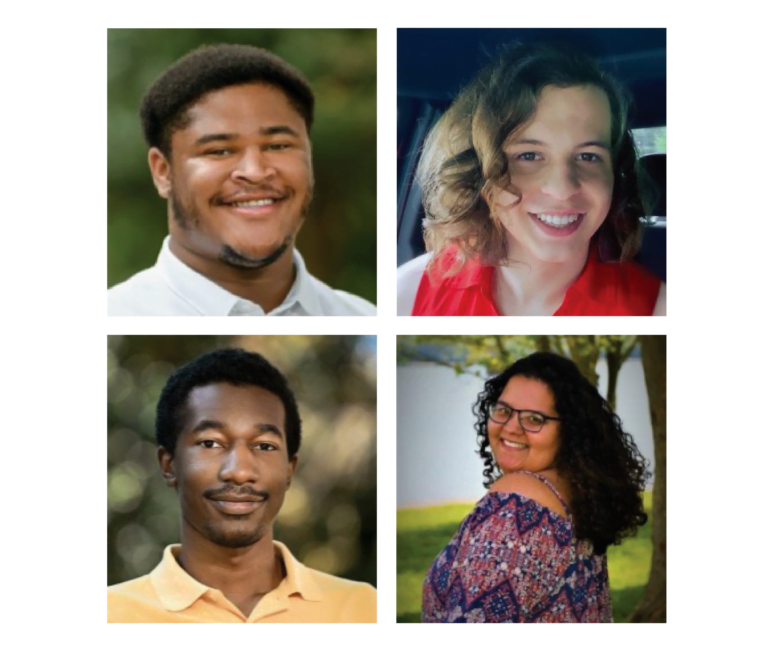
Four University of Tennessee at Chattanooga students, all minoring in Africana Studies or studying African American history, are the inaugural recipients of a newly created scholarship.
In 2021, the Dr. Russell Linnemann Memorial Endowment in History to support Africana Studies in the Department of History was established by Linnemann’s longtime friend, Bill Epstein.
The endowment provided $500,000 to support the study of African and African-American history and the history of the blues to honor the career and academic contributions of Linnemann, who spent 36 years as a UTC professor before passing away unexpectedly in 2006.
“UTC provided academic and cultural support for 36 years to my friend, Russell,” Epstein said. “That support means a lot to me, and I wanted to acknowledge it with a contribution in memory of my friend.”
The first Linnemann Scholarship recipients are political science majors DaVeon Hall and Evelina Kertay, communication major Stephen Thomas and humanities: women, gender and sexuality studies major Victoria Thomas.
“The Africana Studies program is grateful to have the resources to recognize the exceptional work and accomplishments of some of our outstanding students and to support them in their work here at UTC,” said Julia Cummiskey, assistant professor of history and interim director of Africana Studies. “The inaugural class of Linnemann Scholars has set a high standard for future generations of UTC students of Africana Studies and African American history.”
Linnemann taught African and British Empire History at UTC and was a scholar in concentrations such as Western Civilization, African History and Modern European History, but he was celebrated for his courses on the blues, for which he was affectionately known as “The Blues Doctor.”
Along with his teaching duties, Linnemann was the longtime host of WUTC-FM/88.1’s “Blues and More,” a show that gained national notoriety for the National Public Radio affiliate.
Birthday Celebration: Annie Mae Hill
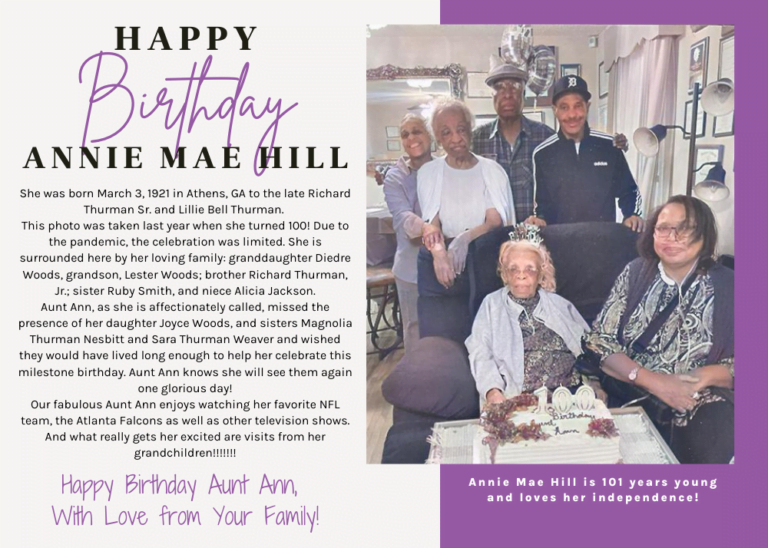
Happy Birthday Aunt Ann!
Text from the Card Above Reads:
Annie Mae Hill is 101 years young and loves her independence!
She was born March 3, 1921 in Athens, GA to the late Richard Thurman Sr. and Lillie Bell Thurman.
This photo was taken last year when she turned 100! Due to the pandemic, the celebration was limited. She is surrounded here by her loving family: granddaughter Diedre Woods, grandson, Lester Woods; brother Richard Thurman, Jr.; sister Ruby Smith, and niece Alicia Jackson.
Aunt Ann, as she is affectionately called, missed the presence of her daughter Joyce Woods, and sisters Magnolia Thurman Nesbitt and Sara Thurman Weaver and wished they would have lived long enough to help her celebrate this milestone birthday. Aunt Ann knows she will see them again one glorious day!
Our fabulous Aunt Ann enjoys watching her favorite NFL team, the Atlanta Falcons as well as other television shows. And what really gets her excited are visits from her grandchildren!!!!!!!
Happy Birthday Aunt Ann, With Love from Your Family!
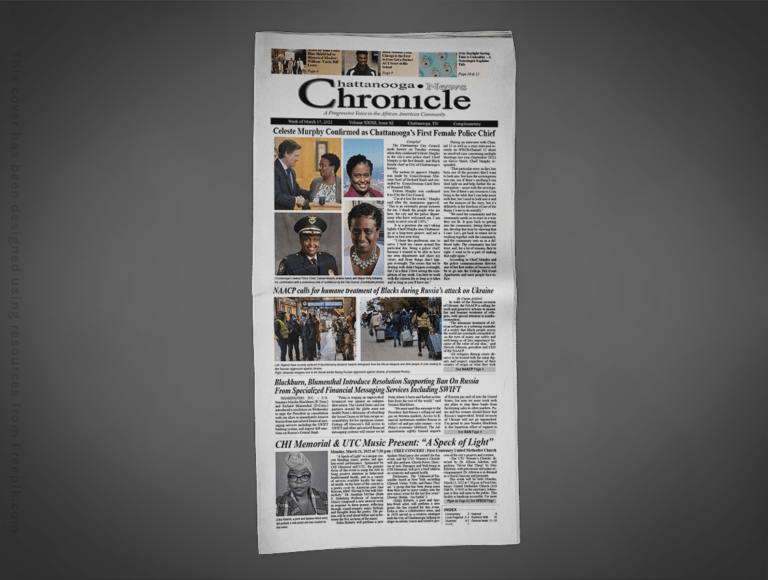
Chattanooga News Chronicle Chosen for Phi Beta Sigma Fraternity’s Bigger Better Business Award
By Camm Ashford
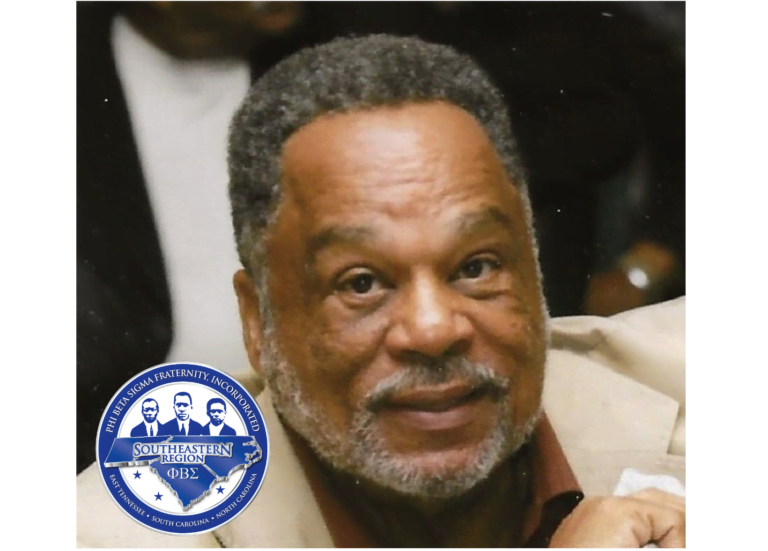
The Southeastern Region of Phi Beta Sigma Fraternity, Inc. has chosen the Chattanooga News Chronicle as winner of its 2022 Bigger Better Business Award.
The News Chronicle will be recognized during the fraternity’s Image Award Gala Dinner on March 26 at 7 p.m., in the ballroom of the Chattanoogan Hotel, 1201 Broad St.
“The Chattanooga News Chronicle has been selected because it demonstrates business excellence and the highest standards of ethical conduct, integrity and civic and social responsibility,” said Phi Beta Sigma Fraternity Eastern Tennessee State Director Arthur Benton.
The theme of this year’s Image Award Gala Dinner is “Celebrating Our Legacy of Brotherhood, Scholarship and Service.”
Phi Beta Sigma Fraternity was founded at Howard University in Washington, D.C. on. Jan. 9, 1914, by three African American students. The founders–A. Langston Taylor, Leonard F. Morse and Charles I. Brown–wanted to organize a Greek letter fraternity that would truly exemplify the ideals of brotherhood, scholarship and service.
From its inception, the founders also conceived Phi Beta Sigma as a mechanism to deliver services to the general community.
Today, Phi Beta Sigma Inc. has blossomed into an international organization of leaders. No longer a single entity, members of the fraternity have established the Phi Beta Sigma National Foundation, the Phi Beta Sigma Federal Credit Union and The Sigma Beta Club Foundation.
Zeta Phi Beta Sorority, founded in 1920 with the assistance of Phi Beta Sigma, is the sister organization of the fraternity.
The “Super” Southeastern Region of Phi Beta Sigma Fraternity, Inc. consists of nearly 100 undergraduate and alumni chapters in East Tennessee, South Carolina and North Carolina.
The fraternity’s motto is “Culture For Service and Service For Humanity.”
The Chattanooga News Chronicle was founded in 1989 by John L. Edwards III, his wife, Faith, and his son Adrian to make sure the African American community was highlighted and reported on in a positive and encouraging manner.
Through the newspaper, the Edwards family has over the years played a major role in writing the stories that call out and confront systemic racism and injustice.
City Council Appoints Marvene Noel to fill Anthony Byrd’s District 8 Seat
By Camm Ashford
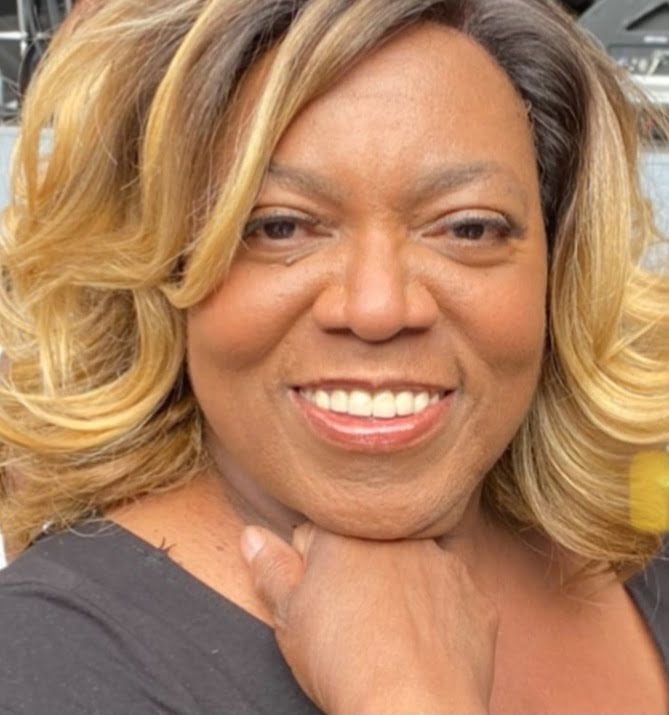
Chattanooga City Council on Tuesday night appointed Marvene Noel to fill the District 8 seat vacated by Councilman Anthony Byrd.
Mayor Tim Kelly appointed Byrd City Court clerk on Feb. 1. Since then, he has not participated in council votes, nor has he attended meetings.
Council on Tuesday conducted interviews with the seven candidates who applied for the seat vacated by Byrd. Noel, of Orchard Knob, won in a 6-2 vote.
Council members Darrin Ledford and Ken Smith voted for Armand Wine, youth minister at Avondale Church of Christ.
Immediately following the vote, Noel was administered the oath of office, and then took the District 8 seat.
“Thank you all for trusting me,” Noel said. “And thank you so much for letting me bring my love and my heart for my community to the City Council family.”
Noel is a member of the Orchard Knob Neighborhood Association. She also serves as
director of diversity for the League of Women Voters of Chattanooga; on the Park Ridge Health System Board of Governors; as the Chattanooga lead for health disparities on the Neighborhood Development Oversight Committee; on the Orchard Knob Collaborative; and on the East Chattanooga Community Council.
District 8 includes the following precincts: Amnicola, Avondale, Bushtown, Courthouse 1 and Courthouse 2 and Eastside 1 and Eastside 2.
Councilwoman Noel said she plans to run for office in the Aug. 4 general election to continue representing the seat. Council members serve four-year terms.