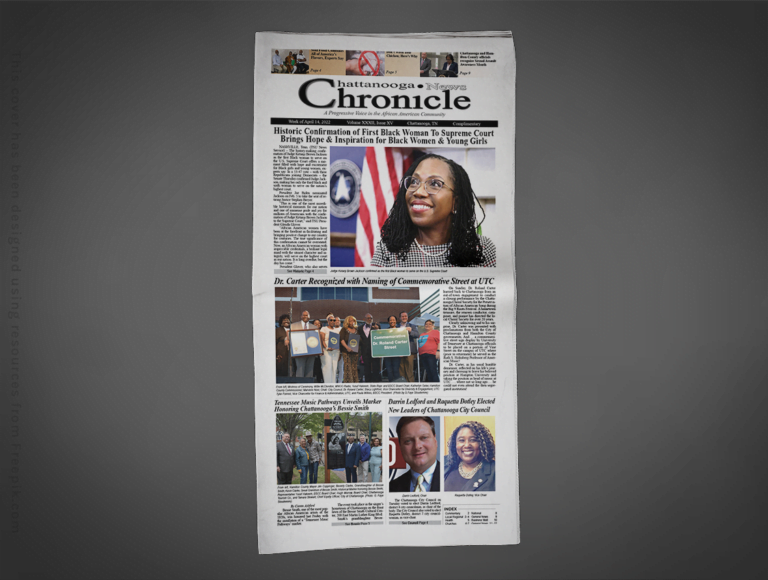
The Chattanooga City Council on Tuesday voted to elect Darrin Ledford, district 4 city councilman, as chair of the body. The City Council also voted to elect Raquetta Dotley, district 7 city councilwoman, as vice-chair.
Ledford, the East Brainerd councilman, has served as chair of the council’s planning and zoning committee since 2017, as a planning commissioner on the Chattanooga Hamilton County Regional Planning Commission, and as a board member of the Regional Transportation Planning Organization.
As a councilman, Ledford has prioritized operational efficiency, increased public services, and his work on the zoning and planning process.
“I am overwhelmed by the support and trust my colleagues have placed in me to serve as chair, and I look forward to working alongside vice-chair Dotley and the City Council in continuing to foster communication and relationships as the building blocks of our community,” Ledford said.
Dotley, the district 7 councilwoman, was elected in 2021 and has quickly become a respected voice on the council through both her service as chair of the Equity and Community Engagement committee, as well as her hard work on behalf of her constituents.
She represents one of the most diverse districts in Chattanooga, stretching from downtown to Alton Park, and from St. Elmo to East Lake.
“I deeply appreciate the faith my colleagues have placed in me, and as vice-chair I look forward to representing the amazing residents of district 7, and collaborating at a deeper level with my fellow council members in order to accomplish our urgent work,” Dotley said.
The results of the election were effective immediately on Tuesday night.
Fort Oglethorpe, GA: Point Park, atop Lookout Mountain, part of Chickamauga and Chattanooga National Military Park, is waiving the entrance fee on Saturday, April 16, 2022, to celebrate the first day of National Park Week.
National Park Week is a presidential proclamation that provides the public a time to explore and discover the natural and cultural histories of our nation’s valued treasures. From Saturday, April 16 to Sunday, April 24, national parks throughout the country will provide special programs, events, and digital experiences. There are 423 units in the National Park System. Take this week to discover a national park, immerse yourself in the resource, and find where your personal story lies within it.
Visit Point Park on this fee free day to indulge in the views and scenery of the Chattanooga Valley from 2,100 feet above, hike the natural and wildlife-abounding Lookout Mountain Battlefield’s
30-miles of trails, while learning the historical significance of this area during America’s Civil War in what became known as “The Battle Above the Clouds.” During the day, park rangers will provide programs at 11am and 2pm and will also be available at the Lookout Mountain Battlefield Visitor Center from the hours of 8:30 am to 5 pm to answer questions and provide information about the park and the Battles for Chattanooga.
For more information about programs Chickamauga and Chattanooga National Military Park, contact the Chickamauga Battlefield Visitor Center at 706-866-9241, the Lookout Mountain Battlefield Visitor Center at 423-821-7786, or visit the park website at www.nps.gov/chch
Kenyatta Ashford fondly remembers family dinners from his childhood in Louisiana as “like a hug.”
“My dad comes from a family of 13 out of rural Louisiana, and my mom comes from a family of nine. Our home became the central gathering place for family during holidays,” he recalled. “It was one of the things that propelled me into wanting to take care of people and prepare, you know, a really, really good meal for them.”
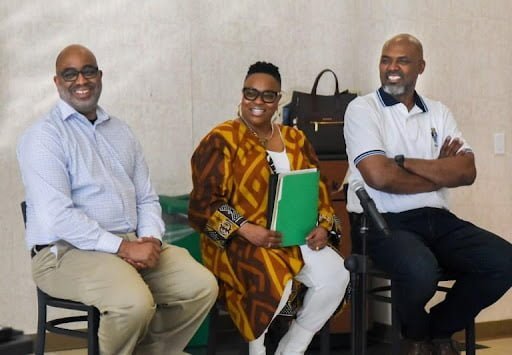
Ashford is chef at the local restaurant Neutral Ground and winner of the culinary competition “Chopped Next Gen” last year on the Food Network. He partnered with author Adrian Miller in a Thursday lecture, “A Conversation about Black Cuisine.”
“My central focus making food is ultimately to always make it delicious because it just brings up a certain comfort to you and everything,” Ashford said. “It’s kind of almost like a hug.”
Miller’s first book “Soul Food: The Surprising Story of an American Cuisine, One Plate at a Time,” won the James Beard Foundation Award for Scholarship and Reference in 2014. His latest, “Black Smoke: African Americans and the United States of Barbecue,” published in 2021.
Sponsored by the Department of History Africana Studies at the University of Tennessee at Chattanooga, the title of the lecture may have been “Black Cuisine,” but the conversation broadened far beyond. While there were discussions on the roots of soul food, the use of vegetables in many of its dishes, barbecue and other topics, it also branched into locally-sourced foods vs. corporate products, building a restaurant business and healthy food choices.
Considering soul food to strictly be a province of blacks, for instance, is the wrong attitude, Miller said.
“This is not a widely shared take, but this is my take. I think that anybody can make anybody’s food, but there are certain guidelines,” Miller said. “You’ve got to be on point with the flavor profile and make it correctly because the worst thing you could do is take food from another culture and make it poorly and make a nasty version of it.”
While the idea of soul food seems intrinsically tied to the South, the reality reaches much farther, Miller and Ashford said.
Some of it goes back to African slaves who brought recipes and cooking techniques from their native countries. Europeans also brought their styles. The Great Migration from 1910 until 1970 took blacks from the East into western America, where cuisines from Native Americans, Latinos and other cultures blended.
“When people come in contact with other people, they notice. They borrow. They experiment. That’s what the human experience has been about,” Miller said.
“Soul food is a coming together of West Africa, the Americas and Europe in terms of ingredients, techniques and culinary traditions. That all comes together in America,” he said.
Nor is soul food unhealthy, as many believe, Ashford explained. Despite the use of lard, fatback and other artery-jamming flavors in some dishes, the base of the cuisine is vegetables.
“I think, as a culture here in the United States, food became an unhealthy thing when it became industrialized,” he said. “Before World War II, lots of folks grew their own food. Food was vegetable heavy.
Ordinance to allow accessory dwelling units by right will increase the supply of housing across the city by unlocking the full potential of single-family dwellings
Chattanooga, Tenn. (Monday, April 11) — Chattanooga Mayor Tim Kelly is working to increase housing options and affordability for Chattanooga residents through a proposal that will permit accessory dwelling units on single-family lots under certain conditions.
Accessory dwelling units, alternatively known as in-law suites, carriage houses or granny flats, are often found above garages, in a detached structure or either above or below the principal dwelling. And at a time when Chattanooga is suffering from a deficit of more than 5,000 units as housing costs skyrocket, allowing ADUs by right on single-family lots couldn’t come at a better time, Kelly said.
“Chattanooga is on the brink of becoming a city in which our children cannot afford to live, and that is unacceptable,” Kelly said. “This ordinance will allow our seniors to age in place, support multi-generational households, and create energy-efficient housing while also maintaining the character of our neighborhoods.”
The ADU ordinance is the latest piece of Kelly’s One Chattanooga strategy to expand access to homes Chattanoogans can afford. The average cost of a home has climbed to $290,000 today, up from $159,000 in 2015, while median household income during the same period rose only slightly to $47,165 from $40,177 in 2015.
The 80 percent increase in housing costs has left 43% of renters defined as “housing burdened,” or spending more than 30% of their income on housing. And 22% of renters are “housing insecure,” defined as spending more than half of their income on housing costs.
Last month, Kelly launched a $100 million affordable housing initiative seeded by $33 million in city money that will leverage public and private funds to create thousands of units that residents can afford, ranging from supportive housing up to missing-middle homes. The city is working on the initiative in conjunction with the philanthropic, nonprofit and private sectors, creating a capital stack that offers a return on investment for those who help create homes that residents can afford.
The Kelly administration has also rolled out a number of initiatives to bolster low-income housing providers directly, including offering $100,000 in backing for security deposits, as well as undertaking comprehensive zoning reform to unblock the pipeline of new home construction.
Under the proposed ordinance, ADUs must be permanent structures limited to 700 square feet in size, and only one ADU will be permitted per single-family dwelling. ADUs must be located in the rear or side yard, and will not be permitted in front yards. They will also be height-limited to two stories, and cannot exceed the height of the principal home.
Existing parking must be maintained or replaced if parking is lost in the course of creating the ADU, and ADUs are required to adhere to the architectural design of the principal home, including the facade, building materials, roof and windows.
The ordinance does not supersede homeowner association rules or historic district guidelines as they relate to ADUs.
Food & Drug experts are warning people not to wash their chicken before they cook it. It sounds crazy, but here’s why…
Studies have shown that 44% of the population washes raw chicken prior to cooking. The percentage goes up to 71% when the chicken is frozen.
Both situations raise the risk of spreading Campylobacter bacteria on multiple surfaces (hands, clothing, cooking utensils, counter tops and more) via splashing droplets of water.
Common symptoms of Campylobacter poisoning include abdominal pain, severe diarrhea (often bloody), vomiting, irritable bowel syndrome, reactive arthritis, as well as a serious condition of the nervous system known as Guillain-Barré syndrome.
The Centers for Disease Control estimates that approximately one in every 1,000 reported Campylobacter illnesses leads to Guillain-Barré syndrome.
As many as 40% of Guillain-Barré syndrome cases in the U.S. may be triggered by campylobacteriosis.
The Naked Truth
A single drop of juice from raw poultry can have enough Campylobacter in it to infect a person!
The National Antimicrobial Resistance Monitoring System (NAMRS) reported that 47% of raw chicken samples bought in grocery stores tested POSITIVE for Campylobacter.
Do NOT wash raw poultry prior to cooking.
Prevent cross contamination- Immediately wash any cutting boards/utensils that have come into contact with raw poultry before using them to prepare any other foods.
If you feel the need to wash your poultry:
Let’s face it, sometimes you MUST wash poultry, like the inside of turkeys before stuffing them, legs/thighs to remove bits of bone from butchering, etc. Here’s how to do so safely:
Place the poultry in a colander in the center of the sink
Rinse using cold water turned on low, (to help prevent splashing)
Let the chicken set a few moments to fully drain off
Wash your hands with hot soapy water
Wash the surrounding counter areas with hot soapy water (A solution of 1 tablespoon of unscented, liquid chlorine bleach in 1 gallon of water may be used to sanitize washed surfaces and utensils.)
Dry the counters/ surfaces thoroughly
Properly cooking poultry effectively kills any potential bacteria (Salmonella, Campylobacter, etc) that is on the chicken, but taking these simple steps will ensure that you don’t accidentally spread the bacteria prior to cooking. (Source: BlackDoctor.org byCharles Reed)
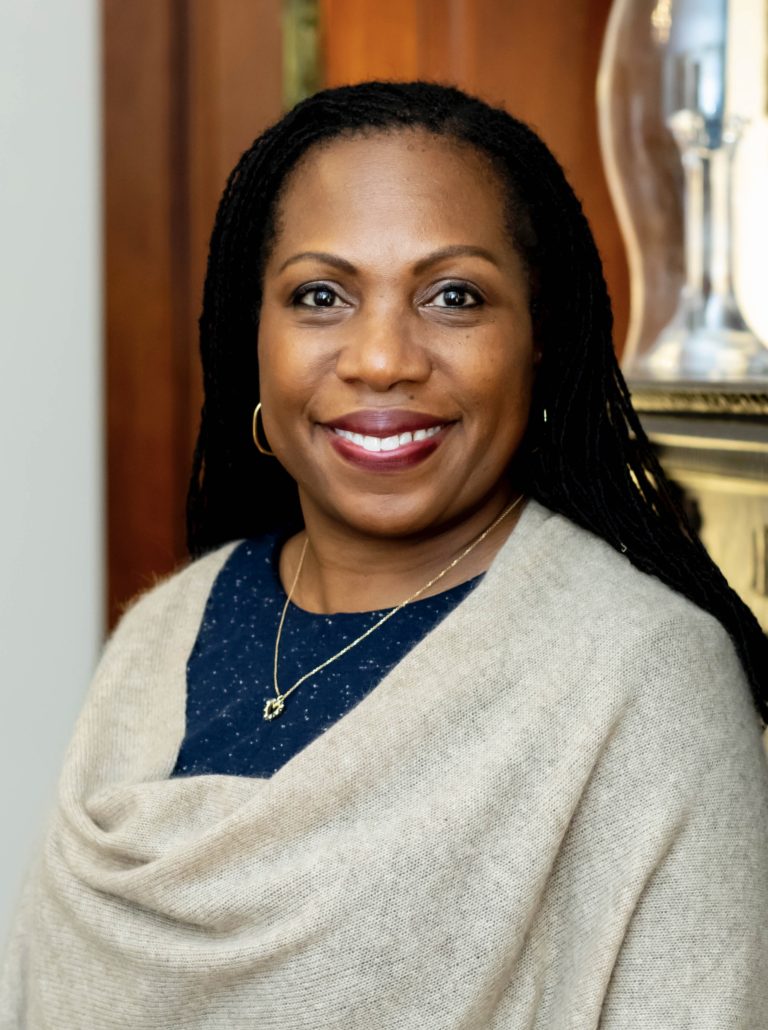
Like millions, I was glued to the TV screen as the “yeses” and “noes” were read aloud in the U.S. Senate chambers, the votes on the confirmation of Supreme Court nominee Ketanji Brown Jackson.
Now although her nomination was a foregone conclusion, for me each “yes” felt like a shot in the arm, a spike in adrenalin. I refused to allow the “no” daggers steal the magnificence of the day.
Suddenly during a commercial, I got a call from Mrs. Faith Edwards, executive editor of the Chattanooga News Chronicle. It was clear that she couldn’t contain her elation. And neither could I.
“Hey brother Terry, I had a hunch that you’d be watching this historic moment. Praise God, yes, yes, yes, hallelujah, hallelujah, hallelujah, I’m beside myself.” But of course, our call was short because we both had to get back to the resumption of the vote counting.
Moments later an epiphany as I watched the proceedings. My two-year-old granddaughter Naomi, pigtails and all, came in the room, climbed onto my lap and asked, “what are you watching grandpa?”
Before I could figure out how to explain the significance of the moment to a two-year-old, a quote flashed through my mind as I looked her in those innocent eyes:
“You can’t be what you can’t see,” wrote education pioneer Marian Wright Edelman. Worth repeating, “You can’t be what you can’t see,”
With my eyes on my Naomi, I thought about her four-year-old sister Noelle playing with toys in the kitchen, and her 11- year-old sister Nadia upstairs absorbed in her tablet.
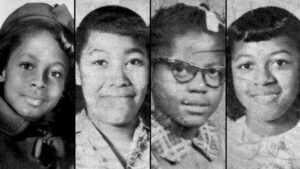
And for reasons I could not fathom, I thought about Denise McNair, Cynthia Wesley, Carole Robertson and Addie Mae Collins, four beautiful Black girls killed when a bomb went off while they were in Sunday school in 1963 at a Birmingham, Alabama church. For these girls, in this historic moment, I thought about what could have been.
Denise McNair, Cynthia Wesley, Carole Robertson and Addie Mae Collins, four beautiful Black girls killed when a bomb went off while they were in Sunday school in 1963 at a Birmingham, Alabama church.
So, thanks to you Supreme Court Justice Ketanji Brown Jackson, my beautiful granddaughters and millions of other young Black girls can now be what they now see.
Abandoning that one, he dug again, and the local residents finally left him alone. So he called it, “The Well of Room Enough for Us at Last!” “For now at last,” he said, “the LORD has made room for us and we shall thrive.”
TODAY’S WORD:
In Genesis 26, Isaac moved to the valley to get away from the local Philistines’ opposition. He could have fought them and won. Once in the valley, he reopened two wells that were rightfully his, but local herders quarreled over the wells, so he let them have the wells. One of the wells he named “argument” and the other “opposition.” He knew that although he could have kept them, it wouldn’t be worth the ongoing strife and conflict. He then dug a third well that was not contested, and he named it “room enough” or “wide-open spaces.” Too often we get bogged down at the well of argument and opposition, trying to prove our point and convince people we’re right. Sometimes you need to stay and fight for what belongs to you, but some battles that you could win are not worth fighting. There are times when you need to walk away and let GOD make it up to you. Take the high road to the valley where there’s room enough, abundance, and wide-open places.
PRAYER FOR TODAY:
FATHER, thank YOU that I can avoid getting stuck in trying to prove my points and win arguments. Thank YOU that beyond the wells of opposition are valleys where there is room enough. I believe that YOU are leading me into wide-open places of abundance and wholeness. In JESUS’ Name, Amen.
Chattanooga, Tenn. (April 4, 2022) – The Bethlehem Center will host its second annual Southside Juneteenth Jubilee on Saturday, June 18 from 1 pm – 4 pm at the center’s location in Chattanooga’s Southside at 200 W. 38th Street.
In honor of the commemoration of African-American emancipation celebrated annually across the United States, the Bethlehem Center originally decided to host a Juneteenth jubilee with the goal of bringing Chattanooga communities together for a great day of celebration, fellowship, and to support locally owned African American small businesses. This year there will be food trucks and over 40 vendors selling art, handmade jewelry, holistic skin products, and more onsite at the jubilee.
“We are so excited to host our Southside Juneteenth Jubilee this year,” said Shari Watson, the Director of Marketing for the Bethlehem Center. “Last year, not only did we showcase over 40 African American business owners, we also celebrated Juneteenth with over 400 attendees from Chattanooga, Atlanta, and Alabama. It was an honor to provide a space where all communities came together to support local businesses and participate in a cultural heritage event in the Greater Chattanooga area.”
For more information about the Southside Juneteenth Jubilee or to learn about vendor and partnership opportunities, please contact Shari Watson at (423) 266-1384 ext. 103 or send an email to swatson@thebeth.org
Nationwide — Merrill Pittman Cooper, an African American man from Jefferson County, West Virginia, has earned his high school diploma at 101-years old, finally making his lifelong dream come true.
From 1934 to 1938, Cooper was a student at Storer College in Harpers Ferry, West Virginia, a school that admits newly freed slaves during the Civil War. He studied Latin, biology, history, English, and mathematics.
However, he was forced to drop out during his senior year when his family had to move to Philadelphia due to financial reasons.
Over the years, he accomplished a career in the transportation industry. But he still has some regret over not getting his diploma. He told his family about it when he visited the school, which is now part of the Harpers Ferry National Historical Park, in 2018.
His family supported his dream and reached out to the school to make it happen. Finally, he was honored with a special ceremony and diploma on March 19.
“Jefferson County Schools is committed to helping every student, young or old, fulfill their dreams,” JCS superintendent Bondy Shay Gibson-Learn said, ac