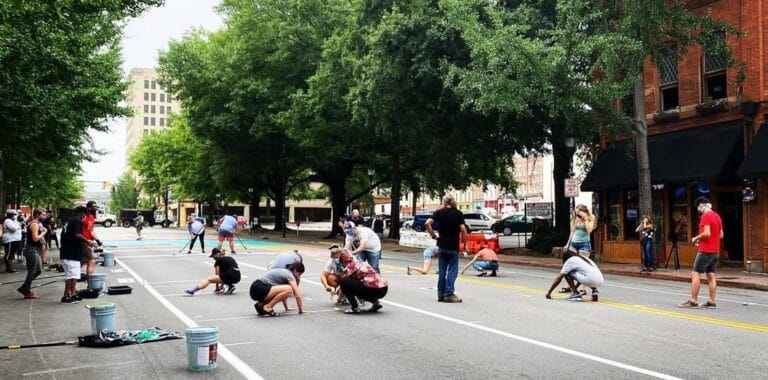
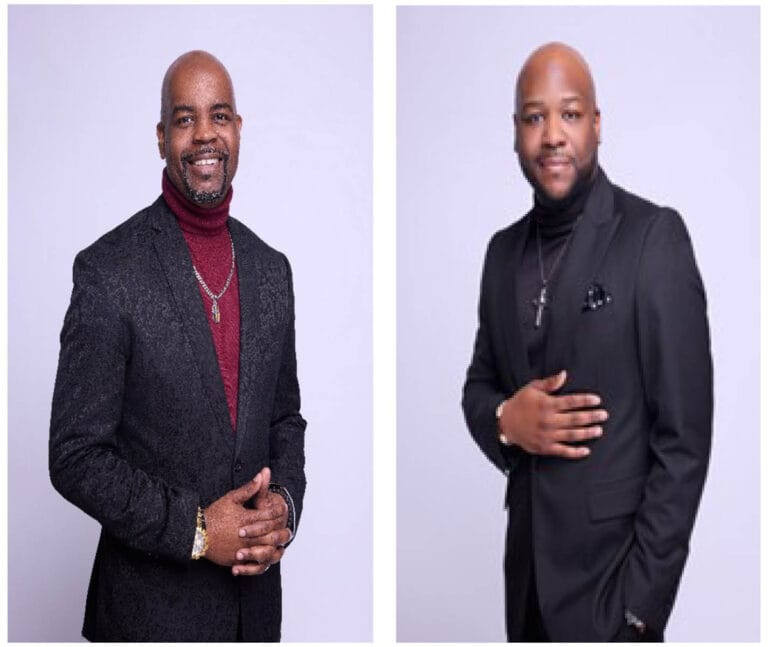
From left, Sharnee Norwood; SEC Representative Frederick “Pokey” Toney; First Vice Commander Joe Gibson; Post Commander Marcus Ford; Fletcher Douglas; and Adjutant Carla Bell (Post & Department Adjutant). (Submitted Photos)
AMVETS Post 36 has been a staple in the East Chattanooga community for approximately twenty years. The post was founded by Jesse Curtis, a local middle school principal in the 1980s and a veteran of the Armed Services. The post has been through a lot of changes in the past two decades but has remained a strong resource for veterans in the area. Last Fall, the veterans of Post 36 held a Trunk or Treat for the second year in a row where they gave away candy and free hot dogs to the community. The organization also held their first Veteran Food Drive last month where they were able to feed 15 veterans in the community.
The organization issues JROTC awards to all the local high schools each year and has made presentations at Hixson High School in the past. In 2026, we intend to include Red Bank HS and East Ridge HS for presentations.
The AMVETS participated in the Armed Forces Day Parade and Luncheon each year as well as the Veterans Day parade in the Fall. And we currently have plans to give away free hot dogs during Hamilton County’s Spring Break in March 2026.
The AMVETS hold meetings at the Veterans Club at 2114 Wilder Street and will post the date of the free hot dogs on their door soon.
Please come out and support the efforts of AMVETS Post 36! And, if you are a veteran in need of camaraderie, or would like to volunteer to help other veterans, please come out and meet the vets of American Veterans Post 36.
The Unity Group of Chattanooga was greatly saddened to hear of the recent transition of one of our foremost heroines who stood for truth, justice and universal fairness, Chattanooga former Representative Dr. Tommie F. Brown. It is not mere coincidence that just hours after we finished the 56th Annual MLK Week, we are reminded that for most of those years Rep. Dr. Brown was a key sponsor and financial contributor for the celebration, and was the keynote speaker at the 2014 Main Program.
Rep. Brown’s mark on Chattanooga’s political landscape is permanently affixed. As the lead plaintiff in Brown v. City of Chattanooga, she stood unwavering in the fight against an at-large election system that had long diluted Black voting power. Yet,she always reminded everyone that while her name led the list, there were other courageous residents and community leaders whose efforts were equally, if not more vital. Together, they transformed Chattanooga’s government into a mayor–council system with district-based elections, finally ensuring that communities of color had the representation they had long been denied.
Dr. Brown always had compassion for our youngest and most vulnerable. Three decades ago, she was among the individuals who called for a complete overhaul of Tennessee’s foster care system, demanding better health care and services for children in state custody. One significant outcome of that advocacy was the Bryan A.Case, which highlighted systemic failures within the system and set important legal and policy precedents. And as recent reports make clear, the concerns Rep. Brown and like-minded advocates raised so many decades ago still resonate today, showing that the fight for the well-being of foster children in Tennessee remains as urgent now as it was then.
Likewise, through her tireless efforts, she ensured that the contributions of Tennessee’s African American legislators were preserved in the state library, archives, and online, work that was especially vital because their achievements had too often been downplayed or outright omitted.
Her commitment to education was also one of her hallmarks. In 1971, Dr. Brown joined the faculty at the University of Tennessee at Chattanooga, where she founded the Social Work program and later became the first African American woman to serve as a department head. For decades she shaped minds and hearts, training generations of social workers, mentors, and leaders who would carry forward her belief that knowledge is power and service is duty.
At age 78, she reflected on her life and her work with that same spark that carried her through decades of activism, education, and public service. As reported in the Times Free Press, she said, “the best is yet to come”, a line that embodies the optimism, the resilience, and the faith she carried for herself and her city.
Rep. Brown could have retreated into a quaint and blissful retirement, but instead she remained tireless in advocating for issues that uplifted the community, helped build coalitions to address pressing issues, and continued to mentor the leaders of tomorrow.
She stood with the people when many went to City Hall, calling for community benefits agreements, voting rights, and an end to police brutality. You would see her at City Council and County Commission meetings because she wanted everyone to know she stood firmly with the interest of the community. You would find her at neighborhood and organizational meetings because she understood that information sharing, organizing, and consensus-building were essential to addressing problems that were often institutionalized and systemic.
Dr. Tommie Brown’s legacy is living proof that courage and dedication can reshape institutions, lift communities, and leave the world better than we found it. She leaves a city that is more just, a state that is more accountable, and a history that will never forget the work of a woman who devoted her life to service. Chattanooga will carry her memory onwards in its government, in its schools, and in its hearts, and as a reminder that real change comes when we fight for it with vision, integrity, and unshakable love for our people.
In reference to Rep. Dr. Tommie F. Brown, we think of the words penned by Lucie E. Campbell:
‘Oh, when I come to the end of my journey,
Weary of life and the battle is won;
Carrying the staff and the cross of redemption,
He’ll understand and say,’ “Well done.”
Yours In Abundance, Unity Group of Chattanooga
Eric A. Atkins, Co-Chair and Rev. Dr. Charlotte S.N.N Williams, Co-Chair
“Thanks homegirl,” I said to myself as I left the car’s garage and punched my hotel’s address into my GPS. I thanked her again after the GPS she developed guided me through heavy California traffic and back roads and got me safely to my hotel. And thanks to your legacy, Dr. West, I’m proud and delighted to kick off African American History Month with your incredible story.
Now if anyone is as insecure as I am when you’re about to drive to some unfamiliar place, you’re probably quick to rely on your destination’s address in your GPS. Yes? No?
Well, the next time you do remember the name Gladys West, whose work on the development of the GPS is a matter of fact. Okay, I bring the West story to your attention for two reasons, again because we’re in the early days of African American History Month and second, and more ominous, we’re in the middle of efforts to erase Black and other identities from history.
Here’s another fact.
Like West, I’m a native born Virginian and graduate of a HBCU (Historically Black College and University.) But that’s where our similarities end.
You see, while Gladys West, a straight A student, pursued a rigorous mathematics curriculum in college, yours truly, at best a B student, studied American Literature and Elizabethan Writers as an English major in college which, as I think about it, should mean that I can write about West’s career in math and science with little understanding of the actual subject matter of her field of expertise. Put a complex math problem on my plate, I’m lost. Put a compelling paragraph on that plate, I salivate. While Mrs. West was adroit at analyzing complex mathematical problems at Virginia State University, during my time at Winston Salem State, I was busy trying to interpret a Shakespeare sonnet or deciphering the works of Emerson and Thoreau.
But before I share what I learned about Gladys West – and my motivation for writing about her- here’s what’s going on these days that has pushed me not far from outrage; the purposeful efforts to erase the history of African Americans in the United States.
Undeniably, there are forces at play these days that want to close the book on our history and insulate themselves from thoughts and images of those atrocities in history. Well – okay, here’s the English major coming out of me- “The past is never past. It’s not even past,” wrote William Faulkner. As a perfect bookend to that Faulkner quote, Pulitzer Prize winning author Nikole Hannah-Jones nailed it best with this: “White Americans desire to be free from a past they do not want to remember, while Black Americans remain bound to a past they can never forget.”
Let that sink in.
Well here’s our unequivocal response to the history-erasing ilk; for every book written about our history that you put on your asinine “banned books” list, for every portrait of our hero you take down, we’re coming at you with counteractions of our own. When you do something under the guise as MAGA, our response will be YBWP (You Ban, We Publish). Got it?
Now with that out of my gut, let’s turn now to Gladys West.
Gladys Mae West was an American mathematician known for her contributions to mathematical modeling of the shape of the Earth and her work on the development of satellite models later incorporated into the Global Positioning System (GPS). She was born in Sutherland, Virginia. Her family was an African American farming family in a community of sharecroppers. She spent much of her childhood working on her family’s small farm. As well as working on the farm, her mother worked in a tobacco factory and her father worked for the railroad. West saw education as her way to a different life.
In high school, she was one of the top two students in her graduating class to receive full scholarships to Virginia State College, a HBCU and graduated as valedictorian in 1948. At Virginia State she studied mathematics, a subject that was mostly studied by men. She graduated in 1952 with a Bachelor of Science degree in mathematics, and then taught mathematics and science for two years in Waverly, Virginia. She returned to Virginia State to complete a Master of Mathematics degree and graduated in 1955 before beginning another teaching position in Martinsville, Virginia.
In 1956, West was hired to work at the Naval Proving Ground in Dahlgren, Virginia, the second Black woman hired and one of only four Black employees. She was a computer programmer in the Dahlgren division, and a project manager for processing systems for satellite data analysis while earning a masters degree from the University of Oklahoma.
In the 1960s, West participated in an award-winning study that proved the regularity of Pluto’s motion relative to Neptune. Subsequently, she analyzed satellite altimeter data from NASA’s Geodetic Earth Orbiting program to create models of the Earth’s shape. She became project manager for the Seasat radar altimetry project, the first satellite that could remotely sense oceans.
From the mid-1970s to the 1980s, West programmed an IBM 7030 Stretch computer to deliver increasingly precise calculations for the shape of the Earth; an ellipsoid with additional undulations known as the geoid. To generate an accurate geopotential model West used complex algorithms to account for variations in the gravitational and other forces that distort Earth’s shape.
In 1986, West published Data Processing System Specifications for the Geosat Satellite Radar Altimeter, a 51-page technical report from the Naval Surface Weapons Center. This explained how to improve the accuracy of geoid heights and vertical deflection, important components of satellite geodesy. This was achieved by processing data from the radio altimeter on the Geosat satellite, which went into orbit on March 12, 1984. West worked at Dahlgren for 42 years and retired in 1998. In 2000, she completed a Ph.D. at Virginia Tech.
West was inducted into the Air Force Hall of Fame in 2018, one of the highest honors bestowed by Air Force Space Command (AFSPC). The AFSPC press release hailed her as one of “the ‘Hidden Figures’ part of the team who did computing for the US military in the era before electronic systems”, a reference to the 2016 book by Margot Lee Shetterly, which was adapted into the film Hidden Figures. The commanding officer at the Naval Surface Warfare Center Dahlgren Division, described the role played by West in the development of Global Positioning System: “She rose through the ranks, worked on the satellite geodesy, and contributed to the accuracy of GPS and the measurement of satellite data.”
As Gladys West started her career in 1956, she likely had no idea that her work would impact the world for decades to come”. West agreed, saying “When you’re working every day, you’re not thinking, ‘What impact is this going to have on the world?’ You’re thinking, ‘I’ve got to get this right.’”
West won the award for “Female Alumna of the Year” at the HBCU Awards event in 2018 and was selected by the BBC as part of their 100 Women of 2018. In 2021, she was awarded the Prince Philip Medal by the UK’s Royal Academy of Engineering, their highest individual honor.
During her career, West encountered many hardships because of racism against African Americans. A prime example was the lack of recognition she received while working, while her white coworkers received praise and added privileges. Her biography makes clear her disappointment at not being granted projects that included travel and exposure.
West died on January 17, 2026, at the age of 95.
So, readers remember the name Gladys West and the fact that it was her work in the development of the GPS that guides you safely to your destination without having to pull off the highway to retrieve and study a folded old Rand McNally paper map from your glove compartment.
Oh, before I sign off, here’s my message to members of the book banning crowd, keep on banning and we’ll keep on publishing. And you can take that to the bank (and the check won’t bounce).
Again, “I owe you one,” is my posthumous message to Dr. West. No, strike that, millions of us owe you Dr. West for help making our lives a heck of a lot more livable.
Terry Howard is an award-winning writer, a contributing writer with the Chattanooga News Chronicle, The American Diversity Report, The Douglas County Sentinel, Blackmarket.com, recipient of the Dr. Martin Luther King, Jr. Leadership Award, and third place winner of the Georgia Press Award.
The Rev. Dr. William Terry Ladd III, pastor of First Baptist Church East 8th Street, views the development of East Martin Luther King Boulevard as a “moral barometer” for Chattanooga.
As the city transitions from MLK Day into Black History Month, the green street signs marking East Martin Luther King Boulevard serve as a daily reminder of a hard-won victory.
But for those who live and work along the corridor once known as the “Big Nine,” the signs also highlight a persistent question: Has the city’s investment in Dr. King’s name been matched by an investment in his people? Across the country, there are now nearly 1,000 streets named for the civil rights icon. In Tennessee, at least 17 communities bear his name. However, few battles over these names were as strategically fought–or as revealing of local power dynamics–as the one right here in Chattanooga.
In the late 1970s and early ‘80s, local activists and Black clergy set their sights on renaming Ninth Street, the historic heart of Chattanooga’s Black enterprise. At its peak, the “Big Nine” was a thriving hub of jazz, commerce, and community. By 1981, however, it had become a symbol of the disinvestment following urban renewal.
The fight hit a wall when the Chattanooga City Commission initially refused to rename the entire street. They were willing to grant the name to the portion in the historically Black neighborhood but balked at extending it toward the river, where the road met prime downtown real estate.
For leaders like the Rev. Dr. William Terry Ladd III, the boulevard is more than a transit route; it is a moral barometer for the city.
“9th Street was where African Americans were. But the rest of MLK Boulevard runs to the river, right into prime downtown real estate,” said Dr. Ladd, pastor of First Baptist Church East 8th Street. “They were very vocal about not wanting to name that portion.”
The community’s response was a masterclass in civil disobedience. In April 1981, hundreds of Chattanoogans marched down Ninth Street, manually taping “Martin Luther King” bumper stickers over existing street signs. They effectively “renamed” the street themselves, forcing the city’s hand. Later that year, the commission reversed its decision, and the entire stretch officially became MLK Boulevard.
As of 2026, the city’s “ONE Chattanooga” strategic plan and the massive “Westside Evolves” project (a $680 million initiative) aim to reconnect the MLK corridor with the riverfront while promising “equitable development” that avoids the mass displacement seen in the urban renewal of the 1960s.
As the city continues its downtown expansion, the challenge for Chattanooga’s leaders and developers remains: ensuring that the residents of MLK Boulevard benefit from the “justice” the street name promises, rather than just living in its shadow.
“Ultimately, a street name is a promise,” said John L. Edwards III, founder and publisher of the Chattanooga News Chronicle. “The signs tell us where we are, but our investment in the people living along this road tells us who we are as a city. At the News Chronicle, we remain the watchmen on this boulevard, ensuring that the ‘justice’ in Dr. King’s name becomes a reality for every block between Central Avenue and the river.”
Anchoring the East MLK Boulevard landscape, the Chattanooga News Chronicle has occupied the 611 block since 1999, documenting the evolution of the former “Big Nine” from its longtime headquarters.
In a historic and prayerful transition, Mount Canaan Church has entered a new chapter of shared leadership, naming Pastors JaMichael D. Jordan, Sr. and Ternae Jordan, Jr. as Co-Pastors. Representing the third generation of Jordan leadership, the brothers are stepping into this season together united in calling, vision, and purpose.
Q: Pastor JaMichael, how does it feel to officially step into the role of Co- Pastor of Mount Canaan?
A: It feels humbling in every sense of the word. To be entrusted with this responsibility is both an honor and a sacred calling. We are stepping into these roles shaped by decades of faithfulness from our grandfather, Pastor Melvin Jordan, and our father, Bishop Ternae Jordan, Sr. Their leadership isn’t just history it’s the blueprint we hope to follow. We accept this assignment with great humility and a deep dependence on God.
Q: Pastor TJ, Mount Canaan has a long and storied legacy under your family’s leadership. How does that history influence you?
A: Our grandfather and father-built Mount Canaan on prayer, perseverance, and a genuine love for God’s people. Their devotion is what laid the foundation for everything Mount Canaan stands on today. JaMichael and I carry their legacy with reverence. It’s not pressure it’s purpose. Their faithfulness paved the road we now have the privilege to walk.
Q: Your wives, Amanda and Demetria will also be stepping into this new season with you two. What does that partnership mean to you all?
JaMichael: Amanda and I are prayerful, encouraged, and excited for this new season. Ministry isn’t something you do alone it’s something God equips you to do with the right people beside you. She’s been my strength, my balance, and my partner in every assignment. Together, we are committed to leading Mount Canaan with grace, compassion, and vision.
TJ: Demetria and I are prayerful, unified, and grateful for this season. Ministry is never a solo assignment it’s a shared calling. She brings wisdom, discernment, and a genuine love for people that strengthens everything we do. Together, we’re committed to serving Mount Canaan with humility, faith, and vision alongside JaMichael and Amanda.
Q: Gentlemen, you’ll be sharing this leadership role together as Co-Pastors. What does that shared dynamic look like for Mount Canaan Church?
JaMichael: Honestly, this is one of the greatest joys of this new chapter. To stand shoulder-to-shoulder with my brother as co-pastor is something only God could orchestrate. TJ understands the weight of this call and the heart of this church. We’ve grown up in the same ministry environment, shaped by the same legacy, and refined by the same faith. Leading together isn’t just symbolic it’s powerful.
TJ: I feel the same sense of gratitude and responsibility. To lead alongside my brother in this season is a blessing I don’t take lightly. JaMichael carries a deep respect for this ministry and a clear pastoral heart for God’s people. We’ve been molded by the same foundation and guided by the same values. Co-pastoring for us isn’t about titles it’s about stewardship, trust, and moving in step with what God is doing.
Q: What can the congregation and community expect in this next chapter of Mount Canaan?
JaMichael: They can expect unity. They can expect innovation. They can expect leadership that honors where we’ve been while boldly embracing where God is taking us. I believe with every part of me that eyes have not seen and ears have not heard what God is going to do through our sincere “yes” to Him. This is a divine continuation—not just of a family legacy, but of God’s purpose for this church.
TJ, when you look ahead, what excites you the most?
TJ: The limitless possibilities of what God can do through a committed people. Mount Canaan is ready for new heights, new impacts, and new testimonies. I’m excited to witness transformed lives, renewed hope, and generational faith rising up. My prayer is simple: that everything we do points back to God and leads people closer to Him.
Closing Thoughts
Pastors JaMichael D. Jordan, Sr. and Ternae “TJ” Jordan, Jr. step into this new season together as Co-Pastors of Mount Canaan Church, not as replacements, but as a continuation of a legacy built on faith, leadership, and unwavering dedication. Supported by their wives, Amanda and Demetria, and united in purpose, this next chapter for Mount Canaan is marked by vision, unity, and spiritual elevation.
As the Co-Pastors affirm together, “The best is yet to come.”
The National Afterschool Association (NAA) has announced its 2026 “Next Generation of Afterschool Leaders,” and a familiar face from the Scenic City is among the top honorees. Eric Barton, a dedicated professional with the Urban League of Greater Chattanooga, has been named one of just 30 emerging leaders nationwide selected for this prestigious distinction.
The award recognizes extraordinary individuals aged 30 or younger who are shaping the future of out-of-school time through advocacy, creative program design, and a commitment to social justice.
Barton was specifically cited for his work in advancing STEAM (Science, Technology, Engineering, Arts, and Math) and project-based learning. His leadership recently propelled a local youth team to a first-place win in a national case competition. This latest accolade follows his receipt of the Rising Star Award at the Whitney M. Young Conference, further cementing his reputation as a powerhouse in the non-profit sector.
“Eric has shown incredible dedication to advancing STEAM and project-based learning,” the Urban League of Greater Chattanooga shared in a statement. “His leadership led our team to a national win, and he continues to show up for our students every day.”
Barton’s approach to leadership is a blend of clinical understanding and strategic data. With a background in psychology and a minor in mathematics, he bridges the gap between meeting students’ emotional needs and maintaining program efficacy.
“I’m a community-oriented professional who cares deeply about helping youth find their voice,” Barton said. “My background in psychology helps me understand and meet young people where they are, and my math minor keeps me grounded in data and strategy. I’m honored to receive this recognition and remain committed to empowering youth through innovative education.”
The NAA’s Next Generation initiative is designed to identify and cultivate “afterschool champions” who have the potential to influence the field for years to come. Honorees are selected based on their contributions to their communities and their persistence in elevating the profession.
Barton, along with fellow Urban League leader Dejah Morgan of Greater Hartford, will be formally recognized this spring at the 2026 NAA Convention in Washington, D.C. He will also be featured in an upcoming issue of AfterSchool Today magazine.
For Chattanooga, Barton’s national recognition highlights the strength of the city’s youth development programs and the caliber of talent working within the Urban League to prepare the next generation of local leaders.
In an era when everyday essentials such as healthcare access, job applications, and banking increasingly rely on technology, many Chattanooga-area residents remain on the wrong side of the digital divide.
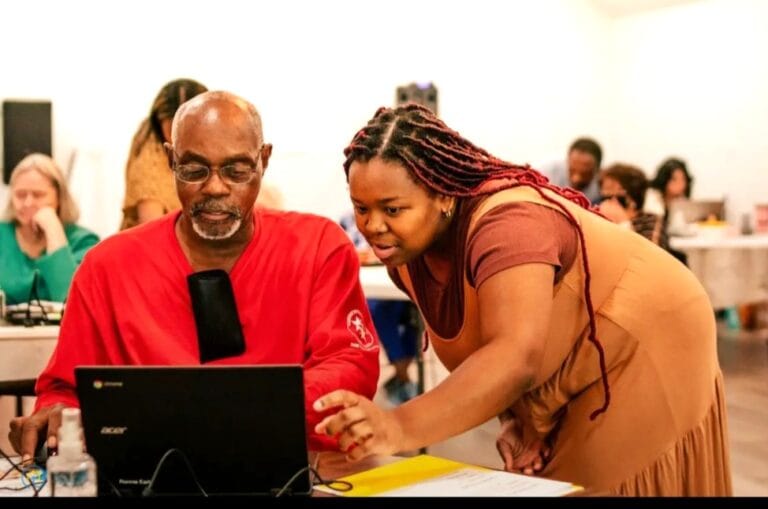
Beginning Feb. 10, the Hixson Community Center will host a Tech Goes Home (TGH) Computer Basics workshop series, running through Feb. 26, with classes held Tuesdays and Thursdays from 4 to 7 p.m. The program is designed specifically for adults and seniors seeking to build digital skills and confidence in an increasingly online world.
This 15-hour course is completely free to the public, offering a supportive environment for beginners to master computer fundamentals and internet navigation. Best of all, every participant who finishes the course will walk away with a brand-new Chromebook at no cost, ensuring they can continue their digital journey at home.
The workshop is part of a broader digital equity initiative led by The Enterprise Center, which was tasked by city and county leadership with addressing disparities in technology access and digital literacy. The Chattanooga program is modeled after Tech Goes Home, a nationally recognized initiative founded in Boston and selected after extensive research into effective digital inclusion strategies.
In addition to providing hardware and training, the program assists graduates with securing low-cost home internet service, removing one of the most persistent barriers to digital access. Classes will be held at the Hixson Community Center, 401 School Dr. Due to limited seating, interested residents are encouraged to register early by calling (423) 643-6480.
TICKETS AVAILABLE AT CHATTANOGA CONVENTION CENTER In Person or ONLINE Every Valley Leadership Academy is a faith-based mentoring outreach to Chattanooga area youths. We enfranchise them with opportunities to experience God’s glory in their relationships, their education, their employment, and in the life of our community.
The federal Centers for Disease Control and Prevention (CDC) has announced a major update to the childhood vaccine schedule, reducing the number of vaccines recommended for children and shifting several shots to optional or guidance-based on risk factors.
The changes, which have faced controversy, took effect immediately and represent the most significant revision to the schedule in decades. Health officials from the Trump administration say the update is intended to address declining trust in public health following the COVID-19 pandemic.
Under the revised schedule, the CDC now recommends routine vaccination for 11 diseases, down from 18 previously. The updated guidance more closely mirrors the childhood vaccine schedule used in Denmark, according to media reports, including NBC News.
However, the CDC said all vaccines previously recommended remain available and covered by insurance. And parents who want their kids to continue receiving the full slate of vaccines can still do so.
What vaccines are still routinely recommended
The CDC will continue to recommend that all children receive vaccines protecting against measles, mumps, rubella, polio, whooping cough, tetanus, diphtheria, Haemophilus influenzae type B, pneumococcal disease, HPV and chickenpox.
These vaccines remain part of the core childhood immunization schedule and are expected to continue to be required for school and child care attendance in many states. States come up with their own school vaccine requirements, though they often rely on CDC guidance.
What has changed: Several vaccines that were previously recommended for all children are now advised only for high-risk groups or through shared clinical decision-making between parents and health care providers.
Vaccines moved to high-risk recommendations include RSV, hepatitis A, hepatitis B, dengue and certain types of bacterial meningitis.
Vaccines now recommended based on shared clinical decision-making include rotavirus, influenza, hepatitis A, hepatitis B and bacterial meningitis. COVID-19 vaccines were moved to shared decision-making last year.
Shared clinical decision-making means parents are encouraged to discuss the benefits and risks with a medical provider rather than follow a universal recommendation.
Changes to hepatitis B guidance: One of the most controversial updates involves the hepatitis B vaccine for newborns. The CDC is no longer recommending that all infants receive a hepatitis B vaccine dose within 24 hours of birth.
Instead, mothers who test negative for hepatitis B are advised to discuss the timing of the first dose with a health care provider. In those cases, the dose may be delayed until at least two months of age.
For mothers who test positive for hepatitis B, the recommendation to vaccinate newborns shortly after birth remains unchanged.
Acting CDC Director Jim O’Neill approved the updated recommendation from the agency’s Advisory Committee on Immunization Practices.
“This recommendation reflects ACIP’s rigorous review of the available evidence,” O’Neill said in a statement reported by The Hill. “We are restoring the balance of informed consent to parents whose newborns face little risk of contracting hepatitis B.”
The CDC did not adopt a separate proposal that would have encouraged blood testing in infants to determine whether additional hepatitis B doses are needed.
Health officials say the updated schedule does not remove access to vaccines or eliminate insurance coverage. Vaccines recommended as of the end of 2025 remain covered under Affordable Care Act plans, Medicaid, the Children’s Health Insurance Program and the Vaccines for Children program.
The childhood vaccine schedule is not a mandate, but it guides insurance coverage and informs state vaccine requirements for school attendance.
The CDC typically updates the schedule annually based on scientific evidence. This year’s revision marks a departure from the usual process and has drawn concern from some medical groups, though federal officials say no vaccines were removed due to safety issues.
For parents, the CDC advises speaking with a pediatrician or health care provider to understand which vaccines are recommended for their child based on age, health status and risk factors.
Health experts continue to stress that vaccination remains one of the most effective tools for preventing serious childhood diseases. (BlackDoctor.org by Issac Morgan | Published January 16, 2026)
ATLANTA – More than 300 Black women leaders carried the voices of their home districts into the halls of the Georgia State Capitol on the first day of the 2026 legislative session, meeting with lawmakers to deliver a clear message in this critical election year: Black women are united, unapologetic, and unstoppable. Convened by the Georgia Black Women’s Roundtable (BWR), the day included a press conference and culminated in a powerful exchange as Georgia state legislators joined the women for a candid conversation during their luncheon.
Georgia State representatives answered questions from the public during the Black Women’s Roundtable luncheon at the Capitol in Atlanta. Seated (l-r): Rep. Sheila Jones (60th District), Rep. Viola Davis (87th District), Rep. Kim Schofield (63rd District), and Rep. Rhonda Burnough (77th District).
At the press conference, Helen Butler, executive director of the Georgia Coalition for the People’s Agenda (People’s Agenda) and convener of GA BWR, stated, “Black women have come together to advocate for our issues. Legislators need to listen, because we are voting our issues. Over 300,000 Black women have lost jobs or been pushed out of work, and that is a crisis that cannot be ignored. We will continue to show up, organize, and forge ahead because we are determined to create opportunities for our communities.”
“We are mothers, we are educators, we are caregivers, we are business owners, we are voters, and we are united. We make up one of the most consistent voting blocs in the country,” exclaimed Dee Dawkins-Haigler , president, Organization of World Leaders. “We need to make sure we have livable wages. Make sure that our children have access to a good education, affordable healthcare, and most of all, we need to make sure that people realize that we are not to be played with.”
Mary-Pat Hector, CEO of RISE, declared, “Let me be clear: this is not just another day at the Capitol. This a very important year for our community. We have elections.” The nationally recognized youth leader continued, “They’re trying to take us back. They’re trying to take our voting rights, they’re trying to take away the rights that we have for our body, and today Black women in Georgia say no longer. This is not going to be the last day that we show up to the Capitol this year in these kinds of numbers. We’re not going to just continue to show up to the Capitol, we’re going to show up in the community, we’re going to knock on these doors, we’re going to get our community to fight back.”
Other speakers at the press conference included Dr. A. Lois Keith, national chair, National Council of Negro Women (NCNW); Rep Kim Schofield (63rd District); Rep Doreen Carter, (93rd District) vice chair Georgia Legislative Black Caucus; Dr. Penny Brown Reynolds, former Fulton County Judge and deputy assistant secretary, USDA; Mayor of Jonesboro, Dr. Donya L. Sartor; Dr. Alieka Anderson-Henry, Chairwoman of Clayton County; and Deborah Scott, CEO and founder, Georgia Stand Up.
During the Black Women U3: United, Unapologetic, Unstoppable 2026 luncheon, lawmakers listened to women’s concerns and discussed current legislation shaping Georgia’s future. Participants raised a wide range of deeply personal and community-specific issues directly with elected officials. One woman urged lawmakers to rein in aggressive homeowners associations, citing rising monthly fees and excessive fines for minor infractions that have placed some homeowners at risk of foreclosure. Another called for required bereavement leave, sharing the toll of losing a loved one without time to grieve. A mother who lost her son to a sports-related injury advocated for legislation to strengthen high school sports safety standards, underscoring the urgent need to protect student-athletes.
Representatives from over 36 different women organizations attended the day of action. Sponsors and partner organizations joining the People’s Agenda included Atlanta Metropolitan Alumnae Chapter, Delta Sigma Theta Sorority, Inc.; National Coalition on Black Civic Participation; Organization of World Leaders; ProGeorgia; NCNW, and Rep GA.
GA BWR is an initiative of the Georgia Coalition for the People’s Agenda and the Georgia affiliate of the National Coalition on Black Civic Participation’s Black Women’s Roundtable. Founded by the late civil rights leader Dr. Joseph E. Lowery, the People’s Agenda is a nonprofit, nonpartisan organization focused on year-round voter registration, education, and mobilization in Black communities throughout Georgia. Their headquarters are in Atlanta with offices in Athens, Albany, Macon, Augusta, LaGrange, Rome, and Savannah. For more information visit thepeoplesagenda.org or @gcpagenda on social media