Monday, October 12, 2026
Advertisement
Home Blog Page 14

Karen Collins Brings Legacy, Soul, and Community to the Walker Theatre Stage

When Karen Collins steps onto the Walker Theatre stage this month, she won’t just be performing. She’ll be carrying a legacy–one stitched together from generations of voices, a lifetime of service, and a belief that music can bring people together in ways few other things can.

“I come from a diverse background,” Collins said during an exclusive interview with the Chattanooga News Chronicle, reflecting on the musical lineage that shaped her. “I like the theater. I like classical music. I like gospel–I love gospel actually–jazz and the blues and funk and rock… I’m literally carrying legacy in my voice.”

That legacy will take center stage at 7:30 p.m. on March 28, when Collins’ celebrated Velvet Chair Experience joins forces with the Chattanooga Symphony & Opera for a one-night-only performance at the Walker Theatre, located at 399 McCallie Ave. in Chattanooga.

The evening will blend orchestral richness with jazz, soul, and timeless classics, marking a bold expansion of a show that began as an intimate speakeasy-style evening at the Bessie Smith Cultural Center and has since grown into one of Chattanooga’s most beloved musical events.

The Velvet Chair Experience is unlike a traditional concert. Audience members select the songs in advance, and a few are invited to sit in the iconic velvet chairs onstage as Collins sings directly to them.

She never knows what she’ll be asked to perform–Etta James, Sade, Nat King Cole, gospel hymns, Broadway standards–and that unpredictability is part of the magic.

“The music we celebrate is really the soundtrack of their lives,” she said. “I can literally see their memories by their emotional expression.”

One woman once told her, “I fell in love with my husband again.” Moments like that, Collins says, are why she insists on honoring every note of the original recordings.

“In that moment in time, I am thinking for them… I want to make sure the person sitting in that chair recognizes that song–every note, every intonation.”

Bringing such a personal experience into a larger venue is no small task. But Collins and the CSO are determined to preserve the show’s signature closeness.

They’re even adding a small dance floor.

“For a song like At Last, if we have a few couples that picked that, I’m gonna bring them up close and let them dance… It’s your moment to walk out and listen to your song with a couple hundred–couple thousand–you know, of your closest friends.”

The collaboration is part of the CSO’s 2025–26 season, Reflection, the first chapter of a three-season journey titled Unspoken: Our Story Through Sound.

“We seek out ways to collaborate with local talent and Karen was a great fit for us as she regularly sings with one of our musicians,” said Susan Caminez, executive director of the Chattanooga Symphony & Opera. “She has created something truly special with the Velvet Chair Experience and the symphony is honored to put her on a larger stage to highlight her star power. She’s magnetic, a dynamic performer, and incredible person. It’s going to be an incredible evening you won’t want to miss.”

Long before she became known for her velvet chairs and powerhouse vocals, Collins was a community leader, minister, and advocate.

She served in the city’s Office of Multicultural Affairs, directed the Homeless Coalition, and traveled to China as part of an economic exchange–singing jazz and gospel at night after meeting with dignitaries during the day.

“It was like the language barrier wasn’t even there,” she recalled. “What comes from the heart reaches the heart.”

Her faith remains central to her work.

“I’m a licensed and ordained minister of the gospel… People see this all over my branding: I love Jesus and jazz, because I do.”

The idea for the Velvet Chair Experience came to her unexpectedly while she was still working in city government.

Standing in a downtown conference room overlooking the Bessie Smith Cultural Center, she felt a spark.

“In that moment, the Lord showed me the Velvet Chair Experience… the velvet curtains, the stage, the lighting, the people… and instantly He gave me the name.”

She pitched the idea, “The Bessie” took a chance, and audiences haven’t stopped coming since.

For Collins, the upcoming performance is more than a milestone–it’s a chance to bring people together across backgrounds, generations, and artistic tastes during a shared evening of music and connection in one of Chattanooga’s historic performance spaces.

“Everybody likes some kind of music,” she said. “Being in a space like that will allow people, if nothing but for that time, to know we are the same.”

She hopes families will come, newcomers will come, and longtime supporters will bring someone who’s never experienced the show before.

“If you build it, people will come. But if people don’t come, we don’t get to do shows like this.”

Captain Cecil Harvey to Lead Tennessee Highway Patrol’s Chattanooga District

Captain Cecil Harvey

Colonel Matt Perry has officially announced the promotion of Cecil Harvey to the rank of Captain over the Tennessee Highway Patrol (THP) Chattanooga District. Captain Harvey, who previously served as a Lieutenant within the district, succeeds Patrick Turner in the leadership role.

The promotion, confirmed in late February, places Harvey at the helm of District Two, a critical region headquartered at 4120 Cummings Highway. The district’s jurisdiction is vast, covering 13 counties: Bledsoe, Bradley, Coffee, Franklin, Grundy, Hamilton, Marion, McMinn, Meigs, Polk, Rhea, Sequatchie and Van Buren.

“I am proud to announce the promotion of Cecil Harvey to Captain over the THP Chattanooga District,” said Colonel Perry in a statement. “Congratulations.”

As Captain, Harvey will oversee various specialized units and essential services, including state trooper patrols, commercial vehicle enforcement, and the HELP (Highway Emergency Local Patrol) program, which provides vital assistance to disabled motorists on Chattanooga’s major interstates.

Local law enforcement agencies were quick to offer their support for the new district commander. Sheriff Austin Garrett and the Hamilton County Sheriff’s Office (HCSO) issued a congratulatory message, wishing him continued success in his new capacity.

“The men and women of the HCSO would like to congratulate Captain Cecil Harvey on his promotion,” the Sheriff’s Office stated. “We wish him continued success in this new leadership role.”

Captain Harvey takes over at a time when District Two remains one of the busiest corridors in the state, managing high-volume traffic through the Appalachian region and providing specialized response teams for the area’s growing commercial and residential infrastructure.

Honoring Legends* of Alton Park Neighborhood

0

2026 Commemorative Street Names include: 

Erma Choice – Florence High – Milton Jackson – Rosemary Porter

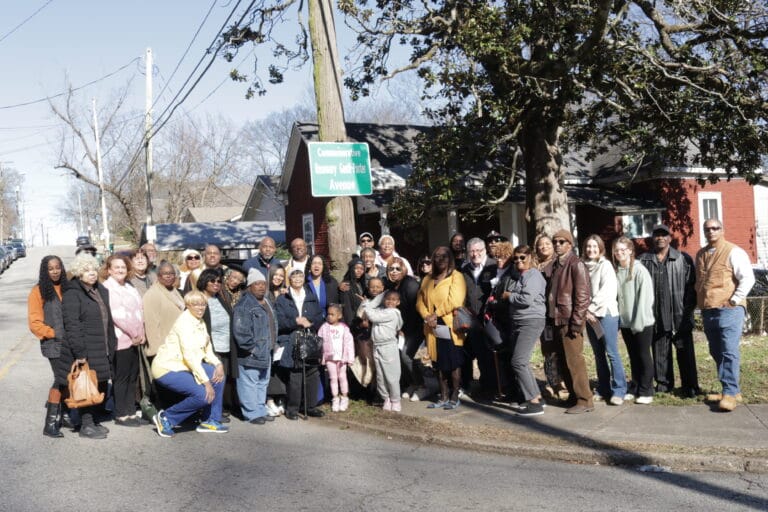
The Oak Hills Elite Neighborhood Association recently hosted a community event at the South Chattanooga Recreation Center in Alton Park to recognize and celebrate four Champion Community Advocates:

Erma Choice

Florence High

Milton Jackson

Rosemary Porter

The event celebration included a luncheon and presentations as well as an opportunity for the families and community members to meet and greet one another.

President and Board Chair Terry McCullough expressed sincere gratitude to the community stakeholders who showed up in record numbers to pay tribute to these Community Advocates and their families and to recognize the hard work, sacrifice, and dedication to the Alton Park community.  It was their efforts that ensured the Alton Park community had safe and clean Land, Water, and Air (EPA standards).  These Champion Community Advocates had worked diligently to provide more and safer parks for children to play and families to have more areas for recreation and enjoyment. Arrangements were also made for a Mobile Market Trailer to come to the area to provide fresh fruits and vegetables.

President McCullough remarked “When it was time for the Alton Park community to have a voice at the table, these Community Advocates delivered that voice”.

Special Thanks and Appreciation were given to the City of Chattanooga and  Councilwoman Raquetta Dotley for their services and efforts in making these dreams and requests a reality. *Honoring Legends* Look forward to other Legends who will be recognized in the future. None will be forgotten or left out!

Laila Edwards

Laila Edwards (born January 25, 2004) is an American college ice hockey player for the University of Wisconsin and a member of the United States women’s national ice hockey team. She has won two World Championship medals, including gold at the 2025 World Championship and silver at the 2024 World Championship, where she was named Tournament MVP at age 20, becoming the youngest player to receive the honor.

Edwards made history in 2023 as the first Black woman to play for the U.S. women’s senior national team. She is also the first Black woman to score a goal for Team USA at the 2024 World Championships and at the 2026 Winter Olympics.

At the collegiate level, Edwards has won two NCAA national championships with the Wisconsin Badgers (2023 and 2025). She was a Patty Kazmaier Award top-three finalist in 2025 and led the nation with 35 goals during her junior season. Edwards won the Bob Allen Women’s Player of the Year Award in 2024.

Early life:  Born in Cleveland Heights, Ohio to Charone Gray-Edwards and Robert Edwards, Laila was raised in Cleveland Heights with her siblings: older brother Robert (Bobby), older sister Chayla, younger brother Colson, and sister Britney Gray.

Edwards began figure skating at age three before switching to ice hockey at age four or five.  Her father enrolled her and three of her siblings in the Cleveland Heights Youth Hockey Program. By age eight, she was traveling to out-of-state tournaments and played AAA hockey with boys’ teams, including the Cleveland Jr. Lumberjacks and Cleveland Barons. She also participated in the Pittsburgh Penguins Elite Girls hockey program.

Edwards left Cleveland Heights at age 13 to attend Bishop Kearney High School in Rochester, New York, for its elite girls’ hockey program.  During the 2021–22 season, she recorded 38 goals and 59 assists for the under-19 team at Bishop Kearney. She finished her career at Bishop Kearney with 147 goals and 266 assists in 287 games from 2018 to 2022.  She skipped her high school graduation ceremony to compete at the 2022 IIHF World Women’s U18 Championship.

Remembering “The Friendship Nine”

0

“We cannot rewrite history, but we can right history.” – Judge John C. Hayes III

We kicked off African American History Month 2026 last issue with one on Dr. Gladys West, who developed the GPS we rely on to get to unfamiliar places we need to get to. Now today’s history lesson is about the relatively little known “Friendship Nine.” But before we get to that, I’ll provide a long-worded but necessary context for today’s lesson. Your patience would be greatly appreciated.

Well between the time of my writing and your reading this narrative, there’s certain to be more flashes of “huh, are you kidding me” surprises (how about an aging “president” posting a former Black president and his wife as apes) that are no longer surprises but expectations in our divided states of America nowadays. Hey, if you don’t believe me take a short pause from reading this, tune into the sources of your news for even more madness and get back to this column a later. Go ahead, we’ll wait.

Now speaking of the incredible nature of things, take for example, Virginia, the state of my birth that for the first time in its four-century history recently elected a woman as governor. Think about that for a second; 400 years – I repeat, 400 years – to figure out that a woman could actually be governor of Virginia. Duh, with a capital D!

And lo and behold, after she was elected the “sky is falling” chicken little trolls went berserk and are still going berserk. With day after day of whining, bellyaching, snarling and nonsensical accusations of “a stolen election,” “DEI” elected, “commie takeover” dog whistles, one would think that – Lord save us – the end of civilization as we’ve come to know it is right around the corner. I’ve had to check with folks who live in Virginia to be sure that the state didn’t dissipate into thin air or under a state-wide Hiroshima and Nagasaki-type cloud of smoke because, take a deep breath readers, a woman was elected governor. 

Now being the devil’s advocate that I am, when I interrupted the string of negative comments with expressions of support for the new governor many responded with stuff too vile and nasty to repeat in this space. A few questioned my IQ, my sexual orientation for some weird reason and – brace yourselves – even weirder, why I support boys in girls’ locker rooms. And one nice lady “kindly” asked that I remain in Georgia, relocate to California and never return to Virginia, even for holidays and funerals.

Some “very fine people” many of those Virginians, huh?

In what we once desired as the virtue of basic civility and respectful disagreement has downturned into races to the bottom on who can be the nastiest and meanest. If it’s not going after Samali Americans in Minneapolis, snatching kids from “illegal” parents from school bus stops, its banning books, taking down portraits or weeding out anything reeking of the DEI boogeyman. However, we understand this modern-day madness is a coordinated effort to erase embarrassing history much to the glee by those who wish that “those people” (you fill in the blanks) were gone or, at best, were never here in the doggone first place. 

So, with that a long-winded laxative of an introduction, let’s turn now to the “Friendship Nine.”

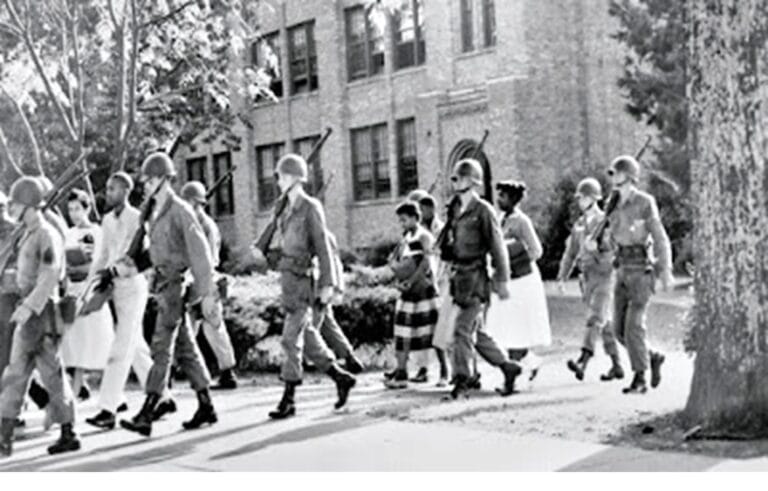
The Friendship Nine was a group of African-American men who went to jail after staging a sit-in at a segregated McCrory’s lunch counter in Rock Hill, South Carolina in 1961. The group gained nationwide attention because they followed the 1960 Nashville sit-ins strategy of “Jail, No Bail”, which lessened the huge financial burden civil rights groups were facing as the sit-in movement spread across the South. They became known as the Friendship Nine because eight of the nine men were students at Rock Hill’s Friendship Junior College.

The first sit-in happened in February 1960 when four Black students from North Carolina Agricultural and Technical State University sat down at a segregated Woolworth’s lunch counter in Greensboro, North Carolina. The movement spread across the South, reaching Rock Hill on Feb. 12, when about 100 Black students staged sit-ins at various downtown lunch counters. Over the next year, several sit-ins were held in the city.

On Jan. 31, 1961, students from Friendship Junior College and others picketed McCrory’s on Main Street in Rock Hill to protest the segregated lunch counters at the business. They walked in, took seats at the counter and ordered hamburgers, soft drinks and coffee.

The next day, 10 were convicted of trespassing and breach of peace and sentenced to serve 30 days in jail or to pay a $100 fine. One man paid a fine, but the remaining nine — eight of whom were Friendship students —chose to take the sentence of 30 days hard labor at the York County Prison Farm. Their choosing jail over a fine or bail marked a first in the Civil Rights Movement since the 1960 Nashville sit-ins, and it sparked the “jail, no bail” strategy that came to be emulated in other places. A growing number of people participated in the sit-ins and marches that continued in Rock Hill through the spring and into the summer.

Since the protestors chose prison instead of bail, they were sent to a work camp, where they refused to work, and were put on bread and water as punishment.

In 2007 the city of Rock Hill unveiled an historic marker honoring the Friendship Nine at a reception honoring the men. At that time, eight of the Friendship Nine were living.

•             Robert McCullough (died in 2006)

•             John Gaines (died in 2022)

•             Thomas Gaither (died in 2024)

•             Clarence Graham (died in 2016)

•             Willie Thomas Massey 

•             Willie McCleod (died in 2020)

•             James Wells (died in 2018)

•             David Williamson Jr.

•             Mack Workman (died in 2024)

“What made the Rock Hill action so timely was that it responded to a tactical dilemma that was arising in SNCC (Student Nonviolent Coordinating Committee) discussions across the South: how to avoid the crippling limitations of scarce bail money,” wrote Taylor Branch in Parting the Waters, his Pulitzer Prize winning account of the Civil Rights Movement.

“The obvious advantage of ‘jail, no bail’ was that it reversed the financial burden of the protest, costing the demonstrators no cash while obligating the white authorities to pay for jail space and food. The obvious disadvantage was that staying in jail represented a quantum leap in commitment above the old barrier of arrest, lock-up, and bail-out.”

In 2015, Judge John C. Hayes III (nephew of the original judge who sentenced the Friendship Nine to 30 days jail time) overturned the convictions of the nine, stating: “We cannot rewrite history, but we can right history.”

So, excuse me, beg your pardon, sorry, but I have to ask why do you suppose that there’s subset of us who cling to the belief that true history must be told complete with its blemishes, warts and all? Who’s harmed and not harmed by the telling of that history?

Now while we’re waiting for your answer count yours truly as one of the promise keepers with more true history chapters to come to insert into your three-ring binders. Perhaps by this time next year, you’ll have a complete volume to add to your bookcase in the empty space left by one that was banned.

I’ll end with a big thanks to the Friendship Nine… and to one Judge John C. Hayes III of Rock Hill, South Carolina!

Terry Howard is an award-winning writer, a contributing writer with the Chattanooga News Chronicle, The American Diversity Report, The Douglas County Sentinel, Blackmarket.com, recipient of the Dr. Martin Luther King, Jr. Leadership Award, and third place winner of the Georgia Press Award.

Civil Rights Icon, Reverend Jesse Louis Jackson, Passes Away at 84

0
The Rev. Jesse L. Jackson Sr. speaks at a 1979 press conference in Chattanooga, surrounded by fellow activists and community leaders. His PUSH/Excel initiative left
a lasting local impact by urging Chattanooga youth to pursue academic excellence
under the mantra, “I am somebody.”

As the nation mourns the passing of the Reverend Jesse Louis Jackson Sr., who died on February 17, 2026, at the age of 84, the reflection in Chattanooga is not just on a two-time presidential candidate, but on a man whose “multiple purpose” reshaped the very streets of this city.

From the halls of the Bessie Smith Cultural Center to the historic blocks of Dr. Martin Luther King Jr. Boulevard, Rev. Jackson’s influence is viewed locally as a blueprint for tangible community improvement. For many in Chattanooga, his death marks the end of an era defined by the transition from protest to institutional economic power.

While national headlines focus on Rev. Jackson’s historic 1984 and 1988 presidential bids, Johnny Holloway, who headed the Chattanooga chapter of Operation PUSH (People United to Serve Humanity) for 15 years, says those campaigns were only a fraction of the man.

“Everybody’s talking about him running for president two times, but that wasn’t the real Jesse Jackson,” said Holloway, a longtime leader in the local civil rights scene and a member of the Unity Group of Chattanooga. “He was trying to serve everybody and he had a tremendous program. He had a program that got thousands of jobs for Black people; he had a program for education; he had a program for the churches. He was multitasking.”

Holloway, who worked at the grassroots level to implement Rev. Jackson’s vision in Hamilton County, emphasized that Jackson’s true legacy was in “the thing that makes people better.”

In Chattanooga, the footprint of Rev. Jackson’s organization, Operation PUSH, is most visible on what was once Ninth Street. In the late 1970s and early ‘80s, local activists and Black clergy–championed by PUSH and the Unity Group–set their sights on renaming the historic heart of Chattanooga’s Black enterprise.

Despite initial resistance from city officials who balked at extending the name change into prime downtown real estate, the community’s persistence led to the official renaming of the thoroughfare to Dr. Martin Luther King Jr. Boulevard. This victory was a local manifestation of Rev. Jackson’s philosophy of “economic reciprocity”–demanding that the city recognize the moral and economic value of its Black citizens.

Under Holloway’s leadership, the local PUSH chapter went beyond symbolic changes, establishing a breakfast program that fed hundreds of children daily and pressing for equity in local electoral processes to ensure meaningful participation for excluded communities.

Founded on Christmas Day in 1971, Operation PUSH grew out of Rev. Jackson’s work with the Southern Christian Leadership Conference’s (SCLC’s) “Operation Breadbasket.” The organization’s goal was to use the Black community’s influence as a massive consumer bloc to negotiate landmark “economic covenants” with corporations like Coca-Cola and Miller Brewing Company.

These agreements committed businesses to hiring Black supervisors and utilizing minority-owned suppliers–a strategy Rev. Jackson later brought to Silicon Valley.

Rev. Jackson’s programs, such as PUSH/Excel, also left a mark locally by encouraging Chattanooga’s youth to strive for academic excellence under the mantra, “I am somebody.”

Born in Greenville, South Carolina, and rising to prominence as a protégé of Dr. Martin Luther King Jr., Rev. Jackson spent his final years battling progressive supranuclear palsy (PSP). Even as his health declined, his organization remained a watchdog for voting rights and criminal justice reform.

In Chattanooga, Rev. Jackson is remembered as a man of action who proved that civil rights and economic justice are inseparable.

As the city reflects on his 84 years, the consensus among those who worked alongside him is clear: his mission was not just to change the occupant of the White House, but to change the lives of those on the “Laurel Streets” of America.

********************************

The Life and Legacy of

Rev. Jesse L. Jackson

Rev. Jesse Louis Jackson spent more than six decades as one of America’s most recognizable moral voices—equal parts preacher, strategist, coalition-builder, negotiator, and presidential trailblazer. He rose from the segregated South to the center of the civil rights movement, then carried its aims into boardrooms, ballot boxes, and global diplomacy. In his later years, he continued to symbolize the unfinished work of democracy even as Parkinson’s disease—and later a rarer neurodegenerative condition—limited his mobility and speech.

Jackson publicly disclosed in 2017 that he had been living with Parkinson’s disease for years, framing the announcement not only as personal news but as a call to keep working and to support the search for better treatments and a cure.

In subsequent years, his health challenges deepened. His organization later confirmed he had progressive supranuclear palsy (PSP), a rare neurodegenerative condition that can severely affect movement, balance, eye control, and speech—symptoms that were visible in his final public period.

Jackson’s illness inevitably changed the cadence of his public role. Yet it also sharpened an enduring theme of his life: a leader’s dignity is not erased by disability, and a community’s obligation does not shrink when someone’s voice grows quieter.

The Rich Legacy He Leaves Behind

Jesse Jackson’s legacy is too large to reduce to a slogan, but a few themes hold:

•             Civil rights as economic power: pushing the movement into jobs, contracts, and corporate accountability.

•             Coalitions as strategy, not symbolism: insisting that political majorities are built—not found—by linking struggles.

•             A transformed political horizon: demonstrating that Black national candidacies could be serious, competitive, and agenda-setting.

•             Public moral language: bringing the rhythms of the pulpit into civic life, making dignity feel speakable—especially for people told they were invisible. Jackson’s greatest achievement may not have been one campaign or one negotiation, but the widening of American possibility—socially, politically, and psychologically. He made millions of people feel counted, and he pressured institutions to act like they believed it. (Compiled)

Bessie Smith Cultural Center to Honor Victims of Racial Terror

0

History is often written by those who survive, but on February 26, at 6 p.m., the city of Chattanooga will pause to listen to the voices that were silenced. The Bessie Smith Cultural Center, located at 200 East Martin Luther King Boulevard, has announced an evening of remembrance titled “Unveiling The Past: Chattanooga Lynchings.”

This event, which is free to the public with registration required at https://www.bessiesmithcc.org/event-details/unveiling-the-past-chattanooga-lynchings-black-history-month-2026/form, aims to confront the somber reality of racial terror lynchings that occurred in Hamilton County between 1877 and 1950, ensuring that the names of the victims are etched into the city’s collective memory.

The evening will begin on the lawn of the Bessie Smith Cultural Center with the formal unveiling of a new historical marker. This monument stands as a tribute to lives lost and a public affirmation of the community’s commitment to historical honesty. As a representative for the center stated, the initiative is about more than just a marker; it is about affirming a deep-seated commitment to the truth.

Following the ceremony, guests will gather for a reception and a fireside chat with local historians.

Central to the evening’s discussion is the 1906 lynching of Ed Johnson, a case that remains a cornerstone of American legal history. Johnson, a Black man wrongly accused of assault, was abducted from the Hamilton County Jail by a white mob and hanged from the Walnut Street Bridge. This act of violence occurred despite a stay of execution granted by Supreme Court Justice John Marshall Harlan–a defiance of federal law that led to the landmark case United States v. Shipp.

This remains the only criminal trial ever held by the U.S. Supreme Court, in which Sheriff Joseph F. Shipp was found guilty of contempt for failing to protect a prisoner. Johnson’s final words, “God bless you all, I am an innocent man,” continue to haunt the city’s history. In 2000, Johnson’s conviction was formally overturned, and in 2021, a permanent memorial was dedicated to him and his pioneering attorneys, Noah Parden and Styles Hutchins.

While the Johnson case gained national notoriety, the event will also shed light on other documented victims of racial violence in the area. Community members and historians, in collaboration with the Equal Justice Initiative (EJI), have documented at least four known lynchings in the region, including those of Alfred Blount, Charles Brown, and Charles Williams.

The upcoming fireside chat will allow experts to discuss the social impact of these tragedies and the ongoing work to preserve these vital stories for future generations.

Community members interested in attending or seeking more information can reach the Bessie Smith Cultural Center at (423) 266-8658.

East Lake Community Center Set for Major Overhaul Under City’s New Resource Hub Initiative

0
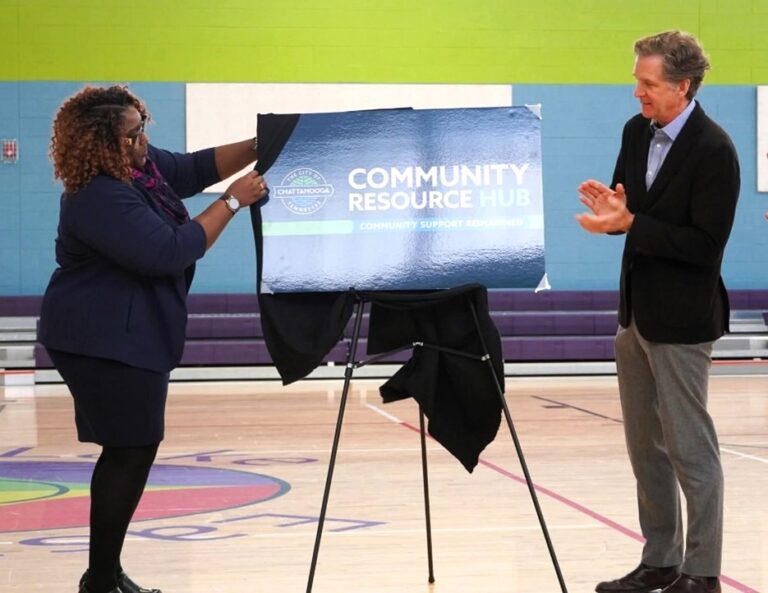
A promotional display inside the East Lake Community Center showcases Chattanooga’s new Community Resource Hub concept, featuring expanded services such as computer workstations and a driver’s license kiosk.

One of Chattanooga’s core neighborhood landmarks is preparing for a major transformation. The East Lake Community Center, located in one of the city’s most racially diverse neighborhoods, will roll out a sweeping programming revamp over the next several months as part of a new “resource hub” model being piloted by local officials.

City leaders say the initiative is designed to better meet the needs of East Lake residents by expanding the center’s services far beyond traditional recreation offerings. The revamped lineup will include dance classes, cooking lessons, and even on-site driver’s license renewals–a mix intended to make the center a more comprehensive, one-stop destination for community support.

The 16,000-square-foot facility, 3601 Dodds Ave., already serves a broad and diverse population, and officials hope the new model will strengthen its role as a neighborhood anchor. If the pilot proves successful, Chattanooga plans to expand the resource hub approach to other community centers across the city.

Chattanooga Mayor Tim Kelly said the effort reflects a broader commitment to ensuring residents have access to the tools and opportunities they need to thrive.

“The East Lake Community Center is home to our city’s first pilot Resource Hub,” Kelly said. “This is a welcoming space that will activate health and wellness resources, education and workforce development opportunities, community services, and more. This focus on our people–all of our people–helps ensure they thrive and succeed in Chattanooga.” The rollout will take place gradually over the coming months as the city evaluates which services resonate most with residents. For now, officials say the goal is simple: create a more accessible, more responsive community center model that reflects the needs and aspirations of the people it serves.

Reginald Edwards is Standing Tall While Sitting

0
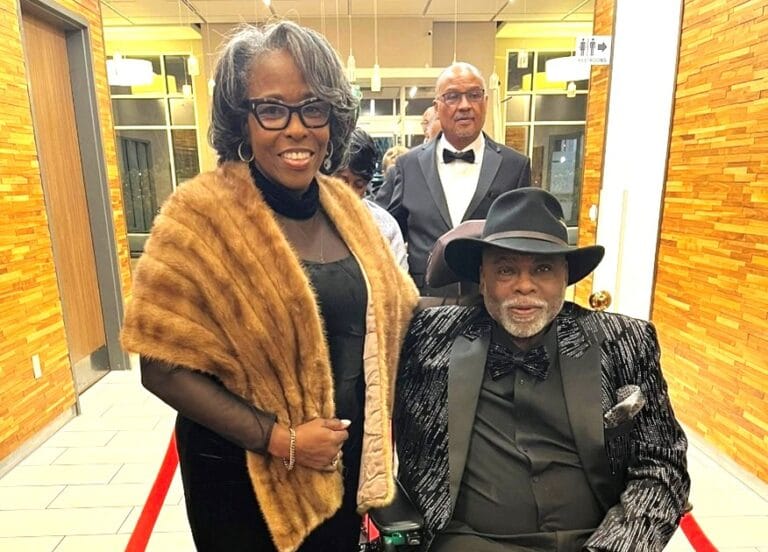
Reginald and Debra Edwards were presented the BOND OF FAITHFULNESS AWARD by Lake Providence Missionary Baptist Church Couples Ministry at the Legacy of Love Gala held on February 15, 2026.The wonderful couple will celebrate 41 years of marriage in 2026.

By John L. Edwards, III

Almost 4 years ago, my younger brother Reginald who lives in Nashville Tennessee lost the use of his legs due to a freak accident.  (The date was our wedding anniversary July 12, 2022.)

After playing a round of golf earlier in the day he attended a meeting at his church Lake Providence where he has served as a deacon for several years.  Returning home just a little after dark and parking his car, he was heading toward his front door when suddenly he stumbled and began to fall forward. Making an effort to twist his body and not fall directly on his face, Reginald ended up falling on his back.  The fall broke his neck which caused damage to his spinal cord.  Laying helplessly on his back, he tried as much as he could to call for help.  After what seemed like forever, his wife Deborah heard faint sounds from outside, went to investigate, and found him outside on the ground. She called an ambulance that transported him to Vanderbilt Hospital. 

We received the call from Debra who told us what had happened and that Reginald wanted to see his brothers.  My wife Faith and I headed to Nashville the following morning praying and hoping for the best, however the prognosis was he would never walk again.  Our brother Valitus and wife Dorothy came up the next day to join us and Reginald’s devoted family, Debra, and sons Reggie II and Hollis. Because only two could be in the room with him, we took turns sitting, talking, laughing, and praying with Reginald.

I wish I could tell you that Reginald is walking today.  I wish I could tell you Reginald is playing golf again.  A game I taught him to play that he ended up playing better than me.  Our family is proud to tell you, that even in that hospital bed when he could not even move his head, he spoke encouragement as a man standing tall in his faith in GOD. His words of faith blessed everyone in his presence.  He asked GOD to let him live to be with his family and submitted his outcome to GOD’s will. 

Today, from his wheelchair, he continues to be an inspiration! He is active as a deacon in his church, singing in the choir, and active in the community, attending his high school reunions, concerts, social club events and even a party or two or three.

His village of family and friends witnessed his progression and have been encouraged by his tenacity and dedication in all that he does, even at painful but necessary therapy sessions, his service in the church,  and preparing his special punch for family and holiday dinners.  For all who have been a part of his story and journey, we know his amazing wife Debra is constantly by his side, pushing him, encouraging him and loving him.  Believe me, Reginald has made progress that some thought impossible.  He serves a GOD that makes anything possible and even in his wheelchair with his faith, he stands Tall!  And, what else I can tell you is that with the assistance of a walker, REGINALD IS WALKING in February 2026.

Music Executive Mathew Knowles, Father of Beyoncé and Solange, to Return to UTC for Free Fireside Chat

CHATTANOOGA, TN.  — The University of Tennessee at Chattanooga Division of Access and Engagement will host a special fireside chat with renowned music executive, educator and brand architect Dr. Mathew Knowles on Friday, February 27 at 6:30 p.m. in the Roland Hayes Concert Hall at the UTC Fine Arts Center.

 Knowles, widely recognized as the creator and longtime manager of Destiny’s Child and the father of global artists Beyoncé and Solange. returns to UTC for the first time since the early 1970s, when he attended the University as one of its early Black students. The conversation will focus on leadership, education, entrepreneurship and opportunity.

 “I see this visit as a chance to invest in the future of UTC students and to be part of forward-looking conversations about leadership and opportunity,” Knowles said.

He began his college career at UTC before transferring to Fisk University, where he earned undergraduate degrees in business administration and economics. He later completed an MBA and a Ph.D. in strategic leadership and organizational culture. For Knowles, the visit to UTC represents both a return and a reflection.

 “My time at UTC helped shape how I think about leadership, responsibility and using education as a platform for impact,” Knowles said. “Returning to UTC is meaningful to me because it represents growth, reflection and the power of education to open doors.”

The fireside chat will be moderated by Vice Chancellor for Access and Engagement Stacy Lightfoot and is sponsored by UTC’s Division of Access and Engagement and WUTC 88.1.

 “Welcoming Dr. Mathew Knowles back to campus for the first time since the early 1970s is a historic moment for UTC. His return allows us to connect his story with the University’s story in ways that many people have not fully seen or recognized,” Lightfoot said.  The event is free and open to the public. Tickets are required and can be reserved at http://www.utc.edu/fac or by calling 423.425.1423.