Saturday, October 17, 2026
Advertisement
Home Blog Page 143

Chattanooga Mayor and Police Chief Provide Remarks in Response to May 28 Shooting

Compiled: F. R. Edwards

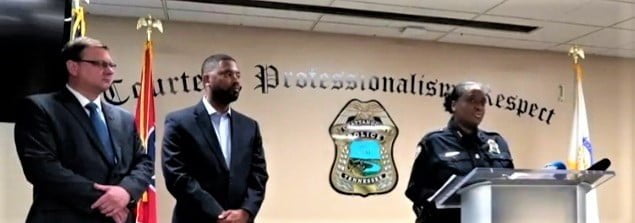
In response to the tragic shooting that occurred in downtown Chattanooga last Saturday night, Mayor Tim Kelly addressed the community through a 4:30 p.m. press briefing on Sunday. The event was live streamed on social media. 

Police Chief Celeste Murphy also provided remarks and fielded questions.

Mayor Tim Kelly:  Good afternoon, thank you for being here. 

This afternoon, I have to admit that I’m experiencing a wide range of emotions. 

First, I am heartbroken for the families and the victims whose lives were upended last night by gunfire. No parent should ever have to get that call. So, as a community, right now there’s a lot of hurt and grieving, and I just want to let those families know that I, and Ginny, and your city grieve with you. 

But I am also angry. Six teenagers were shot last night in what we believe was an altercation between other teenagers. And once again, I’m standing here in front of you talking about our community’s youth getting shot. That’s outrageous and it has to stop.
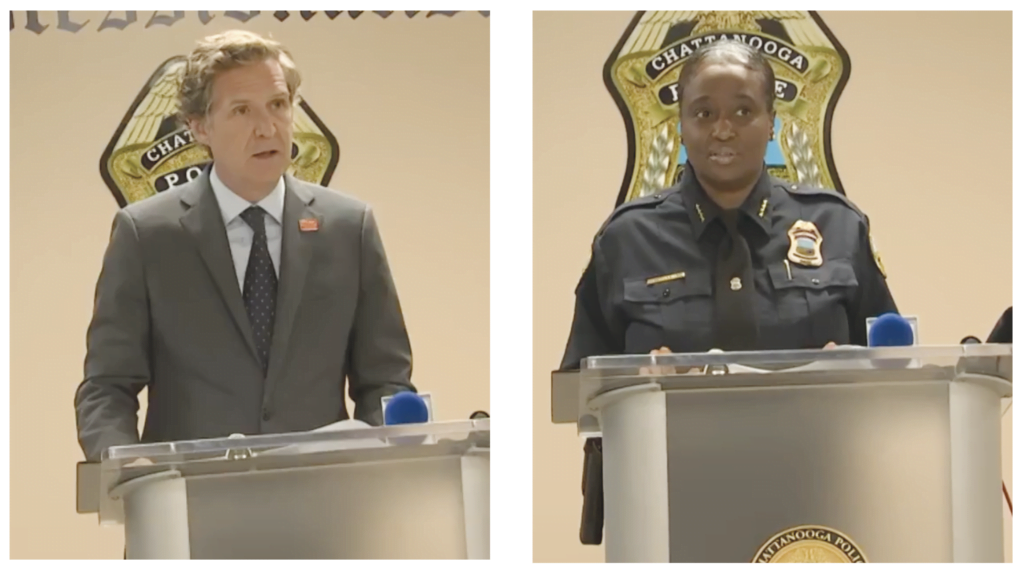
Left: Mayor Tim Kelly | Right: Chief Celeste Murphy 

It’s ridiculous that I even need to publicly state that guns have no place in the hands of our kids. And that children shouldn’t be wandering around in the middle of the night with no supervision. 

Let me also say that I am deeply grateful to the outstanding professionals at the Chattanooga Police Department, who acted quickly and decisively to save lives and prevent any more bloodshed. These officers are heroes and we’re fortunate that they were able to respond as quickly as they did. But the job of preventing kids from shooting each other cannot fall to the brave men and women of our police department alone.

Here’s the bottom line: teenagers acting out, pushing the boundaries, and getting into trouble isn’t new. Kids have always gotten into scuffles with each other. That’s a tale that’s as old as time. What is new is now they have access to handguns and firearms that leave behind bodies instead of bruised egos. I can’t say this clearly enough: easy access to illegal guns is killing kids and our community has a responsibility to put a stop to it. 

This is exactly why I joined mayors from across the country last week to call on the United States Senate to pass common sense reforms to our gun safety laws. Background checks, red flag laws, raising the age limit so that children can’t purchase assault rifles–these are things that the vast majority of Americans support, as do our law enforcement professionals. There’s no reason to wait, we need to pass these laws now.

But parents also need to be responsible. If you know your kid has access to a firearm, you must  intervene before someone–perhaps even your own child–ends up dead. The kind of gun violence that erupted last night is often rooted in neglect. All of us–and especially parents, caregivers, and families–must be actively involved in knowing where our children are, what they are doing, and ensuring they don’t get their hands on weapons that can harm themselves and others. If you have a firearm, keep it securely locked and away from children. As gun thefts are on the rise, failing to secure your gun can result in a tragedy. It will take our families AND our community working together to stop this.

To that end, I want to thank our City Council Chairman Darrin Ledford, Vice-Chairwoman Raquetta Dotley, and Councilwoman Demetrus Coonrod for being here today and for their ongoing partnership. Our alignment is critical and I’m grateful for their leadership. Over the next several weeks, I’ll be working with our City Council to create spaces for our community’s youth to safely gather, and also to invest in youth mentorship and violence prevention programs with our American Rescue Plan dollars. And I encourage all Chattanoogans to get involved in a child’s life through a mentorship program. Nothing will make a bigger difference in our community than that.

Finally, again: if you know a child–especially your child–has access to a firearm, you have a moral duty to intervene or call the police. And parents, make sure you know where your kids are spending their time at night. These are common sense things that we can do that keep children safe, which is what we adults are supposed to–and obliged–to do. As a parent, you are civilly and criminally liable for the violent acts of your child that you could’ve stopped. I am directing my office to work with the police department and the district attorney to enforce existing laws that hold parents accountable for knowingly providing or allowing children access to guns that result in violence. 

I know that there is no one strategy or policy that will solve this crisis. And there’s nothing I can say behind this podium that will undo last night’s violence. But this afternoon, I am calling on our entire community to come together as part of the solution.

Thank you.

Details on what happened the night of Saturday’s (May 28) shooting.

According to a statement provided by the Chattanooga Police Department concerning a highly publicized downtown shooting last Saturday night, “On May 28, 2022 at approximately 10:48 p.m., Chattanooga Police were patrolling the area of 100 Walnut Street when Officers heard gunfire. Moments later they discovered several parties had been shot. Officers were on scene immediately and began rendering lifesaving care to several gunshot victims. As officers were working with victims, other officers began securing the scene. Six victims were transported to a local hospital with gunshot wounds. Four victims had non-life threatening injuries and two had life threatening injuries. Investigators with the Violent Crimes Unit responded to conduct an investigation. Investigators learned that two groups of people were in the area of the above location and were converging toward each other in what appeared to be the beginning of some sort of altercation. Two individuals in one of the groups both produced firearms and began firing at the other group. It is believed that there was a person or persons targeted within the group of victims but many of them were unintended targets.”

 Police Chief Celeste Murphy said five of the victims were 15 and the other was 13 years old. Two of the 15-year-olds who were shot were females.

 The chief also said there has been no proof that the encounter involved different street gangs.

 An individual who was questioned Saturday night as a person of interest was later released and is not considered to have been a shooter.

James Moreland Scholarship Helps Minority Engineering Students

0

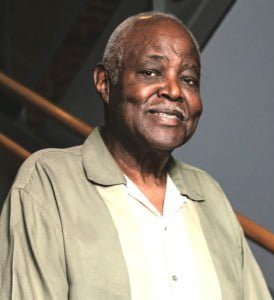
James R. Moreland, who graduated from Howard High School in 1962 and worked for E.I. DuPont for approximately 30 years, never graduated from college, but he’s helping students graduate from the University of Tennessee at Chattanooga.

In the 2021-2022 academic year, the James Moreland Minority Engineering Scholarship assisted more than 20 students enrolled in the UTC College of Engineering and Computer Science.

The scholarship–a last-dollar scholarship to ensure coverage of tuition and fees–is available to prospective students as well as returning recipients.

Increasing the number of minority students is one of the goals in the College of Engineering and Computer Science, said Sara Jackson, chief of staff for the college.

A longtime friend of Moreland’s, Tennessee Sen. Todd Gardenhire, R-Chattanooga, helped secure funds for the scholarship named after Moreland, who didn’t enroll in college because he didn’t have the money.

Terek McReynolds

For decades, Moreland has been a key presence in East Chattanooga. A member of Olivet Baptist Church and former president of the Avondale Neighborhood Association, he has been an advocate for community improvements and, among other successes, helped obtain city funds to build a new recreation center in the neighborhood.

2021-2022 James Moreland Scholarship recipients: Akanni Adimu, Sullen Batts, Christian Ballard, Adam Belton, Seth Cumby, Fatima Ejaz, Ibrahim Elnasri, Cameron Grogan, Sierra Guffey, Demarcus Ivy, Gabriel Jones, Bryan Lopez, Terek McReynolds, Oday Mohamed, Allen Nesmith, Parth Patel, Christopher Riddle, Ashanti Roshelle, Gabrielle Rozek, Larry Schofield and Jordan Williams.

To apply for the James Moreland Minority Engineering Scholarship, a student must be: considered a racial minority, have a 3.0 or greater high school GPA, majoring in engineering or computer science and a Tennessee resident.

 For further information, call the UTC Financial Aid and Scholarships office at 423-425-4677.

National Gun Violence Awareness Day and Wear Orange Weekend June 3rd-5th

Wear orange, find an event, demand action on Gun Violence Awareness Day, June 3

In the wake of multiple tragedies, the fght to end gun violence has never been more urgent. We must address this crisis in all forms—including mass shootings, domestic violence, firearm suicide, and daily gun violence. Enough is enough.

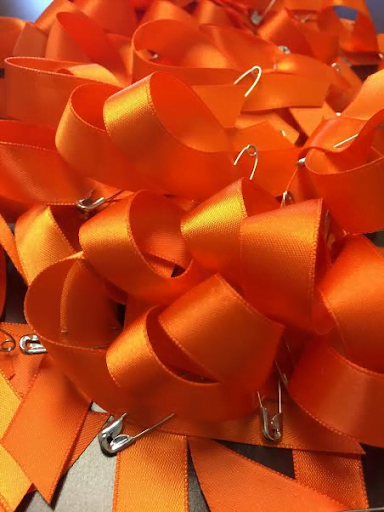
We’re just days away from National Gun Violence Awareness Day and the start of Wear Orange Weekend. Orange is the color of the gun violence prevention movement—we wear this bright color because we demand to be seen and heard.

This year, we need to join together and demand a future free from gun violence once and for all.

With gun violence devastating our communities, it’s never been more important for us to show we won’t stop fighting.

National Gun Violence Awareness Day is an annual event that takes place on the first Friday in June, and is the beginning of Wear Orange Weekend. We #WearOrange to honor the lives of people in the United States affected by gun violence, and elevate the voices of those demanding an end to this crisis.

#WearOrange and demand action. Find an event near you.

9 New Election Interference Laws So Far In 2022

Compiled by Tennessee Tribune

National—State lawmakers have been continuing to push legislation that makes it harder to vote, with 2 new restrictive voting laws enacted so far this year (as of May 4).

Election interference legislation — bills that could lead to tampering with how elections are run and how results are determined — have moved more quickly, with 9 new laws enacted in 2022 (as of May 4).

(At this point, more than half of all state legislatures have ended their 2022 legislative sessions. Also, legislatures are in the second year of their two-year sessions, when they generally tend to pass fewer laws than in the first year. This year follows that trend.)

Highlights from the May 2022 roundup (all statistics current as of May 4, 2022):

Election interference legislation

Election interference laws open the door to partisan interference in elections or threaten the people and processes that make elections work. So far in 2022, 6 state legislatures — Alabama, Arizona, Florida, Georgia, Kentucky, and Oklahoma — enacted 9 election interference laws, 7 of which will be in place for the midterms.

With 4 of the 9 laws, Georgia leads the country in new election interference laws so far this year.

3 of Georgia’s new laws create the risk of partisan interference with election procedures and results.

Florida and Georgia each have a new law creating entities dedicated to pursuing election crimes. This legislation is fueled by the false pretense of voter fraud.

Alabama, Arizona, Kentucky, and Oklahoma each have a new law establishing new criminal penalties for elections officials for actions to expand voter access or for minor mistakes during their ordinary course of conduct.

At least 17 election interference bills introduced in 2022 are moving through 5 state legislatures as of May 4.

Arizona leads the nation in the number of election interference bills that have been introduced in 2022 (27), including 4 bills moving in the legislature that would transfer authority over specific aspects of election administration in ways that could open the door to political interference.

Overall, lawmakers in 27 states have introduced at least 148 election interference bills so far in the 2022 legislative session.

Restrictive voting legislation

Between January 1 and May 4, 2022, Arizona and Mississippi each enacted a law that restricts access to the vote by requiring documentary proof of citizenship for voter registration. (The laws were enacted despite the U.S. Election Assistance Commission’s decision that documentary proof of citizenship requirements are not necessary to determine a voter’s eligibility.)

Of the 2 laws, only Mississippi’s will be in effect for the midterms. Additionally, a restrictive voter ID ballot initiative in Arizona will be on the general ballot for voters.

At least 34 bills with restrictive provisions are moving in 11 state legislatures as of May 4. Of these bills, almost three-fourths — 25 bills in 10 states — would curtail access to mail voting.

In all, lawmakers in 39 states have introduced at least 393 restrictive bills so far in the 2022 legislative session.

Expansive voting legislation

Between January 1 and May 4, 2022, 4 states — Arizona, Connecticut, New York, and Oregon — have enacted 5 laws that expand access to the vote. One of Arizona’s two expansive laws and the Connecticut and New York laws will be in effect for the midterms.

Kappas Come to Chattanooga

0

(Submitted Article) -The South Central Province of Kappa Alpha Psi Fraternity Inc., held its 76th Provincial Council in Chattanooga on March 24-26, 2022.  The Affair was presided over by its Provincial Polemarch, Leonard E. Clemons, of Knoxville. The Province consists of Kentucky, Tennessee, and Northern Mississippi. The Local Chapter, headed by Polemarch Brian Bush, served as host for the event. The occasion held sway at the Westin Hotel with more than 600 registered and over 500 Kappas along with their wives, the Silhouettes, in attendance. 

The Provincial Council is a yearly summit held by all 12 Provinces within the International organization of Kappa Alpha Psi. While here in Chattanooga, there were 79 newly initiated brothers on Thursday, March 24. 

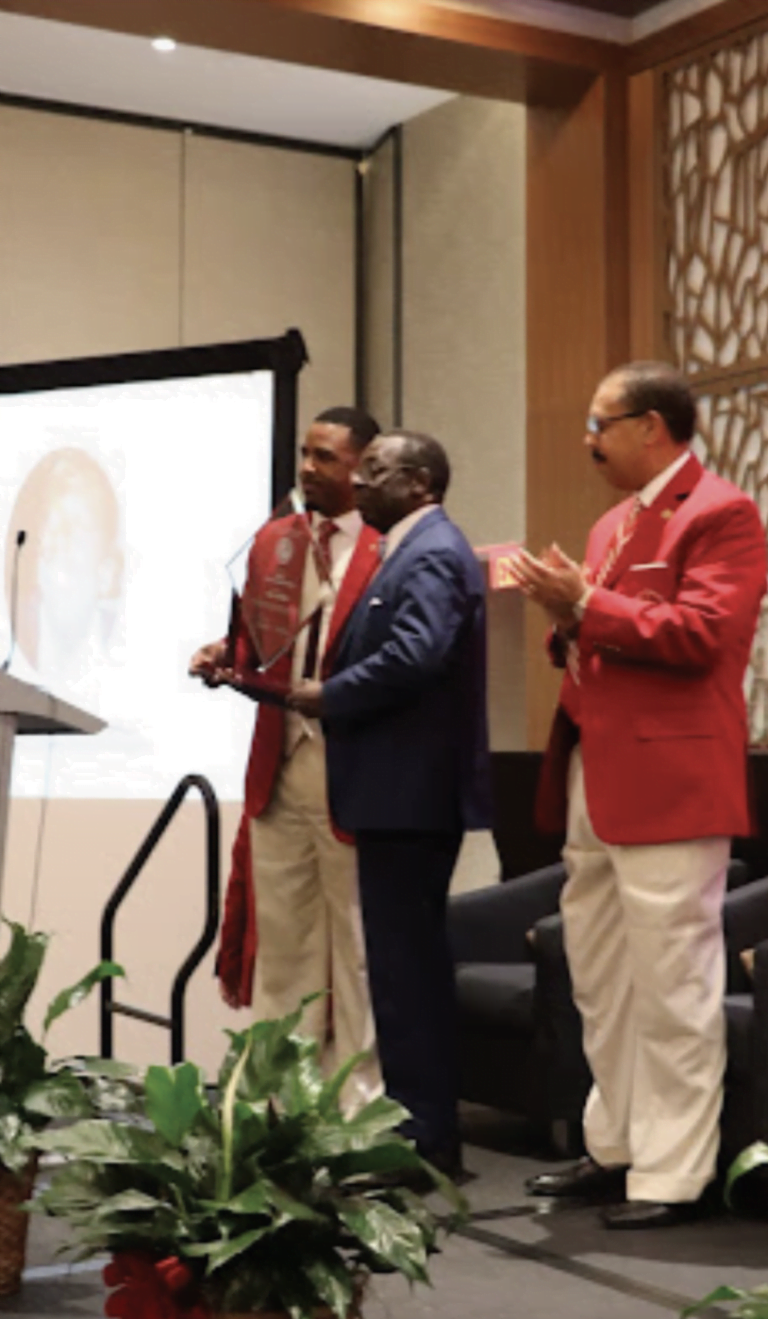
A Public Meeting was held at the hotel on Friday, March 25th. All members of the “Divine Nine” were recognized with a tribute by their hymn. The highlight of the Public Meeting was the awards ceremony. Reginald F. Smith, Executive Director of the Bethlehem Center, received the “Making a Difference Award” for his dedication to the youth of Chattanooga. La Frederick Thrilkill, Principal of Booker T. Washington Alternative Learning Center, received the Public Interest Service Award, for his many years promoting the many unknown aspects of Chattanooga’s Black History. And, Ezra Harris, received the Lifetime Achievement Award for over 30 years of unheralded service to his community, church, and the citizens of Chattanooga. 

Christopher Stokley of UTC, received the Greek Life Service Award; and, Willie F. Brooks Jr. of Memphis received the Louis N. Willis, Merit of Achievement Award. These are two of the Provinces top awards. 

On Saturday the 26th after all the various business meetings, there was a closed Black Tie Banquet. The Rev. Baron Ammons served as Master of Ceremonies. The keynote speaker was Timothy Woods, Western Province Polemarch, of Phoenix Arizona. The banquet was attended by over 350 brothers. 

After the banquet a dance was held in the ballroom. It was open to the public. Additionally, each night the Kappa House located on M. L. King Boulevard hosted brothers with live entertainment.  

(Editor’s Note:  This submitted article was inadvertently missed for earlier publication.  The Chattanooga News Chronicle apologizes for this oversight.) 

The Long Journey Home

0

Opinion Editorial 

There are so many wonderful organizations, civic and nonprofits, in Chattanooga with good intentions, but they are all working in silos. The time is now to come together under a common cause to implement solutions to the problems that plague our culture and communities. My return home has been a long journey. I am sharing my story as an example of a common cause and an option for implementing a solution to the problem.

Imagine losing your mother when you are 19 years old. My mother died of a heart attack which was no doubt the result of unchecked hypertension. Back then African Americans did not go to doctors unless they were pregnant, and they certainly did not do routine health check-ups. My dad was always there for us. However, imagine your father, now a single parent of six, has a heart attack eight years later after losing his wife. He underwent a triple by-pass surgery which extend his life for another ten years. Now imagine, during the recouperation period, your father is informed that his oldest son, my belonged brother, Donald Ramsey, age 25, was found dead in his apartment.  He was the victim of a violent homicide crime and struct down in the prime of life before reaching his highest potential. Donald was a business student at UTC and worked as the manager for a rental car agency at the Chattanooga Airport. He was murdered by an African /American female, 18-year-old Jetta Smith who was a senior in high school.  Her accomplice was Kerry Price 20. Some 30+ years later my family and I still grieve the loss of a loving brother.

Fast forward to today, 2022, and violent crimes have gotten worst. According to the Chattanooga Police department the homicide rate, which includes gun violence, is up. In 2021, 61 percent of the shooting violence was committed by Black males and the rate for Black women is increasing as these perpetrators are getting younger. Couple this with police brutality of Blacks and an increase in WRT-White Replacement Theory which is the fear that White Supremacy groups hold against Blacks whom they think are replacing them in this nation. There is no doubt that history is repeating itself. Is evil winning? Man’s need to control man is an evil that is rearing its head in our communities, across this nation and around the world. And it is as old as the ancient Biblical stories of the Christian Holy Bible.

When I think of the major gains Dr. Martin Luther King Jr made in the 60’s and how he sacrificed his life to obtain freedom for his people, I cry. Peeling back the layers to determine how we got here is like peeling an onion. I cry. Have the gains that Dr. King and all those civil rights leaders who came before and after him been lost? I cry. I would hate to think that his death was in vain. 

The work of those who persevered for justice, compassion and understanding must go on. In the words of MLK, “we are the torch bearers of justice”. It doesn’t end with just the shootings, the work continues as we collectively find solutions, change the narratives, and begin the healing process. Those civil rights leaders then and now persevered so that African Americans could be included and have a seat at the table. Black leaders and those pioneers sought understanding, empathy, and compassion from those who hated us. 

Today advocates for a common cause continue to seek a seat at the table. They do so peacefully. And now we must forgive. As Jesus asked his father to forgive, “for they know not what they do”. However, forgiveness is not just for them, but for us as well. “Love covers a multitude of sins.” – 1 Peter 4:8

Returning home on this road to this beautiful, scenic city has been a very long journey. Thirty years ago, when my brother’s life was taken from him by two African Americans, the anger, fear, and hatred settled in. Fortunately for me, I had the support of my faith and my spiritual family that brought me through those dark times. The question today is where is the support for the grieving families, the relatives of these victims of violent crimes? What is the work of the Chattanooga Police Department’s (CPD) and Hamilton County Sheriff’s department’s victim survival units? How does this division align with the D.A.’s office? My family was blessed as we understood our rights. The two who murdered my brother were brought to court within a month of my brother’s death. They got second degree murder instead of life because no murder weapons were produced. You see the HCSD keystone cop detectives on the case arrested the first African American male with a police record who was nowhere near the scene, nor did he know my brother. Bias detective work? The detectives went on a first name that they received Joetta Smith. She called them.  The innocent man was held in jail for 15 days before a witness connected the dots and realized he saw the female and male perpetrators near my brother’s unit the night of his murder. While the wrong person sat in jail, the murderers had time to get rid of any weapons.

Today, unfortunately, there are victims of violent crimes such as gun shootings who have been waiting as long as six years to get a court case. Unfortunately for my family, we still don’t know if the two who murdered my brother have been released. If they were my family was never notified of their parole. My father died of a second heart attack ten years after my brother’s murder.  What came out in court was a case of fatal attraction as she had been scorned by my brother prior to his death. The court records indicated a troubled teenager who was in and out of the juvenile court system. Witnesses who knew my brother claimed he was afraid of her.  She was from a very dysfunctional home environment. She and her accomplice planned an ambush when my brother returned home late that evening from work.  As my family and I went on about our lives, we carry the spirit of my brother with us.

THE PROBLEM:

Children are dying. Their grieving families are conducting “Go Fund me” campaigns to bury them. Over half of the African American population in Chattanooga lives below the poverty line. Homelessness, poverty, joblessness, violent crimes, trauma, and high school dropout rates are at crisis levels for African American students. The achievement gap has widened, and hopelessness is on the rise. 

THE SOLUTION:

We must be proactive and not reactive. It is time to invest in our children. Education is the great equalizer and teachers, and parents need the tools necessary to collaborate more effectively for the sake of the child. Legislators, Faith based leaders, and community leaders must put the politics aside and do the right thing for all children. Provide the children with tools that assist in their holistic development.  When given a purpose, children will thrive to reach their highest potential. Offer them relevant mentoring programs that guide them towards a purpose. But more importantly, prepare them for a future based on 21st century needs. 

ABOUT THE AUTHOR:  

Audrey Ramsey is a retired Executive Marketer, former broadcast journalist, adjunct professor, freelance writer, and public speaker. She is currently the Executive Director of the Chattanooga Aquatic Project and Personal Development nonprofit and CEO of the Ramsey Professional Development Consultants, LLC. She is a 1983 recipient of the Mary Walker Image Award.

Her Mother’s Nursing Stories Led Dr. Takeyla Williams to a Medical Career

By Camm Ashford 

Dr. Takeyla N. Williams said her mother Lisa played a big role in her becoming the surgical oncology specialist she is today.

“At that time, none of my family members worked in the medical field,” Dr. Williams recalled of her childhood. “My family would be described by many as non-traditional and lower-middle class. But my mother eventually went to college and became a nurse when I was in middle school. Her first position was in a nursing home. She would always talk about her patients, and that definitely inspired me to be a doctor.” 

However, it took some time for Dr. Williams to decide on a medical specialty. 

“Early on, I thought my medical specialty would be pediatrics,” she explained. “But I realized quickly that not all kids are healthy, and it was hard for me to see sick children. While I was in college, I enjoyed women’s health and thought I wanted to do OB/GYN. Though, when I went to medical school and in my third-year clerkships, I learned that I enjoyed instant gratification. My decision to become a surgeon was based on the fact that surgeons see a problem, fix the problem and then move on to the next problem. I did a fellowship in breast surgical oncology, because I could be a surgeon and still focus on women’s health.”

A board-certified and fellowship-trained breast surgical oncologist, Dr. Williams currently works with CHI Memorial Breast Care Associates and the MaryEllen Locher Breast Center at CHI Memorial.

Dr. Williams began her undergraduate education at the College of Charleston in Charleston, South Carolina, where she completed a Bachelor of Science in Biology in 2004. She then returned to her hometown of Augusta, to work at the Medical College of Georgia as a research assistant until her acceptance in 2006 into Atlanta’s Morehouse School of Medicine–where she graduated with honors in 2010.

Dr. Williams completed her residency in general surgery at East Tennessee State University. During her five-year residency, she was awarded the Eric R. Manahan Outstanding Surgical Resident Award, which is an honorary recognition given yearly to a senior resident for outstanding performance as a surgical house officer. Dr. Williams was also appointed the 2015-2016 administrative chief resident. She received her fellowship in breast oncology from Icahn School of Medicine at Mount Sinai in New York City. 

Dr. Williams previously served as a breast surgeon in Chambersburg, Pennsylvania. Having more than 12 years’ experience, she specializes in breast cancer and procedures. As a fellowship-trained surgeon, she participates in a multidisciplinary clinic where she communicates with her patients and other medical professionals to create an individualized treatment plan that includes preoperative preparations, surgical protocols and postoperative care.

Dr. Williams is currently welcoming new patients. To schedule an appointment, call 423-698-0304.

Is Intermittent Fasting the Diet for You? Here’s What the Science Says

0

Malia Jones

By McKale Montgomery

Assistant Professor of Nutritional Sciences, Oklahoma State University

What if I told you all you need to do to lose weight is read a calendar and tell time? These are the basics for successfully following an intermittent fasting diet.

Can it be that simple, though? Does it work? And what is the scientific basis for fasting? As a registered dietitian and expert in human nutrition and metabolism, I am frequently asked such questions.

Simply stated, intermittent fasting is defined by alternating set periods of fasting with periods in which eating is permitted. One method is alternate-day fasting. On “fast days,” followers of this form of fasting are restricted to consuming no more than 500 calories per day; on “feast days,” which occur every other day, they can eat freely, with no restrictions on the types or quantities of foods eaten.

Other methods include the increasingly popular 5:2 method. This form of fasting involves five days of feasting and two days of fasting per week.

Another variation relies on time-restricted eating. That means followers should fast for a specified number of hours – typically 16 to 20 per day – while freely consuming foods within a designated four- to eight-hour period.

But what about eating breakfast and then small meals throughout the day to keep the body’s metabolism running? After all, that’s the conventional wisdom that many of us grew up with.

To answer these questions, it helps to understand the basics of human metabolism.

Human metabolism 101

The human body requires a continual supply of energy to sustain life, and the foods we eat provide us with this energy. But because eating is often followed by periods of time without eating, an intricate set of biological pathways is in place to meet the body’s energy demands between meals.

Most of the pathways function at some level all the time, but they fluctuate following a meal in a predictable pattern called the fed-fast cycle. The time frames of the cycle can vary, depending on the food types eaten, the size of the meal and the person’s activity level.

So what happens, metabolically speaking, after we eat? Consuming carbohydrates and fats leads to a rise in blood glucose and also lipid levels, which include cholesterol and triglycerides.

This triggers the release of insulin from the pancreas. The insulin helps tissues throughout the body take up the glucose and lipids, which supplies the tissues with energy.

Once energy needs are met, leftover glucose is stored in the liver and skeletal muscle in a condensed form called glycogen. When glycogen stores are full, excess glucose converts to fatty acids and is stored in fat tissue.

About three to 18 hours after a meal – again, depending upon a person’s activity level and size the of the meal – the amount of circulating blood glucose and lipids returns to baseline levels. So tissues then must rely on fuel sources already in the body, which are the glycogen and fat. A hormone called glucagon, secreted by the pancreas, helps facilitate the breakdown of glycogen and fat to provide energy for the body between meals.

Glucagon also initiates a process known as gluconeogenesis, which is the synthesis of glucose from nondietary sources. This helps maintain the right level of blood glucose levels.

When the body reaches a true fasting state – about 18 hours to two days without additional food intake – the body’s stores of glycogen are depleted, and tissues like the heart and skeletal muscle start to rely heavily on fats for energy. That means an increase in the breakdown of the stored fats.

“Aha!” you might say. “So intermittent fasting is the key to ultimate fat burning?” Well, it’s not that simple. Let’s go through what happens next.

The starvation state

Though many tissues adapt to using fats for energy, the brain and red blood cells need a continual supply of glucose. But when glucose is not available because of fasting, the body starts to break down its own proteins and converts them to glucose instead. However, because proteins are also critical for supporting essential bodily functions, this is not a sustainable process.

When the body enters the starvation state, the body goes into self-preservation mode, and a metabolic shift occurs in an effort to spare body protein. The body continues to synthesize glucose for those cells and tissue that absolutely need it, but the breakdown of stored fats increases as well to provide energy for tissues such as the skeletal muscle, heart, liver and kidneys.

This also promotes ketogenesis, or the formation of ketone bodies – molecules produced in the liver as an energy source when glucose is not available. In the starvation state, ketone bodies are important energy sources, because the body is not capable of solely utilizing fat for energy. This is why it is inaccurate when some proponents of intermittent fasting claim that fasting is a way of burning “just fat” – it’s not biologically possible.

What happens when you break the fast? The cycle starts over. Blood glucose and lipids return to basal levels, and energy levels in the body are seamlessly maintained by transitioning between the metabolic pathways described earlier. The neat thing is, we don’t even have to think about it. The body is well-equipped to adapt between periods of feasting and fasting.

Possible downsides

If an “all-or-nothing” dietary approach to weight loss sounds appealing to you, chances are it just might work. Indeed, intermittent fasting diets have produced clinically significant amounts of weight loss. Intermittent fasting may also reduce disease risk by lowering blood pressure and blood lipid levels.

On the flip side, numerous studies have shown that the weight reduction from intermittent fasting diets is no greater than the weight loss on a standard calorie-restricted diet.

In fact, the weight loss caused by intermittent fasting is due not to spending time in some sort of magic metabolic window, but rather to reduced overall calorie consumption. On feast days, dieters do not typically fully compensate for lack of food on fasted days. This is what results in mild to moderate weight loss. Approximately 75% of the weight is fat mass; the rest is lean mass. That’s about the same ratio as a standard low-calorie diet.

Should you still want to go forward with intermittent fasting, keep a few things to keep in mind. First, there are no studies on the long-term safety and efficacy of following this type of diet. Second, studies show that intermittent fasters don’t get enough of certain nutrients.

Exercise is something else to consider. It helps preserve lean muscle mass and may also contribute to increased weight loss and long-term weight maintenance. This is important, because nearly a quarter of the weight lost on any diet is muscle tissue, and the efficacy of intermittent fasting for weight loss has been demonstrated for only short durations.

Also, once you stop following an intermittent-fasting diet, you will very likely gain the weight back. This is a critical consideration, because many people find the diet difficult to follow long-term. Imagine the challenge of planning six months’ worth of feasting and fasting around family dinners, holidays and parties. Then imagine doing it for a lifetime.

Ultimately, the best approach is to follow an eating plan that meets current dietary recommendations and fits into your lifestyle. (The CONVERSATION)

Chattanooga State Foundation Announces New Board Members

0

By Betty A. Proctor 

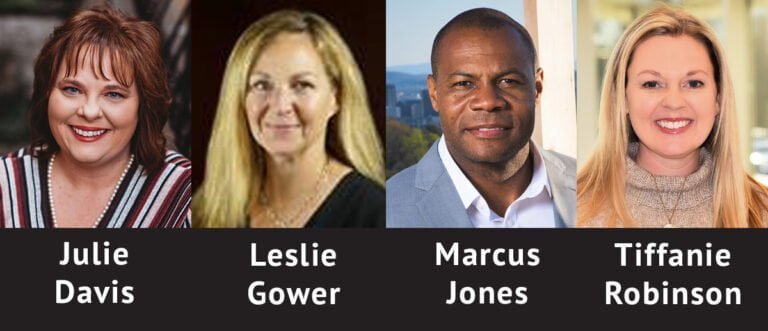
 The Chattanooga State Foundation recently welcomed Julie Cook Davis, Leslie Gower, Marcus Jones and Tiffanie Robinson to its 16-member board of directors.

The board also includes Dr. Edna Varner, Rowena Belcher, Stephanie Crowe, Joe Ferguson, C. Duffy Franck Jr., John F. Germ, Wade Hinton, Larry Parks, Dr. Maricela Rodriguez, Keith Sanford, Britt Tabor and Tom White.

Davis is a partner for the Round Table Advisors of Raymond James and senior financial advisor, RJFS, serving as the team’s insurance specialist. In addition to being a proud Chattanooga State alum, her mother and daughter are also Chattanooga State alums.

Gower is the CEO of the Associated General Contractors (AGC) of East Tennessee. She serves as STEM Council chair for one of four Hamilton County Future Ready Institute’s industry career clusters. 

Jones owns and leads Magnolia Developments, LLC Commercial and Residential Construction Division. He is agraduate of the University of Mississippi with a B.S. in Mechanical Engineering and is a Certified Project Manager Professional, member of the Sigma Pi Phi (Boule) and a member of Kappa Alpha Psi Fraternity, Inc. He volunteers for the local Habitat for Humanity, joining its Board in 2017, and most recently served as the board chair through June 2022. He is an alum of the Chamber’s Leadership Chattanooga program. 

Robinson serves as the president/CEO of Lamp Post Properties and the chief executive and principal broker for SVN | Second Story Real Estate Management, an off shoot of Lamp Post Properties. She is also the elected District 4 Hamilton County School Board member and co-founder of The Jump Fund. The first in her family to go to college, she is an alum of Lee University where she earned a theater scholarship and graduated with a degree in communications.

“We are grateful to have four new dynamic leaders joining a stellar group of dedicated board members,” stated Nancy Patterson, vice president, College Advancement & Public Relations. “Our Chattanooga State Foundation board of directors help ensure that we foster a loyal philanthropic community in support of the mission of the college.”

For more information about the Chattanooga State Foundation, contact Nancy Patterson, vice president, College Advancement & Public Relations, (423) 697-2630 or email Nancy.patterson@chattanoogastate.edu.

Tennessee American Water Hosted Pool Party to Kick Off Summer at Chambliss Center for Children

0

Chattanooga, TN . . . In what has become a summertime tradition at the agency, Tennessee American Water hosted a pool party today at Chambliss Center for Children, welcoming summer with a sparkling pool and treats for the children participating in the summer program.

Tennessee American Water filled up the 40,000-gallon pool at no cost to Chambliss Center for Children. “Clean and reliable water is an essential life resource. We are committed to providing high quality water services that help people enjoy recreational activities and the overall quality of life,” said Daphne Kirksey, Tennessee American Water External Affairs Manager. “Chambliss Center for Children plays a major role in youth development and providing necessary services to so many people in Chattanooga and Hamilton County. We appreciate the opportunity to partner with them to help the families and children in our community.”

 Along with providing the water to fill the pool, TAWC gave away beach balls, new pool noodles, water bottles, and coloring books to the school-age children participating in the agency’s summer child care program.

 “Each year, our kids look forward to this special event, and each year it’s just as exciting as the last!” says Rachel Carroll, Communications Coordinator for Chambliss Center for Children. “Because of the generosity of Tennessee American Water, we are able to use the money we would have spent on filling up our pool on other vital areas in our program, which is a tremendous help to our budget.”