Thursday, October 15, 2026
Advertisement
Home Blog Page 90

The problem with “never mind!”

I’m clueless!

Now before you howl ‘I told you so’ while high fiving your buddies, allow me to say that those two words – “I’m clueless”- is how l feel when someone exposes one of my embarrassing blind spots.  Strange way to start off a column, huh?

But the fact is that there’s something healthy about self-deprecating storytelling, especially if it can be a teachable moment for others. So let me take you to one of my blind spots.

You see, my bride is not only dealing with a clueless spouse, but she’s also dealing with a hearing loss. It’s hereditary (her hearing loss, not her clueless spouse). As frustrating as it is for her to have to constantly respond, “say that again” when she doesn’t hear something clearly, it’s as frustrating to me to have to repeat myself. Of course, my frustration pales by comparison to hers and scores of others who experience a loss in hearing.

Now I’m ashamed to admit that there have been times when I just waved her off with a ‘never mind’ when she’d ask me to repeat myself. Never did I realize how condescending, insensitive, and callous that was, that is until I got the following email a while ago:

“Mr. Terry, I started reading your articles and instantly got hooked on them. Thank you so much for your thought-provoking articles. I have learned a lot from them, and they have helped me a lot to understand other people and cultures.

As an immigrant to this country with English not my first language, sometimes I come across people – even friends – who sometimes say things I don’t understand (usually unrelated to work, maybe a joke or a comment about a football game). When I ask them to explain it to me, usually they say, “NEVER MIND” which leaves me thinking, “why would you say something and then not want to explain it?”

I feel that people think that I should have all the knowledge about what they are discussing. For example, take a television show which aired 20 years ago when I was not here and knew nothing about when they used it as a reference. When I asked for an explanation, I got the same answer “never mind,” which made me feel stupid.

I hope I have explained to you my problem and request you to write an article to address this issue as this is not only me since I have been told by many immigrants that they feel the same way. Please do not publish my name.”

Suddenly the juxtaposition of the experience by this emailer and my wife’s forced me to reflect on something related I’d read previously, “Dismissive Gestures,” by Rich Brenner of Canyon Creek Consulting. He wrote, “humans are nothing if not inventive. In modern organizations where verbal insults are deprecated, we’ve developed hundreds of ways to insult each other silently. When we insult each other, we damage relationships and make achieving our shared goals more difficult.”

Like language, humor and most customs, dismissive gestures vary from culture to culture. While the meanings of various gestures are intuitively clear in your own culture, they can be mysteriously unfathomable in the cultures of others. And they slowly evolve with time. By examining these tactics, says Brenner, we can take some of the sting out of them and reduce the urge to use them ourselves. He lists the following dismissive gestures and their possible interpretations:

Heavy-lidded glances to a third party – When one listener looks at another with a heavy-lidded glance, and possibly a tilt of the head, the message is, “Gimme a break,” or “She’s gotta be kidding.”

Heavy sighing – A heavy sigh, sometimes combined with an exaggerated lift of the shoulders, can mean, “I’ve had enough of this trash.”

Eye rolling – Typically, eye rolling is executed out of the awareness of the target, and that’s bad enough. But sometimes we do it face-to-face, and then it’s especially stinging.

Looking at your watch – Checking the time can be interpreted as “I wish this boring fool would give it a rest.”

Shrugging – A shrug communicates, “I don’t care.” For extra punch, combine with a facial expression of boredom or disdain.

Disgusted laughing – There are laughs-with, and laughs-at. The disgusted laugh is a laugh-at, and there’s nothing funny about it.

Checking a hand-held device instead of paying attention – This can communicate, “I have something more worthwhile to do than to listen to this drivel.”

On reflection, I believe that most of us don’t wake up in the morning wondering who we should insult today. There’s something inherent in us that makes us want to rethink how we may, albeit unintentionally, damage someone emotionally with a dismissive “never mind,” its variations, or others on or not on the above list.

In the end, sharing this blind spot is an uncomfortable reminder that I can’t escape my own demons, the biggest of which is why it took hearing from someone I didn’t know, Rick Brenner, to realize how hurtful I’ve been to someone I do know, my wife.

Yes, I have work to do …. once I crawl out from beneath the nearest rock! © Terry Howard is an award-winning trainer, writer, and storyteller. He is also a contributing writer with the Chattanooga News Chronicle, The American Diversity Report, The Douglas County Sentinel, Blackmarket.com, co-founder of the “26 Tiny Paint Brushes” writers’ guild, recipient of the 2019 Dr. Martin Luther King, Jr. Leadership Award, and third place winner of the 2022 Georgia Press Award.

Governor Lee Signs $412M State Tax Cut

 By Jon Styf 

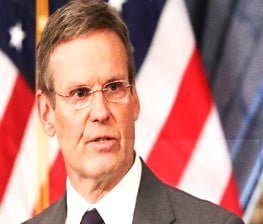
Tennessee Gov. Bill Lee earlier this month signed a tax cut that is estimated at $412 million, with $272.8 million of that attributed to a three-month grocery tax holiday. 

Lee’s office called it the single-largest tax cut in state history. 

The grocery tax holiday will start Aug. 1 and run through Oct. 31. 

“Tennessee’s legacy of responsible fiscal stewardship has allowed our state to weather national economic storms while maintaining a balanced budget and cutting taxes for Tennesseans,” Lee said in a statement. “We thank the General Assembly for partnering with us to make the right investments for Tennessee families and businesses while supporting our state’s future economic growth and success.” 

The bill includes changing the state franchise and excise taxes to single sales factor taxes like 32 other states. Those taxes are based only on a business’s sales within the state of Tennessee. It will be phased in over three years. 

It also creates a $50,000 net earnings reduction ($37.8 million cost) from excise taxes while exempting $500,000 of property from franchise taxes ($20.3 million cost) and increases the filing threshold for business tax from $10,000 to $100,000 ($7.9 million cost). 

“In Tennessee we are committed to low taxes. We believe that Tennessee businesses and citizens are in the best position to decide how to spend their own money, and these tax-cuts demonstrate that we practice what we preach,” Senate Majority Leader Jack Johnson said. “…. We are proud to be one of the lowest taxed states in the nation, and this move to further cut taxes strengthens our dedication to being a pro-business and pro-family state with low taxes.” 

A two-year pilot family leave tax credit will be created for businesses that gives employees from two to 12 weeks of paid leave, providing at least 50 percent of normal wages over that period. If a business provides 50 percent of wages, it receives a 12.5% credit for those wages and it maxes out at a 25 percent credit if full wages are paid. The program is not mandatory for businesses. 

Identical twin coaches inspire Chattanooga students

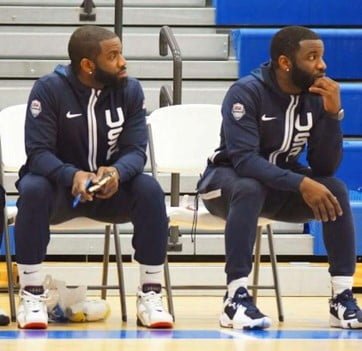
Identical twins Christian and Christoffer Collins have made a profound impact at the Chattanooga Preparatory School. The Collins brothers have become beloved figures at the school and have left a lasting impression on their students, colleagues and the community at large.

Christoffer serves as the varsity basketball head coach and 8th/9th grade physical education teacher, while Christian serves as a 6th grade physical education teacher and coach for the Sentinels. Christoffer succeeded in persuading Christian to leave a nursing career to come and help him build a basketball program at the all-boys charter school located in Highland Park. 

For Christian, the decision to join his twin brother made sense. “I started off wanting to become a teacher. My mom, dad and uncle were all educators,” he said.

Chattanooga Preparatory School’s twin coaches and teachers Christian (left) and Christoffer (right) Collins,

But for both Christian and Christoffer, their work at Chattanooga Prep is more than just a job–it’s a calling. They are passionate about education and sports, and they believe that they can make a difference in the lives of young people.

“What I do on a daily basis, I don’t call work, I call it my passion–because of the love I have for the sport of basketball and the countless young men and women in whose lives I have the pleasure of making a difference,” Christoffer said.

“God has blessed me to be able to live out a daily dream by combining two of my greatest passions, the game of basketball and helping people as a coach and as an educator. There is no greater feeling in the world than being able to help individuals develop discipline, persistence, belief, a work ethic, leadership skills and respect for others both on and off the court.”

The 39-year-old Collins twins were born and raised in Chattanooga, and both attended Brainerd High School before pursuing higher education. Since their arrival at Chattanooga Prep, they have become integral parts of the school’s community. 

As coaches, they have led the school’s basketball team to multiple victories and have helped the players develop both on and off the court. They have also worked tirelessly to instill important values in their students, including hard work, dedication and respect.

Chattanooga Prep finished the 2023 high school basketball season advancing to the Tennessee Secondary School Athletic Association (TSSAA) State Final Four after winning the program’s first state quarterfinal debut, finishing the season 29-9.

“Chattanooga Prep has allowed me to live out my passion being a founding coach and teacher by developing boys into becoming young men,” Christoffer said. “These are the same young men who I am confident enough to say will be the future leaders of America.”

Christoffer is the founder of CKC Elite Basketball Training. He has coached/trained six McDonald All-Americans, five Brand Jordan All-Americans, 10 Mr. and Miss Basketball finalists and winners, two Gatorade Player of the Year winners, a 3x USA Gold Medalist, and two NBA and WNBA champions. Chattanooga Prep opened in 2018 as the city’s first all-boys public charter school, welcoming 66 students at the time. The school focuses on providing an excellent education to underserved communities.

The next Austin? This booming city in Tennessee is about to take a leap into quantum networking

By Jon Swartz 

Before it became the country’s first “gig city,” Chattanooga, Tenn., moved at a languid pace — if it moved at all.

“In the late ’80s and early ’90s, Chattanooga was a dying city of industrial companies leaving,” said Mayor Tim Kelly, a Chattanooga native who was reluctant to come home after attending Columbia University in New York. “But I felt a sense of obligation [a car business in town owned by his family]. At the time, Chattanooga did not have a buzz.”

And then the Tennessee Aquarium happened.

Opened in 1992, the popular attraction on the banks of the Tennessee River and home to 12,000 animals kick-started an implausible renaissance: billions of dollars in investments, a makeover of the downtown area and a boom in hotels that’s still going to this day.

Now Tennessee’s fourth-largest city is hurtling forward with a 25-gig network for everyone and a major new business push behind so-called quantum networking. On Wednesday, the Company Lab, a nonprofit accelerator for early-stage startups unveiled a program to fund and advise six startups working on new approaches to sustainable mobility.

Steve Case, the former America Online CEO and author of “The Rise of the Rest: How Entrepreneurs in Surprising Places are Building the New American Dream,” attended the event. Case has called the city “freight alley” for its proximity to a major river, railroad system and interstate freeways.

Meanwhile, developers of telecommunications company EPB’s new quantum network that debuts in July hope the network and related efforts will put Chattanooga on the leading edge of the next generation of cybersecurity, computing and other technologies.

“This is the kind of initiative that 20 years from now could fundamentally increase the median income of our entire community,” EPB President David Wade said in an interview.

“Quantum is the next chapter, much like in the beginning,” added Kelly, who is also part-owner of a local soccer team and brewery. “We do not know where it is going to go, but surely VC and research will accrue here.”

America’s first ‘gig city’

The majestic Tennessee River carves a path through Chattanooga, the state’s fourth-most-populous city, with its 183,095 residents, and America’s first so-called gig city. Indeed, in 2010 it became the first metropolitan area in the Western Hemisphere to offer 1-gigabit-per-second fiber internet service to all residents and businesses. The speed has been ratcheted up to 25 gigabits per second this year.

The combination of the Tennessee Valley Authority, the legendary electric-utility corporation created in 1933 as part of the New Deal, and EPB, one of the nation’s leading municipal-owned utilities, has greatly contributed to affordable rates of blur-fast technology. Meanwhile, EPD’s Smart Grid Technology has reduced carbon emissions by 4.7 million tons and greatly reduced power outages.

Just as important is the city’s location: It is at the nexus of Atlanta; Nashville and Knoxville, Tenn.; and Birmingham, Ala. — and is within a one-day truck drive of half of the U.S. population.

“We were the Rust Belt of the South, to iron ore and steel, but it was dying away,” said Charles Wood, the CEO of the Chattanooga Area Chamber of Commerce. “The economic shift to white-collar industries changed with the aquarium opening in 1992. From 1992 to 2012, $1 billion was invested in city. Since then, it has been $2 billion.”

Today, in addition to the nation’s pre-eminent gig network and a fledgling quantum network, the city is a tourism hotbed and home to the “Battery Belt,” with the presence of major employers Volkswagen Nissan Motor Co. and Ford Motor Co. as well as Novonix, whose technology turns sludge into synthetic graphite. “It is the Manhattan project for battery life,” Kelly said.

At the nearby University of Tennessee at Chattanooga campus, known as UTC, they’re developing smart-city applications such as a 100-intersection urban testbed for autonomous vehicles over the next few years. “We could greatly influence future transportation,” said Mina Sartipi, founding director of the Center for Urban Informatics and Progress at UTC.

So much, so fast. But who is to manage it all?

“It comes down to growth management,” said Kelly, a leading proponent in the region for a corridor track to Atlanta and expansion of the airport. “It reminds me of Austin. We have the Goldilocks problem of keeping this like Austin 20 [or] 30 years ago, and not what Austin has become” as a major tech hub now struggling to cope with unbridled growth.

Chattanooga transplants from two of the world’s biggest tech hubs can vouch for the appeal of a balanced work-home lifestyle.

“The city is growing smartly,” said Ryan Lusk, CEO of 3-D–printed fabrication technology company Branch Technology. He left New York after several years to return to Tennessee in 2012.

Rachel Pohl, senior manager at Unity Software Inc. relocated to Chattanooga in fall 2021 after leaving the San Francisco Bay Area in October 2020.

For a while, she and her husband embarked on a Magical Mystery Tour of the U.S. with stops at Airbnb properties in Asheville, N.C.; Santa Fe, N.M.; Charleston, S.C.; Bozeman, Mont.; Nashville; and Bentonville, Ark.

Ultimately, they chose Chattanooga over Durham, N.C. “It is a town where you can make an impact,” Pohl said. (Source:  MarketWatch)

Factors that contributed to the record low history scores for US eighth graders

When national student test scores revealed recently that knowledge of U.S. history and civics had reached an all-time low, one Republican lawmaker described the drop as an “outright failure that should concern every parent across the country.”

The test scores showed that 86% of America’s eighth graders were not proficient in U.S. history, and 79% were not proficient in civics.

While one top U.S. education official described the scores as “alarming,” the official rightly pointed out that the decline actually began nearly a decade ago.

In my view as a historian of education reform and policy, the latest history and civics test scores were a predictable outcome. While it is difficult to establish an exact cause of the decline, here are four factors that I believe contributed to it.

1. Pandemic fears of learning loss

When students gradually began to return to their physical school buildings after they were closed when the COVID-19 pandemic began, researchers, politicians and critics of teachers unions began to worry about learning loss in math and reading.

Historically, when there are worries about test scores in core subjects like reading and math, other subjects become less of a priority. This deemphasis on subjects beyond reading and math has taken place before. Specifically, after the Bush-era policy No Child Left Behind became the law of the land in 2002, teachers reported that the emphasis on testing took away time and resources for social studies. They also say it threatened arts education, which has been shown to benefit children’s overall academic, emotional and social well-being.

2. The politicization of social studies education

At the same time that many education experts were worried about learning loss in reading and math, conservative politicians were working incessantly to limit what can be taught in social studies.

In one of his first acts as governor, Virginia’s Glenn Youngkin, for example, set up an anonymous tip line for parents to report teachers who taught “divisive concepts,” such as the notion that the U.S. is “fundamentally racist or sexist” or that a person from a particular race or sex bears responsibility for past actions committed by other members of the same race or sex. The tip line has since been quietly shut down.

Across the country, state legislatures led by conservative politicians have adopted bills banning instruction about aspects of U.S. history that could, they believe, make white children feel “discomfort” or “guilt.”

All of this has created an atmosphere of fear for the nation’s teachers, who remain largely unsure of what they can and cannot teach. For some teachers, this political context has led them to self-censor and limit what they teach about American history, potentially depriving students of a richer understanding of the nation’s politics and policy.

3. Education budget cuts

Although research has long shown that funding matters for student achievement, many school districts around the country are currently struggling for adequate resources.

The pandemic has amplified existing racial and economic disparities – and recent national test scores in history and civics are an extension of those disparities. Not only were the average scores on U.S. history tests lower for Black students than white ones, but the decline from 2018 scores to 2022 was 42% greater for Black students. Black students collectively lost 4.5 points, or 1.8% of their average scores, from 2018 to 2022, versus 3.5 points, or 1.29%, for white students.

And the situation was even more stark for low-income kids. Compared with 2018, children who are eligible for free or reduced lunch – a standard measure of poverty – saw their scores drop more than twice as much as they did for their higher-income peers who did not qualify for the program. Specifically, they lost five points – going from 250.5 in 2018 to 245.5 in 2022, versus just two points for those who do not qualify for free and reduced lunch, who saw their scores drop from 274 to 272 between 2018 and 2022.

4. Teacher shortages

Mounting job stress and the blaming of teachers have led many educators to leave schools altogether, generating widespread teacher shortages.

Among teachers who left the profession in 2022, a record high 64% quit, as opposed to being laid off or fired, leaving district and state leaders scrambling to lower requirements for substitutes in an effort to find adequate classroom support. Evidence suggests that experienced, professionally trained teachers are critical for students’ academic achievement. With that in mind, low test scores in history and civics begin to make more sense.

Keys to improvement

What American kids know – or don’t – about the nation’s history and civics is a reflection not of the kids, but of the political and economic circumstances that affect their schools.

The factors that support student learning – funding, qualified teachers and high-quality curricula – are well known. In my view, if history and civics scores are to improve, then what is needed is more funding for public schools, more support for professional teachers and the freeing up of educators from policies shaped by contentious political debates about what they can and can’t teach about U.S. history in America’s classrooms. (The CONVERSATION)

Chattanooga Mayor Tim Kelly appoints Jermaine Freeman as interim chief of staff

Chattanooga Mayor Tim Kelly on last Friday appointed Jermaine Freeman as interim Chief of Staff. Freeman will take over the portfolio that is being vacated by Joda Thongnopnua as the administration crosses the two-year mark.

Freeman previously served in senior leadership roles for both Mayor Kelly as well as in the prior mayoral administration, with a heavy focus on economic and workforce development. Under Kelly, he has served as the mayor’s senior advisor for economic opportunity, with responsibilities that have included affordable housing, workforce development, and the management of several key economic development projects. 

“I’ve come to rely on Jermaine for his honest insights, his tireless dedication to closing opportunity gaps for our residents, and his demonstrated ability to make Chattanooga a better place for everybody, ” Kelly said. “As my right-hand man for economic opportunity, I’ve seen firsthand his wisdom and grit, and I know he’s up to this challenge.”

Since Kelly was elected, Freeman has been spearheading several of the mayor’s major initiatives, including the revitalization of Chattanooga’s South Broad district, the renaissance of the former DuPont site in Hixson, the creation of hundreds of new affordable homes, and crafting incentives to help major employers expand in or relocate to Chattanooga. 

“My theory of change is fundamentally economic, improving people’s lives by improving their standard of living, and Jermaine has been critical to these efforts,” Kelly said. “We will continue to support this work vigorously as Jermaine moves into his new duties.” Richard Beeland, the current administrator of Economic Development, will take on a portion of Freeman’s economic responsibilities as he transitions into the Interim Chief of Staff role, and the administration will be considering other strategies to support its economic work in the interim.

Employers in Chattanooga are committed to advancing inclusion and diversity, yet many still struggle to make progress

Chattanooga, Tennessee – Wade Hinton, founder and CEO of Hinton & Company and Candy Johnson, president and CEO of the Urban League of Greater Chattanooga, last Thursday released the results of the inaugural Community Culture Index–the region’s first highly-localized data-driven assessment tool meant to measure how well employers are incorporating inclusive practices into their workplaces in a quantifiable and objective way.

Inclusive practices refer to policies, behaviors, and actions that help create a culture of belonging and fairness for all and can contribute to an organization’s ability to attract and retain high-performing employees, develop new products, and reach new market segments.

The Community Culture index (CCI) surveyed small businesses, government agencies, nonprofits and major employers from throughout the Chattanooga region on a range of topics. The survey aimed to determine whether these organizations are adopting leading inclusive practices in areas such as recruiting, hiring, strategic plans, and partnerships. Over the course of several months, more than 100 representatives from Chattanooga-based organizations signed up to participate in the inaugural CCI, garnering responses from 60 employers representing every industry sector in the metropolitan economy.

The CCI is unique because while there have been national or industry-related surveys on the state of DEI, this tool provides a localized assessment that is specific and tailored to the employers in a metropolitan area. Based on the survey results, the tool generates a score indicating how effective the community’s efforts are in promoting diversity, equity. and inclusion in the workplace.

Hinton & Company intends to expand the CCI to other markets interested in advancing inclusion in their community.

“Gone are the days when a fair and supportive workplace was considered a ‘nice-to-have,’’’ said Hinton. “Valuing employees and treating them fairly is a requirement for a sustainable workforce. The 60 organizations that participated in the CCI understand this, and we’re incredibly grateful for their participation and candor. By measuring the inclusivity of workplaces in the region, we believe CCI can help communities build actionable insights and practical steps toward progress. It’s a major step in helping communities begin to identify some potential areas for improvement and remain competitive as a region.”

The CCI generated insights across four main categories: Leadership and Workforce; Culture and Retention; Recruiting and Hiring; and Partnerships.

Specific findings contained in the CCI report include:

Leadership and Workforce

1. Over 70% of participating CHA organizations indicated they have an enterprise-wide DEI strategy in place. Still, many of these organizations lack the resources, capacity, or commitment from leadership to implement the strategy.

2. Fewer than 40% of organizations have a workforce as diverse as the Chattanooga area.

3. Nearly half of respondents (42%) noted their executive/senior leadership team continued to lack diversity.

Recruiting and Hiring

1. Almost half of the respondents reported recruitment efforts included hiring goals seeking talent from underrepresented groups–yet more than 65% identify BIPOC (Black, Indigenous, People of Color) talent as the most challenging group to recruit.

2. Eighty percent of organizations had not completed an audit of their hiring process for potential bias.

Culture and Retention

1. More than half of respondents reported that their organizations have employee resource groups, inclusion councils, or task forces focused on improving inclusionary practices.

2. More than 50% of respondents do not provide DEI training.

3. Only 17% of organizations offer professional development programs specifically for underrepresented groups (e.g., executive leadership for women).

Partnerships

1. The majority of respondents had specific and clear diversity commitments related to their purchasing protocols and philanthropic/corporate social responsibility efforts.

2. However, only a quarter of respondents note record keeping as part of the vendor diversity process.

“We know anecdotally that many employers have a sincere interest in building more diverse, inclusive, and representative workforces, but they may not always know what actions will lead to the kind of progress they want,” said Johnson. “The CCI creates some transparency into operational trends that exist throughout our region, which allows all organizations to learn from each other. When we grow together, our entire regional economy becomes more attractive to workers and employers alike.”

The CCI is funded in part by the Urban League of Greater Chattanooga, the Community Foundation of Greater Chattanooga, the Benwood Foundation, and the Footprint Foundation.

To learn more about the Community Culture Index and read the full report, please visit hintonandco.com/cci-report-cha.

Enzyme is the Answer to Plastics Filling Up Landfills

0

Chattanooga had as one of its largest employers the DuPont Company which produced polyethylene terephthalate, or polyester fibers for everything from women’s hosiery to tires. Today, those plastics are filling up more than just our pantries, closets, and homes with products that end up in landfills that take up to 500 years to breakdown and decompose.

The same science that assisted in creating the advancement of this universally used plastic has now helped solve the growing problem. No. Trash, waste management, and the issue of refuse is not front of mind but knowing that microplastics do end up in our water, kill wildlife, and change our environment should make all of us more aware of how we consume and dispose of those products.

Researchers at the University of Texas in Austin (UTA), or as Tennessee folks say, “The other UT,” have worked on and employed an enzyme called FAST-PETase which is used to turn these used, dirty, and damaged plastics into reusable materials.

As the hope is to achieve a more “circular economy” in the area of consumables, researchers aim to take that which is produced, used, then discarded as spent or no longer needed to remain in that loop of materials to be reused over and again without every leaving the closed system of manufacturing. This approach would obviously protect our landfills from overuse and unnecessary expansion, but also other environmental benefits such as water and air quality and the accomplishment of being good stewards of that which is manufactured and consumed.

FAST-PETase is a variant of an enzyme created at UTA by a collaborative team of engineers and scientists that works by attacking the molecular structure of polyethylene terephthalate (PET), found in bottled water, soft drinks, food wrappers, and textiles. It’s estimated that this type of plastic makes up at least 12% of all waste–all, throughout the entire globe.

Through synthetic biology, the specific enzyme, or protein works to depolymerize plastics at low temperatures and lives up to its name: functional, active, stable and tolerant. This FAST-PETase will eliminate billions of tons of waste that takes centuries to decompose.

The obvious application of this creation of wonderful minds working with computer analysis is within recycling and this circular economy of things.

Another key application is in remediation. There are many lands and spaces made unusable by our approach to life, which is to be mobile, use excessive amounts of disposable bottles and containers, and assume there won’t be any consequence. Stay tuned for FAST-PETase and its application in years ahead. No, this does not mean our wasteful and careless habits are justified. The advancement, instead, assists us as good stewards to correct mistakes and current messes we’ve made, and work toward better communities that are sustainable as Hamilton County and Chattanooga work to deal with the Summit and Birchwood landfills.

Special Report – Part 3 – Extreme Risk Protection Orders Examined

Tennesseans understand there will be a legislative session called by Governor Bill Lee as announced on May 8 to discuss and debate school safety, preventing firearms from getting into the hands of individuals who have been deemed a harm to themselves or others, and the fact that the United States Constitution–the Law of the Land–protects the right of a law-abiding citizen to own, posses, and use a firearm for personal protection.

Before going further, appreciate that this will prove to be a tedious task. Every person brings to any situation their own experiences, opinions, and desires as facts are debated. That simply means something as simple, as some might argue, as keeping firearms out of the hands of the mentally ill or any who are deemed a threat safety is not so simple.

This is all demonstrated by the parable of the blind men asked to describe an elephant through their sense of touch, which they have never seen to know its image. One touches the large beast’s side and declares it to be as a large wall; another examines through touch the pachyderm’s tusk and pronounces it to be as a spear; another is only able to touch the elephant’s trunk and declares it to be snakelike.

You get the idea.

The same will be at play on August 21, as the special session of the Tennessee General Assembly commences this time of deliberations, as described by Governor Bill Lee, “to continue our important discussion about solutions to keep Tennessee communities safe and preserve the constitutional rights of law-abiding citizens.”

At the center of the debate will be extreme risk orders. The Governor and Representatives Sam Whitson (R) and Darren Jernigan (D) have all three made public statements to support this process currently used in Tennessee in the area of domestic violence to protect victims of harassment and violence from escalation and future harm.

What’s the big debate over an extreme risk protection order since it’s not a crime, but employs law enforcement, medical professionals, and the court to remove weapons from those alleged to demonstrate dangerous behavior?

While the accusation made toward a respondent is not a crime, he or she will have a court record and a medical record based on a complainant. This accusation may or may not be substantiated with a fact pattern or evidence of behavior, as demonstrated by the broad scope of other states which have similar laws in place. Upon the actions of law enforcement, medical professionals, and the court, a constitutional right may be taken from a citizen based on the belief or accusation, not a crime committed.

However, in many cases, there may, indeed be evidence, behavior, or even a history and is an appropriate behavior-oriented intervention. Yet, the precedent set by taking a right from one prior to a crime is unconstitutional.

 The dilemma relates to the parable. Let’s just hope Tennessee leaders debate, discuss, and decide with their eyes open and avoid using only their feelings.