Thursday, October 15, 2026
Advertisement
Home Blog Page 87

Chattanooga group fears One Westside plan will spur displacement of African Americans

A Chattanooga nonprofit organization is concerned that the One Westside development project will displace African Americans from the neighborhood.

The Unity Group says that the project, which includes 1,500 new residential units, will not do enough to protect low-income residents. The group is calling for more affordable housing to be included in the project.

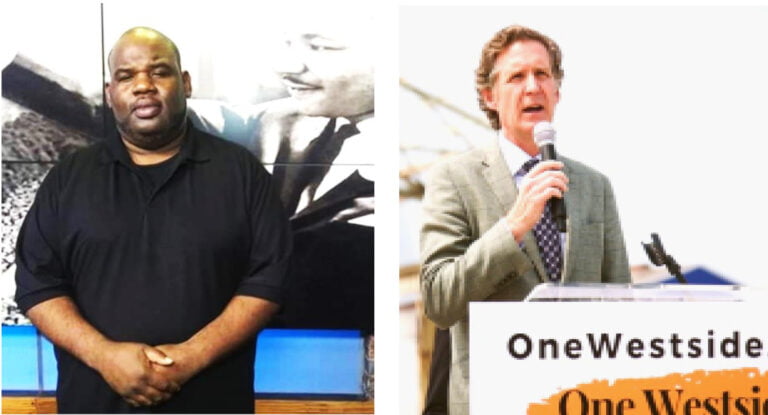
“Everybody advocating for this Westside plan needs to tell the truth,” Eric Atkins, co-chair of the Unity Group, said. “Most of the people will never go back. They might give you a voucher, but good luck finding adequate housing. All this development is gentrification, pure and simple.”

The One Westside plan encompasses two projects occurring across more than 200 acres of property near the Tennessee River. The name echoes Chattanooga Mayor Tim Kelly’s “One Chattanooga” plan, an evolving strategy aimed at closing socioeconomic gaps across the city.

Developers have said that 10% of the housing would be reserved for people making at or below 80% of the area’s median income. However, the Unity Group says that this is not enough, and that more affordable housing is needed to prevent displacement.

“At a minimum, Chattanooga leaders and One Westside supporters need to be honest,” the organization said in a report released last week. “African Americans will be displaced. The pattern is clear and indisputable. Safeguards have not been in place to give African Americans opportunities to remain in and around downtown Chattanooga. The market forces unleashed by hyper-gentrification radically change local culture, housing prices and community networks.”

The report goes on to state, “Whether by design or market forces, redevelopment in the urban core and surrounding neighborhoods has not boded well for African American residents. Thousands of them have been displaced by the destruction of public housing, market rents and higher earning workers in the innovative economy.

“The proposed One Westside Plan, like most Chattanooga plans, sounds great. It will provide affordable housing, parks, and it promises to allow all existing residents to remain in Westside. Yet, in most urban neighborhoods in and around downtown Chattanooga, the African American population has continuously declined between 2000 and 2021.

“The data demonstrates that when major development projects are undertaken in Chattanooga, the African American community is disproportionately displaced. In 2000, most census tracts surrounding downtown were majority African American. The pattern was similar in 2010 with a few tracts switching to majority and a few switching to non-majority African American.

“The biggest changes happened between 2010 and 2021 as Chattanooga continued to grow and attract artists, tech workers, and other creatives. The map shows that Northeast Chattanooga and Avon Park remain African American majority communities. Most of downtown and the southeast corridor of the analysis geography are no longer African American majority. The last remaining high concentration of African Americans downtown is Westside.”

The Unity Group was founded in 1969 to promote civil rights and economic opportunity for African Americans in Chattanooga. The organization has been involved in a number of landmark initiatives, including the election of the first black to the Chattanooga City Commission and the renaming of 9th Street to M.L. King Boulevard. The Unity Group is still active today and continues to work to improve the lives of African Americans in Chattanooga.
Court Rules in Favor of Attorney Rheubin Taylor in Lawsuit against County Mayor Weston Wamp

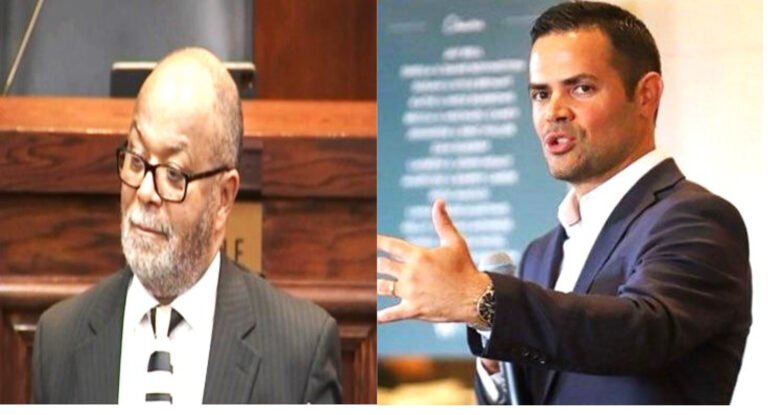
On Wednesday, July 5, Chancellor Jeff Atherton upheld a contract between Hamilton County Attorney Rheubin Taylor and the previous County Commission, extending his term until 2025.

Attorney Taylor’s lawsuit stemmed from Hamilton County Mayor Weston Wamp’s attempt to terminate Taylor after assuming office in 2022, asserting that the county attorney’s appointment falls under the mayor’s authority. However, Taylor countered by claiming that he possessed a valid contract through 2025, granted by the prior commission.

Judge Neil Thomas, representing attorney Taylor, expressed satisfaction with the court’s ruling, stating, “We believe that the Court was correct in upholding the sanctity of contracts when it found the County Attorney’s contract valid. We hope that the parties will resolve themselves to work cohesively towards the best interests of this county.”

The long-running dispute revolved around a four-year contract approved by the commissioners and then-Mayor Jim Coppinger in June 2021, effectively securing attorney Taylor’s position until June 30, 2025. According to the contract’s terms, termination necessitates either “a majority of the County Commission, with concurrence from the county mayor” or a “two-thirds majority without concurrence from the county mayor.”

Mayor Wamp, however, contended in his court documents that the county attorney should be considered an at-will employee, subject to termination for any reason. He further argued that the County Commission lacked the authority to hire or fire any employee, including Taylor.
During the court proceedings, attorney Taylor asserted the validity of his contract until 2025, and maintained that Wamp lacked the authority to remove him. Notably, when Wamp sought the commission’s support to terminate Taylor last year, the plan was unanimously rejected.


Mayor Wamp’s legal team argued against the validity of Taylor’s contract, citing the employee handbook, which refers to the position as an at-will employment. However, Wamp himself was absent from the court on Wednesday.


In response to the ruling, Mayor Wamp released a statement: “For decades, the county attorney has run a private legal firm out of his government office while being paid handsomely as a full-time county employee. After receiving legal opinions on our right to appoint and fire the county attorney from Dwight Tarwater, who has been confirmed as a justice of the Tennessee Supreme Court, and the state’s County Technical Assistance Service, we terminated Mr. Taylor. We’re disappointed by the court’s ruling and believe this high-profile case should have been handled outside Hamilton County by a judge who does not personally know the parties. We have not let this case get in the way of the important work of county government and will continue to work tirelessly to improve the quality of life for the people of Hamilton County.”


Taylor, 74, has a long history of public service. When he returned to Chattanooga in 1973, he became the city’s first licensed African American attorney. In 1978, Taylor, along with the Rev. Paul McDaniel, became the first black Hamilton County commissioners. Additionally, Taylor served as the first black Hamilton County attorney in July 1993, following his 15 years as a county commissioner.  Alongside his legal career, attorney Taylor has served as the senior pastor at Mt. Zion Baptist Church in Lafayette, Georgia, for over 20 years.

Gerber Advises Camp REACH Student Writers

0

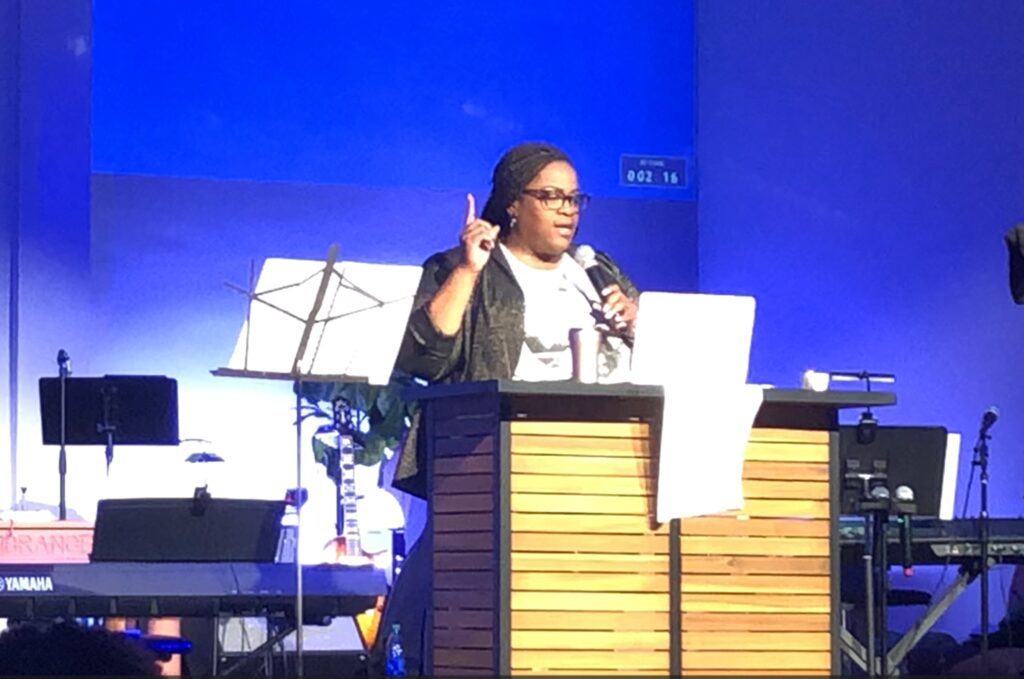
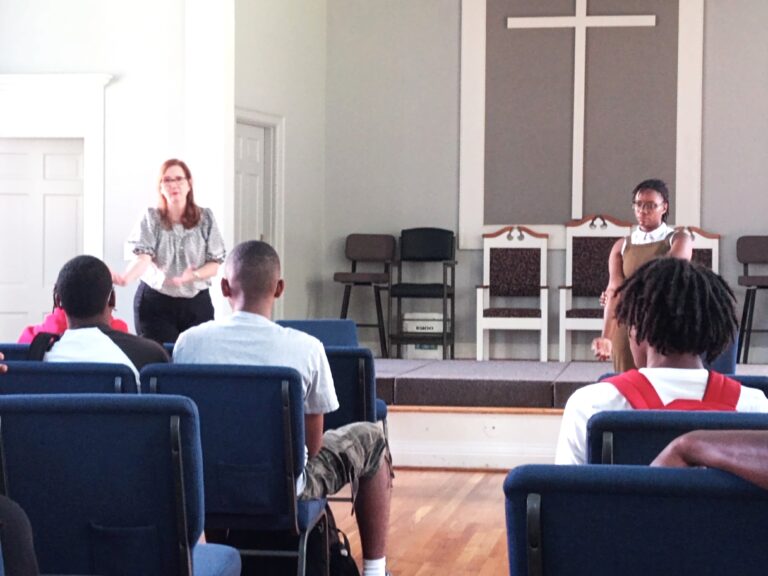
The way to become a good writer is to write, said Alison Gerber, editor of The Chattanooga Times Free Press. She said although her advice sounds simple, it works. Good writers practice daily. Gerber (standing, left) and Digital Editor Tierra Hayes, (standing, right)
spoke to Camp REACH Tuesday, (July 11, 2023) at Hope City Church.
GET INVOLVED: To donate to Camp REACH call the Mary Walker Educational and Historical Foundation
At (423) 267-2313 or go to marywalkerfoundation.org

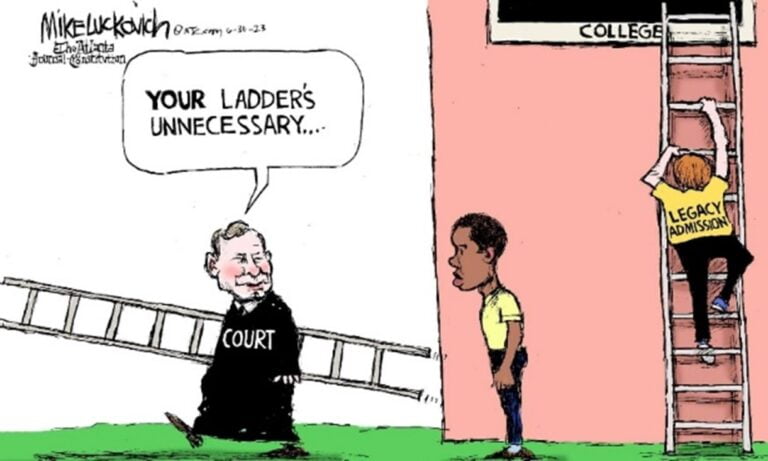
Shhhhhh…. let’s not talk about “legacy,” okay?”

0

I sifted through rubble of reactions to the recent Supreme Court decision that banned race in college admissions searching if “legacy” was also now banned. Well, there was no “there” there.

Okay, setting affirmative action aside for now – as this court gleefully did – how about we do a deeper dive into another form of “affirmative action” –legacy!  I argue that in the same way that we’ve been forced to have an honest national conversation about affirmative action, we’re less than honest if we ignore legacy as a form of affirmative action. However, thanks to the Supreme Court, like a deer caught in the headlights, “legacy” is now out there for public scrutiny.

Turns out that there’s lot out there on the topic legacy. Here’s a brief tour.

“Legacy” is a preference given by an institution to certain applicants on the basis of their familial relationship to alumni of that institution. In college admissions students so admitted are referred to as legacy students. Unlike people of color who are fairly easy to identify, legacy students are indistinguishable. Unlike sororities and fraternities, you won’t find a “Legacy Student” organization, or those words inscribed on sweatshirts and baseball caps on campus.

For years, many universities have engaged in “affirmative action” based on legacy. The offspring of well-heeled alumni – who are overwhelmingly white – have had a far better shot at gaining entry to elite schools which, some argue, amounts to “a form of property transfer from generation to generation.”

Here are a few “let that sink in moments” that may come as a surprise:

  • 36% of Harvard’s class of 2022 can claim a relative that previously attended the university.
  • A study of thirty elite colleges found that legacy students are an astonishing 45% more likely to get into a highly selective college or university than a non-legacy student.
  • Another study revealed that being a legacy was equivalent in admissions value to a 160-point gain on the SAT.

It is estimated that three-quarters of the top 100 colleges in the U.S. factor legacy status into their admissions decisions. This includes all the Ivies and many other ultra-elite private schools such as Georgetown, Duke, and others. A much smaller number of highly selective schools oppose granting favor to legacy status. MIT, Caltech, and Cooper Union are all on record as opposed to hereditary privilege in the admissions process.

Studies have also revealed that legacy students tend to be less qualified than non-legacy students. However, they are economically beneficial to universities since they are perceived to be more likely to donate to their university after graduation.

“Legacy preferences have become an easy target in the wake of a Supreme Court decision that hinged on questions of merit in the college application process,” said Julie Park, who studies college admissions and racial equity at the University of Maryland. Instead of getting in on their own merit, she said, legacy students are just ‘standing on their parents’ shoulders,” she said.

Former president Barack and first lady Michelle Obama both unapologetically admitted to having benefited from affirmative active to get into Ivy League universities. And so did TV’s Joy Reid who also admits that she got into Harvard because of affirmative action. She was aggressively recruited to Harvard because of her excellent grades and SAT scores. Despite that, her first year at Harvard was a shocker. “I never had my academic credentials or intelligence questioned until I got to Harvard. People kept telling me that I didn’t belong there.”

Similarly, the late astronaut, Dr. Ronald McNair, Ph.D., Physics, MIT, the second African American to fly on the space shuttle, recalled being told that he got into MIT and NASA because of affirmative action.

“Now if there’s a silver lining that’s emerged from this Supreme Court ruling, it has forced a national reckoning on legacy preferences,” said Dr. McNair’s brother Carl who today is president of the McNair Achievement Program named in honor of his brother. “As they say, the cat’s out of the bag now and we cannot allow this issue to end up on the back burner.”

Unfortunately, the impact of scant and half-baked acknowledgments of the reality of legacy preferences is that it pits non-legacy groups against each other when the actual discrimination against them is discrimination based on legacy. 

In the end, if given a chance to talk to Justice Clarence Thomas, who led the charge for getting rid of affirmation action; the guy who got into both Holy Cross and Yale Universities on affirmative action programs, here’s a question I would ask him:

For decades now Clarence, you have whined and bellyached about how you were harmed by the “stigma” of affirmative action and because of affirmative action that your Yale law degree wasn’t worth 15 cents. So, can we now expect you to complain about the “stigma” of legacy preferences and how it raises doubts about the qualifications of legacy beneficiaries?

Of course, I wouldn’t hold my breath until he answered!

© Terry Howard is an award-winning trainer, writer, and storyteller. He is a contributing writer with the Chattanooga News Chronicle, The American Diversity Report, The Douglas County Sentinel, Blackmarket.com, co-founder of the “26 Tiny Paint Brushes” writers’ guild, recipient of the 2019 Dr. Martin Luther King, Jr. Leadership Award, and third place winner of the 2022 Georgia Press Award.

Willie Kitchens headlines Camp REACH fundraiser

0

By Brie McGlone, 15
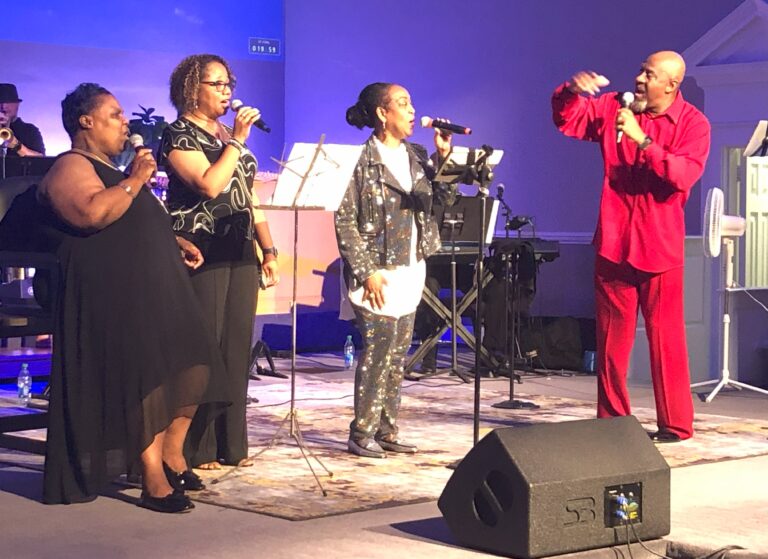
The soulful sounds of Willie Kitchens, Jr. and his band left Camp REACH supporters swaying in their seats and two stepping in the aisle at Hope City Church this month.

The group of about 40 parents, preachers, and poets gathered to raise money for CampREACH, a six-week summer program that assists students with academics, provides exposure to college and career opportunities and pays them up to $150 a week to learn.

“We don’t need a lot of people to get things done,” said Kitchens. “We just need people who are willing.”
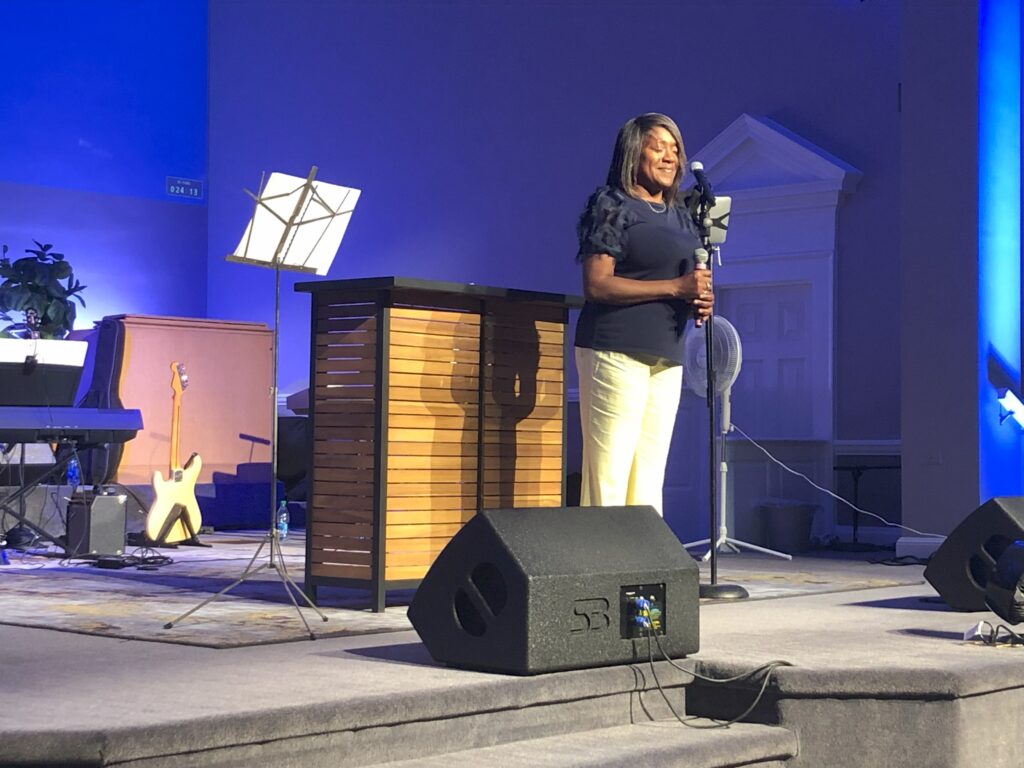
Kitchens, the former lead singer of the Rock and Roll Hall of Fame group The Impressions, was the night’s headliner. Performers also included spoken word by Woodmore Elementary Assistant Principal Luronda Jennings and musical selections by Camp REACH Musical Director Timiethea Delaney.

“The Camp REACH program is and will change the lives and destiny for those who are able to participate,” said Delaney, who hosted the program.

The mission was to raise money for the camp. It costs about $1,500 to cover the cost of one student during the six-week camp. The costs covers their $150 weekly stipend, training by certified teachers, and Olympic level athletic coaches. It also includes field trips to area colleges and lectures from speakers at the top of their career fields like Pinnacle Bank Senior Vice President Jimmy Moncrief who discussed money management during the camp.

Nearly no one remained seated during Kitchens’ concert. Lurone Coach Jennings danced with his daughter Luronda in the aisles, Camp REACH Executive Director Adrian Edwards raised his hands and bobbed his head while manning the door and about a dozen people formed a “love train” and danced around the church as Kitchens’ eight member band and three back up singers belted tunes like “September” by Earth, Wind, and Fire, “My Girl” by the Temptations and “Moving Forward” by Israel Houghton.

The concert was among several fundraisers hosted this month for the camp. The non-profit hosted a luncheon on Thursday, a camp sleepover Friday night and a car wash on Saturday.

“As a native Chattanoogan, I have worked with our youth for many years,” said Delany. “I feel this program will be a way of us reaching our children at a time that is most critical.

Two Camp REACH Coaches win gold medals in Tennessee Senior Olympics

0
Sierra Crawford

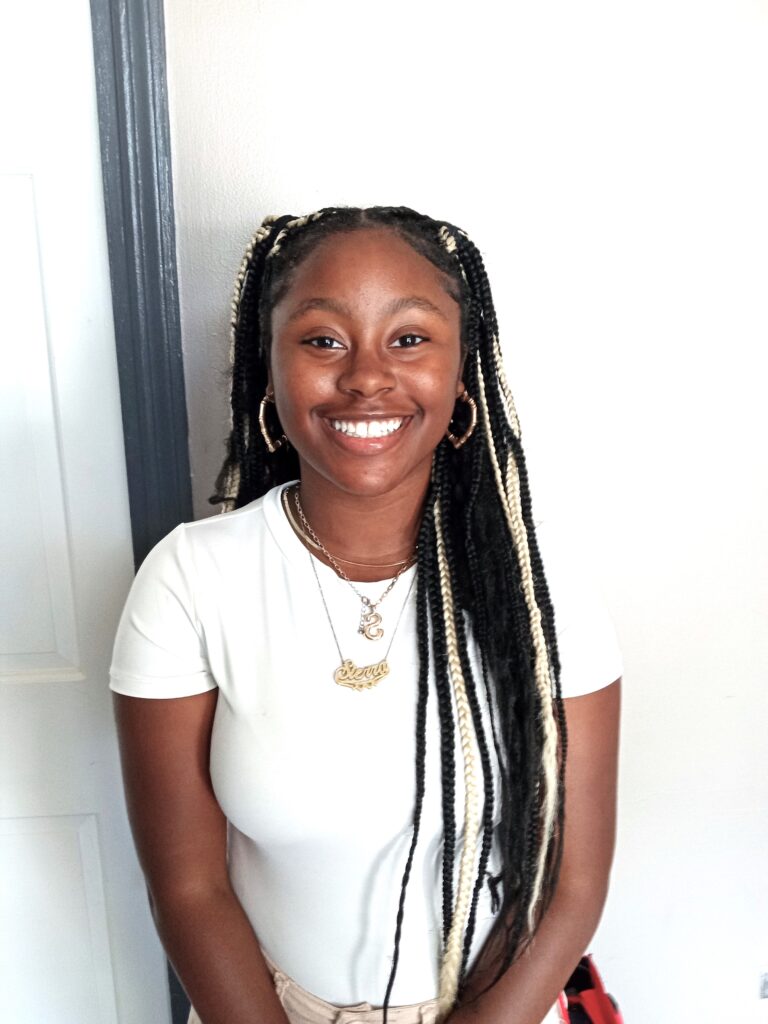
By Sierra
Crawford 16
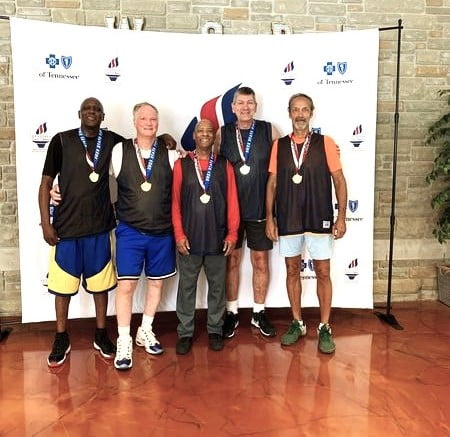
Camp REACH Coaches Gary Cogar and Ricky Dyer, played basketball in the Tennessee Senior Olympics this summer and won the gold medal in their age division.

The two were among five players from the Chattanooga and Nashville areas who played on the Scenic Senior Sixty basketball team in Brentwood (near Nashville) in June and took first place in the sport.

“It was a wonderful experience,” said Dylar, who said the team has been playing together for more than a decade.

This is the first year they’ve won a gold medal in state competition together, said Cogar.

Winning the state championship qualifies them to compete in the national olympics this fall.

Both players say they won’t compete this year, but they will compete nationally in Iowa in 2025 if they win the state again.

Both played in the 60 to 64 age bracket. Dyer, who was a four-year starter at Columbia College in Columbia, Mo., turns 64 in July and Cogar, a retired firefighter who also teaches commercial painting at the camp, is 65. Cogar played in the division to accommodate his younger teammates.

Both coaches assist 1996 Olympic Gold Medalist Venus Lacy in providing athletic training for Camp REACH students.

Cogar says he is encouraging Lacy to compete with the team in national competition in 2025.

Other players include Tyler Overley, Ricardo Jones, and P.J. Heimermann.

Beating the Odds in Life since Birth: Derick Hall Story

“He was born dead.”

The opening statement in the NFL video featuring rookie Derick Hall who was signed by the Seattle Seahawks just a few weeks ago makes it clear: The story to follow is a miracle.

Stacy Gooden-Crandle, the mother of her baby born four months prematurely weighing only 2 pounds, one ounce, was told her child would be born without a heartbeat.

Barely five months pregnant, this young mother was given grim news by professionals who saw the 1% of life compared to the mountainous odds of death facing her child. Faced with signing documents to allow his demise upon birth or resuscitate the baby, Stacy said, “It was a battle…I had to fight every day for my son.”

The NFL 360 video entitled, Derick Hall’s Miracle Journey to the NFL, is now featured on YouTube. The 2-pound-1-ounce preemie who was thought to need special care for the rest of his life, is now the 6’3”-256-pound, twenty-two-year-old who just signed an “unprecedented contract” as a second-round draft pick of the Seattle Seahawks.

This talented Auburn University Tiger and star pass-rushing defensive player made history with the terms of his rookie contract getting almost all of his $3.629 million signing bonus prior to team camp and a base salary guarantee of $100,000 for the first three years to include injury and salary caps, which are terms typically given only first-round picks.

Derick Hall’s distinguished career at Auburn University as a defensive machine elevated him into the elite of the sport he first loved as a scrawny, small boy forced to take rest breaks to overcome asthma and his smaller stature is impressive. His talent, work ethic, and perseverance have almost guaranteed his bright future in the National Football League.

Derick’s heart, however, for family, his faith, and his community place him among the giants of men.

“She’s my superhero. She’s my Wonder Woman. She’s the person who kept me living,” Hall declares of his mom who signed him up for recreational football at age ??. Scenes from the feature also reveal family and close friends of the Gulfport, Mississippi community who encircled Derick Hall in prayer, in faith, and football.

Last year, a water crisis hit poor communities in Mississippi. Having been the recipient of the prayers, love, and support of his community, Derick Hall gave back. Using earnings from his collegiate NIL (Name, Image, Likeness) agreement as a college star, Hall paid for 5 tractor trailer loads of water, disaster relief kits, and response aid.

Derick Hall’s mother fought for him. His community stood alongside his mother in raising a high-needs child. That unconditional love was returned as a demonstration of one many had little faith to live or hope to have a future.

Derick’s grandmother observed that “Good things come out of something bad sometimes” as she pondered life without her grandson. Be inspired by Seattle Seahawks’ #58 and appreciate a mom, a family, and community who didn’t give up as you watch this star.

THELMA HARPER (1940-2021)

Thelma Marie Claybrooks Harper, born in Brentwood, Davidson County, Tennessee, on December 2, 1940, was the first African American woman State Senator in Tennessee.

She was born to the Rev. William Claybrooks, Sr., and Clora Thomas Claybrooks, a sharecropper who parented eleven children.

Her early education began in a rural one-room schoolhouse before attending William Haynes High School, the only high school for African Americans in the County. She later graduated from Cameron High School in Nashville, 11 miles away.

In 1956, she married Paul Harper. They became the parents of Linda Gail Harper and Dylan Wayne Harper.

While studying at Tennessee State University (TSU), Claybrooks Harper was selected to serve as Grand Jury Foreman for Davidson County’s 5th Circuit Court in 1977. This marked the beginning of her political career. The next year, she received a B.S. in business administration and accounting from TSU.

In 1980, Claybrooks Harper began public service when elected Executive Committeewoman for the 2nd District. In 1983, she won a seat on the Metropolitan Council, the legislative authority of the Metropolitan Government of Nashville and Davidson County. She remained there until 1991 when she was elected to the Tennessee Senate for the 19th District. This District comprises a sizable portion of Davidson County, including the urban core of Nashville. The first Black woman to preside over this body, she chaired the Government Operations Committee and was the first senator to serve as Chair of the Tennessee Black Caucus.

Claybrooks Harper was a delegate to the Democratic National Convention in 1980, 1984, 1988, and 1992, and, in 2000 she was one of the convention speakers for former Vice President Al Gore, the presidential nominee at the Democratic National Convention.

In 2003, she simultaneously served as the 2nd District Councilwoman, to complete her term, and as the 19th District State Senator.

In 2017, Claybrooks Harper sponsored the legislation renaming a portion of U.S. Highway 41 to Rosa Parks Boulevard in honor of the civil rights activist who was arrested and fined after refusing to yield her public bus seat to a white man in Montgomery, Alabama during Jim Crow. The bill was passed in both the House and the Senate.

Claybrooks Harper did not file to run for re-election in 2018. Instead, she retired from the State Senate after serving 28 years. During that time, she worked closely with five sitting mayors of Metropolitan Nashville and Davidson County and four governors of Tennessee, including Democrats Ned McWherter and Phil Bredesen.

The Honorable Thelma Marie Claybrooks Harper, a Golden Life member of Delta Sigma Theta Sorority Incorporated and the longest-serving female state senator in Tennessee history died on April 22, 2021. She was 80.   CONTRIBUTED BY: OTIS ALEXANDER

Déjà vualready again; Watermelon seeds then, waterbottles now!

In June 1895, two months after Robert E. Lee surrendered in Virginia, a Union general arrived in Galveston, Texas to inform slaves of their freedom, that the Civil War was over. That was, get this, two and a half years after President Lincoln signed the Emancipation Proclamation that freed all slaves.

Now not be presumptuous, but one wonders why it took two and a half years for such landmark news to travel the 1500 miles from the nation’s capital to Galveston. Well, methinks that we may find the answer in a contemporary interpretation of a line from Shakespeare’s Hamlet, “Something is rotten in the state of Denmark.” Substitute “America” for “Denmark” and the meaning remains the same.

Which brings us to of all things, watermelon seeds. Yes, watermelon seeds.

But first, I must tell you that there are few things more enjoyable for me than a slice of cold, juicy watermelon, especially during hot Georgia summers. I shrug my shoulders at stereotypical images of watermelon eating Black folks that reside in lore and miniscule minds.

So before you slice your next watermelon, take a wild guess as to how many seeds are in that one in front of you. How many? 100?…200?… 300? Your guess is as good as mine. 

Next, answer the following questions:

1.            How many jellybeans are in a large jar?

2.            How many bubbles are in a bar of soap?

3.            How many seeds are in a watermelon?

Now brace yourself for the fact that these questions are from an actual “test” ex-slaves had to pass in Alabama before they could register to vote. Oh, and not to be overlooked, before the 1830s, there were restrictions on teaching slaves to read. In fact, after the slave revolt led by Nat Turner in 1831, many slave states passed laws against teaching slaves to read. 

Fearing rebellions, “It was unlawful and unsafe to teach a slave to read,” wrote Frederick Douglass in, “Narrative of the life of Frederick Douglass, an American Slave.” On that realization Douglass knew that from slavery to freedom ran through the printed word and that education and slavery were incompatible with each other.”  Humm, banning reading? Sound familiar?

So to put this “test” into a historical context understand that similar tests were administered in several states, most of them in the South, during Reconstruction.

Although ratification of the 13th, 14th and 15th amendments gave Black people the right to vote, that right was soon weakened by gerrymandering, violence and intimidation. However, voting literacy tests ended with passage of the 1965 Voting Rights Act which prohibited the use of literacy tests and other methods for excluding Black voters.

Now there’re a couple of other things I need to say about this “test,” so bear with me please.

As my imagination would have it, I envisioned being a “fly on the wall” in the smoke-filled room as a group of “good ole boys” in Alabama heehawed it up as they designed a test that even they could not pass. What would cause them to go to such extraordinary lengths to prevent others from enjoying a privilege they enjoyed? A rhetorical question, indeed.

I then envisioned those now freed illiterate and semi-literate ex-slaves who lined up in large numbers to vote, only to be turned away because they didn’t know how many seeds were inside a watermelon, jellybeans in a jar and bubbles in a bar of soap.

The thought of those ex-slaves walking away heads bowed in disappointment and unimageable humiliation was difficult for me – and I hope for those of you reading this – to fathom.

Need an example of a contemporary “you can’t make this stuff” insanity? Well look no further than Georgia, a state that gained national attention – and mockery- for making it a crime to distribute water or snacks to voters waiting in line in 90-degree temperatures during the 2020 elections.

Now as some will say, the modern approach to voter suppression can be characterized as death by a thousand cuts — minor rules about issues like voter ID, mail voting, limited resources at polling places, reduced voting hours, etc., can add up to create significant burdens, particularly on communities of color.

Yes, progress has been made. We’ll give you that. But let us not get distracted by the continuation of voter suppression and lose sight of aspects of history we’d like to forget and the price paid by many to exercise their right to vote.

Oh, there’s one more thing I want to say about those three questions on the “test” you took at the outset – a segue from the “then” to the “now.” It is this quote by author Willian Faulkner, “The past is never dead. It’s not even past!” 

So in the context of this narrative, where counting watermelon seeds and restricting slaves from learning to read comprised the “then,” today they’ve been replaced by prohibiting water bottles during 90-degree temperatures and banning books in schools and libraries that touch on those sordid realities from our past, the institution of slavery among them.

Now the next time before you take a slice into that sweet watermelon, take a wild guess as to the number of seeds inside, then close your eyes and wonder what that was like for millions of others who desired nothing more than the right to cast their ballot.

And if you lose your appetite and feel feint, we’ll understand …. and won’t deny you a bottle of water! Terry Howard is an award-winning trainer, writer, and storyteller. He is a contributing writer with the Chattanooga News Chronicle, The American Diversity Report, The Douglas County Sentinel, Blackmarket.com, co-founder of the “26 Tiny Paint Brushes” writers’ guild, recipient of the 2019 Dr. Martin Luther King, Jr. Leadership Award, and third place winner of the 2022 Georgia Press Award.

Ivy Rose Foundation and Alpha Kappa Alpha Sorority host ‘All Jazzed Up! Jazz Brunch and Silent Auction’

0

Thelma Marie Claybrooks Harper, born in Brentwood, Davidson County, Tennessee, on December 2, 1940, was the first African American woman State Senator in Tennessee.

She was born to the Rev. William Claybrooks, Sr., and Clora Thomas Claybrooks, a sharecropper who parented eleven children.

Her early education began in a rural one-room schoolhouse before attending William Haynes High School, the only high school for African Americans in the County. She later graduated from Cameron High School in Nashville, 11 miles away.

In 1956, she married Paul Harper. They became the parents of Linda Gail Harper and Dylan Wayne Harper.

While studying at Tennessee State University (TSU), Claybrooks Harper was selected to serve as Grand Jury Foreman for Davidson County’s 5th Circuit Court in 1977. This marked the beginning of her political career. The next year, she received a B.S. in business administration and accounting from TSU.

In 1980, Claybrooks Harper began public service when elected Executive Committeewoman for the 2nd District. In 1983, she won a seat on the Metropolitan Council, the legislative authority of the Metropolitan Government of Nashville and Davidson County. She remained there until 1991 when she was elected to the Tennessee Senate for the 19th District. This District comprises a sizable portion of Davidson County, including the urban core of Nashville. The first Black woman to preside over this body, she chaired the Government Operations Committee and was the first senator to serve as Chair of the Tennessee Black Caucus.

Claybrooks Harper was a delegate to the Democratic National Convention in 1980, 1984, 1988, and 1992, and, in 2000 she was one of the convention speakers for former Vice President Al Gore, the presidential nominee at the Democratic National Convention.

In 2003, she simultaneously served as the 2nd District Councilwoman, to complete her term, and as the 19th District State Senator.

In 2017, Claybrooks Harper sponsored the legislation renaming a portion of U.S. Highway 41 to Rosa Parks Boulevard in honor of the civil rights activist who was arrested and fined after refusing to yield her public bus seat to a white man in Montgomery, Alabama during Jim Crow. The bill was passed in both the House and the Senate.

Claybrooks Harper did not file to run for re-election in 2018. Instead, she retired from the State Senate after serving 28 years. During that time, she worked closely with five sitting mayors of Metropolitan Nashville and Davidson County and four governors of Tennessee, including Democrats Ned McWherter and Phil Bredesen.

The Honorable Thelma Marie Claybrooks Harper, a Golden Life member of Delta Sigma Theta Sorority Incorporated and the longest-serving female state senator in Tennessee history died on April 22, 2021. She was 80.   CONTRIBUTED BY: OTIS ALEXANDER