Thursday, October 15, 2026
Advertisement
Home Blog Page 84

Timing Your Dietary Supplement is Important for Your Other Medications

0
Dietary supplements are common in medicine cabinets and daily health regimes.

But has anyone ever told you that calcium supplements, zinc, and magnesium interfere with the absorption of some pretty important medicines that you may take to treat ailments that include seizures, reflux, and even infections?

According to the American Academy of Family Physicians, up to 60% of U.S. adults with chronic disease regularly use dietary supplements with at least 25% of patients taking prescription medications using a dietary supplement “concurrently” or at the same time.

These dietary supplements range from the mineral calcium for the common goal of bone and joint health, and magnesium to assist with gut health and muscle function, to melatonin used to assist with sleep, and zinc to boost one’s immune system–just to name a few. The widespread use of dietary supplements, such as these and many more herbal and alternative options, generate a $165.71 industry, which speaks to the extremely widespread use of these over-the-counter compounds.

So, how do these interfere with the absorption of other medications and why should I time these separately from certain prescriptions?

Medications, supplements, vitamins, and herbal compounds are absorbed into the bloodstream after being ingested and broken down. When taken with medications, there may be competition for cellular sites for absorption–a change in the actual metabolism of the prescription due to a change in the stomach’s acidity or alkalinity–for example, or even the interference with excretion of medications.

When this competition for absorption sites at the cellular level occurs or a change in the absorption, the Federal Drug Administration warns, this may “affect the potency of your medication, which means you may get either too much or too little of the medication you need.”

The FDA notes, for example, “drugs for HIV/AIDS, heart disease, depression, treatments for organ transplants, and birth control pills are less effective when taken with St. John’s wort, an herbal supplement” used to treat depression and mood. Another cited example by the FDA is the action of four different compounds which slow blood clotting, hence, cause bleeding. Warfarin, ginkgo biloba, aspirin, and vitamin E all impact the viscosity of the blood and clotting time. Only one of these four is a prescription medication, yet all may be in one’s possession in the belief of a health benefit.

For women and seniors, calcium is a very common mineral supplement as we age for the purpose of bone strength and health. The Mayo Clinic recommends taking your calcium supplement with meals to facilitate metabolism and absorption but to time that at least one hour after other medications such as blood pressure medications, calcium channel blockers used in heart ailments, antibiotics, certain hormones, as well as seizure medications, and other prescription drugs for osteoporosis or bone loss. The lesson is simply that if it’s over the counter or listed as “natural” or a dietary supplement, there is still pharmacokinetic activity or actions that need to be considered for your best health. Live healthy!
How Tennessee’s Justice System Allows Dangerous People to Keep Guns — With Deadly Outcomes

By Paige Pfleger, WPLN/Nashville Public Radio, with research by Mariam Elba, ProPublica

Co-published with WPLN/Nashville Public Radio

Series:Under the Gun: How Gun Violence Is Impacting the Nation

As America emerged from the pandemic, communities continued to experience a rising tide of gun violence. School shootings and the rate of children and teens killed by gunfire both reached all-time highs since at least 1999. ProPublica’s coverage of gun violence reveals how first responders, policymakers and those directly affected are coping with the bloodshed.

This article was produced for ProPublica’s Local Reporting Network in partnership with WPLN/Nashville Public Radio. 

This story contains a description of a 911 call that took place as a homicide was being committed.

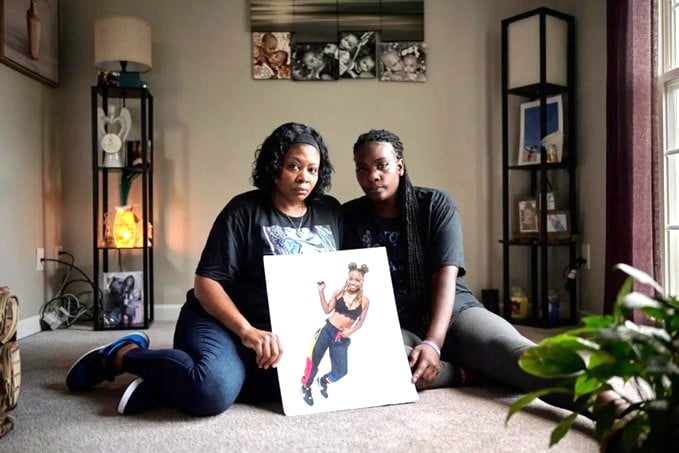
Michaela Carter felt like she was being hunted.

She fled her family’s home on Nov. 15, 2021, and called 911 with her mother, pulling into the parking lot of a discount store in southeast Nashville, Tennessee, to await the police.

“Are they sending people?” Carter can be heard asking her mom on the 911 call. An excerpt of the first call Carter and Jones-Mbuyi made to 911. Jones-Mbuyi told the dispatcher that Carter’s estranged husband, James Leggett, had been seen with a gun. (Credit: Obtained by WPLN)

Her mother, Kimberly Jones-Mbuyi, told the dispatcher that Carter’s estranged husband had just been seen walking around a family member’s apartment complex with a gun.

James Leggett had gotten out of jail 10 days earlier. He’d been locked up since Carter reported to police that he’d repeatedly hit her in the face with a bottle of Jack Daniel’s. Since he was released, he’d started calling her and sending increasingly desperate text messages.

The night before, he posted on Facebook: “Somebody with nothing to lose won’t give a fuck when shit gets real.”

Then, that morning: “Today is the day.”

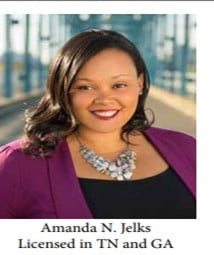
ATTORNEY AMANDA JELKS TO SPEAK AT SCENIC CITY WOMEN’S NETWORK AUGUST 24 MARKETPLACE LUNCHEON AT MOUNTAIN CITY CLUB

0

CHATTANOOGA, Tenn.  – Scenic City Women’s Network (SCWN) is excited to announce Amanda Jelks, attorney, Jelks Law, PLLC, as guest speaker for the August Marketplace Luncheon Thursday, August 24, Noon, at Mountain City Club (729 Chestnut St., in Chattanooga). A delicious buffet and dessert will be served.

About Amanda Jelks:

Amanda is a Chattanooga native who attended the University of Tennessee at Chattanooga for undergrad and the University of Memphis for law school, both on academic scholarships. She had the distinct pleasure of working with the corporate legal department of Pinnacle Airlines (now known as Endeavor Air).

She founded Jelks Law in the summer of 2015. Her practice focuses primarily on providing peace of mind to entrepreneurs and small business owners through her business legal services and estate/succession planning. As a business owner, she understands the legal concerns of business owners and has a real world view of what it takes to operate a successful business.

A motivational speaker, since 2001, Amanda has given motivational talks to diverse audiences at schools, colleges, churches, and nonprofits to help individuals overcome tremendous odds to reach their maximum potential.

She serves on the Board of Directors for the City of Chattanooga’s Health, Educational and Housing Facility Board, Chattanooga Women’s Leadership Institute, and the Tennessee Law Association for Women. Amanda has also served on the advisory boards for the Diversity and Inclusion Committee of the Chattanooga Chamber of Commerce and the MOMentum Network. From 2013 to 2016, Amanda served on the board of directors for Chattanooga Room in the Inn, a homeless shelter for women and children which supplies women with the resources necessary to end the cycle of homelessness. She is also a former board member of the Chattanooga Theatre Centre.

This event is open to the public. Space is limited and registration ends August 22. Register online at SCWN.org, or call (423) 698-6262 for registration fee and information. (Registration link: August Marketplace Luncheon: https://www.scwn.org/events/august-luncheon)

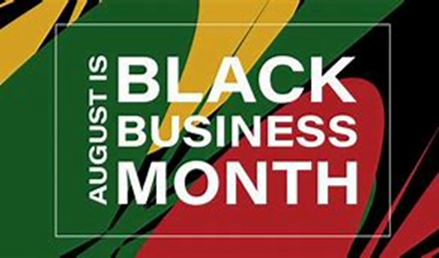
AUGUST IS BLACK BUSINESS MONTH

Black Business Month is celebrated in August — it’s a time to acknowledge and appreciate black-owned businesses across the nation and all that they represent in the country’s continual striving for diversity and equality. Denise Moore, CEO of the Black Business Alliance in Peoria, Illinois, has this to say about the importance of Black Business month: “Black Business Month is exciting because it gives us an opportunity to focus on a community that is far too often underrepresented when it comes to access to capital and opportunities to build wealth.”

When we celebrate the contribution of black business owners and entrepreneurs, it pays homage to them and their legacies, especially since celebrating this month recognizes the importance of black-owned businesses when it comes to contributing to the nation’s economy as well. Approximately 10% of all American businesses are black-owned, and if we look at what statistics say about minority-owned businesses, about 30% of these would belong to black business owners. The primary sectors in which black-owned businesses operate include health care, social work, repair and maintenance, beauty salons, restaurants, and more. Black businesses across the country are booming and, on the rise, with Washington D.C. having the highest ratio of black-owned businesses, a whopping 28%. 

HISTORY OF BLACK BUSINESS MONTH

The history of Black Business Month can be traced back to the year 2004, when engineering entrepreneur Frederick E. Jordan partnered with the president and executive editor of the scholarly publishing company eAccess Corp,’ John William Templeton, to start this annual event. The intention of the pair was to “drive the policy agenda affecting the 2.6 million African-American businesses,” in order to highlight and empower Black business owners all over, especially given the unique challenges faced by minority business owners. This stemmed from Jordan’s own personal experience of the struggle to gain financial backing and funding when he began his own firm in San Francisco in 1969.

Today, he is the successful owner of F. E. Jordan Associates Inc., a company that has international reach, but it also led him to realize that the odds are still not in favor of Black entrepreneurship. To push for equity in the business spaces and to celebrate those who are thriving despite the challenges, Black Business Month is a month-long celebration of entrepreneurs who beat the odds.

Since the late 1700s, both free and enslaved Black people began to open their own small businesses, from barbershops to tobacco shops and shoemaking. As emancipation grew, so did the establishment of Black-owned businesses, and this led to the period between 1900 — 1930 being labeled as the ‘golden age’ of Black-owned businesses. Segregation saw entire districts becoming Black-owned, such as Black Wall Street in Tulsa, Oklahoma.

In 1915, with the establishment of The National Negro Business League, there was widespread support of African-American entrepreneurship, with The National Business League spreading to over 34 states. By 2002, 1.2 million of the United States’ 23 million businesses were owned by Black people, bringing in a revenue of over $150 billion! How’s that for booming business?

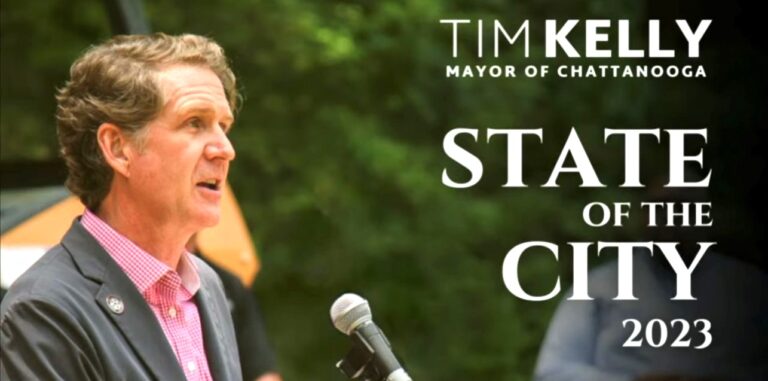
Proud, Hopeful, Bright, Best – The State of Chattanooga, says Mayor Tim Kelly

0

“I want you to be proud to be Chattanoogans…and be hopeful because the future is very, very bright…we will build the very best city in America.”

The closing remarks of Chattanooga’s sixty-sixth mayor, Tim Kelly issued this excerpted declaration and a challenge to those in attendance at the Walker Theatre upstairs in the Soldiers & Sailors Memorial Auditorium last week.

 Following almost an hour of a fireside chat format of Q&A with Local3 News’ Greg Glover serving as host and interviewer, Mayor Kelly used the extremely well-done video production which opened the evening as a launching pad to provide updates on his campaign promises from 2021 and the One Chattanooga Plan. The video featured key figures within the Kelly Administration ranging from the City’s Chief Operating Officer Ryan Ewalt speaking about critical infrastructure progress to Jermaine Evans, the Mayor’s Chief of Staff, addressing workforce development priorities to Nicole Heyman, Chief Housing Officer, whose task is to work to oversee affordable housing access and availability in the City. These, and many others, provided specific updates proving the One Chattanooga Plan is more than a shelved document. It’s a blueprint.

Featured in Mayor Tim Kelly’s remarks and video cutaway of Ewalt, the tripled infrastructure budget, from $2.5 million in 2010 to $10 million, has filled 40,000 potholes, 63 lane miles paved, and will fund, along with a $25 million grant, the construction and replacement of the Wilcox Bridge used by thousands to reach the Glenwood and Orchard Knob areas from Amnicola Highway.

Workforce development was identified as a critical part of bridging the gaps between races and demographic groups in Chattanooga. Both Jermaine Evans and Quentin Lawrence, Director of Workforce Development Strategy, emphasized the projected $500 million in new investment coming to the South Broad Street area, which will include a new stadium, as well as The Bend that will develop an entire new sector of mixed-use properties of business, retail, housing, and recreation.

Adjacent to The Bend property, formerly the Alstom parcel featuring the big blue building, is the important project to renovate and expand the current housing of the College Hill Courts. Mayor Kelly stressed that since its founding in the 1940s, very little investment has been made in this property that is seen immediately from TN Highway 27 and is a key parcel in the downtown area.

The $50 million in Choice Neighborhood grants along with the $90 million in tax credits to incentivize investment in the area which houses many in the minority community, will increase the quality and the number of units available, while “no residents are displaced.”

Acknowledging the priority of public safety and complimenting Chattanooga Police Chief Celeste Murphy along with the entire CPD, property crimes were down by 30% while homicides increased. The commitment of disincentivizing crime through both punishment of criminals, as well as prioritizing education, skills training, and mentorship was unquestionably communicated by Mayor Kelly and his Administration.

The archive of the entire evening is available online via the City’s YouTube channel.

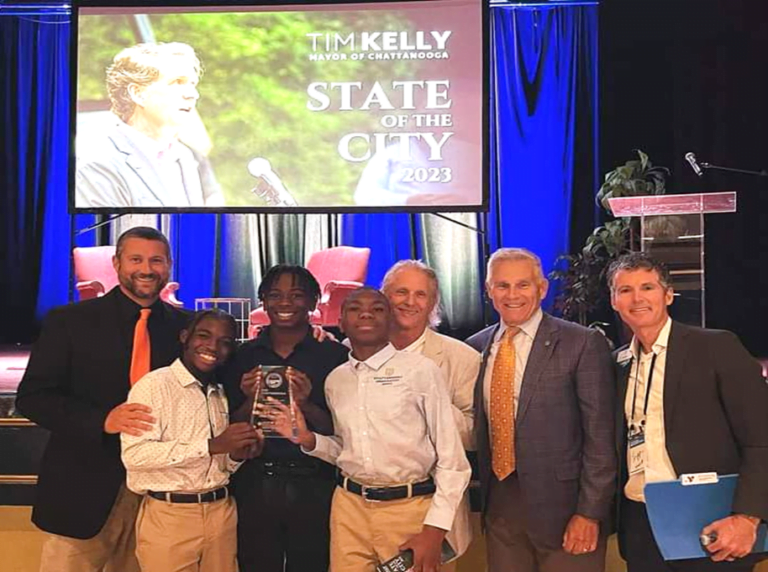
Mayor Tim Kelly Presents Inaugural One Chattanooga Awards

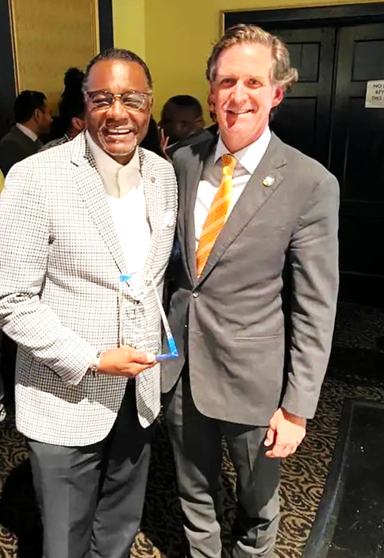
Purpose Point Learning Academy Dr. Ternae T. Jordan Sr., (left) one of the founders of the Purpose Point Learning Academy, and Mayor Tim Kelly.

Mayor Tim Kelly presented his inaugural One Chattanooga Awards during his state of the city address last Thursday night at the Walker Theatre. The awards recognize outstanding individuals and organizations who have embraced the vision of One Chattanooga and whose work is contributing to the success of the city.

“Our success would not be possible without committed people and organizations throughout the community,” said Mayor Kelly. “Chattanooga has a deep history of civic engagement through its community, philanthropic, faith-based and other service organizations. They are truly the heartbeat of Chattanooga, and this is a chance to begin to publicly recognize a few of them for their contributions and positive impact.”

This year’s One Chattanooga Award winners are:

Purpose Point Learning Academy for bringing 180 new early learning seats online and for providing a safe, and positive environment in teaching the next generation the social, emotional and practical skills they need for life success.

“I’m so grateful for the leadership of our awesome director, Ellwanda White, and her amazing staff. You guys rock,” said Dr. Ternae T. Jordan Sr., one of the founders of Purpose Point Learning Academy.

Youth Community Action Project (YCAP) for its use of $300,000 in American Rescue Plan funds, awarded by the city of Chattanooga, to open a fourth site at the Chris L. Ramsey Community Center, providing mentorship, tutoring and love to 100 kids per day.

“So incredibly thankful for the work our staff at YCAP does every single day,” said YCAP Executive Director Andy Smith. “This award is an honor to have. Thankful for Mayor Tim Kelly and his staff for their hard work to making our city better.”

Purpose Point Learning Academy Dr. Ternae T. Jordan Sr., (left) one of the founders of the Purpose Point Learning Academy, and Mayor Tim Kelly.

The Community Foundation of Greater Chattanooga for its work to make a tangible difference in reducing the city’s homeless population and for preventing evictions for more than 400 households since starting up the Eviction Prevention Initiative (EPI).

The One Chattanooga plan, released by Mayor Kelly in May 2022, sets out seven main goals for the city, with 40 key priorities. The goals are to:

•             Build a universal path to early learning

•             Catalyze economic vitality in the Black community

•             Ensure affordable housing choices for all Chattanoogans

•             Improve local infrastructure and public transit

•             Build a competitive regional economy

•             Close the gaps in public health

•             Provide responsive and effective local government

Mayor Kelly said that the One Chattanooga plan is a blueprint for a better Chattanooga. “We don’t yet have all of the solutions or a complete roadmap to guide the way there, so the path will be far from easy, but it will be worth it, because if we achieve it, we will have made Chattanooga the best city in America,” he said.

TITANS MAKE ROSTER MOVE, SIGNING MURRAYS

0

BY ANTOINE HARP

HayWood Media NASHVILLE, AUG. 5, 2023 – LAST SATURDAY, THE TENNESSEE TITANS SIGNED OFFENSIVE TACKLE JUSTIN MURRAY (PICTURED COURTSEY OF SI), WHOM THE LAS VEGAS RAIDERS RELEASE FOUR DAYS EARLIER, TUESDAY, AUGUST 1. THE TITANS THEN SIGNED CENTER JIMMY MURRAY AND WAIVED WIDE RECEIVER JACOB COPELAND, WEDNESDAY, AUGUST 2.

Sen. Campbell Calls Out TN Attorney General for Out-of-State Medical Records Letter

0

NASHVILLE, Tenn. — At a press conference last week, Senator Heidi Campbell, a leading contender for Nashville Mayor, strongly criticized Tennessee Attorney General Jonathan Skrmetti for arguing that the state should be allowed to seize out-of-state medical records.

18 Republican state attorneys general, including Skrmetti, signed onto a letter opposing a federal rule proposed by the U.S. Department of Health and Human Services that would prevent the disclosure of medical records for patients who seek abortions in states where the procedure is legal. The rule is intended to prevent states where abortion is illegal, like Tennessee, from punishing women who travel out of the state for the procedure.

“I think Mr. Skrmetti should take his patriarchal ideological crap and shove it where the sun doesn’t shine,” Campbell said at the press conference. “His assertions that his efforts have been mischaracterized is disingenuous. This is most certainly an effort to go after women’s reproductive health rights.”

She dismissed Skrmetti’s defense that his signature on the letter should not be confused with an intention to prosecute women who get abortions out-of-state.

Campbell’s assessment was shared by two licensed physicians, Dr. Katrina Green and Dr. Amy Gordon Bono. “The top prosecutor in Tennessee is launching his own vigilante attack on the patient-physician relationship and building his suspect list of patients and doctors,” Bono said.

Throughout her campaign and time in elected office, Campbell has been a consistent leader in the battle to protect women’s reproductive health. She is a sponsor of a Senate bill to codify reproductive rights in Tennessee, while also fighting for commonsense carveouts to extremist state policy, such as exceptions for the health of the mother, rape, and incest. Campbell was elected to represent Tennessee’s Senate District 20 in 2020, and prior to that served as the Mayor of Oak Hill in Nashville.

Statewide Bus Tour Rolls Towards Special Session

0

Coalition supporting gun safety policies to hear from families, discuss need for action

NASHVILLE—A coalition of Tennessee lawmakers, gun reform advocates and concerned citizens, who want to address the state’s gun violence epidemic, will be traveling the state in a school bus with a clear message for Tennessee families: Our kids deserve better.

With gun violence now ranking as the leading cause of death for children in Tennessee, advocates say our children and their safety must be priority one — and it’s time for the state legislature to take substantive action during the upcoming special session.

Our Children Deserve Better, a 501(c)(4) organization, seeks to reduce gun violence in Tennessee and push for policies that will help better protect Tennessee’s children in their schools and neighborhoods. The organization is embarking on a multi-city bus tour leading up to the anticipated special session in Nashville on Aug. 21. Families will have an opportunity to share their opinions firsthand with state lawmakers in their own communities.

Despite Republican attempts to block all substantive, common sense legislation during the special session that could help prevent future school shootings, they have been invited to participate in the bus tour to hear directly from victims of gun violence and advocates for gun safety.

Rep. John Ray Clemmons, chairman of the House Democratic Caucus, says the bus tour was borne out of the frustration, sadness and fear felt by thousands of parents and students following The Covenant School shooting in March and the countless other senseless acts of gun violence that continue to plague every community across this state. 

“Sitting in Nashville and spinning our wheels inside the Capitol while families across this state continue to worry about their children’s safety is not an option,” said Rep. Clemmons. “Those of us who believe that our children deserve better are hitting the road to hear from families in their communities and share information. We encourage everyone who cares about this issue, regardless of political affiliation, to join us and get on board for gun safety.”

“Tennesseans from all walks of life have made it clear: they want lawmakers to work together passing reforms that save children’s lives by preventing gun violence before it happens,” said Sen. Raumesh Akbari, the Senate minority leader. “Our families shouldn’t have to live in constant fear that our children might not make it home from school. It’s time to put politics aside and work for the safety of every Tennessee family.”

The bus tour to end gun violence will begin on this Wednesday, Aug. 9 in Memphis at the National Civil Rights Museum. House Minority Leader Karen Camper said that Memphis and the museum are appropriate places to start.

“Gun violence is ravaging the Memphis community,” Leader Camper stated. “Just the thought of the tragedy that could have occurred last week at the Margolin Hebrew Academy breaks my heart. The National Civil Rights Museum, which has documented many of the struggles this country has already gone through, is the perfect spot to begin our tour and hear our constituents thoughts on what needs to be done to reform our current system and protect Tennesseans in all of our state’s diverse areas. Our communities are the backbone of our state: each one has a unique flavor but they combine to create the rich tapestry that is Tennessee.”

The journey will end in Nashville at the State Capitol on Aug. 21, which is scheduled to be the first day of the special session. The first week of the tour schedule is here:

•             August 9, 5:00 pm, Memphis at the National Civil Rights Museum, 450 Mulberry St.

•             August 10, 11:00 am, Jackson at the West TN Farmers Market, 91 New Market St.

•             August 10, 2:30 pm, Dickson at Mulberry Mill, 100 S. Mulberry St.

•             August 12, 12 pm, Clarksville at Patriots Park, 3176 Fort Campbell Blvd.

Building pressure for reform

One of the main reasons for the bus tour is to build public pressure for gun safety reforms, said Sen. London Lamar, chairwoman of the Senate Democratic Caucus.

“Gun violence is a public health crisis. After a decade of Republicans eliminating gun safety laws, shootings are now the leading cause of death for children in Tennessee and innocent people are dying everyday,” said Lamar. “Ending gun violence has always been one of my top priorities and I will keep fighting for gun safety until we finally restore some sanity to our laws.”

Since Republicans gained controlling power, the Tennessee General Assembly has loosened gun laws and abolished common sense gun safety reforms, such as mandatory gun safety classes and background checks for going armed, gun permits, and restrictions on carrying in many public places.

Giffords Law Center, a nonprofit research organization that tracks and analyzes legislation in all 50 states, issues an annual gun law scorecard. This year, Tennessee lawmakers earned an “F” for gun policies in state law.

“Since we started this project in 2010, the evidence has been clear and consistent: strong gun laws save lives, but only in the states that are willing to act,” the Giffords website says.

Not coincidentally, gun violence has steadily increased over the last decade. The latest CDC research on gun violence shows that 1,569 Tennesseans — a record number — were killed by firearms in 2021. That’s roughly one person dying from gunshot wounds every 5.6 hours.

Biden-Harris Administration Opens Nearly $100M in Grant Opportunities for HBCUs, TCCUs, and MSIs and Underserved Students

The U. S. Department of Education recently announced the launch of two grant programs to expand research infrastructure in our nation’s Historically Black Colleges and Universities (HBCUs), Tribally Controlled Colleges and Universities (TCCUs), and Minority-Serving Institutions (MSIs), and to increase completion and retention rates among underserved students.

The grants, which will provide nearly $100 million for transformational infrastructure investments and evidence-based strategies for improved student outcomes for underserved students, follow more than $25 billion in funding to HBCUs, MSIs, and TCCUs through the Department since President Biden took office. Specifically, this consists of $7.3 billion in cumulative investments for 98 HBCUs, $474.5 million to 35 TCCUs, and $18.1 billion to support MSIs.

“At a time when diversity in higher education is under attack, it’s never been more important to invest in our nation’s Historically Black Colleges and Universities, Tribal Colleges and Universities, Minority-Serving Institutions, community colleges, and other inclusive institutions,” said U.S. Secretary of Education Miguel Cardona. “These grant programs represent opportunities for our nation’s most inclusive and diverse colleges and universities to expand their capacity to drive research and innovation and strengthen evidence-based supports that help underserved students successfully complete their degrees and build brighter futures. The Biden-Harris Administration will continue working to raise the bar for excellence and equity in higher education and invest in institutions committed to helping students of all backgrounds and income levels reach their potential and pursue their dreams.”

Historically Black Colleges or Universities, Tribally Controlled Colleges or Universities, and Minority-Serving Institutions Research and Development Infrastructure Grant Program

The Historically Black Colleges or Universities, Tribally Controlled Colleges or Universities, and Minority-Serving Institutions Research and Development Infrastructure Grant Program (RDI) will provide $50 million to HBCUs, TCCUs, and MSIs to implement transformational investments in research infrastructure, including research productivity, faculty expertise, graduate programs, physical infrastructure, human capital development, and partnerships leading to increases in external funding.

For HBCUs and MSIs, the grant will support institutions in increasing their level of research activity in alignment with the Carnegie Classification designations to move from the Doctoral and Professional Universities (D/PU) classification toward the Doctoral Universities with High Research Activity (R2) classification, or from the Doctoral Universities with High Research Activity (R2) classification towards the Doctoral Universities with Very High Research Activity (R1) classification.

For TCCUs, which have their own Carnegie Classification designation and cannot be classified as R1, R2, or D/PU, the funds will support an increase in research activities, undergraduate research opportunities, faculty development, research development, and infrastructure, including physical infrastructure and human capital development.

The Postsecondary Student Success Grant

Aligned with the goals in the Department’s Raise the Bar Initiative, the Postsecondary Student Success Grant (PSSG) application is now open to institutions to support underserved students. The PSSG grant aims to equitably improve postsecondary student outcomes, including retention, transfer, credit accumulation, and completion, by leveraging data and implementing, scaling, and rigorously evaluating evidence-based activities to support data-driven decisions and actions by institutional leaders committed to inclusive student success. Many students of color and with low incomes still face barriers to successfully enrolling in and completing college, and as the number of non-traditional students in postsecondary education increases, additional and different supports are required to enable students to successfully complete their credentials.  This grant program will provide $45 million to fund evidence-based strategies that result in improved student outcomes for underserved students. The competition will consider applications in two tiers—early phase and mid-phase/expansion—based upon the amount of existing research validating their effectiveness.