Wednesday, October 14, 2026
Advertisement
Home Blog Page 75

REPUBLICANS SHOW COST TO THE STATE OF LOSING FEDERAL EDUCATION DOLLARS

0

NASHVILLE—State agencies laid out today how Tennessee could refuse more than a billion dollars for public schools…and how the hardest hit would be in rural Tennessee counties…if Republicans follow through on their proposal to reject over $1.8 billion of federal education funds.

At the first meeting of a joint legislative task force examining whether the state should refuse to accept federal education grants, officials with the Comptroller’s Office said Tennessee is allocated $1.9 billion dollars from the Federal Government this year.  The bulk of that money is passed along to each county’s Local Education Agencies.  Last year, the largest percentage of those funds went to rural counties to supplement their education budgets. The top three were Hancock (31%), Campbell (30.58%), and Benton (29.87) Counties.  The Comptroller’s office said the money is primarily used for poor and disadvantaged students, children with disabilities, school nutrition programs and career and technical education. 

Following the meeting, State Representative Ronnie Glynn, who serves on the Task Force, questioned how Tennessee would be able to replace those dollars, particularly more than $280 million from the USDA helps feed disadvantaged students: “We all know we have to provide our children with the tools needed to receive a quality education and that includes making sure our students are fed so they have the capacity to learn. When I asked how will our kids eat if these funds go away, I was asking for my Montgomery County children, as well as those in Hancock, Campbell, Benton and my home county of Lauderdale. Those counties are depending on those nutrition dollars to help feed their children.”

In addition to the possible loss of more than a billion dollars in federal education funding, the Task Force today also heard from the Fiscal Review Committee on how rejecting the education dollars could jeopardize other federal funds like TANF money and possibly lead to potential federal fines for non-compliance under the Social Security Act. The Joint Working Group on Federal Education Funding continues five days of meetings tomorrow at 9:00 AM in Senate Hearing Room one.

Straddling the tightrope!

0

“Uncomfortable lessons are the ones that teach us most about ourselves.” – Supreme Court Justice Ketanji Brown Jackson

I offer that quote as a lead-in to what follows.

You see, “damn if I do, damn if I don’t” was the “should I or should I not” tightrope I found myself inching my way across as I grappled with the decision or not to weigh in on the Israel-Hamas war.

If I don’t write about it, what could that suggest about me, a dude who prides himself on tackling controversial issues? “Coward,” “spineless” or “complicit” are adjectives I don’t exactly relish being strapped with. “Courageous,” yes, has a much better feel for me.

Wanna know what else has fueled my anxiety? Well, it seemed that every time I tried to put pen to paper on this issue, breaking news of sporadic, bigoted vandalism of mosques and synagogues were reported. Plus, rushed written statements from college administrations across the nation got blistering complaints from student protestors that those statements were too milquetoast, too strong, or just too one sided.  

Wrote columnist Frank Bruni, “For the past two and a half weeks, college leaders have canceled or anxiously discussed canceling campus speeches and events that touch on Israel and Palestine. They’ve agonized over the wording of official school statements about the Oct. 7 massacre in Israel and, in some cases, issued second statements to amend, augment or atone for the first ones.

Students, meanwhile, have blasted those administrators for saying too much or too little. They’ve complained about feeling stranded. They’ve demanded more protection.”

But the truth is that I’ve already put my backside out there when I recently wrote about my Jewish friend’s daughter who lives in, but thankfully, survived the October 7th attack on Israel. At the end of that one, and not expecting much, I requested readers to connect me with anyone they knew who lives in Palestine so that I could get an alternative perspective. 

So after a few days of no takers, I finally received a response from “Tanya” a Muslim lady. Here’s a snapshot of her message to me:

“Thanks for your new article, Terry. It provides a first-hand perspective that’s important and I think that you will find much to resonate with those on both sides of the conflict.” She then listed an Egyptian individual I could reach out to plus articles that would deepen my knowledge of others, Palestinians in particular. As I sort through it all, the most meaningful was the highly informative article, “Israeli-Palestinian Conflict Timeline.”

What I learned from reaching out and getting more balanced information than I expected was the realization that I have so much to learn about the history of that conflict. I learned about my assumptions and gaps in my own knowledge. I also learned how important it is to be inquisitive.

Now the point I’d like to make is simple; sometimes there are unexpected benefits when you take the risk and step out of your comfort zone in search of other experiences and perspectives.

Thus, this takes me to a number of questions I was left with, chief among them, if I write about my Jewish friend “Ed,” as I did recently, does that make me anti-Palestine? Conversely, if I write about the plight of Palestinians, does that make me antisemitic?

Viewed in other contexts, if I write about race, as I sometimes do, does that make me racist against non-Blacks? If I write about women, does that make me anti-men? If I say, “Black lives matter,” do I mean that white lives don’t matter? Of course not. The absurdity of any one of those propositions is laughable. 

So agree with me or not, this conflict should not be a tic for tac, or either/or proposition. To me the focus must be on basic humanity and the desire for peace, safety, and survival no matter what side of the issue – or border – on which you currently reside.

But don’t get me wrong, don’t take me to task before hearing me out. This is not to ignore the history of the conflict, the truth of the savage attack by thugs on Israel on October 7th or the thousands of lives snuffed out in both Palestine and Israel since then. Sure, easier said than done, but the challenge is to acknowledge those realities yet humanize those on either side of the conflict as real people rather than depict them as saints or villains. Think about it this way – it’s hard to argue with someone else’s personal experience, with their lives and what they’ve seen through their own eyes if you see them as individuals and not through images of them on the front page of a tabloid in the grocery store checkout line.

So, my parting advice is this: as the Israel-Hamas war continues to unfold into a wider regional conflict, no matter how bleak, challenge yourself to read media sources different from your usual ones. Better still, put aside that PC or turn off that remote control and develop relationships with those you never considered. 

In the end, and to Justice Brown’s point, when I write about thorny issues, including the one you’re now reading, in doing so I learn much about the “man in the mirror,” his illusions about the knowledge he thinks he has, and the learning and unlearning he must do.

And guess what? By no stretch of the imagination am I alone.

“The greatest enemy of knowledge is not ignorance; it is the illusion of knowledge.” – Stephan Hawking

Terry Howard is an award-winning trainer, writer, and storyteller. He is a contributing writer with the Chattanooga News Chronicle, The American Diversity Report, The Douglas County Sentinel, Blackmarket.com, co-founder of the “26 Tiny Paint Brushes” writers guild, recipient of the 2019 Dr. Martin Luther King, Jr. Leadership Award, and third place winner of the 2022 Georgia Press Award.

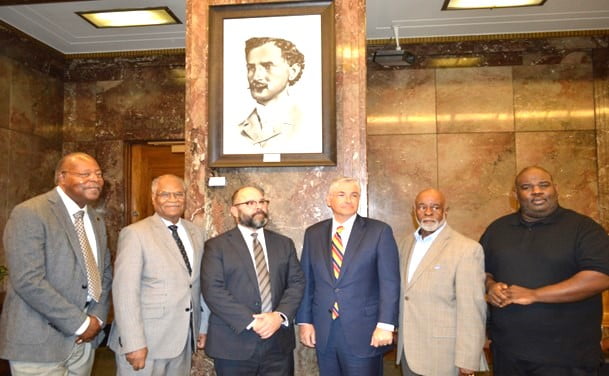
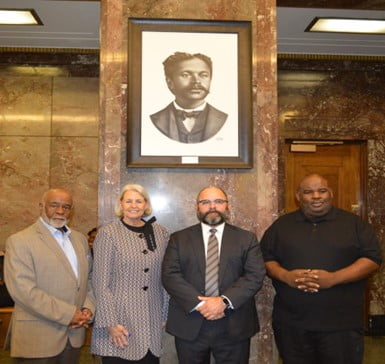
Portraits Of Noah Parden and Styles Hutchins Unveiled at Joel W. Solomon Building 

Chattanooga – The United States District Court for the Eastern District of Tennessee unveiled portraits of Noah Parden and Styles Hutchins in a ceremony Wednesday, November 1st at the Joel W. Solomon Federal Building and United States Courthouse.

Officials said, “Mr. Parden and Mr. Hutchins, two African American attorneys from Chattanooga, obtained a stay of execution in 1906 for Ed Johnson, an African American criminal defendant, in the Supreme Court of the United States. Mr. Johnson had been wrongfully convicted of raping a white woman in a Hamilton County state court. 

From left, Elijah Cameron; Linda Moss Mines; Judge Travis McDonough; and Eric Atkins. (Photo: CNC-Faye Stoudemire)

Charles Atchley, US District Judge opened the ceremony and read the bio of Parden and Hutchins and US District Judge Curtis L. Collier gave a moving overview of the impact both men made on decisions of the Supreme Court.  It was the first time in the Supreme Court’s history that it intervened in a city court’s case and gave a stay of execution.  Despite the stay of execution, a mob forced its way into the county jail where Mr. Johnson was held, and hanged him from the Walnut Street bridge. 

“Although Mr. Johnson’s lynching was an unimaginable tragedy in Chattanooga’s history, Mr. Parden and Mr. Hutchins’ courageous defense of Johnson—at great personal cost—merits the public’s honor.” 

The portraits will be displayed prominently just outside the third-floor courtroom of the Joel W. Solomon Federal Building and United States Courthouse. 

At the unveiling, the Court, in partnership with the Supreme Court Historical Society also announced The Supreme Court and My Hometown program for Chattanooga, a two-week summer day camp for local high school students.  

“The Hometowns program engages high school students in an intensive study of the process and substantive issues of cases decided by the Supreme Court of the United States in a unique and personalized way,” officials said. “During the Chattanooga program, students will learn about Ed Johnson’s case and United States v. Shipp, the only criminal trial ever conducted by the Supreme Court, which resulted in a finding that the Hamilton County Sheriff and five other individuals were guilty of contempt for not enforcing the Supreme Court’s stay of execution.  

“The program also encourages students to interact with their community based on what they have learned throughout their study, and at the end of Hometowns, students will create a capstone project on the impact of these cases.” 

One Westside Update – Survey Says Majority of Residents Want to Return

City Council Chair Raquetta Dotley

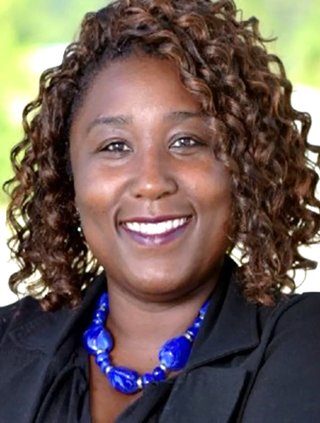
Chattanooga City Council Chairwoman Raquetta Dotley summed up this week’s One Westside update in the October 24 agenda session in terms that contrast vividly to those made during the initial September presentation. Stating the obvious, Dotley noted, “Our last meeting was a little tense,” but concluding with “Overall, I am very pleased with the outcome…”

So, what provoked such a turnabout of events?

The Chattanooga Housing Authority took its marching orders from a very vocal and unmoved Council after the initial presentation on September 26 that utilized three-year old, incomplete data. Preferences of residents of the Gateway Towers and College Hill Courts presented were based on assumptions and projections, rather than a promised survey to address the complex transition of building, relocation, demolition, construction, and return to new units in the massive multi-year redevelopment project tethered to the major development project at The Bend.

A new survey was conducted by CHA of Gateway residents, predominantly seniors, and those of College Hill Courts. The questions asked revealed how many wanted to continue living downtown onsite as the demolition and redevelopment occurred versus those who wanted a Housing Choice voucher to find rental housing or live in a CHA-managed property.

A second question asked how many residents wanted to return to the redeveloped subsidized housing that was first built 83 years ago. Finally, at the insistence of the Council, a new question was added to understand residents’ long-term homeownership desires.

The goal of CHA was to survey 75% of Gateway Towers residents and 75% of College Hill Courts (CHC) residents. At the Gateway Towers 73% of residents were surveyed, with visits attempted five times.

Seventy-seven percent of Gateway residents surveyed want to remain downtown throughout the entire tenure of the project, and 80% plan to return. CHC respondents indicated that 47% want to remain onsite as demolition and redevelopment occur, with 82% wanting to return upon the completion of new units.

Looking at the question of aspiring to own a home, 65% of respondents at CHC indicated their desire to move out of the need of tax-payer subsidized housing to their own home.

Again, Chairman Dotley praised the new information and availability of one-on-one advisors to counsel and educate residents over the course of time on the process of homeownership, noting that the answer to the homeownership question changes the “narrative about people in College Hill Courts.”

Councilwoman Dotley, whose district holds both the Westside and The Bend properties, continued, “People have ambitions. Everybody doesn’t have a father or mother who left them property or a way to navigate certain circumstances…”

As the critical window approaches for the final reading of the very intricate resolution filled with amendments, funding sources, budgets, projected timelines, and moving parts, the tone and temperature of this Agenda Session presentation appears to spell good news for a generational project to move forward that may reflect the Chattanooga Way from day’s past where all benefit.

Nashville Stars Meets Chattanooga Leaders

LOOKS TO BRING Major League Baseball to Tennessee 

NASHVILLE, TN — The Nashville Stars recently visited Chattanooga to meet with area business and community leaders and to share updates on our progress.  

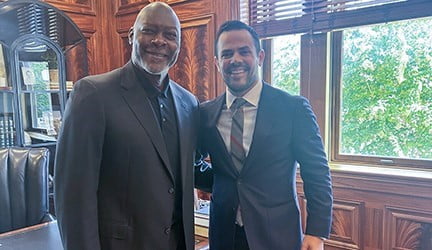
Board member Dave Stewart joined community engagement and operations manager Mia Vickers to visit with Mayors Weston Wamp and Tim Kelly, the Chattanooga Chamber, the Chattanooga Lookouts, TVA, and Hinton & Company to share news about the Stars’ work to bring Major League Baseball to Tennessee. 

Their visit shined a light on the Hamilton County market, its growth, and its continuing impact on Tennessee tourism and the region’s economy. It’s another example of how the Stars will be a team that the entire state of Tennessee can support and be proud of. 

Chattanooga is a focal point of Hamilton County, the fifth fastest-growing county (by population) in the state, thanks to a 1.5% year-over-year growth.  

And just like we’ve recently shown with Nashville’s extensive tourism revenue last year, Hamilton County produced more than its fair share. The 2022 Economic Impact of Travel on Tennessee report by the Tennessee Department of Tourist Development revealed that the county generated more than $1.62 billion in domestic visitor spending in 2022, an 8% increase from 2021 and likewise the fifth-highest total in the state.  

“Tennessee is thriving as tourism continues to soar,” Tennessee Department of Tourist Development commissioner Mark Ezell said in a statement last month. “Our industry’s hard work is paying off with record levels of visitor spending and significantly outpacing inflation.”  

That income was beneficial for the county in a variety of ways. First, direct visitor spending generated almost $167.8 million in state and local tax revenue. It also saved $1,138 in state and local taxes for each Hamilton County household while also supporting more than 12,000 jobs within the county.  

“Hamilton County’s remarkable growth in local tourism stands as a testament to our industry’s unwavering dedication towards becoming the nation’s most competitive destination,” Chattanooga Convention and Visitors Bureau president and CEO Barry White said in a news release in September. “The economic vitality fueled by tourism creates jobs, supports local businesses and funds community projects, all of which contribute to making Hamilton County an even better place to call home.”   The city of Nashville and the Nashville Stars celebrate the tremendous growth and continued appeal of Hamilton County and the city of Chattanooga, which adds appeal for the Stars’ wide-ranging fan base: in Nashville, throughout the state and across the country. 

Redistricting Battlegrounds in Three Southern States

0

While the recent US Supreme Court (SCOTUS) decision in Alabama regarding redistricting, created a new Black opportunity district that would enable Black voters to elect the candidate of their choice, other Southern states have seen backsliding on the principle of one person, one vote. States across the Southeast are going for broke […] 

In the otherwise middling midterms of 2022, North Carolina lost their Democratic majority on their Supreme Court.  A few months into the new legislative term, the North Carolina Supreme Court summarily reversed the previous court’s decision that banned partisan gerrymandering. In a 5-2 decision in April the Court found “We hold that partisan gerrymandering claims present a political question that is nonjusticiable under the North Carolina Constitution” eliminating court oversight of gerrymandering.  

Moving forward to October, with one Democrat flipping parties to Republicans giving the North Carolina state legislature a veto-proof majority, a mid-decade redistricting was complete, possibly eliminating four currently seated Democratic congressional representatives in next year’s election.  

In South Carolina, the US Supreme Court seemed far more skeptical of racial gerrymandering claims than they were in Alabama in oral arguments on October 11. Justice John Roberts seemed particularly concerned that there was no direct evidence of racial bias, while Justice Ketanji Jackson and the Court’s other liberals noted that all the evidence pointed to race being the predominate factor. The US Supreme Court is expected to rule on the South Carolina case by July 2024.  

The lower courts ordered Louisiana to draw a new Black opportunity district, but the 5th Circuit Court of Appeals stayed the decision, and the US Supreme Court upheld that stay in an unsigned order on October 19. There was no dissent noted, although Justice Jackson did leave open the possibility that they may order the drawing at a later date.   With multiple pending lawsuits, victories and defeats in the redistricting battle, the decisions in the South Carolina, Louisiana and Florida gerrymandering cases will play a role in who controls the US House of Representatives in January 2025.  (by Ivan Sanchez)

How much time do kids spend on devices – playing games, watching videos, texting, and using the phone?

0

David Rosenberg

Professor of Psychiatry and Neuroscience, Wayne State University

Natalia Szura

Research Assistant in Psychiatry, Wayne State University

Think about your favorite devices – your smartphone, laptop, tablet, computer or console – the things you use to play cool games, watch hilarious videos and connect and chat with friends.

Many young people spend a lot of free time looking at them. Turns out that teens spend an average of 8½ hours on screens per day, and tweens – that’s ages 8 to 12 – are not far behind, at 5½ hours daily.

Keep in mind those numbers are for only social media, gaming and texting. They do not include the time that kids used screens for schoolwork or homework.

What’s more, much of the time taken up by social media and texting is apparently not even enjoyable, much less productive. A 2017 study of teens ages 13 to 18 suggests they spend most of those hours on the phone in their bedroom, alone and distressed.

These lonely feelings correlate with the rise in the use of digital media. In 2022, 95% of teens had smartphones compared with only 23% in 2011. And 46% of today’s teens say they use the internet almost constantly, compared with 24% of teenagers who said the same in 2014 and 2015.

Our team of psychiatrists who treat young people with digital addiction have many patients who spend over 40 hours per week on screens – and some, up to 80 hours.

Think about it: If you spend “just” an average of 50 hours per week on devices from ages 13 to 18 – the total time you will spend on screens equates to more than 12 years of school!

Find the right balance

All this is not to say that everything about devices is bad. In this digital age, people embark on exciting journeys through the screens of their devices. Sometimes, screens are the windows to a magical adventure.

But too much screen time can lead to problems. As human beings, we function best when we’re in a state of balance. That happens when we eat well, exercise regularly and get enough sleep.

But spending too much time using digital devices can cause changes in the way you think and behave. Many teens and tweens developed the “fear of missing out” – known as FOMO. And one study shows some people develop nomophobia, which is the fear of being without your phone, or feeling anxious when you can’t use it.

Moreover, digital addiction in high school may predict serious depression, anxiety and sleep disruption in college.

Rates of depression and anxiety are skyrocketing among college students. The fear of missing out is pervasive, resulting in sleep disruption; too many college students sleep with smartphones turned on and near their bed – and wake up to respond to texts and notifications during the night. Sleep disruption itself is a core symptom of both depression and anxiety.

How to avoid device addiction

A 2016 poll indicated that half of teens felt they were addicted to their mobile devices.

Getting hooked on screens means missing out on healthy activities. To achieve a better balance, some experts recommend the following: Turn off all screens during family meals and outings. Don’t complain when your parents use parental controls. And turn off all the screens in your bedroom 30 to 60 minutes before bedtime – this step will improve sleep.

You may be a “screen addict” if you:

•             Feel uneasy or grumpy when you can’t use your device.

•             Don’t take breaks while spending hours on your device.

•             Ignore other fun activities you enjoy, like going outside or reading a book.

•             Have trouble sleeping, or falling asleep, because your screen time is too close to bedtime.

•             Experience eye, lower back and neck strain.

•             Struggle with weight gain or obesity because you’re inactive.

•             Have difficulty with real-life, face-to-face social interactions.

If you notice these signs, do not dismiss them. But also realize you’re not alone and help is out there. You can find balance again.

Exercise – riding a bike, playing sports, lifting weights or going for a jog or walk – keeps your brain healthy and protects it against depression and anxiety, as well as limiting your screen time.

Another way to be happier and healthier is to spend time with people – face to face, not via a screen. Seeing people live and in person is the best way to bond with others, and it may be even better for life span than exercise.

Creative hobbies are good, too. Cooking, playing an instrument, dancing, any arts and crafts, and thousands of other fun things make people happier and more creative. What’s more, hobbies make you well rounded and more attractive to others – which leads to more face-to-face interactions.

It’s also critical for parents to practice healthy screen habits. But about one-third of adults say they use screens “constantly.” This is not exactly a great example for kids; when adults take responsibility to minimize their own screen time, the whole family gets better.

Our research team used magnetic resonance imaging, also known as MRI, to scan the brains of teens who had digital addiction. We found impairment in the brain’s decision-making, processing and reward centers. But after a digital fast – meaning the addicted teens unplugged for two weeks – those brain abnormalities reversed, and the damage was undone.

Our findings also showed that kids with a desire to overcome digital addiction did better with a digital fast than those who were less willing or who denied their addiction. A balanced lifestyle in the digital age is all about finding joy in screenless activities – being active, connecting with others and exploring your offline interests. (The CONVERSATION)


Daily life in the aftermath of terror!

0

“Rubbernecking” is a term primarily used to refer to bystanders staring at accidents. More generally, it can refer to anyone staring at something of everyday interest from a safe distance. The term derives from the neck’s bending while trying to get a better view.

With a flip of a remote control or finger, we have the ability to change the channel or turn the page away from events in the news that sickens and shocks us. And that’s what we do. But that’s easier said than done if you’ve not been personally impacted by the event or know someone who has. Which brings us to the current conflict between the Israelis and Palestinians, and relatedly to a recent email I got from “Ed,” a Jewish friend who lives with his wife in Florida.

You see, Ed’s daughter and her family live in Israel. Thankfully, they escaped with their lives when the recent horrific attack on Israel occurred. But unlike the convenience afforded to most of us, Ed was unable to “rubber neck” his away from the horror because the matter was personal for him. Very personal.

Now given the intrinsic value of his experience, Ed thought it more meaningful to hear the perspective from someone who lives in Israel and, thus, gave me the OK to share a recent message he received from his daughter:

“You have asked me about my safety. Israel is the size of New Jersey, and everyone is within range of rockets. There is, in fact, nowhere that is safe.  I would best describe the current situation in my specific area as being less targeted than others, but everyone has friends or family all over the country, making every security situation personal. 

There is also no one in the country who is unaffected by the war. No one is “okay.” The emotions run from shock to palpable anger at the perpetrators. Additionally, many are suffering from PTSD from the Yom Kippur War in 1973. 

In practical terms the general call-up means that there are fewer workers available than normal to keep everything going. Even mundane day-to-day concerns, like needing a plumber, become difficult to address. Not sure everyone knows, but many in Israel’s minority ethnic groups also serve in the IDF, not just Jews. 

Everyone’s routine has been upended and I don’t know anyone who sleeps well. The wonderful public transportation system was severely affected. Most routine appointments of all types were cancelled, schools, nursery schools and day cares were all closed. Supermarkets were not well stocked for a while, especially those outside of the center of the country. There is food readily available, but it might not be what you want, or you find that specialty items are unavailable, an important detail for those with allergies or sensitivities. While a small bump in the road in the grand scheme of things, it adds to the general anxiety.  

Today is market day here and it was very apparent that fresh vegetables are getting hard to come by. Some fields are currently not accessible to the farm workers due to the situation. My local post office is not delivering mail nor receiving customers for the time being. Country-wide, all local elections scheduled for the end of this month have been postponed. 

I finally got some sleep over these last two days and feel better. Two soldiers from our town fell during the first hours of the war, both sons of staff members at the school where I volunteer teaching English. After the funerals we attend the silva

(seven days of mourning) as many times as possible, at their homes. Both families live in my immediate neighborhood. The local burial society provides a mourner’s tent, tables and chairs to accommodate the multitude of visitors. 

There is an app which tells us when and where rockets are/will be hitting and how much time one must get to a shelter. Lots of information is available, including WhatsApp groups, to tell us what is happening in real time. Surreal doesn’t begin to describe it.   

There was a false alarm last week in the evening, which plunged the entire north of the country into their shelters for a couple of hours. In addition to the huge dose of anxiety, it provided us with a practice drill of sorts, for those who needed a refresher course. 

Whole communities around Gaza in the south and the Lebanese border in the north have been evacuated to hotels and resorts in other areas of the country. They generally left home with nothing, so other communities are providing for them as best they can.   

It is very sobering to personally provide meals and essentials to soldiers who will be responsible for one’s personal safety. A homemade meal is infinitely better than battle rations and they appreciate the effort that went into providing that meal. On a practical level, you don’t want soldiers to be distracted in any way or to have to make do while in a tense situation.  

Similar to Ed’s experience, I’ll end with this what could’ve been my “near miss.” My sister, a minister, is a member of a contingent that had purchased tickets and made reservations for a weeklong mission trip to Israel. Worried silly, I called her hoping that her trip had been cancelled and was relieved to hear that it was.

So for the sake of balance, and because I don’t know anyone there, hopefully someone will connect me with a person who currently lives in that part of the world who could tell me about the new realities for the people in Gaza – millions of them children – whose lives, too, were similarly upended.

In the end, and for a broader context, Ed pointed me to CNN’s Fareed Zakaria who offers an important historical backdrop that undergirds this conflict.

So, dial him up. Terry Howard is an award-winning trainer, writer, and storyteller. He is a contributing writer with the Chattanooga News Chronicle, The American Diversity Report, The Douglas County Sentinel, Blackmarket.com, co-founder of the “26 Tiny Paint Brushes” writers guild, recipient of the 2019 Dr. Martin Luther King, Jr. Leadership Award, and third place winner of the 2022 Georgia Press Award.

Cheers to 50 Years!

0

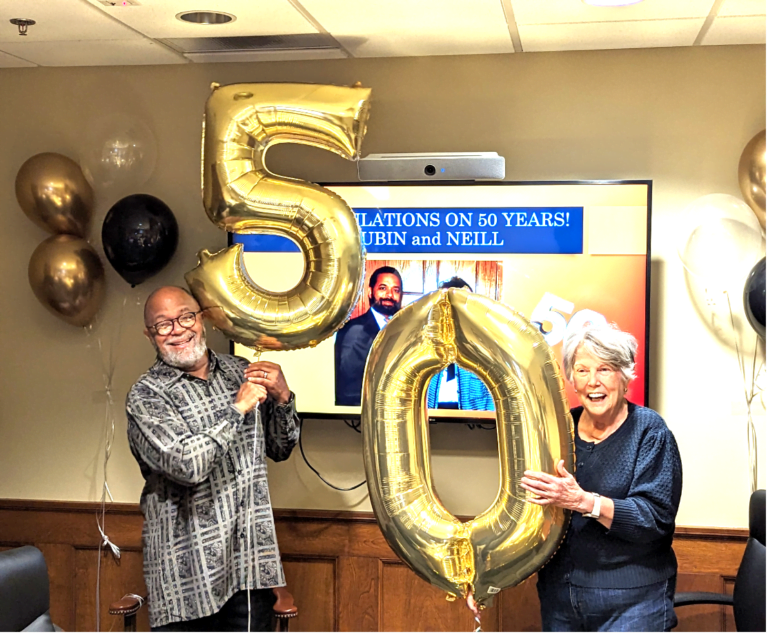
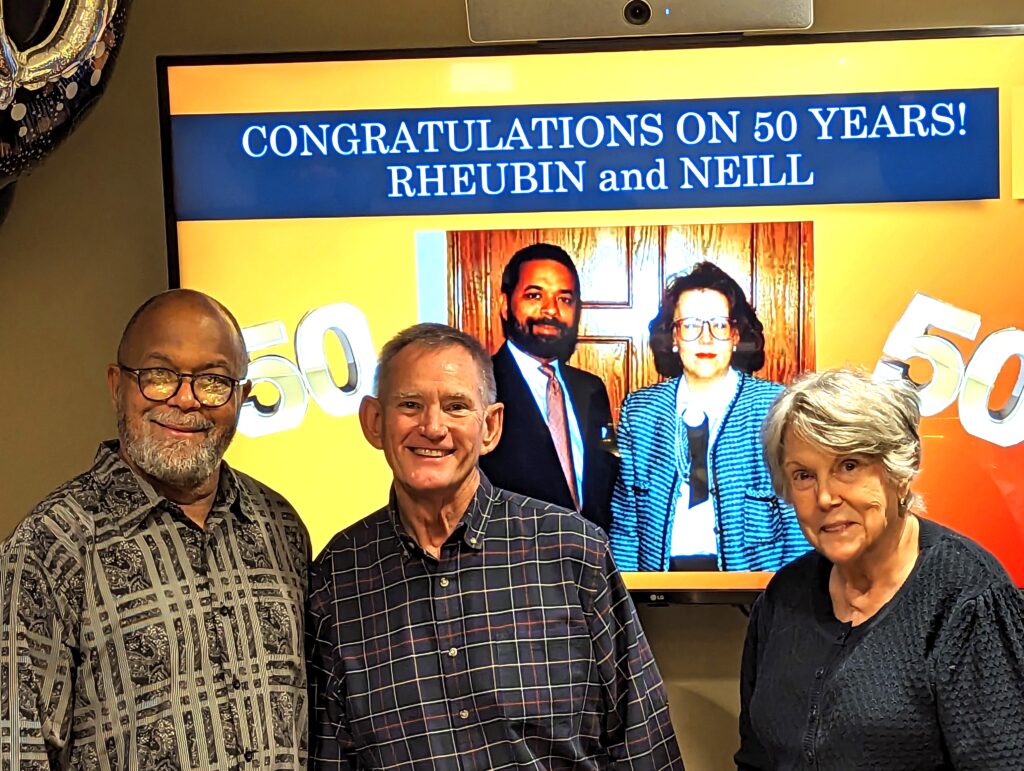
Rheubin McGhee Taylor and Mary Neill Southerland recently celebrated 50 years as licensed attorneys.

Currently serving as the Hamilton County Attorney and Senior Assistant Hamilton County Attorney, they have been doing outstanding work for Hamilton County for 30 and 35 years respectively.

In a surprise celebration, the Hamilton County Attorney’s Office feted them with a small luncheon.

In addition to that accomplishment, R. Dee Hobbs, Assistant County Attorney, celebrated 40 years as an licensed attorney and 22 years in the Hamilton County Attorney’s Office.

Congratulations, Attorneys, on jobs well done!