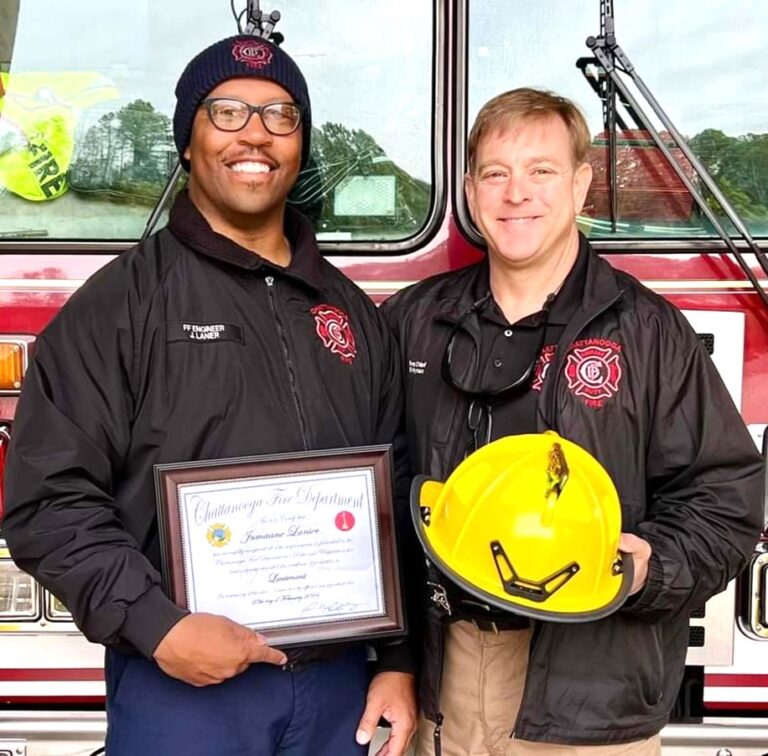
The Chattanooga Fire Department (CFD) announced the promotion of Jumaane Lanier to lieutenant during a ceremony at Station 16 last week. Lt. Lanier assumed his new role surrounded by family, friends, and fellow firefighters.
Chattanooga Fire Chief Phil Hyman commended Lanier for his growth and development, his strong character, and his motivation at work.
“I’m proud of your success story and how far you’ve come in the department,” Chief Hyman said. “You demonstrate leadership attributes learned from life experiences that are very beneficial to the CFD. There’s great things in your future.”
As outlined by the city of Chattanooga, fire lieutenants play a crucial role in ensuring public safety, including–“supervising and actively participating in firefighting and emergency response operations, ensuring adherence to departmental policies and regulations, operating frontline apparatus, training subordinate personnel, and conducting inspections of essential firefighting equipment and infrastructure.”
Additionally, fire lieutenants may be called upon to assume the duties of a fire captain in their absence.
Chattanooga Fire Station 16, located at 1033 Lupton Drive, has served the community since 1971. It houses Quint 16 and Battalion Chief 3, playing a vital role in protecting the Lupton City, North Chattanooga, Riverview, and South Hixson neighborhoods.
The changes to city code will split beer & wrecker violations appeals processes and transform the beer board into an appellate body, less of an investigative authority.
The changes to city code will split beer & wrecker violations appeals processes and transform the beer board into an appellate body, less of an investigative authority.
Chattanooga, Tenn. (March 2024) – In another significant move to streamline and improve the effectiveness of city boards and processes, the Chattanooga City Council Tuesday approved on first reading Mayor Tim Kelly’s proposal to restructure the Chattanooga Beer & Wrecker Board. Under the new ordinance, the Beer & Wrecker Board will be separated and most of its investigative authority will be transferred to an administrative hearing officer.
In its current iteration, the Beer & Wrecker Board is made up of nine volunteers who unilaterally issue beer and wrecker permits, investigate reported violations, and issue disciplinary action. Under the new changes, most new beer permits will be issued by and investigations will be handled entirely through the Chattanooga Police Department. Appeals of the Beer Board’s decisions can still be made to Hamilton County Chancery Court.
The Beer Board will serve primarily as an appellate entity, hearing and voting on appeals to the decisions made by an administrative hearing officer, who will be hired by the City of Chattanooga and will be an expert in state and local laws. Wrecker cases will now be heard by the Passenger Vehicle for Hire Board, which currently hears cases related to taxi and rideshare services.
“Providing responsive and effective local government is one of the goals of the One Chattanooga plan, and this is a big step in the right direction,” said Chattanooga Mayor Tim Kelly. “Chattanooga’s Beer Code was last updated in the 1980s, when the minimum drinking age had only just changed. By making this reform, we’re getting government out of the way of small business and doing away with silly, archaic rules like the one that punished business owners for using a cell phone instead of a landline to report issues.”
The updated changes to the city’s beer code will also decrease the allowable distance, in certain commercial zones, for bars and restaurants to be built from childcare centers and schools. On top of its appellate authority, the Beer Board will also hear applications for beer permits where CPD found possible issues.
Mayor Kelly added “in certain growing areas of our city, restaurants cannot legally be built for 1,000-foot stretches. We understand safety concerns and acknowledge the importance of keeping bars and restaurants an appropriate distance from places that provide services to children. But we can protect our kids while also allowing local businesses to thrive by applying some common sense.”
Individuals interested in applying to serve on a City of Chattanooga board should visit cha.city/boards.
In all candor, I’m hopelessly addicted to Nobel Prize winning writers and New York Times best-selling authors. An image of yours truly salivating at the mouth when the latest best seller shows up on my front steps, thanks to Amazon, is not that far off the mark.
Which takes us to some loaded words sometimes assigned to people who are, well, different, and to two authors; specifically, words from their works that jumped out at me…. “contrarians” and “untouchables.”
Love him or despise him ESPN commentator Stephen A. Smith is never shy when it comes to expressing his opinions, or his opinions of the opinion of others. Several times in his best seller, “Straight Shooter – A memoir of Second Chances and First Takes,” Smith aptly described himself as a habitual “contrarian.”
Humm, “contrarian.” Now it didn’t take long for that word to conjure up another word from something I wrote years ago. That word…. “mongrel!”
Oh wait, that also got me to thinking about still another word, “untouchable,” as it is described in Isabel Wilkinson’s best seller, “Caste, The Origins of our Discontents.” In it a flabbergasted Dr. Martin Luther King, Jr. was introduced while visiting India as an “untouchable.” You read that right.
Since we’re talking about loaded words, let’s shift to a quote that’s loaded with them. Read it a few times before dismissing or admitting that there are some kernels of truth in it.
“Diversity defines the health and wealth of nations in a new century. Mighty is the mongrel. The hybrid is hip. The impure, the mélange, the adulterated, the blemished, the rough, the black-and-blue, the mix-and-match – these people are inheriting the earth. Mixing is the new norm. Mixing trumps isolation. It spawns creativity, nourishes the human spirit, spurs economic growth and empowers nations.”
I’ll admit that this quote isn’t mine. Its actual source is G. Pascal Zachary’s year 2000 book The Global Me: New Cosmopolitans and the Competitive Edge. Now you have to admit that this one’s a real thought-provoker. Once I ceased quibbling over Zachary’s choice of words and began processing the quote on another level, it started to hit home. Here’s why.
First, it squares with where my thinking about diverse people has evolved to over the years. Although I’ve used more palatable words (mongrel, adulterated, impure – couldn’t quite getthere Mr. Zackary), I’ve said that people will continue to show up packaged, talking, and acting differently. Even today. Just walk out your front door, cruise through the local mall, visit your nearest schools or make your way through a crowded airport. Case closed.
And the suitcase that diversity brings will contain a variety of perspectives on issues and approaches to dealing with those issues. Different expectations and behaviors will tumble out before the unpacking’s done. The Golden Rule, “Treat people the way you want to be treated,” will be flipped on its head and replaced with the Platinum Rule “Treat people the way they want to be treated.”
Second, this new diversity will continue to have a bold new bravado, a uniquely different swagger to it. It’s going to walk upright through the front door unapologetically different from what we’re accustomed to. It’s going to pull up a seat next to us as a talented engineer, teacher, widow, ex-con, gay person, introvert, veteran, or school dropout.
It may startle us in the form of a talented ball of fire who doesn’t respond well to micromanagement or knock on the front door in the person of a talented woman with breast cancer, a person dealing with attention deficit disorder or homelessness.
Now let’s not get too comfortable with any reassuring thoughts that this new diversity is enroute someplace and may get here someday in the future. Yes, part of it is coming; it’s hurtling toward us as the new workforce, new students, new customers, new medical practitioners, and new entrepreneurs. Yet the other part is right here staring you in the face, right down the hallway, in the next cubicle, in the adjacent production line, in the customers you have and in the ones you’re after.
Third, this new diversity means that we’re probably in for a ride – a bumpy one at that. Our comfortable niches and time-honored notions about what’s right and wrong, normal, and abnormal, will get nipped around the edges.
Suddenly, all bets are now off. Maybe we need a zinger from time to time, a periodic wake-up call, a kick in the behind, a much-needed potent dose of this reality.
So in the end, do we close the door on that tattooed geek, that chiseled good ole boy, that unashamed transexual or members of the lunatic fringe? Hey, if they’re talented, bring them on in and give them a seat at the table of opportunity. And while doing so, give the existing bigots and incompetents, the bullies, and the sentinels of the status quo a one-way trip to the front door.
We’re left with these questions: how can we continue to work together with all these new diversities in ways that will make our communities and organizations hum along on all cylinders? What in the grand scheme of things must I – not anyone else – but I do as an individual to welcome, contribute to, and grow from these dynamic new changes to the mix? Or do I stay put, ignore the changes coming my way and risk getting jettisoning into remnants of history?
Who knows, maybe it’s the mongrel, the untouchable, or the contrarian who will appear out of nowhere and nudge us over the edge into Mr. Zackary’s reality.
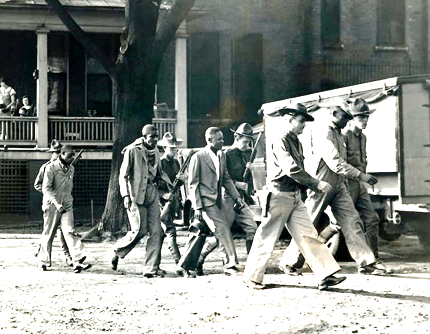
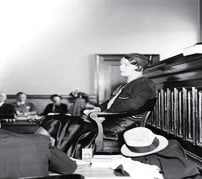
National Guard troops protect members of the Scottsboro Boys as they enter an Alabama courtroom on Jan. 1, 1932. Bettmann/GettyImages
By Ronald E. Hall
(Editor’s note: For Black people, the modern-day meaning of the word has little to do with school curriculum or political jargon and goes back to the days of Jim Crow and legal, often violent, racial segregation.)
If Florida Gov. Ron DeSantis had his way, the word “woke” would be banished from public use and memory.
As he promised in Iowa in December 2023 during his failed presidential campaign, “We will fight the woke in education, we will fight the woke in the corporations, we will fight the woke in the halls of Congress. We will never, ever surrender to the woke mob.”
DeSantis’ war on “woke ideology” has resulted in the banning of an advanced placement class in African American studies and the elimination of diversity, equity and inclusion programs in Florida’s universities and colleges.
Given the origins of the use of the word as a code among Black people, DeSantis has a nearly impossible task, despite his tireless efforts.
For Black people, the modern-day meaning of the word has little to do with school curriculum or political jargon and goes back to the days of Jim Crow and legal, often violent, racial segregation. Back then, the word was used as a warning to be aware of racial injustices in general and Southern white folks in particular.
In my view as a behavioral scientist who studies race, being woke was part of the unwritten vocabulary that Black people established to talk with each other in a way that outsiders could not understand.
The early days of wokeness
One of the alleged victims, Victoria Price, testifies on April 4, 1933, against nine young Black men in the Scottsboro case. Bettmann/GettyImages
It’s unclear when exactly “woke” became a word of Black consciousness. Examples of its use – in various forms of the word “awake” – date back to before the Civil War in Freedom’s Journal, the nation’s first Black-owned newspaper.
In their introductory editorial on April 21, 1827, the editors wrote that their mission was to “plead our own cause.” Part of that mission was offering analysis on the state of educating enslaved Black people who were prohibited from learning how to read and write.
Because education and literacy were “of the highest importance,” the editors wrote, it was “surely time that we should awake from this lethargy of years” during enslavement.
By the turn of the 20th century, the use of versions of the word “woke” by other Black newspaper editors expanded to include the fight for Black voting rights. In a 1904 editorial in the Baltimore Afro-American, for instance, the editors urged Black people to “Wake up, wake up!” and demand full-citizenship rights.
By 1919, Black nationalist Marcus Garvey frequently used a version of the word in his speeches and newspaper, The Negro World, as a clarion call to Black people to become more socially and politically conscious: “Wake up Ethiopia! Wake up Africa!”
At around the same time, blues singers were using the word to hide protest messages in the language of love songs. On the surface, Willard “Ramblin’” Thomas laments a lost love in “Sawmill Moan”:
If I don’t go crazy, I’m sure gonna lose my mind ‘Cause I can’t sleep for dreamin’, sure can’t stay woke for cryin’
But instead of a love song, some historians have suggested that the lyrics were a veiled protest against the atrocious conditions faced by Black workers in Southern sawmills.
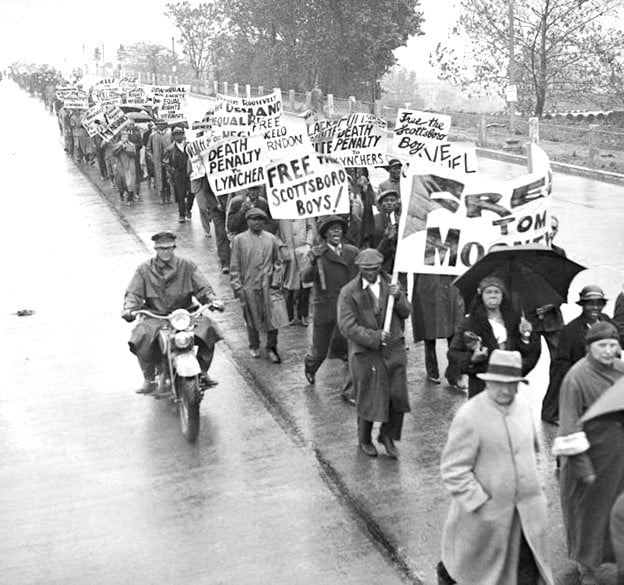
The song given the most credit by historians for the use of the word woke was written and performed in 1938 by Huddie Leadbetter, known as Lead Belly. He advises his listeners to “stay woke” lest they run afoul of white authority.
In an archived interview about the song “Scottsboro Boys,” Lead Belly explained how tough it was at the time for Black people in Alabama.
“It’s a hard world down there in Alabama,” Lead Belly said. “I made this little song about down there. … I advise everybody, be a little careful when they go along through there — best stay woke, keep their eyes open.”
Lead Belly explains his “stay woke” advice to Black people at the 4:30 mark.
And that’s the message that came out in the song lyrics:
“Go to Alabama and ya better watch out The landlord’ll get ya, gonna jump and shout Scottsboro Scottsboro Scottsboro boys Tell ya what it all about.”
A miscarriage of justice
On March 25, 1931, in Chattanooga, Tennessee, two white women, Victoria Price and Ruby Bates, falsely accused a group of several Black young men of rape.
Based on their words, the nine Black men – ages 12 to 19 years old – were immediately arrested and in less than two weeks, all were tried, convicted, and with one exception, sentenced to death.
All the cases were appealed and eventually reached the U.S. Supreme Court. In its 1932 Powell v. Alabama decision, the court overturned the verdicts in part because prosecutors excluded potential Black jurors from serving during the trial. But instead of freedom, the cases were retried – and each of the “Scottsboro Boys” was found guilty again.
There were four more trials, seven retrials and, in 1935, two landmark Supreme Court decisions – one requiring that defendants be tried by juries of their peers and the other requiring that indigent defendants receive competent counsel.
The nine young men spent a combined total of 130 years in prison. The last was released in 1950. By 2013, all were exonerated.
How woke became a four-letter word
Over the years, the memory of the Scottsboro Boys has remained a part of Black consciousness and of staying woke. During the height of the Civil Rights Movement, Martin Luther King Jr. used a version of woke during his commencement address at Oberlin College in 1965.
“The great challenge facing every individual graduating today is to remain awake through this social revolution,” he said.
In recent times, use of the word has ebbed and flowed throughout Black culture but became popular again in 2014 during the protest marches organized by Black Lives Matter in the wake of the shooting death of Michael Brown by a police officer in Ferguson, Missouri. Two years later, a documentary on the group was called “Stay Woke: The Black Lives Matter Movement.”
But for GOP lawmakers and conservative talk show pundits, such as DeSantis, “woke” is a pejorative word used to describe those who believe that systemic racism exists in America and remains at the heart of the nation’s racial shortcomings.
When asked to define the term in June 2023, DeSantis explained: “It’s a form of cultural Marxism. It’s about putting merit and achievement behind identity politics, and it’s basically a war on the truth.”
DeSantis couldn’t be more wrong. The truth is that being aware of America’s racist past cannot be dictated by conservative politicians. Civic literacy requires an understanding of the social causes and consequences of human behavior – the very essence of being woke. (The CONVERSATION/ Ronald E. Hall, Professor of Social Work, Michigan State University)
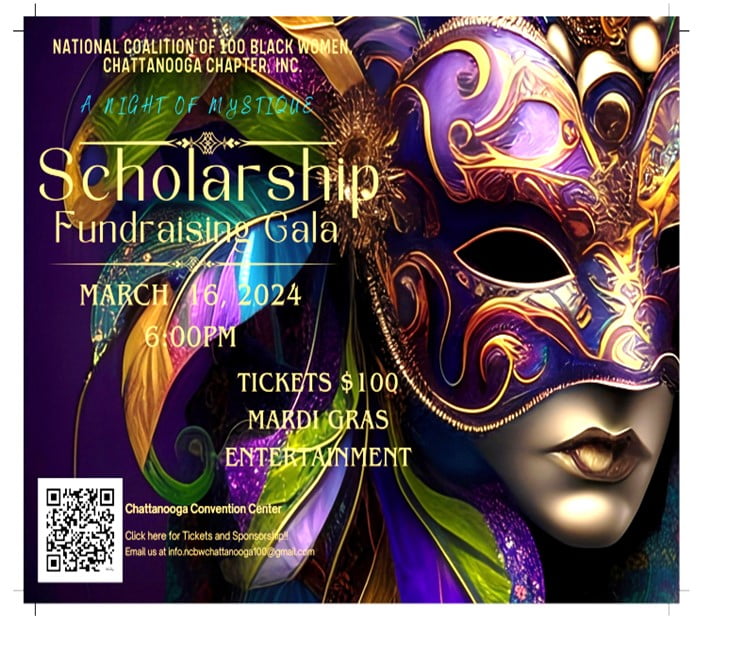
(Chattanooga, TN) The National Coalition of 100 Black Women, Chattanooga Chapter, Inc. (NCBW) will host our annual Mardi Gras Ball on Saturday, March 16 at the Chattanooga Convention Center at 6:00 p.m. The Mardi Gras Ball is one of the annual signature fundraisers for NCBW as we continue providing academic scholarships to female high school seniors in our city, as well as other community-driven initiatives.
Tickets for the Mardi Gras Ball are $100 and can be purchased from any NCBW member. For more information about the organization, please email us at info.ncbwchattanooga100@gmail.com or call us at 423-698-0029
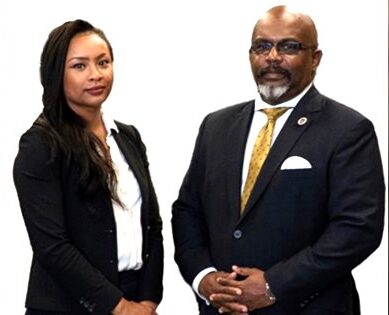
Nationwide — Attorney Zulu Ali and his daughter, Attorney Whitney Ali, have been listed as two of the Most Influential People of African Descent (MIPAD), Law and Justice Edition. MIPAD is a global civil society initiative in support of the International Decade for People of African Descent, proclaimed by United Nation’s General Assembly resolution 68/237, to be observed from 2015 to 2024. MIPAD identifies high achievers of African descent in public and private sectors from all around the world as a progressive network of relevant actors to join together in the spirit of recognition, justice and development. Attorney Zulu and Attorney Whitney are the owners and partners of the Law Offices of Zulu Ali & Associates, LLP, making the firm one of the largest Black family-owned law firms in California; and the largest Black-owned in the Inland Empire, which comprises the counties of Riverside and San Bernardino.
The Law Offices of Zulu Ali & Associates, LLP has been named as one of the top 10 law firms by Attorney and Practice Magazine; and its founder, Attorney Zulu Ali, has also been named top 100 lawyers by the National Black Lawyers and National Trial Lawyers; a Top 10 Lawyer by the American Academy of Trial Attorneys, American Jurist Institute, Attorney & Practice Magazine; Rue Ratings Best Lawyer in America; and Litigator of the Year by the American Institute of Trial Lawyers. Attorney Ali is also a member of Iota Phi Theta Fraternity, Inc., serving as its general counsel.
In 2007, inspired by civil rights attorneys Charles Hamilton Houston, Thurgood Marshall, and Avon Williams, Jr., who used the law and courts as a vehicle to make a change and protect all people against injustice, Attorney Zulu opened the Law Offices of Zulu Ali with a focus on representing persons accused of crimes and seeking criminal justice, immigrants, victims of discrimination, persons seeking civil justice in state and federal courts throughout the United States; and defendants and victims at the international criminal courts at The Hague, Netherlands and the African Court of Human Rights in Tanzania. Attorney Zulu Ali and the law firm takes on extremely difficult cases and matters that provide an opportunity to make changes in the law, through the courts, when the law is unjust.
“It is always nice to be recognized for your work. We face immense scrutiny from courts and others for challenging the system. I am deeply inspired by the late great civil rights attorney Avon Williams who was jailed more than once for not kowtowing to racist courts in the defense of his clients. Being in this fight with my daughter by my side ensures this type of advocacy spirit that was established by great black pioneers of the legal system continues,” Attorney Zulu adds.
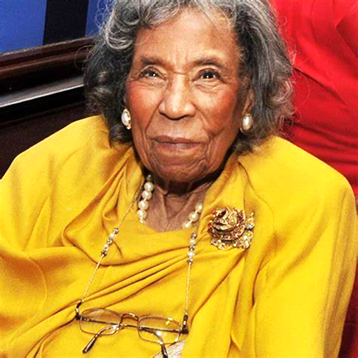
2015 – Amelia Boynton Robinson, a Pivotal Figure at the Selma March, Dies at 104.
Some people are just made to cause, as the late Congressman John Lewis called it, “good trouble.” They’re contrarian by nature. It’s in their DNA. It ignites their fury. It explains their courage to put life and limb at risk for what they believe in.
Which brings us to African American History Month 2024 and to “Mrs. Good Trouble” herself, the late civil rights pioneer Amelia Boynton Robinson, inarguably the matriarch of the voting rights movement. Now if you subscribe to that familiar saying, “behind every great man is a woman,” then I’ll say, “behind every great movement is a woman.” Many of them in fact.
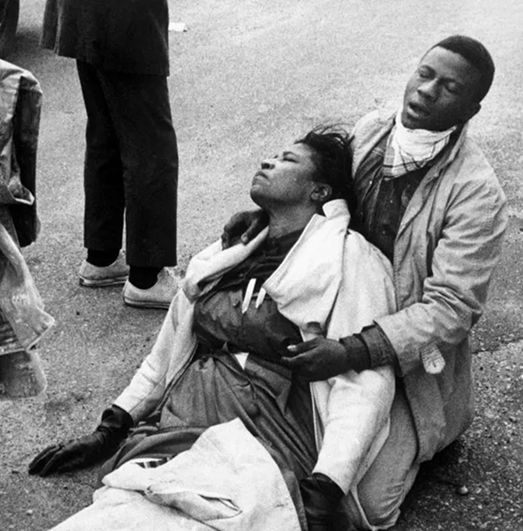
Research deep enough and you’ll come across a grainy old black and white photo of Boynton Robinson at the foot of Selma’s Edmund Pettus bridge cradled in the arms of a fellow marcher after being viciously beaten on “Bloody Sunday” in 1965. Another photograph will show her lying barely conscious on the ground with a white police officer standing over her, nightstick in hand.
Go ahead, we’ll wait and will understand if you found those images so disturbing that a return to the rest of this narrative would deepen your chagrin.
Let’s now fast forward to 50 years later, to a colorful 2015 picture of a wheelchair bound Mrs. Boynton next to President Barack Obama and John Lewis ironically at the foot of that infamous Edmund Pettus bridge and, later, having a congressional medal of honor placed around her neck by President Obama.
Now as I confessed at the outset of my last one about the late Reverend James Reeb who was assassinated in Selma, Boynton’s contributions are the stuff for volumes, not the limitations of space in this narrative. That said, here’s an abbreviated look at her life.
Amelia Boynton Robinson was born in 1911 in Savannah, Georgia. In an era where literacy tests were used to discriminate against African Americans seeking to vote, Robinson used her status as a registered voter to assist other African Americans to become registered voters. She spent her first two years of college at Georgia State College (now Savannah State University), then transferred to Tuskegee Institute in Alabama. She graduated from Tuskegee before further furthering her education at Tennessee State, Virginia State and Temple Universities.
In 1930, while working as a teacher Robinson met Sam Boynton, who she knew while studying at Tuskegee Institute. They married and began to work together to bring education, a higher standard of living, and voting rights to the African American poor, most of whom were sharecroppers.
In 1964, Robinson became the first African American woman ever to seek a seat in Congress from Alabama and won ten percent of the vote when only five percent of the registered voters were African American. That year she asked Dr. Martin Luther King, Jr. to come to Selma and help promote the cause. Soon after, he and the SCLC set up their headquarters at Boynton’s Selma home where they planned the Selma to Montgomery March of March 7, 1965.
In 1965, Robinson was one of the civil rights leaders that led the famous first march across the Edmund Pettus Bridge which resulted in what became known as “Bloody Sunday.” She was gassed and beaten and left for dead, an image of which helped to spark an outpouring of support for the Civil Rights Movement.
Forever the activist, in 1992 Robinson co-founded the International Civil Rights Solidarity Movement, and received worldwide recognition for her service to humanity. In 2005, Robinson and her late husband Sam Boynton were honored on the Fortieth Anniversary of Bloody Sunday in Selma. She spent the latter part of her career touring the nation and worldwide, speaking on the behalf of the Schiller Institute to promote civil and human rights.
In 1990, Boynton Robinson was awarded the Martin Luther King Jr. Medal of Freedom. She continued to tour the United States on behalf of the Schiller Institute, which describes its mission as “working around the world to defend the rights of all humanity to progress — material, moral and intellectual,” until 2009.
In 2014, a new generation learned about Boynton Robinson’s contributions from the Oscar-nominated film Selma, a historical drama about the 1965 voting rights marches. A year later, Boynton was honored as a special guest at President Barack Obama’s State of the Union address.
At the age of 103, Boynton Robinson held hands with President Obama as they marched alongside fellow civil rights activist Congressman John Lewis across the Edmund Pettus Bridge to mark the 50th anniversary of the Selma to Montgomery march.
Boynton died on August 26, 2015, at the age of 104. Her son Bruce Boynton said of his mother’s commitment to civil rights: “The truth of it is that was her entire life. That’s what she was completely taken with. She was a loving person, very supportive — but civil rights was her life.”
So, looking ahead to the next national election, arguably the most consequential one in recent memory, as you are about to cast your vote, do so with the contributions of “Mrs. Good Trouble” and untold others in the front of your mind.
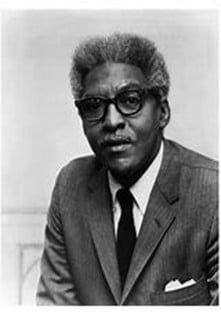
BAYARD RUSTIN Chief Architect of the March on Washington
Bayard Rustin (born March 17, 1912, West Chester, Pennsylvania, U.S.—died August 24, 1987, New York, New York) was an American civil rights activist who was an adviser to Martin Luther King, Jr., and who was the main organizer of the March on Washington in 1963.
After finishing high school, Rustin held odd jobs, traveled widely, and obtained five years of university schooling at the City College of New York and other institutions without taking a degree. Rustin became a foe of racial segregation and a lifelong believer in pacifist agitation. He worked for the Fellowship of Reconciliation, a nondenominational religious organization, from 1941 to 1953, and he organized the New York branch of another reformist group, the Congress on Racial Equality, in 1941.
While his sexual orientation resulted in him taking a less public role, he was hugely influential within the civil rights movement. In the mid-1950s Rustin became a close adviser to the civil rights leader Martin Luther King, Jr., and he was the principal organizer of King’s Southern Christian Leadership Conference. Rustin later was the chief architect of the March on Washington (August 1963), a massive demonstration to rally support for civil rights legislation that was pending in Congress. In 1964 he directed a one-day student boycott of New York City’s public schools in protest against racial imbalances in that system. Rustin subsequently served as president of the A. Philip Randolph Institute, a civil rights organization in New York City, from 1966 to 1979. Soon thereafter he became involved in the gay rights movement. In 2013 he was posthumously awarded the Presidential Medal of Freedom.
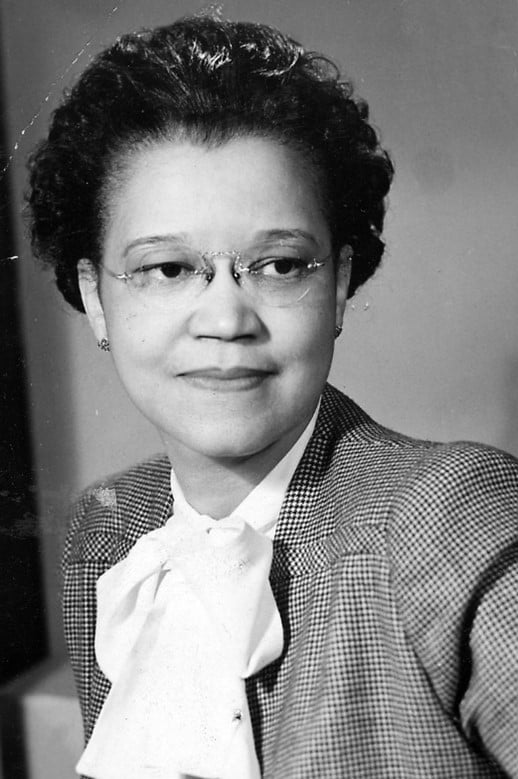
Sadie Tanner Mossell Alexander
Sadie Tanner Mossell Alexander (born January 2, 1898, Philadelphia, Pennsylvania, U.S.—died November 1, 1989, Philadelphia) economist and attorney who was one of the first African American women in the United States to earn a doctoral degree. Alexander served in the administration of Pres. Harry S. Truman as a member of the President’s Committee on Civil Rights (1946). She helped found and served as national secretary (1943) of the National Bar Association, an association chiefly composed of black attorneys. Alexander was the youngest of three children of Aaron A. Mossell, an attorney, and his wife, Mary Tanner Mossell. Her father abandoned the family while she was still young. Her maternal grandfather was Benjamin Tucker Tanner, sometime bishop of the African Methodist Episcopal Church in Philadelphia. One of her uncles was the noted painter Henry Ossawa Tanner. Another of her uncles, Nathan F. Mossell, was a physician and surgeon and the founder of Mercy Hospital (later Mercy-Douglass Hospital) in Philadelphia.
A screening of Ava DuVernay’s award-winning documentary 13th will take place on Feb. 29 at 6 p.m. at the Bessie Smith Cultural Center, 200 East Martin Luther King Blvd. A community discussion will follow.
The 2016 film takes a hard look at the historical implications of the Thirteenth Amendment, which outlawed slavery except as a punishment for crimes. It delves into the social and political actions that have been weaponized against Black Americans since the amendment’s ratification.
The film begins with an audio clip of President Barack Obama stating that the United States had 5 percent of the world’s population but 25 percent of the world’s prisoners. It ends with graphic videos of fatal shootings of Black Americans by police.
During the documentary, researchers, advocates and victims of the prison system discuss how Black Americans, particularly Black men, are disproportionately impacted and unfairly targeted.
It focuses heavily on the prison industrial complex, the idea that prisons benefit from being filled as much as possible. DuVernay contends that the drastic increase in incarceration can be largely attributed to this system.
The film also demonstrates oppression can take an even more insidious form, particularly through language and association, rather than outright discriminatory policies. For example, phrases such as “super-predator” have become widespread, most often referencing young Black men. These labels, used by the media, dehumanize Black Americans and portray them as criminals that should be feared.
DuVernay, who directed the acclaimed films Selma and A Wrinkle in Time, made history at the Oscars in 2017 for 13th as the first Black woman nominated for “Best Documentary Feature.” The screening of 13th is free and open to the public, but registration is required for in-person attendance. For more information, visit www.bessiesmithcc.org/bhm, or call 423-266-8658.
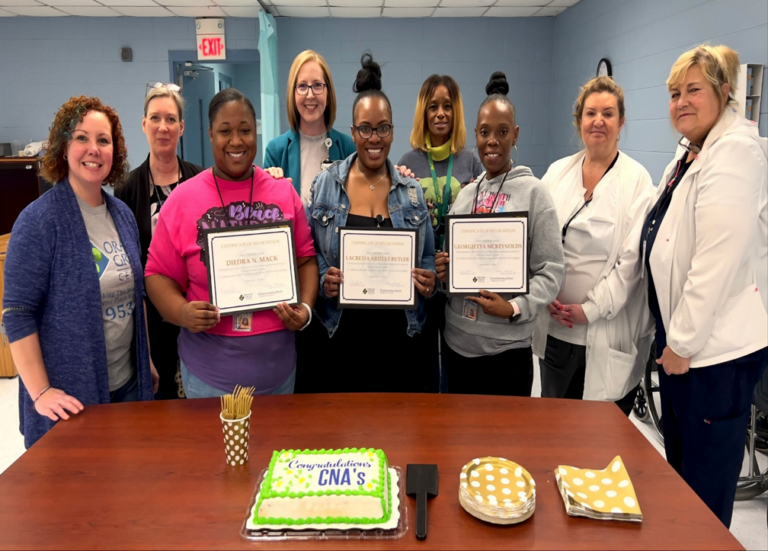
Chattanooga, TN – Orange Grove Center, Chattanooga State Community College, and NHC Chattanooga are proud to announce their collaboration on a new Certified Nursing Assistant (CNA) training program taking place in a dedicated space on Orange Grove Center’s main campus on Derby Street. The program is an intensive two-week course involving classroom and experiential learning which culminates in students taking the State of Tennessee CNA Licensure Exams, which test both knowledge and skills. Orange Grove Center, which celebrated its 70th anniversary in 2023, supports children and adults with intellectual and/or developmental disabilities (IDD) in a wide range of programs, including school-age services, employment, residential, behavioral health, primary medical care, and dental services.
“Orange Grove’s mission has always been to provide the highest quality of care possible to the people it supports. One of the ways we do that is by constantly looking at how we train staff. Training and onboarding is already robust at Orange Grove, but we wanted to look at new ways to add skills and further build expertise,” says Orange Grove CEO Tera Roberts. “We are thrilled to partner with Chattanooga State and NHC Chattanooga to offer this program, and boost the professionalism of caregiving staff,” Roberts stated.
Students in the program have been hired by Orange Grove Center and complete all required background checks and prerequisites. Staff then enroll as students through Chattanooga State to participate in the program. NHC, a Tennessee-based senior care company with communities across the Southeast, is hosting the students for the clinical training portion at its Chattanooga location. NHC will also be the testing site for at least the first several cohorts of students, while Orange Grove applies for approval from the State as a testing site. The first cohort of students began classes on January 22 and finished the program on February 2, 2024.
The program is unique because Orange Grove is underwriting the cost of the program, including the testing, and paying the students an hourly training rate while they participate in the 75-hour program. Students are hired as Direct Support Professionals (DSPs), and the program is offered to both new-hires and existing DSPs. Other CNA certification programs frequently have tuition costs associated with them and require students to pay for their own testing.
The instructor for the inaugural cohort of students was Tammy Clark, RN, BSN, and most recently NHC Chattanooga’s CNA Program Coordinator. “This group of students was a bit different than other groups I’ve taught,” Clark said. “They were very motivated, driven to succeed, and absorbed everything we taught them.”
“The beauty of the CNA certification program is that it gives students valuable skills and builds their confidence as caregivers and as students. Completing the certification often is a great first step toward the next level of education for many people in healthcare, and the bonus is that the students possess marketable skills that give them the ability to work and earn a living while they continue their education,” Clark explained.
Start-up costs for the program are being funded in part by the United Way of Greater Chattanooga as well as an anonymous funder, and Orange Grove has applied for additional grants from local foundations. “Since our founding in 1953, this community has supported all of Orange Grove’s growth,” says Heidi Hoffecker, Orange Grove’s Director of Development. “In a sense, the community has been supporting ‘start-up’ costs for 70 years, because while Orange Grove continues and maintains excellent programs and services, it is constantly innovating and creating new programs as demands and needs of the people and families supported evolve over time.”
Students who enroll in the program agree to work for Orange Grove for a period of two years. Students who complete the full program and pass the State test are eligible for pay raises commensurate with their certification and experience.