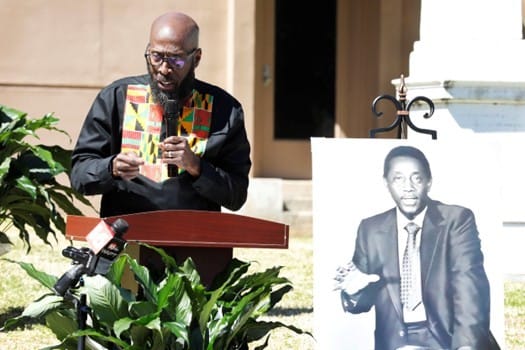
FAYETTE, Miss. – Dr. Michael V. Williams, professor of History and director of Africana Studies at the University of Tennessee at Chattanooga, participated in a ceremony Friday, February 28, 2025 in Fayette, Mississippi, that honored the legacy of James Charles Evers, who served for 16 years as the town’s mayor. Charles Evers was the brother of slain civil rights leader Medgar Evers.
Williams served as a guest speaker for the event that included the unveiling of a Mississippi Freedom Trail marker erected in Charles Evers’ honor. About 200 people turned out for the event which was held at the Jefferson County Courthouse at 1484 Main Street in Fayette.
Williams shared the platform with another guest speaker: Democratic Rep. Bennie G. Thompson, who represents Mississippi’s 2nd congressional district.
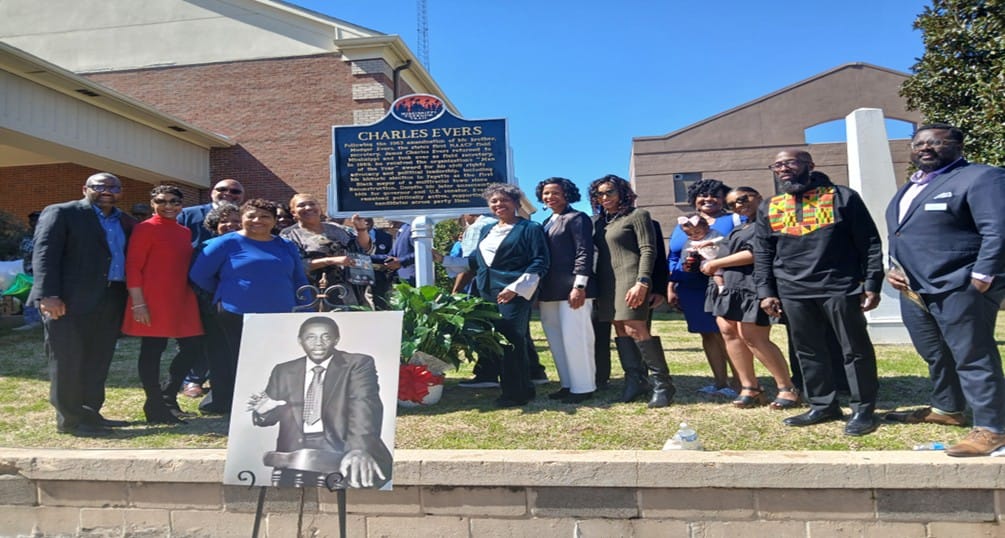
Dr. Michael V. Williams, second from right, poses with the family of Charles Evers in front of the Mississippi Freedom Trail marker erected in Evers’ honor. The marker was unveiled Friday, February 28, 2025 in Fayette, Mississippi.
The Mississippi Freedom Trail was created to honor the people and places in the state that played an important role in the American Civil Rights Movement. The markers are administered by the Mississippi Humanities Council and Visit Mississippi.
During William’s presentation, he said Charles Evers’ life came “to epitomize what it meant to fight for and demand freedom, to fight for and demand equality, to fight for and demand justice, and to dedicate his life to the defense of humanity .…”
Williams said Charles Evers was unwavering in his belief that Mississippi could be better, but that it was up to the people to make it so. “He told us that we have a responsibility to challenge wrong, wherever we found it,” Williams said.
Charles Evers was also down-to-earth in his communication with the public, according to Williams. He said Charles Evers’ talks also revealed his fearlessness, as in his statement, “I would rather be dead and in heaven than be afraid to do what I think is right.”
First elected in 1969, Charles Evers was the first Black mayor of a biracial town in Mississippi since Reconstruction, following passage of the Voting Rights Act of 1965, which enforced constitutional rights for citizens. He was remembered at the ceremony as a fearless leader and man of principle who stayed the course in the fight for justice, freedom, and equality.
Charles Evers was born in 1922 in Decatur. He spent many years of service as a businessman, civil rights activist, and politician. He also worked as station manager for WMPR, where he hosted a weekly political talk show.
Charles Evers served in the U.S. Army during World War II. He was a 1950 graduate of Alcorn A&M College in Lorman, which is today’s Alcorn State University.
In addition to his time as mayor of Fayette, Charles Evers served as Mississippi field secretary for the NAACP following the assassination of his younger brother, Medgar Evers, on June 12, 1963. During the mid-1960s, Charles Evers became a leader of the Civil Rights Movement in Natchez after the attempted assassination of NAACP President George Metcalfe, whose car was bombed by the Ku Klux Klan on August 27,1965.
Charles Evers played a significant role in the success of the Natchez movement, according to historians. When he departed Natchez, he left “with his own position strengthened statewide,” wrote John Dittmer in “Local People: The Struggle for Civil Rights in Mississippi” (University of Illinois Press, 1995). “Nationally, the charismatic brother of Medgar Evers had come to symbolize the civil rights movement in Mississippi.”
In 1969, the NAACP named him the “Man of the Year” because of his accomplishments. Charles Evers died in July 2020 in Brandon, Mississippi. He was 97.
The City of Chattanooga’s Office of Arts, Culture and Creative Economy, in partnership with the Chattanooga Public Library, will present a special edition of Culture on 4 featuring renowned writer and poet Ishmael Reed. The event will take place on Saturday, March 15, at 6:30 p.m. on the 4th floor of the Chattanooga Public Library, 1001 Broad St. This free event is open to the public.
Reed, a Chattanooga native, will engage in a conversation with Lakweshia Ewing, founder of Unlearn Everything and Live. The discussion will explore Reed’s influential career, his insights on storytelling, and the profound impact of culture. Adding to the evening’s artistic tapestry, Rhyme-N-Chatt, Chattanooga’s only interactive nonprofit poetry organization, will deliver a special poetry reading.
Born in Chattanooga in 1938, Reed is celebrated for his satirical works that challenge American political culture. His notable novel, Mumbo Jumbo, is a sprawling narrative set in 1920s New York. Reed’s work often amplifies the voices and perspectives of marginalized communities, particularly African and African-American experiences. He is also a respected essayist, songwriter, playwright, editor and publisher.
Ewing fosters social impact and equity through transformative leadership. With a rich background spanning corporate, nonprofit and community sectors, she cultivates connection and purpose-driven growth. As CEO of Unlearn Everything and Live, LLC, she strengthens organizations through team building and professional development.
Rhyme-N-Chatt, celebrating its 25th anniversary, provides a platform for poetry sharing and discussion through community events, open mic sessions, writing workshops, and other creative expressions. Founded by Vincent Phipps, the organization fosters a supportive environment where poets are valued and empowered. This Culture on 4 event promises an enriching evening of dialogue, poetry and cultural exploration. The event is sponsored by the Chattanooga Public Library Foundation.
Multi-dimensional. Purposed. Passionate. Resilient. These words and many more describe Deborah Levine – a woman of history making history as she lives.
A Chattanoogan by choice, the soft-spoken author gave the Chattanooga News Chronicle the honor of an interview for readers to be inspired during Women’s History Month, as well as know the hidden achievers who live in our very own community.
Deborah Levine’s biography features her accomplishments to include the roles of author, writing coach, editor-in-chief, script writer, journalist, and pioneer of cross-cultural leadership. Just as her roles are many so are her passions to learn, study, read, write, communicate, and convey to others tremendous insight and information.
It’s clear that Ms. Levine has accomplished and continues to accomplish much in her life’s work, which is devoted to bridging the divides of culture, stereotypes, and barriers of society. So, where did it begin?
Deborah Levine (DL): “I was the only little Jewish girl on the island of Bermuda where I grew up. Even in my first years, I was a minority in the minority,” speaking of her family’s home in Bermuda after her family’s move from Brooklyn New York. My older brother was a tease, and said I was the most oblivious person on the planet as an explorer, reader, and one who loved learning. My younger brother had autism and inspired my mom’s special education gifting.”
As an award-winning author and film maker, Deborah Levine’s inspiration comes from the amazing experiences revealed through letters of her father, Aaron Levine, a former intelligence officer for the US Army employed in critical missions to interview Nazis during the course of World War II.
The Liberator’s Daughter is among the 20 books written by Levine. The stirring accounts of her father’s firsthand confrontation of the horrors of Nazi Germany, including the squalor and decay of the death camps, are also depicted in the documentary, UNTOLD, Stories of a WWII Liberator. Deborah was given letters written by her father and writings he had composed during his service to the United States of America as a hate-filled ideology had ruined a once progressive nation, Germany. The book and documentary give personal accounts resulting from the efforts of Nazi Germany to eradicate any threat to their perceived superiority in race and beliefs. This population purging resulted in the deaths of more than 6 million Jews but also thousands of Blacks, those labeled sexual deviants, people with disabilities, political opponents of the Nazis, and many others who were targeted for extermination based on their threat to Nazi power.
Her inspiration is also fueled by a love of being a lifelong learner devoted to opportunities to engage and encourage others to write, record, and take note of their own lives for the preservation for family and the next generations.
DL: “Write a blog. Keep a journal or diary. Write down your events today for the next generation tomorrow. These writings are needed by the next generation, but the practice must be taught so they will write down their own experiences for history’s record.”
Deborah Levine sees the value of each person. She looks beyond a gender, race, partisan label, socio-economic state, or ethnicity to see the value of all.
After discussing the deep impressions of her father’s accounts of his service to America in such a unique role as one who would have been targeted for extermination by the very men he interviewed, CNC asked Ms. Levine to offer her thoughts of the misuse and use of power. The discussion had included the parallels of the millions who accepted the ideology of the Nazis even after America had fought its own Civil War principally over the belief that it was legal and right to own another God-given life as property and for profit.
Ms. Levine’s response: “It is true that if we forget our history, we fail to learn from the horrors and failures and are destined to repeat it. Recognizing echoes of the past are important. While our times may appear to be of chaos, that can also be a time of great creativity and can actually breed life.”
Deborah Levine was a minority in the minority at Harvard beginning her academic studies and in many endeavors, yet prevails as a resilient trailblazer using her talents of creative writing, storytelling, and thought synthesized from vast reading and experiences.
When asked about her more recent works, Ms. Levine spoke of her bout with a life-threatening illness that presented a challenge to press through.
DL: “I’ve seemed to always possess the ability to adapt, adjust, and flourish in spite of, or perhaps because of challenges. This led to my latest book, The Art of Resilience: From Pain to Promise. The book inspires, encourages faith, and speaks to endurance and growing your grit. Adapting to change but also being the change we want to see in this world is part of the critical process. It’s not a spectator process. It’s part of life.”
Continue to follow Deborah Levine at the AmericanDiversityReport.com and enjoy the documentary on YouTube. Be a lifelong learner who carries forward the events of the past for the next generation.
The Chattanooga News Chronicle celebrates Women’s History Month. We honor Deborah Levine for her contributions and for her enduring dedication to making history every day.
Through her performances and recordings, Zakiya Hooker bridges generations, connecting modern listeners to blues’ deep roots while adding her personal chapter to this quintessentially American art form.
From Detroit Roots to Global Stages, Zakiya Hooker Redefines the Blues
As we celebrate Women’s History Month, the Chattanooga News Chronicle spotlights exceptional women whose achievements have shaped their fields. Among them stands Douglasville, Georgia’s Zakiya Hooker, whose authentic artistry and dedication to preserving blues traditions embody the genre’s enduring spirit.
Born in Detroit to blues legend John Lee Hooker, Zakiya grew up surrounded by soulful melodies that would later influence her own musical journey. Yet rather than simply walking in her father’s shadow, she has blazed her own trail–honoring his cultural inheritance while establishing a distinctive voice that appeals to contemporary audiences.
“The blues was my soundtrack from day one,” Zakiya says, reflecting on her upbringing. “There was never a shortage of music and excitement around our home. When my dad would practice, and the band would come over to rehearse, I thought the band members were too cool. I loved watching my dad and listening to the blues.”
Zakiya, born Vera Lee Hooker, left Detroit to escape a difficult relationship, relocating to California to be near her father. Following her first marriage’s dissolution, the single mother embraced a new identity with a name signifying “pure” in Hebrew and “intelligence” in Swahili.
Supporting her three children through determination and versatility, Zakiya built a remarkable career spanning three decades–serving two years with the Oakland Police Department, five years at Kaiser, and dedicating 28 years to the Superior Court of California.
In 1991, she launched her performing career, debuting alongside her famous dad at the Kaiser Center Theatre in Oakland. Despite the inherent pressure of following in her father’s footsteps, she has embraced the challenge, overcoming personal obstacles and proving her own aesthetic merit. Infused with blues, jazz and soul, her style is both deeply expressive and undeniably real.
“I have always kept music in my life, even in the days when I did not know how I was going to make it,” she explains. “I’ve had days when I was down, and I wondered how I was going to make it. When my son died, it was music that got me through. I went into the studio with my dad and recorded Mean Mean World. During bad times, I put some music on, get up, dust myself off and keep it moving. Thank God for the gift of music.”
Zakiya’s impressive discography, including albums like Flavors of the Blues, Keeping It Real, and Bluesman’s Journey, demonstrates her versatility and commitment to professional growth. In 2017, she took her involvement to a new level by learning guitar.
“Picking up the guitar was a game-changer,” she reveals. “It allowed me to express myself more fully, to write and compose music that truly reflected my vision.”
Her 2020 release Legacy, which she produced, wrote and composed, perfectly encapsulates this newfound creative control.
Zakiya’s dedication to her craft has led her to share stages with blues luminaries like Etta James, Taj Mahal and Johnnie Johnson, and to perform at prestigious festivals around the world.
“Every performance is a chance to honor my father’s legacy and to keep the blues alive,” she says. “It’s about passing the torch to a new generation.”
Beyond the stage, Zakiya’s voice has been featured in advertisements and film soundtracks, further solidifying her impact on the music industry. But for Zakiya, it’s the emotional connection with her audience that truly matters.
“When I sing, I want people to feel something,” she emphasizes. “Whether it’s the pain of a broken heart or the joy of overcoming adversity, I want my music to touch their souls.”
Reflecting on her father’s influence, Zakiya shares, “The best advice my father gave me was to be true to myself and follow my heart when doing my music.”
This guidance shaped her artistic journey–a path honoring her heritage while expressing her unique voice.
“My father was a simple humble man who had a dream and followed it. The music was entwined in his DNA and like him, it is in mine as well.” Zakiya and her husband, Ollan Christopher Bell (Chris James), a California native and co-founder of the 1970s R&B group Natural Four, moved to Douglasville in 2008.
You’ve indulged in treats at a family gathering when suddenly, chest pain strikes. Is it just heartburn—or something more serious, like a heart problem? Knowing the difference could be life-saving, says Dr. Maya Balakrishnan, an associate professor of gastroenterology at Baylor College of Medicine.
Unfortunately, the risk of both heartburn and cardiovascular issues increases with age. Here’s how to tell them apart and what you can do to protect your health.
Why the Risk Increases as You Age: “As we get older, the muscles that control the esophagus weaken, which increases the risk of stomach acid refluxing into the esophagus,” Dr. Balakrishnan explained in a Baylor news release. “At the same time, aging also raises the risk of cardiovascular disease due to factors like high blood pressure, high cholesterol, and diabetes.”
The overlapping symptoms can make it hard to know whether chest pain is coming from your digestive system or your heart. Here’s how to distinguish between heartburn and something more serious.
Heartburn: A Digestive Issue with Clear Triggers: Heartburn is a gastrointestinal condition that typically occurs after eating. It happens when stomach acid backs up into the esophagus, causing a burning sensation in the chest.
Symptoms of Heartburn:
• A burning feeling in the chest, especially after eating
• A metallic or acidic taste in the mouth
• Symptoms triggered by specific foods or lying down too quickly after eating
“It’s typically related to what people are eating or caused when they lie down quickly after a meal,” Balakrishnan noted.
Dr. Balakrishnan suggests the following tips to reduce your risk of heartburn:
• Avoid trigger foods.
• Eat smaller meals.
• Take a walk after eating to aid digestion.
• Stay upright for at least three to four hours after a meal.
Treating Heartburn:
If heartburn does strike, over-the-counter antacids can help neutralize stomach acid. Prescription medications like proton pump inhibitors (PPIs) and H2 blockers, which reduce stomach acid production, may be recommended for more persistent cases.
When Chest Pain May Be a Heart Issue
While heartburn is uncomfortable, chest pain related to heart problems can be far more dangerous. Cardiovascular issues can range from angina—chest pain caused by reduced blood flow to the heart—to a heart attack, which requires immediate medical attention.
Symptoms of Heart-Related Chest Pain:
• Chest pain that may feel like pressure, squeezing, or tightness
• Pain that can occur during rest or physical exertion
• Pain accompanied by shortness of breath, dizziness, or nausea
Heart-related chest pain doesn’t typically respond to antacids or other heartburn treatments, making it a red flag for a more serious condition.
“We medically call this type of pain angina, which involves problems with the heart, like blood supply,” Balakrishnan said. “These conditions are more serious than heartburn. They are potentially life-threatening and are related to people’s cardiovascular health.”
How to Know If You’re at Risk for Heart Problems
Certain factors increase your risk of cardiovascular disease, including:
• High blood pressure – High cholesterol – Diabetes
• Smoking – Family history of heart disease
If you experience persistent chest pain—especially if you have risk factors for heart disease—see a doctor immediately.
“It’s important to talk to your doctor about your risk for cardiovascular disease,” Balakrishnan emphasized. “Heart issues are treatable if caught early. Don’t ignore persistent chest pain.”
What to Do if You’re Unsure About Your Chest Pain
If you’re experiencing chest pain and can’t tell if it’s heartburn or something more serious, take these steps:
1. Pay attention to triggers. Did the pain start after a large meal or after consuming trigger foods? If yes, it may be heartburn.
2. Check for additional symptoms. If you have shortness of breath, dizziness, or pain that spreads to other areas like your arms, neck, or jaw, it could be a heart issue.
3. Don’t take chances. If in doubt, seek medical attention. It’s always better to err on the side of caution when it comes to heart health.
The Bottom Line: Don’t Ignore Chest Pain
Understanding whether your chest pain is caused by heartburn or a heart problem can make all the difference. While heartburn is uncomfortable, heart-related chest pain can be life-threatening. Prevent heartburn by avoiding trigger foods and following healthy eating habits. But if you have chest pain that doesn’t go away—or if you have risk factors for heart disease—talk to your doctor right away. Taking your symptoms seriously could save your life. (BlackDoctor.org by Jessica Daniels)
CHATTANOOGA, TN, MARCH 15, 2025 – The Chattanooga (TN) Chapter of The Links, Incorporated will host the 2025 Black Family Wellness Expo on Saturday, March 15, from 9:00 AM to 2:00 PM. The event aims to reduce health and economic disparities while saving and improving lives within the Black community. This initiative in Chattanooga focuses on addressing various health, educational, and economic challenges that negatively impact the well-being and quality of life for many residents. The local event will take place at Orchard Knob Missionary Baptist Church, located at 1734 East 3rd Street, Chattanooga, TN 37404. It is part of The Links, Incorporated’s nationwide Black Family Wellness Expos, held across the country on March 15, 2025, with the goal of mobilizing its membership to enhance outcomes for Black families.
The Black Family Wellness Expo supports The Links National Wellness Expo’s mission to raise awareness about conditions that shorten or impact the quality of life within the Black community. The event is designed to benefit the entire Black family, from infants to senior citizens. The Black Family Wellness Expo will address a variety of important issues, including: Workshops: “AARP Are You Ready,” Veterans “What You Should Know,” Scam Prevention, Healthy Cooking, and Nutritionist Guidance. There will also be information on prenatal, newborn care and maternal health, breast and prostate cancer awareness, kidney disease, heart health, and blood donations. Other areas addressed will include sign-up and information for organ and tissue donor awareness, HIV awareness and testing, caregiver resources, tax preparation, voter registration and information, and much more. This comprehensive event aims to provide essential resources and support to help improve the health and well-being of Black families.
Partnerships with Orchard Knob Missionary Baptist Church and several local agencies, The Chattanooga Links will work to support underserved, disadvantaged, disabled, and elderly populations in the East Chattanooga, Avondale, and Churchville areas. By partnering with these local organizations, The Links aim to provide targeted communities with access to comprehensive, holistic assistance that empowers individuals to take control of and improve their financial, physical, and mental health. We look forward to your attendance on Saturday, March 15, 2025. The workshops will be held from 9:00 AM to 12:30 PM, and the vendors will be available from 11:00 AM to 2:00 PM at Orchard Knob Missionary Baptist Church, located at 1734 East 3rd Street, Chattanooga, TN. We believe that together “We can all make a difference in our community.”
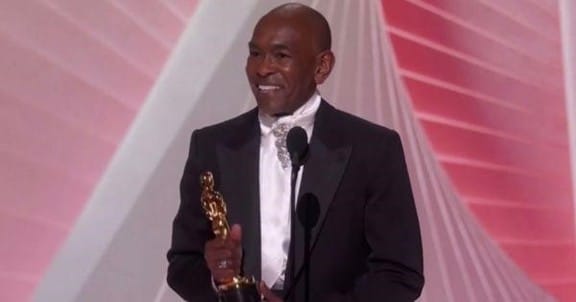
Nationwide — Paul Tazewell made history as the first African American man to win an Oscar award for Best Costume Design, earning the award for his work on Wicked. His latest achievement adds to his Emmy, Tony, BAFTA, Critics Choice, and Costume Designers Guild wins.
Tazewell previously received an Oscar nomination for the 2021 film West Side Story. He won an Emmy for The Wiz Live and a Tony for Hamilton. This award season alone, he secured major wins for his work in Wicked across multiple industry awards, according to Variety.
At the Oscars, Tazewell beat out other nominees including Arianne Phillips for A Complete Unknown, Linda Muir for Nosferatu, Lisy Christl for Conclave, and Janty Yates and David Crossman for Gladiator II.
Tazewell is only the second Black person to win in the category, following Ruth E. Carter, who won for Black Panther and its sequel, Black Panther: Wakanda Forever.
In his acceptance speech, Tazewell acknowledged the historic moment, expressing pride and gratitude to the Wicked cast and crew, especially Cynthia Erivo and Ariana Grande. For Wicked, Tazewell designed over 1,000 costumes, with standout pieces including Glinda’s bubble dress and Elphaba’s iconic black dress.
At 2:00 am, Sunday, March 9, clocks will spring forward one hour as society adjusts our clocks to mark the beginning of Daylight Savings Time. This loss of one hour translates into dawn and sunset occurring one hour later.
In real terms, it’s darker longer in the morning, with more sunshine in the evenings.
Could this time-setting activity that springs forward once in March and falls back again in November be over?
In 2022, a rare show of bipartisanship in the US Senate successfully passed the Sunshine Protection Act, which permanently adopts Daylight Savings Time as the official time with no falling back. Former US Senator and now US Secretary of State Marco Rubio introduced the bill that would put an end to the Standard Time that results in darker evenings in the late fall and winter months.
Unfortunately, the US House argued and never brought the bill to the floor for a vote.
Many states, including Tennessee, have passed enabling legislation anticipating the federal action. Once approved at the national level, the Volunteer State is already primed to adopt Daylight Savings Time permanently. In 2019, the Tennessee General Assembly easily passed the proposal that would eliminate Standard Time.
In December 2024, newly-elected President Donald Trump pledged to adopt a permanent time change without the twice-annual time change. Time will tell if the US House and Senate will do their jobs for the American public to end a practice that began in 1918 as a wartime measure with farmers actually opposing the move. The practices and labor of our agrarians and ranchers typically begin quite early with the earlier sun welcomed.
Americans who love the outdoors and time for recreation enjoy having longer daylight after work with more time for all things outside.
Smart devices have internal programming that automatically change the times twice annually. Should legislation pass with permanent Daylight Savings Time established, software upgrades would be necessary for everything from our phones to our kitchen appliances to our automobiles. Maybe time will stand still, at least just not spring forward and fall back.
Compiled – Voting Turnout was light for the March 4th City elections. With 58 of 58 precincts reporting (100%), there were 20,631 Ballots Cast of the 115,074 total Registered Voters.
Congratulations to Mayor Tim Kelly who won reelection as Mayor of Chattanooga with 17,356 (85.4%) Votes! Districts 2, 4, and 7 had only one candidate running. District 5 had 4 candidates running and District 6 had a total of 5 candidates. Victories were declared for some districts; incumbents retained or lost their seats in some districts, and there will be runoff elections for Districts 6 and 8.
NASHVILLE, Tenn. — The following may be attributed to TEA President Tanya T. Coats, a veteran Knox County educator:
“The passage of universal vouchers makes clear that the state wishes to provide maximum flexibility to meet the needs of each individual child; therefore, we look forward to working with the General Assembly to provide public schools with the same freedom to teach children that private schools currently enjoy. Ensuring that all schools receiving taxpayer support are judged on a level playing field should be a top priority for lawmakers, and we trust there will be no double standard with respect to permitting schools to achieve their mission without government interference.
“Parents and teachers expect more details to support the claim that vouchers won’t harm the public schools where nine out of ten kids will still receive their education. Other states have busted their budgets with similar programs, and the state’s own analysis showed districts will receive less money per student. The state must act to ensure action matches rhetoric.
“The governor and lawmakers have assured us they are not abandoning our public schools. However, Tennessee still has significant work ahead to ensure that public schools have the necessary resources to support both students and educators. Tennessee students need more time to learn, and teachers need more time to teach. The General Assembly should be looking for ways to reduce high stakes standardized testing, allowing for more meaningful assessments that focus on student learning rather than test preparation.
“Tennessee must also implement initiatives to recruit and retain qualified teachers – thereby addressing staff shortages and ensuring diverse and effective educators in every classroom – while upholding the integrity of the profession. A key component of this type of professional investment is to ensure competitive salaries, professional development, and resources to enhance teaching quality. “Tragedies like what occurred at Antioch High School shine a light on the need for additional mental health supports in our schools. Rather than looking for ways to shift resources away from public schools, the state should ensure that we are combining investment in school security with strategies to ensure we’re addressing the wellbeing of all in our school community. This effort will be bolstered by strengthening and expanding community schools, creating supportive environments that integrate academic, health, and social services for students and families.” By Tribune Staff, Updated: February 20, 2025 Tanya T. Coats