Sunday, October 11, 2026
Advertisement
Home Blog Page 4

5 Doctor’s Visits to Add to Your Child’s Back-to-School Checklist

0

For many Black families, back-to-school season is about more than buying backpacks and fresh sneakers. It’s balancing work schedules, after-school activities, transportation, and making sure children are healthy enough to start the year strong. Amid all the shopping and planning, one important item often gets pushed to the bottom of the list: your child’s health.

Back-to-school preparation isn’t about checking boxes or trying to be the “perfect” parent. It’s about giving your child the healthiest possible start to a new school year.

If scheduling multiple appointments feels overwhelming, start with your child’s annual wellness visit. Your pediatrician can help determine which screenings, vaccines, or follow-up care should come next.

. Schedule Your Child’s Annual Wellness Visit

Annual wellness visits are about much more than checking a child’s height and weight. They allow pediatricians to monitor physical, emotional, and developmental health, answer parents’ questions, and identify concerns before they begin affecting a child’s success in school. The American Academy of Pediatrics recommends yearly well-child visits because they help ensure children are healthy, up to date on screenings and immunizations, and ready to learn.

Pediatrician Shanika Boyce, MD, Assistant Dean of Medical Education at Charles R. Drew University, has spoken to BlackDoctor about the value of these conversations: she emphasizes that listening to parents and building trust—rather than treating a visit as a checklist of tasks—helps families feel heard and more open to their pediatrician’s guidance.

For Black families, these visits are also an opportunity to build trust with a pediatrician who understands your child’s health history and to ask questions about concerns that disproportionately affect Black children, such as asthma or sickle cell disease if it runs in your family.

2. Ask About Vision and Hearing Screening

A child who can’t clearly see the classroom board or hear instructions may seem distracted, frustrated, or unmotivated when the real issue is an undiagnosed vision or hearing problem.

Talk with your pediatrician about whether your child needs updated screenings, especially if you’ve noticed frequent squinting, headaches, sitting close to screens, or trouble following classroom directions. Catching this early can make a real difference once school starts.

3. Review Vaccines Before School Starts

Many schools require students to be up to date on routine immunizations before classes begin, and the American Academy of Pediatrics and HealthyChildren.org both recommend reviewing your child’s vaccine record well before the first day.

Waiting until the last minute can make it harder to get an appointment during one of the busiest seasons for pediatric practices. If your child missed a vaccine appointment, don’t panic—your pediatrician can help you put together an appropriate catch-up schedule.

Scheduling this appointment a few weeks before school starts can help families avoid the late-summer rush at many pediatric offices.

4. Update Medication and Action Plans

If your child takes prescription medication or manages a chronic condition, now is the time to make sure everything is current: refilling prescriptions, renewing an EpiPen, updating an asthma action plan, or reviewing a diabetes management plan with your pediatrician.

CDC data shows current asthma prevalence among Black children is more than double that of white children (12.5 percent compared with 5.7 percent), making it especially important for families to have an updated Asthma Action Plan on file before school begins.

If your child has asthma, ask your pediatrician to complete or update an Asthma Action Plan (see below for our helpful checklist) for the school nurse and teachers before the first day of school.

5. Make Sure the School Has the Right Health Information

Before school starts, parents should make sure the nurse has updated emergency contacts, medication authorization forms, and any action plans for asthma, allergies, diabetes, or other medical conditions that require support during the school day.

School nurses do much more than hand out ice packs. They help manage chronic conditions, administer medications, respond to emergencies, and serve as an important link between families, schools, and healthcare providers.

Your Back-to-School Health Checklist

•             ✔ Annual wellness visit scheduled

•             ✔ Vision or hearing concerns discussed with your pediatrician

•             ✔ Vaccines reviewed and up to date

•             ✔ Asthma, allergy, or other action plans updated

•             ✔ Emergency contacts and medication forms submitted to the school

A little planning now can help your child spend less time in the nurse’s office and more time focused on learning, growing, and enjoying the school year. (BlackDoctor.org)
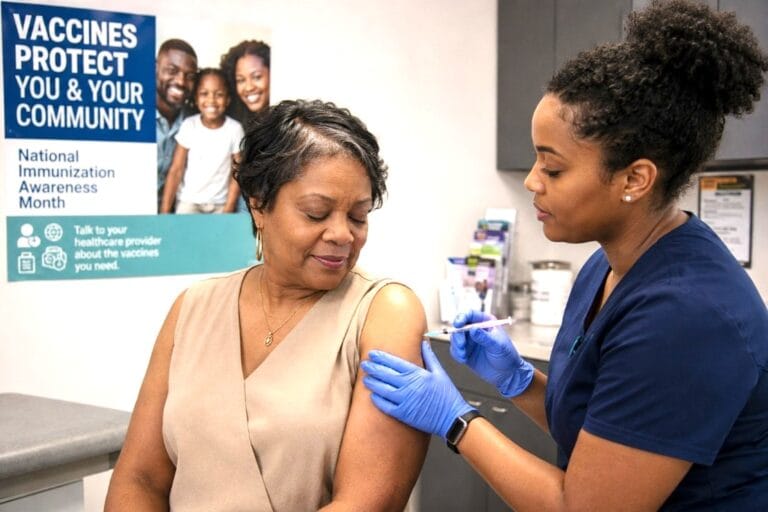
National Immunization Awareness Month underscores importance of vaccines in protecting African American communities

0
Former Centers for Disease Control and Prevention (CDC) Director Dr. David Satcher.

As National Immunization Awareness Month is observed throughout August, public health officials are encouraging Americans of all ages to make sure they are up to date on recommended vaccinations, emphasizing that immunizations remain one of the most effective ways to prevent serious and potentially life-threatening diseases.

The annual observance, led by the Centers for Disease Control and Prevention (CDC), serves as a reminder that vaccines are not only for young children but provide lifelong protection for adolescents, adults, older adults and pregnant women.

Health experts say routine immunizations help prevent illnesses such as measles, whooping cough, influenza, shingles, pneumococcal disease and respiratory syncytial virus (RSV), while also helping protect infants, seniors and people with weakened immune systems who may be unable to receive certain vaccines.

The message carries particular importance for African American communities, where longstanding health disparities have contributed to higher rates of chronic conditions such as diabetes, heart disease and asthma.

Those conditions can increase the risk of severe illness from vaccine-preventable diseases, making routine immunizations an important part of preventive health care, according to public health experts.

Vaccination also helps reduce illness-related hospitalizations, missed work and school days, and the spread of infectious diseases within families and neighborhoods.

Former CDC Director Dr. David Satcher, the first African American to lead the agency, has long emphasized both the value of vaccines and the need to eliminate disparities in immunization coverage.

During congressional testimony, Dr. Satcher said, “Vaccines represent a remarkable public health success story. They are perhaps the 20th century’s most important medical interventions, having prevented millions of diseases, disabilities, pain, suffering, and death.”

He also noted that “disparities in immunization rates still exist for some racial and ethnic groups in this country,” underscoring the importance of reaching underserved communities.

Public health officials continue to stress that vaccines undergo extensive testing before approval. In the United States, vaccines are evaluated through clinical trials, reviewed by the Food and Drug Administration, and recommended by the CDC’s Advisory Committee on Immunization Practices before they become part of the nation’s immunization schedule. Safety monitoring also continues after vaccines are introduced to the public.

Health leaders also emphasize that the benefits of vaccination extend beyond the individual.

Col. Andrew Wiesen of the Defense Health Agency wrote, “The scientific evidence is clear: Vaccines are a public health success.”

Wiesen noted that high vaccination rates help protect people who cannot be vaccinated because of age or certain medical conditions by reducing opportunities for diseases to spread.

Medical experts encourage parents to schedule well-child visits before the new school year begins to ensure children receive any required or recommended immunizations.

Adults are also urged to review their vaccination history with a trusted health care provider to determine whether they need annual influenza vaccinations, tetanus boosters, shingles vaccines, pneumococcal vaccines or other age-appropriate immunizations.

Pregnant women are advised to discuss recommended vaccines, including Tdap, to help protect newborns from whooping cough during their first months of life.

Public health officials say National Immunization Awareness Month is an opportunity for families to review their immunization records, ask questions and make informed decisions with their physicians. They stress that staying current on recommended vaccines remains one of the safest and most effective ways to protect individual health while helping safeguard the broader community from preventable disease outbreaks.

Black America faces critical challenges in 2026 report

Story by Danyale Freeman

As the United States commemorates its 250th anniversary, the National Urban League is posing a sobering question: Is the American Dream dead? Released in its 50th year, the 2026 State of Black America report examines whether the country’s founding promises of life, liberty and the pursuit of happiness have ever been fully realized for Black Americans. While the report acknowledges decades of progress fueled by civil rights advocacy and equity-focused policies, it argues that many of those gains are now being reversed.

“The State of Black America report states unambiguously that we’ve gone backward in the last 18 months,” said National Urban League President and CEO Marc H. Morial during a virtual press conference announcing the report. “Whether you look at the unemployment rate, the inflation rates, the homeownership gap [or] the attacks on political empowerment [that] could cost us hundreds of legislative seats. There’s no way to put a spin on this; these are difficult and demanding times. Those trying to kill the American Dream, their priorities are waging expensive wars, building fiscal plans that benefit billionaires, cutting investments in housing, healthcare, food security, reversing the country’s commitment to civil rights and equal opportunity by attacking diversity, equity, and inclusion.”

The report points to several indicators that paint an alarming reality. Black unemployment has climbed to 7.8%, up from a historic low of 4.7% in 2023, erasing an estimated $87 billion in Black household income. According to the National Urban League, 567,000 Black men and over 300,000 Black women have lost their jobs since November 2025, making this the highest Black unemployment rate in recent memory outside of a recession.

America’s population by 2060, what the data says about race, age, and generational change

The United States is going through two big demographic transformations.

Housing remains another area where the wealth gap continues to widen. The report finds that 44% of Black Americans own their homes compared with 73% of white Americans — a disparity the organization says is wider today than it was before the passage of the Fair Housing Act in 1968. Homeownership has long been one of the primary pathways to building generational wealth, making the widening divide especially significant for Black families.

The report also raises concerns about voting rights and political representation. Following the Supreme Court’s decision in Louisiana v. Callais, the National Urban League estimates that 191 Black-held state legislative seats are now at risk. It also warns that 21 million Americans could face disenfranchisement if the citizenship requirements outlined in the SAVE Act were implemented.

Still, the report isn’t solely focused on what Black America is losing. It also highlights the community’s growing economic influence. For the first time, the National Urban League examined Black consumer buying power, estimating that Black spending has reached $2.1 trillion an amount that rivals the economy of a top-10 nation globally. The report argues that Black consumers are increasingly using that economic influence to hold companies accountable. According to the findings, 45% of Black consumers say they would stop supporting a brand that retreats from diversity, equity and inclusion initiatives. Notably, that sentiment extends beyond Black shoppers, with nearly one-third of non-Black consumers expressing similar views, according to research shared during the press conference.

The report also points to younger Black consumers as a driving force behind the next generation of economic growth through entrepreneurship, investing, content creation, and digital innovation. While the findings are sobering, Morial stressed that the report is ultimately intended to serve as a roadmap. Alongside recommendations addressing employment, housing, wages and voting rights, the National Urban League plans to unveil an Affordability Agenda aimed at expanding economic opportunity.

Fifty years after the inaugural State of Black America report, this year’s edition makes one thing clear: the American Dream cannot be measured by aspiration alone. For millions of Black Americans, whether that dream remains attainable will depend on the policies, protections and investments that shape the nation’s next chapter.

Paid High School Internships Double College Completion Rates, Genesys Works Data Shows

NASHVILLE/ — At a moment when AI is reshaping entry-level hiring and employers are questioning traditional talent pipelines, new data from Genesys Works makes the case that early professional experience changes the trajectory of a young person’s life. The national nonprofit recently released its 2025 Annual Impact Report. Stronger Together, that highlights short- and long-term outcomes for Genesys Works alumni.

In 2025, Genesys Works served 2,161 students and expanded its footprint with the launch of its newest site in Nashville. Its proven model begins with eight weeks of professional skills training during the summer, followed by a paid yearlong internship with a top employer. Students collectively earned $10.9 million in wages and $2.2 million in scholarships.

Of the Class of 2025, 93% of Genesys Works participants enrolled in college, nearly double the national average for first-generation students, according to data from the National Student Clearinghouse (NSC). Alumni pursuing bachelor’s degrees finish within six years at 2.4 times the rate of their peers, and 26% earn degrees in STEM compared to 9.1% of graduates from low-income high schools, based on data from NSC.

The gains compound over time. Among alumni seven or more years post- program, the average income is $67,000, 73% of surveyed alumni report earning more than at least one parent, and 20% own a home. By enabling students to build the skills, experience, and professional networks needed to thrive, the program continues to deliver strong outcomes in college completion, career success, and economic mobility.

“As AI redraws the entry-level job market, young people with the fewest connections stand to lose the most. At Genesys Works, we’re in the business of unlocking human potential — enabling young people to forge those connections and preparing them for meaningful careers while helping employers build the workforce they’ll need,” said Byron V. Garrett, CEO of Genesys Works. “These results show what happens when talent meets opportunity.”

Employers also recognize the program’s value. Ninety-two percent of internship managers report interns meet or exceed expectations, and 99% recommend Genesys Works.

The full 2025 Annual Impact Report is available at genesysworks.org.

The First of ‘7’ Key Moments in Black History

Though the U.S. Supreme Court outlawed school segregation in Brown v. Board of Education (1954), state and local officials in a number of Southern states continued to block integration of their schools.

In 1957, the NAACP resolved to challenge these policies, enlisted nine Black students who agreed to register at Central High School in Little Rock, Arkansas. When the students showed up for the first day of classes on September 4, they confronted a furious mob of white students and others, as well as 250 Arkansas National Guard officers sent by Governor Orval Faubus to prevent them from entering.

Meanwhile, television and newspaper coverage of the events in Little Rock drew international attention to the issue of school segregation, the battle over federal and state power and the growing civil rights movement.

JOIN US IN OUR NEXT ISSUE FOR THE 2ND OF ‘ 7 KEY MOMENTS’ IN THE CIVIL RIGHTS MOVEMENT in Black History.

“The Shepherd’s Voice”

More Power to the People

By Dr. Ernest L. Reid, Jr

If you grew up in the Black community, chances are you’ve heard The Chi-Lites sing, “For God’s Sake, Give More Power to the People.” It was more than a hit song—it became an anthem. Released in 1971, during a season when African Americans were fighting for equal opportunity, justice, and dignity, it reminded us that the future of our communities could not rest solely in politicians or government. Real power has always been found in ordinary people who love their neighbors enough to serve them. More than fifty years later, that message is just as relevant because many of our struggles have changed names, but they have not disappeared.

There is a story about a little church sitting on the corner of a neighborhood where generations had been baptized, married, and buried. Every Sunday morning, the parking lot filled early. The choir sang the songs that had carried our people through hard times. The preacher proclaimed that God was still able, and the congregation left encouraged for another week.

Yet just beyond the church parking lot was another congregation. It gathered on front porches where senior citizens sat alone. It gathered at apartment complexes where grandparents were raising grandchildren. It gathered at bus stops where working mothers worried about stretching one paycheck. It gathered on neighborhood basketball courts where young men searched for hope while violence searched for them.

One afternoon, a little boy asked his grandmother, “If our church is right down the street, why don’t they ever come over here?” She looked at him and quietly replied, “Baby, they will…just as soon as they remember that the church isn’t just where we go. The church is who we’re supposed to be.”

Those words reached the pastor. The following Sunday he stood and declared, “Next Saturday, we’re going to be the church.” And they did.

Teachers tutored children. Nurses offered health screenings. Contractors repaired homes for elderly residents. Deacons delivered groceries and visited shut-ins. The youth ministry distributed school supplies. Business owners shared job opportunities. Even the choir left the choir stand and sang in the neighborhood park, bringing hope to families who desperately needed encouragement. At the end of the day, a reporter asked the pastor, “Who organized all of this?”

The pastor smiled and said, “The Gospel did.” Months later, every problem had not disappeared. But children had mentors. Seniors had visitors. Families found hope. The neighborhood no longer knew the church because of what happened on Sunday morning. They knew the church because it showed up the rest of the week.

That is what more power to the people really means.

The Black Church has always understood this. Long before government programs existed, our churches fed hungry families, educated children, cared for senior citizens, marched for justice, registered voters, buried the forgotten, and reminded our people that God had not abandoned them. Our greatest strength has never been our buildings—it has always been our willingness to serve.

Jesus showed us the same example. He walked where hurting people lived. He welcomed the rejected, healed the sick, fed the hungry, and proclaimed hope to the poor. His ministry was never confined to the synagogue. It happened in homes, along dusty roads, and in the streets where broken people lived.

Our communities need that spirit again. They need churches that serve beyond Sunday morning, businesses that invest in neighborhoods, leaders who listen, and neighbors who refuse to let one another struggle alone. The Chi-Lites pleaded, “For God’s sake, give more power to the people.” Perhaps the greatest power God has already given us is one another. When we choose to serve instead of simply watch, our neighborhoods become stronger, our families become healthier, and our children begin to believe again.

The power has never been locked away in city hall. God has already placed it in our hands. The only question is whether we will use it.

Opal Jackson Honored with Key to the City, Decades After Klan Attack

0
February 1982 published group photograph of Opal Jackson, Katherine Johnson Viola Ellison, and Lela Mac Evans. Fannie Mae Crumsey (not pictured).

Nearly 46 years after a Ku Klux Klan attack left her with shotgun pellets permanently lodged in her leg, Opal Lee Jackson was given a symbol of honor by the city she helped change.

Surrounded by family, Jackson, one of five Black women known as the Chattanooga Five, was presented with a Key to the City on July 23 by Chattanooga Mayor Tim Kelly, in recognition of her courage and the fight for justice that followed the 1980 attack.

“In April of 1980, five Chattanooga women survived an attack by members of the Ku Klux Klan,” Kelly said. “Ms. Opal was honored with a Key to the City, serving as a reminder of the hard road fought for civil rights that led to the historic court ruling that not only granted the Chattanooga Five justice, but set a nationwide legal precedent and the banning of the KKK in Chattanooga.”

For Jackson, now 94, the honor comes nearly half a century after she and four other Black women survived one of the darkest episodes in Chattanooga’s history.

On April 19, 1980, three members of the Justice Knights of the Ku Klux Klan went on a shooting spree through Chattanooga’s Black community. The Klansmen first set fire to a wooden cross near railroad tracks. Then, driving along what was then Ninth Street (now Martin Luther King Boulevard), they fired two shotguns loaded with birdshot into a crowd of Black women waiting for transportation outside a local establishment.

Four women were wounded by gunfire, Jackson among them. A fifth, Fannie Mae Crumsey, was injured by flying glass; the blast also scarred a nearby brick wall, a mark that outlasted the moment. The other three women were Viola Ellison, Lela Mae Evans and Katherine Johnson, together known as the Chattanooga Five.

The men identified as responsible were Marshall Thrash, William “Bill” Church and Larry Payne. Thrash fired from the window of a car Church was driving, while Payne sat in the back seat.

George Key, then president of the local NAACP chapter, turned to the New York-based Center for Constitutional Rights and attorney Randolph McLaughlin for help. McLaughlin filed a federal class-action suit under the Ku Klux Klan Act of 1871, a Reconstruction-era law passed under President Ulysses S. Grant to combat conspiracies aimed at stripping people of their civil rights.

The criminal trial that followed became its own painful chapter: an all-white jury acquitted Church and Payne, while Thrash was convicted on lesser charges and served only a fraction of a nine-month sentence. The verdict sparked four nights of unrest and protest across the city; the Rev. Jesse Jackson traveled to Chattanooga to help calm tensions.

More than a century after its passage, the Chattanooga Five helped put the Klan Act to a new use in the fight against organized racial violence. The federal case was tried in a courtroom whose own mural, depicting Confederate soldiers returning from war with an enslaved Black man picking cotton at its center, reflected the same history the women were fighting.

In February 1982, after an eight-day trial, a federal jury deliberated roughly two and a half hours before ruling in favor of the Chattanooga Five. The jury awarded them $535,000 in damages. That figure is roughly $1.4 million today, according to McLaughlin. The court also issued an injunction barring the Klansmen from further violence in Chattanooga. It remains on the books, and the underlying law has since been invoked in other civil rights conspiracy cases.

The women’s story reached a new generation through How to Sue the Klan: The Legacy of the Chattanooga Five, a 2024 short documentary directed by Chattanooga filmmaker John Beder and produced by civil rights attorney Ben Crump.

The film premiered locally at the Walker Theatre before going on to win an NAACP Image Award for Outstanding Documentary Short and a Midsouth Emmy for Outstanding Short Form Documentary; it was later acquired by PBS’s Reel South series for national broadcast. Kelly encouraged residents to watch it.

But for Jackson, this isn’t history on a screen. She carries it. “I don’t have no trouble with nobody,” she once said. “I didn’t have any trouble then. I can’t hate you for something I don’t know.”

The pellets remain in her leg, yet the violence didn’t define what came after. She has spent the decades since spreading a message of love, even toward the man who pulled the trigger.

The Key to the City honors that: a woman who survived the gunfire, endured a justice system that failed her, and kept fighting anyway.

Jackson and the rest of the Chattanooga Five–Ellison, Evans, Johnson and Crumsey–may not be household names. But their courage reshaped Chattanooga, and the legal fight against organized racial violence, far beyond it.

Election News–Competitive Races Generate Isolated Election Turnout

0

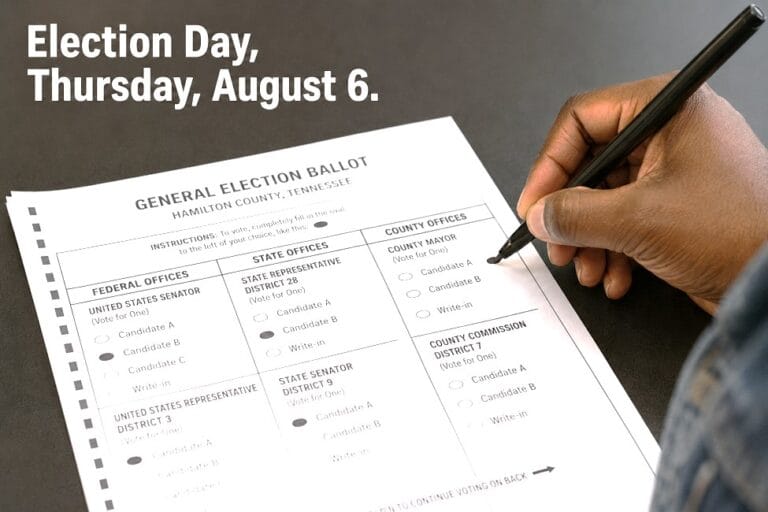
As of Thursday, July 30 in Hamilton County’s Early Voting window that ran July 17-August 1, more than 94% of registered voters of Tennessee’s fourth most populated county still had not yet participated in casting their ballot in the Thursday, August 6 primary for state and federal elections and the general election for the county leadership.

Of the county’s 218,764 registered voters, only 23,944 had voted, or about an 11% turnout.

That takes our breath looking at the appearance of apathy, but Hamilton County Election Commission Administrator Scott Allen noted the flow of voters to be “outstanding” compared to previous primary cycles. This pace will come close to the 15% recorded in the 2024 August elections for Early Voting with a projected 22-25% turnout for the entire Election after the polls close Thursday.

While this August’s election’s pace may be up, the cause is simply competitive races of interest that will determine policy. No, issues are not on the ballot, as in a referendum, they are in reality. Candidates’ platforms give ideas and trends of stances and pledges that predict their leadership plans.

The competitive races include the Republican Party gubernatorial primary, a few contested school board races, with other countywide posts vying for election. But voter apathy continues to prevail on the whole with much greater interest in the government that is furthest from them in Washington, DC, rather than here at home in Chattanooga, Tennessee!

Voter apathy is often associated with predictable partisan outcomes, limited competition, weak local news consumption, distrust of institutions, and campaign fatigue if races get too heated and toxic. Saddest, however, is the belief with too many that individual votes don’t matter. How often do candidates paint themselves one way in the campaign then govern in another? Over time, this takes a toll of voter trust more than many other factors.

Sample ballots for both the Republican and Democrat primaries are available online at https://elect.hamiltontn.gov/sampleballots. Your vote does matter. Otherwise, small, more intense voter groups can have a disproportionate impact on municipal and state government.

In Hamilton County, $1 billion of your tax dollars will be spent over the next year. Tennessee’s statewide budget will spend at least $59.5 billion of your tax dollars.

Never forget, governments have no money. Governments only have the money taken from law-abiding citizens who work, own property, and engage in work, retail and business transactions. It is YOUR money. Make the decision to have a voice in how that money is spent and who stewards it best for the greatest number of people.

Early voting ended August 1.  Election Day is Thursday, August 6 with polls open from 8 am – 8 pm on Election Day.

The realities of Black men in the 4th quarter of life!

(Part 2 of 2) continued from week July 23

Now do we talk about death, life’s common denominator, and the inevitability of our own death? If not directly, vicariously I believe we do when we talk about the growing list of those we once knew who’re no longer with us.

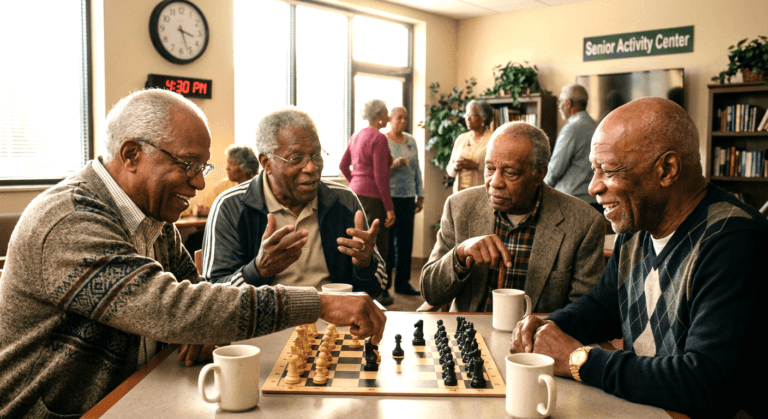
Here’s what several men said about their participation in the 4th Quarter Project.

“Having retired after 40 years as a consultant, at this point in my life I felt that there was something missing. Now I have something else in my life to really look forward to, the 4th Quarter Project.”

“After recently losing two of my best friends, the 4th Quarter group has filled a big gap in my life.”

“For years I’ve been actively involved in my fraternity and Christian men fellowship groups, but unlike those, the issues we explore in the 4th Quarter Project are never discussed in those groups.”

“I’m at my best when I push myself and others outside their comfort zones because that’s where true learning takes place, not only about the issue itself but ourselves in response to that issue. If I’m not uncomfortable I’m probably not learning. The 4th Quarter Project allows that for me.”

As said earlier, I reached out to several wives of members to see what they’ve observed related to their husband’s participation in the 4th Quarter Project. Here’s some of what they told me:

Said a wife, “My husband loves being a member of this group, especially because he recently dealt with a health challenge that led to a personal reflection. For him the opportunity to listen to others has been a powerful validation of “wow, you too?”

“Clearly he enjoys being a part of the group because he talks about it for hours afterwards,” said another. “He hates any schedule conflicts that cause him to miss meetings.”

Said another, “There’s no question about how much he enjoys the group. He’s particularly pleased with learning how much he has in common with other Black men, especially the group’s willingness to deal with issues men typically don’t open up about.”

Taken together, these comments from members boil down into a one-word reason that seems to best explain their collective interest in the 4th Quarter group…..anticipation! And science supports the power of anticipation, and the health benefits it engenders.

A 2015 study showed that anticipating something fun is related to decreased negative emotions such as anxiety and depression. The effect is so powerful that we get more benefit from anticipating a potential positive event than we do from recalling an actual past positive event. The study showed that anticipating something good can even help us feel more positive about something potentially stressful.

The impact is demonstrated on a physiological level. A 2018 study asked participants to anticipate a positive event while undergoing an MRI procedure. The imaging test showed that positive anticipation caused participants’ brains to release dopamine, a neurotransmitter

that results in feelings of pleasure, satisfaction and motivation.

On the issue of health benefits that come with the anticipation of participating in the Project, co-founder Keith Quarles summed it up best:

“For me there have been mental benefits from my participation in the Project that come with unloading things I’ve kept inside and to gauge my health issues against those of other men. It’s also cemented my friendship with other men I know and even enriched conversations I now have with my wife. So yes, do I anticipate our upcoming meetings? You bet I do.”

If anything, the hope is that this narrative is an incentive for others who reside in the fourth quarter of their lives to launch their own 4th Quarter Project, for those who want to anticipate that quarter rather than dreading it.

Oh, yes, one more thing before we go: If Zoom is not your preference, a nearby coffee shop or any other safe space for dialogue would work as well. All you need to bring with you is an open mind and a willingness to share and an interest in learning. Getting started is not that difficult, it’s sorely needed and, yes, it just may add years to your life.

Terry Howard is an award-winning writer, a contributing writer with the Chattanooga News Chronicle, The American Diversity Report, The Douglas County Sentinel, Blackmarket.com, recipient of the Dr. Martin