Tuesday, October 13, 2026
Advertisement
Home Blog Page 38

Thomas Moorehead, Pioneering Entrepreneur

Thomas Moorehead, Pioneering Entrepreneur

Joyce and Thomas Moorehead

Thomas Allen Moorehead, born on April 21, 1944, in Monroe, Louisiana, is a pioneering entrepreneur, philanthropist, and leader in the luxury automobile industry. Raised by his mother, Minnie Mae Thomas, he is the eldest of five siblings. Moorehead’s early life in the segregated South shaped his ambition and resilience, traits that would guide his remarkable journey from humble beginnings to national prominence.

Moorehead graduated from Carroll High School in 1962. That same year, he bought his first car, a used Plymouth for $35, from a junkyard. He enrolled at Grambling State College (now Grambling State University), a Louisiana HBCU, earning a Bachelor of Arts in Business Administration in 1966.  While there he joined Kappa Alpha Psi Fraternity, Inc.  After college, Moorehead briefly took classes in Wayne State University’s MBA program and worked at the Mobil Corporation. From 1969 to 1970, he was a systems analyst at Chrysler Corporation. He later earned a Master of Social Work degree from the University of Michigan in 1971 and began a Ph. D in urban and regional planning, conducting research in Copenhagen, Denmark. While at the University, he served as a field instructor and Director of Community Services in the School of Social Work until 1983.

Moorehead’s path shifted dramatically in the mid-1980s. After working as a car sales consultant, he entered the General Motors Dealer Training Program in 1985. Two years later, he opened his first dealership, Moorehead Sentry Buick Isuzu, in Omaha, Nebraska. This marked the beginning of a groundbreaking career in the automotive industry.

He would later own one of the most successful minority-owned BMW and MINI Cooper dealerships in the country, located in Sterling, Virginia. Under his leadership, Sterling Motorcars expanded across the Mid-Atlantic region, with multiple locations in Virginia, Maryland, Delaware, and Pennsylvania. His achievements were recognized by the National Association of Minority Automobile Dealers (NAMAD), and by 2018, Sterling Motorcars generated over $623 million in annual revenue. Moorehead invested $25 million to upgrade the dealership’s facilities, solidifying its position in the luxury market.

Beyond BMW, Moorehead made history as the first African American to own dealerships for Rolls-Royce (2013), Lamborghini (2016), and McLaren, joining a rare class of elite international luxury car dealers. He also acquired a Harley-Davidson dealership in 2014.  In 2001, he founded Moorehead Properties, Inc. and in 2007, became the first African American to own a Marriott Residence Inn at National Harbor Resort and Convention Center in Maryland. He has invested in 43 hotels across the country and recently purchased a Harley Davidson dealership.

The focus, he says, should always be on the customer; he’s been known to send homemade coffee cakes to clients whenever the dealership makes even a minor error.

“I don’t want to see a frown on your face when you walk out of here,” he says. “The boss in the store is not Tom Moorehead, it’s his customer. If we lose sight of that, we might as well close our doors.”

When he’s not working hard to make “the boss” happy, Moorehead spends time with his two children and works with his wife Joyce, a former attorney, on their foundation, which provides scholarships to students in their junior and senior years of college. Moorehead also served as chairman of the board of the National Association of Minority Auto Dealers.

But even now, after far exceeding that million-dollar goal his mentor promised years ago, the humble Southerner doesn’t drive a Rolls-Royce, although his wife did surprise him with one for Christmas a few years back. “I told her, I can’t drive that,” he says. “For me, a young fellow out of Monroe, Louisiana, I really don’t get caught up on what I drive.”  (Article Compiled with contributions by Otis Alexander; Washington Life)

Grace Lonergan Lorch (1903-1974)

The mysterious woman in the polka dot dress!

Soon Grace Lorch arrived in a polka dot dress, having just dropped off her daughter at a nearby junior high. She put her arm around Eckford and fearlessly shouted back at the crowd, “Leave this child alone! Why are you tormenting her? She then boarded the bus at the bus stop with Eckford to comfort her and drove away from the mob scene.

Dear readers. Before you bid au revoir to this side of planet Earth, add Little Rock, Arkansas and, a few blocks away, the Little Rock Nine Museum, to your must-do bucket list. And if you get there, before leaving town take the walk down South Park Street – alone like I did years ago – in front of the imposing fortress of Little Rock Central High School. Hold that possibility until the end of this narrative and, with it, a recommendation.

But before the anti-DEI history erasing crowd comes gunning for my noggin, snatches me off a street corner and handcuffs me for a one way government expenses paid one way trip to a prison in El Salvador, I figured that I’d try to stay one step ahead of them with another little-known bit of history they’d prefer that you didn’t know about, namely that of one Grace Lorch.

Grace Lorch? Who’s she?

Well, it’s unlikely you’ve heard of Grace Lorch. Unless you are a serious student of African American history makers, her name likely won’t register. But when Grace Lorch helped another person you either don’t know or remember, Elizabeth Eckford of the “Little Rock Nine” in 1957, together they changed history. 

Grace Lonergan Lorch (1903-1974) was a teacher and civil rights activist best known for her work as a white escort for the Little Rock Nine. Before then, she was a teacher in Boston and served as President of the Boston Teachers Union.  Despite having been a teacher for two decades Grace was dismissed due to an 1880s era rule of the Boston School Committee that, get this, banned female teachers from marrying. Lorch appealed but the committee upheld the rule.

Before long, the negative publicity around her case led to a campaign to end the prohibition, which was successful nine years later when the legislature voted to end the ban on married female teachers.

After Boston, Grace and her husband Lee, who holds a PhD in mathematics, and their daughter Alice swung south and continued their civil rights activism in New York, Pennsylvania, Nashville, Little Rock, back north to Connecticut and finally to Canada.

In New York City’s Stuyvesant Town they fought to end housing discrimination and brought the issue to a head by allowing a Black family to live in their apartment as guests. That controversy cost Lee Lorch his job as a math professor; so the Lorches moved to the South where Lorch obtained a teaching position at predominantly Black Fisk University and later at predominantly Black Philander Smith College in Little Rock, Arkansas. As one of three white professors at Fisk,  Lee chaired the math department and encouraged and mentored several Black students to earn PhDs in mathematics, the first in the United States.

Two weeks after leaving Nashville and moving to Little Rock, Grace wrote a letter to the local school superintendent asking that their eleven-year-old daughter Alice be allowed to attend the predominantly Black neighborhood school. The request was denied.

Continuing their civil rights activism, the Lorches were involved in the Little Rock branch of the NAACP and were intimately involved in the Little Rock Nine’s struggle to desegregate Little Rock Central High School.

On their first day of school, the nine Black students were instructed to arrive together; however, the instruction never reached fifteen-year-old Elizabeth Eckford who arrived separately and found herself alone on South Park Street facing an angry mob threatening to lynch her.

Lorch’s rescue of Eckford made the Lorches a target. Dynamite was placed in their garage, they were harassed in the press, their daughter faced bullying at school and Grace was subpoenaed by the Senate Subcommittee on Internal Security. State and federal officials began harassing her for “communist activities.” Her husband Lee, a college mathematics professor, was harassed as well. Three weeks later she had to stand in front of the U.S. Senate Internal Security Subcommittee and answer to accusations of communism.

This level of harassment of the Lorches soon escalated. The Arkansas Attorney General investigated them. Governor Faubus accused them of being communist subversives. Arkansas representative Thomas Alford denounced Lee Lorch as a communist functionary on the floor of the U.S. House of Representatives.

Now although the Lorches were not new to civil rights activism, this was the first public incident that put them on the radar of powerful segregationists.

Before it was over, they left Arkansas to escape further persecution and after one year in Connecticut they moved to Canada where they hoped that the persecution would end. But it didn’t. The attorney general of Arkansas supplied Canadian authorities with dirt on their supposed communist activities. Even after leaving the country, they still suffered. 

In the end, there are a few things that need saying before bringing this to a close.

One, it should come as no surprise that social activism means resistance to change and personal sacrifices and can lead to ridicule and threats, let alone getting fired from jobs – as the Lorches can readily attest to.

Two, it would be a tragic example of historical negligence to ignore or erase Lee Lorch’s outstanding contributions to the Civil Rights Movement. Given the focus of this narrative – mainly on Grace, his wife – coupled with the limitations of this space, the reader would be well served to research Lee Lorch’s incredible lifetime of fighting racial injustice and the professional sacrifices he experienced.

Three, appreciate that like the Lorches example, American history is replete with examples of Jewish/African American relationships in social causes. Think philanthropist Julius P. Rosenwald and Booker T. Washington, Dr. Martin L. King Jr. and one of his chief advisors, Stanley Levinson. Think Andrew Goodman and Michael Schwerner, two Jewish young men who lost their lives while working to get voting rights for Blacks in Mississippi. Explained to me by my friend “Deborah,” a Jewish American, among other explanations, historically Arican-American and Jewish Americans are connected by a common bond of oppression.

I close with a serious recommendation: get to the Little Rock Nine Museum before the anti-DEI history erasing crowd gets there first and scotch tapes this message on the museum’s front door…. Closed for good!

Terry Howard is an award-winning writer, a contributing writer with the Chattanooga News Chronicle, The American Diversity Report, The Douglas County Sentinel, Blackmarket.com, the Augusta County Historical Society Bulletin and recipient of the Dr. Martin Luther King, Jr. Leadership Award, and third place winner of the Georgia Press Award.

Another First by Chattanooga’s EPB

Chattanooga’s EPB, or Electric Power Board, was the first in the United States to offer one gigabyte of internet service. Now, the public utility is embracing a new first–quantum computing.

What is quantum computing and why should we care, especially in Chattanooga?

What exactly is quantum computing? In very basic terms, the capacity of a quantum computer is exponentially larger in comparison to typical computers available in the use of code and the basic units of calculations and processing using the mechanics of particles and functions at a scale smaller than atoms. The application of quantum computing is in the speed of calculations being millions of times faster and the ability to solve problems much more complex than typical computers.

In research, once a pattern is established, the speed of quantum computing in using algorithms makes a years-long study much shorter in duration. This power translates to significant gains in optimization and efficiency, notably in energy solutions (such as battery technology) and the advancement of medical treatments.

Chattanooga’s Electric Power Board and IonQ  have just announced a $22 million partnership to develop and host the first quantum computing and networking hub in America. The new EPB Quantum Center will serve as a resource for research, development, and the marketing of applications that benefit both consumers and patients.

IonQ is a College Park, Maryland computer company with expertise in building quantum computers. The partnership with EPB makes the Chattanooga utility the host of the network available for commercial use. IonQ provides training, development, and support.

IonQ will also create a Chattanooga office in this comprehensive quantum partnership moving Chattanooga into a small number of cities that support research, development, and a deliverable that is in the market and useful in a large number of business sectors.

The EPB Quantum Center will develop cybersecurity technologies and cryptography that permits tamper-proof communications and data transmission. The area of energy productivity will see benefits in grid outage reduction, load balancing, and initiatives to improve energy efficiency for consumers.

The benefits of quantum computing pack a long list. Understand, however, that the economic benefit to companies having access to such a resource versus classical computing offers key competitive advantages. The opportunities for Chattanoogans and area residents come in the form of more incredible jobs and an influx of high-tech leaders creating an unparalleled culture of economic growth, technological advancements, and a Scenic City that moved from Gig to Quantum.

County Mayor’s Office Names Paris Vinnett as Director of Communications

Contributed Article  – Hamilton County Mayor Weston Wamp has appointed Paris Vinnett as the county’s director of Communications. A dynamic communications professional, Vinnett brings nearly a decade of experience in local government with a strong background in media relations and community engagement.

“Paris is a gifted communicator with a proven ability to connect citizens with their local government,” said Mayor Wamp. “We are grateful she has joined our office as we enter an important year of following through on major initiatives ranging from career and technical education to roads and infrastructure improvements.”

Vinnett currently serves as press secretary for the City of Chattanooga and previously served as the director of Communications for the City of Kenner and Jefferson Parish Public Schools in Louisiana. Throughout her career, she has led strategic campaigns that effectively communicated key administrative priorities and elevated public engagement.

“I’m honored to join Mayor Wamp’s administration and contribute to the important work happening across Hamilton County,” said Vinnett. “ Effective communication is an essential part of good governance, and I look forward to serving our residents with clarity, integrity, and purpose.”

She holds a Master of Public Administration from Louisiana State University and a bachelor’s degree in marketing from the University of New Orleans. Vinnett’s proven ability to translate policy into clear, compelling messaging will support Mayor Wamp’s commitment to transparency and effective communication. Previous Director of Communications, Mary Francis Hoots, has shifted into the role of Deputy Chief of Staff, assuming many of the responsibilities of the former director of Operations position. This reorganization is budget neutral.

Battle Academy Students Spice Up Learning with Innovative Culinary Program

0
Battle Academy students participate in the “Cooking Up Learning” program, where culinary arts are integrated with traditional subjects to create a dynamic and hands-on educational experience.

At Battle Academy, the classroom has taken on a delicious new flavor. Through the school’s “Cooking Up Learning” program, the tantalizing aromas of freshly baked pumpkin bread and the savory sizzle of frying okra are not just about food preparation–they represent a dynamic and engaging approach to education.

“Cooking Up Learning,” the brainchild of Tarah Kemp, blends culinary arts seamlessly with core academic subjects, transforming learning into a hands-on, flavorful adventure. Kemp, who moved to Chattanooga from Miami, Florida, in 2006 and is a graduate of the University of Tennessee at Chattanooga, drew upon her unique background to create the program.

“I was a teacher with two jobs: teaching during the day and serving at a local restaurant at night,” Kemp explained. “I did this for over 12 years. I was keen on keeping my worlds divided, only to discover that I could bring my expertise and passion of food into my classroom.”

This realization led to the establishment of “Cooking Up Learning” at Battle Academy, a program designed to cultivate critical thinking, collaboration, and problem-solving skills in students through the engaging medium of food.

“Cooking Up Learning” creatively integrates culinary activities with grade-specific curriculum, offering a more exciting and tangible way for students to grasp concepts. Imagine math lessons involving measuring ingredients, science experiments exploring the chemical reactions in baking, or geography lessons coming alive through the preparation of dishes from different cultures. This hands-on approach fosters deeper understanding and retention of material.

A vital ingredient in the program’s success is its partnership with local culinary luminary Chef Kenyatta Ashford. A Food Network “Chopped Champion” renowned for his expertise in Afro-Creole cuisine, Chef Ashford has been collaborating with Battle Academy students for the past three years.

His involvement ranges from demystifying the chemistry behind a simple vinaigrette to exploring the cultural significance of fried okra harvested from the school’s very own rooftop garden.

During a recent session, Chef Ashford guided students in the preparation of Chicken Perlo, a dish steeped in both history and flavor. These interactions not only hone students’ culinary skills but also provide invaluable insights into cultural heritage and the importance of community connections.

The program has already yielded significant positive results, with 100% of participating educators reporting heightened student engagement, improved content retention, and a more positive overall attitude towards school. Parents and teachers alike have lauded its effectiveness in enhancing students’ understanding of subjects like history, geography, and math through the lens of cooking.

As one enthusiastic parent shared, “We never thought our fifth grader would be excited about beans and vegetables–now he loves parsnips and eats beans, thanks to Culinary Lab!”

Battle Academy, a K-5 Magnet School, is nestled in the heart of Chattanooga’s Southside at 1601 Market Street. For those interested in learning more about the “Cooking Up Learning” program or exploring the possibility of bringing it to their own school, additional information can be found on website: https://www.cookinguplearning.com/.

EPB’s ArtSpark Goes to School Program Showcases Student Creativity

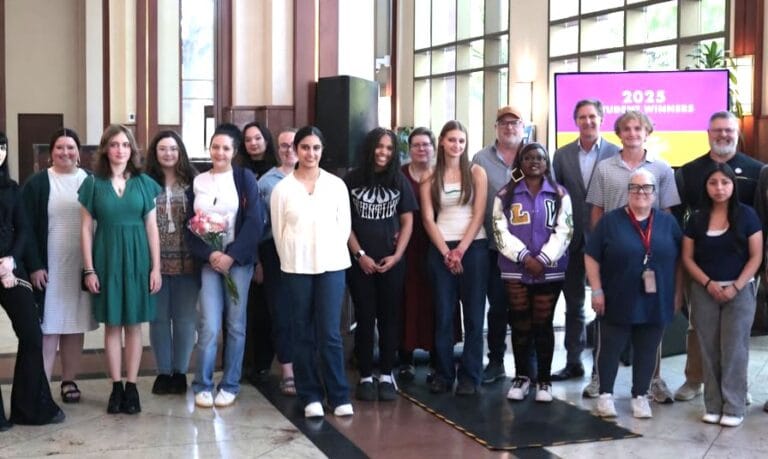
For the seventh year, EPB’s ArtSpark Goes to School program continues to highlight the artistic talents of local high school students while beautifying Chattanooga and Hamilton County’s public spaces. Student artwork inspired by the theme “What Energizes You?” will soon be unveiled on 10 utility boxes across the city.

With the completion of this year’s program, student artwork will be displayed on 68 utility boxes. Winners represent schools from across Hamilton County:

Amelia Watkins, Hixson High School; Colette “Cole” Bischof, Chattanooga High School Center for Creative Arts;

Delilah Allen, East Ridge High School; Honey McCullough, Hixson High School; Karen Ramos Perez, The Howard School; Lina Jameel, Chattanooga School for the Liberal Arts; London Woods, Chattanooga School for the Arts & Sciences; Mac Campbell, Signal Mountain Middle/High School; Meg Finger, Chattanooga High School Center for Creative Arts; Olivia Sutherland, Sale Creek Middle/High School

Runners-up were also recognized during the program, reflecting the deep talent of this year’s students:

Amelia Shipley, Sale Creek Middle/High School; Gianna Baldino, Chattanooga School for the Liberal Arts; Sadie Ham, Chattanooga School for the Arts & Sciences; Sara Yoshida, Chattanooga School for the Liberal Arts

“Chattanooga’s artistic culture is an integral part of who we are as a community, and I’m proud that EPB continues to support it with this innovative program,” said Mayor Tim Kelly. “Using student art to beautify our infrastructure in such a public way is a simple, brilliant way to promote these promising young Chattanooga artists.”

The program, which engages students through a STEAM-based curriculum (Science, Technology, Engineering, Arts, and Mathematics), helps students combine artistic expression with technical knowledge.

Dr. Justin Robertson, Hamilton County Schools superintendent, emphasized the value of the student-centered initiative, saying, “ArtSpark Goes to School provides our students with a unique opportunity to apply their creativity and innovation beyond the walls of the classroom. Seeing their artwork displayed in our communities provides a sense of connection and inspiration as they continue their education.”

River City Company’s original program to cover utility boxes in artwork inspired ArtSpark Goes to School.  Arts-Based Collaborative developed the curriculum schools used for the program.

Elizabeth Hammitt, EPB director of Residential Energy and Environmental Solutions, shared her excitement about the ongoing success of ArtSpark: “ArtSpark has become more than just a program. It’s a way to celebrate the creativity cultivated in our schools and transform our public spaces. We’re proud to be part of this effort that fosters both STEAM education and community engagement.” EPB works with a third party to create and apply vinyl wraps from the winning student designs.

Erlanger Accepting Applications for Annual VolunTEENs 2025 Summer Program

CHATTANOOGA, TENN. – Erlanger VolunTEENs program is now accepting applications for the 2025 summer program. High school students ages 15 to 18 interested in a career in healthcare are encouraged to apply.

This six-week program will allow high school students to directly support Erlanger staff and patients. Students will gain hands-on experience and exposure to the day-to-day workings of healthcare in both clinical and non-clinical departments.  The program is available at six Erlanger locations: Baroness, East, North, Sequatchie, Bledsoe, and Western Carolina.

“We are thrilled to announce the 2025 Erlanger VolunTEEN summer program,” said Callie Vandemark, Service Learning Coordinator. “Come join us at the region’s only teaching hospital and gain valuable hospital experience while compassionately caring for our community and learning about the many rewarding careers in healthcare.”

The VolunTEENs program runs every summer for six weeks in June and July. All applicants must apply in person during one of the scheduled 30-minute interviews. Interviews will be held in Chattanooga, Murphy, NC, Murphy, Bledsoe and Sequatchie from April 2 through April 24.

The program is open to students who are rising sophomores through rising college freshmen. Participants must be 15 years old by June 1, 2025. To learn more about the VolunTEEN program, visit erlanger.org/volunteering.

Demetrus Coonrod Leaves Chattanooga City Council After Historic and Controversial Tenure

0

After two terms of service marked by advocacy for underserved communities, Demetrus Coonrod completed her final day as Chattanooga’s District 9 City Councilwoman on April 8, closing a compelling chapter in local politics shaped by personal redemption and public service.

“It has been one of the greatest honors of my life to serve as the City Council representative for District 9–with a deep commitment to uplifting and advocating for all of Chattanooga,” Coonrod stated in her farewell address.

First elected on April 11, 2017, and sworn in for a second term on April 19, 2021, Coonrod’s path to public office was unconventional and fraught with obstacles. Her journey from federal incarceration to the council chambers represents one of the more profound stories of rehabilitation in Tennessee politics.

“I had experienced some challenges on the way to becoming a council person,” Coonrod has stated. “I experienced a little time in prison and then advocated for the things that are most important in my community.”

Coonrod’s journey to the Chattanooga City Council was marked by early hardship, including a childhood shaped by parental addiction and housing instability. Following an 84-month federal prison sentence for conspiracy to commit armed robberies–a conviction she says resulted from lending her car to a friend who used it in a crime–and a period of homelessness, Coonrod embarked on a path of transformation.

Prior to her 2017 election, she established herself as a franchise owner for a JanPro cleaning service and served as vice chair of the Hamilton County Democratic Party.

In 2022, Coonrod achieved another milestone when she completed her bachelor’s degree in sociology with a minor in criminal justice from the University of Tennessee at Chattanooga–an educational journey she began in 2009 but temporarily halted in 2015 due to family responsibilities.

“It was a journey, trying to juggle being a parent, a grandma raising my 6-year-old granddaughter, serving on the council. It took a lot of sleepless nights,” she reflected at the time of her graduation.

Last year, Coonrod faced controversy when her residency qualifications were challenged, but Hamilton County Circuit Court Judge Michael Dumitru dismissed the case, ordering the city to reimburse her attorney’s fees. Shortly after that legal victory, Coonrod mounted an unsuccessful bid for the District 28 seat in the Tennessee House, losing to incumbent Rep. Hakeem Yusuf–whom she had previously defeated in her first council race.

Coonrod has been transparent about her past, publishing a memoir titled Prison To Purpose: A Past That Shaped My Future in 2021. The book chronicles her journey from incarceration to public service, detailing how her experiences inform her advocacy work for justice reform and victims’ rights.

In her farewell message, Coonrod urged continued civic engagement from her former constituents: “As I close this chapter, I ask you don’t stop showing up. Show up for your block. Show up at the polls. Show up when it’s uncomfortable. Because change doesn’t just happen, you make it happen.”

As she leaves office, perhaps the most remarkable aspect of Coonrod’s story remains that the same federal judge who sentenced her to prison, Curtis Collier, later swore her in as an elected official.

“From 2017 to 2025, I didn’t just sit on City Council–I worked,” she said. “I led. I fought. I delivered. Through a global pandemic, civil unrest, and daily challenges, I stood firm for the people who trusted me with this seat. We didn’t wait for change–we made it. And this city is stronger because of it.”

She added, “Thank you, Chattanooga, for riding with me. For trusting me. For challenging me. For believing in what we could build together. We made history–real, raw, community-powered history. And even though my term is ending, my work isn’t done. I’m still here. I’m still us.”

Ron Elliott won the District 9 election on March 4 by a significant majority, succeeding Coonrod in representing the East Chattanooga, Eastdale, Glenwood, Missionary Ridge, and Ridgedale communities.

SIGMAS HOST GOLF Tourney for SCHOLARSHIPS!

Chattanooga, TN – The Phi Beta Sigma Fraternity, Inc. Epsilon Xi Sigma Chapter is proud to host the Eddy L. Echols, Sr. Golf Classic on Friday, June 6, 2025 at Brown Acres Golf Course. See our advertisement on page 03 for more information about this scholarship fund raising effort as well as your oppportunity to highlight your golfing skills and possibly win $10,000 for making a “Hole in One”!

A Team of four is $600 and $150 for Individuals. There will be prizes for First, Second, and Third place Teams, additional prizes, and once again,…an awesome opportunity for the $10,000 Hole-in-One!! It will be an afternoon of fun and great golfing!

Our Honorary Chair and Celerity guest is Chattanooga’s own, Mariah Huq. Mariah is a global and community activitst and successful TV Mogul/Bravo. The Chattanoga native who currently resides in Atlanta with her family is excited to assist our fraternity and community effort to raise scholarship funds for Chattanooga high school students.

Phi Beta Sigma Fraternity, Inc. Epsilon Xi Sigma members are equally proud to host our first Eddy L. Echols, Sr. Golf Classic in honor of our Brother Eddy L. Echols, Sr. Known for his unwavering commitment to his community and his profound faith, the life of Mr. Eddy L. Echols, Sr. is a testament to the values of compassion, dedication, and resilience. Brother Eddy L. Echols is a charter member of Epsilon Xi Sigma Chapter of Phi Beta Sigma Chapter in Chattanooga. Brother Echols was the third president of Epsilon Xi Sigma Chapter of Phi Beta Sigma and served as president from 1977 through 1982. He also served as the chapter Treasurer for many years.

Brother Echols is a Life member of Phi Beta Sigma Fraternity, Inc., Life member of the NAACP, and is a member of The Greater Tucker Missionary Baptist Church of Chattanooga, where he serves as a deacon.

After graduating with a degree in education from Knoxville College, Mr. Echols relocated and taught in the Chattanooga school system at Orchard Knob Junior High School. While teaching at Orchard Knob Junior High School, Mr. Echols received his Master of Education degree from the University of Tennessee at Chattanooga. After teaching at Orchard Knob Junior High School, Mr. Echols accepted a job as the Director of The Chattanooga Youth Corps. After serving in that capacity for several years, Mr. Echols served as Director of Pre-Vocational Component Concentration Employment Program of Chattanooga; and later as Director of Adult Education and Extended Services. Before Mr. Echols retired, he served as Director of Employee Relations at The Chattanooga Public School System. Mr. Echols was appointed to The Erlanger Board of Trustees in Chattanooga in 1982 and became the first person of color to serve on the Board.

Despite his numerous commitments, Brother Echols always makes time for his family. He was a devoted husband to his late wife, Mrs. Barbara Echols, and still a

devoted father to his son, Doctor Eddy Echols, Jr. and daughter Yolanda Echols Mitchell who is practicing Law in Chattanooga.

And, YES! you will have an opportunity to meet Brother Echols, and Honorary Celebrity Chair, Mariah Huq at the very first Eddy L. Echols, Sr. Golf Classic where we will raise funds for scholarships. Both individuals will be available for photos, discussions, and collecting donations for scholarships for area high school students.

Contact Tournament Coordinators for additional information:

Bill Brooks 423/504-3704

Keatha Richardson 423/463-9134

Avery Smith 423/240-6144