


NASCAR History–The First Black Man Wins at Indianapolis

The Brickyard 400 has a new place in history.
The historic oval in Indianapolis featured an exciting finish after a rain delay and two overtimes. The race’s leader, whose team held their breath and managed precious fuel rather than lose time with a pit stop, added even more history to the storied track.
Darrell “Bubba” Wallace, Jr., who drives number 23 for the team of Michael Jordan (yes, that Michael Jordan) and Denny Hamlin, became NASCAR’s only full-time black driver in 2018. The Toyota Camry had circled the 2.5 mile track for 3 hours, twenty-two minutes, sixteen seconds, and 316/1000th of a second before the checkered flag waved above the multi-colored souped-up sedan.
The 31 year-old Wallace who was born in Mobile, Alabama, had a love of racing as a young man with an interest and role in racing since age 9 years young when he began racing go-karts. Wallace’s dad, Darrell Wallace, Sr., shared his son’s desire to be the first Black man in the NASCAR Hall of Fame even when he first entered the profession of driving at eighteen.
Born from a multiracial marriage, Bubba’s namesake, Darrel, Sr. is white and his mother, Desiree, is African American, a former University of Tennessee track athlete, and social worker. His older sister gave him his nickname at birth after struggling to pronounce “brother.”
Looking back at a first interview, given the acknowledgment of the groundbreaking role model Wallace could become, in 2012 when he was 18, his response was respectful but reflected his youth. Asked how it felt to carry the torch of African Americans in racing, Bubba replied, “It’s a responsibility. But I kind of try to keep it in the back of my head and not worry about it too much and do what I love.”
Seconds matter. Even thousandths of a second matter! The 0.222-second margin between Bubba Wallace’s Camry to Kyle Larson, the 2024 Brickyard 400 Champion, snapped Wallace’s 110-race winless streak.
“Oh, my gosh, I’m just so proud of this team! That adrenaline rush is crazy, ’cause I’m coming off that right now–and I’m worn out,” declared the emotional 31-year-old who hugged his wife then hoisted up his 10-month-old son, Becks, before the cheering grandstand.
Bubba Wallace, Jr. dared to race, despite being the first of his race, and is running with the winners!
Honoring the Gift of Life: National Minority Donor Awareness Month


Each August, National Minority Donor Awareness Month highlights the urgent need for organ, eye and tissue donors in multicultural communities and celebrates the lives saved through organ donation. Tennessee Donor Services (TDS) is proud to take part in this national observance by raising awareness, encouraging conversations, and honoring the donors and families who make the gift of life possible.
Across the United States, 60% of the people waiting for a lifesaving transplant are members of multicultural communities, with 28% of those identifying as Black. In Tennessee, that percentage is even higher: 45% of patients waiting are Black.
Organ and tissue donation saves lives every day. Yet, because of the increased prevalence of conditions like diabetes and high blood pressure, which can lead to end-stage renal disease and the need for kidney transplants, people of color are disproportionately represented on the waitlist. In fact, African Americans are three times more likely to suffer from kidney failure than white Americans.
Transplant success rates improve when organs are matched between people of the same race and ethnic background. This makes increasing donor registrations in minority communities a matter of necessity and means to saving more lives.
Adam Cowan, a kidney recipient, says his transplant not only saved his life, but gave him a better quality of life. “Dialysis was no joke; I would compare it to being tethered to a leash. I was limited in what I could eat and drink, travel was limited, and treatment days were a bust.”
He says he now has freedom to live because someone chose to donate and give him the gift of life. “Now that I have started my second-year post transplant, I am excited to share my journey. I travel the state as a patient advocate for dialysis patients and people in my community call me with questions and advice, I was finally able to get certification as a Donate Life Ambassador and I can’t wait to reach more people,” said Cowan.
Tennessee Donor Services works year-round to build trust and strengthen relationships in communities of color, listening to community members’ experiences, sharing facts, answering questions, and encouraging informed decisions about donation.
Registering as a donor is a powerful act of compassion and a symbol of hope. It’s a decision that can save and heal lives, giving others the chance to spend more time with their families, follow their dreams, and make lasting memories.
This National Minority Donor Awareness Month, Tennessee Donor Services invites everyone to learn more, talk with their loved ones, and consider joining the organ and tissue donor registry. You can sign up at BeTheGiftToday.com or when renewing your driver’s license or state ID.
As the donor registry becomes more diverse, more lives will be saved.
Black Church and Black Press Unite to Empower Black America

Nashville, TN — In a historic announcement, a coalition of leading Black faith organizations and the National Newspaper Publishers Association (NNPA) unveiled a strategic partnership and plan to confront systemic disparities impacting African American communities nationwide.
Dr. Boise Kimber, President of the National Baptist Convention, USA, Inc.; Bishop J. Drew Sheard, Pre- siding Bishop of the Church of God in Christ (COGIC); Dr. Samuel Tolbert, President of the National Baptist Convention of America; and Dr. Benjamin F. Chavis Jr., veteran civil rights leader and President of the NNPA, are leading this collaboration between the Black church and Black Media.
“There is strength in unity. There is power in our collective voice. There is hope in our actions,” said Dr. Boise Kimber.
For generations, African American communities have endured deep-rooted inequities in healthcare, education, criminal justice, economic opportunity, and access to capital. These challenges are not new. The coalition intends to put an end to fragmented responses and speak with one clear, concise and consolidated voice.
The Black Church and Black Media, two institutions that have long anchored and uplifted Black America, are now coming together with renewed focus and purpose.
This partnership is grounded in shared values, spiritual conviction, cultural empowerment, and an unwavering commitment to truth, justice, and progress.
The coalition will focus on five core initiatives:
• Shaping a unified national narrative that challenges harmful stereotypes and amplifies stories of Black resilience, excellence, and innovation
• Mobilizing faith-based and media networks to address community disparities through solutions-focused advocacy and outreach
• Holding corporate America accountable by demanding responsible reinvestment in Black communities through sustainable partnerships, economic equity, and community-led development
• Empowering the next generation by reclaiming our narratives and creating new pathways for education, leadership, and entrepreneurship
• Holding elected officials accountable by spotlighting those whose policies do not align with the interests of the Black community. To earn our votes, they must heed our voices.
“This is more than a symbolic gesture; it is a strategic and spiritual alignment.” When the Black Church and Black Media speak as one, we can ignite a movement. When we organize as one, we can shift the narrative. When we act as one, we cannot be ignored or denied,” the coalition stated.
The coalition invites all stakeholders, faith leaders, media professionals, community organizers, educators, business leaders, and concerned citizens to join this movement for unity, justice, and progress.
Coalition Leaders,
Sens. Blackburn, Warnock introduce CREATE Act to provide tax relief to music creators
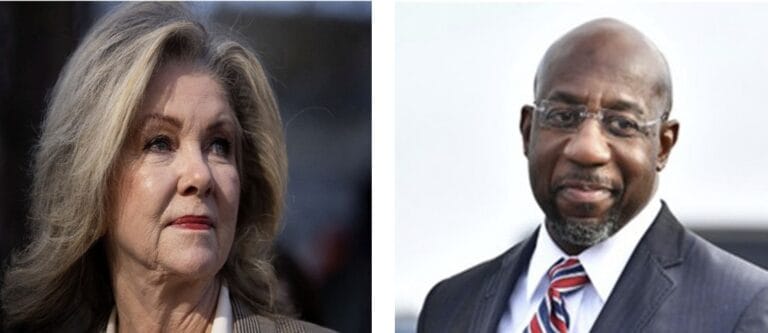
(Compiled) – U.S. Senator Marsha Blackburn (R-TN) and U.S. Senator Raphael Warnock (D-GA) are usually on opposite sides of the aisle but they are teaming up on a bill that would give the entertainment industry some tax relief.
The Creative Relief and Expensing for Audio and Television Enterprises Act, dubbed CREATE, would extend a $150,000 tax credit for production expenses incurred by entertainers, singers and songwriters through 2030. The credit is set to expire at the end of the year with an extension from Congress.
“Thousands of singers and songwriters call Tennessee home, and they should be able to write off recording production expenses that are critical to their work,” said Blackburn a Tennessee Republican. “The CREATE Act would support creators and keep America’s music industry strong by ensuring they can still count on this tax relief.”
Georgia has become a hub for filming television series and movies. More than 550 productions were made in Georgia in the past three years, according to the Georgia Department of Economic Development. During fiscal year 2025, which ended June 30, film and television productions spent $2.3 billion.
“From productions like The Color Purple, to The Hunger Games, and the Marvel Cinematic Universe, Georgia has become a national leader in the arts and entertainment industry,” said Warnock, a Georgia Democrat. “Our continued investments in incentivizing domestic production for film, television, and music benefit our culture and our economy.”
The Recording Industry Association of America, the American Association of Independent Music and the Recording Academy said they back the bill.
“Without Congressional action, the HITS Act and all of Section 181 will expire this year, unnecessarily putting tens of thousands creative community jobs at risk and dragging down one of America’s strongest export sectors,” said Mitch Glazier, chairman and CEO of the association.
Tennessee Treasury returned record-breaking $125 million in Unclaimed Property in FY25, doubled number of claims paid

The Tennessee Department of Treasury, Unclaimed Property Division returned a record $125 million of missing cash money to the rightful owners or their heirs during fiscal year 2025. This milestone is double the $62.5 million paid out last year, and exceeds the previous record of $68.7 million by more than 80%.
The Division also processed an unprecedented number of individual claims. From July 1, 2024, to June 30, 2025, over 168,000 claims were paid, more than doubling the previous high of 78,305 in FY 2024.
Unclaimed property is money that has been turned over to the State by businesses and organizations unable to locate the rightful owners, such as utility refunds, uncashed paychecks, credit balances for overpayments, rental deposit refunds, gift certificates, securities, and abandoned bank accounts. The Unclaimed Property program, authorized by the Tennessee General Assembly, is a consumer protection program of the Department of Treasury that works to reunite this missing money with its rightful owner.
“This fiscal year has been extraordinary for our Unclaimed Property Division, and it highlights the dedication and hard work of our team, and the innovative methods they have found to get more missing money back into Tennesseans’ bank accounts,” State Treasurer David H. Lillard, Jr. said. “Achieving these historic benchmarks is truly rewarding and a testament to our unwavering commitment to reuniting the rightful owners with their lost funds.”
Tennesseans will soon have a chance to check for missing money in-person. The Unclaimed Property Division has added one of its largest outreach events ever to this year’s schedule. We’ll have a tent at The University of Tennessee, Knoxville football game against East Tennessee State University (ETSU) on Saturday, Sept. 6, in Vol Village tailgate area outside Neyland Stadium.
It only takes a minute to search your name, and Tennesseans have located hundreds, and even thousands of dollars in missing money at past events. With millions of dollars available to claim, anyone attending the game is encouraged to stop by the Unclaimed Property tent to search ClaimItTN.gov for missing money. If property is found, the owner can file a claim on the spot. About 70% of claims are paid in as little as two weeks, on average.
• What: Unclaimed Property Division representatives will be on-hand at the UT vs. ETSU game to help reunite Tennesseans with their missing money, and assist with the claims process.
• When: Noon – 3:30 p.m. ET (Game starts at 3:30 p.m. ET) Saturday, Sept. 6, 2025
• Where: Vol Village public tailgate area at Neyland Stadium, located at Humanities Plaza on Volunteer Boulevard, across from the Torchbearer statue.
Outreach events are among the many methods the Division uses to locate owners of unclaimed property, including mailing letters to the address provided when the property was turned over from the business (holder), sending letters to employers of potential claimants whose Social Security Number has been matched with records from the Tennessee Department of Labor and Workforce Development, and automatically sending missing funds to rightful owners the Division has been able to independently verify. On average, the Unclaimed Property Division sends hundreds of thousands of letters each year to potential claimants. If you have received a letter, you can verify the information by searching the portal at ClaimItTN.gov.
Good Neighbors, Inc. Celebrates 73 Years of Service: “Looking Back with Gratitude, Moving Forward in Faith”
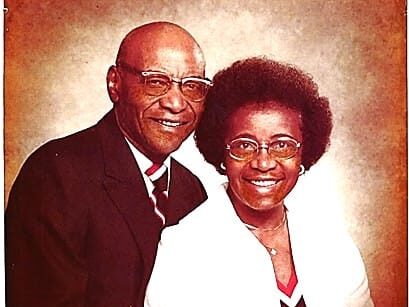

In the heart of Chattanooga, a legacy of compassion and community care continues to thrive. Good Neighbors, Incorporated—an organization born from a simple act of kindness—will celebrate 73 years of service on August 23, 2025, at Greater Tucker Missionary Baptist Church, with doors opening at 3 PM. The theme, “Looking Back with Gratitude, Moving Forward in Faith,” beautifully captures the spirit of this milestone.
This celebration is free and open to the public, and all are encouraged to attend—especially those who have ever participated, volunteered, had relatives involved, or received help from Good Neighbors. Your presence is a powerful way to honor the legacy and ensure its future.
A Humble Beginning with a Powerful Impact – The story of Good Neighbors began in late fall of 1951, when Mrs. Whiteside learned of a heartbreaking situation: children in a nearby neighborhood were so hungry that others mocked them by throwing bread on the ground, watching them scramble to eat. Deeply moved, she rallied her church’s missionary society, neighbors, and friends to provide food and clothing. Their generosity not only helped that family but sparked a movement.
Motivated by this experience, Mr. and Mrs. Whiteside formally organized the Good Neighbors Club on January 10, 1952. Operating from their home, they collected and distributed essentials to those in need. Support poured in from local churches, and Fred Webb of WMFS Radio (now WNOO) amplified their mission through a weekly public service broadcast, building widespread community interest.
No Government Funding—Just Faith and Generosity – True to Mr. Whiteside’s personal philosophy, Good Neighbors never sought government funding. Instead, it relied on private donations and grassroots fundraising. By 1959, the organization had grown so significantly that the State of Tennessee granted it a charter, officially recognizing it as a tax-exempt charitable organization.
This commitment to independence and faith-driven service has remained a cornerstone of Good Neighbors’ identity.
Building a Legacy: Whiteside Faith Manor & New Testament Church
Two major milestones stand out in the organization’s rich history:
• September 1977 marked the groundbreaking of Whiteside Faith Manor, a senior residential facility with 117 apartments, dedicated in April 1979. It remains a model for senior housing in the region.
• On May 3, 1979, the Good Neighbors New Testament Church opened its doors next to the Manor. A non-denominational church, it continues to reflect the inclusive and faith-filled mission of the organization.
These institutions are physical testaments to the enduring vision of Mr. and Mrs. Whiteside—places where dignity, community, and care are lived out daily.
Serving Families with Swift, Direct Assistance – Today, Good Neighbors supports 60 to 75 households annually, delivering swift, direct assistance when it’s needed most. Whether it’s food, clothing, or emergency aid, the organization remains a lifeline for families facing hardship.
This work is made possible by the continued generosity of donors, volunteers, and community partners who believe in the mission and want to see it thrive for generations to come.
Fundraising for the Future: $7,300 Goal, $14,600 Stretch – To mark the 73rd anniversary and sustain its vital programs, Good Neighbors has launched a fundraising campaign with a goal of $7,300 and a stretch goal of $14,600. These funds will support ongoing outreach and ensure the organization can continue responding quickly and compassionately to those in need.
Tax-deductible donations can be made online at www.goodneighborschattanooga.org. Every dollar helps extend the reach of this mission and deepen its impact.
A Personal Invitation to the Community – This celebration isn’t just about honoring the past—it’s about recognizing the people who made it possible. If you’ve ever: **Received help from Good Neighbors; **Volunteered your time or resources; **Had a relative who was involved; **Been inspired by their work; …then this event is for you.
Your story is part of the Good Neighbors legacy. Your presence at the anniversary celebration is a way to say “Thank You,” to reconnect with others who share your experience, and to help shape the future of this beloved organization.
Join Us on August 23rd! – Let’s come together to celebrate 73 years of faith, service, and community care. The event will be held at: Greater Tucker Missionary Baptist Church. Doors open at 3 PM and the event is Free and Open to the Public.
Bring your memories, your gratitude, and your hope for the future. Let’s honor the vision of Mr. and Mrs. Whiteside and recommit ourselves to being good neighbors in every sense of the word.
Rev. William Terry Ladd III Appointed to U.S. Civil Rights Commission’s TN Advisory Committee

A local faith leader has been appointed to one of the nation’s most critical civil rights advisory roles.
The Rev. Dr. William Terry Ladd III, senior pastor of First Baptist Church East 8th Street, has been named one of 14 new members of the Tennessee State Advisory Committee to the U.S. Commission on Civil Rights. The appointments were approved Friday, July 18, during a business meeting of the Commission in Washington, D.C.
In response to the announcement, Chattanooga Mayor Tim Kelly offered his best wishes, saying, “Congratulations to Pastor William Terry Ladd III. I know you’ll represent Chattanooga with distinction.”
Dr. Ladd joins the committee at a time when conversations around diversity, equity, and inclusion (DEI) are at the center of national debate. Despite some public skepticism and political pushback against DEI efforts, Dr. Ladd says the continuing existence of racial and social disparities underscores the need for such work.
“The thing that’s really pushing the anti-DEI right now is the notion that we live in a ‘post-racial society.’ But the reality is we still have disparities and we still have discrimination,” Dr. Ladd noted. “Whether we want to accept the truth about that or not, they still exist.”
The Tennessee Advisory Committee–one of 56 state and territory-based panels under the U.S. Civil Rights Commission–serves as a nonpartisan body that examines civil rights concerns within the state and makes policy recommendations. Members serve four-year, voluntary terms and provide input on a wide range of issues including voting rights, education, disability access, and more.
The most recent Tennessee committee’s term expired in June 2024, leaving the seats vacant until now. The newly appointed members bring together voices from legal, academic, religious, and civic sectors.
Dr. Ladd, a Knoxville native and respected pastor, teacher, and community leader, has led First Baptist Church East 8th Street since 2012. A historic congregation founded by Union Army veterans in 1866, the church remains a pillar of faith and advocacy in Chattanooga’s African-American community.
In reflecting on his decision to apply for the committee, Dr. Ladd said it was a matter of faith and civic duty.
“I debated applying and I prayed about the decision,” he said. “But as long as discrimination and disparities exist, we still need the Civil Rights Act of 1957, we need the commission, and we need the advisory committees. That’s what compels me to serve.”
Joining Dr. Ladd on the committee are: Brandon Smith (Chair), Nicholas Barry, Gale Jones Carson, Larry Crain, Luke Cymbal, Chicoya Smith Gallman, Kathleen Harms, William Morgan, Denise Smith-Martinez, Kyontha Nelson, Muriel Malone Nolen, Kymberly Whitaker, and Stelle Marie Yarbrough.
“I’m looking forward to working with individuals from across the aisle, from different political ideologies, ethnicities, and faith traditions,” Dr. Ladd said. “It’s an opportunity to speak for those who have been and continue to be discriminated against.”
Dr. Ladd’s extensive background in theology and social justice advocacy uniquely positions him for this role. A graduate of Morehouse College and McAfee School of Theology at Mercer University, he holds a Doctor of Ministry degree from McCormick Theological Seminary. He’s also been honored by Morehouse College’s Martin Luther King Jr. International Chapel and has served in leadership roles across multiple church and civic organizations.
He currently participates in a national peer-preaching initiative and volunteers as a mentor with Big Brothers Big Sisters of Chattanooga. He is a member of the NAACP and Alpha Phi Alpha Fraternity, Inc.
While the committee’s recommendations are not binding, they are submitted to the national commission and can influence policymaking at the federal, state, and local levels.
“Our job is to make sure that people’s rights are not violated,” Dr. Ladd said. “It really is an honor to serve.”
For more information about the U.S. Commission on Civil Rights and its state advisory committees, visit www.usccr.gov.
New 729 Area Code Coming to Eastern Tennessee: What Residents Need to Know

A new area code is coming to eastern Tennessee.
Due to a growing demand for new phone numbers, the Tennessee Public Utility Commission has approved the introduction of the 729 area code in the existing 423 area code region. This region includes communities such as Chattanooga, Bristol, Johnson City, Kingsport, and many surrounding areas. The addition–known as an “area code overlay”–will not replace the current 423 area code but will serve the same geographic area alongside it.
Starting August 5, 10-digit dialing will become mandatory for all local calls within the 423 area. Any calls placed using only 7 digits after this date will not be completed and will instead be routed to a recorded announcement reminding callers to include the area code.
Then, on September 5, new telephone lines or services may be assigned numbers with the new 729 area code. From that point forward, both the 423 and 729 area codes will co-exist in the region, and anyone receiving a 729 number will also be required to dial 10 digits for all local calls.
This area code overlay will not affect the pricing of phone calls, the coverage area, or any existing rates and services. What is considered a local call now will remain a local call after the overlay takes effect. Additionally, access to emergency and information services will not change–residents can still dial just three digits to reach services such as 911, 988, 211, 311, 411, 511, 611, 711, and 811, where available.
To prepare for the transition, residents should begin identifying their telephone number as a full 10-digit number, including the area code, when providing it to friends, family, customers, or business associates. All services and devices that are programmed to dial only 7-digit numbers–such as life-safety systems, medical monitoring devices, fire and burglar alarms, security gates, cordless and mobile phones, fax machines, Internet dial-up numbers, speed dialers, voicemail services, and call forwarding settings–should be reprogrammed to include the area code.
While many modern systems already operate on 10-digit dialing by default, older equipment may still use 7-digit dialing. Customers are encouraged to contact their medical alert or alarm service providers to confirm whether reprogramming is necessary. Any needed updates to these systems must be completed by Aug. 5.
Businesses and individuals should also update materials such as websites, printed stationery, checks, advertisements, personal and pet ID tags, and other items to reflect the area code in their phone numbers.
For more information about the 423/729 area code overlay and how to prepare, visit the Tennessee Public Utility Commission’s website at www.tn.gov/tpuc/news.html or contact your local telephone service provider.
The lines in our lives!
So here I was in a line back in 2021 with scores of others, all masked because of COVID, at a large airport when pent up tensions exploded. The reason? Well, one traveler broke protocol and ducked under the ropes that kept us in line and elbowed her way closer to the blue-clad TSA passport/boarding pass checkers. That’s when things quickly went south.
“Hey, lady, you can’t cut in front of all of us who’ve been waiting in line,” shouted a silver-haired gentleman standing behind me. A chorus of “yeah, you’re right,” “who do you think you are,” “you’re a jerk,” and barely audible expletives followed. Unmoved, the woman never looked back at all the angry eyes on her back and left us helplessly annoyed.
Again, that was four years ago.
But oddly, “lines” and the implicit messages that emanate from standing in line (“queuing up”) have been on my mind a lot lately. And when you add gender, cultural differences and one’s personal space preference (proxemics) into the mix, things can really get dicey.
Kinda weird, huh? Well, let me explain.
You see, near the end of my most recent column, “Why people vote against their self-interest,” I posed several pointed questions aimed purposefully and pointedly at men. And here it is over a week later and I remain intrigued about the realities of how lines permeate our daily life, sometimes in ways we’ve never considered. Here’s what I wrote:
“Why are lines with women waiting to get into restrooms in airports, convention centers, stadiums, etc., often twice and sometimes three or four times long as lines with men? And men, when you exit those restrooms what thoughts go through your mind when you look into the faces of those women you passed by on the way in? By comparison, what goes through your mind when you’re confronted by the undeniable realties these days of the horrific treatment of women?
Now unrelated to the aforementioned, my line intrigue was further deepened as I watched on TV a fist throwing throw down between two beefy men at a Walmart store that happened after one of them violated a “jumping in line” cultural no-no in the United States to get to the register. And more to the extreme, we’re left shaking our heads while watching the evening news and seeing road rage – and even shots fired – when someone jumps the line and cuts someone off on a busy highway.
So, let’s ponder the way lines are ingrained in our expectations, communications, consciousness and how they often manifest in our daily lives, shall we!
For starters, we cross lines, blur lines, ignore lines and challenge lines, don’t we? “Line our pockets,” “line up our ducks” are common idioms frequently found in the way we communicate. Admit it or not, we draw a line when it comes to our personal space preferences and otherwise how we expect to be treated by others, do we not?
“Drawing a line in the sand,” is another idiom that appears frequently in Bob Woodward’s, “War,” a superbly written book about the leadup to the war between Russia and Ukraine, a metaphorical (sometimes literal) point beyond which no further advance from Russia would be tolerated. I’ll add that the president of the United States “drew a line in the sand” with threats to impose stiff tariffs on imports from India, Canada and other nations with a deadline of August 1st for non-compliance.
Now to make this personal, I’ll share an example of a painful – literally- lesson I learned about drawing a line when I dared someone to cross a line. You see, decades ago I drew a line with a piece of chalk on a sidewalk in my neighborhood and dared an unfamiliar kid to cross it. Well, he took me up on my offer and punched me on my nose before speeding off on his bike. Yep, he gave this knucklehead a painful, eh, “knuckle sandwich” that’s burnished in his memory to this day.
Back to restroom lines, agree or not, long restroom lines for women versus shorter ones for men convey inequality. Now ask yourself if the roles were reversed how long do you figure men would put up with having to stand in long lines back-to-back with other men while women are in and out of much shorter lines smiling at those annoyed men? My answer? They wouldn’t! You know it and I know it,
Switching gears, let’s take this lining up narrative outside the United States to see how it plays out in other countries.
During a brief stay in Barcelona, Spain years ago I located a post office nearby and went there to mail a package back home. On arrival I was taken aback by seeing that there were droves of people there either to pick up or mail packages but there were no lines. To the contrary there was lots of pushing and shoving and cutting each other off as folks jockeyed for position to get to the main desk. Unwilling to join in the fray (plus memories of that awful bloody nose administered to me back then) I decided that mailing that package wasn’t all that important after all.
Asked a researcher, does “waiting in line” need translation, or do all cultures view a wait as undesirable? It turns out there’re cultural nuances to queueing, according to the University of Virginia Professor Elliott N. Weiss and his colleagues. His team published observations from years of travel and research in “Line, Line, Everywhere a Line: Cultural Considerations for Waiting-Line Managers” in Business Horizons. (I ordered the publication to attach it to my passport for a trip to Argentina and Uruguay later this year).
Across the globe, the researchers confirm, people wait for food and transportation, to make purchases, to get services, or to have experiences. “But how they view the wait, what the “rules” are, and what they expect in terms of accommodations vary widely. In some countries, people expect to mill around, jockeying for position and clamoring for attention, while in others, finding chaos instead of an orderly queue would be off-putting.”
In the U.S., as pointed out at the outset of this column, the unspoken rules about lines are so strong that some react angrily to line-cutters. So, before you book your next flight abroad understand that neat, orderly lines and personal space preferences are not the norm everywhere; a lesson I learned after attempting to board a jam-packed train in Shanghai, where people self-advocated by pushing toward the front and even smiled at me as they muscled by me.
And once I was pushed – maybe shoved is a better word- from behind into that train, bodies were pressed against other bodies in a way that tested the effectiveness of my Listerine mouthwash, Old Spice deodorant and recently purchased cologne from a street vendor.
Oh yes and of note, to deal with cultural differences in China and other places, Disney and other popular theme parks have created narrow, single-person queue lanes so that people could not cut ahead of each other.
In the end, if I were to suggest what I want you to conclude from and do about this global zig zag column on lines and lining up, that advice would be to exercise genuine curiosity, tolerance, patience – and above all common sense – as you learn and unlearn.
And remember this; coming from that years ago experience in my old neighborhood, a broken nose – or anything worse- just ain’t worth the hassle that can come with a trip to the local hospital (or funeral home), let alone the avoidable humiliation that can come with line protocol conundrums.
Trust me… and the nose on my face!
Terry Howard is an award-winning writer, a contributing writer with the Chattanooga News Chronicle, The American Diversity Report, The Douglas County Sentinel, Blackmarket.com, recipient of the Dr. Martin Luther King, Jr. Leadership Award, and third place winner of the Georgia Press Award.