Monday, October 12, 2026
Advertisement
Home Blog Page 29

Growth vs. Flooding: Chattanooga Confronts the Cost of Development

0

Chattanooga is growing in popularity as a place to live. People move here from other states because of affordability, beauty, and freedom to live less hindered from bureaucracy–at least for now–than other states. Property tax increases are proposed in the City of Chattanooga, while there is expanded housing to meet demands of new residents of Chattanooga and Hamilton County.

The state of growth in our area means more development. We’re seeing it. We’ve been living through it.

As weather events occur–some of which include torrential downpours while others are just days of rain on a steady basis–the fact remains, water has to go somewhere. And this is where commonsense seems to have been silenced in fear, despite being readily available and pretty obvious.

Let’s look at a few facts, starting with the physical geography and topography of the area. The landmass is cut by the beauty of the Tennessee River. What a blessing of abundance and God’s resources. The rising mountains form a caressing bowl of beauty holding the carved up land and this majestic river. Chattanooga is unrivaled. What a blessing!

That makes all land in the valley part of the tributaries and watershed that feed into the river. Those are facts whether you’re Republican, Democrat, Independent, Black, White, Hispanic, or any ethnicity or of socio-economic standing.

The rain has to go somewhere.

Debates are ongoing about Hamilton County’s “Plan Hamilton,” which is aimed to be a planned growth roadmap. Existing neighbors and communities debate the obvious ongoing development that is changing the topography, which creates a different flow of water, land stability, and traffic. And now the case is being made publicly by the recently resigned Regional Planning Agency Executive Director that the 15-member Planning Commission favors development by trade and personal interests rather than the best interests of the people of Hamilton County and Chattanooga and their greatest investment, their own homes and lands.

Few officials are stating the obvious as residents in East Brainerd, East Ridge, and Brainerd are the most recent to demand answers on flooding, with all the significant changes and growth. These voices join neighborhoods in Hixson, Lupton City, and any area that feeds into the Tennessee River. That obvious statement is simple: The more you make surfaces impervious to water and build upon land that has proven for decades to be part of a watershed, there will be flooding or at least a significant change in runoff.

So, voices of Chattanooga and Hamilton County, you matter. It is a fact that the greatest investment of most which serves as a part of generational wealth is one’s home and land. As we know, the Good Lord isn’t making any more of it.

Speak up and get engaged. On the one hand, we’re told that Chattanooga is now a “National Park City.” On the other hand, we see development making significant changes to the contour and landforms of our hometown. The wise request is to employ commonsense and good stewardship.

Streets in Alton Park to Receive Commemorative Names Honoring Beloved Community Leaders

0
Milton L. Jackson Sr. will be honored with a secondary street designation in Alton Park.

Some of Alton Park’s most familiar streets will soon carry new names–secondary designations honoring residents who left a lasting mark on the South Chattanooga community.

The Chattanooga City Council has unanimously approved new signage recognizing three longtime residents: Milton L. Jackson Sr., Florence High, and Erma R. Choice. Councilwoman Raquetta Dotley, who represents District 7–which includes Alton Park–said the designations are intended to preserve legacies that shaped the neighborhood.

“As we work to revitalize the South Chattanooga community, we must honor those whose legacy of justice, community and advocacy paved the way,” she told the Chattanooga News Chronicle. “Remembering them preserves our rich heritage and ensures our culture remains the foundation for future growth.”

Signage to West 38th Street between Central Avenue and Alton Park Boulevard is designated as “Mrs. Erma R. Choice Commemorative Street.”

One designation will rename a portion of Central Avenue between East 38th Street and Workman Road as Milton L. Jackson Sr. Avenue. Another sign will mark West 45th Street, between Central and Oakland avenues, as Florence High Avenue. Earlier this spring, the council also voted to commemorate West 38th Street, from Central Avenue to Alton Park Boulevard, as Mrs. Erma R. Choice Commemorative Street.

Milton L. Jackson Sr., who died May 18 at the age of 89, was a leading voice on environmental justice in Alton Park. A founder of the Stop Toxic Pollution Organization, Jackson helped secure a federal Superfund designation for the polluted Chattanooga Creek–bringing crucial funding and manpower for cleanup efforts.

He frequently lobbied officials and educated neighbors about the health risks tied to industrial pollution in their community. The Oak Hills Neighborhood Association remembered Jackson as “dedicated and determined to make a better place for all,” calling him a local legend.

Florence High, born in 1922, died in 2003 at the age of 81. She was best known for her devotion to young people in the neighborhood. Despite never having played sports herself, she became the coach of Alton Park’s Eli Giants softball team and was a tireless presence at youth activities.

“She always supported us 100%,” her son, Robert High, recalled in an earlier interview. “There was never an excuse as to why she couldn’t be there.”

High left behind a large family, including 22 grandchildren, 35 great-grandchildren, and one great-great-grandchild.

Erma Ruth Choice, who passed away in 2017 at age 89, was fondly known as a “neighborhood mother” in Alton Park. Community members remembered her warmth, steady presence, and support across generations.

In April, the City Council unanimously approved a resolution in her honor, officially naming part of West 38th Street as “Mrs. Erma R. Choice Commemorative Street.”

Councilwoman Dotley said there will be a celebration in Alton Park once all three signs are installed, giving residents the opportunity to honor the lives and contributions of these leaders together. “These names will not just be on signs,” Councilwoman Dotley said. “They represent the spirit of service, strength and love that built Alton Park.”

Councilman Ron Elliott Assessment Notice Following August 12th Flash Flooding

CHATTANOOGA, TN – Councilman Ron Elliott, in coordination with the Hamilton County Mayor’s Office, Tennessee Emergency Management Agency (TEMA), and the Hamilton County Office of Emergency Management & Homeland Security, is conducting a comprehensive assessment of damages resulting from the severe weather and flash flooding on August 12, 2025.

This assessment applies to all properties within the limits of the City of Chattanooga, including residential homes, commercial properties, businesses, and other structures that experienced water intrusion into primary living or working spaces or sustained storm-related damage.

Councilman Ronald Elliott, who represents District 9, is working closely with county officials and emergency management teams to assess the situation and identify opportunities for aid and recovery support for affected residents. “Our community’s resilience is strong, but we will work tirelessly to ensure help is available to those who need it most,” Elliott said.

 Official Notice: All individuals, property owners, business owners, and tenants affected by the August 12 storm damage are strongly encouraged to promptly report their damages to their insurance company. This flood damage assessment process does not replace or supplement any claims submitted to private insurers. Information collected through this process will be used by local and state intergovernmental agencies to evaluate the overall extent of damage for the potential allocation of recovery resources.

Reporting Instructions: Please provide the following information: 

– Full address, phone number, and email address

– A brief description of the damages and, if possible, photographs                                                

– Submit reports via email to council-clerk@chattanooga.gov

City officials and partner agencies remain actively engaged in response and recovery efforts. 

Additional updates will be provided as more information becomes available.

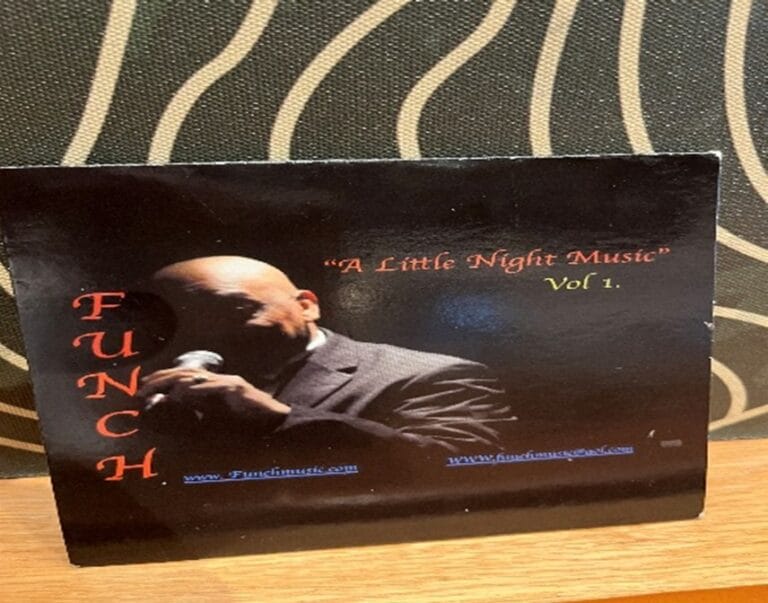
Hey, who moved my CD?

I had best described as a “Who moved my cheese?”  moment when I climbed into my car recently. Well, not “cheese” in a literal sense that’s in the title of that best-selling book, but a favorite Funch (I’ll get to him shortly) CD. You see, when I punched the ejection button, out popped that of some rap artist whose name and lyrics don’t warrant any mention here. How it got there, God (or some wayward kiddo) only knows.

You see, what was missing was a Funch CD containing a collection of my go to music that calms me down while stuck in local traffic, mellows me out during long drives elsewhere, or prompts me to pull over, close my eyes for a listening snooze during those necessary, allow me to say, “bladder breaks.”

In a fit of panic, I searched the pocket on the side door on the driver’s side, but it wasn’t there. Next, I dumped everything out of the glove compartment and frantically sifted through current and expired registration papers, an empty Snickers candy bar wrapper, a long dead roach and a spare toothbrush. Still no luck.  

Okay, if you’re wondering about my freakout over something as mundane and inconsequential as some darn CD, well I’ll give you two reasons why.

First, the missing CD is a collection of old school Soul classics sung by Mr. James Funchess, aka “Funch,” a talented singer I was raised with in a small town in Virginia. Fortunately, for him he could sing and work magic on a keyboard. Unfortunately for me, I couldn’t carry a note if it were handed to me on a silver keyboard. But that shortcoming doesn’t stop me from crooning like him when driving (always alone, mine you) and listening to his renditions of Luther Vandross’ “Dance with My Father Again,” Sammy Davis Jr’s “Mr. Bojangles,” Tony Bennetts’ two classics, “Who can I turn to,” and  “Shadow of your smile,” and Louis Armstrong’s “What a wonderful world.” 

My second reason is a piece written almost 20 years ago by Leonard Pitts, Jr., my go to Pulitzer Prize winning columnist for hard-hitting social insight and breath-taking prose. Add to that is the fact that before he pivoted to writing about race and culture in America, Pitts cut his teeth as a music critic among the exclusive ranks of jazz critics Whitney Balliet, Robert Christgau, Stanley Crouch and others. That’s how he met and casually “shot the breeze” a few minutes with Eddie Levert of the R&B group The O’Jays.

Almost 20 years ago Pitts wrote, “There’s Still Nothing like That Sweet Soul Music,” the opening paragraph of which cited the tragic death of young Gerald Levert, the son of talented singer Eddie Levert, himself a singer of thunderous power. On the caliber of Black music back then – and I argue continues today – Pitts further wrote:

“We live in an era where music is largely impersonal, a cut-and-paste machine tooled artifice. Moreover, we live in an era where Black music is often police blotter or a sex act or a product placement, but less frequently a love song. Still, some of us remember when Black music was about soul and soul was about truth, particularly the truth of how it is between women and men.”

Which brings me to this fact: many talented Black singers from back in the day who traveled throughout the south on the “chitlin circuit” in station wagons with trailers in tow and performed in smoke-filled dance halls, attempted to “crossover” into “mainstream” music that had traditionally ignored them. Some made the transition, others who refused were not so fortunate. Many of the latter Black singers – some one-hit  wonders – were marginalized and forced to stay with what made them icons in the Black community while those few who did cross over had to straddle the fence between the community that made them on one side and a community that had ignored them on the other.

Saying more about old school Black music, Pitts added, “We used to call them begging, baby, baby please songs for how they promised the moon and stars to a woman if she would give you the time of the day or pleaded with broken voice and teary eyes for another chance after you fooled around and hurt her. These days, Black music produces fewer songs that cherish women. Oh, there are plenty of sex songs, plenty of I love your butt songs. But baby please is becoming a lost art.”

To Pitts’ point, many remember James Brown’s, Please, please, please”; Otis Redding’s “Try a little tenderness”;  Lou Rawls’ “You’ll never find another  love like mine”;  Barry Whites’ “I got so much love to give”;  Wilson Pickett’s “In the Midnight Hour”; Donna Summers’ sensuous  “Love to love you baby”; and Mavin Gaye’s “Sexual Healing” as baby please classics.

And not to be forgotten are those classic “no dice bro” clapbacks from Black women singers during those times that highlighted the subtleties and nuances of “baby please” interactions between the two sexes back then. Esther Phillips’ “Release me, I don’t love you anymore”; and Carla Thomas’ “Tramp”,  her duet with Otis Redding that exemplified the soulful repartee between Black women and men are examples that stand out in mind. And there are others.

Which brings us to a truth for many of us – a longing for the days when Black music was worth listening to and not, as it is too often today, rambling gibberish masquerading as real music to be shielded from the ears and minds of the young and impressionable.

So back to Funch, at the top of my list of my favorite of his songs, hands down it would be his rendition of “I’ll be home for Christmas” sung for many years by Bing Crosby, Dean Martin and others. You see, this one is personal given that the home Funch speaks of, the one that brings tears to my eyes when he sings it, are images of the home we both shared growing up in Virginia.

In that song he sings images of freshly cut Christmas trees on sale on parking lots while snowflakes are descending on the city. He sings images of the sweet aroma of hot dogs and burgers flowing out of Mrs. Sadie’s snack shop on Johnson Street and jam-packed gyms on Friday nights at Booker T. Washington High School just up the street. He sings images of the unique ambiences of Black churches, salons, and barber shops. He sings images of bell ringing Salvation Army Santas on the sidewalk in front of Montgomery Ward. He sings images of the sounds of busy snowplows and shovels performing what shovels and snowplows were designed to perform. He sings images of overcoats, red and green scarves, leather gloves and rubber boots. He sings images of soapbox derbies, of sleds and sleigh rides. Underneath his lyrics, that’s the home Funch sings about when he sings “I’ll be home for Christmas.”

So yes, I’m unashamed of being dubbed “old school.” If that indicates that I prefer songs and lyrics that respect and elevate women – Black women in particular who inarguably are constantly being disrespected and caricatured in the media – I’ll wear that moniker as a badge of honor.

See ya next time.

Oh, wait, I did locate my Funch CD! It was underneath my front seat. Alright readers, I know what many of you are thinking about me, your bumbling columnist.

And that, ahem, is not too nice is it?

Terry Howard is an award-winning writer, a contributing writer with the Chattanooga News Chronicle, The American Diversity Report, The Douglas County Sentinel, Blackmarket.com, recipient of the Dr. Martin Luther King, Jr. Leadership Award, and third place winner of the Georgia Press Award.

Drugs That Can Affect Your Memory

0

Occasional periods of forgetfulness or “brain fog” where you can’t think clearly or have trouble multitasking and comprehending information is an unfortunate sign of aging. But you may not know that some over-the-counter and prescription drugs can affect your memory and cognitive function too.

1. Sleeping aids (nonbenzodiazepine sedative-hypnotics)

Why they are prescribed: Sometimes called the “Z” drugs, these medications can be used to treat insomnia and other sleep problems. They also are prescribed for mild anxiety.

Examples: Eszopiclone (Lunesta), zaleplon (Sonata) and zolpidem (Ambien).

How they can affect memory: Although these are molecularly distinct from benzodiazepines (see No. 1, above), they act on many of the same brain pathways and chemical messengers, producing similar side effects and problems with addiction and withdrawal. The “Z” drugs also can cause amnesia and sometimes trigger dangerous or strange behaviors, such as cooking a meal or driving a car with no recollection of the event upon awakening.

Alternatives: There are alternative drug and nondrug treatments for insomnia and anxiety, so talk with your health care professional about options. Melatonin, for instance, can help to reestablish healthy sleep patterns. And cognitive behavioral therapy for insomnia (CBT-I) is the first-line treatment for sleep disorder.

Before stopping or reducing the dosage of these sleeping aids, be sure to consult your health care provider. Sudden withdrawal can cause serious side effects, so a health professional should always monitor the process.

2. Incontinence drugs (anticholinergics)

Why they are prescribed: These medications are used to relieve symptoms of overactive bladder and reduce episodes of urge incontinence, an urge to urinate so sudden and strong that you often can’t get to a bathroom in time.

Examples: Darifenacin (Enablex), oxybutynin (Ditropan XL), solifenacin (Vesicare), tolterodine (Detrol) and trospium (Sanctura). Another oxybutynin product, Oxytrol for Women, is sold over the counter.

How they can affect memory: Patients who take anticholinergics can have complications with their long-term memory, says Merrey. These medications have been associated with an increased risk of dementia, and that heightened risk can persist even after the medication has been discontinued.

That’s because these drugs block the action of acetylcholine, a neurotransmitter that mediates all sorts of functions in the body. In the bladder, anticholinergics prevent involuntary contractions of the muscles that control urine flow. In the brain, they inhibit activity in the memory and learning centers. The risk of memory loss is heightened when the drugs are taken for more than a short time or used with other anticholinergic drugs.

Older adults are particularly vulnerable to the other adverse effects of anticholinergic drugs, including constipation (which, in turn, can cause urinary incontinence), blurred vision, dizziness, anxiety, depression and hallucinations.

Alternatives: As a first step, it’s important to make sure that you have been properly diagnosed. Check with your doctor or other health professional to see if your urinary incontinence symptoms might stem from another condition (such as a bladder infection or another form of incontinence) or a medication (such as a blood pressure drug, diuretic or muscle relaxant).

Once these are ruled out, try some simple lifestyle changes, such as cutting back on caffeinated and alcoholic beverages, drinking less before bedtime and doing exercises to strengthen the pelvic muscles that help control urination.

Some urologists are treating overactive bladder with Botox injections to help the muscle relax. Solutions beyond the medicine aisle can also come in handy. “I’ve been really thrilled with the improvements in protective [undergarment] items. They’ve really come a long way,” says K. Ashley Garling-Nañez, clinical assistant professor at the University of Texas at Austin College of Pharmacy. “There are a lot more options for active adults.”

3. Cholesterol-Lowering Drugs

There have been several studies that claim statins and other high cholesterol busters may impair memory by lowering cholesterol levels in the brain as well as in the blood. Lipids in the blood are essential in the formation of connections between nerve cells, which underlie memory and learning.

The FDA warns that some people may experience memory loss or confusion while taking statins, a type of cholesterol-lowering drug. However, the evidence is conflicting, and some studies have found that statins have no effect on memory. For example, a 2015 study found that people who take any type of cholesterol drug are almost four times more likely to report memory loss right after starting the drug, but it also compared people who didn’t take cholesterol drugs to those who did. A 2003 review of case reports and literature found that about 50% of patients reported cognitive side effects within two months of taking statins, but 56% of those patients saw improvements when they stopped taking the drug.

In 2012, the FDA modified the labels for statins to reflect their increased risk for memory problems.

What You Can Do: Be sure to tell your doctor of any noticeable changes you see after taking your medication.

4. Narcotic painkillers (opioids)

Why they are prescribed: These medications are sometimes used to relieve moderate to severe pain from surgery or injuries. In some instances, they can also be used to treat chronic pain.

Examples: Fentanyl (available as a patch), hydrocodone (Vicodin), hydromorphone (Dilaudid, Exalgo), morphine and oxycodone (Oxycontin). These drugs come in many different forms, including tablets, solutions for injection, transdermal patches and suppositories.

How they can affect memory: These drugs work by stemming the flow of pain signals within the central nervous system and by blunting one’s emotional reaction to pain. Both these actions are mediated by chemical messengers that are also involved in many aspects of cognition, so use of these drugs can interfere with long- and short-term memory, especially when used for extended periods of time. Researchers have also found a link between opioid use and dementia in older adults.

Alternatives: In patients under the age of 50 years, nonsteroidal anti-inflammatory drugs (NSAIDs) are the frontline therapy for pain. Unfortunately, NSAID therapy is less appropriate for older patients, who have a much higher risk of gastrointestinal bleeding. Research shows the risk goes up with the dosage and duration of treatment.

Acetaminophen (Tylenol) may be another option, but again, it’s important to consult your doctor about risks, side effects and drug interactions for all medications.

5. Antianxiety drugs (benzodiazepines)

Why they are prescribed: Benzodiazepines are used to treat a variety of anxiety disorders, agitation, seizures, and delirium and muscle spasms. Because benzodiazepines have a sedative effect, they are sometimes used to treat insomnia and the anxiety that can accompany depression.

Examples: Alprazolam (Xanax), chlordiazepoxide, clonazepam (Klonopin), diazepam (Valium), flurazepam, lorazepam (Ativan), midazolam, quazepam (Doral), temazepam (Restoril) and triazolam (Halcion).

How they can affect memory: Benzodiazepines dampen activity in key parts of the brain, including those involved in the transfer of events from short-term to long-term memory. In fact, they’re used in anesthesia for this very reason.

Alternatives: Benzodiazepines should be prescribed only rarely in older adults, and then only for short periods of time. It takes older people much longer than younger people to flush these drugs out of their bodies, and the ensuing buildup puts older adults at higher risk for not just memory loss but delirium, falls, fractures and motor vehicle accidents. Another drawback: They’re addicting, says D.P. Devanand, M.D., professor of psychiatry and neurology at Columbia University Medical Center.

Talk with your doctor or other health care professional about treating your condition with other types of drugs or nondrug treatments. If you are taking these medications for insomnia, for instance, the first line of treatment is cognitive behavioral therapy for insomnia (CBT-I). And an antidepressant might be able to treat your anxiety, Devanand notes.

Be sure to consult your health care professional before stopping or reducing the dosage of any benzodiazepine. Sudden withdrawal can trigger serious side effects, so a health professional should always monitor the process. (BlackDoctor.org by Dr. Phillip Gould)

Fisk University Earns National Recognition for Commitment to First-Generation Student Success

0

NASHVILLE, TN (August 5, 2025) – FirstGen Forward, formerly the Center for First-generation Student Success, recently announced Fisk University as one of sixty new members of the FirstGen Forward Network for 2025–26. To be selected as a FirstGen Forward Network Member, Fisk displayed a demonstrated commitment to improving experiences and advancing success for first-generation college students.

“Serving first-generation students is woven into the fabric of Fisk University’s mission and legacy. These students are often pioneers in their families, navigating higher education without a roadmap, and they bring extraordinary resilience, determination, and potential to our campus community. By joining the FirstGen Forward Network, we can foster a lasting, campus-wide culture where their success is a shared responsibility across every department and division. Our goal is to expand mentoring, career pathways, and leadership opportunities, while building systems and practices that not only help first-generation students thrive at Fisk, but also uplift families, strengthen communities, and continue our tradition of producing leaders who make a global impact,” said Tiffany Steward, Vice President for Enrollment Management and Student Success.

The FirstGen Forward Network provides a three-phase framework designed to help institutions scale holistic first-generation student success, transforming the student experience, strengthening academic and co-curricular outcomes, and building inclusive institutional structures. Since its launch, 489 institutions—including two statewide systems—have joined the Network, spanning 49 states and the District of Columbia.

“We are pleased to welcome Fisk University into the FirstGen Forward Network,” said Dr. Stephanie J. Bannister, vice president with FirstGen Forward. “Through the application process, it was clear that Fisk is not only committed to supporting first-generation students, but also prepared to invest in long-term, strategic efforts that create environments where these students can truly thrive.”

Institutions join the Network through a competitive application process. During the first year, Network Members engage in monthly workshops, peer learning opportunities, and professional development sessions while contributing to a nationwide knowledge-sharing community. Members can progress to Network Leader status and ultimately achieve Network Champion designation by demonstrating a measurable impact and sustained commitment to the success of first-generation students.

“Being selected as a FirstGen Forward Network Member is both an honor and a call to action,” said Dr. Kevin Kruger, interim president and CEO of FirstGen Forward. “Fisk joins a growing movement of institutions and professionals who are committed to advancing access, sharing best practices, and driving systemic change to ensure first-generation students succeed. We look forward to seeing Fisk and the entire Class of 2025 make a lasting impact.” The 2025–26 Network Members officially began their journey during the FirstGen Forward Virtual Kickoff on June 5, 2025. To view a complete list of the institutions or to learn more about FirstGen Forward and the Network, visit firstgenforward.org.

TN SNAP Waiver Sure to Make Significant Changes to the Program

0

Tennessee’s Supplemental Nutrition Assistance Program (SNAP) is likely to join twelve other states’ food assistance program in a significant overhaul.

Governor Bill Lee announced on Friday, August 8 of the Tennessee Department of Health’s waiver that will be submitted that would remove payment through the EBT card system in the Volunteer State for any “items listing sugar, corn syrup, high-fructose corn syrup, or a similar caloric alternative as the primary (first) ingredient” as well as “beverages where carbonated water and sugar, high-fructose corn syrup, or a similar caloric alternative are the first two ingredients.”

The waiver will ask for a third action that includes payment in the SNAP system for previously excluded “hot prepared chicken, including rotisserie and non-fried, non-breaded items like grilled chicken tenders–offering convenient, healthy meal solutions” to be covered as approved items for purchase.

Tennessee’s waiver reflects a bill passed with 69 votes of support in the Tennessee House of Representatives but never saw a floor vote in the Tennessee Senate. The language of the waiver parallels the language of the bill passed on March 10.

“Tennessee is leading the nation in creating innovative solutions to enhance quality of life, and I’m proud to continue our legacy of responsible fiscal stewardship while also delivering nutritious food choices for hard-working families,” said Gov. Lee in the statewide press release. Other states that have applied for the waiver, six of which have already been approved by US Secretary Robert F. Kennedy, Jr., are Arkansas, Colorado, Florida, Idaho, Indiana, Iowa, Louisiana, Nebraska, Oklahoma, Texas, Utah, and West Virginia.

According to the US Department of Agriculture, which partially oversees the food assistance program federally, the prohibition of these two categories of purchases will make a significant change in buying habits of SNAP participants.

The number two purchase and the number fifteen typical purchase of SNAP households would be denied with the approval of the Tennessee waiver request based on national data. Take notice of any direct alerts to EBT card users. Your list of qualified purchases may be changing in the near future.

Community Mourns the Passing of Judge Walter F. Williams

0

Chattanooga is mourning the loss of Judge Walter F. Williams, a towering figure in the city’s legal, civic and spiritual life, who passed away on Friday, August 8, at age 73.

Judge Williams, who presided over Chattanooga City Court from 1991 to 2003, was remembered in recent days as more than a respected jurist. He was, community leaders say, a mentor, innovator and compassionate advocate who left an indelible mark on the city that raised him.

“Judge Williams is a legend in Chattanooga’s legal community and Chattanooga’s Black community, and his reach extended far beyond both,” said Chattanooga Mayor Tim Kelly. “He was ahead of the curve on efforts to prevent violence and recidivism by focusing on rehabilitation when it was appropriate. I hope his family and friends can find comfort in the knowledge that he blazed a trail for future generations and changed countless lives for the better while our community was lucky enough to have him.”

For many, his impact also extended into the personal. John Edwards III, founder and publisher of the Chattanooga News Chronicle (CNC) and a longtime family friend, recalled both relying on Williams as his attorney and admiring him as a man.

“Walter had a way of making you feel like you mattered, no matter who you were or where you stood in life,” Edwards said. “He believed deeply in justice but also in mercy–and when you sat across from him, you knew he truly cared. For me, he wasn’t just a lawyer or a judge; he was a brother, a confidant, and a constant reminder of what service looks like.  Judge Walter Williams was a rare individual.  He was respected by his peers as well as people from all social and economic levels.  His friends, of which he had many, addressed him as Judge Williams at professional and community events.  However, at social events and the local watering holes, he was just “Walter”.  He was witty, and humorous, and could light up any room with his charm and personality.  My father and I were represented by Attorney Williams in several legal matters.  I am happy to say, ‘we always won!’.  The Edwards family will always treasure his friendship and words of wisdom.

The late Judge Walter Williams, center, stands with other Chattanooga gentlemen at formal event in Miami, FL, July 2025.(Photo:CNC/Imani)

The Bessie Smith Cultural Center called him “a man whose life’s work was a testament to the power of education, service, and faith.”

Chief Justice Robert Benham, Supreme Court of Georgia (Retired) was deeply saddened when his cousin, CNC Executive Editor, Faith Edwards shared with him  the news of Judge Williams’ death on August 8th.  Justice Benham commented the following:

“Walter was a brilliant, admirable, capable, attorney and judge.  He was a valued colleague and one whose wit and wisdom I could always depend on.   We debated, argued, and laughed together! He was a good friend and I recall he even invited me to come up and speak at his church.  My wife, Nell and I are saddened to hear the news of his passing.  Please extend our condolences to Mrs. Gwen (the Love of his Life) and family. The world is a better place because of the service of The Honorable Walter F. Williams”.

Born July 20, 1952, in Chattanooga’s Westside housing projects, Williams rose from humble beginnings to become an honors graduate of Morehouse College–where he was elected to Phi Beta Kappa–and Howard University School of Law, where he was named an Earl Warren Fellow. After beginning his career in Atlanta with the IRS Regional Counsel’s Office, he returned to Chattanooga to practice law before ultimately winning his seat on the City Court bench in 1991.

Judge Williams quickly became known for his firm but creative approach. He established Chattanooga’s first Environmental Court docket, raised compliance with housing codes and litter laws, and even required defendants to complete their education–resulting in nearly 900 GEDs earned under his watch. Behind his rulings was an unshakable belief that “education is the key to success.”

His colorful personality, wit, and innovative sentences also became community legend, from ordering a man to turn his Morehouse T-shirt inside-out for behavior unbecoming of the school, to admonishing confused lawyers with quips about what name would appear on a tombstone.

Beyond the courtroom, Judge Williams taught at the University of Tennessee at Chattanooga, served as a deacon at First Baptist Church on East Eighth Street, and championed scholarship efforts through 100 Black Men of Chattanooga, helping direct more than $250,000 toward student awards.

His guiding principle was summarized in his life’s motto: “If I can help somebody as I pass along, then my living shall not be in vain.”

Judge Williams is survived by his loving wife Gwendolyn; daughters Hillary and Heather; his only grandson and pride and joy Trey; brother Jackie (Pinky); sister-in-law Gracie Guerry; brother-in-law Ronald (Patricia) McIntosh and a host of amazing, wonderful and glorious nieces, nephews, cousins and other loved ones, as well as members of his beloved community.

 Funeral services were held Wednesday, August 20, at First Baptist Church on East Eighth Street, officiated by the Rev. Dr. William Terry Ladd, III, with arrangements by John P. Franklin Funeral Home.

As the city remembers him, Judge Williams’ legacy is perhaps best expressed not in accolades or offices held, but in the lives he touched. As Chronicle Publisher John Edwards, III  puts it, “Walter lived his life so that his work spoke for him. And the truth is, it still does.”

Quarters honoring African American women are now in circulation.

The American Women Quarters Program™ celebrates the accomplishments and contributions made by women to the development and history of our country. Beginning in 2022, and continuing through 2024, the U.S. Mint issued five new reverse designs each year. Five quarters will be issued in 2025 under this program.

The American Women Quarters feature contributions from women in a variety of fields, including, but not limited to suffrage, civil rights, abolition, government, humanities, science, space and the arts. The women honored are from ethnically, racially, and geographically diverse backgrounds.

Four quarters minted in 2022, 2023, 2024 and 2025, respectively, acknowledge and celebrate the contributions of African-American women.

Maya Angelou was a celebrated writer, performer and social activist. She was acclaimed as one of America’s most visible Black women. Angelou had a broad career as a singer, dancer, actress, composer, and Hollywood’s first female Black director, but became famous as a writer, editor, essayist, playwright and poet.

Bessie Coleman was the first African American and first Native American woman pilot. She was the first African American to earn an international pilot’s license. She traveled to Le Crotoy, France, in 1920 to attend an aviation school. She was the only student of color in her class.

The Rev. Dr. Pauli Murray was the first Black woman to graduate from Yale Law School with a doctor of juridical science degree in 1965. A true trailblazer, Pauli Murray was a scholar, activist, writer and Episcopal priest who was an important yet often overlooked figure in the civil and women’s rights movements.

Ida B. Wells was an educator, journalist, suffragist and civil rights activist. She fought for justice and equality and used her powerful voice to expose violence against African Americans in the late 19th and early 20th centuries. She co-founded the National Association for the Advancement of Colored People (NAACP).

These quarters are in circulation. They can also be purchased from the U.S. Mint. Former Rep. Barbara Lee, (D-Calif.-12), introduced the Circulating Collectible Coin Redesign Act of 2020 (Public Law 116-330), which passed in January 2021 and ultimately paved the way for the creation of these new coins under The American Women Quarters Program™.

This 5-Minute Test Is Transforming Dementia Care in Black Communities

0

Dementia is a critical issue affecting more than six million older adults in the United States, and the impact on Black and Hispanic communities is particularly severe. Despite its prevalence, cognitive impairments often go unnoticed by healthcare providers, especially in busy primary care settings. Early diagnosis of dementia or mild cognitive impairment (MCI) is crucial for effective treatment and planning, helping to keep older adults safe. However, traditional cognitive tests can be lengthy, expensive, and culturally biased.

The Challenge of Early Detection

In many primary care settings, signs of cognitive impairment are frequently missed, leaving many older adults without the necessary care and support. This issue is even more pronounced among Black and Hispanic populations due to cultural biases in existing cognitive tests and the demanding nature of primary care environments.

To address these disparities, a research team led by Dr. Joe Verghese at the Albert Einstein College of Medicine developed a new cognitive assessment tool called 5-Cog. This innovative tool is designed to be culturally unbiased and can be used by non-healthcare professionals, making it accessible and practical for diverse primary care settings.

How 5-Cog Works – The 5-Cog tool consists of three brief tests that assess:

1.           Memory Recall: Evaluating the ability to remember and recall information.

2.           Cognition and Gait Connection: Observing how cognitive function affects walking and movement.

3.           Symbol-to-Picture Matching: Testing the ability to associate symbols with corresponding images.

The entire process takes about five minutes, and if the results indicate cognitive problems, the tool automatically updates the patient’s electronic health record. This triggers a set of recommendations to be sent to their healthcare provider, ensuring timely follow-up and intervention.

In a study funded by the National Institutes of Health (NIH), the 5-Cog tool was tested with approximately 1,200 older adults from disadvantaged neighborhoods in Bronx County, New York City. The study population was predominantly Black, Hispanic, or Latino, with a significant portion having low educational attainment. Participants were randomly assigned to take either the 5-Cog test or an unrelated physical test (control group) before their primary care visit.

The results, published in Nature Medicine on June 4, 2024, were promising:

•             Improved Dementia Care: Nearly 20% of those who took the 5-Cog test received enhanced overall dementia care, compared to just under 7% in the control group.

•             New Diagnoses and Referrals: Participants who took the 5-Cog test showed significant improvements in receiving new diagnoses of dementia or MCI, further assessments, and specialist referrals within 90 days of the test.

The significance of the 5-Cog tool extends beyond its immediate results. Early detection of dementia allows for better management of the disease, including:

•             Timely Interventions: Identifying dementia early enables healthcare providers to implement treatments that can slow the progression of the disease, improving the quality of life for patients.

•             Care Planning: Early diagnosis helps families and caregivers plan for the future, ensuring that appropriate support systems are in place.

•             Reducing Healthcare Disparities: Tools like 5-Cog that are designed with cultural sensitivity in mind help bridge the gap in healthcare disparities, providing equitable care for all populations.

The success of the 5-Cog tool in this study suggests it could transform primary care practices, enabling more older adults to receive timely diagnoses and treatment for cognitive impairments. Further research is ongoing, including a clinical trial to evaluate the tool’s effectiveness in identifying early cognitive changes in older adults who do not report any cognitive concerns. Additionally, the tool will be tested in different populations to ensure its broad applicability and effectiveness.

How You Can Advocate for Better Dementia Care

As a member of the Black community, it is crucial to advocate for the adoption of tools like 5-Cog in your local healthcare settings. Here are some steps you can take:

1.           Stay Informed: Keep up-to-date with the latest research and advancements in dementia care.

2.           Ask Questions: During healthcare visits, inquire about the availability of cognitive assessments and advocate for the use of culturally unbiased tools.

3.           Spread Awareness: Educate family members, friends, and community groups about the importance of early detection and the benefits of tools like 5-Cog.

4.           Support Policy Changes: Encourage local and national policymakers to prioritize funding and implementation of effective cognitive assessment tools in primary care settings.

(Source: BlackDoctors.org by  Jessica Daniels, BDO Staff Writer | Published 08/05/25)

(Editor’s Note:  The 5-Cog Test is a five-minute cognitive assessment tool designed to detect cognitive decline among older adults. It consists of three brief tests: memory recall, the connection between cognition and gait, and the ability to match symbols to pictures. This test is particularly beneficial for individuals with language and education barriers, as it is culturally neutral and can be administered by non-physician personnel. The 5-Cog Test has been shown to improve the diagnosis of mild cognitive impairment and dementia, leading to better care and treatment outcomes for patients. – Consult your medical care provider for additional information)