Monday, October 12, 2026
Advertisement
Home Blog Page 19

December Marks National Impaired Driving Prevention Month

0

As holiday travel increases and celebrations fill the calendar, federal leaders and national safety advocates are renewing urgent calls to keep impaired drivers off America’s roads. December is National Impaired Driving Prevention Month–an annual observance now in its 39th consecutive year–and last week the White House issued a presidential message underscoring the growing need for vigilance.

The message, released by the Office of the First Lady, pledges strengthened federal efforts to combat drunk and drugged driving, which claims the life of one American every 42 minutes. The administration emphasized that despite advances in vehicle safety, traffic fatalities remain alarmingly high nationwide, with impaired driving continuing to be one of the leading causes of preventable deaths.

Mothers Against Drunk Driving® (MADD), the nation’s largest nonprofit dedicated to ending impaired driving, is partnering with law enforcement agencies across the country throughout December. Together, they aim to increase awareness, promote safe transportation choices, and support high-visibility enforcement campaigns.

The month carries a tragic history: during December 2018 alone, 839 people were killed in alcohol-related crashes, making up 29 percent of all traffic deaths, according to the National Highway Traffic Safety Administration. Christmas Eve and New Year’s Eve proved especially deadly, with 108 lives lost in impaired driving crashes over just two days–nearly half of all vehicle fatalities for that period. Christmas Day saw an additional 35 lives claimed.

“These numbers are shocking and staggering,” said MADD National President Helen Witty, whose 16-year-old daughter Helen Marie was killed by a driver impaired by alcohol and marijuana. “The pain caused by one person’s choice to drive impaired is often permanent. Yet every drunk driving death and injury is preventable.”

Witty emphasized that impaired-driving crashes traditionally rise throughout December as more Americans travel and attend gatherings where alcohol is served. MADD is urging everyone to plan ahead before drinking: designate a sober driver, use a taxi or rideshare, or take public transportation.

“There is no excuse for driving under the influence of any mind-altering substance, including alcohol,” Witty said. “It could save your life–or the life of someone you know.”

Every U.S. president since Ronald Reagan has formally designated December as National Impaired Driving Prevention Month. President Donald Trump continued the tradition this year, reaffirming his administration’s commitment to making America’s roadways safer.

MADD is also encouraging motorists to participate in its annual Tie One On for Safety® campaign–its longest-running public awareness initiative–by displaying the organization’s signature red ribbon or magnetic decal on their vehicles. The campaign, launched in 1986, symbolizes a personal commitment to sober driving.

“Whether you’re traveling to holiday festivities or hosting a party, always remember your designated driver,” Witty said. “Everyone can help keep our holiday season joyous by planning ahead. Include festive non-alcoholic options for designated drivers celebrating with you.”

More information about the Tie One On for Safety® campaign, along with details on obtaining a red ribbon, is available at madd.org/toofs.

Founded in 1980 by a mother whose daughter was killed by a drunk driver, Mothers Against Drunk Driving® has helped save more than 390,000 lives and reduce drunk driving deaths by over 50 percent. The organization supports nearly one million victims of drunk and drugged driving each year at no cost, while advocating for stronger laws, advanced vehicle technology, and the widespread use of ignition interlocks for offenders.

Don’t Let Food Poisoning crash your Thanksgiving dinner

By Lisa  Cuchara, Professor of Biomedical Sciences, Quinnipiac University

Thanksgiving is a time for family, friends and feasting. However, amid the joy of gathering and indulging in delicious food, it is essential to keep food safety in mind. Foodborne illnesses can quickly put a damper on your celebrations.

As an immunologist and infectious disease specialist, I study how germs spread – and how to prevent them from doing so. In my courses, I teach my students how to reduce microbial risks, including those tied to activities such as hosting a big Thanksgiving gathering, without becoming germophobes.

Foodborne illnesses sicken 48 million Americans – 1 in 6 people – each year. Holiday meals such as Thanksgiving pose special risks because these spreads often involve large quantities, long prep times, buffet-style serving and mingling guests. Such conditions create many opportunities for germs to spread.

This, in turn, invites a slew of microbial guests such as Salmonella and Clostridium perfringens. Most people recover from infections with foodborne bacteria, but each year around 3,000 Americans die from the illnesses they cause. More routinely, these bugs can cause nausea, vomiting, stomach cramps and diarrhea within hours to a couple of days after being consumed – which are no fun at a holiday celebration.

Foods most likely to cause holiday illness

Most foodborne illnesses come from raw or undercooked food and foods left in the so-called danger zone of cooking temperature – 40 degrees to 140 degrees Fahrenheit – in which bacteria multiply rapidly. Large-batch cooking without proper reheating or storage as well as cross contamination of foods during preparation can also cause disease.

Not all dishes pose the same risk. 

Turkey can harbor Salmonella, Campylobacter and Clostridium perfringens. Undercooked turkey remains a leading cause of Thanksgiving-related illness. Raw turkey drippings can also easily spread bacteria onto hands, utensils and counters. And don’t forget the stuffing inside the bird. While the turkey may reach a safe internal temperature, the stuffing often does not, making it a higher-risk dish.

Leftovers stored too long, reheated improperly or cooled slowly also bring hazards. If large pieces of roasted turkey aren’t divided and cooled quickly, any Clostridium perfringens they contain might have time to produce toxins. This increases the risk of getting sick from snacking on leftovers – even reheated leftovers, since these toxins are not killed by heat.

Indeed, each November and December outbreaks involving this bacterium spike, often due to encounters with turkey and roast beef leftovers.

Don’t wash the turkey! – Washing anything makes it cleaner and safer, right? Not necessarily.

Many people think washing their turkey will remove bacteria. However, it’s pretty much impossible to wash bacteria off a raw bird, and attempting to do so actually increases cross contamination and your risk of foodborne illness.

Since 2005, federal food safety agencies have advised against washing turkey or chicken. Despite this, a 2020 survey found that 78% of people still reported rinsing their turkey before cooking – often because older recipes or family habits encourage it.

When you rinse raw poultry, water can splash harmful bacteria around your kitchen, contaminating counter tops, utensils and nearby foods. If you do choose to wash turkey, it’s critical to immediately clean and disinfect the sink and surrounding area. A 2019 USDA study found that 60% of people who washed their poultry had bacteria in their sink afterward – and 14% had bacteria in the sink even after cleaning it.

Food prep tips for a safe and healthy Thanksgiving

Wash your hands regularly. Before cooking and after touching raw meat, poultry or eggs, wash your hands thoroughly with soap and water for at least 20 seconds. Improper handwashing by people handling food is a major source of bacterial contamination with Staphylococcus aureus. This bacterium’s toxins are hard to break down, even after cooking or reheating.

Thaw turkey safely. The safest way to thaw a turkey is in the refrigerator. Allow 24 hours per 4-5 pounds. There’s also a faster method, which involves submerging the turkey in cold water and changing the water every 30 minutes – but it’s not as safe because it requires constant attention to ensure the water temperature stays below 40 F in order to prevent swift bacteria growth.

Stuff your turkey immediately before cooking it. Stuffing the turkey the night before is risky because it allows bacteria in the stuffing to multiply overnight. The toxins produced by those bacteria do not break down upon cooking, and the interior of the stuffing may not get hot enough to kill those bacteria. The USDA specifically warns against prestuffing. So cook stuffing separately, if possible, or if you prefer it inside the bird, stuff immediately before roasting, making sure it reaches 165 F.

Cook food to the right temperature. A thermometer is your best friend – use it to ensure turkey and stuffing both reach 165 F. Check casseroles and other dishes too. It’s best not to rely on an internal pop-up thermometer, since they can be inaccurate, imprecise and could even malfunction.

Avoid cross contamination. Use separate cutting boards for raw meat, vegetables and bread. Change utensils and plates after handling raw meat before using them for cooked foods.

Keep food at safe temperatures. Serve hot foods immediately, and make sure hot foods are served above 140 F and cold dishes below 40 F to keep them out of the microbial danger zone.

Be cautious with buffet-style serving. Limit food time on the table to two hours or less – longer than that, any bacteria present can double every 20 minutes. Provide dedicated serving utensils, and avoid letting guests serve with utensils they have eaten from.

Be mindful of expiration dates. Don’t forget to check dates on food items to make sure that what you are serving isn’t expired or left from last Thanksgiving.

Educate guests on food safety. Remind guests to wash their hands before preparing or serving food, and politely discourage double-dipping or tasting directly from communal dishes.

Thanksgiving should be a time of gratitude, not gastrointestinal distress. By following these simple food safety tips, you can help ensure a safe and healthy holiday. (The CONVERSATION)

Dismantling of the Department of Education Fails Students

0

WASHINGTON — “On November 18, 2025, the Trump administration began the process of selling off the Department of Education for parts. The administration has let down teachers, families, and students — those currently in classrooms and the generations to come. Further diminishing these offices that protect student rights and stop discrimination and sending them off to be run by agencies that work on public health and short-term training, which lack the skills, expertise, or capacity in education, isn’t about improving student outcomes. It’s about implementing a business model that transforms students into widgets instead of human beings who need support. Our nation’s children need champions in Washington. Now is the time for Congress to stand up for the rights of America’s students and ensure education programs stay where they belong: with the Department of Education.

“The law is clear: only Congress can dismantle the Department of Education. In its 45-year history, the U.S. Department of Education has played an essential role in ensuring all students — particularly those traditionally underserved by America’s schools — are guaranteed their rights to a quality public education, free from discrimination.

“Counter to recent comments made by Secretary McMahon, students and schools were hurt by the shutdown of the federal government. Uncertainty and chaos do not contribute to student learning. Calls and emails from families desperate to learn about their cases with the Office for Civil Rights (OCR) went unanswered. Information requests from schools and districts were left unresolved while the government was closed.

“These new directives only serve to further distance students — particularly students of color, those from low-income backgrounds, students with disabilities, and multilingual learners — from educational opportunities. The other agencies that are now charged with protecting students’ educational civil rights simply do not have the relationships, expertise, or staff capacity to do so.

“Moving functions of the Office of Elementary and Secondary Education to the Department of Labor will erode oversight of required annual assessments and school accountability, as well as grants that fund a host of important programs, from charter and magnet schools to assistance for students experiencing homelessness. At a time when assessments show that America’s students are struggling, it is nonsensical to risk important federal funding and oversight of how schools are serving students.

“Specifically, moving Title I, the largest federal funding stream providing important resources to the schools serving the lowest-income students in America, to the Department of Labor makes no sense. The same goes for programs for literacy, K-12 family engagement, community schools, migrant education, and professional development for teachers, just to name a few of the programs directly impacted. All of these are definitionally educational programs that need to be invested in, not jerked around for no reason other than ideology. Does anyone think burying family engagement and community schools programs in another agency and starving them of expert staff and resources is going to “fix” the educational system? This administration insults the intelligence of America’s families in implying that it will.

“Other anticipated future moves not included in today’s announcement, such as transferring the authority at OCR or the Office of Special Education and Rehabilitative Services (OSERS), are also deeply troubling. We have already seen the impacts of staff reductions and regional office closures at OCR: higher caseloads for investigators mean fewer investigations and the dismissal of thousands of cases at record pace, leaving students without the appropriate remedies to ensure their federally guaranteed rights to education. Transferring OCR’s authority to another department that is ill-equipped to carry out its critical functions would all but guarantee that civil rights complaints will continue to be dismissed en masse without resolution.

“Today’s actions — and the additional demolitions that are anticipated to follow — are a betrayal to every public school, educator, student, and family in this country. Congress must reclaim its authority and prevent this unprecedented transfer of authority.”- Statement from EdTrust president and CEO, Denise Forte

TSU Engineering Student Selected for Prestigious 3DEXPERIENCE World 2026 Conference

0

TSU rising junior earns all-expenses-paid invitation to one of the world’s premier engineering and design conferences.

NASHVILLE, TN — Tennessee State University engineering student Mariah McKinney has been selected to attend 3DEXPERIENCE World 2026, one of the industry’s leading global conferences for designers, engineers, and advanced technology innovators. The week-long event, hosted by Dassault Systèmes, will take place in early February 2026 and attracts thousands of participants from across the world.

McKinney, a rising junior in the College of Engineering, will join an international community of SOLIDWORKS and 3DEXPERIENCE users for hands-on technical sessions, professional certifications, keynote presentations, and networking with top engineers and product-development professionals. For a student whose interests include mechanical design, simulation, and digital engineering tools, the opportunity is transformative.

“This conference represents a major step in my growth as an engineer,” McKinney shared. “I’m honored to represent TSU on such a global stage and excited to learn from experts who are shaping the future of design and innovation.”

A Community-Driven Opportunity

The opportunity came through Ms. Kara L. Tucker, a Nashville-based design engineer and presenter at this year’s 3DEXPERIENCE World conference. Tucker received a special “plus one” conference ticket and made it her mission to support a woman or gender-marginalized engineering student from TSU—an act of mentorship that underscores the strength of Nashville’s engineering community.

Tucker’s generosity covers all expenses for McKinney: conference registration, hotel accommodations, meals, and travel.

“I wanted to use this opportunity to uplift a deserving young engineer from my community,” Tucker said. “Mariah’s passion, discipline, and curiosity made her the perfect choice. I know she will make TSU proud.”

A Win for TSU Engineering

Faculty and staff in the College of Engineering noted that McKinney’s selection highlights both her talent and the strong industry partnerships TSU continues to cultivate.

“This is exactly the kind of high-impact professional development experience that prepares our students to compete globally,” said a representative from the College of Engineering. “Mariah’s selection also demonstrates the level of support our students receive from industry leaders and alumni who believe in their potential.”

With access to cutting-edge tools, training, and professionals shaping the future of engineering design, McKinney is poised to bring back invaluable knowledge to her coursework, peers, and future career.

A Bright Future Ahead

As she prepares to take the national stage at 3DEXPERIENCE World 2026, McKinney represents not only her own ambitions but the excellence of Tennessee State University’s engineering programs.

“I’m grateful for this opportunity and the support behind it,” she said. “It motivates me to keep working hard and to open doors for the next generation of engineers coming after me.” TN TRIBUNE/ Renuka Christoph

Why Cutting Food Waste is Your Smartest Recipe This Thanksgiving

0

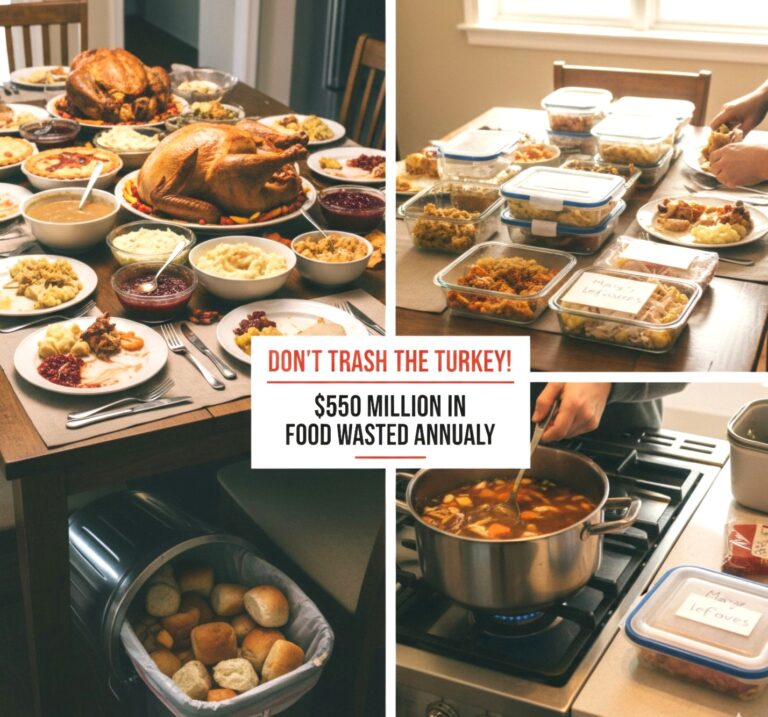
This Thanksgiving, Americans are projected to waste an estimated 320 million pounds of food, equating to approximately $550 million worth of perfectly good meals destined for the trash.

With wholesale turkey prices up 40% from 2024, according to the USDA, reducing waste is more critical than ever for both household budgets and the environment.

The amount of food discarded is equivalent to 267 million meals that could have gone to people in need, according to ReFED, a U.S.-based nonprofit working to solve food waste.

The Thanksgiving meal is often the largest many cooks prepare annually. ReFED and NielsenIQ survey data reveals the root of the problem: more than 90% of Thanksgiving hosts intentionally prepare more food than needed.

While leftovers are a cherished part of the holiday, 12% of hosts (responsible for feeding up to 36 million people) don’t plan to manage them effectively, increasing the chance they’ll be thrown away.

The environmental cost is steep, too. The emissions associated with wasted Thanksgiving food are equal to driving 190,000 gasoline-powered vehicles for a year. Furthermore, producing the food that will be wasted required about 39 billion gallons of water.

Minnie Ringland, Senior Manager of Climate and Insights for ReFED, noted the direct financial hit: “We’re seeing general food price inflation, but in particular, USDA reports wholesale prices for frozen turkeys are 40% higher than in 2024…ReFED’s analysis indicates that 40% of what gets tossed on Thanksgiving is turkey.”

To help households keep their food waste in check and maximize their savings, the U.S. Department of Agriculture (USDA) Food Loss and Waste Liaison and ReFED recommend adopting these simple strategies before and after the big meal:

Before the Meal: Plan and Serve Smart

Shop with a List: Avoid impulse purchases by making a detailed list based on your guest count. A good rule of thumb is to plan for one pound of turkey per person, or one-and-a-half pounds if you want ample leftovers.

Scale Down: For smaller gatherings, consider cutting recipes in half or only preparing the family’s top favorite side dishes. Serve one type of roll or dessert instead of several.

Serve Smartly: Opt for a buffet or family-style meal where guests serve themselves. This helps prevent over-plating, and using smaller serving spoons encourages portion control.

After the Meal: Repurpose and Store

Maximize Leftovers: Since leftovers are a tradition, have to-go containers ready for guests, or ask them to bring their own. Nearly half of hosts already send guests home with food (45%).

Be Creative: Transform leftovers into new meals. Turkey can be used for chili or stock, extra mashed potatoes make great breakfast fritters, and stale bread is perfect for bread pudding. Freeze what you can’t eat in the first few days.

Save Scraps: Freeze vegetable peelings, celery tops, and meat trimmings for future culinary creations like savory broths and hearty soups.

Donate: Consider donating any unopened, shelf-stable ingredients (like canned pumpkin pie filling or green beans) to a local food bank.

Compost: Make an effort to keep food scraps out of the landfill by using a backyard compost bin or a community composting program.

Chattanooga Girls Leadership Academy Named Among State’s Highest Performers In 2024-25 Reward School List

0

The Tennessee Department of Education on Friday approved the state’s 2024-2025 Reward School list, with 30 public charter schools recognized among Tennessee’s highest-performing schools for student achievement and improvement over time.

On the list was Chattanooga Girls Leadership Academy.

Officials said, “Tennessee’s public charter schools, which are free and open to all students, continue to deliver exceptional results while serving many of the state’s most vulnerable learners.

“Statewide, public charter schools educate a student population that overwhelmingly comprises students of color and includes a higher share of economically disadvantaged students than the state average – learners who historically must overcome additional challenges to achieve.”

“The Reward List represents schools that have a uniquely positive impact on the students they serve. It’s exciting to see so many public charter schools utilizing their flexibility and autonomy to create innovative learning environments where students are thriving,” said Elizabeth Fiveash, CEO of the Tennessee Charter School Center. “We’re proud to partner with these schools that continue to prove what is possible for Tennessee students.” Reward Schools represent the top tier of public schools in Tennessee. These schools demonstrate strong student achievement and growth across multiple measures, including TCAP performance, TVAAS growth scores, chronic absenteeism, English Learner progress, graduation rates, and Ready Graduate rates.

2nd Annual CHRISTMAS BICYCLE DRIVE

0

The Scenic City Heroes American Legion Post 291 has kicked off our 2nd Annual Christmas Bicycle Drive. We are asking for bicycle donations or funds to purchase bicycles for elementary-aged children ranging from age 5 – 11. Bike Prices range from approximately $80 – $110 (Walmart quotes).  The bicycles will be given out Dec 20th.

Bike pickup and drop off can be coordinated in the local Chattanooga area by contacting Tommy L. Mitchell – Past Commander Scenic City Heroes American Legion Post 291, P.O. Box 8094, Address: 701 Hooker Rd., Chattanooga, TN 37411, PH: 904 705-2422, Email: rdy2rol@yahoo.com, Website: tnlegion0291.com      We are a non-profit, so all donations are tax-deductible.  Our EIN will be provided for all donations via text or email, whichever is preferred. Thank you for making this a successful endeavor for our children.

Black People Founded the City of Los Angeles

Los Angeles, California has a lot more Black history than most people realize. The city was founded in 1781 by a group of 44 Mexican settlers, and 26 of them were of African descent.

Pío de Jesús Pico, who was of both African and American descent, was one of the first governors of the area that is now known as the city of Los Angeles. In fact, he served as the governor of Alta California twice and was even a councilman before his untimely death.

Even more, in 1872, the First African Methodist Episcopal Church was established in Los Angeles when emancipated Blacks began moving to the city in significant numbers towards the end of the Civil War. In 1885, the second Baptist Church for African Americans was built.

In the 1920’s, Paul Revere Williams, a famous Black architect credited for shaping Los Angeles, began designing homes and commercial buildings throughout the cities.

Locations like Central Avenue became the focal point for African-American communities. In fact, Central Avenue was the location of the vibrant Los Angeles jazz scene that attracted such greats as Louis Armstrong, Duke Ellington, Count Basie, and Bessie Smith. To date, the Dr. Ralph J. Bunche home, the first person of color to win the lauded Nobel Peace Prize, remains a landmark on Central Avenue.

The infamous Dunbar Hotel (originally known as the Hotel Somerville) on Central Avenue was completely financed and built solely by Black people. Known as one of the finest Black-owned hotels in the nation, it would often host major events such as the NAACP national conventions.

Today, Los Angeles remains one of the top cities in the countries where African Americans live, and Black history continues to be made in the areas of business, entertainment, politics, and more.

Encountering the homeless – “There, but for the grace of God, go I”

0

Well readers, here we go again with a story that’s begging to be told.

This time it’s a story about an issue I should have written much earlier about – the homeless – aka unhoused – Americans we see and rather not see if we’re honest with ourselves. They’re somehow surviving on sidewalks, at street intersections, under bridges and on park benches and represent every possible demographic. The stories about how they got there and the choices and factors that led them there have been subject to endless debates.

Another part of the story is how we (note that I said “we,” not you) typically deal with the uncomfortableness when encountering homeless Americans. One piece of the puzzle is our set of emotions when we see them. However, the bigger piece, if we’re honest with ourselves, is the range of emotions – think fear, disgust, sadness, guilt, etc. – we hurry away with vis-à-vis “There, but for the grace of God, go I”

Okay, before we get started, please retrieve the mirror I asked you to have nearby as you were about to read my most recent column, “Long lines for women in the restroom!” You’ll need it as you read the rest of this narrative.

Now this story begins in the back seat of our car where I sat as my wife and a family friend were about to pull into a pancake house for breakfast before heading to the airport for her flight to Pittsburg. Suddenly my wife stopped and rolled down the car window on her side. 

“Good morning,” she said to the woman whose blankets and bags were strewn about the sidewalk. Without hesitation she and our friend reached into their pocketbooks for cash and handed it to her. “Thank you so much. God bless you, the woman said.” To my dismay that’s not where it ended.

“Tell us your name,” said my wife, a request that caused me to worry that we needed to get in and out of the restaurant and to the airport real soon not knowing what to expect given the government shutdown and flight delays and cancelations. But her conversation with the lady kept me clock watching, shifting nervously in the back seat and worrying.

Now was the source of my anxiousness really to get to the airport or to remove me from my uncomfortableness in the presence of a homeless person, or both? (Yes, I’m looking in my mirror too).

Suddenly the issue of how homelessness became less about them and more about me and my hair-trigger reactions jolted me into realizing that I was part of the problem and had work to do on myself. But thank God, because I’ve never been homeless, where do I start?

Well, short of giving homelessness a personal try, the next best thing for me was to find out what actual homeless people said about how they were treated by passersby. Fortunately, a previously homeless person in the United Kingdom shared a list of insults thrown at him regularly when he was on the streets:

•             I’m a drug addict

•             I have mental problems

•             I drink too much

•             I molest children

•             If you’re a woman on your own at night I will rape you

•             I’m not intelligent enough to get a job

•             I probably sell my body for drug money

•             Oh, and I’m not homeless at all, I’m just a fake, begging for cash because I can’t be bothered to get a job.

Mirror time readers!

Now setting aside the probability that you’ve never said those things yourself, how many of those thoughts raced through your mind as you read that list? Are there others?

The former homeless person wrote, “I have genuinely heard every one of those when people walked past me. None of them are true, not for me, nor the majority of the homeless population. Some of those things may be true for a minority of homeless people, and that minority may make up the majority you see, but don’t tar us all with the same brush.”

Shifting now to possible explanations about why many react the way we do when encountering a homeless person. Experts say that there are several interacting factors behind our uncomfortableness when passing by a homeless person:

–             Threat detection bias- we are wired to monitor for signs of danger, particularly unusual behavior and appearance.

–             Disgust- Visible signs of poor hygiene, soiled clothing.

–             Attribution– cultural narratives that attribute homelessness to laziness

–             Empathy overload – sadness, guilt, helplessness can be overwhelming.

–             Media framing – news and portrayals that link homelessness with crime.

–             Personal experience- particularly negative ones, shape emotional responses.

So, like Bigger Thomas in Ralph Ellison’s best-selling novel, “Invisible Man,” our typical reaction is to reduce homeless people to invisibility by locking our doors, avoid them by looking away, crossing the street and quickening our pace.

Now for many of the reasons cited here, interacting with homeless individuals can often leave one unsure of what to say or how to offer assistance without causing offense. However, experts say in a world where simple gestures can make a significant difference, understanding the dos and don’ts of communication can help foster empathy and genuine connections. Here’s a guide based on insights from advocates and individuals with lived experiences:

Dos:

1.           Acknowledge the Person: A simple “hello” or “good morning” can go a long way in making someone feel seen and valued. Eye contact is crucial, as it reaffirms their humanity in a world where they often feel invisible.

2.           Open-Ended Questions: Asking open-ended questions like “How are you doing?” shows genuine interest and gives the individual the autonomy to decide whether they want to engage in conversation or not.

3.           Offer Support Without Expectations: If you choose to provide assistance, do so without attaching strings or making assumptions about how it will be used. Whether it’s a pair of socks, a granola bar, or a dollar, your act of kindness can initiate a meaningful connection.

4.           Educate About Resources: Instead of questioning why someone hasn’t sought help, inform them about available resources like shelters, charitable organizations, or local agencies that provide support to the homeless.

Don’ts:

1.           Blame or Judge: Avoid phrases like “Why don’t you get help?” as that can come across as accusatory and dismissive of the complex factors contributing to homelessness.

2.           Attach Conditions: Giving money with the condition that it not be used for alcohol or pressuring someone to go to a shelter disregards their autonomy and the realities of their circumstances.

3.           Assume Shelter is Always the Solution: Understand that shelters may not be suitable for everyone due to safety concerns, overcrowding, or incompatible rules. Respect the individual’s autonomy in deciding what’s best for them.

4.           Stereotype or Stigmatize: Refrain from making assumptions about a person’s character or circumstances based on their housing status. Homelessness can affect anyone and is not indicative of moral or personal failings.

5.           Suggest Simplistic Solutions: Avoid statements like “Get a job,” which overlook the systemic barriers and individual challenges that contribute to homelessness. Recognize the complexities involved and approach conversations with empathy and understanding.

Now in closing and in parting, here’s wishing you and yours a Happy Thanksgiving and, while enjoying your baked turkey, cranberry sauce and mac and cheese, be sure that the realities of homelessness and your mirror are both nearby!

Terry Howard is an award-winning writer, a contributing writer with the Chattanooga News Chronicle, The American Diversity Report, The Douglas County Sentinel, Blackmarket.com, recipient of the Dr. Martin Luther King, Jr. Leadership Award, and third place winner of the Georgia Press Award.

Ernestine Berry Carter Honored

0

‘Grandma Tina Honored for Life of Service and Love’

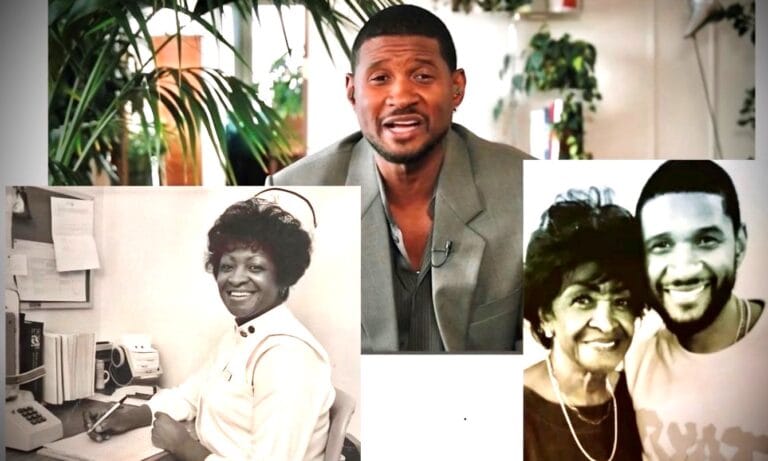
Chattanooga’s Ernestine Berry Carter was honored by her family, community, and profession just days prior to what would have been her 90th birthday.

Chattanooga State Community College announced the Ernestine Carter Endowed Nursing Scholarship on Monday, November 19 as a “trailblazer” was memorialized for her steady determination wrapped in compassion as a nurse. “Tina” became the first Black admissions nurse at Memorial Hospital and the first Black member of the Ask-A-Nurse program after receiving her nursing degree from Cleveland State Community College in 1974.

Ms. Carter started her education in Chattanooga’s Public Schools and graduated from Howard High School as a member of the Class of 1953.

Most won’t know Ernestine Carter, or Grandma Tina, unless your life has been touched by her devotion to patient care and needs. Or, you may know her grandson, Usher (Usher Raymond IV) who made remarks to honor his grandmother’s legacy.

“She was a hero–my personal hero,” declared the R&B legend via a recorded message. “Our goal in establishing this scholarship is to impact lives forever and inspire the next generation of nurses to live and serve by my grandmother’s example.” 

Usher came up with the idea to honor his grandmother back in 2022 when Tina Carter died the day before Christmas. The funding comes from the singer and a partnership with another philanthropist and family friend, Cammie Rice, who spoke of her own experience of the Christ-centered love of Tina who would call her with prayers and encouragement.

The endowment is now the largest nursing scholarship of Chattanooga State’s history that will cover tuition, the most costly portion of higher education, to open doors for others pursuing a life of serving for the purpose to heal.

Ms. Carter acknowledged that she had been called by God in 1971, but faced challenges as a female in organized Christian ministry. Finally, in 1990, Tina began another aspect of the ministry of healing by reaching out to and meeting the needs of individuals who were incarcerated and their families impacted by teaching about “repentance and reconciliation to become who God created them to be.”

Usher praised his inspiration, “Grandma Tina, you did it!”

Yes, Grandma Tina, you did it with grace, determination, and overcoming barriers that typically frustrate most to inaction.

Ernestine Berry Carter had notable recognitions, two of which include “Black Pioneer Women Award of Excellence” presented by the National Coalition of 100 Black Women, Inc., Chattanooga Chapter, and as an honoree and inductee into the Bessie Smith Cultural Center.