Sunday, October 18, 2026
Advertisement
Home Blog Page 164

Tennessee Legislative Updates 2022

0

Tennessee Legislative Updates 2022

Tennessee’s 2022 legislative session is well under way, and we’re keeping a close eye on the proposed bills involving our state’s election process.

What voting and election legislation have we seen so far? Here’s a summary of the issues that we see trending:

Enhanced election audits: Currently, only the counties that use optical scan voting machines, i.e., those with paper ballots, are required to audit ballots following certain elections, but a couple of bills could change that.

HB2585/SB2675 would require randomly selected counties to conduct risk-limiting audits, a statistically based technique of randomly selecting ballots to audit, before the election results are certified. This type of audit is aligned with election security best practices, as they help to ensure that voting equipment and processes are working properly before election results are finalized.

Whereas others, like HB1883/SB1865 and HB2112/SB1939, propose implementing audits performed after an election has been certified and a result announced. Unlike the audits proposed in HB2585/SB2675, these “forensic” audits are new, coming on the heels of the 2020 election. These bills would establish a system that review ballots six months to a year after an election as opposed to before results are certified as final.

Voting machines with voter-verified paper audit trails: While most states (all but six) use voting machines that provide voters a verifiable paper audit trail, two-thirds of Tennessee counties still do not.

ThinkTennessee has long advocated in support of voting machines capable of producing paper trails. Cost remains a barrier for many counties, which is why we also recommended that the state provide financial support to enable the machine upgrades in our post-2020 election report.

A handful of new bills, like HB 2331/SB 2558, sponsored by both parties, would require counties to provide this election security best practice. Importantly, the Secretary of State noted in his recent budget presentation before the Senate Finance, Ways, and Means Committee that the state has over $30 million dollars in Help America Vote Act (HAVA) funding available that can be used to purchase these new voting machines.Prohibition of non-citizen voting:HB 2128/SB 2245 reiterates that a person must be a citizen to vote in federal, state, or local elections, and it prohibits county, municipality, or other political subdivisions from granting voting rights to non-US citizens. It also expands the sources election officials may use to confirm citizenship and addresses of registered voters from traditional state agencies to non-traditional commercially available data. (By Kalen Russell/TN Tribune-Story first published by Think Tennessee)

Tennessee’s 2022 legislative session is well under way, and we’re keeping a close eye on the proposed bills involving our state’s election process.
What voting and election legislation have we seen so far? Here’s a summary of the issues that we see trending:
Enhanced election audits: Currently, only the counties that use optical scan voting machines, i.e., those with paper ballots, are required to audit ballots following certain elections, but a couple of bills could change that.
HB2585/SB2675 would require randomly selected counties to conduct risk-limiting audits, a statistically based technique of randomly selecting ballots to audit, before the election results are certified. This type of audit is aligned with election security best practices, as they help to ensure that voting equipment and processes are working properly before election results are finalized.
Whereas others, like HB1883/SB1865 and HB2112/SB1939, propose implementing audits performed after an election has been certified and a result announced. Unlike the audits proposed in HB2585/SB2675, these “forensic” audits are new, coming on the heels of the 2020 election. These bills would establish a system that review ballots six months to a year after an election as opposed to before results are certified as final.
Voting machines with voter-verified paper audit trails: While most states (all but six) use voting machines that provide voters a verifiable paper audit trail, two-thirds of Tennessee counties still do not.
ThinkTennessee has long advocated in support of voting machines capable of producing paper trails. Cost remains a barrier for many counties, which is why we also recommended that the state provide financial support to enable the machine upgrades in our post-2020 election report.
A handful of new bills, like HB 2331/SB 2558, sponsored by both parties, would require counties to provide this election security best practice. Importantly, the Secretary of State noted in his recent budget presentation before the Senate Finance, Ways, and Means Committee that the state has over $30 million dollars in Help America Vote Act (HAVA) funding available that can be used to purchase these new voting machines.
Prohibition of non-citizen voting: HB 2128/SB 2245 reiterates that a person must be a citizen to vote in federal, state, or local elections, and it prohibits county, municipality, or other political subdivisions from granting voting rights to non-US citizens. It also expands the sources election officials may use to confirm citizenship and addresses of registered voters from traditional state agencies to non-traditional commercially available data. (By Kalen Russell/TN Tribune-Story first published by Think Tennessee)
The State of Black Chattanooga: A Tale of Two Cities

0

By Camm Ashford 

A scathing report released Wednesday afternoon by the Urban League of Greater Chattanooga during a news conference paints a bleak picture for Blacks living in Chattanooga and Hamilton County.

The “State of Black Chattanooga,” the Urban League’s inaugural report on the dismal condition of African Americans living in the area, points out “numerous large and serious aspects of gaps in parity (equality) between Black and White populations in the city and region.”

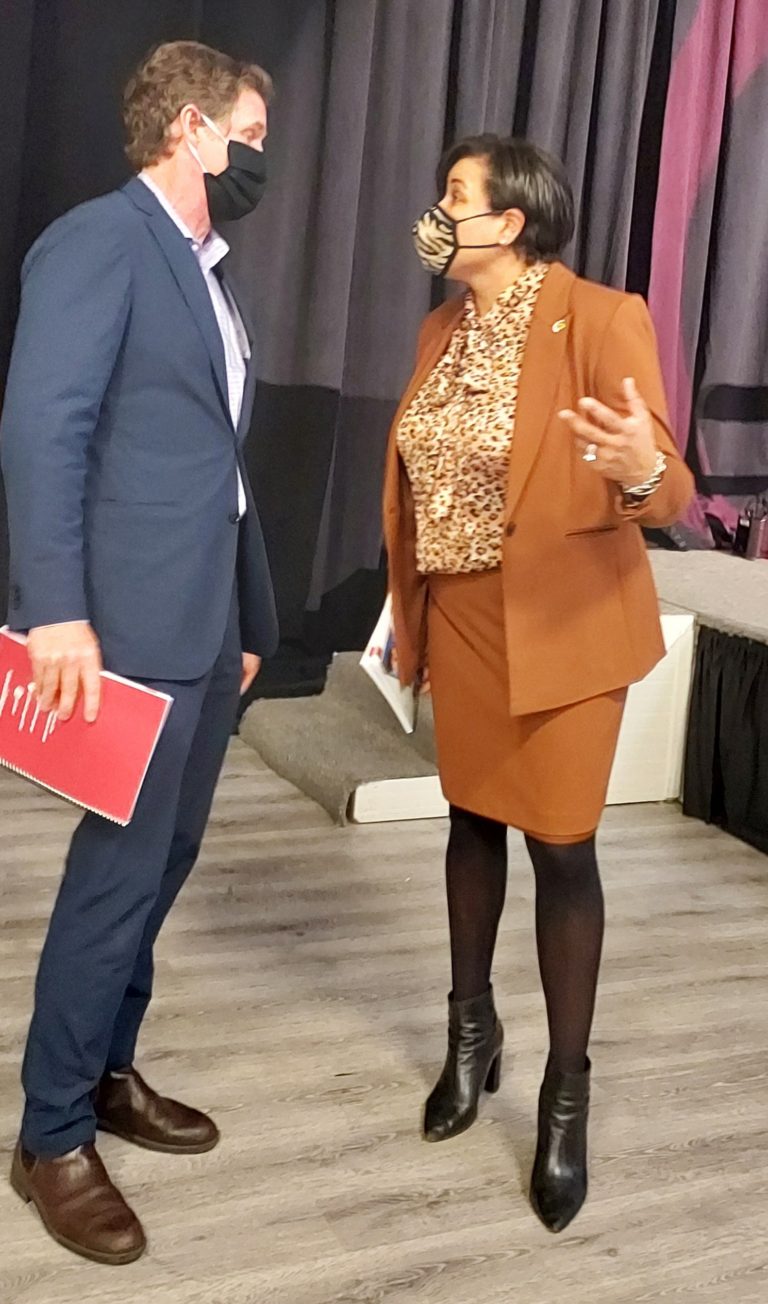
The report uncovers a “tale of two cities,” said Chattanooga Mayor Tim Kelly.

“Today, we’re facing two fundamentally different life experiences,” Kelly said during the 1 p.m. news conference at the Kingdom Center, 730 E. Martin Luther King Blvd. “It’s two Chattanoogas.”

The Rev. Dr. Ernest Reid, Inaugural State of Black Chattanooga co-chair, compared the status of the city’s Black residents in 2022 to the African Americans in 1787 who were subjected to the “Three-fifths Compromise,” which allowed a state to count three fifths of each Black person in determining political representation in the U.S. House of Representatives.

“Black Chattanoogans experience only about 60% of the wellbeing outcomes that White residents enjoy,” Rev. Reid, pastor at Second Missionary Baptist Church, explained. “This three fifths of wellbeing presents a significant verdict on the progress which is lacking for quality of life for Black Chattanoogans.”

Citing the report and fighting back tears, Candy Johnson, the Chattanooga Urban League’s first female president and CEO, noted that “no one could tell the truth about Black Chattanooga but Black Chattanoogans.”

She continued, “The challenges of developing and maintaining an equitable environment for Black Chattanoogans are many, varied and real. The quality of life experienced by Blacks and Whites in Chattanooga differs widely from one another in terms of economics, workforce, health, education, civic life and many other areas.”

Highlights of the “State of Black Chattanooga”  include: Black Chattanooga mortgage applicants are denied (27%) almost 108% more often for conventional mortgage loans compared to White applicants (13%); median Black family income is around half of White family income; Black Chattanoogans have 3 times the mortality rate from diabetes and hypertension compared to White Chattanoogans; Black women face a significantly elevated rate of poverty in Chattanooga, triple the overall poverty rate; and looking at the Class of 2020, only 21% of Black students graduating from Hamilton County high schools were deemed as “Ready Graduates,” compared to 53% of White students. 

“Chattanooga is not keeping pace with other Tennessee metropolitan areas for the Black population in median income, educational attainment, homeownership and overall quality of life,” Rev. Reid said. 

“Left unaddressed, inequality dampens overall growth and generates a wide range of adverse social consequences. To work toward racial equity, we must work to eliminate policies, practices, attitudes and cultural messages that perpetuate unfavorable outcomes for the quality of life of Black Chattanoogans.”

In response to the “State of Black Chattanooga,” Mayor Kelly said he plans to “address affordable housing,” “jumpstart the local economy” and “focus on early childhood development.” 

John Edwards III, Chattanooga News Chronicle founder and president, served on the State of Black Chattanooga Exploratory Committee.

Since 1982, the Urban League of Greater Chattanooga has been an affiliate of the National Urban League, the nation’s largest community-based organization devoted to empowering African Americans and other underserved individuals to enter the economic and social mainstream.

Chattanooga State’s Nesmith named DREAM Scholar

By Betty A. Proctor

Zennia Nesmith, on track to graduate from Chattanooga State Community College in spring 2022, has been named a 2022 DREAM Scholar by Achieving the Dream (ATD). 

As one of eight students chosen for this honor nationwide, Nesmith will engage with community activists, education leaders, peers and DREAM Scholars alumni.

Nesmith’s journey began at the tender age of seven when she became inspired by the compassion and humanity exhibited by Dr. Martin Luther King Jr. She loved finding solutions to problems and helping others, but did not have the support needed to achieve her academic goals.

During Nesmith’s early adult life, her goal was to make a livable wage. Once she became a wife and mother, that changed to providing for her daughter and later when her daughter suffered a traumatic brain injury from a car accident, it became keeping her head above water. 

“I worked a job to provide for her and made a decent living, but all the while, I knew I needed to go to college and get an education so I could help others heal from trauma,” said Nesmith.

Although she did not complete high school, Nesmith completed her GED and enrolled at Chattanooga State more than two decades later.

Now fully understanding her life goals, she said, “My life has trained me to help women and children with trauma, and I am pursuing a degree in psychology to do exactly that.” 

Fully immersed in academia and college life, Nesmith shares her own inspirational story with

HiSET (High School Equivalency Test) adult education students twice a week. 

“I wanted them to know that I sat in their seat trying to figure it out, too, and that it was OK,” she said.

Later, when Nesmith began experiencing difficulty retaining information in two of her classes, she was diagnosed with severe ADHD, and had to extend the same grace to herself that she advocated to others. 

“These experiences related to my career goals of making available more resources in our communities and promoting healthy mental health initiatives,” she shared.

The DREAM Scholars Program is an experiential learning opportunity for community college students designed to enhance leadership, critical thinking and networking skills. 

Nesmith and her cohorts will receive customized programming and extensive networking sessions that align with their future goals. All selected scholars will engage in a learning process that culminates in attending the DREAM 2022 conference. 

“I am so proud that Zennia was one of eight students from around the country selected to be a DREAM Scholar,” stated Dr. Rebecca Ashford, Chattanooga State president. “She is the first DREAM Scholar from Chattanooga State, and her selection makes the entire campus community proud. Zennia’s personal story and leadership on campus have inspired all of us who have had the opportunity to work with her. She may be our student, but she has taught us so much.”

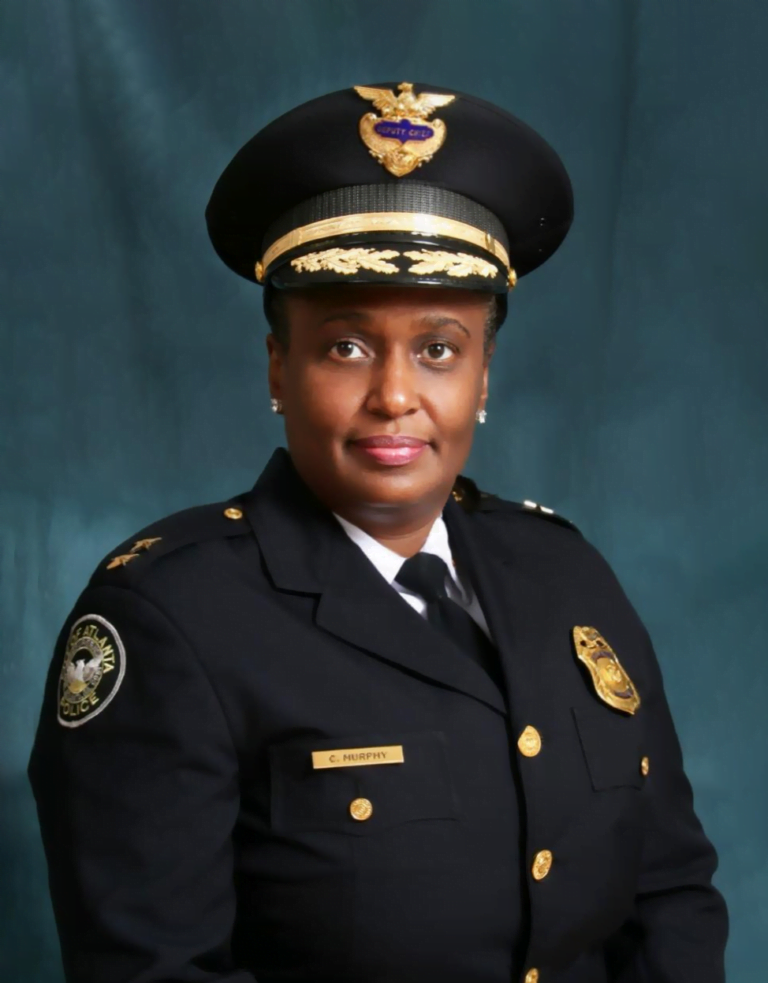
Mayor Tim Kelly selects the first Black woman to head the Chattanooga Police Department

0

By Camm Ashford 

During an early morning news conference on Tuesday, Chattanooga Mayor Tim Kelly named Celeste Murphy, a 25-year law enforcement veteran, as the city’s next police chief.

“I am thrilled to announce my appointment of Celeste Murphy to be Chattanooga’s next chief of police,” Kelly said. “She has a demonstrated track record of keeping people safe and reducing crime, and she brings a life-long commitment to civil rights and community policing.”

Murphy is the first woman, and also the first Black woman, to head the department. She also made history in her previous role with the Atlanta Police Department, where she was the first female ever to command two different precincts at the rank of major and four different divisions at the rank of deputy chief.

“This is a dream come true,” Murphy said of the historic nomination.

Murphy, whose appointment is subject to confirmation by Chattanooga City Council, helped drive and maintain a double-digit decrease in overall crime in her Atlanta precincts as deputy chief of the Field Operations Division and has also led department efforts to provide educational and life skills to the city’s youth–including working with local nonprofits to provide alternative pathways to criminal justice involvement.

“As chief, I will bring every resource, every relationship and every ounce of experience to meet this challenge and keep our city and our neighborhoods safe,” Murphy said. “We are going to expose the humanity in each other by embracing what we have in common. We will work together instead of against each other through conversations and partnerships between the department and the community. And we will enhance both our focus on stopping crime as well as our work to address its root causes.”

As chief, Murphy will focus on three key issues: violent crime reduction, community policing and youth engagement.

Over the last two decades, Murphy rose through the ranks at the Atlanta Police Department, serving as patrol officer, detective, sergeant, lieutenant, captain, major and deputy chief. She has worked in or supervised every division of the department, including Special Operations, Special Projects, Field Operations, Strategy, and Community Services. 

She has taken on multiple high-level assignments for the department, including overseeing policing at the Hartsfield Jackson Atlanta International Airport, as well as managing Violent Crime Interdiction. 

During the period of unrest after the killing of George Floyd, she managed approximately 900 patrol officers and worked with the community to quickly restore the peace. 

Murphy is a mother of four children and holds degrees from Syracuse University and Saint Leo University. 

She succeeds Eric Tucker, who served as interim chief following the retirement of David Roddy on July 30, 2021.

If she’s approved by the council, Murphy’s salary will be $165,000 a year.

29-Year Old Becomes 1st Black Woman to Win Gold Medal in Olympic Speed Skating 

0

Nationwide — Erin Jackson has made history as the first Black woman ever to win a speedskating medal after bagging the gold medal in the 500-meter speedskating event at the Winter Olympics in Beijing.

The 29-year old skater won the women’s 500 meters at the National Speed Skating Oval with a time of 37.04 seconds, earning the first speedskating medal for the USA in the Beijing Olympics.

“I wish I could describe how I feel, it is amazing,” she said after the race, according to NPR. “This
medal means so much. It has been a tough couple of years and a tough beginning for this year. For this to come around like this, I am so happy.”

Jackson was born and raised in Ocala, Florida. She only started her career on ice in 2016, formerly competing in inline speed skating and roller derby.

Jackson is now only one of the two Black athletes to win speedskating medals at the Olympics, with Shani Davis winning the gold in men’s 1,000 meters and silver in the 1,500 meters in the Olympics in Turin in 2006.

African American History Month – what else don’t we know?

0

Wait! Hold on! Put aside your cleaning cloth.

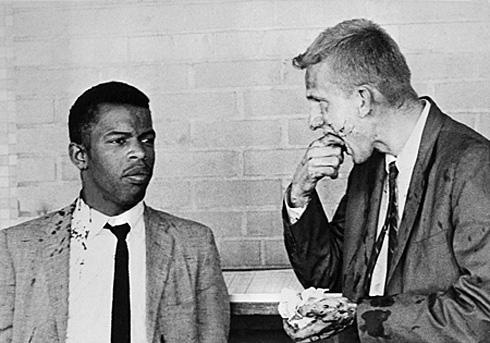
Don’t misidentify the dark spots on the collar and shirt worn by the Black fellow in the accompanying picture, or on the hand and sleeve of the white fellow, as smudges on your screen. They’re not. Those are actual blood stains.
In the following paragraphs, I’ll get to the breath-taking story behind the two men in that picture, John Lewis and James Zwerg, and in less than a thousand words. As the adage goes, “pictures are worth a thousand words.”
Now like many, I would love to have been a proverbial “fly on the wall,” listening intently to candid conversations between those two men. Of course, we –well, most of us anyway – know about the late congressman John Lewis. But James Zwerg?

Like the color of their skins, Lewis’ and Zwerg’s biographies are as different as night and day; Lewis born and raised in Alabama, Zwerg in Wisconsin. Now if there are words that undergirded their relationship, bloodshed, courage, sacrifice and fearlessness would top the list.

Now to put their relationship into a historical context, one can look at those of Stanley Levison, advisor, speech writer and friend of Dr. Martin Luther King, Jr., or that of Julius P. Rosenwald and long-time friend of educator Booker T. Washington. (The interested reader is urged to Google those names, histories, and relationships).
Zwerg and Lewis met in Nashville as college students and shared a seat on the Greyhound bus in 1961 as Freedom Riders. They greeted each other as “Brother John” and “Brother Jim.” Although many know of Lewis, let’s find out a bit more about James Zwerg.

Born in Appleton, Wisconsin at a time the 1940 city census listed just one person as “Negro,” Zwerg, a graduate of Appleton High School became engaged in the civil rights movement as a 21-year-old student. While attending college, where he had an African American roommate his first year, Zwerg participated in an exchange program that took him to Nashville’s Fisk University.

Shortly after his arrival, he met Lewis and soon became involved in demonstrations against segregation, participating in lunch counter and movie theater sit-ins while being subjected to repeated verbal abuse and physical assaults. As one of the few white men involved in the peaceful protests, Zwerg often drew targeted abuse as a “n****r lover.” Once, when trying to enter a theater in 1961, Zwerg was hit with a monkey wrench and knocked unconscious.

A stop in Montgomery on a Freedom Ride in 1961 left both Lewis and Zwerg bloodied and battered. Zwerg was one of ten student Freedom Riders — and the only white male — to board a bus in Nashville bound for New Orleans. On the way, Zwerg was among several students arrested in Birmingham and spent two and a half days in jail. In Montgomery, the Freedom Riders were met at the bus station by a mob armed with bricks, pipes, hammers, chains, and a pitchfork.

“When I volunteered to go, I realized that if anybody was going to get killed, it would probably be me.” Zwerg recalled. “Because they hated me, the white n****r lover. I accepted the possibility of my death.”

Zwerg wasn’t killed, but was beaten so badly — a severe concussion, a broken nose, a broken thumb, half his teeth were broken, three cracked vertebrae, numerous cuts, and bruises — he spent five days in a hospital. Photos of a beaten Zwerg (below) ran in national magazines as well as newspapers around the world.

“Segregation must be stopped. It must be broken down,” Zwerg said in an interview from his Montgomery hospital bed that was broadcast on the national news. “We’re going on to New Orleans no matter what. We’re dedicated to this. We’ll take hitting. We’ll take beatings. We’re willing to accept death. But we’re going to keep coming until we can ride from anywhere in the South to any place in the South.”

That statement galvanized the country, sending participants of all persuasions to segregate the South. In 1961, Dr. King presented Zwerg with the Southern Christian Leadership Freedom Award.

Zwerg graduated from Beloit College in 1962 and earned a degree in theology at Garret Theological Seminary. Ordained a minister in the United Church of Christ, he served churches in Wisconsin until he moved to Tucson to become minister of the Casas Adobes United Church of Christ. He left the active pastorate in 1975 and spent the rest of his career in a variety of community relations positions in Tucson.
The bond forged between John Lewis and James Zwerg in the 1960s during the civil rights movement remained strong until Lewis’s passing.

Back to what I said at the outset; really, I wish I could have been a “fly on the wall” as those two incredible men shared their hopes and fears during those dangerous freedom rides, during sit-ins, or on adjacent hospital beds recovering from brutal beatings.

Meet the Black Neuroscientist Who is on a Mission to Change the World

0

Nationwide — Shonté Jovan-Taylor is a neuroscientist, entrepreneur, and success strategist who is on a mission to change the world through the power of neuroscience so that more people can unleash their human potential. As a TEDx speaker and a member of the Forbes Coaches Council, she firmly believes that there is nothing more important than stretching your skill and knowledge towards the innovation you have inside – not only inside your heart but your brain as well.

She comments, “The human brain has granted us intelligence far beyond any living species on earth. As one of the busiest organs in the human body, our brains run with an astonishing efficacy nearly every second of our lives. While we have some control over what we do and how we think, our brains are more than capable of changing the world in a truly profound way.”

In her mission of empowering 100 million minds for change and prosperity, Shonté is expanding her gifts for humanity.
After graduating from UCLA and achieving over 15 years of brain research and industrial-organizational training, Shonté has accelerated herself as both a neuroscientist and a success trainer. However, the road didn’t start off on such a successful trajectory. As a teenage mom, the cards were stacked against her, but Shonté prevailed, beginning college at just 16 years old. Her mission to spark human potential was something that didn’t just come naturally, it first sparked within herself. With her ability to change her circumstances through the power of neuroscience, she knew it was something everyone could take part in and become the person they admire. So after conducting several multi-million dollar research studies for both the government and pharmaceutical industries, she launched her own training and research institute, The OptiMind Institute, to fulfill her mission. She focuses on all aspects of amplifying human potential, whether that is training organizations to elevate their leaders and workforce, or empowering entrepreneurs to manage their mental empires while they build their financial empires.

Her current work is intended to guide ambitious individuals towards an elevation of human potential and expanded compassion. Grounded in her knowledge of neuroscience and human behavior, her work offers an opportunity for exploration into the mind for professional and personal success. Her influence focuses on understanding the brain, making it possible for people to make a shift toward innovative thinking that amplifies brilliance, determination, and empathy in others. It’s a specific path that takes her audience to the next level of innovation, engagement in revenue.
From her previous focus of identifying what was wrong with someone’s brain, Shonté has cultivated the unique opportunity to enhance what is right. Through her intentional work, she uses the artistry of the human brain to challenge how we treat others, ultimately transforming the world. From her keynote speaking engagements, individual coaching, and training seminars, Shonté has committed her knowledge to helping people across the country unveil their greatest asset, their brain.

Her leadership and success trainings have allowed her to train thousands of coaches and leaders worldwide and to continue her passion for igniting High Performance, Productivity, and Focus Techniques that are based on neuroscience. Her recent accomplishments include writing a book to empower Generation X, hosting a globally rated podcast called Coffee With a Neuroscientist, and becoming an official member of the Forbes Coaches Council.

Heart Issues Have Affected 4 in 10 U.S. Adults Since Pandemic Began

0

Four in 10 Americans say they’ve had at least one heart-related issue during the COVID-19 pandemic, and about one in four who have tested positive say COVID has affected their heart health, according to a new online poll.
Shortness of breath (18%), dizziness (15%), higher blood pressure (15%) and chest pain (13%) were the top problems reported in the survey of 1,000 American adults.

“COVID fatigue is a very real thing – and for this year’s survey we wanted to see what kind of effect the ongoing pandemic is having on Americans’ heart health and in particular their healthy habits,” says Dr. Samir Kapadia, chairman of cardiovascular medicine at the Cleveland Clinic, which conducted the poll.
“We know 90% of heart disease is preventable through a healthier diet, regular exercise, and not smoking, so now is the time to refocus on our heart health,” he added in a clinic news release.

What the poll shows
As the pandemic nears its second anniversary, the poll found that one habit, in particular, was on the rise. More Americans are glued to their chairs, and walking has declined. In all, 77% of respondents said they often or sometimes sit throughout the day.

Overall, four in 10 respondents who have lost a family member to heart disease before age 60 have never been screened for the condition that caused their loved one’s death. But the rate of screening was higher (54%) among millennials.
And one-third of respondents said that even if they have a family history of heart disease, there is nothing they can do to reduce their risk. But doctors say early screening and treatment can save lives.

How to prevent heart issues
The first step in preventing any potential heart-related issues is finding out your risk. Finding out your risk will help you understand the state of your heart and the best way to keep it healthy.
Your doctor can help aid you in determining your risk factors and setting goals to lower your risk. If you are unsure of where to start the conversation, the following questions can give you some important insight into your heart’s health:
What is my risk for heart disease?
What is my blood pressure? What does it mean for me, and what do I need to do about it?
What are my cholesterol numbers? (These include total cholesterol, low-density lipoprotein (LDL) “bad” cholesterol, high-density lipoprotein (HDL) “good” cholesterol, and triglycerides.) What do they mean for me, and what do I need to do about them?
What are my body mass index (BMI) and waist measurement? Do they indicate that I need to lose weight for my health?
What is my blood sugar level? Does it mean I’m at risk for diabetes?
What other screening tests for heart disease do I need? How often should I return for checkups for my heart health?
For smokers: What can you do to help me quit smoking?
How much physical activity do I need to help protect my heart? What kinds of activities are helpful?
What is a heart healthy eating plan for me? Should I see a registered dietitian or qualified nutritionist to learn more about healthy eating?

How can I tell if I’m having a heart attack? (BlackDoctor.org by Cara Jones)

How Roe v. Wade Will Be Overturned 

Washington, D.C. - When Trump’s three Supreme Court nominees were asked if they would vote to overturn Roe v Wade, Brett Cavanaugh said it was “established precedent”; Neil Gorsuch said he would be reluctant to overturn any previous Supreme Court decision; and Amy Coney Barrett dodged the question. We are about to find out what they really think about a woman’s right to choose. The Court’s three newest members are expected to uphold a Mississippi law that bans all abortions after 15 weeks.  A 6 to 3 vote in the case would weaken, if not overturn, the 1973 landmark Roe v. Wade decision. The Supremes are expected to make a decision in the Mississippi case in June.

In December, the Supremes let stand a Texas “fetal heartbeat” law (SB 8) that prohibits abortions after 6 weeks and sent it back to be challenged in a lower court. “This decision means there are no protections under Roe in Texas. It also meant that overnight, people in Texas are no longer able to get abortion services,” said Lisa Matsubara, General Counsel for Planned Parenthood Affiliates in California. Lisa Matsubara is General counsel for Planned Parenthood Affiliates of California. She noted about 85% abortions occur after 6 weeks of pregnancy and that those women are no longer able to get an abortion without traveling out of the state.

Because women often don’t even know they are pregnant at six weeks, the practical effect of the law is to ban virtually all abortions in Texas. The law also prohibits defendants who win lawsuits against them from collecting attorneys’ fees and costs. In the meantime, abortion providers in California and other states have seen women come from Texas to get one.  California Planned Parenthood health clinics served more than 7,000 out of state patients in 2021. Since the Texas law went into effect five months ago, wait times for abortions in Oklahoma went from 3 days to 3 weeks.
Conservatives have historically supported individuals’ right to autonomy, privacy, and freedom from government intrusion.  Not when it comes to abortion. The Texas law has punitive provisions that include a private right of action allowing citizens to sue abortion clinics. And it even puts a bounty on providers and women who get turned in for violating the law. Barring a new federal law, unlikely to pass the U. S. Senate, women’s constitutional right to get an abortion in all 50 states will soon no longer exist.

Copycat bills like SB 8 have been introduced in Florida, Arkansas, Ohio, Arizona, Missouri, and Alabama.  Legislators in five other states have announced their intention to introduce similar bills. Those are Indiana, Mississippi, North Dakota, South Dakota, and West Virginia. Tennessee has several anti-abortion bills, including a fetal heartbeat bill, that are waiting in the wings.

“The states have really been a battleground for abortion access in recent years,” Matsubara said. Twenty-six states, including Tennessee, will likely ban abortions if Rove v. Wade is overturned. More than 36 million women, nearly one half of all women of reproductive age (18-49) will lose abortion access if Roe is overturned. Abortion rights have been constitutionally protected for nearly 50 years, so why the sudden change?  It’s not based on how people feel about it. A PEW poll in May 2021 found 59% of Americans thought abortion should be legal and 39% said it should be illegal.
Right to Life activists were not been able to impose their religious belief on all Americans so for more than two decades, they have employed a strategy to pass restrictive abortion laws one state at a time. More importantly, they have engaged in a grand strategy to change the make-up of the federal judiciary. They have successfully politicized the courts and it was President Trump who set the stage for a legal challenge to Roe v Wade today.
Trump appointed 231 federal judges, overwhelming white, and they were picked for their opposition to abortion. They are also young and with lifetime appointments, they will be around for a long time. Regarding the Supreme Court, the Republicans blocked a pro-abortion nominee, Merrick Garland, and changed the Senate rules to get Neil Gorsuch approved by a simple majority. Two other Trump nominees, Brett Kavanaugh and Amy Coney Barrett, shifted the make-up of the high court to a 6-3 conservative majority.

What does it mean for whom?
“If Roe were to be overturned it does not necessarily mean abortion would be illegal in every state. That would be up to each state to decide what those restrictions are. It also means states are free to decide whether or not to make sure abortion remains legal in their state,” Matsubara said. She said if you have means, you could afford to travel to another state to get an abortion. “This is an issue that disproportionately impacts people who are low income as well as women of color,” she said.

“You’re talking about young people, some who have never traveled outside their state before,” said Jodi Hicks, CEO and President of Planned Parenthood Affiliates in California. Access to abortion for low-income patients and women of color would have to include childcare, travel costs, time off from work, and places to stay. Hicks said that 60% of women who visit their clinics are people of color, 70% are under 30, and 80% are on some sort of Medicaid program.
Of the 36 million women impacted if Roe were overturned are 5 million Black women, 5.7 million Latinos, 1.1 million Asian people, and 340,000 native people would lose access to abortion services across the country.
“The reality is that those are the communities that already face significant barriers to care,” Hicks said. She said the Hyde Amendment (1980) prohibits using federal funds to pay for abortions except those pregnancies arising from incest or rape. “This is a discriminatory policy and it impacts most Black, Latino, and indigenous people who are experience poverty at twice the rate of their White counterpart in 2019,” she said. Hicks noted that those same communities of color are more likely to rely on federally funded health programs like Medicaid, Medicare, and other children’s health programs.

“Among women aged 15-49, 29% of Black women and 25% of Hispanic women were enrolled in Medicaid in 2019 compared to 15% of White women and 12% of Asian women.” Hicks said the Hyde Amendment currently affects people in 34 states while 16 states provide their own funding for abortion coverage.

“The Hyde Amendment leaves 7.8 million women 15-49 with Medicaid coverage but without abortion coverage. Half of those affected are women of color. Among women with Medicaid coverage subject to the Hyde Amendment, one in four who seek an abortion are forced to continue the pregnancy,” she said. A University of California study found that denying a woman an abortion creates economic hardship and insecurity that lasts for years. They are more likely to stay with an abusive partner and unwanted children have negative consequences for their other children.

RAGE Movie Premiere “Purple Carpet” Mix & Mingle Feb. 26

0

Scottie B. Caldwell is spreading the word about “Domestic Violence Awareness.” The Movie Premiere will take place on Saturday, February 26, 2022, from 5-7 at The Arts Avenue-Southside, 1800 Rossville Avenue, Chattanooga, TN.
RAGE is about a once loving couple, Skye, and Dre. Their marriage became rocky when Skye discovered Dre was abusive and unfaithful. Dre blamed her for not being the type of woman he needed her to be. Skye experiences suicidal thoughts and is taken on a roller coaster ride of emotions.

Scottie B. Caldwell and Ketrick Copeland are the main characters in this film. Charles Patterson plays Skye’s brother. Laretta Harrison plays Dre’s mother. Other cast members include several members from Greater Tucker Baptist and other local Chattanooga residents.

Scottie Caldwell wrote the screenplay and Charles Patterson co-wrote and directed the film. Cedric Caldwell and Angie Winans Caldwell wrote the theme music and song. Cinematography by Elgin Cahill and Julius Caldwell.
Mix and mingle with the cast of RAGE.

Natalie Robinson Cothran, Pam Hopkins, Charles Patterson, Valitus Edwards, Sr., Tiffany Wiltshire, Rose Awotula Kehinde, Irvin Overton, Wilhemenia Hogg, Tony Sammons, Alan Knox, Nicole Kalaukoa Erskine, Larry Erskine, Danielle Perry, Christian Allana Caldwell, Alphonso Toliver, Enoushall Kilgore, Evelyn Jacobs, Laretta Harrison, Rozz Bloodsaw, Kimberly Price-Spears, Brenda Carson, Alton Carson, Williams Chavis Diana, Gregory Williams, Dorothy Graves, and Jamesetta Gray.

This is a ticket event and A short film you do not want to miss! *Wearing Masks is encouraged! For Tickets and additional information: caldwell.scottie@yahoo.com