Saturday, October 17, 2026
Advertisement
Home Blog Page 137

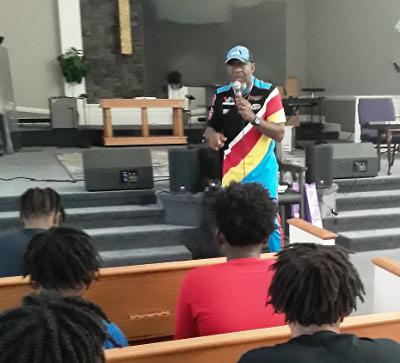
Willie Kitchens Teaches Youth at Camp REACH

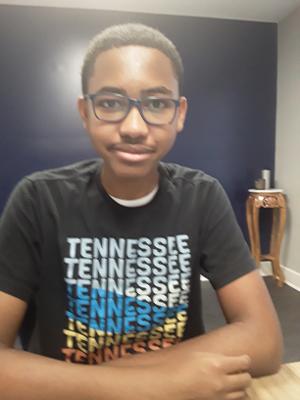
By Jaelyn Moon, 14, of East Ridge High School

Willie Kitchens, former lead singer of the Rock and Roll Hall of Fame group, The Impressions, brought his skills and talent to Camp REACH this summer.

“You are a little bit off pitch,” said Kitchens after listening to the Camp REACH choir sing. “We can work on that.”

The choir sings at Hope City Church at noon July 14. The event is free and open to the public. Students will also participate in a Spelling Bee, discuss reading improvements they’ve made through the Lexia Reading program and act in a skit about Mary Walker, a former slave who learned to read at age 116.

Timiethea DeLaney, who also teaches choir at the camp, says she hopes the choir and camp give teens an outlet to positively channel their energy and an appreciation for discipline.

“A lot of us, we don’t get discipline at home,” she said. “I want them to learn and grow, learn how to respect themselves, respect others and have self-control.”

Several students engaged in conversation and music lessons with Kitchens.

“I like that he didn’t go on and on preaching, or lecturing. He got right into the lesson or the fun part,” said LaToria Battle, a 14-year-old upcoming freshman at The Howard School. 

Kitchens promised that by the time the six-week camp ended, the group made of high school students from around the city would better understand stage presence and music.
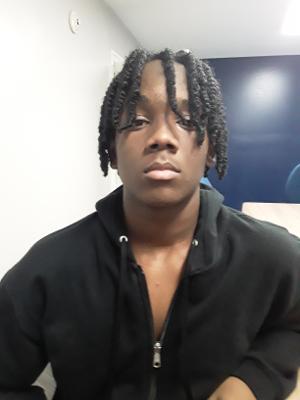
Jaelyn Moon, 14, attends East Ridge High School

The local pastor and professional singer has a lot of experience to share.

He released a 12-song gospel jazz CD in 2021 titled “You Kept Me” that tells how God never gave up on him despite his life struggles. But he is best known for joining as lead singer of the Impressions in 1999. The rhythm and blues group, which started in Chattanooga and once included the late lead singer Curtis Mayfield, was inducted into the Rock and Roll Hall of Fame in the early 2000s, said Kitchens.

Kitchens grew up in Chattanooga and fell in love with music. By age 16, he was a skilled bass guitarist and background vocalist. His father, Willie Kitchens Sr., taught him to play the guitar at age 10. Six years later, Kitchens joined the Five Sons of Calvary as a bass guitarist and background singer. He taught himself to play the harmonica, electric keyboard and piano, according to the website, https://www.thehistorymakers.org/biography/willie-kitchens-41.

At REACH, he did an amazing performance for students that included rapping, singing and even playing the piano. His main style is gospel music, but he can do it all.

“Somebody asked me today, do I do everything?,” said Kitchens. “I said well I do a lot.”

Then he performed a rap that left campers clapping and standing on their feet. 

If you go:

What: End of Camp REACH showcase

When: noon July 14

Where: Hope City Church, 7 North Tuxedo Ave.

The event is free and open to the public.
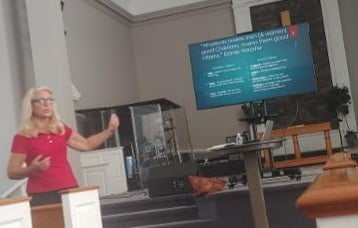
Former State Rep. Robin Smith Told Local Camp Reach Teens That Being Good Christians Makes Good Citizens

By Aaron Capp Tarver

Being born in America makes a person an American citizen and living in Chattanooga makes him a citizen of the city, but people who believe in Jesus Christ have the most important citizenship because that citizenship is eternal, said former State Rep. Robin Smith.

“We get so fixated on the here and now: school, parents, drama, Tic Toc, Instagram. Those are all important but you know what is most important? It’s that you were created in the image of God,” said Smith.

She spoke this month to more than 40 teens attending Camp REACH, a summer career camp hosted by the Mary Walker Foundation at Hope City Church. REACH is an acronym for Respect, Earn (money) Achievement, Citizenship and Hardwork.

Grayson Strickland, a 14-year-old freshman at Chattanooga Preparatory School attending REACH, was among several teens attentive to Smith’s presentation.

“She talked about how the nation was created,” said Grayson. 

“She told us about caring for other people,” said Jaziah Pinkerton. Jaziah is a 15-year-old Brainerd High School sophomore attending the camp.

Smith is one of several speakers who shared insights and experiences this summer. Other speakers included Frenise Mann, owner of Mann Financial Consulting; author and entrepreneur Lakweshia Ewing, who discussed race and diversity; and singer Willie Kitchens of the Rock and Roll Hall of Fame group The Impressions, who discussed stage presence and music.

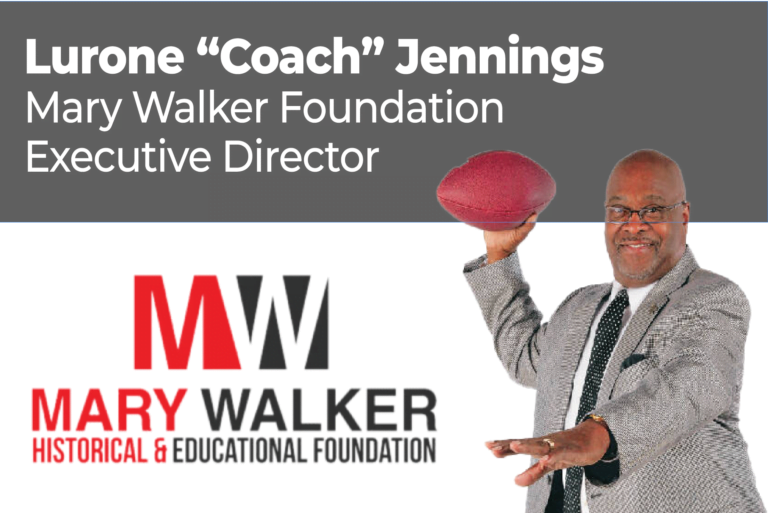
“We want to bring talented speakers and people who have been exposed to the world to help students understand there is a lot out there that they haven’t been exposed to,” said Lurone “Coach” Jennings, executive director of the Mary Walker Foundation.

Camp REACH student Aaron Capp Tarver.

“We want to give them insights on things to think about for their own future and help them plan their future beyond what they know about from their immediate surroundings.”

Smith, a Republican, was elected as the Representative for Tennessee’s 26th State House District in 2018. She resigned in March.

She told students that she made mistakes and that God forgives and redeems people. She gave the dictionary definition of citizenship but also talked about the opportunity that each of them has to be citizens of heaven.

Then she explained the benefits of being an American citizen compared to being a citizen of other countries.

Americans have the freedom to express themselves and to worship as they wish. They have a right to a prompt and fair trial by a jury. They also have the right to vote in elections for public officials, to own property and to pursue their dreams, said Smith.

But in China, the government permits neither free speech nor ownership of property. And instead of allowing people to pursue their dreams, most citizens of China are educated in a skill according to what’s needed by the government. Just because a teen in China wants to be a teacher, doesn’t mean he can pursue that profession. It depends on if the government needs it, said Smith.

Most people think of England as being pretty free, but all of the property in England is owned by the crown, the King and Queen of the country.

She also explained that taxes in many other countries are higher than in the United States.

She told them that the laws of the land are based on the laws in the Bible and she quoted  Daniel Webster who stated, “Whatever makes men good Christians, makes them good citizens.”

Webster’s cousin was Noah Webster who is credited for creating the Webster’s Dictionary.

Smith emphasized that everyone is created in the image of God and has “unlimited potential.” Then she challenged students to fulfill the potential given to them.

“You are literally, physically created to be in the image of God,” she said. “And then you get to choose what you fill yourself with. Fill yourself with stuff that is worthy of your wonderful mind, your wonderful will and your wonderful soul.”

Is Civil Disagreement Possible in Today’s Culture?

0

By Robin Smith 

Americans tout how progressive our society has become, yet working together and working beyond disagreements are two commitments that are almost extinct. And, yes, it is a commitment to decide to work with others and, if they exist, to move past differences.

Politics is always fingered as the reason Americans are so divided. Without question, significant differences exist across the complete political spectrum, from the most conservative on the right to the most liberal on the left. These differences are emphasized and magnified for the benefit of political interests to divide and conquer. 

But disagreements between individuals and groups are not confined to party politics or heated topics like abortion, gender confusion and whether the money you earn is owed to anyone other than the one who worked to earn it. 

Civil disagreement–those variances and differences of opinion, ideology and reasoning displayed with courteousness and politeness in manner–has been called a dying art.

Sometimes, it’s just easier to understand something by seeing what it is not. In the case of civil disagreement, it’s not winning the case with the loudest voice. It’s not eliminating another’s voice in a discussion because of a perceived difference of opinion or belief of superiority. Civil disagreement is not debate or discussion that includes personal attacks, name-calling or any escalation beyond discussion. 

In 2022, our public discourse is disgusting and bears no resemblance to an advanced society capable of innovation, achievement or forward movement when the Cancel Culture is a favorite tool of many who leverage social media to swarm and bully any who disagree with them. Resolving conflict is needed to avoid escalation and behavioral conditioning that devalues respect, discussion, self-control and collaboration. Put simply, if our families, communities and churches don’t value mutual respect and unity, not uniformity, we are endorsing the opposite through inaction.

Interestingly, our culture spends a vast amount of time devoted to discussions and efforts supporting diversity…unless it is a diverse opinion. Then, the tendency is to suppress and silence the individual possessing the opposing view. If a disagreement needs to be addressed, the wrong approach is to engage in self-serving, escalating behavior that immediately signals no desire to find a solution.

Conflict resolution is a process that essentially involves a mutual commitment to agree to disagree or to compromise, to move past that disagreement and to work together for the good of the cause or community. Very basic principles and actions involved in conflict resolution are listening, identifying common ground and demonstrating mutual respect throughout the process. 

So, back to the first question: Is civil disagreement possible in today’s culture? The answer depends on individuals making the commitment to mutual respect as demonstrated by listening, valuing others’ opinions and looking beyond self-interest and personal rights. A really simple way to say it is to treat others in the manner you want to be treated.

Consider the Iceberg – Gary and Monique Payton!

0

Psst, hey reader! If ever you needed an inspirational “The apple doesn’t fall far from the tree” story, then look no further. Monique Payton (the tree) and her son Gary (the apple) are textbook examples and are at the center of the inspirational story that follows. 

Let’s begin with Gary.

“Journeymen” is vernacular for players who play for multiple teams over the course of their professional basketball careers. Often, many are signed, released, resigned, picked up on short-term contracts by other teams or end up on rosters in development leagues hoping one day to get one last shot with a team in the National Basketball Association.

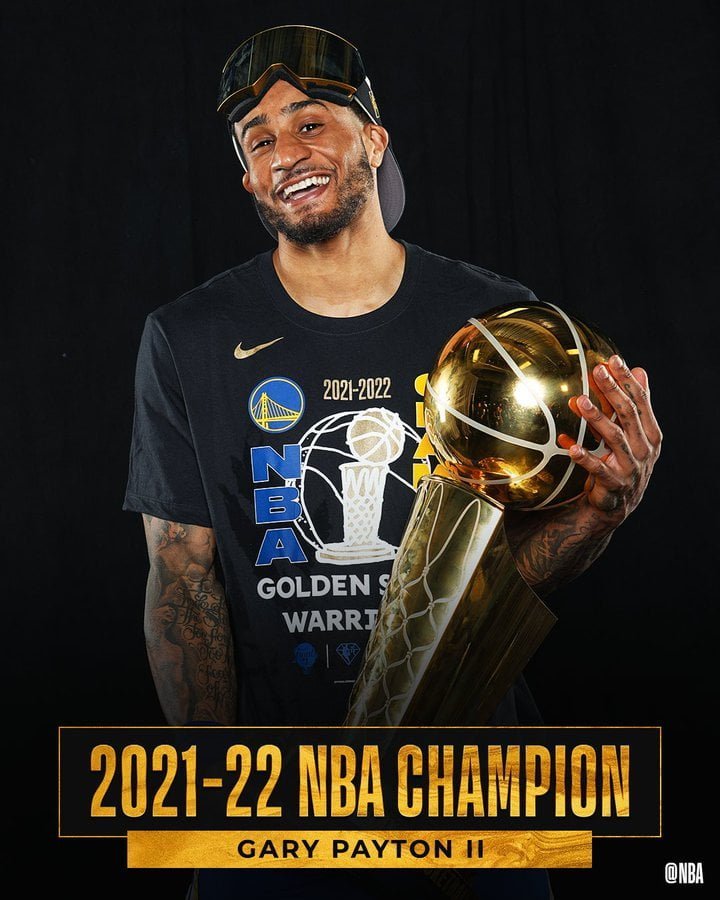
Which brings us to the compelling story of Gary Payton II, crowned last week as a member of the world champion Golden State Warriors. And what a story. 

Because of space limitations, I decided to share a synopsis of his story through the words of Payton’s grandfather, Ollan Christopher Bell, better known as Chris James, Douglasville, Georgia resident, co-founder of the 1970s hit-making group, The Natural Four and author of the book, “Music Saved my Life.” 

With temperatures hovering near 90 degrees, we sat on James’ patio sipping wine the day after the Warriors victory, interrupted frequently by his rumbustious dog Antionette who vied for our undivided attention. 

“Gary called and wished me a happy birthday the other day,” beamed Bell. “The last time I’d actually seen him was at a restaurant last year in California. And here we are, wow, a couple of days later and he’s a member of the world champion Golden State Warriors. Man, can you believe that?”  

To begin the story about his grandson, I wanted to know what thoughts raced through Ollan’s mind before and during the championship game. He paused, shooed Antionette away, and leaned back in his chair.

“Honestly, being a musician and not a true sports fan, I thought that Boston would win and that the final game would be won by the Warriors in San Francisco. But I was not surprised by the outcome because Gary has always worked hard for everything he’s achieved. He inherited that from his mother Monique who was a great swimmer, basketball player and all-around athlete. 

Now readers, we’ll need your imagination to “see” the story that follows. 

Now envision an iceberg, the tip of which is above the water. In that space visualize the picture of the above trophy-holding Gary Payton, II. But the bigger stories are the ones below the surface, the ones you cannot see that had an impact on the young Payton you see in the top of the iceberg. 

To begin, Payton was born in Seattle to Monique and Gary Payton while his father was a member of the NBA’s Seattle Supersonics. He played his college basketball at Oregon State University and was coached by Craig Robinson, the brother of former first lady Michelle Obama. 

Gary’s journey to the Golden State Warriors was a long and arduous one. Over his career Payton played with the Milwaukee Bucks, Los Angeles Lakers, Washington Wizards, Toronto Raptors and the Golden State Warriors in addition to teams in the NBA developmental league. 

He was waived by Golden State before the start of the 2021–22 season but was re-signed after he cleared waivers. He had a breakout season and started the first two games of the Western Conference semifinals against the Memphis Grizzlies. 

In Game 2, Gary fractured his left elbow when he went up for a layup but fell hard after the Grizzlies’ Dillon Brooks chased him down and hit him in the head while he was in the air. Incredibly, he recovered and in Game 5 of the finals he posted 15 points, five rebounds and three steals in a 104–94 win over the Boston Celtics.

Now let’s deep dive underneath the iceberg and learn something more that you may not know about Gary Payton II…. his struggle with dyslexia.

Briefly, dyslexia is a learning disorder that involves difficulty reading due to problems identifying speech sounds and learning how they relate to letters and words. Also called reading disability, dyslexia affects areas of the brain that process language. It’s important to know that people with dyslexia have normal intelligence. 

Although there’s no cure for dyslexia, early assessment and intervention result in the best outcome. Sometimes dyslexia goes undiagnosed for years and isn’t recognized until adulthood. Among famous dyslectic people are Whoopie Goldberg, Caitlyn Jenner, Tom Cruise, Albert Einstein, Thomas Edison and Winston Churchill.

Finishing up, I asked Ollan to tell me one other thing about his grandson that many may be surprised to know. With a smile on the face of a proud dad and granddad, he first told me that his daughter Monique started a foundation and a non-profit after her divorce from Gary’s dad. 

He then gave me a link to the Gary Payton II (GPII) Foundation, a non-profit organization that acts as a conduit for dyslexia-awareness, supports early screening, detection, and certified assessment for youth and young adults with languages-based learning challenges. 

Befittingly, on June 1, 2022, Gary received the Bob Lanier Community Assist Award (previously called the NBA Cares Community Assist Award) for the 2021-22 NBA season for his work in dyslexia awareness and education.

Yes indeed, with Gary and Monique Payton, “the apple doesn’t fall far from the tree!”

© Terry Howard is a contributing writer with the Chattanooga News Chronicle, The American Diversity Report, The Douglas County Sentinel, Blackmarket.com, Hometown Advantage, co-founder of the “26 Tiny Paint Brushes” writers’ guild, and recipient of the 2019 Dr. Martin Luther King, Jr. Leadership Award.

Red Flag Laws Saved 7,300 Americans From Gun Deaths in 2020 Alone – and Could Have Saved 11,400 More

0

By John A. Tures

Professor of Political Science, LaGrange College

Lawmakers in Congress are poised to pass the first gun control legislation in three decades. Among the elements in that legislation is support for states to pass what are called “red flag laws.”

These laws, already in place in many states, let police take guns from people deemed a threat to themselves or others. The laws also seek to bar those people from buying guns.

The proposal has emerged again in the wake of the mass school shooting in Uvalde, Texas, as well as others in recent weeks. The current draft of a Senate bill would make $750 million in federal funding available to help states administer a red flag law if they have or pass one – though states without them could also qualify for the money by adopting other policies unrelated to guns.

The contrast between states that have them and states that don’t provides a useful opportunity for a scholar like me, who uses data to help understand politics, to examine whether they may help reduce gun-related deaths.

19 states, plus DC, have red flag laws

Since Connecticut became the first in 1999, states across the country have enacted laws allowing police to seize guns from people a court agrees are dangerous – and often barring them from buying guns as well.

Red flag laws spread after Parkland shooting

The nation’s first red flag law was passed in Connecticut in 1999, allowing police – but not medical professionals or family members –to ask a judge for permission to seize the guns of a person believed to be imminently dangerous to themselves or others. In the subsequent two decades, a handful of other states passed similar laws.

In 2018, the mass shooting at Marjory Stoneman Douglas High School in Parkland, Florida, sparked a new crop of them. That year, Florida passed a red flag law, and many other states followed suit. By the end of 2021, 19 states and the District of Columbia had done so. Not every state is on board: In 2020, Oklahoma banned its counties and municipalities from passing red-flag laws.

While differing slightly from state to state where they do exist, these laws generally allow a judge to declare a person legally ineligible to own or purchase guns for a maximum of one year. The request has to come from the police or, in some states, a doctor or relative. The person can usually challenge the ruling in court, and police can seek extensions of the decision, which is often called a “risk protection order,” if they deem it appropriate.

In Florida, where the request must come from police, an average of five of these orders are granted every day.

Do they reduce gun deaths?

Research has shown that Connecticut’s red flag law reduced suicides, which involve firearms more than half the time.

To determine if red flag laws reduce gun deaths overall, I examined states’ firearm death rates, in light of whether they had a red flag law or not, in each of three years – 2018, 2019 and 2020.

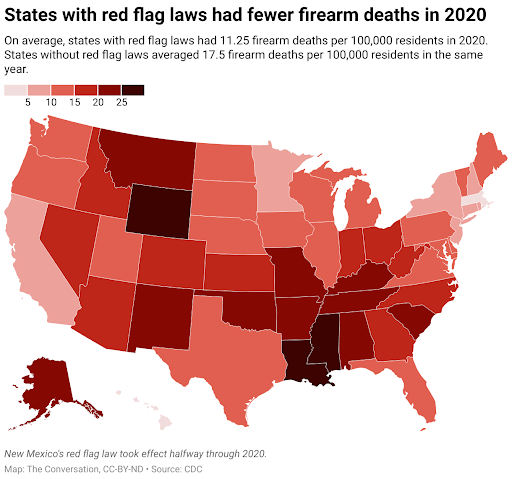
The seven states with the lowest firearm death rates for 2020 all had red flag laws. And 14 of the 15 states with the highest firearm death rates that year did not have a red flag law. The exception was New Mexico, where a red flag law took effect halfway through the year.

On average, states with red flag laws in 2019 and 2020 had significantly lower firearm death rates than states without them. In 2018, the average death rates for both groups were closer, but states with red flag laws still had a meaningfully lower rate.

Then I imagined those average firearm death rates applied to the whole country – if the whole nation had a red flag law, or there were none at all. In 2020, if there were no red flag laws, I estimate that 52,530 Americans would have died in gun deaths. The number actually recorded was 45,222, indicating red flag laws saved 7,308 American lives that year.

If red flag laws had existed either state by state or at the federal level, my estimate is that 33,780 people would have died by firearms in 2020 – saving an additional 11,442 lives. (The CONVERSATION)

(Editor’s Note:  No RED FLAG LAWS for: Tennessee; and surrounding states of Georgia; Arkansas, Alabama, Kentucky; Mississippi; North Carolina; South Caroline; Missouri.)

“Why The Shaking?” – In the Huddle

TODAY’S SCRIPTURE

(Acts 8:3–4, NLT)

But Saul was going everywhere to destroy the church…But the believers who were scattered preached the Good News about JESUS wherever they went.

TODAY’S WORD

The early church was flourishing and doing great things in Jerusalem. But then a persecutor named Saul came along and wreaked havoc against the church, shaking the disciples’ lives. Believers were forced to flee their homes and livelihoods and were scattered through the regions of Judea and Samaria. I’m sure they thought, “GOD, why did YOU allow this?” But sometimes GOD allows things to be shaken to shift us. In this case, it caused the gospel to be spread and new churches to be established. In life, we all have times when things shake us to our core–an unexpected illness, a lost loved one, a job layoff. All the stability we were used to is no longer there. It’s easy to get discouraged. But here’s the key: The shaking is not there to stop you; the shaking is there to shift you. If you keep the right attitude, the shaking will shift you into promotion, into greater influence, into better relationships. GOD uses shakings to get us in position for new levels.

PRAYER FOR TODAY

FATHER, thank YOU that times of shaking in my life are not going to stop me, but they will shift me. Thank YOU that the things meant for my harm are going to lead me into promotion and things that are better. I believe that I am going to see favor and blessing I’ve never seen. In JESUS’ Name, Amen.

Mozelle Davis Obituary

Retiree of Chattanooga Police Department and faithful member of Hope City Church.

Mozelle Davis, 77, of Chattanooga, passed away on Thursday, June 16, 2022.

Mozelle was retired from Chattanooga Police Department after 23 years of service.

Mozelle was proceeded in death by her parents: Mose and Willie Mae Swint; brothers, Willie Cecil Swint, David Swint, Roosevelt Swint, Charles Swint, and Lebron Swint; sister, Barbara Russell; and grandson, Robert Davis.

She leaves to cherish her memory: a son Terrance (LaTysha) Swint; a daughter Valarie Dave; a granddaughter Jacques Dave; three grandsons Javonte Dave, Rashawn Dave and Joshua Ogletree; a sister Rosa Farmer; a brother Bennie Swint; three sisters in law Sarah (David) Swint, Bert (Roosevelt) Swint, Nyla (Willie Cecil) Swint and a host of family and friends.

Visitation will be held from 1pm-5pm on Thursday, June 23 and 9am to 11am on Friday, June 24, at Taylor Funeral Home at 3417 Wilcox Blvd, Chattanooga.

A Celebration of Life service will be on Friday, June 24, at 1 p.m. at the Hope City Church with Pastor Ciby Thomas officiating. Interment will follow at Lakewood Memory Gardens East.

Arrangements are entrusted to Taylor Funeral Home of Chattanooga, Inc.

Biden Asks Congress to Pause Gas Tax Amid Record Pump Prices

By Jarrett Renshaw

(Reuters) – U.S. President Joe Biden on Wednesday called on Congress to pass a three-month suspension of the federal gasoline tax to help combat record pump prices and provide temporary relief for American families this summer.

The president also urged states to temporarily suspend state fuel taxes, which are often higher than federal rates, the official said, and will challenge major oil companies to bring ideas on how to bring back idled refining capacity when they meet with his energy secretary later this week.

Biden and his advisers have been discussing the issue for months amid increasing pressure to act as record-high gas prices weigh down the president’s poll ratings and cast a dark cloud over Democrats’ chances of retaining congressional power in November’s elections.

A suspension of the 18.4 cents per gallon federal gasoline tax and 24.4 cent diesel tax would require congressional approval, likely making Biden’s pitch largely symbolic.

Lawmakers in both parties have expressed resistance to suspending the tax, with some Democrats, including House of Representatives Speaker Nancy Pelosi, worried the move could have limited effect on prices if oil companies and retailers pocket much of the savings.

“A gas tax holiday alone will not, on its own, relieve the run up in costs that we’ve seen,” the White House said in a statement. “This unique moment when the war in Ukraine is imposing costs on American families, Congress should do what it can to provide working families breathing room.”

Biden is asking Congress to suspend the fuel tax through September, a move that will cost the Highway Trust Fund roughly $10 billion in forgone revenue but could be made up from other areas of a budget that is seeing revenue grow and deficits shrink as the United States emerges from the COVID-19 pandemic, it added.

Some states, such as New York and Connecticut, have already paused state fuel taxes, while others have floated ideas such as consumer rebates and direct relief.

News of Biden’s announcement – which will come in an afternoon speech – first came on Tuesday night.

Refiners are struggling to meet global demand for diesel and gasoline, exacerbating high prices and aggravating shortages.

“Pausing the federal gas tax will certainly provide near-term relief for U.S. drivers, but it won’t solve the root of the issue – the imbalance in supply and demand for petroleum products,” a spokesperson for the American Fuel and Petrochemical Manufacturers industry group said, adding longer-term policies are still needed to boost U.S. energy production.

U.S. pump prices are near $5 a gallon as soaring demand for motor fuels coincides with the loss of about 1 million barrels per day of processing capacity. In the last three years many plants were closed when fuel demand cratered at the height of the COVID-19 pandemic.

(Reporting by Jarrett Renshaw; additional reporting by Katharine Jackson; Editing by Ross Colvin, Christopher Cushing, Susan Heavey and Nick Zieminski)

Bessie Smith Cultural Center to Open New Exhibit

CHATTANOOGA, TN (June 21, 2022) On June 25, 2022, the Bessie Smith Cultural Center will open Phase II of the New Museum Vision in the Vilma Fields Atrium.  The new exhibit titled “Chattanooga’s Black Soundtrack” was created to preserve and celebrate the central role African Americans play in creating America’s music.  The professionally curated collection will share the story of Chattanooga African American entertainers by integrating history and interactive technology.  Not only does the exhibit feature well-known Chattanoogan’s such as Usher, Kane Brown, the Impressions, and Montego Glover, but it also highlights those entertainers who performed in the night clubs on the Big Nine and notable musicians such as Booker Scruggs, Deacon Bluz, and many others.

In exploring how the intermingling of musical and cultural traditions, styles, and beliefs, brought forth new modes of American musical expression, the exhibition expands the definition of African American music to include African American music-makers of all genres and styles.

More importantly, in a land where racism and oppression existed as a continuing battle to be fought against and won, it shows how African American music provided a voice for liberty, justice and social change. Visitors will be able to appreciate African American music as a vibrant living art form that has been a vehicle of cultural survival and creative expression.

The museum will open on June 25 at 10:00 am with a ribbon cutting ceremony.  Visitors will be able to tour the museum until 5:00 pm.  Museum admission is free on this day and there will be food trucks and music on the lawn of the Bessie Smith Cultural Center.  Uncle Larry’s, Fūd Vybez, and Sugar, Spice, & Everything Ice food trucks will be selling great food and cool treats throughout the day.

This exhibit was made possible by museum partners, Benwood Foundation, Lyndhurst Foundation, Chattanooga Tourism Company, Coca Cola, Tennessee Arts Commission, Kazee, and the City of Chattanooga.

For Additional Information contact:

Paula Wilkes, Bessie Smith Cultural Center (423) 266-8658