Friday, October 16, 2026
Advertisement
Home Blog Page 120

4 Exercises to Aid in Strengthening Your Memory

0

Have you ever mentally created a grocery list, knowing everything you’d get because you’ve needed it for a few days? Then You go to the store, and out of the ten things you needed, you walk out with one thing from your list and 20 other items you hadn’t needed or would use immediately. How did that happen? Whether a person is younger or older, having a sharp memory is essential to function in life, and we need to work hard to keep our memories intact as we age. 

They say muscles are made in the kitchen, but what about muscle memory – how are they made? Here are four ways to improve your memory.

. The Four Detail Observation Exercise

While out and about, select one person and make a mental note identifying four things about them. Then, throughout the day, try to remember those four points. The more you do, the more your memory improves. 

2. Repeat, Recall

Increase cognitive functioning through active listening. While engaging in conversation, silently repeat what the other person is saying. This act forces you to engage in the conversation instead of building responses to what you think they may say.

It also compels you to pay attention, reduces distractions, and ensures you’re all into your discussion. The key here is to remember the conversation once you’ve parted ways. 

3. Take the Long Road Home

It’s easy to jump into our routines. After all, they are routines for a reason. They keep us on track, and we know their potential outcomes based on experience. It’s a mindless activity given its repetitive nature.

Now, there is nothing wrong with routine, but a disruption in our patterns forces us to engage in alternative processes, which improve our mental ability to function.

Taking the long way home could mean different things to different people. It could mean changing your route home, going to a new grocery store, and walking a new terrain instead of running.

Our disrupted actions aid in increasing our memories, so when we jump back into our routines, who knows – we’ll have

Release From the Prison of Regrets! (Part Two)

0

Apparently my last one, “The Lifelong Regret,” touched (torched?) a few raw nerves. Proof positives are the many lengthy phone conversations on the topic of “regret” that made me cringe at the thought of the size of my next phone bill.  

You see, some conversations were longer than I anticipated since I’m not skillful at effectively hinting, “hey, gotta go.” And others were of the brief “sorry but I don’t want to talk about that stuff” category. 

Now the common thread in all those recollections were the immediacy of the responses to my query and the length of time transpired that caused those regrets; a few more than five decades ago. 

Although many I talked to have yet to come to terms with a particularly painful regret, my sense was that it was cathartic for them to share theirs once I opened up by sharing a few of mine. 

Let’s first center up on a simple definition. Aleks Krotoski defines a regret as “that sinking, nagging feeling we get when we realize we have made the wrong choice, or when things have not gone the way we hoped or imagined they would.”

With that definition sinking in with you readers, check out a few regrets that surfaced during my recent conversations:

“Because of school integration, my biggest regret in life was not being able to fulfill my dream of graduating from and playing on the basketball team at the predominately African-American Julius P. Rosenwald High School that closed down.”    – Chris W.

“My biggest regret is that I married way too early to the wrong man although I had two great children from that marriage.”  – Pat S.

“Shamefully, I caved into peer pressure, joined a fraternity in college and engaged in acts of hazing and other things I’m ashamed of today.”  –Floyd L.

“I now regret that I did not speak up when I was the target of a sexist comment during a homeowner’s meeting of which I was the chair.” –Shirley A. 

“I regret that getting a girl pregnant in high school and never married her or developed a relationship with our son from that union. He still refuses to have anything to do with me. “-John P.

Back to Chris W. above, a talented yet complicated and sometimes misunderstood history buff who I’ve dubbed “the compelling storyteller” (or “griot” as attorney “Ms. Jackson” affectionally describes him.) 

Near the end of our hour-long conversation, I shared my worry about opening a keg of worms filled with decades of folks’ nagging regrets. But in mid-sentence he stopped me dead in my tracks with this:

“C’mon bro, there’s something powerful in asking about real examples of personal regrets. I say that because there’s a good chance that others will relate to some of them at some level and others may be much more circumspect about decisions they’re about to make, not wanting to make a similar mistake.”

Thanks Chris. I needed that reality check, that kick in the rear end!

Krotoski cautions that regret can keep us looking back rather than moving forward. If you find yourself overwhelmed by regrets, Krotoski says, then the approaches below might help:

• Accept that making mistakes is part of life – none of us are perfect! Humans are fallible and some regret is inevitable.

• See a bad decision as an opportunity to learn. Focus on the things you can control, not the things you can’t.

• Avoid self-shaming. Rather than thinking, “I shouldn’t have done that”, say to yourself, “I’ll learn from this and do better next time.”

• Share your regrets to help others. Telling others about your regrets will help them too if they are faced with similar decisions.

• Focus on the good decisions you made and the things you did well. There are always things that you did right.

• If your regrets are about how your actions affected other people, then apologize. Take positive action to right the wrongs.

I liken how we respond to regrets to how batters sometimes respond to “blowback pitches” – in baseball parlance when they fall to the ground to avoid getting hit by a fastball, then get up and hit a game winning homerun.

You see, Chris responded to his “blowback pitch” by getting up and salving his regret with positive actions by moving from letdown to triumph. 

First, he arranged for the showing of an eye-opening Rosenwald documentary in a downtown theater in 2018 that was completely sold out. And second, he was asked to chair the Rosenwald High School 2022 reunion which resulted in the biggest turnout ever.

Since then, after putting the final nail in his regret coffin, Chris continued as an expert in and storyteller about African American history in his part of the state, and beyond.

So please don’t regret not sharing this piece with someone dear to you because doing so may turn out to be a game (or trajectory) changer you never anticipated.

Just saying….and not regretting!© Terry Howard is an award-winning writer and storyteller. He is also a contributing writer with the Chattanooga News Chronicle, The American Diversity Report, The Douglas County Sentinel, Blackmarket.com, co-founder of the “26 Tiny Paint Brushes” writers’ guild, recipient of the 2019 Dr. Martin Luther King, Jr. Leadership Award and 3rd place winner of the 2022 Georgia Press Award.


Chattanooga Area Food Bank Partners With the Bethlehem Center for Grant Award as Part of Feeding America’s Food Security Equity Impact Fund

0

$250,000 Awarded to Address Food Insecurity Disparities by Race and Ethnicity in Chattanooga

Chattanooga, TN – Chattanooga Area Food Bank is proud to announce that it is one of 25 food banks receiving a grant from Feeding America®, the nation’s largest hunger-relief organization, as part of their Food Security Equity Impact Fund. The $250,000 grant will support a partnership between the food bank and The Bethlehem Center to address the root causes of hunger and food insecurity in communities of color in Chattanooga by developing and advocating for change and developing solutions to improve food insecurity and to create a more just food system.

“This is a major step in our journey to center our work in community-led change and co-development of solutions to end hunger,” says Melissa Blevins, President & CEO of the Food Bank. “This is a guiding example of collective impact when our work is grounded in equity and centered around the community.”

With every award from the Food Security Equity Impact Fund, a minimum of 85% of awarded dollars were allocated to community partners, purposefully driving resources to organizations with historical barriers to access funding, led by and serving people of color. The Chattanooga Area Food Bank and The Bethlehem Center will work to empower residents of marginalized communities of color in Chattanooga to lead efforts in improving food access, particularly in relation to systemic inequity and policy regarding food access by developing strategies for change and advocating for their community at the city-wide level around issues of food access and insecurity.

“We know that communities of color experience food insecurity at disproportionate rates. As we work to improve food access for all, we need to invest in local organizations whose work helps to remove barriers that lead to long-term or multi-generational food insecurity,” said Ami McReynolds, chief equity officer of Feeding America. “The work proposed by food banks and their community partners for these grants is inspiring. Our hope is that we learn from these community investments and together, in partnership with people facing hunger, work to dismantle the systems that drive inequity and truly end hunger in America.”

Feeding America established the Food Security Equity Impact Fund in March 2021 to drive investments to communities of color which are disproportionately impacted by food insecurity. Data shows Black, Latino, Native American, and Pacific Islanders experience food insecurity at rates 2-3 times higher than that of white individuals, and food insecurity among Asian subgroups varies substantially leaving some subgroups at heightened risk. In Chattanooga, households of color are 3.5 times more likely be food insecure. Individuals of color saw a 25% increase in food insecurity, while Caucasian individuals saw a 6% decrease in 2020.

For more information about the Chattanooga Area Food Bank visit chattfoodbank.org To learn more about The Bethlehem Center and their efforts visit thebeth.org

Liz Cheney trounced: ‘Black sheep effect’ and GOP partisan identity explain her decisive defeat after criticizing Trump

0

You probably know that Wyoming Rep. Liz Cheney, the GOP’s strongest – and loneliest – Donald Trump critic, lost her reelection bid this week. You probably know it’s because Trump waded into the race, bent on revenge, and endorsed a rival GOP candidate. You may even know that Cheney quoted both Presidents Abraham Lincoln and Ulysses S. Grant in her concession speech.

But what you may not know is how the once-popular Wyoming legislator could be unseated by what political philosopher Robert Talisse describes as a “one-term, twice-impeached and historically unpopular former president” who was able to “catapult an unknown candidate into a massive win over an effective incumbent.”

Talisse, who teaches at Vanderbilt University, offers an elegant lesson in how the public interest can be subverted by partisan identity – an increasing problem in America’s democratic system.

“We assume that voters first determine their interests and then support candidates who will best advance them,” he writes. But this assumption puts things backward: “In today’s hyperpartisan America, political interests are the product of political allegiances – not the other way around.” (The CONVERSATION –Naomi Schalit Senior Editor, Politics + Society)

Sen. Bill Hagerty, Rep. Chuck Fleishmann and Curtis Dubay, U.S. Chamber of Commerce Featured at 2022 Federal Focus: Mayor Jim Coppinger Honored with Keys to the City  

0

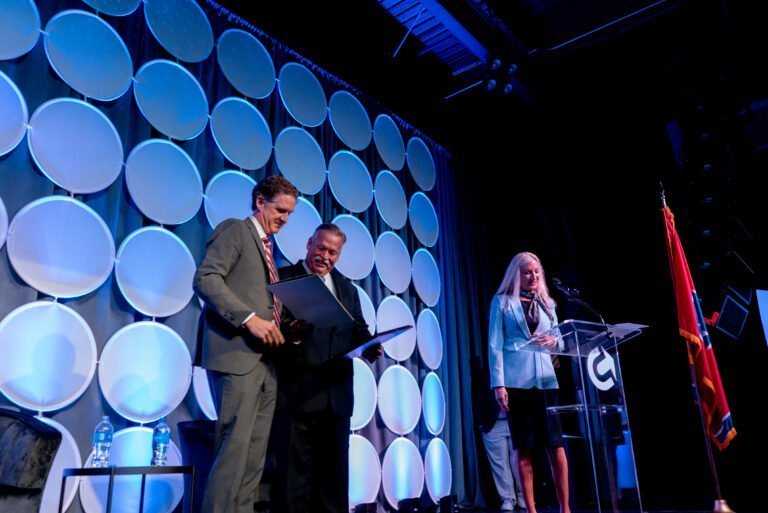
Chattanooga, Tenn.  — Tennessee Sen. Bill Hagerty and Rep. Chuck Fleischmann, 3rd District, Tennessee, joined Justin Furrow, Chambliss Bahner & Stophel, at The Signal for Federal Focus 2022. Delegation members discussed the state of Washington, inflation, workforce development, among other topics during a Q&A session moderated by Furrow.  

Jim Coppinger, Mayor, Hamilton County was honored with the keys of the city in a special presentation by Tim Kelly, Mayor, City of Chattanooga – making August 25, Jim Coppinger Day. Furrow was also honored for his service on the Executive Committee Board of the Chattanooga Area Chamber of Commerce with Rep. Fleischmann adding Furrow to the Congressional Record.  

Curtis Dubay, Chief Economist, U.S. Chamber of Commerce closed the event with a video presentation on the state of the economy. Other members in attendance include Christy Gillenwater, President, CEO, Chattanooga Chamber of Commerce; Sharon Law, Business Development Manager, Thompson Engineering, Policy Committee Chair, Chattanooga Chamber of Commerce; as well as city, county, and state delegation representatives.  

(About Federal Focus:  Federal Focus is the Chattanooga Chamber’s signature Public Policy event highlighting how policies in Washington affect Southeast Tennessee. The Chattanooga Chamber of Commerce and presenting sponsor EPB hosted Federal Focus 2022 at The Signal.)  

Keep Your Kids Safe and Informed

Bullying affects one out of every five students ages 12-18 in the U.S. Here are ways you can help if you think your child is being bullied, bullying others, or witnessing it:Be on the lookout for behavioral or emotional changes in your child. Talk to them since sometimes kids won’t ask for help.Learn what bullying is and isn’t. Many behaviors that look like bullying may be serious but need different responses.Find out how you and school or community officials can help your child if bullying happens.Learn about your state’s anti-bullying laws for schools. Federal laws require schools to address harassment based on race, color, national origin, sex, and disabilities.Work with your child to prevent and deal with cyberbullying. Talk to your child about bullying before it happens. This makes it easier for them to tell you if something occurs.Visit StopBullying.gov for more information about these and other actions you can take to help your child. (Source:us.gov)

Biden-Harris Administration Announces Final Student Loan Pause Extension Through December 31 and Targeted Debt Cancellation to Smooth Transition to Repayment

0

Last month in August, the U.S. Department of Education (Department) announced a final extension of the pause on student loan repayment, interest, and collections through December 31, 2022. Borrowers should plan to resume payments in January 2023. While the economy continues to improve, COVID cases remain at an elevated level, and the President has made clear that pandemic-related relief should be phased out responsibly so that people do not suffer unnecessary financial harm.

To address the financial harms of the pandemic by smoothing the transition back to repayment and helping borrowers at highest risk of delinquencies or default once payments resume, the Department will provide targeted student debt cancellation to borrowers with loans held by the Department of Education. Borrowers with annual income during the pandemic of under $125,000 (for individuals) or under $250,000 (for married couples or heads of households) who received a Pell Grant in college will be eligible for up to $20,000 in debt cancellation. Borrowers who met those income standards but did not receive a Pell Grant will be eligible for up to $10,000 in relief. The Department will be announcing further details on how borrowers can claim this relief in the weeks ahead. The application will be available no later than when the pause on federal student loan repayments terminates at the end of the year. Nearly 8 million borrowers may be eligible to receive relief automatically because relevant income data is already available to the Department. The Department is also making available a legal memorandum regarding its authority for these discharges.

The Department is also proposing a rule to create a new income-driven repayment plan that will substantially reduce future monthly payments for lower- and middle-income borrowers. The proposed rule would protect more income from loan payments. It would cut in half—from 10% to 5% of discretionary income—the amount that borrowers have to pay each month on their undergraduate loans, while borrowers with both undergraduate and graduate loans will pay a weighted average rate. It would also raise the amount of income that is considered nondiscretionary income and therefore protected from repayment. The rule would also forgive loan balances after 10 years of payments, instead of the current 20 years under many income-driven repayment plans, for borrowers with original loan balances of $12,000 or less. Additionally, the proposed rule would fully cover the borrower’s unpaid monthly interest, so that—unlike with current income-driven repayment plans—a borrower’s loan balance will not grow so long as they are making their required monthly payments. The plan would also simplify borrowers’ choices among loan repayment plans. The proposed regulations will be published in the coming days on the Federal Register and the public is invited to comment on the draft rule for 30 days.

“Earning a college degree or certificate should give every person in America a leg up in securing a bright future. But for too many people, student loan debt has hindered their ability to achieve their dreams—including buying a home, starting a business, or providing for their family. Getting an education should set us free; not strap us down! That’s why, since Day One, the Biden-Harris administration has worked to fix broken federal student aid programs and deliver unprecedented relief to borrowers, ” said U.S. Secretary of Education Miguel Cardona. “Today, we’re delivering targeted relief that will help ensure borrowers are not placed in a worse position financially because of the pandemic, and restore trust in a system that should be creating opportunity, not a debt trap.”

Additionally, the Department is proposing long-term changes to the Public Service Loan Forgiveness (PSLF) program that will make it easier for borrowers working in public service to gain loan forgiveness. Specifically, the Department proposed allowing more payments to qualify for PSLF including partial, lump sum, and late payments, and allowing certain kinds of deferments and forbearances – such as those for Peace Corps and AmeriCorps service, National Guard duty, and military service – to count toward PSLF. These proposed regulatory changes build on the progress made with the temporary changes announced last year by the Department that expire on October 31, 2022. Since the start of the temporary changes, the Department has approved more than $10 billion in loan discharges for 175,000 public servants. To apply for forgiveness or payments to count toward forgiveness under the temporary changes, visit the PSLF Help Tool.

The Department is also taking steps to reduce the cost of college for students and their families and hold colleges accountable for raising costs, especially when failing to deliver good outcomes to students. The Department has already re-established the enforcement unit in the Office of Federal Student Aid and recently withdrew authorization for the accreditor that oversaw schools responsible for some of the worst for-profit scandals. The agency will also propose to reinstate and improve a rule to hold career programs accountable for leaving their graduates with unaffordable debt. And the Department is announcing new steps to take action against colleges that have contributed to the student debt crisis. These include publishing an annual watch list of the programs with the worst debt levels in the country and requesting institutional improvement plans from colleges with the most concerning debt outcomes that outline how the college intends to bring down debt levels.

The Biden-Harris Administration will keep fighting to reduce the cost of higher education by working to make community college free and doubling the maximum size of the Pell Grant.

Beck Cultural Center Holds 8th Annual  Eighth of August Red Carpet Event 

By Vivian Shipe

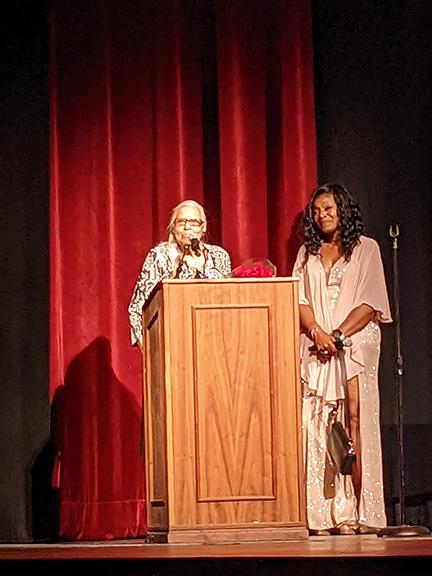
KNOXVILLE, TN — As they have for the last seven years, the Beck Cultural Exchange Center culminated a weekend of festivities acknowledging the date (August 8) slaves were freed in Tennessee with the debut film presentation of a film by Emmy Award winner Loki Mullholland.

The film did not disappoint. With Civil Rights legend Jo Ann Bland as the film moderator, “After Selma” tells the story of what happened after the Bloody Sunday attempted crossing of the Edmund Pettus Bridge from Selma to Montgomery in a march for voting rights by over 600 people who were beaten during the event 

The event held at the Tennessee theater was well attended and featured several wonderful events during the program including drumming presentations by Guns Up Drums Down and a highlight of the evening, the presentation of the Heritage Award to the honorable Lois Goins LeFlore.

Camping Out in Calculus Class

0
The goal of the Calculus Prep Camp is to help students bypass a pre-calculus class, which usually is required before a student can take any calculus course.

By Shawn Ryan

Since eighth grade, Zoe Hubbard has known she wanted to design video games but not for late-night bouts of “Fortnite” or “League of Legends.”

She wants her games to help people with Alzheimer’s disease, dementia, ADHD and other brain-based conditions. Studies have shown that activities in a virtual world can help with memory, comprehension, awareness and, in turn, overall physical and emotional health.

First, though, the games must be fun, she said.

“You can use video games as a form of education, and a lot of the educational games out there aren’t that good, so you kind of tune out and don’t learn much,” said Hubbard, who plans to major in computer science this fall semester as a freshman at the University of Tennessee at Chattanooga.

Her lifetime goal is the reason she enrolled in the Calculus Prep Camp this summer at UTC.

“All coding runs on basic calculus,” said Hubbard, who graduated from Renaissance High School in Franklin, Tenn.

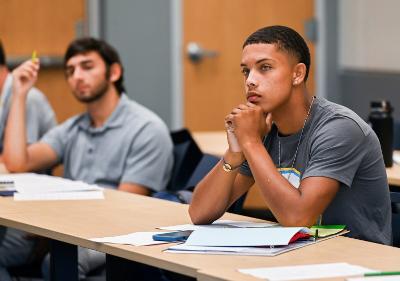
Now in its second year, the camp is a collaboration between the UTC Department of Mathematics and College of Engineering and Computer Science. Although it’s a two-week summer camp, no one is eating warm s’mores or making macaroni art, although stringing together the numeric beads needed to solve calculus equations could be considered an art form since not everyone has the talent.

Its goal is to help students bypass a pre-calculus class, which usually is required before a student can take any calculus course. Most math, engineering and computer science students must take calculus to earn their degree.

At the end of the prep camp, students–who must have an ACT math score of 24 or higher to be accepted–take an exam and, if they pass, can vault straight into college calculus.

All 16 of this summer’s calculus campers were pursuing majors that require calculus, said Tracy Hughes, senior lecturer in the Department of Mathematics and one of the camp’s instructors.

“We want them to pass the test and be successful, but we also want to make sure that we are truly preparing them,” she said.

“For a lot of their courses, calculus is a prerequisite; so if they don’t start in their freshman year in Calculus One, that means there’s a whole slew of classes that they can’t take until their sophomore year,” Hughes explained.

This summer, all the campers were incoming UTC freshmen, but that’s not a requirement.

Camp is free, and so are housing and meals if the students live on campus during the two weeks. Costs are covered by the College of Engineering and Computer Science.

The camp includes classroom lessons, lectures, practice and homework using computer-based software. Students also take chaperoned trips around campus and downtown Chattanooga.

There’s more to attending the camp than avoiding a single course. Not having to take pre-calculus can save UTC students about $1,650 each in tuition and fees.

The world has calculus–the mathematical study of multiple changing variables–to thank for solutions to its engineering and computer problems, but it’s not for everybody. For non-math people, a classroom lesson might sound like it’s being taught in the language of planet Saywhat.

“What happens if we have this time-compounding equality? We’re going to have to add six. All of the sides, right? So then we’re going have negative three less than or equal to four B less than and, if I add six over here, we get 18, yeah?” Hughes asks.

Phrases like “compounding equality,” “improper fraction” and “interval notation” crop up.

Levi Miller understands the lessons well enough to correct Hughes on a couple of points. He’s right, she admits.

A graduate of Sequatchie County High School in Dunlap, Tenn., he’s known since sixth grade that he wanted to be a civil engineer, he said. He’s not completely sure how calculus combines with civil engineering, he just knows it does.

“I need at least some calculus-based knowledge,” he said.

With a plan to graduate in four years, taking pre-calculus would slow that goal, he said.

“I’ve got to keep my credit hours all up, so pre-calculus just would leave me behind.”

Election Officials Expect ‘Very Low’ Turnout for the Sept. 15 District 8 City Council Runoff

By Camm Ashford 

Officials are predicting that only a small percentage of registered voters will participate in Chattanooga’s District 8 City Council runoff election on Sept. 15.

“We expect a very low turnout,” Kristi Berry, chief deputy with the Hamilton County Election Commission, told the Chattanooga News Chronicle in a phone interview. “Maybe about 3 percent.”

There were 1,324 votes cast out of 8,193 eligible voters (around 16%) in the District 8 contest on Aug. 4 to fill out the remainder of the term of former Councilman Anthony Byrd, who in February resigned his post on the nine-member council to become Chattanooga’s new City Court clerk.

City Council voted 7-1 to have a runoff, if necessary, in the District 8 race. 

Community activist Marie Mott was the top vote-getter in the three-person race Aug. 4, but did not get over 50 percent of the vote. She is in the runoff along with Marvene Noel, who was appointed by the council as the interim.

Chattanooga Mayor Tim Kelly has endorsed Noel. Malarie Marsh, who finished third in the primary race, has endorsed Mott. 

The Election Commission’s Berry estimated the cost of putting on the Sept. 15 runoff at “between $75,000 to $100,000.” 

She said the estimate includes charges for early voting, staffing, ballots, truck rentals and supplies. The cost of the special election will be borne by the city of Chattanooga.

Early voting for the District 8 runoff race will take place at the Hamilton County Election Commission, 700 River Terminal Rd., until Sept. 10. 

On Sept. 15, polls will be open from 8 a.m. to 7 p.m. at: Alton Park-Bethlehem Center, 200 W. 38th St.; Avondale-Avondale Community Center, 1305 Dodson Ave.; Bushtown-Carver Community Center, 600 N. Orchard Knob Ave.; Courthouse-Olivet Baptist Church (Kingdom Center), 730 E. MLK Blvd.;

Downtown-Dogwood Manor Community Room, 959 Gateway Ave.; East Chattanooga-East Chattanooga Community Center, 2409 Dodson Ave.; East Lake-East Lake Senior Center, 3208 E. 15th Ave. and Eastside/Ridgeside-Clear Story Arts (Gallery Room), 1673 S. Holtzclaw Ave.

You must be a registered voter whose residence is in City Council District 8 to vote in this race.You can check if you are eligible to vote on the Election Commission’s website at https://hcvoter.hamiltontn.gov/voterrequest/voterinfoRequest.aspx. You can also call the Election Commission at 423-209-8683 (VOTE) between 8 a.m.-4 p.m. on weekdays.