On view September 30, 2022 through January 8, 2023
Chattanooga, Tenn. – Wrapping up its 70th anniversary, yearlong focus on collecting, The Hunter Museum of American Art is pleased to announce the final of three, anniversary-year special exhibitions featuring collections. Opening the evening of Thursday, September 29 at 6pm, Memories & Inspiration: The Kerry and C. Betty Davis Collection of African American Art celebrates the passion of an ordinary couple who spent more than 35 years as devoted connoisseurs, building a collection of vivid artworks that are both resonant and remarkably personal.
Memories & Inspiration presents 67 selected works from a body of art amassed over 35 years. Kerry, a retired mailman, and Betty, a former television news producer, gladly gave up many ordinary comforts in order to live with extraordinary paintings, drawings, prints, and sculptures as their principal luxuries. Their collection includes works by Radcliffe Bailey, Romare Bearden, Beverly Buchanan, Elizabeth Catlett, Ernest T. Crichlow, Sam Gilliam, Loïs Mailou Jones, Jacob Lawrence, Gordon Parks, Alma Thomas, and Charles White, but Kerry and Betty do not search exclusively for well-known and/or documented artists. Rather, they focus on the more meaningful task of gathering and preserving a range of artistic approaches to the black image, in order to console the psyche and contribute to a more authentic articulation of the self.
The result is an eclectic gathering of pieces crossing different mediums, subjects, and styles by a group of artists of the African Diaspora who are strikingly diverse but unified in their use of cultural and historical narratives. Memories & Inspiration brings together an awe-inspiring selection of works, but it is their personal resonance—their connection to the Davises’ hopes, passions, and everyday lives—that gives the collection its unique power.
This astonishing private collection rounds out the Hunter Museum’s year of focusing on art collecting. Join us at the museum for Memories & Inspiration as well as numerous related programs through the end of the year in celebration of the Hunter’s 70th anniversary. Visit www.huntermuseum.org to learn more.
International Arts & Artists in Washington, DC, is a nonprofit arts service organization dedicated to increasing cross-cultural understanding and exposure to the arts internationally, through exhibitions, programs and services to artists, arts institutions and the public. Visit ArtsandArtists.org
Memories & Inspiration: The Kerry and C. Betty Davis Collection of African American Art was organized and toured by International Arts & Artists, Washington, DC.
MEMORIES & INSPIRATION: THE KERRY AND C. BETTY DAVIS COLLECTION OF AFRICAN AMERICAN ART
Memories & Inspiration: The Kerry and C. Betty Davis Collection of African American Art” was organized and toured by International Arts & Artists, Washington, DC.
You have the right to speak out, hand out flyers and petitions, and wear expressive clothing in school — as long as you don’t disrupt the functioning of the school or violate school policies that don’t hinge on the message expressed.
What counts as “disruptive” will vary by context, but a school disagreeing with your position or thinking your speech is controversial or in “bad taste” is not enough to qualify. Courts have upheld students’ rights to wear things like an anti-war armband, an armband opposing the right to get an abortion, and a shirt supporting the LGBTQ community.
Schools can have rules that have nothing to do with the message expressed, like dress codes. So, for example, a school can prohibit you from wearing hats — because that rule is not based on what the hats say — but it can’t prohibit you from wearing only pink pussycat hats or pro-NRA hats.
Outside of school, you enjoy essentially the same rights to protest and speak out as anyone else. This means you’re likely to be most protected if you organize, protest, and advocate for your views off campus and outside of school hours.
You have the right to speak your mind on social media, and your school cannot punish you for content you post off campus and outside of school hours that does not relate to school.
Can my school discipline me for participating in a walkout?
Because the law in most places requires students to go to school, schools can discipline you for missing class. But schools cannot discipline you more harshly because of the message or the political nature of your action.
The punishment you could face will vary by your state, school district, and school. If you’re planning to miss a class or two, look up the policy for unexcused absences for your school and school district. If you’re considering missing several days, read about truancy. Also take a look at the policy for suspensions.
If you are facing a suspension of 10 days or more, you have a right to a formal process and can be represented by a lawyer. Some states and school districts require a formal process for fewer days.
You should be given the same right to make up work just as any other student who missed classes.
What do I do if I’m confronted by police at my school?
If you’re stopped by a police officer at your school, stay calm. Don’t argue, resist, run away, or otherwise interfere with the officer. Ask if you’re free to leave. If the answer is yes, calmly and silently walk away from the officer.
If the officer asks you a question, you have the right to remain silent. You also have the right to refuse to write or sign a statement. But if you waive these rights, anything you say, write, or sign can be used against you. And if you choose to make a statement, ask to have a lawyer, parent, or guardian present before you are questioned.
You can refuse to give your consent to be searched by the police. This may not stop the search, but this is the best way to protect your rights if you end up in court.
Don’t consent to a phone search; police need a warrant to search your phone. The same goes for a strip-search. No police officer or school employee has the authority to strip-search you.
Don’t resist, fight, or flee from an officer who is arresting you. Say you wish to remain silent and ask for a lawyer immediately. Don’t say anything, sign anything, or make any decisions without a lawyer present.
Popular Chattanooga wine festival celebrates its 27th anniversary.
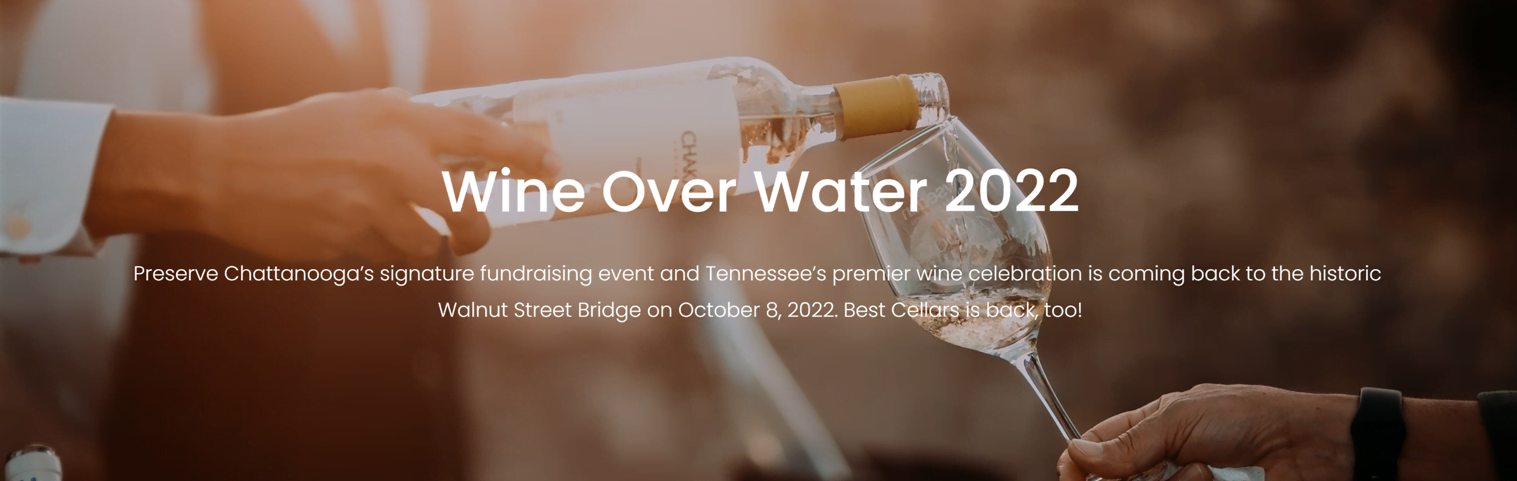
CHATTANOOGA, TN, September 28, 2022 – Preserve Chattanooga, formerly known as Cornerstones, is bringing back the popular Best Cellars and Wine Over Water events this October.
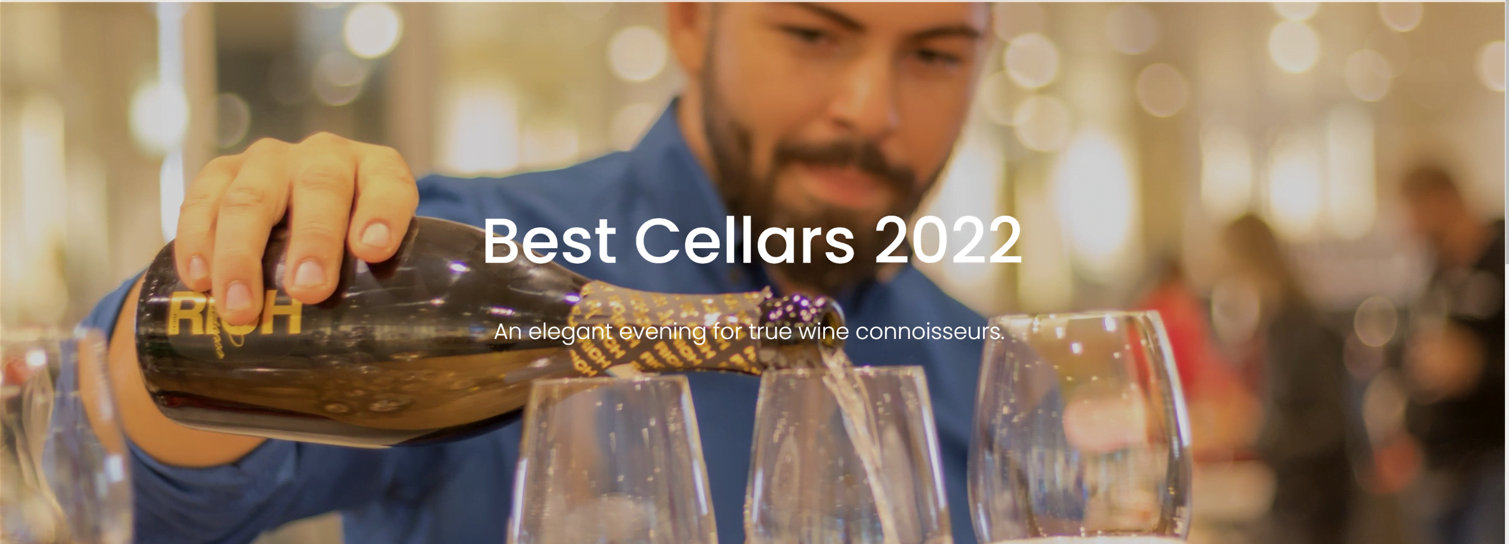
Lexus of Chattanooga is the Presenting Sponsor for Best Cellars, an artfully curated evening event for connoisseurs of fine wine. The premium wine selections are handpicked by the participating wineries whose representatives are present to answer your questions. The event will take place on Friday, October 7th from 6:00-9:00 pm at the Hunter Museum of Art and is the perfect start to the Wine Over Water Weekend. Tickets are $225 and include admission to Wine Over Water on October 8th. Tickets are only available online until October 6 at www.preservechattanooga.com/bestcellars. Food City is the Presenting Sponsor for Wine Over Water which is celebrating its 27th anniversary this year. This much-loved annual event has become a favorite destination for wine enthusiasts from throughout the southeast. “W.O.W.” is an evening showcasing a broad variety of wines and cocktails, delicious food from leading Chattanooga chefs, and four live bands – all taking place on the historic and beautiful Walnut Street Bridge. Tickets are $125 and are only available online until October 6 at www.preservechattanooga.com/wineoverwater. Preserve Chattanooga is grateful to the many sponsors who make this event possible, including Pinnacle Financial Partners, McLemore, Comedy Catch, Frothy Monkey, Gate 11, Nic and Norman’s, Stir, Chattanooga Gas, GBX Group, BACE Structural, Patricia Nash Designs, Brown Haven Homes, Black Creek, T.U. Parks Construction and Sunny 92.3 FM. Best Cellars and Wine Over Water would not be possible without the generous support of our area wine distributors and producers from throughout the world who voluntarily participate in this event. Preserve Chattanooga’s mission is to protect the architectural heritage of Chattanooga, be its advocate, and celebrate it. The historic preservation nonprofit owns the historic Terminal Dome, the former passenger lobby and centerpiece of the famous Terminal Station that opened in 1909. Preserve Chattanooga’s mission is supported by donations, grants and the annual Wine Over Water festival. Learn more at www.preservechattanooga.com.
PRESS RELEASE CONTACT: Todd Morgan, Executive Director
The mall invites the community to participate in a fundraising walk for breast cancer awareness
Saturday, October 1 – WALK at 9 a.m.
WHAT: Hamilton Place is hosting the first in-person Susan G. Komen MORE THAN PINK Walk after more than two years of virtual walks. The event helps raise critical funds that support breast cancer patients, research, and patient navigation services to better serve those impacted by the disease.
Previously scheduled to take place outside of the mall, the Walk and associated events will now take place entirely inside Hamilton Place to avoid any potential rain delays on Saturday. All participants are asked to park at the Food Court and enter through the Food Court entrance beginning at 7 a.m. Event check in and registration will take place at the end of the Food Court near Victoria’s Secret.
The walk will begin at 9 a.m. After the walk, entertainment will begin inside Hamilton Place at 10 a.m. Events such as community art projects, dance and music performances, face painting, surprise Princess appearances kicking off a Fashion Show and giveaways will take place in Center Court, with the Student Art Ribbon Exhibit on full display. The mall will be covered in pink and feature colorful storefront windows. The afterparty will end around 3 p.m.
All of the community is invited, with a full schedule of events here.
WHEN: Saturday, October 1, 2022 from 7 a.m. – 3 p.m.; Walk at 9 a.m.
WHERE: Hamilton Place Mall – 2100 Hamilton Place Blvd., Chattanooga, TN 37421
Media on-site will have the opportunity to take photos, shoot b-roll, and interview local participants, Hamilton Place retailers and management staff, as well as Susan G. Komen representatives. Media wishing to be on-site during the event should contact Stacey Keating at 724-331-0646.
Chattanooga, Tenn. (Sept. 26, 2022) – The Bethlehem Center, a local nonprofit devoted to empowering youth and families through spiritual growth, education, and leadership development, celebrated the success of this year’s Community Connections Summer Grants Program. The program provides summer program funding for organizations that deliver education, discipleship, and/or leadership development programming for the youth representing underserved communities.
“In 2018, the Bethlehem Center began administering the program in order to serve Chattanooga youth and the community,” says Reginald F. Smith II, executive director at The Bethlehem Center. “We have provided guidance, structure, support, and professional development training to selected partner organizations ever since.”
Two areas the Summer Grants Program focuses on are Outdoor and Arts Programming. Outdoor programs allow children to engage in outdoor education and play to support emotional, behavioral and intellectual development, while also benefiting their health. The art programs provide children with different points of view, allow them to empathize with “others,” help to reduce stress among children, and give them an outlet for expression and the opportunity to reflect on the human condition.
The 2022 programming included sculpting a functional bike within forty-hours, learning how to use digital design software, mural painting, farming and gardening skills, and more.
2022 CCSG Recipients:
● Alpha And Omega Outreach
● Brainerd Baptist Hispanic Church
● Bridge Chattanooga
● Chattanooga Football Club Foundation – Chattanooga Sports Ministries
● Christ Community
● Doors Open Jazz, Inc.
● East Lake Expression Engine
● Hamilton County Coalition
● Highland Park Commons
● Iglesia Bautista de Chattanooga
● Iglesia Evangelica Filadelfia
● Impact1!
● Misión de la Basílica – Casa de Oración Santa Cruz
● MVP Summer Program
● National Coalition of 100 Black Women – Chattanooga Chapter Inc
● Net Resource Foundation
● New Monumental Baptist Church “Community Operation Outreach”
Program
● Orchard Park Church S.T.E.P. Camp
● Placing Emphasis Around Kids (PEAK)
● Primera Iglesia Bautista Hispana de Red Bank
● Quarterback Club
● Reach One Teach One
● Smoking For Jesus
● St. Peter & Paul Basilica Hispanic Ministry
● The Centenary – First-Centenary United Methodist Church
● The Pursuit of Happiness
● Tob.Art Creative Painting
● Unity Performing Arts Foundation of Chattanooga
● Young Ladies of Power Inc.To learn more about the Bethlehem Center and our Summer Grants Program, visit thebeth.org or email grants@thebeth.org
The city of Chattanooga’s Office of Family Empowerment announces its new program year for the Low-Income Home Energy Assistance Program (LIHEAP). This program is for Hamilton County residents and provides assistance for income-eligible families to help in meeting rising home energy costs. The new program year will begin October 1, 2022 and ends September 30, 2023. Eligible applicants will receive a one-time assistance payment and may be received only once per program year. This assistance is applied directly to the applicant’s account with the energy provider. To kick off our new program year we are hosting a drive-thru event for applicants to pick up an application.
WHAT: Drive-Thru event for potential LIHEAP applicants to pick up an application to apply for the new program year.
WHEN: Monday, October 3, 2022; ALL DAY
WHERE:South Chattanooga Community Center, 1151 W 40th St, Chattanooga, TN 37409
WHO: Office of Family Empowerment staff will be stationed outside the South Chattanooga Community Center parking lot to hand out applications and speak with applicants. Please refer to the map attached for details on the drive-thru set up.
At this point in the COVID-19 pandemic, nearly everyone has experienced the panic and uncertainty that come with having mild COVID-like symptoms – such as a cough and sore throat – only to test negative day after day. With cold and flu season just around the corner, that state of frustrating uncertainty is likely to strike most of us again.
Both COVID-19 and the flu are contagious respiratory illnesses that have similar symptoms, making it difficult to distinguish between the two viral infections without a lab test. Testing is the only way to know which virus is causing your symptoms. In fact, labs are working to create one test that can detect both COVID-19 and the flu.
As a nursing professor with experience in public health promotion, I am often asked about the differences between the flu and COVID-19. This year I am fielding many questions about the timing of getting the new COVID-19 booster and the flu shot and whether they can be given together.
Parsing the symptoms
Symptoms of both COVID-19 and the flu can range from mild – or no noticeable symptoms at all – to severe. While flu infection does not typically affect one’s ability to taste or smell, loss of taste or smell has been a common symptom associated with COVID-19 infection. Both infections can cause fevers, chills, body aches and fatigue. More severe symptoms of either infection include difficulty breathing and subsequent infections like pneumonia.
During the 2021-2022 flu season, the term “flurona” made its way into the COVID-19 vernacular. Flurona refers to a simultaneous infection with both the flu and COVID-19. While only a few cases of co-infections have been reported, it would not be surprising to see more of them this coming flu season. Vaccination for both the flu and COVID-19 is your best protection against both.
Timing the shots
With the newly formulated COVID-19 booster shot now available and flu season just around the corner, a natural question is whether there is an optimal timing for the two shots.
The answer to that question is to get both as soon as possible. It is important to consider that it takes approximately two weeks after vaccination for the body to develop antibodies from both the COVID-19 vaccines and the flu vaccine.
As long as you have completed your primary COVID-19 vaccine series and it has been at least eight weeks since your last COVID-19 booster, now is the time to get the updated COVID-19 vaccine that targets both the original strain of SARS-CoV-2 – the virus that causes COVID-19 – and the most recent omicron subvariants. The original COVID-19 vaccines and booster series have dramatically reduced the number of COVID-19 infection and death rates, as well as cases of severe COVID-19 that lead to hospitalization.
While everyone 6 months of age and older are recommended to receive both the COVID-19 and flu vaccines, certain populations have a higher risk for severe infection, such as pregnant women, and should be extra vigilant about getting vaccinated.
Further, among those vaccinated against COVID-19, symptoms during an infection tend to be milder. However, due in part to the quickly evolving nature of the virus, it’s become clear that immune protection from COVID-19 vaccination or infection does not last forever. While studies show that the primary COVID-19 series maintains efficacy against severe disease and death six months after vaccination, protection against infection decreases by between 20% to 30% by six months after vaccination.
Timing is also important with the flu vaccine. Flu cases typically begin to rise in October and peak between December and February, but can last through May. Ideally, people should get vaccinated before flu begins to spread, making September or early October the ideal flu vaccination time.
A difficult flu season ahead
Due to lockdowns, reduced travel, school closures and mask mandates in the first and second years of the pandemic, both the 2020-2021 and 2021-2022 flu seasons were estimated to have fewer hospitalizations and deaths from the flu compared to many of the pre-pandemic years.
In the fall of 2021, experts became concerned about the potential for a COVID-19 and flu “twindemic,” especially as COVID-19 restrictions were lifting and masks were coming off. Fortunately, the worst didn’t bear out – flu numbers in the 2021-2022 season did not return to pre-pandemic levels. However, the possibility of a “twindemic” is not out of the picture for the coming flu season.
Flu seasons are inherently difficult to predict. With most people traveling again, schools open, mask mandates lifted and workers headed back to the office, people are undoubtedly going to be exposed to germs that they have been more protected from for the last two and a half years.
To further compound this, flu vaccine rates have been lower during the pandemic, suggesting that Americans may be out of the habit of getting their annual flu shot.
Pairing the shots
Many are also wondering whether they can or should get both the updated COVID-19 booster and the flu shot at the same time. The good news is, yes, it is safe for both adults and children 12 years of age and up who are eligible for the updated COVID-19 booster to get these vaccines simultaneously.
A recent study found that common vaccine side effects such as pain at the injection site occurred at slightly higher rates when someone received the flu vaccine and a COVID-19 vaccine at the same time, as opposed to receiving only a COVID-19 booster. However, those reactions, including fatigue and headache, were mild and resolved within a day or two.
You don’t need to make two separate vaccine visits as long as you are due for your next COVID-19 shot. However, I don’t recommend waiting to get your flu shot if you are not yet due for a COVID-19 booster. The Centers for Disease Control and Prevention suggests everyone receive their flu vaccine by the end of October. But if you miss that deadline, it is absolutely better to get vaccinated later in the season than not at all.
Community matters too
Getting the flu and COVID-19 vaccines isn’t just about your own health, it’s about family and community health too. Communities with higher vaccination rates have fewer opportunities to spread the virus.
Keep in mind that many people cannot be vaccinated because they have weakened immune systems or are undergoing treatments. They depend on those around them for protection. While one person may experience mild symptoms if they contract the flu or COVID-19, they could spread the virus to others who could become severely ill. Because it’s impossible to predict how people will react if they get sick, getting the flu and COVID-19 vaccines is the best prevention strategy. (The CONVERSATION/September 2022)
Trisha Tucker, Associate Teaching Professor of Writing, USC Dornsife College of Letters, Arts and Sciences
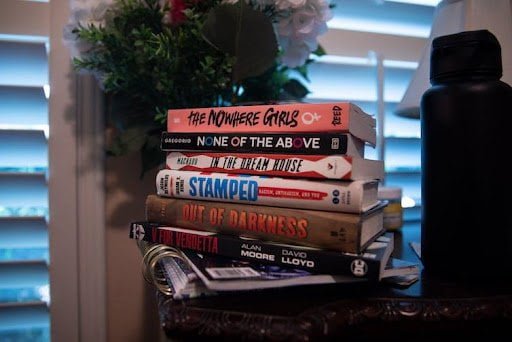
Banned Books Week, an annual event that teachers and librarians across the U.S. mark with a combination of distress and defiance, occurs in September. The theme of this year’s event, which took place Sept. 18-24: “Books Unite Us. Censorship Divides Us.”
I teach a class on banned books at the University of Southern California, so I’m prone to notice headlines on the topic, but this isn’t just perception bias. The American Library Association reports that in 2021, it tracked 729 challenges to library, school and university materials, targeting a total of 1,597 books. That’s the highest number of attempted book bans since tracking began more than 20 years ago. This year is on course to surpass 2021’s record with 681 challenges as of Aug. 31, 2022.
Increasingly, bans have targeted books written by or featuring LGBTQ people and people of color. But perennial classics like “To Kill a Mockingbird,” “Huckleberry Finn” and “Grapes of Wrath” also have been challenged by parents concerned about their racist language and marginalization of Black characters.
“Book banning doesn’t fit neatly into the rubrics of left and right politics,” reminds Pulitzer prize-winning author Viet Thanh Nguyen.
Many adults presume that exposure to particular literary content will invariably produce particular effects.
Christian author and editor David Kopp acknowledged as much when he addressed the controversy around the 1989 children’s book “Heather Has Two Mommies.”
“[T]he deeper dilemma for many Christians who oppose this book is often not a theological one, but an emotional one. It has to do with what we fear,” he wrote on the faith-focused website BeliefNet in 2001. “We fear our kids will be indoctrinated somehow. We fear they’ll come to consider homosexuality as normal and then … the part we don’t say … become one.”
Kopp found this fear “absurd.” He insisted that a “book, well intentioned or otherwise, isn’t likely to change our child’s sexual orientation.”
Put simply, children co-create their own reading experiences. Their interpretation of books is informed by their personal and cultural histories, and those interpretations may change over time or when readers encounter the same stories in different contexts.
Neither the supposedly healthy nor the supposedly dangerous effects of childhood reading, then, can be taken for granted. Children are not merely empty vessels waiting to be filled by a text’s messages and images, despite how adults tend to portray young readers as helplessly in thrall to the stories they consume.Wall Street Journal contributor Meghan Cox Gurdon has argued that parents must be ever-vigilant against books that would “bulldoze coarseness [and] misery into their children’s lives.” Earlier this year, an Ohio school board vice president accused Jason Tharp, author of “It’s Okay to Be a Unicorn,” of “pushing LGBTQ ideas on our most vulnerable students.”
Who children are
Such perceptions reflect pervasive stories American society tells about children and the nature of childhood. These stories are the focus of an undergraduate class I teach called “Boys and Girls Gone Wild,” in which we explore themes of childhood innocence and deviance through texts such as “Lord of the Flies,” “When They See Us” and “The Virgin Suicides.”
On the first day, I ask students to brainstorm on common traits of children. They frequently choose words like “innocent,” “pure” and “naive” – although babysitters and students with younger siblings are more likely to acknowledge that children can also be “mischievous” and “strange.”
English philosopher John Locke’s late-17th-century idea that humans were born as “tabulae rasae,” or blank slates, had incalculable influence. The child with no innate traits must be carefully molded. Thus “childhood became a period of intense governance and control,” according to scholarAlyson Miller.
Some groups held divergent views, such as 18th- and 19th-century evangelical Christians, who believed children were born imbued with original sin. But the narrative of the inherently pure, helpless child came to shape fields as diverse as biology and political theory.
Perhaps no disciplines were influenced as powerfully as the intertwined fields of literature and education.
The value of ‘unsafe’ books
Book bans gain traction in cultures that imagine themselves as upholding a barrier between the purity of children and the corruption of the world.
But this effort can have unintended consequences, argue scholars like Kerry H. Robinson. In her 2013 book on sexuality and censorship, she writes that “the regulation of children’s access to important knowledge … has undermined their development as competent, well-informed, critical-thinking and ethical young citizens.”
Debates about challenging books would go differently if participants understood young child readers as active participants in the discovery and creation of knowledge.
Jason Reynolds, the Library of Congress’ national ambassador for young people’s literature and author of the oft-targeted “All American Boys,” which depicts a racially charged police beating, offers a different – and, I’d argue, healthier – way to conceive of children’s relationship to reading.
“There’s no better place for a young person to engage and wrestle with ideas that may or may not be their own than a book,” he told CNN for an in-depth June 2022 feature on book banning in America. “These stories are meant to be playgrounds for ideas, playgrounds for debate and discourse. Books don’t brainwash. They represent ideas.”
For Reynolds and the other authors, librarians, readers, parents and educators commemorating Banned Books Week 2022, adults have a right to disagree with those ideas. But rather than fear the uncomfortable “conversations young people bring home,” adults can actively encourage them.
“If the adults are doing their jobs,” Reynolds says, the discomfort that often accompanies growth “doesn’t have to feel like danger.” (The CONVERSATION)
Almost 1,300 Tennesseeans took their own lives in 2020, according to the Centers for Disease Control and Prevention. That’s almost 18 people per 100,000 residents – and of course, every suicide affects friends and family members as well.
“We always talk about ‘you’re not alone,'” said Fladen. “People may feel very alone if they’re depressed, or even if they’re not depressed, but they don’t see ways to end the pain or to feel better. Now, we have 988, so it’s real easy – just call 988, and you will get to talk to somebody that can help.”
The theme of this year’s awareness month is “Together for Mental Health,” focusing on the need for more mental health resources.
Fladen said they’re working on diverse outreach efforts within the Hispanic, African American and Asian communities, to help reduce the stigma of suicide and mental health issues in those communities.
“We also support things like the National Suicide in the Black Church Conference, which takes place in Memphis, Tennessee, every two years,” said Fladen. “We have programming we offer every year that features diverse presenters. We want to help people see people that look like them.”
According to NAMI, almost 5% of adults consider suicide at some point in life. Among high school students, that increases to almost 19% – and 45% for LGBTQ young people.
Anita Davis, volunteer and outreach leader for the Save the Children Action Network in Tennessee, said she did home visiting for seven years in Metro Nashville in a low-income housing area and is well aware of the needs of families and the importance of the renewal of the program.
“This legislation will end on September 30th if Congress does not renew it,” Davis pointed out. “So we’re talking with — I’ll be speaking with — my two state senators and two of the congressional representatives from Tennessee, to urge them to please not only renew this legislation but to improve it.”
According to Feeding America, in Tennessee, 41.8% of households receiving SNAP benefits have children. Save the Children is urging Congress to preserve and protect SNAP benefits because so many families rely on them.
Roy Chrobocinski, managing director of federal domestic policy for Save the Children, said the rising price of goods and supply-chain issues have affected families and their ability to access food.
“We know the benefits don’t go far enough,” Chrobocinski stressed. “We know that families who receive the benefits, they still have to pay money out of pocket. It’s not covering the cost of all of their food, but it makes sure that they can supplement what they are paying to make sure that they have enough food to eat each day, each month.”
Chrobocinski added children do not donate to political campaigns, and they cannot vote, so he argued it is critical for Save the Children advocates in Washington to share their stories and make it clear to members of Congress the importance of investing in children.