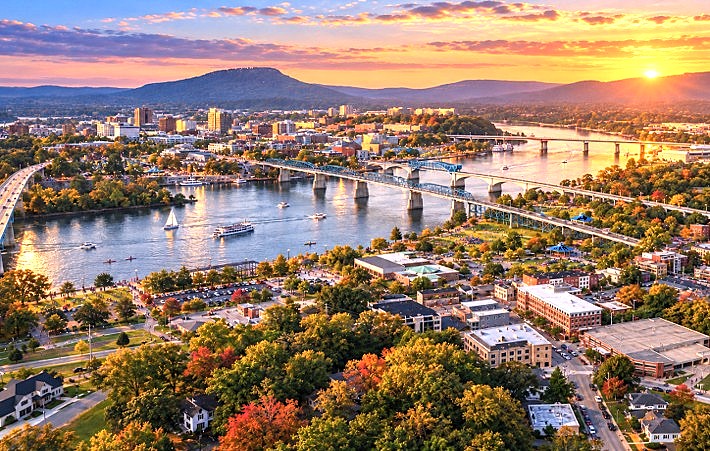
Hamilton County generated $1.878 billion in visitor spending during 2025. More than 11.5 million annual visitors contribute to an engine supporting over 30,000 jobs and approximately $193 million in state and local tax revenue. That spending extends throughout restaurants, hotels, shops, transportation services, and attractions… and paychecks of Chattanoogans.
Not all this revenue is attributable to the Tennessee River, but the waterfront is unquestionably one of the region’s defining tourism assets. The fact that the Tennessee River cuts through our Scenic City feeding its beauty and welcoming so many to play and stay here should inform us that it’s a treasure that must be stewarded.
Two recent news stories reveal the need to plan carefully to avoid negative impacts to our region’s natural force and wonder of the River.
The recent sewer overflow into South Chickamauga Creek exposed a vulnerability. Infrastructure installed in the early 1970s deteriorated, dumping wastewater into a tributary of the Tennessee River. Authorities estimated that 500,000 to 700,000 gallons could enter the creek before containment.
Crews stopped the discharge into the creek October 9 while recreational restrictions in the area and Riverwalk were implemented. The incident illustrates the economic importance of maintaining infrastructure that visitors rarely see but that protects the attractions they come to enjoy.
Meanwhile, another threat emerged not from deterioration but from redevelopment.
Plans to close Ross’s Landing for approximately 18 months beginning in November 2026 nearly cost Chattanooga the Head of the Hooch, a national rowing regatta bringing more than 6,500 athletes and an estimated $12 million in annual economic impact.
Organizers warned that construction plans threatened essential boat access, staging areas, parking, and the logistical capacity required to conduct the event. Relocation to Columbus, Georgia, was seriously considered, potentially transferring substantial visitor spending away from Chattanooga.
Only after additional negotiations and design commitments did organizers announce that the regatta would remain.
The planned waterfront improvements–recreational amenities, restaurants, and more accessible public spaces–are worthwhile objectives. But worthwhile objectives do not excuse overlooking established economic activity during construction planning.
Other significant waterfront events face major relocation and operational adjustments that generate the velocity of money throughout downtown, including IRONMAN, Chattajack, Riverfront Nights, and the 3 Sisters Bluegrass Festival. Increased organizer expenses, inconvenienced visitors, and affected nearby businesses almost seemed to be an afterthought when one project seemed to literally idle so much of the area’s economic engine.
These result in real economic costs, not merely scheduling complications.
Chattanooga has invested decades building a nationally recognized waterfront destination. Protecting that investment demands coordinated planning among all stakeholders with a cost-benefit analysis and timeline that benefits more than the governments and a few decision makers.
The Head of the Hooch was retained, but its threatened departure should serve as a warning. The closure of part of the River access during the peak season of Fall due to failed infrastructure came with a high price. Economic development is not simply creating something new. It is also stewarding existing treasures and assets.