Thursday, October 15, 2026
Advertisement
Home Blog Page 81

Affordable Housing, Homeownership, and Generational Wealth – It’s Critical

0

What’s got a megachurch pastor buying land for affordable housing? Simply, the man of God knows what that government has failed to honor and understand: Work and ownership creates immediate provision but also generational wealth.

“We need affordable housing” is spoken by those whose properties are hit by increasing property taxes or those who see homes leveled for more pricey units for rent, lease, or sale by developers in the process called gentrification.

Whatever the influencing factor, the reality is that homeownership has been difficult in the African American community and has worsened.

Bishop T.D. Jakes, lead pastor of The Potters House in Dallas, Texas, established an enterprise which includes a real estate venture company. The TD Jakes Group purchased almost 100 acres in Atlanta in 2022 to assist in making homeownership a greater likelihood for African Americans who couldn’t otherwise afford to own or attain lending.

The development is the first of a joint effort with Wells Fargo and Jakes, whose devotion to facilitate financial literacy and independence is often woven throughout his ministry of the Gospel of Jesus Christ. The Atlanta endeavor launches a 10-year agreement of about $1 billion in investment of “mixed-income housing with an array of living choices such as single-family homes, townhomes and apartments positioned in well-designed neighborhoods with ample amenities aimed at enhancing the quality of life through healthy food choices, healthcare options and other wraparound services.”

Some may applaud the business acumen of the highly driven and intelligent pastor. Yet, his plan is not just biblical, it’s supported by economists and reality.

The entire Old Testament records God’s people in a land of their own with the priority of family as the foundation of all society. Remember, there was no “church” until Acts 2, so God used family and generational wealth to establish His people.

The fight, then, was against warring nations that demanded their loyalty and servitude. That battle continues as families sometimes literally fight to own their own homes in an overtaxed, over-regulated environment with constant pressures on the family unit itself.

Economic experts on African American wealth and ownership:

  • “The benefits from homeownership have not been shared equally. In the second quarter of 2022, the homeownership rate for white households was 75% compared to 45% for Black households, 48% for Hispanic households, and 57% for non-Hispanic households of any other race…the Black-white gap in homeownership rates was the same in 2020 as it was in 1970” (US Treasury, Sept 15, 2022).
  • “The Black-white wealth gap in the U.S. shows that progress on closing the gap has all but stalled since the 1950s and inequality is on track to grow moving forward” (Princeton’s Ellora Derenoncourt, PhD, Wealth of Two Nations).
  • “In 2019, the median net worth of white families was $188,200–7.8 times that of their Black peers, at $24,100” (US Federal Reserve).

Possessing personal property and wealth is critically important to lift all. Innovative solutions to remove barriers and threats to these biblical and American rights are ones to applaud.

Hey, Best and Brightest Tennessee Students, the UT System Wants YOU

The University of Tennessee Board of Trustees’ September 8 meeting had as its first agenda item, “Admissions Policy Proposal.” That meeting concluded with a news release approving “a guaranteed admissions standards proposal that would impact all UT undergraduate campuses.”

So, what does that mean to all Tennessee students?

These guaranteed admissions standards are aimed “to expand access, recruit more of Tennessee’s best and brightest students to its campuses, promote greater geographic representation, and further its land grant mission,” according to the University of Tennessee’s system President Randy Boyd.

It seems that Tennessee’s land grant university, established in 1794 as Blount College two years before Tennessee was even a state, wants to actively seek the best and brightest minds that are homegrown in the Volunteer State.

What are these new guaranteed admissions standards that were made effective upon Board of Trustee passage and through the Fall of 2024 class?

The Board of Trustees approved President Boyd’s presented admissions changes as follows:

The approved proposal means all UT undergraduate campuses would guarantee first-year admission to all Tennessee high school students who meet any of the following eligibility criteria:*

  • Finish in the top 10% of their high school’s graduating class; or
  • Achieve a 4.0 or higher cumulative GPA.

Additionally, UT campuses in Martin, Pulaski, and Chattanooga would add a third criteria:

  • Achieve a 3.2 or cumulative higher GPA and have an ACT composite score of 23 or higher (or an SAT score of 1130-1150 or higher).

Applying these new criteria to the 65,580 public high school students, about 10% would have guaranteed admission with almost 28% of Tennessee high school students scoring a 23 or higher on the ACT admissions test. Students who are looking to attend a four-year higher education setting within the next year, schedule a meeting with your guidance counselor or start browsing now at the University of Tennessee Chattanooga or the University of Tennessee Knoxville websites (https://www.utc.edu/about/admissions or https://admissions.utk.edu/apply/) to begin your process.

VOTE_VOTE_VOTE!!

0

 Justice delayed; justice denied!

My two recent columns on the killings of Emmett Till and Rev. George Lee in Mississippi seemed to bother “Fred,” who identified himself as a frequent reader. Here’s a recap of our recent exchange:

FRED: Look, with so many other pressing issues today, why on Earth do you keep taking us back in history? It’s awful what happened to them but why should we be reminded of the fate of Till and Lee? Give us a break, will you!

ME: Nice to hear from you Fred. Well, given that we’re in the midst of a rancorous election for the next president, let alone acts to suppress the right to vote, I thought it important to remind folks of the ultimate price paid by many to secure and exercise that right.

FRED: Okay but don’t you think that it’s time to move on?

ME: Actually, I have one more Fred. This time it’s about Lamar Smith. Perhaps you’ve never heard of him. So here it is.

To contextualize this narrative, it seems that death by suicide has a way of cheating survivors out of the justice they deserve. That’s the thought that raced through my mind when I heard that the killer of three innocent African Americans in Jacksonville, Florida took his own life by the gun he used to snuff out the lives of his victims. You could hear that frustration from the mouths of Jacksonville’s police chief and many others who seized and screamed into microphones.

Similarly, the Jacksonville tragedy got me thinking about death by natural causes as was the case of the killers of Emmett Till and Rev. George Lee, Mississippi men I wrote about in previous columns who died before facing justice. Although it took decades of case dismissals, Byron De Beckwith, the assassin of Civil Rights activist Medgar Evers, was finally convicted for his heinous crime. Of course, Beckwith’s conviction was the exception in those days in the deep South.

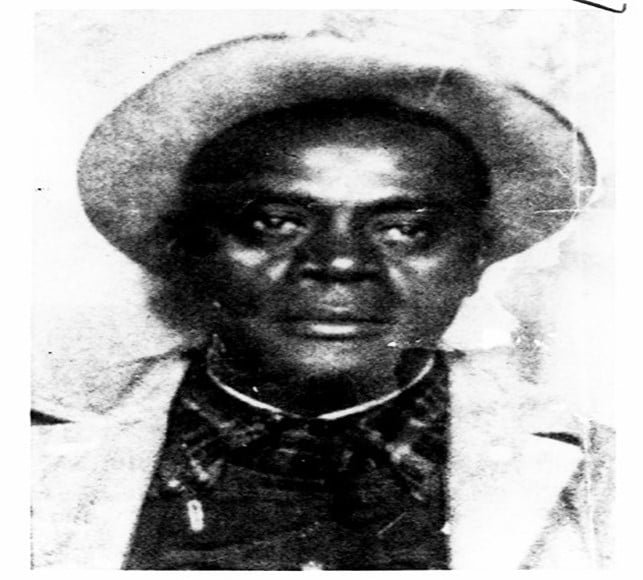
This takes us to a little-known Lamar Smith, the World War I veteran who knew the risk of registering Black residents to vote in the deep South and encouraging them to exercise that right. I happened across the name Lamar Smith during my research into the death of Emmett Till, which led me to learning about Rev. George Lee and eventually to Lamar Smith. Briefly, Lamar Smith’s civil rights work led to his fatal shooting in 1955 on the lawn of the Brookhaven courthouse in Mississippi by three men who, like scores of others during that time in our history, were never prosecuted for the crime. His murder was one of several racially motivated attacks in Mississippi in that year. The other incidents, as cited, included the murder of George W. Lee in Belzoni (May), Emmett Till, in Money (August), and the shooting of Gus Courts (December), a civil rights associate of Lee in Belzoni. The Smith case was cited in the NAACP‘s pamphlet M is for Mississippi and Murder.

Noah Smith, Mack Smith, and Charles Falvey were arrested for Smith’s death, but were never tried. Two grand juries were convened but did not take action because witnesses refused to testify, according to FBI documents. The FBI reopened Smith’s case in 2008 as part of an initiative for unresolved civil rights era murders but closed his case in April 2010, saying that the three men were dead and unable to be prosecuted.

Now as frustrating as it is, the Jacksonville killer’s suicide snatched away any chance for justice for the survivors of his hateful act. Similarly, deaths by natural causes robbed the survivors of the killings of Till, Lee, and Smith the justice they deserved.

So let’s wrap this up with the well-recognized phrase “Justice delayed is justice denied,” one that’s often used to emphasize the importance of timely and efficient delivery of justice.

When a legal system fails to provide justice in a timely manner, it can lead to frustration, loss of faith in the system, and even further injustice. It’s hard to imagine decades waiting for justice by the families of Emmett Till, George Lee, and Lamar Smith only to see that justice snatched away by death by natural causes.

In the end, I hope that one day we won’t have to regurgitate the past to remind folks not to take the right to vote for granted, especially during the times we now live in.

And “Fred,” if you read this one, thanks for posing me with your question. Keep on reading and I promise to keep on writing.Terry Howard is an award-winning trainer, writer, and storyteller. He is a contributing writer with the Chattanooga News Chronicle, The American Diversity Report, The Douglas County Sentinel, Blackmarket.com, co-founder of the “26 Tiny Paint Brushes” writers guild, recipient of the 2019 Dr. Martin Luther King, Jr. Leadership Award, and third place winner of the 2022 Georgia Press Award.

BLACK ENTREPRENEUR LAUNCHES LYINGCLIENT.COM, A PLATFORM THAT EXPOSES DISHONEST CUSTOMERS

0

Nationwide — Meet Tamera Preacher, the founder and CEO of LyingClient.com, a website she envisioned after having three consecutive bad experiences with difficult customers. On one occasion, her general contracting company, one of very few owned by a Black woman, had been falsely reported to the BBB, and this motivated her to create a platform that would expose dishonest and Karen-like customers. Ultimately, it would be a website that would allow business owners and entrepreneurs to report problematic customers and share their experiences.

It wasn’t easy, however, for Tamera to create the platform. She does not have a technical background, she is a military veteran, and she earned her master’s degree in Human Resources – all factors that have nothing to do with website development. But she was determined to get it done regardless.

She sought out an attorney to learn the laws about recording and displaying customers’ information. Then she began the process of finding the right website developer but initially, no one seemed to have the same passion and standards to develop the perfect website. It needed to be user-friendly, have a social media platform adjoining, and most importantly, be accessible to busy people really easily. Most individuals who work for themselves don’t have a lot of time to write about or even research a customer’s information.

Eventually, though, she found the right developer, and the site was officially launched shortly after. Now in year two, she has grown a substantial social media following and gained attention from several business owners active in their careers. Her website has even now ranked #1 on Reddit.com as the best platform to report “Karen” customers.

Here are some of the website’s features:

Real-time Scam Alerts: Stay informed and avoid falling victim to scams by accessing real-time alerts about fraudulent customer activities.

Directory of Terrible Customer Experiences: Make informed decisions with a comprehensive directory of negative customer experiences.

Advertising for Your Business: Showcase your services to a targeted audience of like-minded professionals on the platform.

Legal Aid Page: Provide legal resources for starting a business, maintaining a business, and legally securing your business.

Tips against Hackers: Safeguard your data and online presence with best practices.

Tips for Cybersecurity: Enhance your cybersecurity knowledge to protect sensitive information effectively.

Like most things, when it gains notoriety not everyone will understand the purpose. Recently she was racially attacked and cyberbullied for her firm stance on exposing Karen customers. The platform’s significance has been acknowledged by its ranking as #1 on Reddit for its innovative approach to addressing the issue of “Karen” customers—individuals displaying unreasonable demands. After much litigation though, the website is still here and ready to provide services to the general public. For more details and/or to sign up for membership, visit LyingClient.com

It’s About Combating Hate

0

Thursday, October 5, 7:00 p.m.

UTC University Center Auditorium

Open to the public; No cost to attend

The Jewish Federation of Greater Chattanooga with event partners: B’nai Zion Congregation, Mizpah Congregation, Chabad of Chattanooga, University of Tennessee of Chattanooga, Department of Philosophy and Religion and Chair of Excellence in Judaic Studies, Northminster Presbyterian Church, Unitarian Universalist Church, and Second Presbyterian Church presents:

Keynote Speaker Eytan Davidson, ADL Southeast Regional Director

Topic: The State of Hate and Antisemitism

Davidson, originally from New York, has called Atlanta home since 2008. He is the grandson of Holocaust survivors and Jewish refugees from Eastern Europe. In his most recent professional role, Davidson was the Vice President for Communications and Policy at Purpose Built Communities, where his work focused on counseling outstanding leaders in dozens of neighborhoods across the country focused on breaking the cycle of intergenerational urban poverty. Before that, Davidson worked for Atlanta BeltLine, Inc., serving as the Communications Director, stewarding the transformational BeltLine project from vision to reality. Eytan started his career in New York as a campaign staffer for Michael Bloomberg, where he served for nearly five years in his Mayoral administration in several high-impact roles.

 “After the pink billboards brought to Chattanooga by the Jewish Federation, we want to continue this important conversation about antisemitism, hate and discrimination.”, states Michael Dzik, Executive Director of the Jewish Federation of Greater Chattanooga.

               ADL is the world’s leading anti-hate organization. Founded in 1913 in response to an escalating climate of anti-Semitism and bigotry, its timeless mission is to protect the Jewish people and to secure justice and fair treatment for all. Today, ADL continues to fight all forms of hate with the same vigor and passion. A global leader in exposing extremism, delivering anti-bias education, and fighting hate online, ADL is the first call when acts of antisemitism occur. ADL’s ultimate goal is a world in which no group or individual suffers from bias, discrimination or hate. The Jewish Federation of Greater Chattanooga works diligently to educate and fight against antisemitism and all forms of hate.  We create partnerships with civic, business and faith communities to build understanding and respect for all.

Officials of The Southern Christian Leadership Conference Seek to Strengthen Alliance Between Black Americans and Jews

0

Civil Rights Organization Commits to Fulfilling Dr. Martin Luther King, Jr’s 55-Year-Old Promise To The Jewish Nation

ATLANTA – Ten days after he was assassinated on a hotel balcony in Memphis, Dr. Martin Luther King, Dr., the co-founder and president of the Southern Christian Leadership Conference (SCLC), was scheduled to make a return visit to Israel, where he was fostering stronger alliances between Black Americans and Jews, two groups that shared a common history of discrimination, racism, and oppression.

Last month, SCLC’s First Lady Cathelean Steele, and Dr. Charles Steele, Jr., the civil rights organization’s president and CEO, finally made good on the SCLC’s return to Israel. First Lady Steele was honored by Israeli leaders and was a guest speaker at three events, including one on a street named after Dr. King and one outside a popular forest where a section is named after Dr. King’s late wife, Coretta. During the SCLC’s 54th Annual Conference on August 25 and 26th, Ms. Steele and Dr. Steele  provided highlights of that historic trip.

Today, they announced next steps for strengthening relations between both communities, which includes educating Black Americans about the historic alliance and the need for it to continue as well as supporting efforts that encourage Black Americans to travel to Israel where they can learn first-hand about the reason Black Americans and Jews have a bond that cannot be broken.

This renewed focus comes during a time when tensions have developed between the Black and Jewish communities following comments by high profile individuals from both sectors that are perceived antisemitic and anti-Black.

In an effort to address the discourse and to repair damage to decades of Black Americans and Jews uniting to address injustices, many Black and Jewish organizations across the nation have been holding symposiums and other meetings where the discussions center on honest dialogue about the state of the alliance. The SCLC is one of the latest internationally recognized Black organizations and one of the most legendary to place the spotlight on strengthening the alliance, because its ties to working closely with Israeli leaders date back to Dr. King’s visit in 1959.

With major civil rights gains being reversed and attacked and with the heightened racial tensions in the U.S., Ms. Steele and Dr. Steele said the SCLC made a commitment with Israeli leaders that the organization is committed to completing Dr. King’s vision of building a stronger collaboration between the two communities.

“We still need each other,” Mrs. Steele said about the alliance with Israel. “We need to work together. We need to realize our past, and we need to make sure our future is better than our past. I believe that Dr. King’s dream and Mrs. Coretta Scott King’s dream is being fulfilled. The history of African Americans and the history of our Jewish brothers and sisters is not that different. Slavery is slavery. I don’t care what name you call it by.”

She added, “We are fulfilling the dream of Dr. Martin Luther King, Jr. to bring African Americans to Israel. Our job is to bring us back together because of the history we share.”

During her visit to Jerusalem, Ms. Steele shared a passage Dr. King shared about the SCLC’s commitment to Israel.

“Peace for Israel means security, and we want to stand with all of our might to protect its right to exist. It’s territorial integrity. I think Israel, and I never mind saying it, has one of the great outposts of democracy in the world and a marvelous example of what can be done… how desert land can almost be transformed into an oasis of brotherhood and democracy. Peace for Israel means security and that security must be reality.”

Ms. Steele, one of a delegation of 600 women, including 150 women leaders from the U.S., said the SCLC will be working through an organization called the Covenant Daughters International, who is working closely with the First Lady of Israel Michal Herzog to bring African Americans on a continuous basis to Israel.

Dr. Steele said the alliance would also include focus on economics, because Dr. King recognized a few months before his death that the movement had focused on integration and voting rights and left out economics.

“He thought integrating people in society and putting them in political positions would bring about economic equality,” Dr. Steele said. “You cannot have the right to vote without economics.”

Ms. Steele and Dr. Steele said education is the key to building the foundation for a stronger alliance with Israel, something that Ms. King was intentionally about in her quest to root out communism and antisemitism until her death.

“She believed there was an educational benefit reassuring that Black and Jewish youth understood the struggle that each group experienced as two of the most repressed groups in the world,” Ms. Steele said. “Dr. Steele and I agree, and we are committed to strengthening the alliance so we can eradicate all injustices.”

ABOUT THE SCLC: Established in 1957, the SCLC, whose first president was Dr. Martin Luther King, Jr., is an international organization made up of chapters and affiliates with programs that affect the lives of all Americans: north, south, east, and west. Its sphere of influence and interests has become international in scope because the human rights movement transcends national boundaries. For additional information about the SCLC, visit www.nationalsclc.org.To arrange an interview with Ms. Steele and Dr. Steele, contact Jerry Thomas at jerry@jerrythomaspr.com, or (312) 804-7999.


Workers like it when their employers talk about diversity and inclusion

0

Rita Men Professor of Public Relations and Director of Internal Communication Research, University of Florida

Many companies have made commitments toward diversity, equity and inclusion initiatives in recent years, particularly since the murder of George Floyd sparked weeks of racial justice riots in 2020.

But some of those efforts, such as hiring diversity leaders and creating policies to address racial inequality, have stalled or reversed at the same time as a growing conservative backlash is threatening to further undermine such initiatives.

Most recently, a June 2023 Supreme Court ruling tossing out affirmative action policies at several universities has prompted businesses and advocates to worry that similar corporate efforts to improve the diversity of their workforces may be next.

That would be bad news for companies, because research has shown that diversity, equity and inclusion initiatives improve creativity, innovation, productivity and organizational performance.

What’s more, a majority of workers say they want their employers to do DEI. My own research in corporate communications suggests how employees communicate their efforts is just as important as having them.

DEI and the workplace

Diversity, equity and inclusion are three related values that companies and other organizations use to guide their efforts to create workplaces that are welcoming to people from all walks of life. These values emphasize the respect of individual differences and fair treatment of all people, regardless of race, gender, age, sexual orientation or other factors.

The implementation of DEI measures varies across organizations, with strategies ranging from policies that ensure the fair treatment of workers of color to training and the establishment of employee resource groups, which are internal communities built around workers’ shared identities or interests. Examples include networks for women, people of color or veterans.

While strategies may vary, DEI is in wide use across corporate America. Every Fortune 100 company listed some kind of DEI initiative on its website as of July 2022, and a 2021 survey found that 82% of chief human resource officers said DEI was their foremost concern.

Broad benefits of DEI

Numerous studies on diversity, equity and inclusion policies have found them to have many positive impacts on corporate performance.

Consulting company McKinsey in May 2020 reviewed data on over 1,000 companies in 15 countries and found that the “business case for inclusion and diversity is stronger than ever.”

Its analysis showed that in 2019 companies in the top quartile in terms of ethnic and cultural diversity were 36% more likely to report above-average profits than those at the bottom, slightly better than in 2014. And companies with the most gender diversity among executives were 25% more likely to outperform the market, up from 15% in 2014.

A 2019 study that analyzed workforce diversity in the U.S. federal government found that racial diversity is significantly and positively related to organizational performance.

One of the reasons DEI initiatives have a positive impact is because workers appreciate them. For example, a survey conducted in early 2023 found that most employees – 56% – think it’s a good thing if their company is focused on DEI.

Talking up DEI

But my own work suggests that getting many of these benefits from DEI initiatives may depend on how well employers are communicating their efforts to workers. In 2021, colleagues Sunny Qin, Renee Mitson, Patrick Thelen and I conducted an online survey with 657 full-time employees across 27 industries in the U.S. We published the findings in June 2023.

We asked respondents how well they thought their employers communicated around the topic of diversity, including efforts to promote a diverse workforce. We also assessed participants’ engagement in their companies as well as the employees’ cultural intelligence, or the ability to interact and adapt across cultures. We then used a statistical technique called structural equation modeling analysis to spot relationships between all their answers.

We found that the employees who worked for companies that talked more about their commitment to fostering a diverse and inclusive environment were also more engaged in their work. This was also correlated with higher levels of cultural intelligence, and together they contributed to a more inclusive work environment.

Importantly, we found that this effect was strongest for racial minorities, whose level of engagement was more highly correlated with how well their employer created an inclusive climate than for white people in our survey.

Valued and included

Overall, our study supports the notion that employees still value and appreciate their companies’ focus on diversity, equity and inclusion efforts.

And as we found, a more diverse and inclusive work environment leads to a more engaged workforce when companies continually communicate about their stance, values and commitment to DEI. Such communications signal to employees that their employers hear their voices and stand with them. Having a diverse and inclusive workplace isn’t just about checking off boxes. It’s about making sure everyone feels valued and included. (The CONVERSATION)

Jacob A. Waddingham Assistant Professor of Management, Texas State University

Miles Zachary Associate Professor of Management and Entrepreneurship, Auburn University

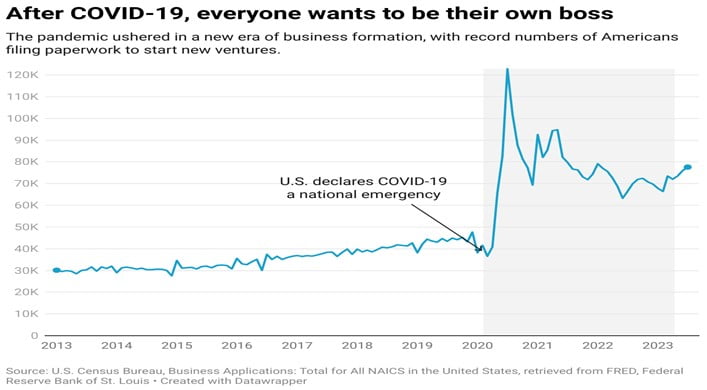
If you’ve been thinking about starting your own business lately, you’re not alone. Americans began launching ventures in record numbers during the pandemic, with an above-trend pace continuing through 2023.

Unfortunately, many of of these enterprises won’t last long: 30% of new businesses fail within two years, and half don’t last past five, according to the Small Business Administration. While some of these unlucky founders will pursue new ventures, many others will try to rejoin the traditional labor force.

You can’t blame them. People often see “going back to work” as a safety net for risk-taking entrepreneurs. As professors of management who study entrepreneurship, we wanted to see if this was true.

Screened out

So we surveyed more than 700 hiring professionals to determine whether founders really can get new jobs that easily, as well as seven former entrepreneurs who successfully made the transition back into the workforce.

We found that former business owners were actually less likely to get interviews compared with applicants with only traditional experience. This was true regardless of whether they had sold or closed their businesses. And the longer they were out of the traditional workforce, the worse their chances of success were.

Why do employers hesitate to take a chance on former business owners?

It starts at the earliest stages, with the recruiters who screen people into – or out of – consideration for interviews. We found that recruiters worried that entrepreneurs would jump ship to start their own companies as soon as they can. This is a problem for employers, since hiring is a long, expensive process that can take months or even years to pay off.

For example, one recruiter told us, “I am looking for candidates that will be long-term employees, as we invest quite a bit into each hire. When I interview people, it is generally a red flag if they say they want to start their own business or already have a business on the side.”

A related fear: A worker who leaves to start a new venture might be tempted to poach talent, clients and tactics from their old employer.

Recruiters were also concerned that former entrepreneurs may refuse to take directions. Spending time as your own boss can make it difficult to adapt to a lower place on the organizational hierarchy. As one recruiter in our study put it, former business owners “are used to being the one who makes all the decisions.”

They also raised issues of job fit, questioning whether ex-entrepreneurs’ knowledge and abilities would translate to traditional work. “The concern would be the skills they have developed don’t transfer,” said one of our interviewees. In addition, for entrepreneurs who have worked alone, it can be difficult for recruiters to know how well they’ll perform with others.

Even when a former entrepreneur is a good match for a position, recruiters can fail to make the connection because of stereotypes or misunderstandings about their experience. A former bakery owner we interviewed recalled applying for a position and being pigeonholed based on their experience: “They said, ‘Oh, I wish we were hiring for a baker!’ and I said, ‘No, no, no, I’m applying for your front office.’ It was like they thought all I knew was just a baker, but that is far from the truth.”

Landing an interview

Our research adds to a growing body of evidence that ex-entrepreneurs struggle to get interviews and offers. Thankfully, it also offers insights that organizations can use to improve their applicant pool – and that enterprising job seekers can use to boost their odds.

Our study found that former entrepreneurs face less bias when they apply to roles that seem entrepreneurish – in other words, that are in line with stereotypes about business owners. So, for example, they’re more likely to land interviews when applying for positions with a lot of autonomy, such as in new business development, rather than those that require following lots of rules, such as in legal compliance.

Relatedly, our research suggests that recruiters – perhaps unintentionally – have biases against ex-entrepreneurs. Acknowledging such tendencies is a good first step toward minimizing their influence. Moreover, not all recruiters are equally affected: Another recent study showed that recruiters who also have prior entrepreneurial experience – as well as women and those who were recently hired – were less likely to screen out former business owners. So organizations with more diverse hiring teams and a deeper understanding of entrepreneurial experience might see less-biased results.

For their part, ex-entrepreneur job applicants would be wise to highlight in-demand aspects of their work history. For instance, a recent survey by Boston Consulting Group found that executives rank innovation as one of their top three priorities. Former entrepreneurs should emphasize their many valuable characteristics – such as being passionate and creative – that contribute to innovation. The lack of a traditional employment history may create obstacles for entrepreneurs trying to rejoin the workforce. Recruiters who overlook their value risk missing out on strong candidates. (The Conversation)

Biden-Harris Administration Celebrates Completion of Nationwide Unlocking Pathways Summit Series

0

The Biden-Harris Administration completed its nationwide Unlocking Pathways Summit series today in Biloxi, Mississippi. The four-part series was part of the U.S. Department of Education’s Raise the Bar: Unlocking Career Success initiative, aimed at helping young Americans access good-paying jobs created by President Biden’s Bidenomics agenda. The series was supported by the Departments of Transportation, Energy, Commerce, and Labor to increase and expand access to high-quality career pathways helping young Americans prepare for careers of the future in in-demand fields.  

The Summit series was co-hosted with the national education and workforce development organization Jobs for the Future (JFF), and more than 500 guests from more than 36 states attended the convenings to highlight workforce priorities and growing opportunities for young people created by historic recent federal investments, including the Bipartisan Infrastructure Law, Inflation Reduction Act, and CHIPS and Science Act. 

Each Summit included state teams of key decision makers across the K-12, Higher Education, and Workforce systems, and the U.S. Department of Education (Department) was joined at each event by senior leadership from both federal agency partners and state leaders, including Gov. Jared Polis of Colorado and Gov. Tony Evers of Wisconsin.  

The series kicked off in Renton, Washington, where the Department partnered with the Department of Transportation to discuss construction and infrastructure pathways. At the Summit, the Department announced partnerships with Departments of Transportation, Energy, Commerce, and Labor to support state teams to connect across sectors to advance career-connected learning. 

At the Summit in Aurora, Colorado, U.S. Secretary of Education Miguel Cardona announced the launch of a $25 million Career Connected High School Grant, a new program that will provide grants to consortia of local educational agencies, institutions of higher education, and employers to pilot evidence-based strategies to increase the integration and alignment of high school, postsecondary education, and the world of work to improve postsecondary education and career outcomes for all students. 

In Madison, Wisconsin, Deputy Secretary of Education Cindy Marten announced 81 semi-finalists for Phase 2 of the Career Z Challenge, a challenge designed to identify local education agencies interested in creating or enhancing work-based learning (WBL) opportunities to engage students across grades 9-12 in meaningful career exploration, development, and preparation. The 81 semi-finalists represent 34 states and collectively serve more than 1.5 million students.   

At today’s final summit in Biloxi, Mississippi, representatives from Alabama and Mississippi shared regional exemplars that support students with disabilities to pursue competitive integrated employment and further connecting their education and workforce systems to support youth employment. Additionally, the Department announced the grand-prize winner of the Rural Tech Project. This is a $600,000 challenge to advance technology education and prepare students for the careers of today and tomorrow, administered by Luminary Labs. The winner, Woodlake High School in Woodlake, California, prepares students for regional aviation careers and postsecondary degrees, utilizing drone operations, geometry, and aerodynamic principles. Students use flight simulators, complete dual-credit college courses, and earn recognized industry certifications. As the grand-prize winner, Woodlake will receive an additional $100,000 prize. 

“High school students everywhere need more opportunities to build the advanced technology skills that our employers need, and our economy demands. These summits allowed us to gather key officials to work together to ensure our youth are ready for the jobs of the future,” said Amy Loyd, assistant secretary of the Department’s Office of Career, Technical, and Adult Education. “I am honored to congratulate Woodlake High School for their inspiring and innovative work in the Rural Tech Project. Woodlake’s aviation program engages students meaningfully through hands-on learning and real industry experiences, preparing them to pursue high demand, rewarding careers.”  For more information about the Career Connected High School Grant, the Career Z Challenge, or the Rural Tech Project, and for more information about the broader Unlocking Career Success initiative, sign up for our newsletter here.