Tuesday, October 13, 2026
Advertisement
Home Blog Page 49

Meet Johnnie Reid, the 61-Year-Old Black Woman from Florida Still Running Track

0

Nationwide — In the world of athletics, there are moments that transcend the mere crossing of a finish line or the launching of a shot into the air. These are moments of profound human achievement, where dedication, perseverance, and sheer determination meet to create something truly remarkable. Such is the story of 61-year-old Johnnie Reid, an African American woman whose journey from the halls of Clewiston High School to the pinnacle of the track and field world stands as a testament to the power of the human spirit. She is a diligent worker in the Collier County State Attorney’s office, and a workout warrior after work.

Johnnie Reid’s story is one of resilience in the face of adversity, of unwavering determination in pursuit of a dream. In April 2023, at the age of 60, she set a world record in the 60-meter event at the USA Track and Field Masters Championship, completing the race in 8.49 seconds.

Born with a love for speed coursing through her veins, she honed her skills on the tracks of Clewiston, Florida, where she set records in the 100-yard dash that still stand to this day. But it was not until later in life that Johnnie’s true potential would be realized, when she emerged as a force to be reckoned with in the senior category of track and field.

Her journey to the top has been anything but easy. Overcoming injuries and setbacks, facing moments of doubt and despair, Johnnie refused to give up on her dreams. It was this indomitable spirit that propelled her to new heights, culminating in her recent achievements as the #1 ranked athlete in the world for the 50 and 100 meters, as well as the #1 ranked athlete in the USA for Shot Put in the senior category.

One of the defining moments of Johnnie’s journey came last year at the USATF indoor meet in Kentucky. It was there that she shattered the American Record in the 50 meters, a feat made all the more poignant by the passing of her beloved coach and mentor, Wayne Holloway. His influence on Johnnie’s life and career cannot be overstated, and though his physical presence may be gone, his legacy lives on in every stride she takes on the track.

But Johnnie’s journey is not just about personal triumph — it is also about the legacy she leaves behind. She is not only representing herself but also Collier County, Naples, her family, and all those who have supported her along the way. It is a legacy that will inspire generations to come, proving that with faith, perseverance, and the support of loved ones, anything is possible.

As we celebrate Johnnie Reid’s remarkable achievements, let us also take a moment to reflect on the qualities that have propelled her to the top — determination, perseverance, and an unwavering belief in herself. In a world where success is often measured in wins and losses, Johnnie’s story serves as a reminder that true greatness lies not in the medals we wear around our necks but in the strength of our spirit and the depth of our character.

WIT Wade Scholarship Program Offers Black Students $50K Toward a STEM Master’s Degree

0

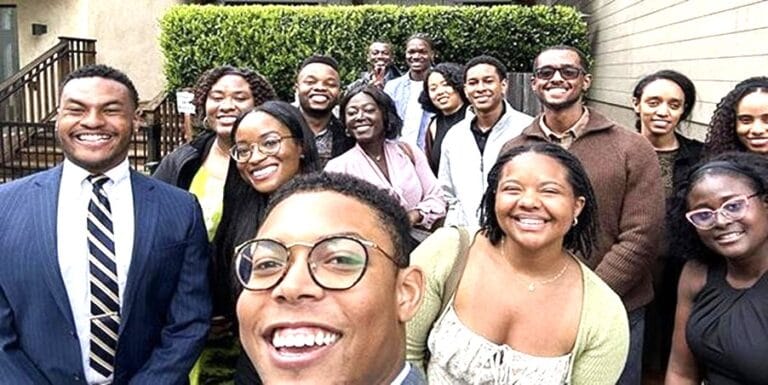
Nationwide — Wade Institute of Technology (WIT), an experiential Silicon Valley-based college for students of African descent pursuing careers in Science, Technology, Engineering, and Mathematics (STEM) fields, announced that it is accepting applications for the 2025 Wade Scholarship Program (WSP).

To qualify for the scholarship, applicants must be admitted to a master’s degree program ranked within the U.S. News & World Report Top 30 U.S. graduate schools of engineering and/or the graduate engineering program of any of the Historically Black Colleges and Universities (HBCUs).

“There has been an alarming drop in the number of Black STEM professionals, who were already woefully underrepresented in these fields,” said WIT Executive Director Booker T. Wade, Jr. “This scholarship helps ease the financial burden that is often a contributing factor to the drop-off of Black students in the educational pipeline. We are committed to the goal of promoting increased diversity, equity, and inclusion in STEM through expanded educational opportunities.”

WSP Scholars receive up to $50,000 toward the cost of tuition, on-campus housing, food, and other expenses or fees. Applicants must have a bachelor’s degree in a STEM discipline from an accredited college or university in the U.S. or the equivalent from an international institution.

Minority Television Project Inc. (MTP), which owns and operates San Francisco Bay Area public television station KMTP-TV 33, provides funding for the scholarship. Through its support of both WIT and WSP, MTP is working to make transformative changes in the technology ecosystem.

There have been 26 WSP Scholars since the program launched in 2021. Applications for the 2025 scholarships are due no later than January 17, 2025. International students may apply but must already have U.S. residential or visa status.

Prospective WSP Scholars will be evaluated on independent thought, purposeful leadership, civic mindset, and undergraduate achievements. Additional information on requirements and a link to the application portal can be found at wadescholarship.org

About Wade Scholarship Program

The Wade Scholarship Program (WSP) was established to mitigate the underrepresentation of people of African descent in STEM. WSP provides scholarships to Black scholars who are admitted to an engineering master’s degree program ranked within the US News & World Report Top 30 US graduate schools of engineering and HBCUs with graduate engineering programs.

About Wade Institute of Technology Founded in 2020, Wade Institute of Technology (WIT) is a private, non-profit 501(c)(3) educational institution that provides a STEM course of studies for students of African descent. Through an innovative mix of traditional instruction and experiential learning from top-tier faculty and institutions, WIT positions its graduates to be visionary leaders in their disciplines at a global level.

Global Landmarks Go Teal for Alzheimer’s Awareness, Spotlighting Rising Impact on Black Americans

On Nov. 1, more than 1,300 landmarks across the United States and around the world lit up in teal–the color of Alzheimer’s awareness–to launch Alzheimer’s Awareness Month as part of the Alzheimer’s Foundation of America’s (AFA) annual “Light the World in Teal” initiative.

From the Bridgestone Arena and Tennessee State Capitol Building in Nashville to iconic sites in 16 foreign countries, these teal-lit landmarks served as a visual reminder of the more than 6.2 million Americans living with Alzheimer’s disease.

Studies reveal that Alzheimer’s disease disproportionately affects Black Americans aged 65 and older, with a diagnosis rate of 14%, compared to 10% among their white counterparts. The disparity is likely even higher, as many Black individuals are not diagnosed correctly.

The Centers for Disease Control and Prevention projects that Alzheimer’s cases among Black Americans–who are at a higher risk than any other racial or ethnic group–will quadruple by 2060. This disparity cannot be explained by genetics alone.

The roots of Alzheimer’s disease in the Black community run deep, often stemming from systemic inequalities. Health conditions like heart disease, diabetes and high blood pressure are more prevalent among Black Americans, exacerbated by factors such as environmental injustice, food deserts and chronic stress. These conditions, along with depression and obesity, are known risk factors for Alzheimer’s.

Moreover, systemic barriers to healthcare access and quality treatment contribute to the disparity. Black Americans often face challenges in receiving timely and appropriate care for these underlying conditions, which can increase their risk of developing Alzheimer’s.

The compounding impact of racism, throughout a lifetime, further exacerbates these health disparities and can contribute to cognitive decline.

Alzheimer’s is a brain disorder that gradually destroys memory and thinking skills, and eventually the ability to carry out daily tasks. Early symptoms can include forgetting recent conversations or events, trouble finding the right words, and vision or spatial issues. As the disease progresses, people may experience increased confusion, disorientation, personality changes, and even hallucinations or delusions.

In 1983, President Ronald Reagan designated November as National Alzheimer’s Awareness Month. A decade later, his personal battle with Alzheimer’s brought the disease’s devastating reality to the forefront of the nation’s consciousness.

As November 2024 marks the 41st anniversary of National Alzheimer’s Awareness Month, and a cure remains elusive, initiatives like “Light the World in Teal” strive to raise awareness and provide support for millions affected by this debilitating disease.

To learn more about the AFA and how you can get involved, visit its website at www.alzfdn.org, or call the National Helpline at (866) 232-8484, or text (646) 586-5283. You can also connect with them on various social media platforms, including Facebook, Instagram, and LinkedIn. The Alzheimer’s Association Chattanooga office is located at 110 Somerville Ave., Suite 227, (423) 265-3600.

One Week, Three Wins: Kezia King

0

Lightning strikes thrice for Hutchins Academy senior Kezia King, who just landed her third scholarship in a week–this time a $7,500 annual award from Fisk University. The latest win brings her HBCU scholarship total to an impressive $30,000, marking her second award from a Historically Black College and University.

Kezia’s reaction to her latest achievement? Pure fire: “Receiving my second scholarship to an HBCU, and my third overall scholarship, this time a $7,500 award from Fisk University, fills me with incredible joy and gratitude. It’s not just financial support; it’s a reminder of the doors that education can open and a step closer to my dreams. I’m beyond excited to continue on this journey with such an amazing community behind me!”

Earlier in the week Kezia,  Hutchins Academy scholar and  daughter of Chattanooga Fire Department Captain Larry King Jr.,  added another prestigious scholarship to her growing list of academic triumphs.

Just hours after announcing her $108,000 scholarship package from Agnes Scott College, King has been awarded the Bennett College Excellence Scholarship, worth $48,000. This latest achievement brings her total scholarship earnings to an impressive $156,000, exemplifying the extraordinary potential of young Black women in academic excellence. Bennett College, one of only two historically Black colleges exclusively for women in the United States, has recognized King’s exceptional academic prowess with its Excellence Scholarship, offering $12,000 annually for four years. This recognition from such a historic institution, which has been empowering Black women since 1873, adds another layer of significance to King’s achievements.

3 strategies to help Americans bridge the deepening partisan divide

0

by Alex Hinton, Distinguished Professor of Anthropology; Director, Center for the Study of Genocide and Human Rights, Rutgers University – Newark

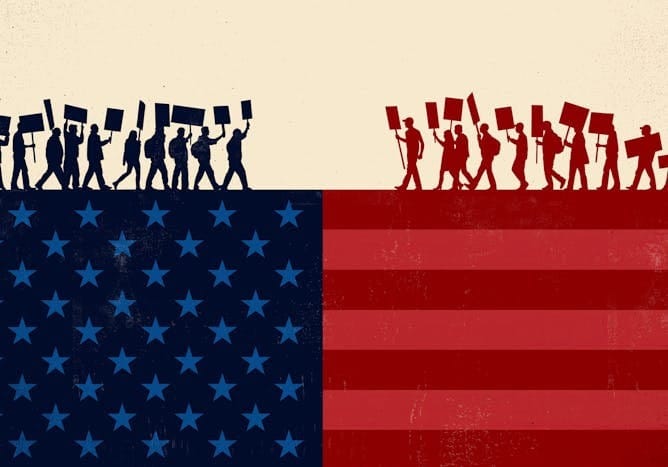
Is it possible to bridge America’s stark political divisions?

In the wake of a presidential election that many feared could tear the U.S. apart, this question is on many people’s minds.

A record-high 80% of Americans believe the U.S. is greatly divided on “the most important values”.  Ahead of the election, a similar percentage of Americans said they feared violence and threats to democracy. Almost half the country believes people on the other side of the political divide are “downright evil.”

Some say that the vitriolic rhetoric of political leaders and social media influencers is partly to blame for the country’s state of toxic polarization. Others cite social media platforms that amplify misinformation and polarization.

There is, however, reason for hope.

I say this as an anthropologist of peace and conflict. After working abroad, I began doing research on the threat of violence in the U.S. in 2016. In 2021, I published a related book, “It Can Happen Here.”

Now, I am researching polarization in the U.S. – and ways to counter it. I have visited large Make America Great Again events for my research. I have also gone to small workshops run by nonprofit organizations like Urban Rural Action that are dedicated to building social cohesion and bridging America’s divides. Some refer to the growing number of these organizations as a “bridging movement.”

Their work is not easy, but they have shown that connecting with and listening to others who hold different political views is possible.

Here are three strategies these organizations are using – and people can try to use in their own daily lives – to reduce political polarization:

1. Listen first

Pearce Godwin, a former Republican-leaning consultant from North Carolina, was one of the first “bridgers.”

In 2013, Godwin was doing Christian humanitarian work in Africa. Upset by the vitriol of U.S. politics, Godwin, who had worked on Capitol Hill, wrote a commentary, “It’s Time to Listen,” while on an overnight bus trip across Uganda.

Multiple U.S. newspapers published his column, which called for what is the starting point of most bridging work: People should listen first to understand.

Later that year, Godwin started a nonpartisan and nonprofit organization, the Listen First Project, to promote this message through activities like a 2014 “Listen First, Vote Second” public relations and media campaign.

After Donald Trump won the 2016 election, Godwin decided to expand Listen First work. He established the #ListenFirst Coalition with three other similar organizations: The Village Square, Living Room Conversations and National Institute for Civil Discourse.

Today, this coalition includes over 500 organizations, whose work ranges from one-off dialogue skills workshops to longer-term projects that seek to build social cohesion in the U.S.

2. Be curious, not dogmatic

Braver Angels dates back to 2016 and is another large nonprofit organization that is part of the #ListenFirst Coalition.

On Election Day on Nov. 5, 2024, Braver Angels organized hundreds of pairs of Trump and Kamala Harris supporters to stand at polling stations and demonstrate that dialogue across the political divide is possible. Some held signs that read “Vote Red, Vote Blue, We’re All Americans Through and Through.”

During the past year, I have observed Braver Angels workshops on media bias, public education, immigration and the 2024 election.

Their fishbowl exercise stands out.

Designed by Bill Doherty, a couples therapist and co-founder of Braver Angels, the fishbowl involves a group of Republicans and Democrats talking.

People in the group take turns speaking on a particular political topic, while the others – along with a larger group of observers – listen to what they say without speaking. After peering into this “fishbowl,” each group member discusses what they discovered by listening to the other group. Many mention their “surprise” at points of agreement on certain issues and the thoughtful reasoning behind positions “on the other side” they had previously dismissed.

The exercise illustrates a key starting point of bridging work: Be curious, instead of trying to prove you are right. Learn how someone on the other side of an issue understands and perceives something.

3. Burst out of your bubble

Another key strategy to overcome division is helping people burst out of their bubble. The idea is that people can objectively detach from and examine their assumptions, and then try to explore alternative views outside their social media, news information and community silos.

One #ListenFirst Coalition partner, AllSides, tries to help people do this through a digital platform that shows how the same news of the day is being reported by left, right and center media organizations. It also has an online tool, “Rate Your Bias,” which helps users become aware of their own assumptions.

People can use these tools to compare different stances on issues like federal taxes and civil liberties – and how their own positions line up. People can also search for individual media outlets to see if the majority of other users have rated these organizations as liberal, conservative or center.

When people identify their own biases – which can become evident as they examine the media outlets they like, for example – it can help them become more curious and open. It also helps them move out of the information silos that divide people.

The bridging movement is not without its challenges. People who lean red are sometimes suspicious of these initiatives, which give people information on voting and democracy and can be perceived as having a liberal bias.

Group diversity is also a challenge. Based on my observations, Braver Angels participants tend to be older, white and educated.

And other groups, like #ListenFirst Coalition partner Urban Rural Action, have to spend considerable time and effort getting a diverse range of people in their programs.

But, given America’s stark political divisions, I think there is a clear need and desire for the depolarization work these groups do. The vast majority of people in the U.S. are concerned about the current state of polarization in the nation. These bridging groups show a way forward and offer strategies to help Americans build bridges across the country’s deepening political divide. (The CONVERSATION)

U.S. States with the Highest Obesity Prevalence and Related Health Issues

0

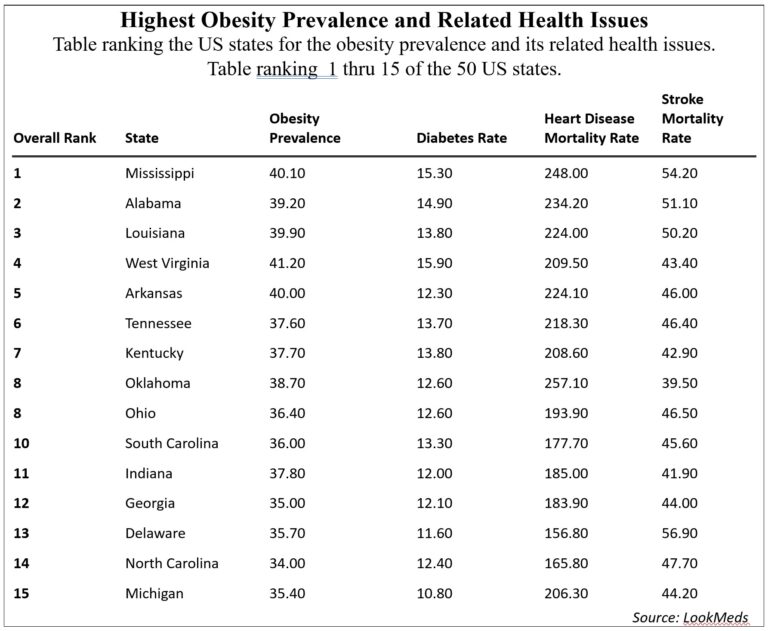
A new report from LookMeds reveals troubling health trends in Tennessee, which ranks as the #6 health crisis hotspot in the nation. This study, based on CDC and American Diabetes Association data, highlights where obesity, diabetes, heart disease, and strokes are most prevalent in the United States.

Key Findings for Tennessee:

1. Mississippi

Mississippi has the second-highest prevalence of obesity in the nation at 40.1, and 15.3% of the adult population has diagnosed diabetes. Mississippi also had some of the highest mortality rates when it came to heart disease and strokes, at 248 and 54.2, respectively.

               Obesity Prevalence: 40.1

               Diabetes Rate: 15.3

               Heart Disease Mortality Rate: 248

               Stroke Mortality Rate: 54.2

‍2. Alabama

Alabama saw an obesity prevalence of 39.2, with 14.9% of adults having been diagnosed with diabetes. Additionally, Alabama’s heart disease mortality rate is 234.2, the third-highest in the United States. The stroke mortality rate was also the third-highest at 51.1.

               Obesity Prevalence: 39.2

               Diabetes Rate: 14.9

               Heart Disease Mortality Rate: 234.2

               Stroke Mortality Rate: 51.1

‍3. Louisiana

Louisiana comes in third for states with the highest rates of obesity and related health issues. The state has an obesity prevalence of 39.9. Also, 13.8% of the adult population has been diagnosed with diabetes. The heart disease mortality rate is 224, and the stroke mortality rate is 50.2, the fourth highest in the nation.

               Obesity Prevalence: 39.9

               Diabetes Rate: 13.8

               Heart Disease Mortality Rate: 224

               Stroke Mortality Rate: 50.2

‍4. West Virginia

West Virginia ranks fourth in America’s health crisis hotspots. The state has the highest prevalence of obesity in the nation, at 41.2. It also has the highest diabetes rate, with 15.9% of the adult population having been diagnosed. However, it has lower mortality rates, with a heart disease mortality rate of 209.5 and a stroke mortality rate of 43.4, earning West Virginia fourth place.

               Obesity Prevalence: 41.2

               Diabetes Rate: 15.9

               Heart Disease Mortality Rate: 209.5

               Stroke Mortality Rate: 43.4

‍5. Arkansas

Coming in fifth is Arkansas. It has the third-highest prevalence of obesity, at 40, and 12.3% of the adult population has been diagnosed with diabetes. Arkansas has the fourth-highest rate of heart disease mortality, at 224.1. Finally, the stroke mortality rate is 46.

               Obesity Prevalence: 40

               Diabetes Rate: 12.3

               Heart Disease Mortality Rate: 224.1

               Stroke Mortality Rate: 46

‍6. Tennessee

Tennessee ranks sixth for states with the highest prevalence of obesity, with a 37.6 rate. Additionally, 13.7% of adults have been diagnosed with diabetes, which is the sixth highest rate in the nation. Finally, it has a heart disease mortality rate of 218.3 and a stroke mortality rate of 46.4.

               Obesity Prevalence: 37.6

               Diabetes Rate: 13.7

               Heart Disease Mortality Rate: 218.3

               Stroke Mortality Rate: 46.4

Chattanooga Fire Station Unveils New Baby Box for Safe Infant Surrender

0

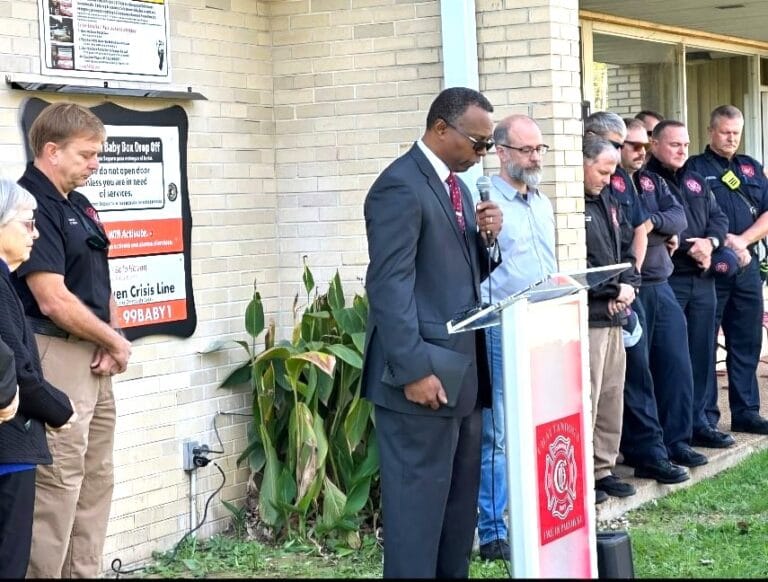
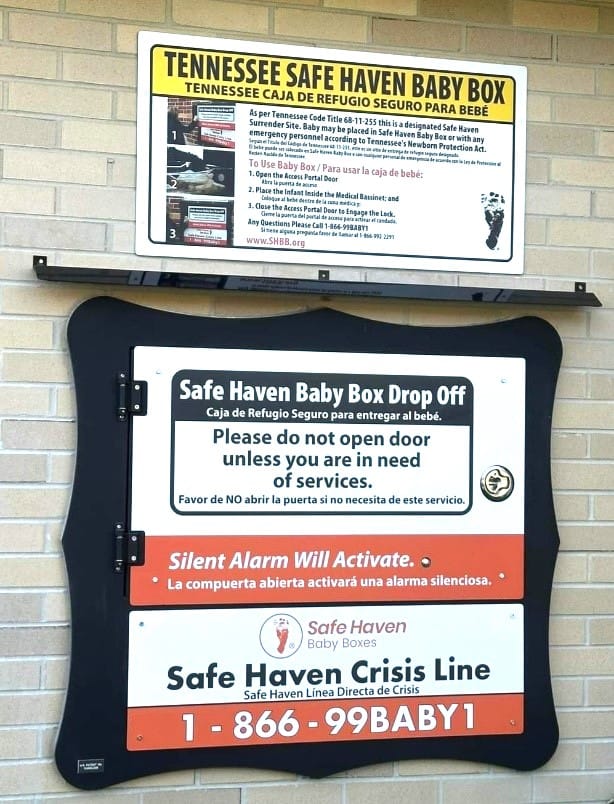
In a significant step toward protecting vulnerable newborns, the Chattanooga Fire Department has installed a new Safe Haven Baby Box at Fire Station 6, offering parents in crisis a secure and anonymous way to surrender their infants.

Chattanooga parents facing an unimaginable situation now have a new lifeline–a Safe Haven Baby Box installed at Fire Station 6, 4510 Bonny Oaks Dr.

The temperature-controlled device, located at 4510 Bonny Oaks Dr., was unveiled last Tuesday during a ceremony attended by fire department personnel, city leaders and Safe Haven officials. The installation makes Chattanooga the latest Tennessee city to join a growing network of over 280 Safe Haven Baby Box locations across the United States.

“We want parents across the entire area to know that they can turn to the Chattanooga Fire Department when they are in crisis and rest assured that their newborns will be safe,” Chattanooga Fire Chief Phil Hyman said. “This is about protecting and saving the lives of children, and we are honored to be a part of the expanding Safe Haven Baby Box program.”

The Baby Box, installed in an exterior wall of the fire station, features a secure door that, when opened, allows parents to place their newborn in a temperature-controlled environment. Once the door is closed, sensors immediately alert firefighters, who provide medical care until Hamilton County Emergency Medical Service arrives to transport the infant to the nearest hospital for evaluation.

The project came to fruition through the efforts of local resident Carol Burhenn, whose daughter adopted a son through a similar Baby Box program in Vienna, Austria. Local businessman and philanthropist Read Taylor provided the funding necessary to bring the program to Chattanooga.

Fire Station 6 was strategically chosen for its accessibility, being located near Highway 153 and major interstate systems. Parents who utilize the Baby Box will find an orange bag containing resources, including information about state protection laws, postpartum care, and a registry for sharing the child’s medical history confidentially.

The installation is protected under Tennessee’s Safe Haven Law, which legally permits parents to surrender their newborns without fear of prosecution. While mothers have 30 days to reconsider their decision, they receive an identification number to track their child’s status through the Department of Children’s Services.

Tennessee currently has 12 Safe Haven Baby Box locations, including sites in Jackson, Lawrenceburg, Springfield and Knoxville, with additional locations planned for Atoka, Rocky Top, and East Ridge. The initiative aims to eventually place at least one Baby Box in each of Tennessee’s 95 counties.

For biological fathers who may be uncertain about their child’s fate, the state offers a putative father registry. By registering, fathers can receive potential notifications if their child has been surrendered through the Safe Haven Baby Box program.

Parents in crisis can reach the Safe Haven Crisis Line 24/7 at 1-866-99BABY1 for support and guidance.

Thank you Mr. Rosenblatt!

0

There I was, sullen and sitting in a local coffee shop three weeks removed from the recent election trying to figure out how on earth it turned out that way.  Stunned? Well, (good grammar aside) that be me.

Now the fact is that I’d published two election related columns recently and was stuck midway through a third one when I took a break, refilled my cup, aimlessly flipped through my newspaper and came across a column by Roger Rosenblatt, author of “Unless It Moves the Human Heart: The Craft and Art of Writing.”

Now I’d not thought much about Rosenblatt’s book – and forgot that I actually had a copy – until I read his recent piece, “How to Be a Writer in the second Age of Trump.”  Wow, talk about an attention getter, the juxtaposition of the words “Writer” and “Trump” in the same title snared my attention. Why? Because after reading it – several times in fact – Rosenblatt’s piece turned out to be what I needed and when I needed it. You see, although writing about Trump during times of Trump may be a boon for some, for others it’s downright exhausting.

Here’s how he started:

“When I woke last week to the news that Donald Trump had been elected president once again, my first impulse was to write. This is not unusual for me. I have been writing my way through difficult times for more than 60 years.”

A few lines down he continued, “But whenever I found myself lost in anger, anguish or confusion, the answer for how I could get through it has been the same: Put pen to paper.”

Now good writing, writes Rosenblatt, requires four things: precision of language, the freedom to say anything, respect and – perhaps most important – love. So for the rest of this narrative, I’ll look at those good writing requisites and follow with my reaction to each starting with “precision.”

“The simple reason precision is essential in writing is that it allows both the writer and reader a clear and shared understanding. One must be precise in all facets of writing. If you need three adjectives to describe something, you have the wrong something.”

Ahh, you got me on this one Mr. Rosenblatt. I’ll admit that when it comes to precision, I’m sometimes guilty of lack thereof and often wordsmith to the extreme. So yes, I have work to do here but your point is well taken.  

On “freedom,” he writes, “The writer depends on total freedom to write what she wants to write, say what she wants to say in a form of her choosing. Freedom is what gives the writer power.”

Here I say, “amen” Mr. Rosenblatt and if you walked into this coffee shop at this very minute, I’d gladly pick up the tab for your favorite latte. What writer freedom means to me is freedom to push boundaries, annoy, educate, reeducate, validate, invalidate and, in the words of the late civil rights icon John Lewis, “Get in good trouble necessary to redeem the soul of America.”

Now Rosenblatt’s last two requisites – “respect” and “love” – led to a double take by yours truly followed by a bit of introspection. He wrote, “An author respects all his characters because he recognizes that we are all flawed and that everyone fails.”

Well, I get that, especially his no brainer about our flaws and failures. But here’s what he wrote that made me depart a tad from what he suggests (the italics are mine).

“(The writer) also respects all points of view, even the most abhorrent. Writers are representative of all humanity and thus are obligated to treat every person, idea and image fairly and honorably.”

Now although I doubt if that’s his literal intent, I’m here to tell you that there’s no way on earth that I’ll respect outright lies and expressions of hate, bigotry and racism, or the people who spout them. Sorry, but honorably respecting abhorrent points of view is a bridge too far for me and if anyone mouths any of that stuff, my respect for them will evaporate into thin air with virtually no chance of recovery.

He closes with “love”.

“Instead of seeing the world as a competitive playing place, the writer sees the world as a vast collection of people, all of whom share the same sense of wonder, the same fears and dreams and the same grief. The writer understands that everyone she meets is carrying a heavy burden. The writer feels that burden – in Madison, Wisconsin, in Santiago, Chile, in Moscow and in Beijing – and loves all who bear it.”

However, from my perspective that burden must include those living in challenging conditions in Port- au- Prine, Haiti, along the Gaza strip, Jerusalem, Mexico City and the Sudan. That burden must include those attempting to escape violence in their home countries or living in abject terror about the threat of mass deportation. That burden must include women whose lives are at risk because of abortion bans. It must include students and teachers dealing with gun violence in schools. That burden must include the homeless young mother with a year-old son who sat near me in the coffee shop where I wrote the piece you’re now reading.

Add those to your mix Mr. Rosenblatt and I’m all in.

Can writers survive, even thrive, in such an environment?” asks Rosenblatt at the end. His answer: “We’d better.” To that I’d append that with not yielding to threats to our core values as writers, nor refraining from saying what must be said and when and how to say it. Because times that writers must continue to “hold feet to the fire,” speak truth to power and call out hypocrisy, craziness and cowardliness whenever and wherever it surfaces.

If we don’t who will?

Terry Howard is an award-winning trainer, writer, and storyteller. He is a contributing writer with the Chattanooga News Chronicle, The American Diversity Report, The Douglas County Sentinel, Blackmarket.com, co-founder of the “26 Tiny Paint Brushes” writers guild, recipient of the 2019 Dr. Martin Luther King, Jr. Leadership Award, and third place winner of the 2022 Georgia Press Award.

CAMPER REMAINS DEMOCRATIC LEADER/CLEMMONS REMAINS CAUCUS CHAIR

0

NASHVILLE—The Tennessee House Democratic Caucus today elected its leadership positions for the upcoming 114th General Assembly of the Tennessee House of Representatives.  Rep. Karen Camper of Memphis remains House Democratic Leader and Nashville Rep. John Ray Clemmons retains his title as Caucus Chair.  Other positions elected today were as follows:

Assistant Democratic Leader—Rep. Harold Love of Nashville

Democratic Whip—Rep. Sam McKenzie of Knoxville

House Floor Leader—Rep. Torrey Harris of Memphis

Caucus Vice-Chair—Rep. Bob Freeman of Nashville

Caucus Treasurer—Rep. Ronnie Glynn of Clarksville

Caucus Secretary—Rep. Yusuf Hakeem of Chattanooga

Democratic Leader Pro Tempore—Rep. Larry Miller of Memphis

In addition to the above, Rep. Johnny Shaw of Bolivar and Nashville Rep. Vincent Dixie were elected to fill the 2 House Democratic positions on the Joint Fiscal Review Committee.  Freshman lawmakers Shaundelle Brooks of Nashville was elected Assistant House Floor Leader and Gabby Salinas of Memphis was named the new Assistant Democratic Whip.

Brain-training games remain unproven, but research shows what sorts of activities do benefit cognitive functioning

0

As many as 60 million people – that’s 20 percent of Americans – deal with irritable bowel syndrome (IBS).

IBS is a chronic condition that affects the lower gastrointestinal tract. It also causes the colon to be irritable and spastic, which causes the abdominal discomfort associated with changes in the consistency and/or frequency of bowel movements.

The causes of IBS are not fully known, but are believed to be a result of a combination of factors, including bacterial imbalance, food allergies and parasites. IBS has three subcategories:

•             pain associated with diarrhea;

•             pain associated with constipation;

•             pain and diarrhea alternating with constipation

How does IBS affect people? People who suffer from IBS are plagued by uncomfortable and disabling symptoms like abdominal pain (the most commonly reported), bloating, and both diarrhea and constipation.

These symptoms cause them to be affected in their daily life and they also miss approximately twice as many work days per year than non-sufferers. They also report more fatigue, lack of energy, and also decreased physical functioning, and overall general health.

Treating IBS

Although there are plenty of treatments for IBS, many do not address the underlying causes of the digestive system.

The lining of the colon, or the gut, is affected in IBS and when it breaks down it can cause “leaky gut” syndrome that eventually exposes the immune system to bacteria. This lining can break down from toxic diets, too much sugar, not enough fiber and also stress.

When this happens, the immune system responds and causes changes in the body such as increased allergies, sensitivities, mood disorders, and even depression.

To balance the gut’s ecosystem, it must be controlled and the overgrowth of bacteria must be in balance. This balance will help to resolve bloating and overall symptoms of IBS by clearing out the overgrowth of bacteria.

The best way to attack these symptoms is to repopulate your digestive tract with good bacteria. Probiotics are a great way to accomplish this, as they help to further normalize gut function.

Probiotics are live microorganisms that can be therapeutic for gastrointestinal diseases such as IBS. They help the bowel by suppressing the growth of bad bacteria, improving the leaky gut, and helping alter the immune system. The use of probiotics may also improve bowel motility.

You can also repopulate your digestive tract with good bacteria by increasing fiber and decreasing sugar in your diet. The soluble fiber in vegetables and fruit adds healthy bulk to the diet. Another beneficial option is taking digestive enzymes with meals to help break down food faster as the gut heals.

Other nutrients that can help heal the lining of the gut include fish oil and the fatty acid Gamma linolenic acid (GLA) commonly found in evening primrose oil, zinc, vitamin A, and glutamine.

Make sure to also drink plenty of water, exercise regularly and decrease your alcohol intake to promote regularity and minimize your IBS symptoms.

If you suspect that you may have IBS, consult with your doctor so they can do a careful physical examination with a complete history and an initial evaluation with lab work. For some patients, this may mean a colonoscopy if there is a family history of colon cancer.

Visiting your doctor as well as eliminating certain foods to treat the underlying causes of IBS can dramatically improve your health and help you overcome your digestive problems. (Dr. Jessica Shepherd for BlackDoctor.org)