Monday, October 12, 2026
Advertisement
Home Blog Page 34

New laws to take effect in Tennessee July 1

SUMMER / ALCOHOL SAFETY/ JULY 4

•             Allows citizens to take the boating safety exam online by eliminating the monitoring requirement.

•             Previously, citizens were required to take the exam in-person, usually at a local library, under the supervision of a proctor.

•             Online testing expands access for rural Tennesseans and provides a flexible solution for those who work during standard business hours

•             Tennessee law requires anyone operating a personal watercraft or motorboat born after Jan. 1, 1989, to have a TWRA-issued Boating Safety Education Certificate or a NASBLA-approved boating safety certificate if they are visiting from another state.

Good Samaritan Law Expansion (Rudder/HB995)

•             Extends immunity protections to individuals who seek medical care for themselves or others in the event of a suspected alcohol overdose. Expanding the current Good Samaritan Law for drug overdoses.

•             Extends immunity protections for alcohol-related misdemeanors like public intoxication, and those involving individuals under the age of 21, such as providing or purchasing alcohol for minors and selling alcohol or beer to minors.

•             The bill was brought to Rudder by a University of Tennessee alumna who lost her 18-year-old brother after an alcohol overdose at a party. His friends were afraid they would get in trouble if they called for help since they were underage drinking.

With an estimated 2,200 alcohol overdose deaths annually in the U.S., the law aims to improve emergency response and save lives, especially for teens and underage adults, by removing legal deterrents.

Increased accountability for impaired drivers (House Bill 190 by Gant):

•             This new law lowers the minimum alcohol concentration (BAC) in a person’s blood to be considered aggravated vehicular homicide or assault from 0.20 percent to 0.15 percent.

•             Aggravated vehicular assault constitutes a Class C felony in Tennessee, punishable by up to 15 years in prison.

•             Aggravated vehicular homicide is a Class A felony, punishable by up to 60 years in prison.

•             One in three fatal crashes in Tennessee involves a person driving under the influence of drugs or alcohol, costing the lives of 441 people in 2023.

•             Rep. Gant, the sponsor of the bill, was critically injured in a crash caused by a drunk driver in 2022

Honoring America’s Founding Principles: Life, Liberty, and the Pursuit of Happiness

•             In recognition of America’s 250th anniversary in 2026, the General Assembly passed a resolution designating three commemorative months to celebrate the nation’s core founding principles. This begins in 2025 and it will be a permanent designation

•             These observances are designed to inspire reflection, civic pride, and renewed appreciation for the values that shaped our country:

•             June – “Celebration of Life” Month

•             July – “Celebration of Liberty” Month

•             August – “Pursuit of Happiness” Month

•             These designations serve as a meaningful tribute to our shared American heritage and a reminder of the principles that continue to guide our state and nation.

PUBLIC SAFETY

Protecting children from hemp-derived products (House Bill 72 by Howell): Protects children from hemp-derived cannabinoid products by creating a minimum sentence of 48 consecutive hours in a county jail or workhouse and a fine of not less than $500 for people convicted of selling or distributing the products, including THC gummies, to people under 21.More than 250 kids were treated for cannabis poisoning at the East Tennessee Children’s Hospital between July 2023 and June 2024.

Increased penalty for exposing children to fentanyl / House Bill 751 by Faison

(Enhances penalties for knowingly placing a child in danger by possessing fentanyl in the presence of a child.

•             The legislation establishes a Class E felony for anyone who exposes a child to fentanyl

•             This elevates to a Class B felony if the child is under 8-years-old

Poison centers in the United States managed 539 cases of children under 6 years old being exposed to fentanyl in 2023, an increase from 10 cases in 2016, according to America’s Poison Centers

Targeting Human Smuggling (House Bill 322 by Todd)

•             The General Assembly passed a new law to strongly penalize and deter traffickers who smuggle illegal immigrants into our country.

•             It establishes three new offenses to target human smuggling of illegal immigrants:

•             Class E felony offense of human smuggling, targeting traffickers who:

•             Knowingly transport and conceal an illegal immigrant from law enforcement for financial gain; or

•             Encourage or influence someone to enter or remain in the country illegally while shielding them from detection

•             Class A felony for aggravated human smuggling when the victim is under the age of 13

•             Class A misdemeanor to knowingly harbor or assist in harboring undocumented individuals in Tennessee, punishable by $1,000 fine per person harbored

•             Expands human trafficking laws by adding promotion of minor prostitution as a trafficking offense.

•             Human smuggling is a multi-billion-dollar criminal enterprise that violates the rule of law, endangers communities and threatens the lives of victims, especially children.

Threats of mass violence: House Bill 1314 by Cochran: The new law will make knowingly threatening mass violence by any means of communication a Class E felony offense. Another person must reasonably deem it a legitimate threat that could lead to the death or injury of four or more people. It also creates a Class B misdemeanor offense for posting on a public website the phone number or home address of another person with ill intent, a practice commonly referred to as “doxing.”

Combating hate crimes: House Bill 55 by Lamberth: The PEACE Act makes key changes to state law to address hate littering and trespassing, police procedure, obstruction and road safety. This mirrors ordinances passed by Metro Nashville Council in 2024 following Nazi protests in Nashville.

Fighting against AI-generated deepfakes: House Bill 1299 by Lamberth: The new law creates a legal framework for victims to sue and recover financial damages from a person who posts pictures of intimate digital depictions without consent. It creates a Class E felony offense “to disclose or threaten to disclose intimate digital depictions with the intent to harass, annoy, alarm or cause substantial harm to the finances or reputation of the depicted individual.”

Unlawful Photography: House Bill 99 by Bulso: The new law enhances the penalty for unlawful photography from a Class A misdemeanor offense to a Class E felony. The penalty would increase further to a Class D felony or Class C felony in certain cases if the victim was younger than 13. Anyone convicted of unlawful photography would also be required to register as a sex offender.

BUSINESS/ CONSUMERS

Unfair billing: House Bill 141, sponsored by State Rep. Michael Hale, R-Smithville, protects consumers from excessive charges when canceling service contracts for cable, internet or phone plans. The newly signed law prohibits service providers from billing customers for an extra billing period if the contract is canceled during the first half of a cycle. If a customer cancels in the second half of a service period, providers can still charge for the remaining days and one additional full billing term. Companies that fail to follow the new rules may face penalties as outlined in the Tennessee Consumer Protection Act of 1977.

Squatting- commercial property (House Bill 216 by Rudd): The new law allows for the immediate removal of squatters on commercial property if certain conditions are met, building on a previous law Rudd passed creating an expedited eviction process for lawful Tennessee homeowners.

Lab-grown meat: House Bill 804, sponsored by State Rep. Rusty Grills, R-Newbern, sets clear rules for how lab-grown or “cell-cultured,” food products can be marketed and sold in the state. These are foods made by growing animal, poultry or seafood cells in a lab without traditional slaughter. Any product made this way cannot be labeled as “meat” or a “meat food product”. While labels can still describe the species, the cells came from or note that the product is a meat substitute, falsely labeling lab-grown products as meat will be considered misbranding and can result in fines of $2,000 per violation. The law also requires manufacturers to obtain a state permit to sell these products, including paying a $1,000 annual fee. The Tennessee Department of Agriculture will oversee the permitting process, which must align with federal safety standards and be implemented using existing state resources.

VAPE Products: House Bill 968, sponsored by State Rep. David Hawk R-Greeneville, sets strict rules for selling vapor products. It requires manufacturers to register with the state and list their products in an official directory. Retailers, distributors and wholesalers can only sell products from that list.

TRAFFIC /

TRANSPORTATION

Bullying /Juvenile DL suspension for one year HB1025 (Russell):

Suspends a juvenile’s driving privileges for one year if they are found adjudicated delinquent for harassment, bullying or cyberbullying.

This legislation expands on a law, championed by Russell, formally defining bullying, cyberbullying and harassment in state code.

This bill does contain an option for a first-time offender to receive a restricted license to use only to commute to school, work and church.

Increasing penalties for blocking traffic  (House Bill 302 by Martin)

•             Creates a Class C misdemeanor for parking, stopping, or leaving a vehicle that impedes traffic.

•             The penalty increases to a Class B misdemeanor if the action contributes to an accident.

Improving the process to regain a driver’s license (House Bill 816) by Travis

•             Removes the burdensome 8-point penalty for driving on a suspended license.

•             This change prevents excessive penalties that can make it nearly impossible for individuals to regain their driving privileges.

•             The law still holds drivers accountable for the offense, but does so without creating long-term barriers to having their license reinstated.

•             It’s a balanced approach that supports accountability while helping Tennesseans get back on the road legally.

Making Highway travel more accessible more family-friendly

House Bill 60, sponsored by State Rep. Kevin Raper, R-Cleveland, makes highway travel more accessible and family-friendly by requiring signs for family restrooms at rest areas and welcome centers. A family restroom is a private, single-occupancy facility that locks and accommodates individuals who may need assistance, including parents with young children, elderly travelers, people with disabilities or anyone needing help from a caregiver. The Tennessee Department of Transportation will add signage on highways to indicate where these restrooms are located, following national traffic sign standards. The department will also publish a list of family restroom locations on its website.

Targeting rideshare driver impersonation to enhance passenger safety (House Bill 786) by Howell

•             A new law addresses the growing concern of rideshare impersonation.

•             The bill makes it a criminal offense for one to falsely present themselves as a rideshare driver.

•             Individuals that are caught impersonating a rideshare driver will face a Class B misdemeanor charge.

•             If impersonation occurs with another felony, the charge can be upgraded to a Class E felony.
Helping the Homeless Brings Joy

By Camp REACH Student, Rebekah Wright, 18

Chattanooga resident Robert Smith credits the late Bishop W.C. Hunter, founder of The World’s Church of the Living God, and Pastor Allan Harrington for teaching him to care for others. He says helping people is how he thanks God.

“The Bible says, ‘He who considers the poor, the Lord will bless,’” Smith said.

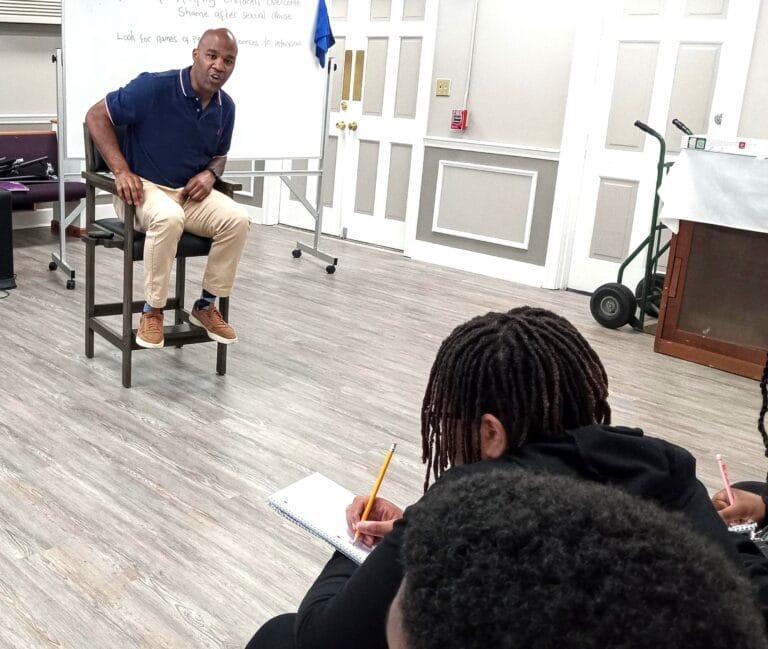
Smith spoke this month to teens at Camp REACH, a summer program that focuses on career exploration, literacy, and leadership. His visit came after students in the camp’s journalism class expressed a desire to write about people who help the homeless.

Rachel Wright, 17, sat among nearly a dozen students listening.

“Don’t judge [homeless people] for what they’re struggling with, because they can’t always help themselves,” she said. “It’s always important to give back.”

Smith, who helps feed the homeless through Shalom Emmanuel Ministries at The World’s Church of the Living God, is one of several volunteers and professionals that students interviewed this summer about why they serve people experiencing homelessness.

Catherine Williams, Hospitality Manager at the CHATT Foundation, said her drive comes from a desire to make a difference in people’s lives—even when that means going beyond her paycheck.

“My passion is being able to help someone in the midst of their darkest moment… and bring them back to being a sustainable adult,” she said.

According to chattfoundation.org, the CHATT Foundation provides around 140,000 meals a year. It offers three meals a day, hygiene items, and clothing at no cost to the homeless community. The center also provides access to a computer lab, a phone line, and a case manager to help clients find jobs and rebuild their lives.

This year Chattanooga Regional Homeless Coalition counted an estimated 1,100 homeless individuals across its 11-county region—a 12 percent increase from 2024.

Local minister Richard K. Bennent volunteers at several organizations that serve the homeless, including the Salvation Army and First Presbyterian Church, where he helps with emergency assistance and teaches faith and finance classes. He also produces a podcast on TikTok called New Thought, which focuses on changing how people think.

“The Bible says in Philippians 2:5, ‘Let this mind be in you which was also in Christ Jesus,’” Bennent said. “That means: I want to show you your better self. I want to take you out of moments of addiction and help you see those were just moments. If you let them go, I can show you what’s ahead of you.”

For students like Rachel, the experience was eye-opening.

“Some homeless people have nowhere to live, eat, or stay,” she said after interviewing homeless people at the CHATT Foundation. “And it’s important for people in the community to help them any way they can.” Camp REACH is a work-based summer youth program of the Mary Walker Foundation, designed to cultivate literacy, journalism, career exploration, and leadership development.

The S.L. Hutchins Bar Association Celebrates Legacy and Leadership at Second Annual Barristers’ Ball

Cheeks and Taylor Honored

Chattanooga, TN – On Saturday, June 21, 2025, the S.L. Hutchins Bar Association hosted its Second Annual Barristers’ Ball at the WTCI Studio in Chattanooga. This year’s theme, “Carrying the Torch: Honoring the Past, Navigating the Present, and Building for the Future,” reflected the organization’s mission to uplift Black attorneys and preserve the legacy of Chattanooga’s first African American lawyer, Styles L. Hutchins.

The elegant evening brought together attorneys, community leaders, and supporters for a night of celebration, networking, and reflection. Attendees enjoyed music, trivia, dinner, and fellowship, all in support of the association’s ongoing work to promote diversity, equity, and justice in the legal profession in Chattanooga.

The highlight of the evening was the presentation of two distinguished awards honoring exceptional contributions to the legal community and the city of Chattanooga.

The Honorable Judge Walter Williams, center, is joined by colleagues.

Kisha Cheeks Receives Walter F. Williams Achievement Award

Attorney Kisha Cheeks was honored with the 2025 Walter F. Williams Achievement Award, which recognizes an attorney who exemplifies the high ethical standards, legal excellence, and deep community engagement that defined Judge Walter F. Williams’ life and career.

A proud Chattanooga native, Cheeks brings over 13 years of courtroom experience, representing thousands of clients in court on matters including probate, family law, and business disputes. As the principal attorney at the Cheeks Rucker Firm, she has earned a reputation for passionate advocacy and compassionate counsel.

Cheeks’ commitment to service extends far beyond the courtroom. She is a dedicated mentor, community volunteer, and active member of organizations such as Alpha Kappa Alpha Sorority, Inc., The Links, Inc., and the Ivy Rose Foundation. She was recently selected for the 2024 Tennessee Bar Association Leadership Law Program, an honor given to only a handful of attorneys across the state. And, in 2025 she made history with her competitive campaign for Circuit Court Judge in Hamilton County.

Her unwavering dedication to faith, family, and fairness has made a meaningful impact on Chattanooga’s legal landscape—and her leadership continues to pave the way for future generations.

Attorney Rheubin Taylor Honored with Lifetime Achievement Award

The S.L. Hutchins Bar Association also recognized Attorney Rheubin McGhee Taylor with its Lifetime Achievement Award in honor of his decades of trailblazing legal service and steadfast commitment to public good.

Taylor re-made history as Chattanooga’s first Black licensed attorney to return to Hamilton County in 1973,  after graduating from Howard University School of Law. Over his long and distinguished career, he has practiced law, served on the Hamilton County Commission, and spent more than three decades as Hamilton County’s Attorney. In that role, he has advised generations of elected officials, negotiated high-stakes contracts, and helped steer transformative projects such as the Tennessee Riverwalk and the revitalization of the Volunteer Army Ammunition Plant.

Beyond his legal and political impact, Taylor is also a spiritual leader—serving for 28 years as Pastor of Mt. Zion Baptist Church in Lafayette, Georgia. Through both civic and religious service, Taylor has lived a life guided by compassion, integrity, and a higher calling.

As he concludes his years of service to Hamilton County and his congregation, Taylor’s legacy stands as a testament to the power of perseverance, faith, and purpose-driven leadership.

CFD Training Chief William Andrews Graduates from Prestigious Leadership Institute

0

More than 2,500 fire service professionals worldwide have completed the Carl Holmes Executive Development Institute (EDI) since 1991–and now Chattanooga Fire Department’s Assistant Chief William Andrews has joined their ranks.

Andrews recently graduated from the prestigious five-year leadership program, marking a significant milestone in his career as Training Chief for the department. The rigorous EDI program develops fire service leaders from around the globe, preparing them for executive-level responsibilities in emergency services.

EDI is recognized as one of the nation’s largest and most renowned organizations dedicated to advancing fire service leadership. The program focuses on developing management skills and leadership potential among fire service professionals, with curriculum covering critical areas such as fire department budgets, community-based fire and EMS programs, media relations, and fire personnel management.

The program’s motto, “All that I am I owe. I live eternally in the red,” reflects its commitment to service and professional development.

As Training Chief, Andrews oversees a comprehensive instruction program that prepares Chattanooga firefighters for state certifications including Emergency Medical Technician, Hazardous Materials operations, Firefighter levels 1 and 2, and various apparatus management. The Training Division is known throughout Tennessee for its diversity and expertise across multiple emergency response disciplines.

The institute honors the legacy of Dr. Carl G. Holmes (Jan. 6, 1927-Nov. 24, 2017), a pioneering figure in American fire service who was one of the first 12 African American firefighters hired by the Oklahoma City Fire Department in 1951. Despite facing significant challenges due to racism and discrimination, Holmes rose through the ranks to become Assistant Fire Chief, eventually founding EDI to develop leadership skills among minority firefighters.

Holmes’ impact extended far beyond Oklahoma City. He served on National Fire Protection Association committees, helped establish national training standards for firefighters, and was sought after by major cities including Chicago, San Francisco, and Los Angeles for fire chief positions.

The EDI program has been hosted at several Historically Black Colleges and Universities, including Florida A&M University, Clark Atlanta University, and its current location at Dillard University in New Orleans. The program has served participants from across the United States, Canada, the Caribbean, Europe and Africa.

Chief Andrews’ completion of the program enhances his ability to lead the Chattanooga Fire Department’s training initiatives, which extend beyond department personnel to include partnerships with the University of Tennessee at Chattanooga, Hamilton County Local Emergency Planning Committee (LEPC ), Boy Scouts of America, and other local organizations.

The EDI’s mission encompasses providing safe training environments; maintaining compliance with local, state and federal guidelines; and ensuring all participants receive career development opportunities through state-approved certification programs. EDI graduates across the country now serve in high-ranking positions throughout the fire service, with many crediting the program as instrumental to their professional success. Chief Andrews’ graduation represents not only a personal achievement but also an investment in the continued excellence of fire service leadership in Chattanooga and beyond.

Moccasin Bend Mental Health Institute–A Community Asset in Flux

CNC Staff Writers

Moccasin Bend Mental Health Institute (MBMHI) sits on prime real estate that most developers would love to have in their revenue-generating portfolios. The 64-year-old hospital is on land designated as a National Historic Landmark in the Moccasin Bend Archaeological District, which is filled with artifacts from both the Native American Trail of Tears and the Civil War.

Several interests are involved in the critically important decision to relocate the hospital to meet the needs of the mentally ill and cognitively challenged that require care in an institutionalized setting. Some interests are obvious. Others may be not-so-public interests influencing the decisions.

Questions linger as distrust builds, since information is difficult to obtain by our community. On the TN Department of Mental Health and Substance Abuse (TDMHSA) website’s “Mental Health Milestones,” the very first milestone reads, “No State facility for the mentally ill in Tennessee.  Care was responsibility of local communities included family care, jails, almshouses, poor houses” assigned to the dates of 1796-1840.

Now, 229 years later into Tennessee’s Statehood, the issue of inadequate mental healthcare facilities is still a pressing concern. MBMHI serves 52 counties–more than half of Tennessee’s 95 counties. Since 1961, the number of beds has increased from 150 to only 165 for adult psychiatric patients with “severe and persistent mental illness.”

The demand for mental health beds exceeds the supply. Rightfully, an effort is being made to expand and update MBMHI. According to TN State Building Commission (SBC) records, the request to approve the project “to construct a new replacement facility” was approved on September 14, 2023, with the 2022-23 Tennessee budget, including  $260,000,000 for the project.

 During that SBC meeting, the Department of General Services indicated that site selection was already underway seeking 80 acres with 40 prospective sites, many in Hamilton County but some in Bradley, McMinn, Monroe, Marion, and Sequatchie Counties. The 2023 minutes reveal that “the State-owned property at Moccasin Bend became the most advantageous real estate option,” or simply rebuilding on the existing site. That option was eliminated just a year after an archaeological study was published in November 2024 necessitating a location change.

What has happened since?

The SBC met again on January 9, 2025, and approved “the authority to act” by the “Executive Sub,” or Commission’s Executive Subcommittee (ESC) to now include land purchase and new construction of a replacement hospital. Chattanooga News Chronicle reviewed all meeting videos since January, yielding no publicly announced action, and raising questions as the next meeting approaches on June 23.

The public has not been updated as to the work of TN General Services in its site selection process, which now includes a 100-acre location just off Highway 153 driving toward Chattanooga State on Amnicola Highway. A second location mentioned is near Erlanger Medical Center and a third location is off 10th Street, after a 160-acre site in Eastdale near Tunnel Boulevard met neighborhood opposition.

The public is interested. Chattanooga’s three competing large health systems likely have opinions. The Chattanooga News Chronicle will continue providing information for you and your community.

New Report: Cost Of Living Jumps $8,200 For Hamilton County Families

United Way urges action as more households fall below the ALICE threshold

CHATTANOOGA, Tenn. (June  2025) — A new report from United Way of Greater Chattanooga and its research partner United for ALICE revealed that the cost of living for a Hamilton County family of four with two children in child care rose by $8,200 in just one year. At the same time, poverty rose by 2%. Even though more residents joined the workforce, it wasn’t enough to close the growing gap between wages and the cost of basic needs like housing, child care, food, and transportation. 

The latest ALICE data from 2023 provides a clearer picture of financial hardship across the Greater Chattanooga region.

 Statewide Insights

ALICE stands for Asset Limited, Income Constrained, Employed. These are households earning more than the Federal Poverty Level but not enough to afford the basics. ALICE families often work multiple jobs and earn too much to qualify for assistance, but too little to make ends meet. Traditional federal poverty measures overlook ALICE families entirely.

In the most recent year of available data, 14% of Tennessee households were officially in poverty. But that number more than doubles when ALICE is included. Combined, 44% of Tennessee households were living below the ALICE threshold. In Georgia, that number is 45% of households. 

“When we underestimate how many families are struggling, we underestimate what it truly takes to build a thriving community,” said Lesley Scearce, President and CEO of United Way of Greater Chattanooga. “ALICE represents our teachers, healthcare workers, delivery drivers, and caregivers—people holding up the local economy while struggling to support their own households.”

In both Tennessee and Georgia, many of the most common jobs don’t pay enough to cover basic needs. In Tennessee, 32% of workers in the 20 most common occupations lived in households that couldn’t afford essentials. In Georgia, that number was slightly higher at 35%.

Hamilton County Snapshot 

In 2023, 10,961 households with children lived below the ALICE threshold, a 15% increase from the previous year. While the percentage of ALICE households overall remained steady, poverty rose by 2%, meaning more families are falling deeper into crisis.

North Georgia Snapshot

Catoosa County: 2% decrease in households below the ALICE threshold, with improvements in income and workforce participation.

Walker County: 6% decrease in ALICE households, but poverty increased by 3%, showing mixed progress.

Dade County: Little change, but financial hardship remained high.

Across Greater Chattanooga, families are struggling to find stability. A single unexpected expense can spiral into deeper hardship.

 Community Action 

ALICE represents our neighbors, coworkers, and friends. United Way of Greater Chattanooga is urging the community to take action to support local families. 

 “When businesses, nonprofits, and local governments work together, we can make a real difference for working families,” said Scearce. “When families thrive, so does the economy. Thriving families raise thriving kids—the future of our workforce. And a strong workforce is the foundation of a strong economy. We can’t afford to leave hardworking families behind.”

Employers: Join the upcoming United for Working Families Summit to support financial resilience for local employees.

Community Members: Advocate for family-friendly policies and vital resources like Head Start and SNAP by sending a message to U.S. representatives and senators.

Donors: Support emergency assistance and long-term solutions through United Way’s 211 helpline and community programs. Learn more and explore the latest ALICE data at unitedwaycha.org/alice.

Chattanooga State Celebrates Inspiring Journeys of Spring 2025 Graduates

Ajaya Kennedy – Chattanooga State Community College. She will transfer to the University of Tennessee at Chattanooga this fall, continuing a tradition created in her childhood.

More than 900 graduates walked across the stage at Chattanooga State Community College’s spring commencement ceremony on May 9, culminating educational journeys that spanned continents, generations, and life circumstances.

The 924 graduates, ranging in age from 17 to 62, represented one of the most diverse classes in the college’s history, with students hailing from nine countries beyond the United States, including Belarus, Brazil, the Dominican Republic, Germany, Guatemala, Iraq, Mexico, the Philippines, and India.

Among the standout stories was that of mother-daughter duo Nicole Parris and Nalani Sims, who earned their associate degrees together. Through ChattState’s Dual Enrollment program, 17-year-old Nalani simultaneously completed her high school diploma and associate degree, while her mother Nicole launched an educational path toward a career in psychology.

“You’re here for a reason. Figure out what that reason is and go toward it,” Nicole Parris reflected on her academic journey.

Another remarkable graduate, Ajaya Kennedy, honored both loss and love as she earned her associate degree in Theater Performance. Raised by her great-grandmother Theora after losing her mother in a car crash at age two, Kennedy found healing through the arts, attending musical theater performances throughout her childhood with her great-grandmother.

“Ajaya was raised by her incredibly strong great-grandmother, Theora Kennedy, or Mamaw, as Ajaya calls her,” said College President Dr. Rebecca Ashford, who highlighted Kennedy’s story during the ceremony. “Theora ensured that Ajaya was raised in a home that values education.”

Kennedy, a Central High School graduate from Knoxville, will transfer to the University of Tennessee at Chattanooga this fall to continue her theater studies.

The graduating class reflected the college’s mission of accessible education, with 31% representing first-generation college graduates and 29% being armed forces veterans. The average age of graduates was 26, with the youngest cohort of 10 students being just 17 years old.

Post-graduation plans were split nearly evenly, with 42% of graduates planning to transfer to four-year universities while 58% intend to enter the workforce directly.

During her commencement address, Dr. Ashford encouraged graduates to embrace gratitude as they move forward.

“When you are grateful–when you focus on what you have rather than what you lack–you bring more joy and abundance to your life,” she told the assembled graduates, friends and family members. “I encourage you to be grateful even for the challenges that you face, and there is no doubt that you faced challenges as you pursued your education.”

The ceremony, attended by hundreds of family members, faculty, and community supporters, celebrated not just academic achievement but the perseverance required to balance education with work, family responsibilities, and personal obstacles.

The college conferred both associate degrees and technical diplomas during the ceremony, recognizing achievements across multiple academic and vocational programs that serve the greater Chattanooga region’s workforce and educational needs.

Chattanooga Native AKeera Ford Earns Prestigious Fulbright Award for UK Study

Chattanooga native AKeera Ford, a recent graduate of Kennesaw State University (KSU), has been granted a highly coveted Fulbright Study Award, a prestigious honor that will take her across the Atlantic to the United Kingdom. Ford will pursue a Master’s degree in Crime, Justice, and Psychology at the University of Leicester, where she plans to delve into how the UK’s victim-centered justice system facilitates recovery.

Ford, who earned both a Bachelor of Science in Psychology with a minor in criminology and a Bachelor of Arts in Black Studies from KSU in May 2024, will spend a year in Leicester. Her academic pursuits will focus on the field of criminology, examining practices that could offer valuable insights into supporting victims.

“I was born and raised in Chattanooga,” Ford explained, detailing her path to Kennesaw State. “But I went to school in Ringgold, Georgia, which is how I ended up at a Georgia school like KSU. We briefly lived in Georgia for about eight years, but it was only 15-ish minutes from Chattanooga.”

The journey to securing a Fulbright award is known for its rigorous demands, and Ford shared her personal experience with the process.

“When applying to things like this, there’s always a level of uncertainty. No one can be certain they will be awarded a scholarship as prestigious as this one because it’s so competitive. The wait was long, the application process was demanding, and I definitely had my fair share of self-doubt.”

However, the moment of acceptance was met with an outpouring of emotion.

“But when I received my acceptance, I opened the letter, I laughed, I thanked God, and then I cried. I am ecstatic and truly so grateful for this opportunity. The experience will be invaluable and, I believe, a turning point that sets me in an upward trajectory for years to come. I’m delighted to have the opportunity to travel to the UK and beyond, gaining new perspectives through the people and places I encounter, and engaging in a meaningful exchange by sharing pieces of my own along the way.”

The Fulbright Program, founded in 1946 in the aftermath of World War II by legislation introduced by Senator J. William Fulbright, stands as the U.S. State Department’s flagship international academic exchange initiative. Its core mission is to foster mutual understanding and cultivate friendly, peaceful relations between the people of the United States and other nations worldwide.

The Fulbright U.S. Student Program provides grants to recent college graduates, graduate students, and early-career professionals, enabling them to engage in study, research, or English teaching abroad. Since its inception, the program has empowered over 400,000 talented individuals from diverse backgrounds to study, teach, and conduct research internationally.

With a global reach spanning more than 160 countries, the Fulbright Program operates on an open, merit-based selection process, identifying awardees based on their academic achievement and leadership potential. The program’s unique binational structure, supported by the U.S. Congress, foreign governments, and various institutional and private contributions, reinforces its enduring success and distinguished standing in international education.

Fulbright alumni have gone on to achieve remarkable distinctions across various fields, including government, science, the arts, business, and education, with many earning Nobel Prizes, Pulitzer Prizes, and holding positions as heads of state.

United Way of Greater Chattanooga Commits $600,000 Through Bridge Fund to Meet Urgent Basic Needs

CHATTANOOGA, Tenn. (June 10, 2025) — In direct response to rising demand and growing funding gaps across the nonprofit sector, United Way of Greater Chattanooga is committing $600,000 through its Bridge Fund, a vital resource that supports local organizations providing food, shelter, healthcare, transportation, and more to neighbors in crisis.

 As nonprofit partners face tightened budgets amid increased community need, the Bridge Fund offers a flexible, responsive solution to help ensure frontline services remain accessible when families need them most. These investments also prioritize frequent referral partners of the 211 Helpline, reinforcing United Way’s commitment to connect individuals with critical services in real time.

 “We’re hearing clearly from our nonprofit partners: the need is urgent, and flexible funding is scarce,” said Abby Garrison, Vice President of Community Investments at United Way of Greater Chattanooga. “This Bridge Fund investment is a direct result of what we heard and shows the United Way is responding not only with empathy, but with action.”

The Bridge Fund is part of United Way’s broader Community Investment funding model, which channels donor dollars through three types of grants that meet both immediate needs and support long-term change. 

 A diverse group of more than 60 trained grant reviewers, in collaboration with the United Way’s Community Investment staff and a dedicated Community Investment Committee, read and scored every application for funding that was submitted. These volunteers and staff provided their recommendations to the United Way’s Board of Directors, which voted to accept those recommendations. 

 For this grant cycle, the Community Investment Committee was co-chaired by Paulo Hutson, United Way Board Member and co-founder of A Medida Communications, and Ben Staples, United Way Board Member and Senior Vice President of People & Culture at CBL Properties.

 “This is what responsive, community-centered philanthropy looks like,” said Ben Staples, Community Investment Committee Co-Chair. “We listened, we evaluated, and we acted together.”

 “It’s not just about a one-time grant,” added Paulo Hutson, Community Investment Committee Co-Chair. “It’s about sustaining the relationships and services that so many families depend on, especially during moments of crisis.”

Results from United Way’s recent survey of local nonprofit organizations made it clear they are facing a myriad of growing pressures, from staffing constraints to increased caseloads to budget shortfalls. The Bridge Fund helps close these gaps, particularly for organizations that are directly serving local ALICE (Asset Limited, Income Constrained, Employed) households. These families often live just above the federal poverty line—earning too much to qualify for assistance but not enough to cover basic monthly expenses. Data released earlier this month indicates that 41,566 such households exist in Hamilton County as of 2023, the most recent year for which data is available.

 This work aligns with United Way’s 2030 Impact Agenda, which is focused on optimizing regional resources, strengthening strategic partnerships, and increasing transparency to build stronger outcomes for families in the region. By addressing both short-term crises and long-term community needs, United Way ensures every donor dollar leads to meaningful change. To see the full list of funded partners, visit unitedwaycha.org/fundedpartners.  Help Bridge the Gap –  Help ensure local families can access food, shelter, and essential services when they need it most. Visit unitedwaycha.org/give to donate today.

Black Americans Face Unequal Burden as U.S. Inches Closer to War

By Stacy M. Brown,

NNPA Newswire=June 22, 2025

As the United States edges closer to possible military action against Iran, history signals a familiar reality for Black Americans: disproportionate risk, unequal support, and a long legacy of being asked to sacrifice more while receiving less. From World War I through Iraq and Afghanistan, Black servicemembers have routinely been overrepresented in combat roles and underrepresented in decision-making positions. Today, although Black Americans make up just over 13% of the U.S. population, they account for nearly 19% of active-duty Army personnel. “When the U.S. goes to war, Black Americans, whether as civilians, enlisted personnel, or military families, often carry a disproportionate share of the burden,” Liscah R. Isaboke, Esq., Managing Partner at Isaboke Law Firm, PLLC, told Black Press USA.

“Historically, Black service members have been overrepresented in frontline and high-risk roles while underrepresented in officer ranks,” Isaboke said. “This exposure results not only in increased physical danger, but also long-term disparities in access to VA benefits, career advancement, and mental health care upon return.” That overrepresentation is linked to greater economic inequality. Recruitment data shows the military draws heavily from low-income communities, and Black Americans—more likely to face systemic barriers to college and employment—are disproportionately represented among enlistees seeking stability, education, or opportunity. Once enlisted, they are less likely to be promoted into leadership roles, often due to bias in evaluation and selection processes. According to the VA’s National Health Study, 21.9% of deployed Black veterans screened positive for PTSD, compared to 14.1% of white veterans. Studies have shown that Black veterans are less likely to receive long-term, culturally competent mental health care and face more barriers to follow-up treatment. Military justice records also reveal that Black service members are more likely to face court-martial than their white counterparts.

“Black Americans have historically been overrepresented in the U.S. military while being under-protected both at home and abroad,” Cazoshay Marie, a disability advocate, artist, and writer, wrote in an email to Black Press USA. “From the disproportionate impact of PTSD and other invisible war wounds among Black veterans to the lack of adequate support upon returning home, the psychological and socioeconomic costs of war weigh heavily.” “Increased military spending often coincides with the defunding of essential programs—education, healthcare, and community infrastructure—which are lifelines in our communities,” Marie said. Those federal divestments have long-term consequences. During the post-9/11 wars in Iraq and Afghanistan, it’s estimated that the U.S. spent over $6 trillion on military operations, interest payments, and veteran care. As those expenses ballooned, domestic programs—including housing subsidies, public education investment, and job training—faced cutbacks. Black Americans, already on the receiving end of wealth gaps and institutional neglect, felt those losses acutely.

In their February 2024 essay “The Race Gap That Shapes American Views of War,” published in Foreign Affairs, Naima Green-Riley of Princeton University and Andrew Leber of Tulane University wrote that Black Americans have consistently been less likely than white Americans to support U.S. wars abroad. The authors cited not only political and moral skepticism but also a deeply rooted sense that these wars are carried out in the name of democracy while offering little tangible benefit to Black communities. “Black Americans are more inclined to ask: Is this war just? Will our people gain anything from it? And what are we sacrificing for a country that so often withholds justice at home?” Green-Riley and Leber wrote.

The article pointed to cultural responses, including KRS-One’s 2008 track “Our Soldiers,” which critiques the Iraq War and opens with a siren that initially evokes U.S. policing. The song’s hook, “Frontline of the political war,” highlights a dual consciousness: the experience of fighting abroad while being targeted and marginalized at home. “As a historian of public health and policy, I can say that when the U.S. goes to war, Black Americans often shoulder a disproportionate share of both the burden and the consequences—on the battlefield and at home,” Dr. Zachary W. Schulz, of the Department of History at Auburn University, told Black Press USA. “Historically, military service has been a double-edged sword for Black Americans,” Schulz said. “From the Civil War through Iraq and Afghanistan, Black soldiers have fought for freedoms abroad they were denied at home. Military service offered mobility, education, and sometimes even a pathway to civil rights advocacy—as in the case of the Double V campaign during WWII—but it also exposed Black personnel to racism within the ranks, limited advancement opportunities, and post-service disparities in veteran care.”

“Civilians are also deeply affected,” Schulz said. “Wars often fuel economic shifts and labor demands that open up jobs for Black workers—only to see those gains reversed when the war ends. Wartime policing and surveillance disproportionately target Black communities, and anti-war protest movements led by Black activists—think Muhammad Ali or Martin Luther King Jr.’s ‘Beyond Vietnam’ speech—have historically met with state suppression and public backlash.” “The impact is layered,” Schulz added. “Black Americans are overrepresented among the fighters, under-resourced in the aftermath, and frequently erased from the national narrative of sacrifice.” “We must tell the full truth,” Isaboke concluded. “Black Americans have always shown up for this country, even when this country has not always shown up for them, especially in times of war.”