Saturday, October 10, 2026
Advertisement
Home Blog Page 237

COVID-19 — Even During a Killer Pandemic Trump Tests Positive for Racism

0

By Lauren Victoria Burke
NNPA Newswire

NNPA NEWSWIRE — “The FBI assesses hate crime incidents against Asian Americans likely will surge across the United States, due to the spread of coronavirus disease … endangering Asian American communities,” read a report compiled by the FBI’s Houston office and sent to local law enforcement across America. “The FBI makes this assessment based on the assumption that a portion of the US public will associate COVID-19 with China and Asian American populations.”

On March 23, standing at the podium in the White House Briefing Room, President Trump was asked whether or not using the term “Chinese virus” when referring to COVID-19 pandemic was racist or was inspiring recent violence against Asians.

“It’s not racist at all. It comes from China, that’s why,” Trump said to punctuate the point.

President Trump’s press briefings on COVID-19 are carried by millions and in multiple appearances the President referred to COVID-19 as “the Chinese virus.”

A reporter asked, “Do you think, using the term ‘Chinese virus’, that puts Asian-Americans at risk, that people might target them?”

“No, not at all,” Trump answered. “I think they probably would agree with it, 100 percent. It comes from China,” he added. The President’s press briefings on the COVID-19 crisis is viewed by millions.

Many political observers have pointed out that labelling the virus this way will only increase tensions between the two countries and encourage xenophobia.

President Trump has a long history of racism, racist comments and targeted words against almost every group that is not white Anglo-Saxon protestant. Asian-Americans have reported incidents of racial slurs and physical abuse over the perception that China caused COVID-19.

Racism against Asian Americans has surged as the coronavirus sweeps the U.S., with reports of hate crimes averaging approximately 100 per day, according to Rep. Judy Chu (D-Calif.).

On television on March 31, Chu discussed the increased violence against Asians in the U.S. and confirmed that, “at least 1,000 hate crimes incidents being reported against Asian Americans” after the pandemic hit the U.S.

“The FBI assesses hate crime incidents against Asian Americans likely will surge across the United States, due to the spread of coronavirus disease … endangering Asian American communities,” read a report compiled by the FBI’s Houston office and sent to local law enforcement across America. “The FBI makes this assessment based on the assumption that a portion of the US public will associate COVID-19 with China and Asian American populations.”

On March 27, the FBI warned of a surge in hate crimes against Asian Americans because of coronavirus. On March 30, several members of Congress spoke out to address the issue and bring more attention to the FBI’s findings. Legislators included Reps. Hakeem Jeffries (D-NY), Katherine Clark (D-MA), Judy Chu (D-CA), Karen Bass (D-CA), Joaquin Castro (D-TX) and Grace Meng (D-NY).

Lauren Victoria Burke is an independent journalist for NNPA and the host of the podcast BURKEFILE. She is also a political strategist as Principal of Win Digital Media LLC. She may be contacted at LBurke007@gmail.com and on twitter at @LVBurke

Publix launches initiative to help farmers, feed those in need during pandemic

0

More than 150,000 pounds of produce, 43,500 gallons of milk to be donated to Feeding America food banks during the first week of the initiative

LAKELAND, Fla., ­— Publix announced today a new initiative to purchase fresh produce and milk to assist farmers impacted by the coronavirus pandemic. Publix will donate these products directly to Feeding America member food banks in its operating area. The initiative will support Florida produce farmers, southeastern dairy farmers and the growing number of families looking to Feeding America for fresh fruits, vegetables and milk during the coronavirus pandemic. Kicking off today, the initiative is expected to run for several weeks.

“As a food retailer, we have the unique opportunity to bridge the gap between the needs of families and farmers impacted by the coronavirus pandemic,” said Publix CEO Todd Jones. “In this time of uncertainty, we are grateful to be able to help Florida’s produce farmers, southeastern dairies and families in our communities.”

According to Feeding America, an estimated 17.1 million additional people will experience food insecurity due to school closures and rising unemployment during the pandemic.

“As we respond to the coronavirus pandemic, Publix understands that more families are turning to us to help put food, especially fresh produce and milk, on their tables,” said Feeding South Florida President & CEO Paco Velez. “We’re grateful to Publix for not only supporting growers, but also for their years of support of Feeding South Florida.”

With numerous reports of farmers discarding produce and milk that isn’t being sold — mostly as a result of school, restaurant and hotel closures — Publix hopes to address the needs of both the farming community and its local partner food banks through this initiative.

“We are thrilled about Publix’s initiative to buy additional milk from Southeast Milk for processing and donation to Feeding America member food banks,” said Southeast Milk Inc. President Joe Wright. “It’s a win-win for our farmers who are feeling the impact of decreased demand and the families who are in need of nutrient rich milk during this pandemic.”

“Like so many others right now, Florida farmers are in a time of need. We are humbled Publix is purchasing additional fresh vegetables from us and other local farms to donate to food banks throughout the Southeast,” said Pero Family Farms Food Co. CEO Peter F. Pero IV. “Thank you to Publix, the participating food banks and their volunteers for making this initiative possible for those less fortunate while supporting local farms.”

“In addition to providing much needed produce and milk to food banks, this initiative provides financial support to farmers during this challenging time,” Publix’s Jones said. “We’re honored to be able to work with these groups and do good together for our communities.” 

Throughout the company’s history, Publix has supported organizations working toward alleviating hunger in our neighborhoods. Since 2009, Publix has donated more than $2 billion in food to people in need and has pledged an additional $2 billion in food donations over the next 10 years. 

Publix Super Markets Charities recently made donations totaling $2 million to support Feeding America member food banks during the pandemic.

About Publix

Publix, the largest employee-owned company in the U.S. with more than 200,000 associates, currently operates 1,242 stores in Florida, Georgia, Alabama, Tennessee, South Carolina, North Carolina and Virginia. For 23 consecutive years, the company has been recognized by Fortune as a great place to work. In addition, Publix’s dedication to superior quality and customer service is recognized among the top in the grocery business. For more information, visit the company’s website, corporate.publix.com.


UTC graduate student is on the front lines in Chattanooga’s battle with COVID-19

These days, everyday people are taking on hero status. 
University of Tennessee at Chattanooga Master of Public Health graduate student Jasmine Pulliam is no exception. 

In order to gather information for the health department, the Chattanooga native has been working from home, checking on people who have come into contact with someone who tested positive for COVID-19.

None of the people being interviewed by Pulliam actually have the virus; the goal is to track whether they eventually show symptoms or not. From there, Hamilton County Health Department officials can determine where the virus might have previously been, where it might spread and the number of patients suffering from it.

Pulliam has five subjects to call daily, and said they have been “very calm and aware” of the situation.

“They are very cooperative and open to answering questions,” she said.
Pulliam joins UTC graduate student Mary Ferris, along with athletic training students and faculty in the Department of Health and Human Services, as they touch base daily with people who have had contact with someone ill with coronavirus.

Dawn Ford, clinical associate professor with the Master of Public Health program at UTC, trained 61 volunteers on procedures, which were developed by the Hamilton County Health Department.

From there, health department officials get in touch with her when they have people that need tracking, Ford explained.

“I assign the contacts to the volunteers and do a quick just-in-time training to go over the specific instructions,” she said.

UTC students also are involved with the Hamilton County Health Department’s Twitter campaign #AlonetogetherCHA, which promotes social distancing.

A graduate of Chattanooga High School Center for Creative Arts, Pulliam’s studies at UTC focus on chronic disease prevention and control.

At press time, there were 121 positive coronavirus test results in Hamilton County, with 13 deaths.

CGLA senior awarded multiple scholarships to attend HBCU in Mississippi

Zapouria Wadley, a senior at Chattanooga Girls Leadership Academy, has been awarded the Reuben Strickland Memorial Scholarship, as well as the top scholarship from the Comcast Foundation.

She plans to attend Mississippi Valley State University in the fall, where she was given a Presidential Academic Scholarship, which pays for most of her educational expenses.

“I decided to attend an HBCU (historically black colleges and universities) because I absolutely love my culture, and I want to be somewhere where I am surrounded by people who look like me and are also striving to be successful just like I am,” says Wadley, who plans to major in broadcast journalism. 

“I feel as though there are so many things that I still don’t know about my culture’s history as an African-American female, and I feel that an HBCU will be the right place for me to learn more about my roots and where I came from.”

She adds, “Plus, one of my former teachers attended, and she always exhibited so much pride in being an alumni of MVSU.”

Wadley received $2,500 from the Comcast Foundation, through its annual Leaders and Achievers Scholarship Program–high school students who have been selected for their outstanding community service, academic performance and leadership skills.

In addition, Wadley was awarded $1,000 from the Reuben Strickland Memorial Scholarship Fund, established in 2008 to provide financial assistance to selected graduating seniors based on their academic performance, community involvement and financial need.

She says she’s also “waiting to hear back from several other scholarships, including ones through the Community Foundation and ones from various sororities.”

Passionate about academics and her future career, as well as staying connected with her circle of family and friends, Wadley shares, “I have always loved being on camera, and I also love meeting new people and communicating with others. I just knew that broadcast journalism would be the right career for me, as I will be able to exercise my strength of public speaking.”

Wadley says she’s grateful to have local news anchor Greg Funderburg as one of her mentors.

“I have job shadowed with Mr. Funderburg twice,” she says. “During this time, I was able to observe the news anchors while on air, meet news personnel in different departments of the station, and have one-on-one conversations with them about their individual paths and how they got to where they are. Which was very beneficial.”

Wadley reveals that nothing will diminish the overall joy and inspiration she has experienced during her last year at CGLA; however, she reluctantly admits to being a little disappointed by having to give up seeing her friends at school and to missing the extracurricular activities associated with being a senior, while schools remain closed due to the coronavirus pandemic.

“The coronavirus pandemic has no doubt negatively impacted my senior year as I, along with my peers, have not been able to enjoy the fun traditions that are a part of senior year–such as prom and a lock-in that we had planned,” she says. “However, I have been able to handle the drastic change pretty well. I’m using this time to finish my senior year strong and prepare myself mentally for the next stage of my life, which is college.”

As for Wadley’s summer plans?

“If this pandemic passes over before the summer, I plan to do an internship at either a radio station or a news station, get a part-time job, and spend lots of time with my family before I leave for college,” she says. 

After college graduation, Wadley plans to work a year as an entry-level reporter at a small news station, followed by service in the military.  Her goal is to obtain a master’s degree in clinical psychology, as she is “passionate about mental health.”

Her parents are Sharon and Tedarrell Wadley Sr. of Chattanooga.

EPB completes power restoration for 60,000 customers

0

Repairs to fiber optic services to continue through weekend

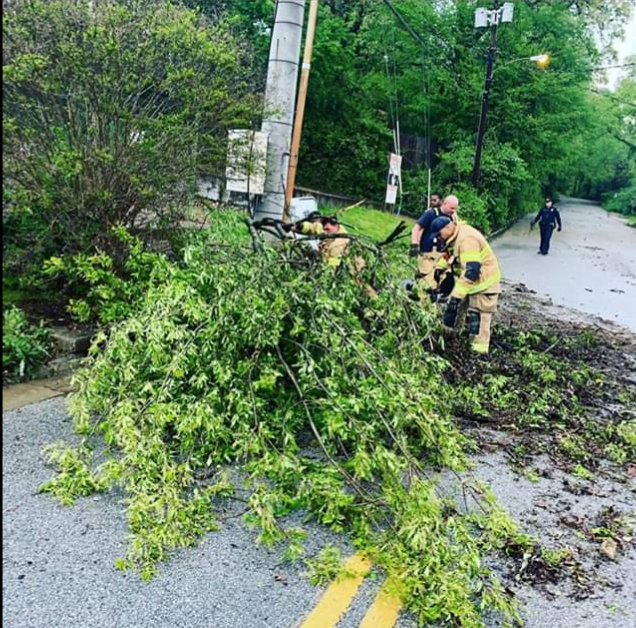
Chattanooga, TN – EPB confirmed that it has completed the reconstruction of the utility poles, electric lines, and power system equipment that sustained catastrophic damage when tornados and severe weather ripped through Chattanooga last Sunday causing power outages for about 60,000 customers.

“We’ve re-energized all of the power lines necessary to complete the restoration and the smart grid is operating within normal parameters at the system level, but we haven’t yet replaced the smart grid equipment in many areas, so there may be some house-to-house outages that aren’t apparent to us.” said Scottie Summerlin, EPB public relations coordinator. “If anyone is still experiencing a power outage from last week’s storm, please call EPB to let us know at (423) 648-1372.”

Summerlin also highlighted EPB’s continuing effort to restore fiber optic services. “We know connectivity is a top priority especially now,” Summerlin said. “The re-construction effort is a layering process. Electric crews must replace utility poles and restore electricity before fiber optic repairs can be made. We’ve had fiber crews coming in as soon as electric crews complete their work.”

EPB has engaged hundreds of additional fiber installers in the effort to repair internet and other fiber optic services as quickly as possible. Their current focus is re-splicing the main feeder fiber cables which will restore service to thousands of additional customers over the next two days. Once this is done, EPB will work on repairing the smaller distribution fiber lines to bring remaining customers back on-line.

EPB expects to restore fiber optic services to most customers by Friday, but restoration efforts will likely extend through the weekend.

Road Closure Information

As restoration continues please be on the lookout for periodic road closures. These closures are announced by Chattanooga Police Department on Facebook, Twitter, and other news media outlets. Follow the Chattanooga Police Department for up to date information. #roadclosures #CHAPD #PowerRestore

EPB Quick Connect WiFi available to public

For people who need internet access, EPB has installed free EPB Quick Connect WiFi hotspots at 25 locations around the county.  Those locations can be found at epbquickconnect.com. 

Need EPB Customer Support? Customers with questions are encouraged to go to EPB.com for the latest information including an outage map.  Customer service representatives are also available by phone 24 hours a day, 7 days a week at 423-648-1372.

Meet the Black Doctor Helping Homeless People Get Tested For COVID-19

0

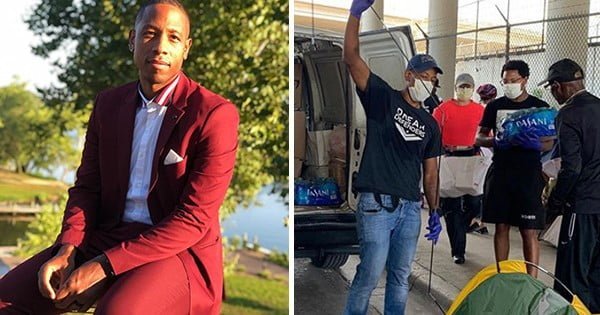
Miami, FL — Dr. Armen Henderson, an internist at the University of Miami Health System, has been making efforts to help homeless people get tested for the coronavirus as he believes that it is “essential to protecting the public’s health.” He is also working with a number of community volunteers to provide the essential needs of the homeless during the pandemic.

Homeless people, including those who are elderly and with compromised immune systems, are known to be at a higher risk of being infected with COVID-19. While authorities advised people to stay at home to prevent the spread of the virus, homeless people had to sleep on the streets and use public facilities.

Henderson saw this difficult situation and he is trying to alleviate it. He first went to the homeless in Overtown neighborhood in Miami equipped with a medical mask, face shield, and gloves and conducted COVID-19 testing to people.

Most recently, Henderson said he had taken swab samples from 15 people which he would send to the lab for testing. He collected their contact information so he would be able to inform them of the results once available after a few days.

More than that, he also partnered with organizations such as The Smile Trust and Dream Defenders to provide food, hand sanitizers, and camping tents. Showering Love, a nonprofit, also joined in to provide mobile showers and clothing.

Volunteers noticed that homeless people are still skeptical of the pandemic. It shows the importance to inform the homeless people how serious the coronavirus threat is so they would really do the necessary practices to prevent being infected and spreading the virus.

Henderson also hopes to bring more camping tents and conduct more COVID-19 tests. He calls for the local government to step up in assisting homeless people during the pandemic as the whole community is actually at risk. “Just test everybody, especially people who are vulnerable,” Henderson told the Miami Herald. “These people are the most vulnerable. They’re also at highest risk for getting the virus and for spreading it.”

Health Department Opens a Second Community Testing Site to Expand Weekend Hours

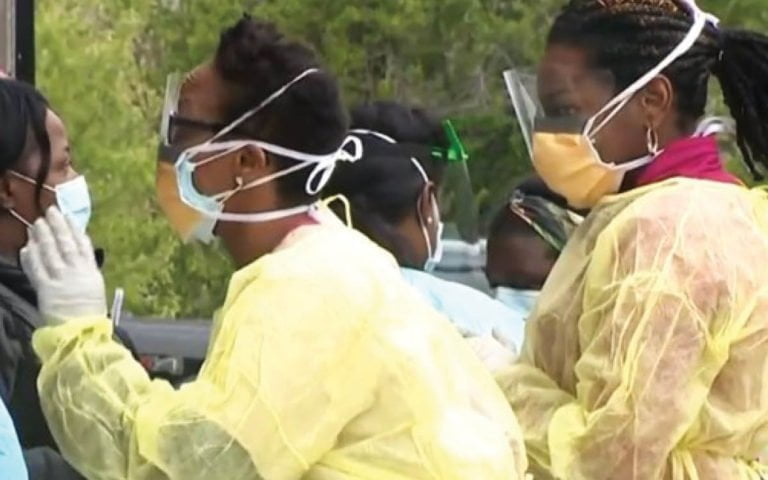
HAMILTON COUNTY, TN – The Hamilton County Health Department is opening a new COVID-19 community testing site at the Riverfront Parkway Emissions Testing Center, 1620 Riverfront Parkway, Chattanooga TN, 37402. The new site is being operated in partnership with the Chattanooga Police Department, Opus Inspection Inc., Tennessee National Guard, and Tennessee Department of Health.

“Thanks to this new partnership with the Tennessee National Guard, we are expanding the capacity to do more community testing,” says Health Department Administrator Becky Barnes, “The goal has been and continues to be the identification of positive cases so that we can rigorously investigate them and their contacts to contain the spread of the virus.”

The Riverfront site will complement the existing Bonnyshire community testing site which has been in operation for the past two weeks. The new site will offer service on the weekends only, while the Bonnyshire site will continue to operate during the week. No physician referral or symptoms are necessary to make an appointment at either site.

Anyone wanting a COVID-19 test should call the Health Department scheduling number 209-8393 to make an appointment. 

The new site is predicted to handle hundreds of individuals per day on the weekends it is open. For now, the Riverfront site will be in operation for the next two weekends (April 25-26 and May 2-3). The decision to continue on subsequent weekends will be made at that time based on available resources. Like the Bonnyshire samples, all samples collected at the Riverfront site will be processed at the Hamilton County Laboratory at Baylor School.

Hamilton County Health Department COVID-19 Community Testing Sites.

Call 423-209-8393 for an appointment.

For more information about COVID-19, please call the Health Department COVID-19 Hotline at 423-209-8383, or visit the Health Department COVID-19 website.

Coronavirus: the puzzle of why the risk of death is greater for men and for the elderly

By Jeremy Rossman, Honorary Senior Lecturer in Virology and President of Research-Aid Networks, University of Kent

For COVID-19, age and sex appear to be strong predictors of who lives and who dies.

The fatality rate for the disease is estimated to be 0.66%, according to data from China. In other words, 0.66% of people who are formally diagnosed with COVID-19, die. But the rate varies dramatically for different age groups, ranging from 0.0016% for children under ten to 7.8% in people over 79. Similar rates are seen in New York city. The graph below shows the increasing fatality rate for increasingly older populations.

Similar trends are seen with the percentage of COVID-19 patients that need hospitalization (ranging from 0% in under tens to 18.4% in over 79s). Yet those over 79 do not appear to be more likely to become infected, as they represent just 3.15% of the total confirmed cases.

Recent studies have shown that gender is a risk factor, too. Men are at a greater risk of dying from COVID-19 than women.

Data from China shows that men have 1.65 times the risk of dying from COVID-19 and in New York city, the rate is 1.77 times greater. Yet overall, men and women have roughly similar risks of getting the virus.

A declining immune system?

The ability of the human immune system to fight off pathogens declines over time and is significantly reduced in those over 70. Recent results show that in bad cases of COVID-19, there is a severe deficiency in certain classes of immune cells that fight off infections. These immune cells are known to be less active in the elderly, suggesting that an age-related decline in immune function may put the elderly at risk of more severe COVID-19 disease. Yet many of the most severe cases of COVID-19 are associated with over activation of the immune system.

The immune system is composed of many different parts and so it is possible to have suppression of one component and over-activation of another. But if the age-dependency of COVID-19 disease was specifically due to immune function, we would expect babies to also show severe disease, as their immune systems are still developing. This is what is seen in most seasonal flu epidemics, where those under two and those over 65 are at a greater risk of severe disease.

Changes in ACE2 levels?

In contrast to the flu, the 2003 Sars epidemic showed a fatality rate that increased with age similar to COVID-19 (4.26% for those under 44, rising to 64.2% for those over 74) and a 1.66 times greater fatality rate in men compared with women. The absence of severe infection in babies suggests that the age and gender disparity for COVID-19 may not be due to differences in immune response but rather something specific to the Sars viruses.

Both the 2003 SARS-CoV-1 and the current SARS-CoV-2 viruses bind to and use a protein known as ACE2 to gain entry into cells. ACE2 normally helps to regulate blood pressure and is found on the surface of many different cells, including those that line the lungs. The amount of ACE2 on human cells is higher in men and increases with age.

Certain variants of the ACE2 gene in humans are also associated with different levels of ACE2 expression, and the amount of ACE2 in different populations is somewhat correlated with COVID-19 disease. Also, hypertension (high blood pressure) is known to be a significant age-dependent risk factor for severe COVID-19 disease. Hypertension is typically treated with ACE-inhibitors that have also been shown to increase the amount of ACE2.

However, it appears that COVID-19 infection results in decreased ACE2 levels, which are associated with more severe lung disease. It is not clear what happens when ACE2 levels are high to begin with, such as in older men. Simply increasing ACE2 levels does not appear to cause more severe disease.

In addition, a recent clinical trial showed that ACE-inhibitor use was associated with less severe COVID-19 disease.

ACE2 is just one component of a complex regulatory system and so changes in ACE2 levels and action may have more complicated effects on disease progression than just virus entry into cells. These effects may change as the disease progresses and the immune system is activated.

Exposure to other coronaviruses?

Other related coronaviruses have been found to cause pneumonia in elderly patients and the likelihood of exposure to a virus increases with age. We also know that the human immune system can show some cross-reactivity between different coronaviruses.

Normally, recovery from an infection generates an immune memory that protects a person from being reinfected with the same pathogen. Cross-reactivity occurs when the immune system responds to a new pathogen as if it already had a memory of it. Sometimes this can protect against infection, but sometimes it can make the disease worse.

As severe COVID-19 disease appears to result from an over-activation of the immune system, it is possible that previous exposure to related coronaviruses may create an immune memory that primes the system to overreact to COVID-19. This process could be more prevalent in older people with more past exposure to other coronaviruses.

No data shows this cross-reactivity occurs in COVID-19 disease, but analysis of COVID-19 severe infection rates in areas with previous related coronavirus outbreaks could shed some light on the matter.

A simple explanation? It is also possible that the reason why more men and elderly people are dying from COVID-19 is more simple. We know that the risk of fatal COVID-19 disease is almost twice as great if the person has underlying health conditions. Most of these health conditions show increasing prevalence with age, such as hypertension, which increases in occurrence from 7.5% in those under 40 to over 63% in those over 60. This increasing rate of predisposing health conditions could directly increase the risk of severe COVID-19 disease.

We don’t know why these health conditions put people at risk of more severe disease. We also are just beginning to understand how COVID-19 causes disease in the first place. By understanding the process of severe COVID-19 disease we will be better placed to both mitigate the risks to specific populations and to develop interventions that block the most severe disease and possibly even prevent fatalities.

Governor in Kenya Criticized For Including Hennessy Bottles in COVID-19 Care Packages

0

Kenya — Mike Sonko, the governor of Nairobi, Kenya, is being criticized over his plans to include small bottles of Hennessy in thousands of COVID-19 care packages that are being distributed to needy families. He says it should be included because it could be used as a “throat sanitizer.”

“I think from the research conducted by the World Health Organization and various organizations, it has been believed that alcohol plays a major role in killing the coronavirus,” Sonko said in a video according to CNN.

The World Health Organization (WHO), however, has disputed the claim saying that alcohol does not protect against coronavirus. The organization also advised people to minimize alcohol consumption as it may weaken one’s health, making it more vulnerable to viruses such as coronavirus.

Githinji Gitahi, the CEO of Amref Health Africa, a medical nonprofit, took to Twitter to voice his opinon about Sonko’s claim. He urged Kenyans to just get rid of the alcoholic drink.

Moreover, Hennessy itself also issued a statement disproving Sonko’s claims that Hennessy or any other alcoholic beverage can prevent coronavirus. “Hennessy would like to stress that the consumption of our brand or any other alcoholic beverage does not protect against the virus,” the company said in a statement.

Prostate Cancer Survivors: Three African American Men Share Their Experience With Non-Invasive HIFU Procedure

0

By Shelly Gordon

Nationwide — Three African American men: Reggie Dye, a healthcare executive, Thomas Newell, a retired basketball referee for youth at risk and Victory Murray, NASA lead engineer whose team repaired Apollo 13, wanted a better way to treat their prostate cancer—one that promises a better quality of life post-treatment than surgery and radiation which are the standards of care. These two procedures can come with a greater risk of urinary incontinence, erectile dysfunction and penile shrinkage.

When diagnosed with localized prostate cancer, they each selected a noninvasive procedure called High Intensity Focused Ultrasound (HIFU). They got together to share each of their stories about their HIFU treatment, which is widely used across the world, but still relatively new in the United States, with select physicians across the country delivering the treatment.

HIFU is a noninvasive focal-therapy procedure that destroys targeted prostate tissue. HIFU directs extremely precise high-frequency sound waves that heat up and burn off only the diseased portion of the prostate, sparing surrounding tissue and nerves. Therefore, risks of common side effects associated with surgery and radiation — urinary incontinence and erectile dysfunction — are lessened with HIFU.

African American Men at Higher Risk for Prostate Cancer

According to the American Cancer Society, African American men are 1.5 times more likely to be diagnosed with prostate cancer than white men, and twice as likely to die from the disease. In fact, the risk of African American men dying from low-grade prostate cancer is double that of men of other races, according to a study in the Journal of the American Medical Association (December 2019).

In light of those statistics, a study in Cancer, a peer-reviewed journal of the American Cancer Society (ACS) recommends that black men be screened for prostate cancer more often and at a younger age. The study is significant because it challenges the conventional wisdom that early screening of typically slow-growing prostate cancer can lead to over-treatment.

Prostate Cancer Treatments – Standard of Care & HIFU

For decades, doctors have offered prostate cancer patients two choices for treatment: radiation or radical surgery to remove the entire prostate, which can cause those life-altering side effects and compromise their quality of life. More recently over the past decade, men with less aggressive disease have had the option to choose active surveillance. But for some of those men, going to bed each night knowing they have cancer in their bodies that could progress negatively affects their peace of mind.

Dye, Newell and Murray each chose the HIFU procedure because the risks of urinary incontinence and erectile dysfunction were less likely to occur than with surgery or radiation.

“I’m very glad I chose HIFU for my prostate cancer treatment,” Murray said. “I also consider myself lucky because I was diligent about receiving my annual physical, and I feel honored to share my challenge with prostate cancer.”

“My advice to other men – especially African American men who are at even greater risk — is to find a physician you trust and heed the professional advice you are given. I hope in some small way I can encourage someone else who may be reluctant to get the right treatment to become a prostate cancer survivor. I did with the help of my doctors and HIFU!”

Murray, Newell and Dye share their stories: Why they each chose HIFU, its impact on their lives, and why they encourage their peers to get tested early and often. Find their video here.Shelly Gordon is the founder of G2 Communications. For more than a dozen years, Shelly has worked with a variety of medical specialists and medical device manufacturers across the U.S., and has written numerous articles about medical conditions and treatments that have appeared in top healthcare publications in print and online.