

President Biden Signs Federal Anti-Lynching Bill Into Law

By Camm Ashford
On Tuesday, during a signing ceremony in the Rose Garden at the White House, President Joe Biden signed legislation to finally define lynching as a federal hate crime.
Congress first considered anti-lynching legislation more than 120 years ago. It failed to pass such legislation nearly 200 times, beginning with a bill introduced in 1900 by North Carolina Rep. George Henry White, the only black member of Congress at the time.
“Hundreds, hundreds of similar bills have failed to pass,” President Biden said. “Over the years, several federal hate crime laws were enacted, including one I signed last year to combat COVID-19 hate crimes, but no federal law, no federal law expressly prohibited lynching. None. Until today.”
The bill is named after the late 14-year-old Emmett Till, who in 1955 was abducted, beaten and brutally killed by two white men, who were subsequently acquitted by an all-white jury in Sumner, Mississippi. The two men, Roy Bryant and his half-brother J.W. Milam, would go on to admit to Till’s murder the following year.
The outcome of the trial, coupled with Till’s mother’s insistence on holding an open-casket, public funeral to show her son’s brutalized body, served as a catalyst and turning point for the civil rights movement, with activists and leaders often evoking his memory.
“I was 8 years old when my mother put the photograph of Emmett Till’s brutalized body that ran in Jet magazine on our living room coffee table, pointed to it, and said, ‘This is why I brought my boys out of Albany, Georgia,’” lead House sponsor of the bill Rep. Bobby L. Rush, D-Illinois, said in a statement. “That photograph shaped my consciousness as a black man in America and changed the course of my life.”
President Biden noted, “Racial hate isn’t an old problem; it’s a persistent problem. And I know many of the civil rights leaders here know, and you heard me say it a hundred times: Hate never goes away; it only hides. It hides under the rocks. And given just a little bit of oxygen, it comes roaring back out, screaming. But what stops it is all of us, not a few. All of us have to stop it.”
The lead Senate sponsor of the bill Sen. Cory Booker, D-N.J., said: “I feel a sense of joy. I can hear ancestors exhaling. It’s been far too long justice has been delayed and denied.”
Vice President Kamala Harris originally sponsored the legislation in June 2018, when she was representing California in the Senate, leading the effort with Sen. Booker and South Carolina Republican Sen. Tim Scott.
The legislation that is now becoming law would define hate crime conspiracies leading to serious injury or deaths as lynchings, subject to federal prison sentences of up to 30 years. The sentencing enhancement is stronger than what had appeared in prior bills.
Lynching was a common practice in the American South in the decades after the Civil War. From 1877 to 1950, more than 4,000 black people were lynched, according to a historical count by the Equal Justice Initiative.
In Chattanooga, Ed Johnson, a black man wrongfully accused of raping a white woman, was killed on the Walnut Street Bridge March 4, 1906. A white mob attempted to hang Johnson, but when their hanging attempts failed, they shot him to death. Johnson had been convicted in a county court and sentenced to death. Johnson’s lynching was followed by an unprecedented criminal trial at the Supreme Court, which ordered a stay of execution.
The Walnut Street Bridge in downtown Chattanooga has a history of being a site where lynchings took place.
“Lynching was pure terror to enforce the lie that not everyone–not everyone belongs in America and not everyone is created equal; terror to systematically undermine hard-fought civil rights; terror not just in the dark of the night but in broad daylight,” said President Biden.
“Innocent men, women and children hung by nooses from trees. Bodies burned and drowned and castrated. Their crimes? Trying to vote. Trying to go to school. To try and own a business or preach the Gospel. False accusations of murder, arson and robbery. Simply being Black.”
Epsilon XI Sigma Chapter of Phi Beta Sigma Fraternity, Inc. Hosted the Southeastern Region Conference in Spectacular Fashion
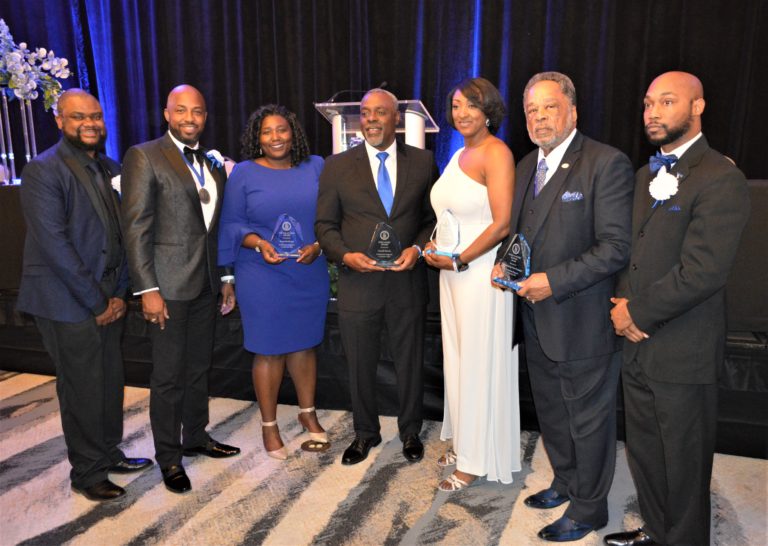
Last weekend the Epsilon Xi Sigma Chattanooga Chapter of Phi Beta Sigma Fraternity, Inc. hosted the “Super” Southeastern Region Conference here in Chattanooga at the Chattanoogan Hotel.
The Southeastern Region of Phi Beta Sigma Fraternity, Inc. consists of nearly 100 undergraduate and alumni chapters in East Tennessee, South Carolina, and North Carolina. The conference concluded with an Image Awards Gala Dinner where four Chattanoogans were recognized for their accomplishments. LuDaryl Lyons is the president of the Epsilon Xi Sigma Chattanooga Chapter of Phi Beta Sigma Fraternity, Inc.
Gov. Lee Announces Proposal to Suspend Grocery Tax for 30 days

By Camm Ashford
NASHVILLE, Tenn.–Gov. Bill Lee on Tuesday announced a proposal for a 30-day suspension of state and local grocery sales tax to provide direct financial relief to Tennesseans amid surging inflation nationwide.
The governor’s proposal was included in the Fiscal Year 2022-2023 budget amendment.
“As Americans see their cost-of-living skyrocket amid historic inflation, suspending the grocery tax is the most effective way to provide direct relief to every Tennessean,” said Gov. Lee. “Our state has the ability to put dollars back in the pockets of hardworking Tennesseans, and I thank members of the General Assembly for their continued partnership in maintaining our fiscally conservative approach.”
The tax suspension would cut approximately $5 to $10 off a $100 grocery bill.

Rep. Yusuf Hakeem, a Democrat who serves District 28, supports the governor’s proposal, but said a longer suspension would be more beneficial.
“I questioned if 30 days is enough time to really have the impact that we would like to see in regards to the ability of the average citizen in our state to be able to reap a benefit from it,” Rep. Hakeem said. “In my view, lowering of the gas tax at this time would have a greater impact when it comes to the family budget.”
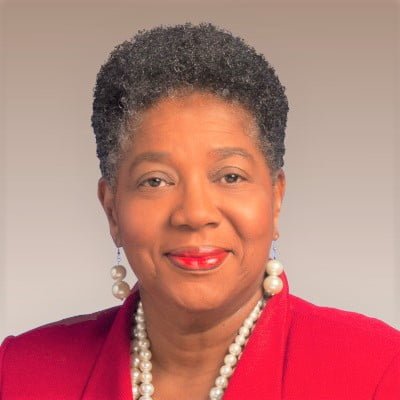
Nashville Senator Brenda Gilmore joined Rep. Hakeem in raising questions about whether a gas tax would be the best way to provide short term financial relief for Tennesseans.
“Was there any consideration to helping our constituents with the gas tax,” asked Sen. Gilmore.
Dept. of Finance and Administration Commissioner Butch Eley told the Democratic lawmaker that in proposing a month-long grocery tax “holiday,” the administration looked at the gas tax and found that the grocery tax would be better relief for Tennesseans.
“As it relates to the gas tax, it’s a tax that is gathered at the wholesale level so there are a number of complications,” Commissioner Eley explained. “We felt that ultimately the grocery tax was one that every Tennessean could participate in.”
In published reports, Republican House Speaker Cameron Sexton said the price tag for the proposed 30-day grocery tax suspension likely would be between $80 million and $110 million.
Grocery items are taxable at a rate of 4% (plus local rates of more than 2%) in Tennessee. If Gov. Lee’s proposal is approved, three exclusions to the halted grocery tax will be included: candy, alcohol, and prepared meals.
Jada Pinkett Smith on Alopecia, Hair Loss & the Slap Heard Around the World

Jada Pinkett Smith and Will Smith have been in the spotlight a lot lately, and it’s not always been in a good way. The latest news involves Will storming the Oscars stage at the 2022 94th Oscar Awards and slapping Chris Rock making a joke about his wife. That moment is the one everyone is talking about from Sunday’s Oscars, and not the winners.
Rock made a comment about Jada’s bald head referencing the movie G.I. Jane, where actress Demi Moore shaved her head for the role.
It all went down when Rock came out to present an award for Best Documentary. On stage, the comedian laughed and said, “Jada, I love ya. G.I. Jane 2 — can’t wait to see it, all right?” At that point Will walked on stage and proceeded to slap Chris and then calmly walk back to his seat.
He then shouted back to Chris saying, “Keep my wife’s name out your mutha—— mouth!”
No matter how you feel about the joke, many did not know that Jada has had issues with losing her hair for years.
Back in 2018, Jada Pinkett Smith had been wearing headwraps and not showing her hair for months at a time. It turns out the beautiful Girl’s Trip star has been struggling with the hair loss condition, possibly linked to alopecia. She took to social media to explain it.
“I’ve been getting a lot of questions about why I’ve been wearing this turban,” said the beautiful 50-year-old actress.
“Well, I’ve been having issues with hair loss. And it was terrifying when it first started.”
She also says she’s currently receiving steroid injections to help with her loss.
“I’m getting steroid injections, which seem to be helping but not curing. But I’m open to other ideas,” she posted on her Instagram.
One type of steroid injection Pinkett Smith may be using is called Corticosteroid Injections. This method of treatment — the most common form of treatment for alopecia areata — uses corticosteroids that are injected into bare patches of skin with a tiny needle. These injections are repeated about every four to six weeks and are usually given by a dermatologist.
If new hair growth occurs from corticosteroid injections it is usually visible within four weeks. There are few known side effects related to this kind of treatment. But a drawback of corticosteroid injections, like all treatments for alopecia areata, is that they do not prevent new hair loss from developing.
Alopecia is defined as loss of hair from the body. Hair loss is often a cause of great concern to the patient for cosmetic and psychological reasons, but it can also be an important sign of systemic disease.
Alopecia areata, also known as spot baldness, is a condition in which hair is lost from some or all areas of the body. Often it results in a few bald spots on the scalp, each about the size of a coin. Psychological stress may result. People are generally otherwise healthy. In some, all the hair on the scalp or all body hair is lost and loss can be permanent.
Alopecia areata is believed to be an autoimmune disease. Risk factors include a family history of the condition. The underlying mechanism involves failure by the body to recognize its own cells with subsequent immune-mediated destruction of the hair follicle.
The actress recalled the “terrifying” moment she first noticed she was losing “handfuls of hair” in the shower.
“It was one of those times in my life where I was literally shaking with fear,” she said. “That’s why I cut my hair and continued to cut it.”
This revelation was featured in the third episode of her Facebook mini-series, Red Table Talk, co-hosted by her mother Adrienne Canfield Norris, and teenage daughter Willow Smith.
Other topics discussed have included coping with loss, motherhood and body image – with Willow previously disclosing she self-harmed as a child following the release of her debut single Whip My Hair.
Despite having many medical tests, Pinkett Smith said she has not been able to find the cause of her alopecia. She suspects it might be stress.
Other main factors for alopecia are:
1. Thyroid Problems
The thyroid is a butterfly-shaped gland at the front of the neck.
It produces hormones that regulate many processes throughout the body. If the gland makes too much or too little thyroid hormone, the hair growth cycle may falter. But hair loss is rarely the only sign of a thyroid problem.
Other symptoms include weight gain or loss, sensitivity to cold or heat, and changes in heart rate.
2. Polycystic Ovary Syndrome (PCOS)
Women with polycystic ovary syndrome (PCOS) have a chronic hormonal imbalance.
The body makes higher levels of androgens than expected. This often causes extra hair to sprout on the face and body, while hair on the scalp grows thinner. PCOS can also lead to ovulation problems, acne, and weight gain. But sometimes thinning hair is the only obvious sign.
These days, Pinkett Smith said she enjoys using turbans, as they help conceal her condition and are an empowering fashion choice.
“When my hair is wrapped, I feel like a queen,” she said. (Source: BlackDoctor.org by Aria Ellise, BDO Special Contributor)
Hunger Persists at HBCUs, Despite Record Federal Funding

By Nadia Ramlagan
Tennessee’s six Historically Black Colleges and Universities (HBCUs) collectively received more than $131 million in the past year through the American Rescue Plan, according to new data from the Department of Education.
But another report found many students at HBCUs are missing meals or worried about having enough food.
Terrell Strayhorn, provost and senior vice president for academic affairs at Virginia Union University and director of the Center for the Study of Historically Black Colleges and Universities, said nearly half the students surveyed reported struggling to access food and losing a job during the pandemic.
“And it’s hard to feel like you belong in higher education when your basic needs are not met,” Strayhorn explained. “When you don’t have enough money to pay your bills and have food, and have a place to lay your head, but you’re expected to show up for biology class.”
The report is based on survey data from nearly 5,000 students at fourteen public and private HBCUs. It showed HBCUs produce more than 20% of Black Americans’ bachelors degrees.
Rachel Sumekh, founder and CEO of Swipe Out Hunger, a national nonprofit focused on ending college hunger, thinks states should create and expand financial aid and emergency aid options for students.
“Four states have passed something known as the Hunger-Free Campus bill, which has sent over $70 million to campuses to fund anti-hunger programs,” Sumekh reported.
Sumekh added states need federal support, and also an expansion of Supplemental Nutrition Assistance Program (SNAP) access to students in degree and nondegree career and technical programs, as well as for HBCU students enrolled in programs increasing job prospects for low-income populations.
“When it comes to basic needs, our institutions are too underfunded and too understaffed to address the level of need on campus,” Sumekh asserted.
According to the report, one in five HBCU students having trouble meeting their basic needs had received help from their college in applying for SNAP benefits. (TNS)
Racism in the US Senate
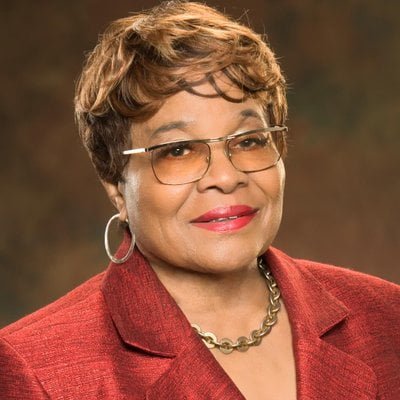
By Rosetta Miller-Perry
This week, our young people, the nation and the world have had a chance to see both the best and worse of America in the Senate Judiciary Committee hearings regarding President Biden’s nomination of the Hon. Judge Ketanji Brown Jackson to the United States Supreme Court. Jackson handled herself with extreme dignity, responding to often stupid, KKK racist irrelevant and insulting questions with detailed, thoughtful responses, and remaining respectful to Senators and Congressmen. She was often cut off in mid-answer, interrupting or refusing to let her complete responses, and just behaving with the standard contempt and animus they have for Black people in general, and in particular any Black person with a chance to reach a position of power.
For three days, including a marathon 13-hour session Tuesday, Jackson had to hear comments and answer questions from right-wing white leaning KKK racist Republicans that ranged from inaccurate to irrelevant to total mischaracterizations of both the law and her record. Sadly, many were nothing more than racist insults masquerading as policy points.
Lindsey Graham who I use to admire and respect and Ted Cruz, who was born in Canada whom I never respected his intellect, repeatedly tried to make it seem that the honorable Judge Jackson had somehow not been hard enough on child pornography. Graham also accused her of “judicial activism,” (“legislating from the bench”). This is what some Republicans want when it comes to repealing abortion laws or imposing bans on transexuals, but otherwise claim to oppose.
“Every person in all of these charts and documents, I sent to jail. Because I know how serious this crime is,” Jackson told Graham during an exchange about the child pornography cases.Then another ardent right-wing reactionary Josh Hawley who looks like his name sounds, tried to bring it up again, prompting Judge Jackson to say “I’ll stand on my answer.” She rightly told the equally ridiculous Tom Cotton, who hasn’t realized that, we don’t pick cotton anymore, said, “What I regret is that in a hearing about my qualifications … we’ve spent a lot of time focusing on this small subset of my sentences.”
In addition, Cruz tried to hammer Jackson on critical race theory questions one day and transgender issues other, while yet another GOP senator droned on about cancel culture. NONE of those things have the slightest relevance to her competence to be on the Supreme Court, and are simply standard right-wing rhetoric designed to get support from their cadre of Trump supporters.
But while this crew of lightweights, whose ranks also include Tennessee’s own stalwart Trump supporter Marsha Blackburn, repeatedly displayed conduct that reflected the absolute worse in American decorum and behavior, Senator Cory Booker demonstrated the best. Booker, a New Jersey Democrat and one of three sitting Black U.S. senators, lauded Jackson for reaching the heights of the U.S. judiciary as both a Black woman and working mother.
“It’s hard for me not to look at you and not see my mom. Not to see my cousins, one of them who had to come here and sits behind you. She had to have your back. I see my ancestors and yours,” Booker said. “But don’t worry, my sister. Don’t worry. God has got you. And how do I know that? You’re here, and I know what it’s taken for you to sit in that seat.“You have earned this spot,” Booker added.“You are worthy. You are a great American.”
Throughout his monologue, Booker cited the Black men and women who had helped pave a path for Jackson and himself. He talked about how the abolitionist Harriet Tubman was beaten before she escaped slavery, then went back to save other slaves, establishing a network of safe houses. Tubman, Booker said, would gaze at the night sky looking for a star that was a “harbinger of hope.”
“I thought about her. And how she looked up, she kept looking up no matter what they did to her she never stopped looking up. And that star was a harbinger of hope,” Booker said. “Today, you’re my star. You are my harbinger of hope. This country’s getting better and better and better. And when that final vote happens, and you ascend on to the highest court in the land, I’m going to rejoice.”
He also accurately depicted the tactics and questioning of Republicans. “I mean, this is a new low,” Booker said of the GOP attacks, especially the claim made by Hawley that Jackson went easy on child pornography defendants. “What’s especially surprising about this is it didn’t happen last year [when Jackson was nominated to the U.S. Court of Appeals for the D.C. Circuit]. You were put on a court that I’m told is considered like the second most powerful court in our land. And you passed with bipartisan support. Nobody brought it up then. Did they not do their homework?”
Judge Jackson should and will be confirmed to the Court, although the Congress will continue to be dominated by backward racist white right-wing types. But at least her presence adds some balance and also finally erases another barrier to progress in this nation, the absence of a Black woman on the highest court in the land. These hearings also reveal the continual decline of the Republican Party as I have known since my deceased mother was a Republican and I sadly watch its descent into hate speechs, racist caricature and demagoguery.
Finally: People with white color can change their shade, but those of us with darker skin cannot. So, don’t judge us based on our color, but do it based on our intellect.
As Dr. Martin Luther King, Jr. said: “I have a dream that my four little children will one day live in a nation where they will not be judged by the color of their skin but by the content of their character.”
Top 10 Indoor Plants For Cleaner Air

The more time we spend in the house, the more we need focus on keeping it clean, including the things we can’t see. Houseplants are our often-overlooked helpers in ridding the air of pollutants and toxins. But many are effective allies in keeping your household air clean and pure.
It is suggested that one plant should be allowed for approximately 10 square yards of floor space, assuming average ceiling heights of 8 to 9 feet. This means that you need two or three plants to contribute to good air quality in the average domestic living room of about 20 to 25 square yards.
Research has shown that these 10 plants are the most effective all-around in counteracting offgassed chemicals and contributing to balanced internal humidity.
Here are some of the best air-purifying houseplants and the toxins they are most effective at reducing:
1. Bamboo Palm (Chamaedorea seifritzii)—benzene, formaldehyde, trichloroethylene (TCE)
2. Golden Pothos (Chrysanthemum morifolium)—This fast-growing vine is usually seen hanging in a cascade of green from baskets. You can pot it with a support, plant it in a hanging basket or train it to climb a trellis. It is quite an addition to your home, with its dark green leaves and golden streaks. The plant needs bright, indirect light and is great at fighting pollutants such as formaldehyde, usually found in car exhaust fumes. Heads up: Golden pothos is a poisonous plant and should be kept away from small children and pets. It’s not called the devil’s ivy for nothing.
3. Common Ivy or English Ivy (Hedera helix)—benzene, formaldehyde, TCE, toluene, octane, terpene (the most effective plant against benzene according to NASA)
4. Ficus tree or Weeping fig (Ficus benjamina)—benzene, formaldehyde, TCE, octane, terpene
5. Acre Palm (Dracaena massangeana)—One of the most common indoor plants, the areca palm doesn’t tolerate neglect too well. The soil needs to be kept moist for it to thrive. The plant, however, can survive on little sunlight. According to the NASA study, this plant filters out formaldehyde, xylene and toluene.
6. Peace lily (Spathiphyllum)—benzene, formaldehyde, TCE (Avoid lilies if you have cats – they can be toxic).
7. Purple heart (Tradescantia pallida)—benzene, TCE, toluene, terpene.
8. Red Ivy (Hemigraphis alternate)—benzene, TCE, toluene, octane, terpene.
9. Spider plant (Chlorophytum comosum, Chlorophytum elatum)— Commonly used to remove harmful chemicals such as benzene, formaldehyde, carbon monoxide and xylene from air, the “spider” is characterized by its tiny white flowers and rich foliage. Requiring low-maintenance and easy to grow, it thrives in cool to average home temperatures and prefers dry soil. Bright indirect sunlight keeps it growing best.
10. Wax plant (Hoya carnosa)—benzene, TCE, toluene, octane, terpene. (Source: BlackDoctor.Org/Felicia Vance, BDO Staff Writer
Republican Primary Forum

CHATTANOOGA, TN— Hamilton County Mayoral candidates Sabrena Smedley and Weston Wamp will meet for a Republican Primary forum, which will be aired for public viewing on WTCI – PBS and WUTC 88.1, Thursday, April 14 at 8:00 p.m. EST, a non-profit coalition announced today. All candidates who qualified to be on the ballot in the Republican primary were invited to participate.
Partnering organizations include the Chattanooga Area Chamber of Commerce, Chattanooga 2.0, the Community Foundation of Greater Chattanooga, the University of Tennessee at Chattanooga, the United Way of Greater Chattanooga, and Venture Forward. WTCI-PBS and WUTC are presenting media partners.
The Republican Primary forum will be moderated by Ray Bassett, host of Scenic Roots on WUTC 88.1 FM. After brief introductory statements are made by each candidate, the debate will follow a standard format in which candidates will have up to two minutes to respond to questions, followed by up to one minute of response from the opposing candidate.
“At the Foundation, we believe that creating opportunities for sharing information and building relationships is as crucial as our monetary investments in the community,” says Dwayne Marshall, Community Foundation VP of Community Investment. “We are excited to work with our partners to create space for shared learning and informed decision-making this May and August as part of the Hamilton County government election cycle.”
Viewers and listeners should expect candid discussions about the candidates’ experiences, priorities, and opportunities for the future of Hamilton County. The focus will remain on substantial issues and solutions for the community.
“WTCI understands the value of an informed community. It is mission-focused work. A candidate forum is an opportunity for those on the ballot to communicate their vision for our community. Working with our partners, it is imperative that we offer multiple platforms for this important programming,” says Bob Culkeen, president and CEO of WTCI-PBS.
The candidates will respond to questions submitted by the coordinating partners. The views and opinions expressed in this program are those of the speakers and do not necessarily reflect the views or positions of any entities they represent.
“We look forward to furthering our understanding of Sabrena Smedley and Weston Wamp’s perspectives on key issues for Hamilton County. We’re proud to continue to be part of this partnership bringing the opportunity to know where these candidates stand on key issues to our community,” said Lesley Scearce, President and CEO of United Way of Greater Chattanooga.
Early voting will be held in Hamilton County April 13th through April 28th. The primary election will be held on May 3rd. More information about how and where to vote can be found at the Hamilton County Election Commission website at https://elect.hamiltontn.gov.
“Life’s Puzzle”- In the Huddle
TODAY’S SCRIPTURE
(Proverbs 4:25, MSG)
Keep your eyes straight ahead; ignore all sideshow distractions. Watch your step, and the road will stretch out smooth before you.
TODAY’S WORD
When you isolate a negative experience and focus on it, it may not make sense. It’s like when you have a piece to a jigsaw puzzle that doesn’t look like it fits anywhere. You’re sure the manufacturer made a mistake. It’s an odd shape, not the right color, too blurry. It looks random, like it’s unnecessary. But when the other pieces come together, it makes sense. There will be a perfect fit where the colors match and the edges line up. Without it, the puzzle wouldn’t be complete.
You may have a piece to your life puzzle that doesn’t make sense. You could think, “GOD didn’t ordain this setback or loss. This piece doesn’t fit.” But GOD isn’t finished. Nothing is random. That piece is instrumental in getting you to your destiny. If you stay in faith, all the pieces will come together for your good–not just the good breaks and increases, but even the losses and disappointments. It will be a perfect fit when GOD brings it all together.
PRAYER FOR TODAY
FATHER,FATHER, thank YOU that my life is in YOUR hands, and YOUR plans for me are good. Thank YOU that the pieces of my life puzzle that I don’t understand now are going to come together and be a perfect fit. I believe that YOU will get me to where I’m supposed to be. In JESUS’ Name, Amen.