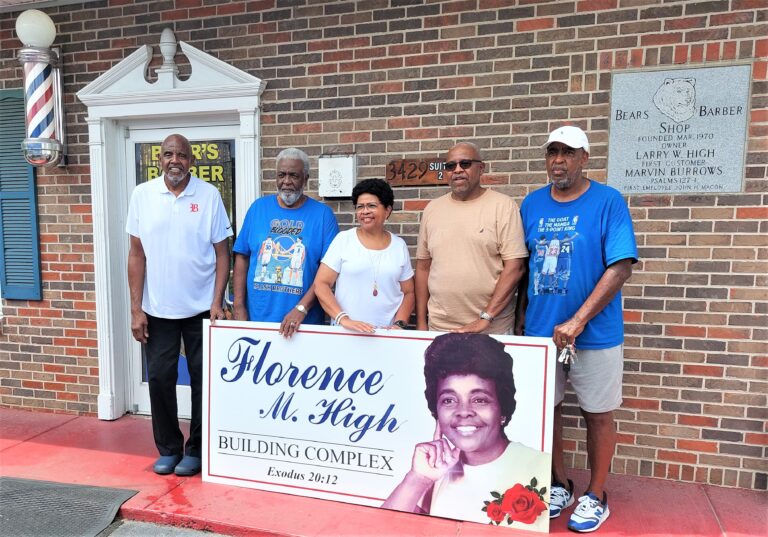
Honoring Mrs. Florence High – On August 22, 2022 to commemorate what would have been the 100th birthday for their mother, Mrs. Florence High, her children gathered to unveil and hang her portrait at Bear’s Barber Shop. From left, Larry “Bear” High; Robert High; Glinda High Jennings; Samuel “Chipper High; and Randall High. (Photo: G.Faye Stoudemire)
By Clark D. Cunningham | W. Lee Burge Chair in Law & Ethics; Director, National Institute for Teaching Ethics & Professionalism, Georgia State University
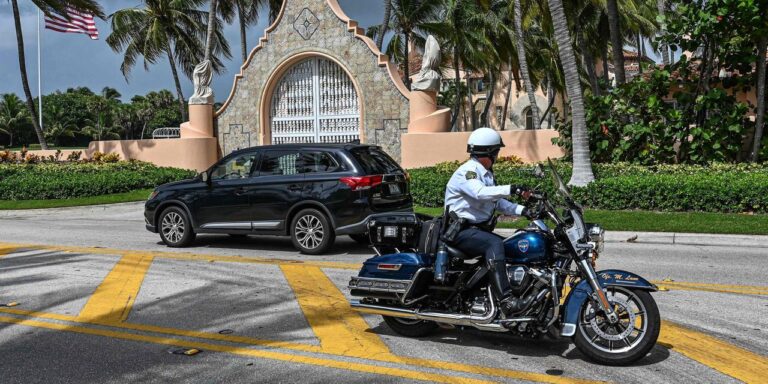
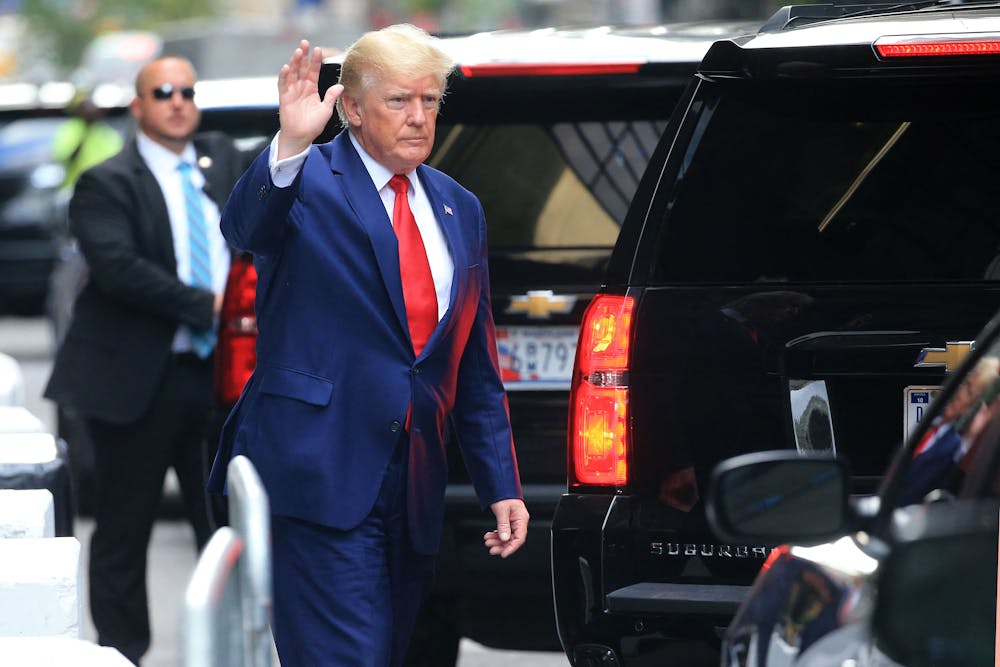
The FBI recovered confidential and top-secret items from Mar-a-Lago during its Aug. 8, 2022, search of the estate – pointing to former President Donald Trump’s potential violation of several federal laws.
A Florida federal judge – the same one who issued the warrant to search Trump’s estate – ordered on Aug. 12, 2022, that the document be made public – along with an inventory of items seized during the FBI’s raid.
The unsealed documents seem to indicate that the U.S. Department of Justice believes Trump may have violated the Espionage Act, as well as other criminal laws relating to the handling of public records.
Clark Cunningham, Georgia State University legal scholar and an expert on search warrants, explains how this new information connects to possible criminal wrongdoing by the former president.
U.S. Attorney General Merrick Garland discussed the FBI’s search on Aug. 11, 2022. Drew Angerer/Getty Images
These laws were potentially violated
The released warrant authorized the FBI to search for evidence that Trump has violated three key laws.
First, there is the Espionage Act, which applies to possession of information related to the national defense that could be used to harm the U.S. or aid a foreign adversary. This law applies to someone who, like Trump, initially had lawful possession of such information but who, after their time in office ended, refuses to return it to the government.
Then, there is obstruction of justice, which includes concealing documents to obstruct a federal investigation.
Finally, there is the Public Records statute, which prohibits someone entrusted with a public record from “concealing” that document.
What’s in the inventory
The inventory of items taken by the FBI from Mar-a-Lago apparently shows Trump may have violated these laws in a number of different ways.
The inventory shows that FBI agents seized documents designated “SCI,” which refers to Sensitive Compartmented Information. In simple terms, this is classified information that comes from intelligence sources – and must be handled only within secured government locations.
Because this kind of sensitive information can reveal both methods and procedures for collecting intelligence – including the identity of undercover agents in hostile countries – the presence of such materials at Mar-a-Lago may be a violation of the Espionage Act, if Trump was willfully retaining this information after the government demanded its return.
The inventory also refers to numerous “top-secret” documents. Federal law definesthis as “information or material which requires the highest degree of protection” and could threaten national security. The FBI’s discovery of top-secret documents could corroborate The Washington Post’s report that the FBI search included classified documents related to nuclear weapons. The FBI also seized documents designated “secret” and “confidential.”
All told, the FBI removed 27 boxes and other individually listed items, including photographs.
Trump received a federal subpoena in the spring of 2022 to return documents taken from the White House.
So if the inventory includes items that should have been returned in response to the subpoena, but were not, that can be evidence of obstruction of justice and concealment of public records.
A defense that might not hold
Trump has suggested that the FBI may have planted evidence during its search.
However, federal rules about search warrants provide strong protection against such a possibility, by requiring that a government officer present when a search warrant is carried out “prepare and verify an inventory” of property seized in the presence of “another officer” and “the person from whom, or from whose premises, the property was taken.”
The officer must then “give a copy of the warrant and a receipt for the property taken to the person from whom, or from whose premises, the property was taken,” according to these rules.
U.S. Attorney General Merrick Garland said during his Aug. 11 statement about the search that these procedures were followed. “Copies of both the warrant and the FBI property receipt were provided on the day of the search to the former president’s counsel, who was on site during the search,” Garland said.
The federal rules say that if the owner of the premises is not present, another “credible person” can verify the inventory – in this case, the unsealed records confirm that Trump’s attorney, Christine Bobbs, acknowledged receipt of the inventory at 6:19 p.m. on Aug. 8, 2022.
Limited precedent for unsealing these types of documents
It’s relatively rare for a judge to unseal court records of a search warrant, unless an actual criminal prosecution is underway.
One other notable exception occurred in December 2016 when a New York federal court issued an unsealing order for the Oct. 30, 2016, search warrant requested by former FBI Director James Comey to investigate emails improperly stored by former Secretary of State Hillary Clinton.
Unlike the Aug. 12, 2022 order regarding Trump, the unsealing of the Clinton-related warrant included the underlying affidavit. An affidavit is a statement made under oath to the issuing judge to obtain the warrant.
Disclosure of these documents provided the basis for a firestorm of criticism by Clinton allies that there was insufficient evidence to support the FBI’s warrant application.
As explained in a judge’s October 2016 order to make the search warrant for the Clinton investigation public, warrant application proceedings “have historically been highly secretive in nature and closed to the press and public.” In that case, the judge said that in deciding whether to unseal, courts must consider both the government’s interest in not compromising an ongoing criminal investigation and the need to protect the privacy and reputation of the person subject to the search who may never be charged with a crime.
However, for the Mar-a-Lago warrant, both the government and Trump, the subject of the search, consented to the unsealing.
True to his reputation for careful judgment, Garland went by the book in response to an avalanche of attacks from Trump allies demanding transparency about the search. The warrant and inventory have now been released for all to see through a proper court procedure – which Trump publicly endorsed. (The CONVERSATION)
New bridge will increase emergency response times, bolster supply chain efficiency, and enhance neighborhood connectivity with a direct, multi-use path to the Riverwalk
Chattanooga, Tenn. (August 12, 2022) — The City of Chattanooga will receive $25 million in federal funds to replace the 70-year-old, long-deteriorating Wilcox Boulevard Bridge with a new, modern structure that will better connect residents to the Tennessee River while enhancing a core logistics corridor for the city.
The funding, which was granted by the U.S. Department of Transportation’s Rebuilding American Infrastructure with Sustainability & Equity (RAISE) program, represents one of the largest, single-item transportation investments in the City’s history.
“On behalf of the City of Chattanooga, I sincerely thank President Biden and Transportation Secretary Pete Buttigieg for this historic investment into our city, which will uplift our transportation industry and ensure a more connected, healthy, and equitable future for our residents,” said Mayor Tim Kelly. “I also want to thank our congressional delegation, Governor Bill Lee, the Tennessee Department of Transportation, Norfolk Southern, our state delegation, Mayor Jim Coppinger, our City Council and County Commission, and the many others who made this project possible. This unprecedented series of partnerships is the perfect example of the tremendous impact we can have when we work together on transformative solutions that will improve people’s lives for decades to come.”
The existing bridge has deteriorated to the extent that it can only support passenger vehicles, delaying East Chattanooga response times for first responders, and increasing the burden on the city’s local logistics and transportation industry. When completed, the new bridge will expand equitable access to jobs, parks, trails, and essential services for some of the city’s most historically disadvantaged communities, while increasing safe access to one of the region’s most important logistical assets — Norfolk Southern’s DeButts Railyard.
“We’re pleased to congratulate the City of Chattanooga for being awarded a federal Rebuilding American Infrastructure with Sustainability & Equity (RAISE) grant to replace and improve the Wilcox Boulevard Bridge in Chattanooga” said Deputy Governor and Tennessee Department of Transportation Commissioner Butch Eley. “This bridge replacement will strengthen Chattanooga’s infrastructure network and provide a safer, more reliable route for members of the community. TDOT has a long, demonstrated history of working with the City and we look forward to continuing our partnership to ensure this project is successful.”
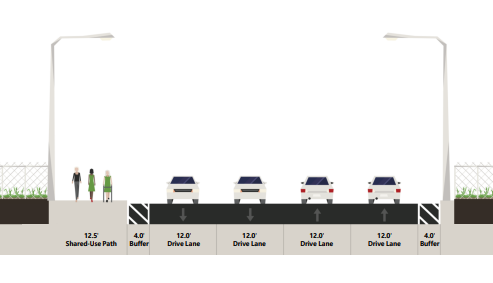
The new bridge will be engineered to modern structural integrity standards that will support CARTA buses, emergency vehicles, increased vehicular traffic, and multimodal freight to support future economic activity in East Chattanooga. It will also include a new multi-use path that will directly connect East Chattanooga residents to the Riverwalk through the Wilcox Boulevard Connector — a pedestrian and bike connection the City plans to develop from Amnicola Highway at Wilcox Boulevard to the Riverwalk in the coming years.
“Norfolk Southern joins Chattanooga in celebrating the RAISE Grant award for the replacement of the Wilcox Boulevard Bridge,” said Ed Boyle, Vice President of Engineering for Norfolk Southern. “Communities are connected by infrastructure: goods move, people connect, and growth happens. We’re proud to be a part of the Chattanooga community and to be a part of this important project.”
With a direct connection to the Riverwalk, residents in the eight census tracts that make up the East Chattanooga area — 18 percent of whom do not own a car — will have the option to walk or bike to jobs in the Amnicola Highway business park or downtown Chattanooga, to education opportunities at Chattanooga State, and to the many parks and trails along the riverfront.
“The replacement and improvement of the Wilcox Boulevard Bridge will shape the future of the East Chattanooga community, opening up new opportunities for jobs and access to our beloved Riverwalk for some of our city’s most historically disadvantaged neighborhoods,” said City Councilwoman Marvene Noel, in whose district the bridge resides. “East Chattanooga was home to one of the first incorporated African-American cities in the nation, and this tremendous investment will help ensure its spirit of independence and cultural vibrance continues to thrive with new growth and prosperity.”
The RAISE grant program is funded through President Biden’s Infrastructure Investment and Jobs Act, and Chattanooga’s award is one of the largest of the 166 funded projects announced by the U.S. Department of Transportation yesterday. The $25 million grant will go toward the estimated $54.5 million needed to fully replace the bridge, with the City and Norfolk Southern each contributing an additional $10 million and the Tennessee Department of Transportation contributing an additional $5 million over the next 2 to 3 years leading up to construction. Hamilton County is contributing $500,000, and the remainder will come from other local and federal transportation funding sources.
The construction plan is designed not to interrupt freight movements in the DeButts Railyard below the bridge, and will also continue to allow limited vehicular traffic on two lanes of the existing bridge.
The City of Chattanooga thanks the following elected officials, community partners, and stakeholders for their support:
By Henry Tran | Associate Professor of Education Leadership, University of South Carolina & Douglas A. Smith | Associate Professor of Education, Iowa State University
California, for example, allows teacher candidates to skip basic skills and subject matter tests if they have taken approved college courses. New Mexico is replacing subject skills tests with a portfolio to demonstrate teaching competency.
Similarly, Oklahoma eliminated the Oklahoma General Education Test as a certification requirement. Missouri no longer looks at a prospective teacher’s overall grades – just the ones earned in select courses required to become a teacher. Alabama has moved to allow some who score below the cutoff scores on teacher certification exams to still get a teacher’s license, and Arizona’s education requirements for teachers now allow people without a college degree to begin teaching – so long as they are currently enrolled in college.
Disrespect to the profession is driving teachers away
Even before COVID-19 hit, teachers were leaving the profession at an increasing rate. In the late 1980s, annual teacher turnover was 5.6%, but it has grown to around 8% over the past decade.
We found that the reasons teachers are leaving primarily revolve around the disrespect they and the profession consistently face. For example, teachers earn about 20% less than similarly educated professionals.
In addition, teachers have been experiencing diminishing control over what and how they teach. They are also regularly exposed to a continued tide of disrespectful student behavior and parental hostility, as highlighted by a survey of 15,000 educators that revealed a growing trend of students verbally and physically harassing teachers, as well as parents engaging in online harassment and retaliatory behaviors for teachers simply doing their jobs.
This overall lack of respect drives turnover from existing teachers and discourages potential teachers from considering the profession.
One college student told us, “I looked into teaching as a career pretty strongly … and every person I talked to, be it a grade school teacher or college professor, told me the same thing – that it was a lot of work, it was an unstable work environment, and the pay was very poor for the amount of work that you put in.” Unsurprisingly, she chose another career path.
The wrong solutions for the problem
A growing number of states have eliminated or have proposed to remove basic skills and subject matter exam requirements for teacher certification. Those prerequisites have long served as quality control checks for prospective teachers. While they do not guarantee effective teaching, they do serve as a minimum qualification threshold.
We believe efforts to loosen requirements for new teachers will bring more disrespect to the profession. History also suggests that they will make it so that schools that serve mostly students of color will have even fewer certified and experienced teachers than they already do.
But more directly, these efforts to boost teacher recruitment don’t address the reasons teachers are leaving the profession in the first place, which drive 90% of the demand for new teachers.
Lowering the standards to allow more people to enter the teaching profession may, for a short period, boost the number of people available to stand in front of classrooms. But that approach does not make teaching an attractive profession to consider, nor worthwhile for someone to stay and thrive in. Solving the teacher shortage problem requires solutions that reduce the numbers of teachers leaving the field and specifically address the lack of respect, low pay, hyperscrutiny and poor working conditions that they regularly endure. (The CONVERSATION)
Hitting the road for one last summer getaway or taking your kid to college? Don’t get caught unprepared! A little planning and some safety checks might spare you from dealing with a breakdown.Follow these tips to get your vehicle in good shape before heading out so you have a smooth and safe road trip.
Air Conditioning
As the temperature rises, your A/C has to work harder to keep your vehicle cool. Check A/C performance before traveling. A lack of air conditioning on a hot summer day affects everyone, but is particularly dangerous for people who are in poor health or who are sensitive to heat, such as children and older adults.
Heatstroke
The summertime months have proven to be especially deadly for children when it comes to vehicular heatstroke. Heatstroke in vehicles often occurs when a child is left unattended in a parked vehicle or managers to get into an unattended vehicle. Never leave children alone in the car—not even for a few minutes. Vehicles heat up quickly. Even if the outside temperature is in the 70s and the windows are cracked, the temperature in a vehicle can rapidly reach deadly levels. A child’s body temperature rises three to five times faster than an adult’s.
Visit NHTSA.gov/Heatstroke to learn more tips and reminders to prevent heatstroke.
Belts and Hoses
High summer temperatures accelerate the rate at which rubber belts and hoses degrade. Look under the hood and inspect all belts and hoses to make sure there are no signs of bulges, blisters, cracks or cuts in the rubber. It’s best to replace them now if they show signs of obvious wear. While you’re at it, make sure all hose connections are secure.
Vehicle Checks
Check for Recalls
NHTSA’s Recalls Look-up Tool lets you enter your vehicle identification number (VIN) to quickly learn if your vehicle has a critical safety issue that has not been repaired, and how to get that repair done for free. You can also download NHTSA’s SaferCar app and enter your vehicle and equipment information. If a recall is issued, you’ll get an alert on your phone.
Tires
Make sure each tire is filled to the vehicle manufacturer’s recommended inflation pressure, which is listed in your owner’s manual and on a placard located on the driver’s side door frame, and don’t forget to check your spare if your vehicle is equipped with one. Do not inflate your tires to the pressure listed on the tire itself. That number is the maximum pressure the tire can hold, not the recommended pressure for your vehicle. A tire doesn’t have to be punctured to lose air. All tires naturally lose some air over time. In fact, underinflation is the leading cause of tire failure.
Some other tips:
Inspect your tires at least once a month and before long road trips.
Look closely at your tread and replace tires that have uneven wear or insufficient tread.
Tread should be at least 2/32 of an inch or greater on all tires. Look for the built-in wear bar indicators or use the penny test to determine when it’s time to replace your tires. Place a penny in the tread with Lincoln’s head upside down. If you can see the top of Lincoln’s head, your vehicle needs new tires.
If you find uneven wear across the tires’ tread, it means your tires need rotation and/or your wheels need to be aligned before you travel.
Check each tire’s age. Some vehicle manufacturers recommend replacing tires every six years regardless of use.
Tires for electric vehicles are heavier, but all tires require the same maintenance. Low-rolling-resistance tires for conventional vehicles could also have lower tread life.
An inspection is not just about checking tire pressure and age. Remember to check:
for any damage or conditions that may need attention;
the tread and sidewalls for any cuts, punctures, bulges, scrapes, cracks, or bumps. The tread should be at least 2/32 of an inch or greater on all tires; and
your spare tire.
If you find tire damage, take your vehicle to a tire professional.
Cooling System
Make sure you have enough coolant in your vehicle, and that the coolant meets the manufacturer’s specifications. See your vehicle owner’s manual for specific recommendations on coolant. You or a mechanic should check the cooling system for leaks, test the coolant, and drain or replace old coolant as needed.
Fluid Level
Check your vehicle’s oil level periodically. As with coolant, if it’s time or even nearly time to have the oil changed, now would be a good time to do it. Also check the following fluid levels:
brake
automatic transmission or clutch
power steering
windshield washer
Make sure each reservoir is full; if you see any signs of fluid leakage, take your vehicle in to be serviced.
Batteries
Have a mechanic check your battery, charging system, and have them make any necessary repairs or replacements. For hybrid-electric vehicles, keep gasoline in the tank to support the gasoline engine.
Lights
Check your headlights, brake lights, turn signals, emergency flashers, and interior lights. Be sure to also check your trailer brake lights and turn signals, if necessary.
Wiper Blades
After the heavy toll imposed by winter storms and spring rains, windshield wiper blades may need to be replaced. Like rubber belts and hoses, wiper blades are vulnerable to the summer heat. Examine your blades for signs of wear and tear on both sides. The blades can also deform and fail to work properly in both directions. If they aren’t in top condition, invest in new ones before you go.
Floor Mats
Improperly installed floor mats in your vehicle may interfere with the operation of the accelerator or brake pedal, increasing the risk of a crash. Follow the manufacturer’s instructions for mat installation and use retention clips to secure the mat. Always use mats that are the correct size and fit for your vehicle.
Protect Yourself and Loved Ones
Seat Belts
Buckle Up. Every Trip. Every Time. Ensure that everyone else in your vehicle is buckled up in age- and size-appropriate car seats, booster seats, or seat belts.
Car Seats
Remember that all children under age 13 should always ride properly buckled in the back seat.
Make sure car seats and booster seats are properly installed and that any children riding with you are in the right seat for their ages and sizes. See
Never leave your child unattended in or around a vehicle.
Always remember to lock your vehicle and to keep your keys out of reach so children do not play or get trapped inside.
Backing Out/Parking
Before you back out of a driveway or parking spot, prevent backovers by walking around your vehicle to check for children running and playing. When using a backup camera, remember that kids, pets, and objects may be out of view but still in the path of your vehicle. When children play, they are often oblivious to cars and trucks around them. They may believe that motorists will watch out for them. Furthermore, every vehicle has a blind zone. As the size and height of a vehicle increases, so does the “blind zone” area. Large vehicles, trucks, SUVs, RVs, and vans are more likely than cars to be involved in backovers. (Source: usa.gov)
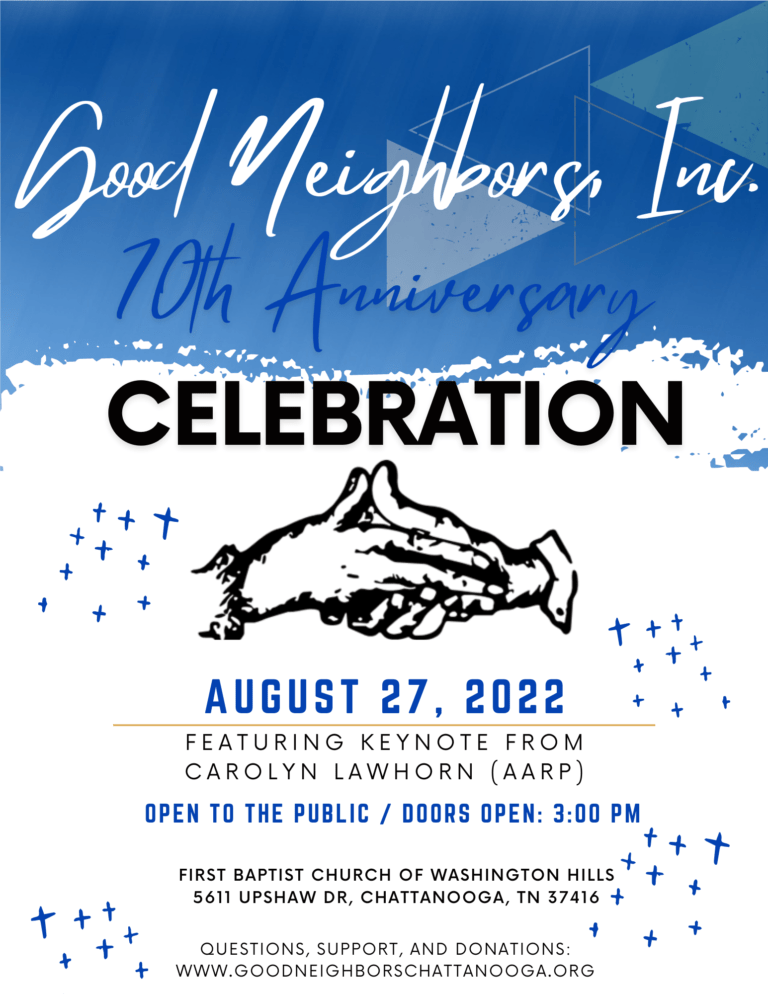
Hamilton County, TN – Good Neighbors, Incorporated will celebrate 70 years of service on August 27, 2022, at First Baptist Church of Washington Hills with doors opening at 3:00 pm. The keynote speaker of the celebration and commemoration will be Carolyn Lawhorn (AARP) along with a musical performance from gospel artist, Jasmine Le’Shea.
The event is free and open to the public; tax deductible donations and contributions are welcomed and may be made online at www.goodneighborschattanooga.org.
The organization was founded in 1952 when Dr. William and Mrs. Maudette Whiteside realized the urgent call for helping the community in ways that did not exist. They, along with many dedicated members, established Good Neighbors, Incorporated as a vehicle to immediately serve families in need. From then to present day, Good Neighbors, Incorporated has continued to provide WNOO radio ministries; in-home services for the elderly and disabled; affordable housing; food vouchers and assistance with rent, prescriptions, and utilities throughout Tennessee, Georgia and Alabama.
Can fruit salad help in your weight loss goals? It sure can! But on the other hand, if you use the wrong combination of fruits, it can backfire on you and keep your weight at a standstill. Here’s one of the best fruit salad recipes I use for weight loss:
Ingredients
3 cups chopped watermelon
1 can peaches in 100% juice
1 can pineapples in 100% juice
1 cup chopped strawberries
1 cup grapes
1 1/2 cups blueberries
2 Tbsp lemon juice
Directions: Simply add all the ingredients except the peaches, pineapples and the lemon juice. When adding in the peaches and pineapple, drain off about half of the juice in a separate container. You don’t need it for this recipe. Then, add the lemon juice last and toss.
Now for the good part. Here’s why this works to burn off excess pounds:
Watermelon – Eating less to lose weight isn’t easy if you’re always hungry — the key is to eat foods that help you feel full for longer. Watermelon is a good candidate for prolonging fullness. Each wedge has 5 percent of the daily recommended intake for fiber, which slows digestion and promotes satiety.
Blueberries – Blueberry is a fruit that helps you lose belly fat by taking advantage of the health benefits, such as the positive effect its antioxidants such as anthocyanin have on your body, vitamin C to keep your immune system strong, and vitamin E for anti-aging. Blueberry antioxidants have been linked to the banishing of belly fat, heart disease, and diabetes.
Strawberries – Strawberries can help promote weight loss in three ways: (1) They increase the body’s production of a hormone that stimulates your metabolism and suppresses your appetite. (2) They can slow the rate of digestion of starchy foods. This helps control the rise in blood sugar that follows a starchy meal. This is a key benefit for those with adult-onset Type 2 diabetes. (3) Strawberries also can help your weight-reducing hormones function properly.
Pineapples – Pineapple contains an enzyme called bromelain, which helps your body digest protein. Consuming pineapple — or supplemental bromelain — may help people who lack digestive enzymes digest foods and fats better.
Lemon – Excellent liver detoxifiers, lemons also alkalize our body. They may seem acidic based on taste but in the process of being metabolized by the body, they actually alkalize our bodily fluids and tissues. Maintaining the health of the liver is also imperative to the body’s ability to digest and burn fat, since the liver is one of the organs responsible for these functions.
SIDE NOTE: You may want to eat a banana about 30 minutes after this salad to jumpstart your body into moving its bowels even better! (BlackDoctor.org/Chef Dee Lawyne)
By Dwight Stirling | Lecturer in Law, University of Southern California
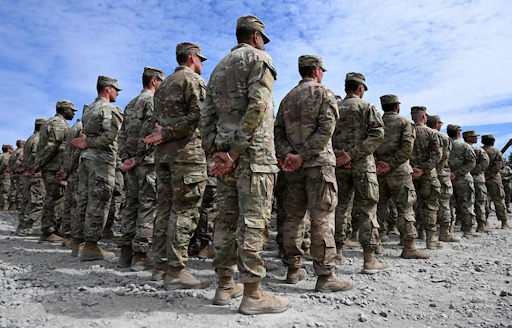
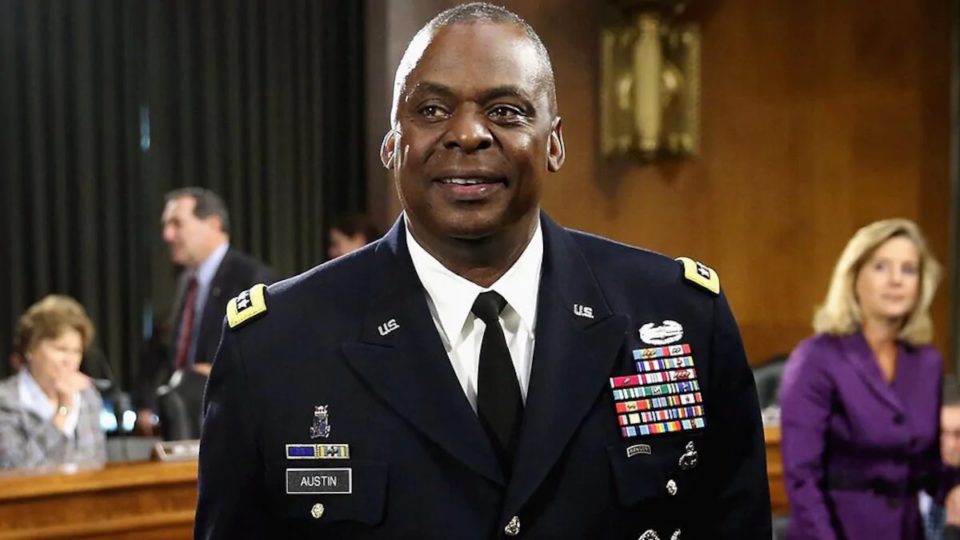
Less than a month after the Jan. 6, 2021, assault on the U.S. Capitol, Secretary of Defense Lloyd J. Austin took the extraordinary step of pausing all operations for 24 hours to “address extremism in the ranks.” Pentagon officials had been shaken by service members’ prominent role in the events of Jan. 6.
Of the 884 criminal defendants charged to date with taking part in the insurrection, more than 80 were veterans. That’s almost 10% of those charged.
More remarkable, at least five of the rioters were serving in the military at the time of the assault: an active-duty Marine officer and four reservists.
Service members’ involvement in the insurrection has made the spread of extremism – particularly white nationalism – a significant issue for the U.S. military.
The group found about 100 substantiated cases of extremism in the U.S. armed forces in 2021.
The latest instance occurred in July 2022, when Francis Harker, a National Guard member with white supremacist connections, was sentenced to four years in prison for planning an anti-government attack on police. Harker, who carried a picture saying “there is no God but Hitler,” was planning to attack police officers in Virginia Beach, Virginia, with Molotov cocktails and semi-automatic rifles.
Worried, Austin has tightened the rules regarding political speech within the military. The new rules prohibit any statement that advocates for “violence to achieve goals that are political … or idealogical in nature.” The ban applies to members of the military both on and off duty.
Also, for the first time, the new rules prohibit statements on social media that “promote or otherwise endorse extremist activities.”
In light of the stricter policy, it is useful to consider how courts apply the First Amendment in the military context.
Good order and discipline
While soldiers and sailors are certainly not excluded from the protection of the First Amendment, it is fair to say they operate under a diluted version of it.
As one federal judge observed, the “sweep of the protection is less comprehensive in the military context, given the different character of the military community and mission.”
The “right to speak out as a free American” must be balanced against “providing an effective fighting force for the defense of our Country,” a federal judge noted in a separate case.
These and other federal judges point to the military’s need for good order and discipline in justifying this approach.
While never precisely defined, good order and discipline is generally considered being obedient to orders, having respect for one’s chain of command and showing allegiance to the Constitution. Speech that “prevents the orderly accomplishment of the mission” or “promotes disloyalty and dissatisfaction” within the ranks harms good order and discipline, and can be restricted.
In 1974, for example, the Supreme Court ruled that the Army can punish an officer for encouraging subordinates to refuse to deploy.
The officer’s comments included: “The United States is wrong in being involved in the Vietnam War. I would refuse to go back to Vietnam if ordered to do so.”
In 1980, the Seventh Circuit Court of Appeals ruled that the Army could legally fire an ROTC cadet for making racist remarks during a newspaper interview.
Explaining his political philosophy, the cadet said: “What I am saying is that Blacks are obviously further behind the whites on the evolutionary scale.”
In 2012, a San Diego district court ruled that the Marine Corps can lawfully discharge a sergeant who mocked president Barack Obama while appearing on the “Chris Matthews Show.” At one point the sergeant told the host: “As an active duty Marine, I say screw Obama and I will not follow his orders.”
While each of these statements is protected by the First Amendment in civilian life, they crossed the line in military life because they were deemed harmful to morale and represented what one federal court described as more than “political discussion … at an enlisted or officers’ club.”
The military’s job is to fight, not debate
In deciding these First Amendment cases, courts often hark back to why the military exists in the first place.
“It is the primary business of armies and navies … to fight the nation’s wars should the occasion arise,” the Supreme Court said in 1955.
In a separate case, the Supreme Court declared: “An army is not a deliberate body. It is the executive arm. Its law is that of obedience.”
Quickly following orders can mark the difference between life and death in combat.
On a national level, the degree to which an army is disciplined can win or lose wars. A mindset of obedience does not come solely from classroom training but from repeated rehearsals under realistic conditions.
As a military judge observed in a 1972 decision, while service members are free to discuss political issues when off duty, the “primary function of a military organization is to execute orders, not to debate the wisdom of decisions that the Constitution entrusts” to Congress, the judiciary and the commander in chief.
New policy bans ‘liking’ extremist messages
The U.S. military’s revised approach to political speech prohibits retweeting or even “liking” messages that promote anti-government or white nationalist and other extremist groups.
Does a restriction this broad comply with legal precedent?
As a law professor who has served more than 20 years in the U.S military, I believe the broader rules will probably be upheld if challenged on First Amendment grounds.
The most comparable case is Blameuser v. Andrews, a 1980 case from the Seventh Circuit Court of Appeals where an ROTC cadet espoused white supremacist political views in a newspaper interview.
Amongst other extremist remarks, the cadet told the reporter: “You see, I believe that in the final analysis, the Nazi Socialist Party will take over America and possibly the whole world.”
Finding that the statements harmed good order and discipline, the Seventh Circuit ruled that the Army did not violate the First Amendment when it subsequently removed him from the officer training program.
The cadet’s “views on race relations draw into question his ability to obey commands, especially in a situation in which he regards the military superior as socially inferior,” the Blameuser decision said.
The military has wide latitude in deciding who is deserving of the “special trust and confidence” that comes with military employment. Military officials are free to consider political and social beliefs that are “inimical to the vital mission of the agency” in making hiring and firing decisions, the Blameuser decision said.
Social media posts expressing support for violent political activities will likely be treated in the same way.As the Seventh Circuit said in Blameuser, by liking or retweeting an extremist message, a service member’s actions are “demonstrably incompatible with the important public office” they hold. (The CONVERSATION)
By John E. Warren, Publisher | The San Diego Voice & Viewpoint
Recently, the California Department of Justice released a report which showed that African Americans are the greatest victims of Hate Crimes in the State. This is not surprising since we have always been the victims of Hate Crimes, with law enforcement seeking to underreport for fear of looking bad. At the writing of this editorial, there are more than 42 active investigations of shootings by law enforcement personnel in the State of California. This fact came to light recently as the San Bernardino Police Department attempted to avoid an investigation of the shooting of Rob Adams, who was shot 7 times in the back on July 16th.
The reason for shooting this Black man while he was running away from police was because they thought he had a gun in his hand instead of the cell phone on which he was talking to his mother at the time he was shot. He was a Black man reported by a call to the police, in an area where there was supposedly a lot of gambling. The police, for their own sake, contend he had a gun instead of the cell phone.
Question: How many Black men have been killed so far by police because they had a cell phone in their hands, which police assumed was a gun? We can count at least three: one here in San Diego county shot in broad daylight because of a cell phone in his hand, one killed in another state standing outside his garage with a cell phone in his hands that police thought was a gun. Now, Mr. Adams, who we are sure is just one more. Oh, let’s not forget the young man in Minnesota who was shot in his car by an officer who thought she was reaching for her taser instead of her gun.Now that everyone is aware of just how great Hate Crimes are against African Americans, are we going to be treated like the Asian community following what we clearly called a Hate Crime massacre at the Massage Spas in Atlanta, Georgia, or, to be more specific, here in California where hundreds of thousands of dollars have been made available for grants to fight Hate Crimes, primarily in the Asian communities? While some Black media outlets received some of the funding, where is the similar grant allocation budget to fight Hate Crimes in the African American community beyond the State Attorney General announcing the creation of an office with a Black man over it, in response to this crisis?
Where is the money which makes the same level of commitment to the Black community that the State has made to the Asian Community? A public relations campaign without the dollars to match what has been done for the Asian community, is just window dressing.