
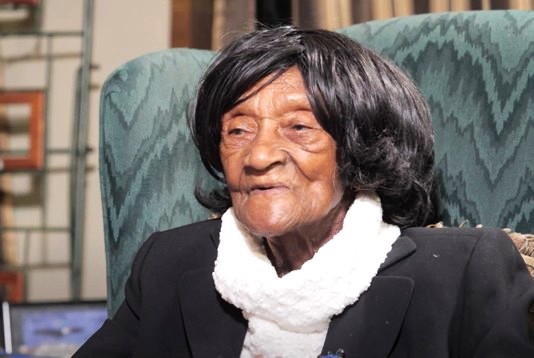
The last known living survivor of the 1921 Tulsa Race Massacre
Randle grew up in Tulsa’s Greenwood District, a thriving Black business hub known as Black Wall Street. By age six, her family lived in Greenwood, where over 300 Black-owned businesses flourished, including hotels, theaters, pharmacies, and professional offices.
As of today, October 2026, Lessie Benningfield Randle is living history in the most literal sense. She stands as the last known person able to say, from memory, what it meant to be a child in Greenwood when white Tulsa burned it down. That status is almost impossible to comprehend. She is older than the modern civil rights movement, older than Social Security, older than television, older than most institutions now charged with preserving her story. She has outlived Jim Crow’s formal architecture, the rise and fall of urban renewal, the civil rights era, the Black Power era, the age of mass incarceration, the Obama presidency, the Trump era, the Biden centennial commemoration and the first federal review of the massacre.
But Randle’s significance is not simply chronological. It is ethical. Her life asks whether America’s historical memory is allowed to remain decorative, or whether memory must impose obligations. The Justice Department can name the massacre. Museums can display photographs. Journalists can write anniversary essays. Cities can raise banners. But Randle’s central question remains: what does the country owe the people it allowed to be robbed, burned, displaced and ignored?
Her answer has been consistent. She has asked for justice, not sentiment. She has asked for restitution, not pity. She has asked the country to do the right thing while she is still here to see it. In that demand, Mother Randle belongs not only to Tulsa history but to the broader history of Black witnesses who forced America to look at what it had done: Ida B. Wells documenting lynching, Mamie Till-Mobley opening her son’s casket, Fannie Lou Hamer testifying about Mississippi violence, and the elders of Greenwood telling Congress that the massacre was not memory alone but an unpaid bill. Lessie Benningfield Randle’s life began in rural Oklahoma and moved through one of the most prosperous Black districts in America before that district was attacked. It continued through grief, family, work, aging, testimony and law. It now rests in the fragile space between witness and legacy. When the last survivor is gone, the country will lose something no archive can replace: the living voice of a child who saw Greenwood burn. Until then, Mother Randle remains what she has been for more than a century—evidence, elder, rebuke and light.